
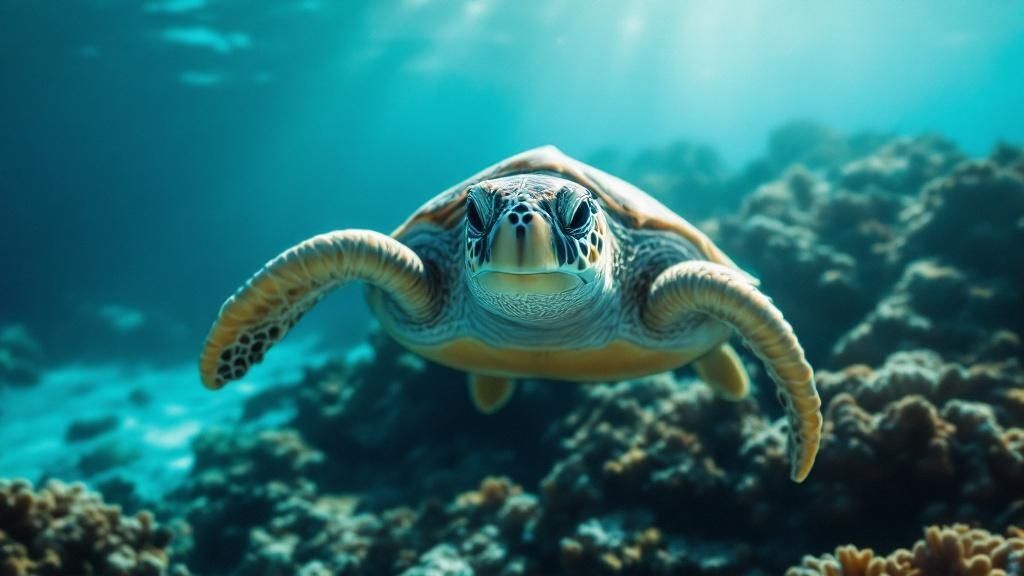
Picture yourself slowly descending into warm, impossibly clear water. Sunlight streams down, illuminating an ancient lava tube just as a green sea turtle glides gracefully past you. This isn't a dream; this is what Big Island scuba diving is all about. Thanks to the island's massive volcanoes, which shield the Kona coast from the prevailing winds, you'll find some of the most consistently amazing diving conditions anywhere on the planet. It’s what makes diving Hawaii Big Island a bucket-list destination for divers from all over the world.
Why the Big Island Is a Diver’s Paradise
So, what’s the secret behind the Big Island's incredible diving? It really boils down to a unique blend of volcanic geology, a thriving marine ecosystem, and those famously calm waters. The island's fiery origins have sculpted a truly dramatic underwater world you won't find anywhere else. Imagine exploring ancient lava tubes, intricate swim-through arches, and huge submerged craters, all bursting with life.
This one-of-a-kind volcanic landscape provides the perfect foundation for vibrant coral reefs. These reefs are home to a staggering variety of marine life. You’ll see everything from tiny, colorful nudibranchs to majestic manta rays and peaceful sea turtles snoozing on the seafloor. The Kona coast, in particular, gets all the love because it's so well-protected, meaning you get fantastic visibility and hardly any current on most days.
For a lot of people, that first plunge into the Hawaiian ocean is a life-changing moment. The rhythmic sound of your own breathing, the incredible feeling of weightlessness, and the sight of a perfect reef ecosystem—it’s an experience that truly sticks with you forever.
Let's take a quick look at what makes diving here so special.
Big Island Scuba Diving at a Glance
| Feature | Why It's a Highlight | Best For |
|---|---|---|
| Volcanic Topography | Unique lava tubes, arches, and craters create a surreal underwater landscape. | Divers seeking adventure and unique underwater photography opportunities. |
| Marine Biodiversity | Home to manta rays, turtles, dolphins, and countless endemic reef fish. | Everyone from beginners to seasoned pros who love marine life. |
| Calm Kona Coast | Protected from winds, offering excellent visibility and minimal currents year-round. | New divers, underwater photographers, and those who prefer relaxed dives. |
| Manta Ray Night Dive | A world-famous, unforgettable experience swimming with giant mantas. | Thrill-seekers and anyone looking for a truly unique dive. |
This combination of features is why divers come back to the Big Island again and again.
The Kona Honu Divers Difference
Exploring this underwater paradise is always better with a guide who knows every nook and cranny. Kona Honu Divers has built its name as the highest-rated and most-reviewed of all Kona diving companies, and for good reason. They’ve even won multiple awards for being the best in the Pacific. What’s their secret? They are all about diving, period. They're the only company in Kona that doesn't mix snorkelers on their dive boats, which means every single trip is focused 100% on the divers' experience. This makes them a perfect choice for both new and experienced divers alike. You can get a deeper dive into what makes this island so special by exploring why you should think of diving on the Big Island.
To keep this underwater world pristine for future generations of divers, it's crucial that we all do our part. Protecting our oceans is a shared responsibility, and understanding how to stop water pollution is a great place to start.
Whether you're a brand-new diver about to take your first breath underwater or a seasoned pro looking for your next great adventure, Kona Honu Divers has a reputation for creating trips you'll never forget.
Think of this guide as your all-access pass to an incredible journey. Ready to discover the magic of scuba diving Big Island Hawaii?
Your Guide to Diving on the Big Island
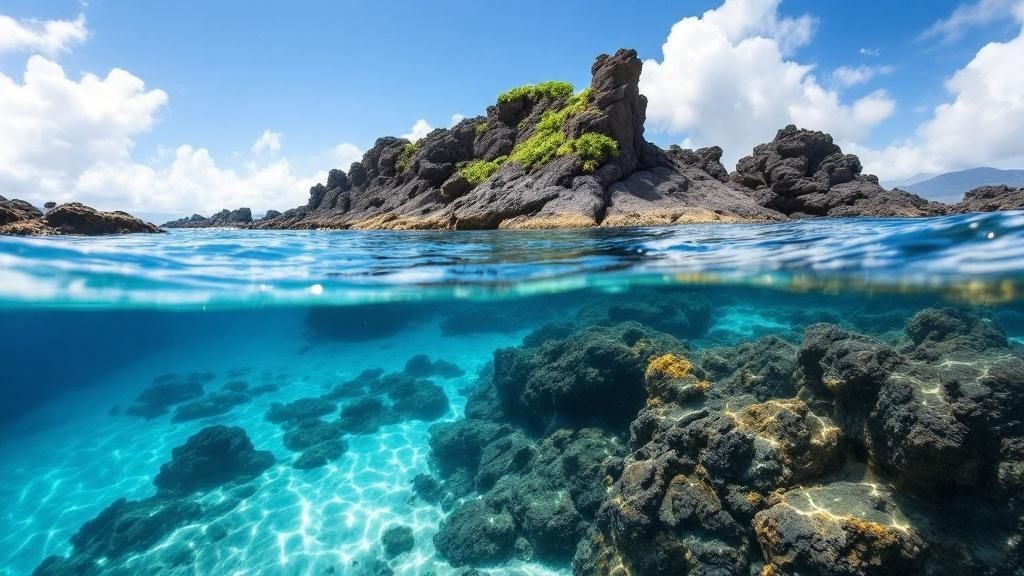
The Big Island’s underwater world is something special. It's incredibly welcoming, with phenomenal experiences waiting for divers of all stripes—from wide-eyed beginners to salty, seasoned pros. No matter your skill level, there's a perfect way to explore the island's vibrant marine life and jaw-dropping volcanic seascapes. Your adventure really just starts with one question: how do you want to get in the water?
For the most part, you have two main options for Kona diving: heading out from the shore with shore diving or hopping on a boat for boat diving. Each offers a completely different, yet equally amazing, perspective on the island’s aquatic treasures.
Choosing between a shore dive and a boat dive often comes down to what you want to achieve. Shore diving is about convenience and self-reliance, while boat diving is your ticket to the best, most pristine sites the Kona coast has to offer.
Let's break these down so you can figure out the right path for your Big Island scuba diving trip.
Shore Diving vs. Boat Diving
Shore diving is fantastic for its sheer simplicity and flexibility. You can literally grab your gear, walk in from a beach, and start exploring the shallow reefs on your own schedule. It’s a great choice for certified divers who are comfortable managing their own dive and want to sneak in an extra tank or two whenever they feel like it.
But if you want to experience the true magic of scuba Big Island, boat diving is the way to go. Professional Kona diving companies like Kona Honu Divers run custom-built dive boats designed to reach the premier, remote sites that are impossible to get to from shore. These spots are typically healthier, far less crowded, and feature more dramatic underwater terrain and incredible animal encounters. A boat charter handles all the logistics for you, so you can just relax and enjoy the ride.
Not Certified? No Problem
Ever wondered what it’s like to breathe underwater but don't have a certification card? The Discover Scuba Diving program was made for you. It's an opportunity to try scuba diving without a certification. Under the close, watchful eye of a professional instructor, you can safely give scuba diving Big Island Hawaii a try in a calm, controlled setting. It’s the perfect way to dip your toes in—or rather, your whole body—and see if diving is your new passion.
Or, you could take a scuba course and get your full Open Water Diver certification right here while on vacation. Imagine swapping a stuffy classroom for the warm, blue Pacific. A top-tier operator like Kona Honu Divers can guide you through the entire course, making sure you leave as a confident, competent diver. They’ve built their reputation on safety and creating a positive learning space, which has made them the highest-rated and most-reviewed dive company in Kona. They’ve even got the awards to prove it.
The Big Island is famous for its incredible diving Hawaii Big Island opportunities, drawing divers from across the globe to see its unique lava tubes and rich marine ecosystems. One of the most celebrated spots is Kealakekua Bay, a protected marine life sanctuary known for its crystal-clear water and mind-boggling biodiversity. The bay's protected status is what keeps this ecosystem so vibrant, making it a must-see for anyone with a tank on their back. You can check out more of the Big Island’s premier dive locations.
What If Your Group Has Non-Divers?
It’s pretty common to have a mix of divers and non-divers in the same group. Kona Honu Divers is laser-focused on providing the best possible dive experience, which is why they’re the only operator that doesn't take snorkelers on their boats. For any family or friends who’d rather stay on the surface, their sister company, Kona Snorkel Trips, happens to be the best snorkel company on the Big Island. This setup is brilliant—it ensures everyone has an amazing day on the water, with each activity getting the dedicated attention it deserves. You can explore the many incredible diving tours available for your trip.
Choosing the Best Kona Diving Company
Let's be honest: the dive operator you pick for your Big Island scuba diving adventure can absolutely make or break your trip. When you start looking up Kona diving companies, you'll see a few options, but one name just keeps popping up for all the right reasons: Kona Honu Divers.
They've earned thousands of five-star reviews and prestigious awards as the best in the Pacific, and it’s not just by accident. They’ve built a reputation for crafting the perfect day on (and under) the water. It’s about more than just pointing out cool fish; it’s about safety, comfort, and a genuine passion for the ocean that you feel from the moment you step on board.
The 'Divers-Only' Advantage
So, what’s their secret sauce? It’s something that seems simple but has a massive impact: a ‘divers-only’ boat policy. Kona Honu Divers is the only operator in Kona that dedicates their dive boats exclusively to scuba divers.
Think about it. When a boat isn't trying to cater to two completely different groups—snorkelers splashing at the surface and divers exploring 60 feet down—the entire operation becomes laser-focused. The crew, the schedule, and the chosen dive sites are all selected purely for the best possible scuba experience.
This means you never have to compromise. You’re heading to sites chosen for their incredible underwater topography and marine life, not just because they have a calm, shallow area for snorkelers. It creates an atmosphere of shared excitement on the boat, a community of divers ready for an adventure built just for them.
A Smart Solution for Mixed Groups
"But what if some of my family or friends don't dive?" That’s a common question, and Kona Honu Divers has a brilliant answer. Their sister company, Kona Snorkel Trips, is the top-rated snorkel operator on the Big Island.
This setup is a win-win for everyone:
- The divers in your group get a focused, world-class dive trip with Kona Honu Divers.
- The non-divers get their own fantastic, dedicated tour with Kona Snorkel Trips.
It’s the perfect way to make sure nobody in your party feels like they’re getting a watered-down experience. While you’re gearing up for a premier Kona diving day, your friends are enjoying an equally amazing time exploring the reefs from above.
If you’re traveling with people who have different interests, knowing how to split up for the day can be a real game-changer. Here’s a quick breakdown to help you decide which company is right for each person in your group.
Comparing Top Kona Operators for Your Group
| Feature | Kona Honu Divers | Kona Snorkel Trips |
|---|---|---|
| Primary Activity | Scuba Diving | Snorkeling & Manta Ray Snorkels |
| Best For | Certified divers, students, Discover Scuba participants. | Snorkelers, families, those who prefer staying on the surface. |
| Boat Policy | Divers-only vessels | Snorkeler-focused boats |
| Trip Focus | Exploring deeper reefs, lava tubes, and unique underwater topography. | Viewing vibrant shallow reefs and interacting with surface-level marine life. |
Ultimately, this two-company approach ensures everyone gets a tour tailored specifically to them, guaranteeing a fantastic day on the water for your entire group. To get a better sense of all the underwater possibilities, you can explore our complete guide to Big Island scuba diving.
Unforgettable Night Diving Experiences
When the sun finally dips below the horizon on the Kona coast, the ocean doesn’t go to sleep. It awakens. Big Island scuba diving completely transforms after dark, revealing a magical underwater world that offers some of the most profound and memorable encounters you can have anywhere on Earth. This is when the island’s most legendary spectacles truly begin.
The World-Famous Manta Ray Night Dive
At the very top of almost every diver’s wish list is the Manta Ray Night Dive. Honestly, it's an experience that words struggle to capture. You kneel on the sandy ocean floor in a semi-circle, your lights pointing up, creating a glowing arena on the water's surface.
Then, they appear. Majestic manta rays, with unbelievable wingspans stretching up to 16 feet, start gliding and somersaulting just inches above your head. It’s a completely silent, underwater ballet. These gentle giants are drawn to the light, which illuminates their primary food source: plankton.
This isn't just another dive; it's a truly breathtaking performance. You're not just an observer; you become part of the show as these graceful creatures dance in the beams of your dive light. It’s one of those memories that will stick with you for a lifetime. For anyone looking to have this experience, the island is world-renowned for its incredible Big Island Manta Ray Night Dive experiences.
To get that full, jaw-dropping view from the seafloor, a great guide is essential. You can learn more about what makes this dive so incredible by checking out our guide to the https://konahonudivers.com/kona-manta-ray-night-dive/.
The Thrill of the Blackwater Dive
If you're a truly adventurous diver looking for something completely different, the Kona Blackwater Dive is your ticket to another dimension. This is nothing like a typical reef dive. Here, you'll find yourself tethered to a boat, drifting in the pitch-black open ocean miles from shore, suspended over thousands of feet of water.
It's here you get a front-row seat to one of the largest migrations on the planet. Strange and beautiful bioluminescent creatures rise from the crushing depths to feed near the surface under the cover of darkness. You’ll come face-to-face with alien-like larval fish, pulsating ctenophores, and bizarre organisms that look like they belong on another planet. It feels less like diving and more like floating through deep space.
Choosing Your Night Dive Adventure
So, which one is for you? The good news is that top-tier Kona diving companies specialize in both of these incredible nocturnal adventures, offering trips for different skill levels.
The Manta Ray Night Dive is accessible and awe-inspiring for divers of all certifications. On the other hand, the advanced Blackwater Dive is a unique thrill best suited for experienced divers comfortable in challenging conditions. These signature dives are a massive part of what drives the island's dive tourism, a market that helps support a global industry projected to hit USD 18.5 Billion by 2025.
Ultimately, these night dives are more than just a fun activity; they are genuine encounters with a hidden world. Whether you choose the elegant dance of the mantas or the mysterious abyss of a blackwater dive, diving Big Island after dark is an adventure you simply will not forget.
Advanced Diving for Experienced Divers
So, you've got your certification card, logged some solid bottom time, and you're ready to see what the wilder side of Big Island scuba diving has to offer. If you're craving more than a gentle swim over the reef, you're in the right place. For skilled divers, the island unveils a thrilling playground of challenges that pay off with truly unforgettable moments.
This is where diving Big Island shows its adventurous spirit. We’re not just talking about going deeper—it’s about tackling more complex and dynamic environments. Think sheer drop-offs that disappear into the deep blue, ancient lava tubes that demand pinpoint buoyancy control, and dive sites where a bit of current brings in the big-ticket pelagic life. These more experienced diving opportunities are for those with solid skills and a serious hunger for exploration.
What Makes a Dive ‘Advanced’
On the Kona coast, an "advanced" dive isn't just a label; it’s a promise of a more dynamic experience. You might be dropping into a site known for stronger currents, which act like a superhighway for marine life, often attracting schools of eagle rays or even the occasional shark. The trade-off for a little extra work is a front-row seat to a far more active underwater world.
The incredible topography is another key element of advanced scuba diving Big Island Hawaii. One minute you could be gliding through a massive, cathedral-like cavern, and the next you might be navigating a tight swim-through forged by ancient lava flows. It takes confident finning and good spatial awareness, but the reward is seeing some of the most pristine and untouched parts of the reef.
These more demanding dives are a chance to see the Big Island's raw, untamed beauty. They take you away from the crowds and put you face-to-face with the powerful forces that shaped this island, both above and below the water.
This is exactly why choosing the right dive operator is so important. You need a crew that lives and breathes these sites—one that can deliver a trip that’s both challenging and absolutely locked-in on safety.
Premium Charters for Serious Divers
If you want to spend your surface interval talking about dive profiles instead of resort buffets, a dedicated advanced charter is the way to go. These trips are designed for experienced, like-minded divers. Kona diving companies like Kona Honu Divers run premium advanced dive charters that specifically target these more demanding and rewarding sites.
The beauty of these charters is that everyone on the boat is on the same page, skill-wise. This creates a fantastic group dynamic and gives the dive guide the freedom to lead more ambitious profiles. You might explore a deep pinnacle, hunt for rare critters, or drift along a wall that’s just buzzing with activity—all things reserved for divers with the training to match the adventure.
This is your chance to really push your Kona diving experience to the next level. It’s an opportunity to build on your skills, see sights that very few people ever witness, and go home with stories that will fuel your passion for diving for years to come.
Frequently Asked Questions
Is there good diving on the Big Island?
Good? It's world-class. The Big Island offers some of the best diving on the planet, hands down. It's known for unbelievable water clarity, unique lava tube formations you won't find anywhere else, and an abundance of marine life. The Kona coast, in particular, is a global destination because its calm, sheltered waters host iconic dives like the Manta Ray Night Dive.
What are the best months to scuba dive in Hawaii?
You can dive here year-round, so the "best" time really depends on what you're looking for. Summer (May-September) generally brings the calmest seas and warmest water. Winter (December-March) is humpback whale season, and hearing their songs underwater is an experience you'll never forget. For a perfect balance of great conditions and smaller crowds, the shoulder seasons in spring and fall are tough to beat.
Is Kona good for scuba diving?
Kona isn't just good for scuba—it's exceptional. The massive volcanoes on the island shield the Kona coast from the trade winds, creating consistently clear and calm conditions that are a diver's dream. It’s the undisputed hub for Hawaii’s most famous dives and has a high concentration of top-notch professional operators, making it the premier scuba destination in the state.
Is it better to snorkel or scuba dive in Hawaii?
That really depends on what you want out of your day. Snorkeling is fantastic for getting a glimpse of the shallow reefs and is super accessible for everyone. But scuba diving is a fully immersive experience. It lets you explore deeper, swim through dramatic underwater canyons and lava tubes, and spend real, quality time with marine life. To truly appreciate the magic of the Manta Ray Night Dive from the seafloor, for example, scuba is the only way to do it.
Which Hawaiian island is best for scuba diving?
Among divers, the Big Island consistently takes the top spot. It has a unique combination of volcanic underwater landscapes, super-reliable conditions on the Kona coast, and bucket-list dives you can't do anywhere else, like the Manta Ray Night Dive and the eerie Blackwater Dive. While other islands have great spots, the Big Island simply offers the most diversity and the most iconic experiences.
When to dive Kona?
Honestly, any time you can get here. The water is always warm, hovering between a comfortable 75-80°F. Summer has the flattest, calmest water, while winter adds the magical soundtrack of humpback whales. The shoulder seasons are a sweet spot with beautiful weather and fewer people. The best time to dive Kona is whenever you can make it happen.