
Picture this: you're sinking into water so clear you can see for 100 feet in every direction. Sunlight filters down, illuminating dramatic volcanic arches and ancient lava tubes that are absolutely buzzing with life. That’s what Big Island scuba diving is all about—it's easily the gold standard for underwater adventure in Hawaii. The Kona coast, in particular, delivers some of the most reliable and breathtaking diving conditions you'll find anywhere on the planet.
Why The Big Island Is Hawaii’s Premier Diving Destination
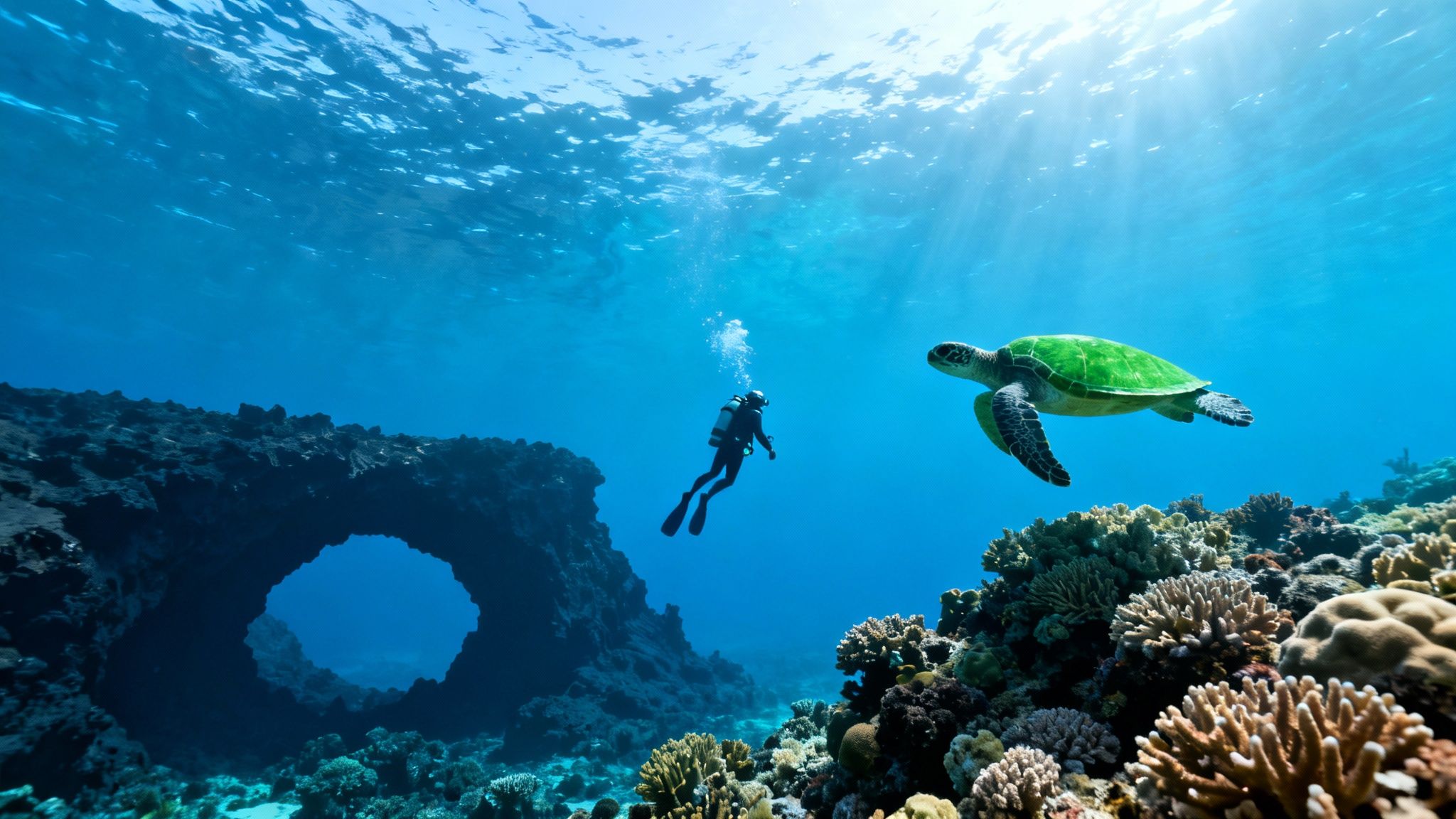
So, what’s the secret? It really comes down to the island's unique geography. The western Kona coast is tucked into the rain shadow of two colossal volcanoes, Mauna Loa and Hualalai. These giants act as a natural barrier, blocking the powerful Pacific trade winds and creating a calm, protected shoreline with wonderfully placid ocean conditions.
This natural shield translates to less chop on the surface and calmer seas pretty much all year. That means more comfortable boat rides and, more importantly, safer and more enjoyable dives. It's this geographic lottery win that has cemented the Big Island's reputation as a world-class diving hub.
An Underwater Volcanic Paradise
The seascape here is something else entirely. Forged over millennia of volcanic eruptions, the ocean floor is a stunning maze of lava tubes, massive archways, and old craters now draped in colorful coral. It honestly feels like you're exploring another planet.
These incredible geological features create the perfect home for a staggering variety of marine life. The ecosystem is thriving and diverse, with something new to see around every corner.
- Vibrant Coral Reefs: Kona's reefs are some of the healthiest in Hawaii, packed with countless species of tropical fish, eels, and clever octopuses.
- Beloved Marine Megafauna: You're almost guaranteed to run into a honu (Hawaiian green sea turtle). We also frequently see pods of playful spinner dolphins from the boat, and sometimes they'll even make a special appearance during a dive.
- The Main Attraction: Of course, the Big Island is legendary for its resident population of graceful manta rays. They are the undisputed stars of the world-famous manta ray night dive.
The numbers really tell the story. The Big Island supports around 100,000 certified scuba dives every single year. A whole community of dive shops is here, welcoming tens of thousands of divers from around the globe. This isn't just a coincidence; it's a direct result of the crystal-clear water, one-of-a-kind volcanic topography, and the unforgettable marine life that make Kona so special. You can get a deeper dive into this topic in our guide on what makes the Big Island good for scuba diving.
With its incredible biodiversity and consistently great conditions, the island is the perfect playground for divers of every skill level. Whether you just got your certification or you've been diving for decades, the underwater world of Kona is waiting to blow you away. Ready to explore a variety of underwater adventures? Check out the available Kona diving tours.
Experiencing The Legendary Manta Ray Night Dive
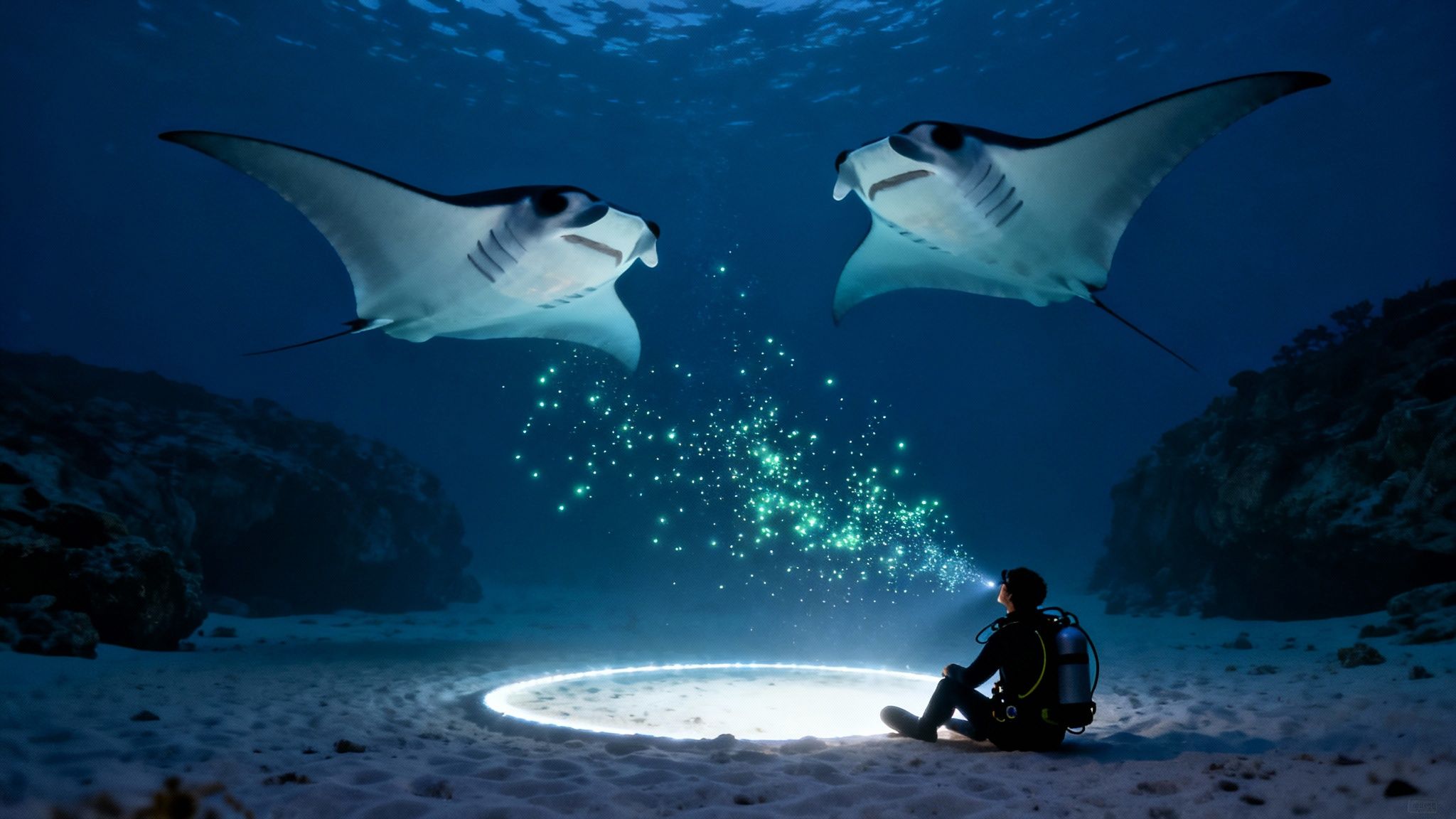
Some dives just stick with you. The Kona Manta Ray Night Dive is one of them. It's a fixture on bucket lists for divers all over the globe, and for good reason—it’s a surreal, almost magical encounter that feels like watching an underwater ballet. This is, without a doubt, the signature Big Island scuba diving experience.
The whole thing starts as you descend into the dark ocean at twilight, finding your spot on the sandy bottom. Your guides place a powerful light source in the center—we call it the "campfire"—which shoots a beam up through the water column. This light is irresistible to the microscopic plankton that manta rays love to eat.
Then, the show begins. Huge, graceful shadows start to emerge from the blackness, gliding effortlessly into the light. These gentle giants, with wingspans that can stretch over 12 feet, perform incredible, acrobatic barrel rolls just inches above you, feasting on the plankton cloud you helped attract.
Why Garden Eel Cove Is The Superior Choice
While you can see mantas at a couple of spots, one site consistently delivers a better, more memorable experience: Garden Eel Cove, also known as Manta Heaven.
What makes it so special? It all comes down to geography. The cove is tucked into a bay that’s naturally protected from the open ocean swell, something other sites can't offer. This means calmer, more predictable conditions, making for a much more comfortable and enjoyable dive for everyone. You get to spend your time mesmerized by the show, not fighting against surge. The surrounding reefs are also healthier, making the pre-manta daylight dive even more spectacular.
It's one thing to see the mantas, but it's another to be fully present for one of nature's greatest performances. When the conditions are calm and the setup is comfortable, you can truly relax and soak in every single moment of this unforgettable encounter.
The viewing area at Garden Eel Cove is another huge plus. Divers gather on a large, sandy patch, giving you a stable and comfortable place to sit or kneel. This setup is great for getting an unobstructed view and minimizes any disturbance to the marine environment.
Comparing Manta Ray Dive Locations
When it comes to the manta dive, not all locations are created equal. The right spot can make all the difference between a good dive and a truly epic one. To really understand why so many experienced divers prefer Garden Eel Cove, it helps to compare it directly to the other main site.
| Feature | Garden Eel Cove (Makako Bay) | Keauhou Bay (Manta Village) |
|---|---|---|
| Protection & Conditions | More protected from swell, often calmer | More exposed, can be rougher |
| Diver Experience | Sandy bottom 'campfire' for comfortable viewing | Rockier bottom, can be more crowded |
| Reef Health | Healthy, vibrant surrounding reefs for the day dive | Reefs can show more impact from boat traffic |
| Manta Sightings | Very consistent and reliable sightings | Also consistent, but conditions can vary |
The choice is pretty clear. Garden Eel Cove usually translates to a calmer, more comfortable, and more visually stunning dive from start to finish. You can discover more about what makes the Kona manta ray night dive a world-famous attraction and book your own unforgettable manta ray dive tour to see why the location matters so much.
At Kona Honu Divers, we've fine-tuned this trip over the years to ensure you get a spectacular show while always prioritizing the safety and well-being of the mantas. Our experienced guides foster an environment of deep respect for these incredible animals.
Exploring Kona’s Top Dive Sites Beyond The Mantas
Don't get me wrong, the manta ray night dive is an absolutely mind-blowing, world-famous experience. But it's just the beginning of the story when it comes to Big Island scuba diving. The Kona coast is a diver's dream, packed with dozens of sites that show off the raw, volcanic power that shaped this underwater world. Once you venture beyond the mantas, you'll find a whole new playground of lava tubes, vibrant coral gardens, and hidden pockets of marine life.
Every spot has its own unique vibe and offers a completely different adventure. The topography here, sculpted by ancient lava flows, has left behind an incredible landscape of arches, caverns, and pinnacles that you just won't see anywhere else. Let's talk about a few of the must-see locations that really make Kona a top-tier destination for divers of all stripes.
Golden Arches: A Lava Tube Wonderland
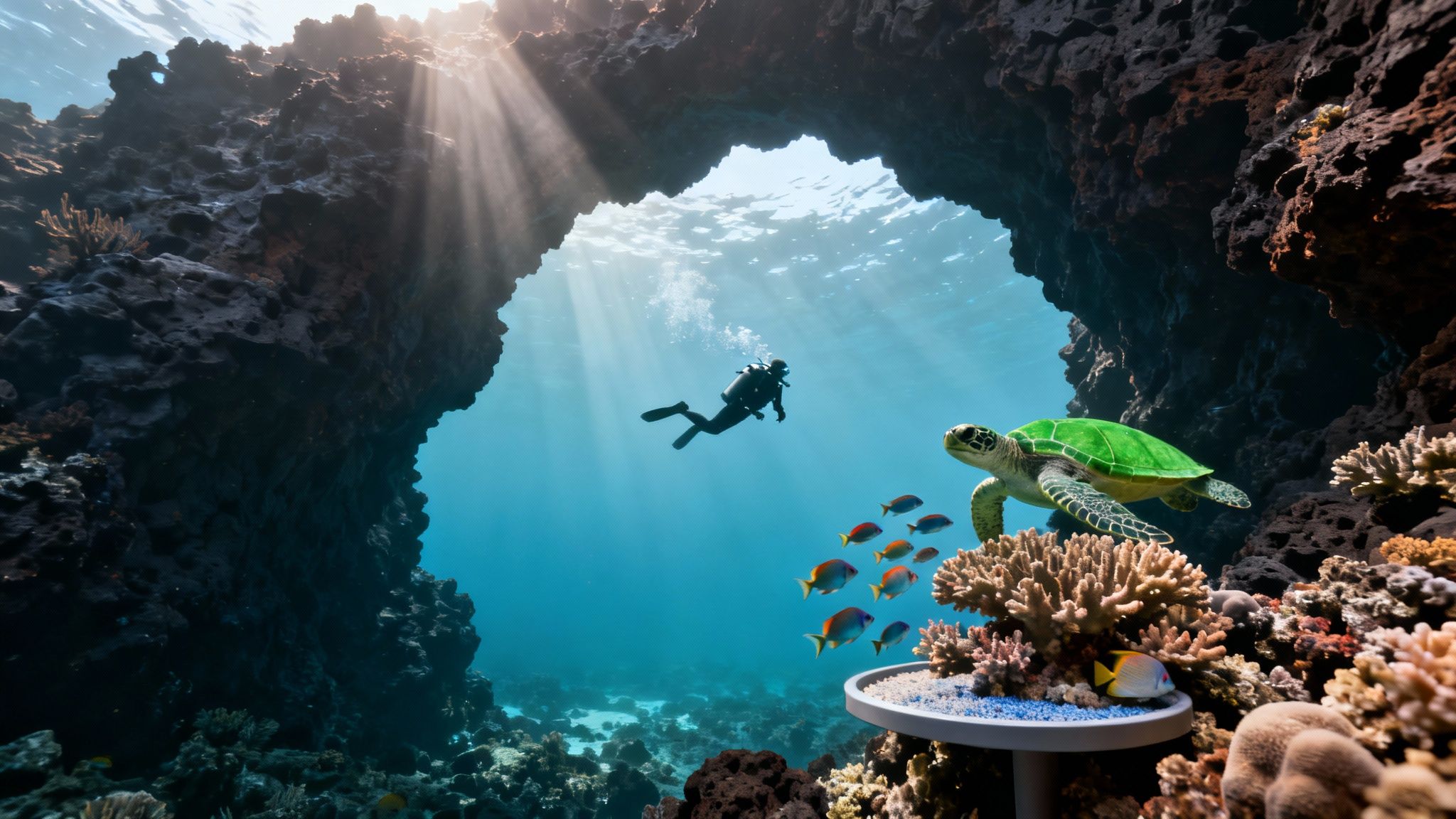
One of the most requested and truly iconic dive sites in Kona has to be Golden Arches. This place is famous for its dramatic underwater architecture, dominated by a massive lava tube that forms an unforgettable swim-through. As you glide through the archway, you’ll see sunlight piercing the surface, creating these incredible, ethereal rays that dance through the water and light up the colorful sponges clinging to the cavern walls.
It’s a genuinely magical feeling. Inside the tube, you'll often find schools of fish hanging out in the shelter, and it’s not uncommon to spot a whitetip reef shark chilling on the sandy floor. This site is a photographer's dream and a blast for anyone who gets a kick out of exploring unique geological formations. It’s a perfect example of how volcanic fury can create something so breathtakingly beautiful, and it's a great dive for most skill levels.
Turtle Pinnacle: The Honu Hotspot
If seeing Hawaiian green sea turtles—or honu, as we call them—is on your bucket list, then Turtle Pinnacle is your spot. This site is a classic "cleaning station," which is basically a natural spa where turtles cruise in to have algae and parasites cleaned off their shells by eager little fish like the Hawaiian cleaner wrasse.
Here's what makes this dive so cool:
- Relaxed Turtle Encounters: You get to just hang back and watch the turtles in their element, totally undisturbed as they get their shells buffed and polished.
- Abundant Marine Life: It's not just about the turtles. The pinnacle itself is crawling with life, including moray eels peeking out of crevices, octopuses, and a wild variety of colorful reef fish.
- Great for All Levels: The depth is pretty manageable and the conditions are usually calm, making it a fantastic and rewarding dive for both brand-new and seasoned divers.
Watching this symbiotic relationship happen right in front of you is fascinating and offers some of the best photo and video opportunities you can ask for.
A dive at Turtle Pinnacle feels like you've been invited to a secret turtle party. Seeing these ancient, gentle creatures interact with the reef so calmly is a powerful reminder of just how fragile and interconnected the ocean's ecosystem really is.
Pawai Bay: Corals And Big Critters
For those looking for sprawling, healthy coral reefs and a chance to spot some bigger marine life, Pawai Bay is an excellent choice. This protected bay is home to some of the most pristine coral gardens on the Kona coast, with huge fields of finger and lobe corals creating a vibrant, living city beneath the waves.
The bay’s geography also tends to attract larger pelagic species. It’s not unusual to see graceful eagle rays gliding through the blue or whitetip reef sharks patrolling the edges of the reef. Spinner dolphins are also frequent visitors to the area, and while an underwater sighting is rare, you can often hear their playful clicks and whistles, which makes for a pretty awesome soundtrack to your dive. Pawai Bay is a perfect showcase of the incredible biodiversity that makes Big Island scuba diving a true world-class adventure.
These sites are just a taste of what Kona has to offer. Here at Kona Honu Divers, our crew knows these waters like the back of their hand and can get you to the absolute best spots based on the day's conditions and what you're hoping to see.
Ready to explore these incredible underwater worlds? You can book one of our many diving tours to see the best of Kona.
The Ultimate Thrill Of The Kona Blackwater Dive

If you’re a certified diver looking for an experience that genuinely pushes the boundaries, the Kona Blackwater Dive is it. This isn't just another night dive—it's a journey into a completely alien world, far from the familiar glow of the reef. It's easily one of the most surreal and captivating dives on the planet.
Picture this: you're floating miles offshore in the deep, dark Pacific, tethered to a boat on the surface. Below you, thousands of feet of open ocean. You are, for all intents and purposes, an astronaut in inner space, witnessing the largest migration on Earth as it happens every single night.
You’ll be right in the middle of the nightly vertical migration, where countless bizarre and beautiful creatures rise from the crushing depths to feed near the surface, all under the cover of darkness.
What Creatures Will You Encounter?
The life you'll see on a blackwater dive is nothing like what you find on the reef. These are pelagic organisms, creatures that spend their entire lives drifting in the open ocean. Many are in their larval stages, looking completely different from their adult forms, while others are deep-sea residents that only come up at night.
Get ready to be amazed by:
- Alien-Like Larval Fish: You'll see the juvenile versions of common reef fish, many of them transparent and adorned with wild, spiny appendages for defense.
- Pulsating Jellies and Siphonophores: A stunning parade of gelatinous creatures will drift by, many of them bioluminescent and creating their own light shows.
- Iridescent Cephalopods: Tiny, jewel-like squid and octopuses hunt in the darkness, flashing brilliant colors right before your eyes.
This dive is a macro photographer’s dream, filled with subjects most people will never see. It's an advanced dive for a reason, demanding excellent buoyancy control and a calm mind. For a deeper look at what this incredible experience is all about, check out our complete guide to blackwater diving in Kona or book the thrilling Blackwater Dive tour.
The Mechanics Of A Blackwater Dive
Precision and safety are everything out here. Divers are attached by tethers to a heavily weighted line that drifts with the boat and the current. This setup is crucial—it keeps everyone together and connected to the vessel, so no one gets lost in the immense blackness of the open ocean.
People often describe the blackwater dive as being in outer space. Floating in the vast darkness as strange, glowing creatures drift past your mask… you truly feel like an astronaut exploring a new frontier. It’s both humbling and life-changing.
Your whole world shrinks to the small, illuminated patch of water around your light, which is what draws these incredible animals in. Since there’s no seafloor for reference, maintaining perfect buoyancy is non-negotiable. You have to be completely comfortable managing your position in the water column for the entire dive.
This is why the blackwater dive is reserved for seasoned adventurers seeking the next level of Big Island scuba diving. For those ready for the challenge, we offer an advanced dive tour that will push your skills. It’s more than a dive; it’s a profound encounter with a hidden universe that only awakens after the sun goes down.
Practical Tips For Planning Your Dive Trip
The thrill of planning your Big Island scuba diving adventure is second only to the dive itself. A little bit of prep work goes a long way in making sure your trip is smooth, safe, and everything you hoped for.
So, when's the best time to go? Honestly, there’s no bad time. Kona’s coastline is incredibly calm and sheltered, making it a fantastic year-round destination. That said, different seasons do have their own unique appeal.
Summer, from June to September, usually delivers the flattest seas and warmest water. You can expect temperatures to hit a delightful 80-82°F (27-28°C). But winter has a magic all its own. Dive between December and March, and you’ll likely be treated to the haunting songs of humpback whales echoing through the water—a truly unforgettable soundtrack for your dive.
Preparing For Your Dives
Aside from your swimsuit and a sense of adventure, there are a few essentials you won’t want to leave behind. Getting these details right before you go is key to a comfortable and stress-free trip.
Here’s a quick checklist to get you started:
- Reef-Safe Sunscreen: Hawaii is serious about protecting its coral. Sunscreens with oxybenzone and octinoxate are banned, so be sure to pack a mineral-based one using zinc oxide or titanium dioxide.
- Dive Computer: While you can always rent one, diving with your own computer means you’re already familiar with its display and settings. It's a small thing that adds a big layer of comfort and safety.
- Reusable Water Bottle: Hydration is non-negotiable for divers. Do your part to cut down on plastic and bring a bottle you can refill throughout the day.
- Logbook and C-Card: Don't show up without them! You'll need proof of your certification and dive history to get on the boat.
Before you finalize everything, it’s also a smart move to look into an international travel health insurance guide to see what your medical coverage options are. Having that peace of mind is invaluable.
Certification And Skill Level
To really experience what Kona has to offer—especially the incredible boat dives—you’ll need an Open Water Diver certification at a minimum. This is the standard ticket to join guided tours to the best offshore sites, including the world-famous Manta Ray Night Dive. Any professional operator will ask to see your certification card before you head out.
Has it been a while? If it’s been more than a year since your last dive, it's a really good idea to take a refresher course. It’s a quick way to shake off the rust, get your confidence back, and make sure you feel totally comfortable from the moment you hit the water.
Local outfits like Kona Honu Divers run great refresher programs to get you back in the groove. Being upfront about your skill level and when you last dived helps the guides create groups that match everyone’s comfort level, which makes the experience better for the whole boat. A little honesty and preparation set the stage for a truly amazing Big Island scuba diving vacation.
Understanding Ocean Safety In Hawaii
The warm, turquoise waters of Hawaii are a huge part of the allure, especially when you’re planning a **Big Island scuba diving** trip. But as beautiful as it is, the Pacific is a mighty force that deserves a healthy dose of respect. Getting a handle on ocean safety isn’t just a good idea—it’s the most important thing you can do to make sure your adventure is amazing for all the right reasons.
Most people heading to the islands probably think scuba diving is the riskiest water activity. The actual numbers, however, tell a different story. A decade-long study of incidents in Hawaiian waters found that snorkeling was connected to far more tourist deaths than scuba diving.
Between 2009 and 2018, there were 206 deaths related to snorkeling, and 189 of those were visitors. In that same timeframe, scuba diving accounted for 28 deaths. If you're curious, you can dig into the full snorkeling safety statistics to see the bigger picture.
Why Certified Diving Is Often Safer
So, what's behind that massive difference? It really boils down to three things: training, supervision, and awareness.
When you become a certified scuba diver, you go through some pretty intense training. You learn everything from how your gear works to controlling your buoyancy and, most importantly, what to do if something goes wrong. Plus, on a guided dive, you're always under the watchful eye of a professional Divemaster or Instructor who's trained to read the conditions and keep everyone safe.
Snorkeling, on the other hand, can give people a false sense of security. It's easy for visitors with little to no ocean experience to rent some gear and just jump in. They might not know about hidden currents, their own physical limits, or how to react if they suddenly feel overwhelmed. That lack of preparation and professional guidance is often what leads to exhaustion, anxiety, and panic.
Your most important piece of gear is respect for the ocean. Never turn your back on it, always stay aware of your surroundings, and don't ever be afraid to ask for help. The ocean is stunning, but it's also wild.
Core Principles For A Safe Experience
No matter what you're doing in the water, a few key rules of thumb will make a world of difference. Think of these less as warnings and more as tools to empower you for an incredible time in Hawaii.
- Always Go With A Professional: This is non-negotiable. Booking a trip with a trusted operator like Kona Honu Divers gives you a built-in safety net. Their crew knows the local spots inside and out, gives a detailed safety briefing, and is ready to handle anything that comes up.
- Be Honest About Your Abilities: Tell your guide exactly where you're at with your swimming skills and comfort in the water. There's zero shame in saying you're a bit nervous or don't have a ton of experience. In fact, it helps the crew give you the right support to have a great time.
- Never Underestimate The Ocean: The conditions can shift in a heartbeat. Listen carefully during the safety briefing, follow your guide's lead, and never go out alone or into conditions that are beyond your skill set.
When you put safety first and respect the power of the ocean, you're setting yourself up for a Big Island scuba diving experience you'll remember forever.
Your Big Island Scuba Questions, Answered
Still have a few questions floating around before you book your Kona dive trip? Perfect. Let's tackle some of the most common things divers ask to make sure you're fully prepared for the adventure of a lifetime.
Do I Need To Be Certified To Scuba Dive On The Big Island?
For almost any dive you'll do from a boat here, the answer is a definite yes. You’ll need at least an Open Water certification to join the most sought-after dives, including the legendary Manta Ray Night Dive and explorations of Kona's unique offshore lava tubes. Without that C-card, the best of the underwater world remains just out of reach.
If you're not certified yet, don't worry! You can get your feet wet with a "Discover Scuba Diving" program. It's a fantastic, professionally supervised taste of what it's like to breathe underwater, but it's not a certification. To really unlock all that Kona has to offer, getting certified is your ticket in.
What Is The Water Temperature In Kona?
One of the best things about diving in Kona is how comfortable the water is year-round. In the winter, you can expect the water to be a pleasant 75-77°F (24-25°C). By late summer, it warms up to a balmy 80-82°F (27-28°C).
Most people find a standard 3mm wetsuit is more than enough for the summer months. If you're diving in winter or tend to get chilly, a 5mm wetsuit will keep you perfectly cozy. Every local dive shop, including us at Kona Honu Divers, has high-quality rental gear to keep you comfortable no matter when you visit.
Can I See Whales While Scuba Diving In Kona?
Actually seeing a humpback whale swim past you on a dive is incredibly rare—it's the kind of once-in-a-lifetime encounter you can't plan for. But what you can expect during whale season (December through March) is something just as magical: their song.
It's common to hear the haunting, complex calls of male humpbacks echoing through the water on your dives. It's a powerful, full-body experience you'll never forget. Plus, you’ll almost certainly see them breaching and spouting from the boat during your surface intervals, which is a pretty amazing bonus.
What Marine Life Can I See Besides Mantas And Turtles?
While the mantas and turtles get most of the spotlight, Kona's reefs are absolutely packed with other incredible marine life. The volcanic underwater landscape creates a ton of nooks and crannies for critters to call home.
On any given dive, you're likely to spot:
- A Rainbow of Reef Fish: The reefs are buzzing with butterflyfish, triggerfish, and of course, Hawaii's state fish, the Humuhumunukunukuāpuaʻa.
- Masters of Camouflage: Keep your eyes peeled for moray eels poking out of holes, octopuses changing color, bizarre-looking frogfish, and tiny, vibrant nudibranchs.
- The Big Stuff: It's not uncommon to see whitetip reef sharks resting on the sandy bottom or majestic eagle rays gliding effortlessly past you. And don't be surprised if a pod of spinner dolphins escorts the boat on your way out to the site!
Every single dive here reveals something new, which is what makes Big Island scuba diving so addictive.
At Kona Honu Divers, our entire mission is to provide safe, respectful, and unforgettable adventures in the water. Our crew lives and breathes Kona diving, and we're ready to show you the very best of it. You can explore all of our world-class diving tours here.