
Big Island scuba diving sweeps you into crystalline Pacific waters, where volcanic reefs frame every view and sudden drop-offs add a thrill. Kona Honu Divers tailors each outing to your skill level—from calm lagoon explorations to heart-pounding night dives under manta rays’ wings.
Discover Why Big Island Scuba Diving Stands Out
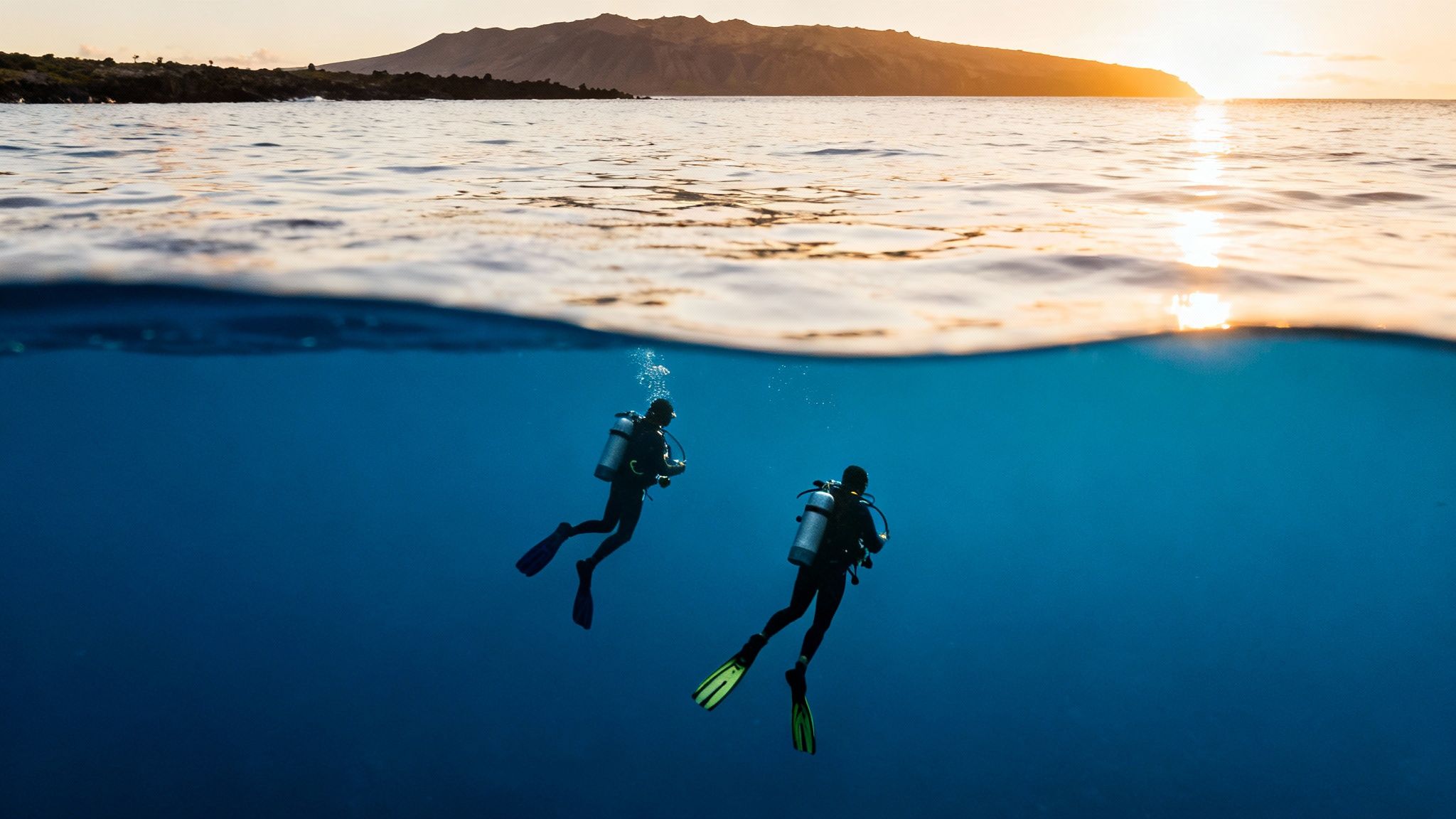
Back in the early 1980s, pioneers at Jack’s Diving Locker helped spark a love for Kona’s underwater world—and they haven’t slowed down. Today, that shop logs 25,000 dives a year and supports ongoing manta-ray research. Learn how it all began at Kona Honu Divers.
Key experiences include:
- Guided lagoon dives for newcomers
- Night dives with mantas under stun lights
- Specialty blackwater excursions that reveal rare life
- Advanced deep-wall and drift-dive adventures
In this guide, you’ll map out the best seasons, pick gear and certifications, sharpen safety know-how, and book an epic underwater journey with confidence.
Guide Roadmap For Your Dive Journey
We start by matching dive spots to your comfort level and timing. Then we’ll unpack the Big Island’s unique underwater landscapes with vivid examples—think lava tubes brimming with colorful reef fish. From there, you get straightforward gear checklists and clear certification paths.
By the end, you’ll see exactly how to plan, book, and enjoy every moment beneath these waves.
What To Expect On Your First Dive
Kona Honu Divers shines with genuine local expertise, small groups, and hands-on safety. Their boats offer shaded seating, hot showers, and ample storage for all your gear.
Instructors walk you through every detail—step by step—so you’ll surface feeling both confident and curious.
The first dive into crystal-clear waters starts here.
With over 200 years of combined ocean experience, the Kona Honu team guides every dive safely. You’ll also enjoy free nitrox and top-condition rental kits, giving you extra bottom time and peace of mind. Whether you're stepping off the boat for the first time or hunting a new personal best, Kona’s reefs consistently deliver jaw-dropping moments.
Secure Your Dive Spot
Plan ahead—winter and summer are peak seasons, and prime time slots fill fast.
This guide has given you the tools to dive smart, savor every sight, and return with stories worth sharing. Next up: in-depth site maps, seasonal checklists, gear tutorials, plus conservation tips you can use on every trip.
Your underwater adventure kicks off the moment you trust Kona Honu Divers to lead the way.
Let’s dive in. Get ready to uncover hidden gems beneath Kona’s shores.
See you underwater soon—happy diving!
Mahalo, divers.
Understanding Underwater Landscapes
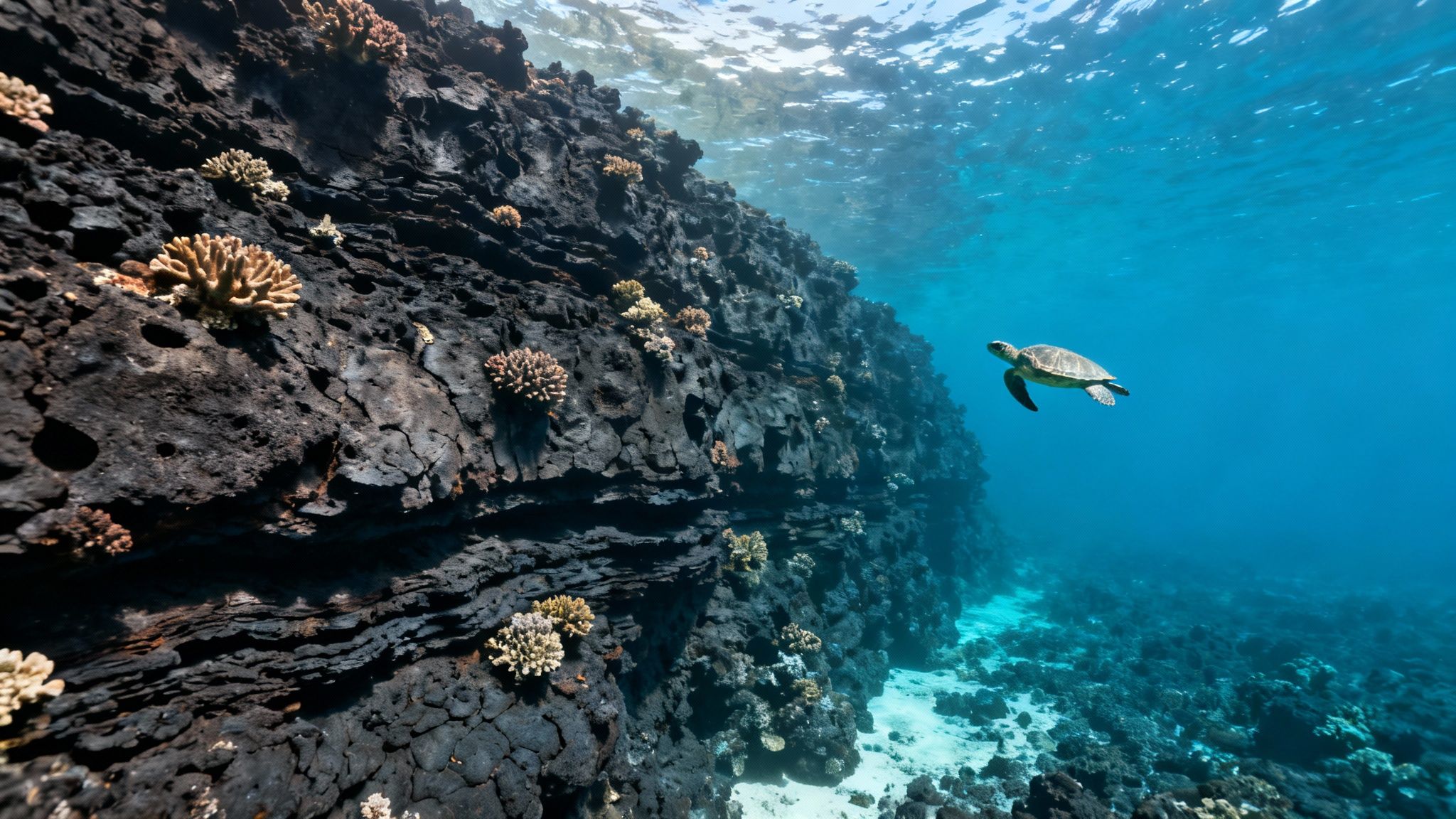
Beneath Kona’s surface, ancient lava flows from Mauna Loa and Hualalai have sculpted dramatic walls, ledges and slopes that teem with life.
These rocky formations host vibrant coral gardens, curious turtles and a parade of reef fish alongside tiny macro critters.
Spotting a neon-bright coral patch here can feel like wandering through an otherworldly jungle.
- Spectacular walls set the scene for thrilling drift dives in deep blue.
- Sheltered slopes provide calm habitats rich with diverse marine species.
- Lava tubes and arches hide tiny nudibranchs and other macro treasures.
- Deep drop-offs formed by massive slides create fertile seabeds below.
Geological Analogies
Picture those towering walls as underwater skyscrapers, each ledge serving as an apartment for schools of fish.
Gentle slopes function like highways, channeling currents and guiding your dive path through bustling coral “towns.”
- Walls as skyscrapers offer fish safe roosts.
- Slopes as highways direct your drift.
- Reefs as parks provide peaceful observation zones.
Volcanic Slide Impact
Massive volcanic events, like the Alika slide, reshaped Kona’s coast with 1500–2000 cubic kilometers of rock and debris.
Those giant shifts carved steep walls and funneled nutrients into benthic zones, giving rise to some of the island’s most vibrant reefs. Learn more about these massive slides here.
“The Alika slide transformed miles of reef, creating biodiversity hotspots and steep walls,” reports a marine geologist.
- Steep walls created new niches for coral and fish.
- Nutrient flows boosted coral growth rates.
- Sediment deposits formed fertile underwater valleys.
Fault Lines And Currents
Hidden fault lines and ridges guide currents that can either stir up sediment or clear the view.
The Kealakekua fault wall, for instance, rises over 100 feet, producing powerful surges that demand respect.
- Check surge forecasts before each dive.
- Drift parallel to walls to stay safe.
- Use reef hooks for stability when surge hits.
By mapping these features, Big Island scuba diving enthusiasts can choose sites that suit their skill level.
For a guided adventure through these underwater formations, consider booking with Kona Honu Divers (explore tours).
Real-World Examples
Kealakekua Bay offers a perfect case study, with coral gardens stretching between 30–60 feet.
Visibility often tops 100 feet, making it easy to spot turtles at cleaning stations and curious garden eels.
Divers say drifting here feels like floating inside a vibrant underwater cathedral.
- Coral heads can reach up to 6 feet tall in Kealakekua Bay.
- Turtle encounters jump by 80% thanks to regular cleaning gatherings.
Planning Your Dive Profile
With these geological insights in hand, you can fine-tune your dive plan for the conditions you’ll face.
East coast slopes promise gentle drift experiences, while west-facing walls cater to deep, dramatic drops.
- Calculate bottom time based on slope angles.
- Monitor visibility forecasts tied to seasonal currents.
- Tap local dive operators for the freshest site intel.
Understanding these landscapes guides you to richer, safer dives and reveals hidden gems beneath Kona’s waves.
Top Dive Sites And Unique Underwater Experiences
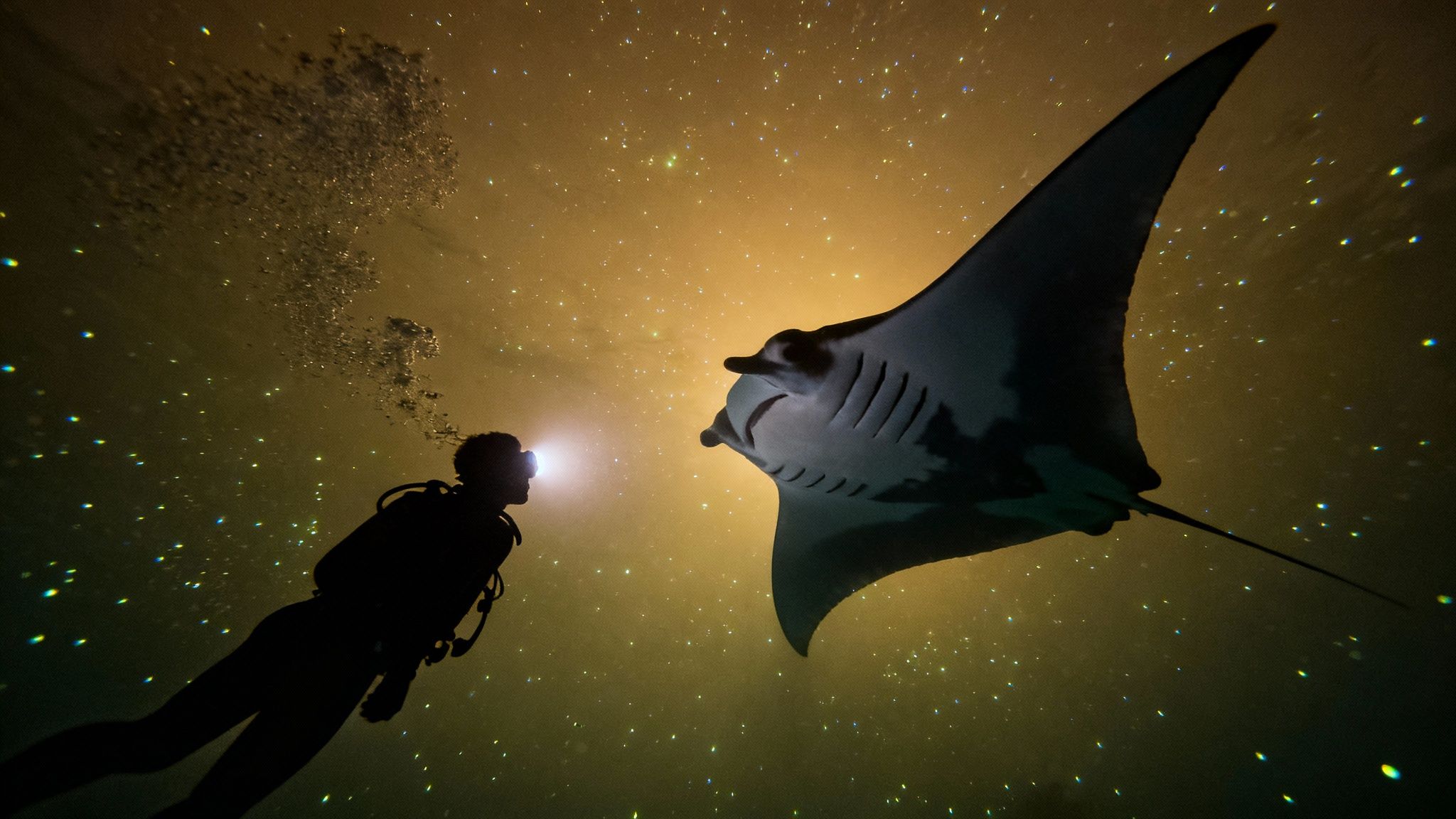
The Big Island’s underwater world feels alive with every descent. Colorful corals, curious fish, and dramatic volcanic walls transform each dive into its own story.
Garden Eel Cove stands out as the superior choice for manta ray dives, thanks to its naturally sheltered location, improved viewing areas, and thriving reef structures. Its gentle slopes and protected cove create a calm environment where mantas gather consistently and divers enjoy uninterrupted sightlines. The healthy corals and abundant marine life here outshine other sites, making every moment beneath the surface remarkable.
Garden Eel Cove also stars in the 2-Tank Manta Ray Dive with Kona Honu Divers, where manta sightings happen on nearly 90% of trips. Since the early 1990s, these night dives have earned Kona a reputation for respectful, up-close encounters. Learn more about this evolution on manta dive history on Wikipedia.
For one of the island’s most unforgettable evening adventures, don’t miss the Big Island Manta Ray Night Dive.
Historic Kealakekua Bay
Drifting into Kealakekua Bay feels like stepping back through time. This site combines 100-foot visibility with a story-rich setting—Captain Cook’s landing point.
- Turtle Cleaning Stations: Watch hawksbill and green turtles hover as wrasses pick algae from their shells.
- Coral Garden Ledges: Float alongside vibrant reef walls alive with butterflyfish and parrotfish.
Local guides weave in Hawaiian legends, giving every dive cultural depth. Photographers adore the way midday sun filters through the amphitheater of lava rock.
Plan an early-morning drop-in to dodge afternoon winds. When the air is still, the water stays crystal clear, and you’ll glide effortlessly on gentle drifts.
Eerie Blackwater Night Dives
If you’re chasing the unknown, the Blackwater Night Dive tour plunges you into an otherworldly plankton bloom. Under the hush of night, pointer lights reveal ghostly jellyfish and larval creatures pulsing in the dark.
“Blackwater diving reveals marine life unseen in day dives, offering a window into planktonic ecosystems.”
This drift dive demands precise buoyancy but pays off with scenes few divers ever witness. Key tips:
- Bring a pointer light: It’s your spotlight on transparent critters.
- Secure gear with a lanyard: Prevents anything from drifting off into the abyss.
Boat crews set safety nets and walk you through every detail before entry. Once you’re floating, the absence of currents and daylight creates a surreal sense of flight.
For a deeper challenge, book the Premium Advanced 2-Tank Trip. You’ll explore:
- Deep manta cleaning stations: Rays resting in hidden caves.
- Volcanic drop-offs: Walls plunging past 130 feet.
Advanced sites shine for wide-angle shots. Try a dome port for split views, crank up strobes to revive reef hues, or silhouette a manta against a glowing surface.
Comparison Of Popular Big Island Dive Sites
Below is a quick guide to help you choose the ideal spot for your certification and curiosity level.
| Dive Site | Depth Range | Highlight | Difficulty |
|---|---|---|---|
| Garden Eel Cove | 10–40 ft | Protected lagoon & manta ray dives | Beginner |
| Kealakekua Bay | 30–60 ft | Coral gardens & turtle stations | Intermediate |
| Blackwater Night | 50–150 ft | Bioluminescent plankton & larval life | Advanced |
| Deep Pinnacles | 80–130 ft | Volcanic walls & trevally schools | Advanced |
Use this snapshot to line up your skills with the Big Island’s best. Whether you’re just starting out or chasing deep-water thrills, there’s a perfect match below the surface.
Match Sites To Your Skill
Choosing the right dive spot makes all the difference. Beginners thrive in sheltered bays; intermediates learn drift diving along coral walls; advanced divers and night-owl explorers find their thrills in deep pinnacles and bioluminescent drifts.
Booking with Kona Honu Divers means you’re diving with seasoned guides, roomy boats, hot showers, shaded seating—and free nitrox fills. For their full menu of experiences, see Kona Honu Divers’ tours.
With varied terrain, night specialties, and world-class guides, Big Island scuba diving serves up an adventure at every level. Aloha—and see you beneath the waves!
Planning Your Dive Trip On The Big Island
Think of planning your Big Island scuba adventure like lining up the perfect sunrise surf session—you want everything timed just right. Here, ocean temperatures hover around 75–82°F, visibility often exceeds 100 feet, and currents are gentler during the island’s sweet spots.
Deciding how many days to spend underwater is your next move. Most divers find three to five days of diving strikes a great balance, leaving time for volcano hikes or snorkeling along the shore.
Key Planning Steps
- Block out your core dive days first, then weave in land-based excursions.
- Lock in flights early to snag the best fares and shortest connections.
- Reserve a rental car alongside your accommodation to guarantee availability.
Booking three to six months ahead is a reliable way to lock in your preferred dive and boat schedule.
Seasonal Dive Conditions On The Big Island
Before you hit “book,” here’s a quick seasonal snapshot to guide your timing:
| Season | Water Temperature | Visibility | Average Rainfall |
|---|---|---|---|
| Winter | 76–80°F | 80–120 ft | Moderate |
| Spring | 75–82°F | 100–140 ft | Low |
| Summer | 77–82°F | 90–130 ft | Low |
| Autumn | 75–79°F | 70–110 ft | Moderate |
Use this table to pick your ideal window—whether you crave crystal-clear water or fewer showers.
Getting To Kona And Where To Stay
Kona International Airport connects you directly to the U.S. mainland. From arrivals, you’ll find shuttle vans, taxis, and rideshares ready to whisk you into Kailua-Kona.
Renting a car is highly recommended if you plan to explore launch sites on Alii Drive or Mahaiula Bay on your own schedule.
Local Lodging Tips
- Opt for beachfront spots with gear storage and quick water access.
- Look for keyless check-in properties if you have early-morning dives.
- Self-catering units let you stock up on snacks and refill reusable water bottles.
Check out our guide on the best places for divers to stay on the Big Island for a detailed neighborhood breakdown. And don’t forget your comprehensive adventure travel insurance to cover any unexpected twists.
Building A Balanced Itinerary
After your morning two-tank dives or specialty night outings, mix in some of the island’s highlights:
- Hike Hawaii Volcanoes National Park at first light.
- Snorkel with honu (turtles) at Kealakekua Bay in the afternoon.
- Tour a local coffee farm and taste fresh-roasted beans.
Other Afternoon Options
- Sunset sailing with reef snorkeling stops
- Guided lava-tube beach walks
- Cultural performances at Kamakahonu or Hulihe‘e Palace
For instance, you might plan a manta-ray night dive then catch dawn at Puʻuhonua O Hōnaunau—blending awe and relaxation in one day.
Final Planning Tips
- Confirm your gear reservation with Kona Honu Divers at least seven days before you arrive.
- Check daily weather and ocean forecasts to tweak your schedule on the fly.
Packing a compact first-aid kit and extra O-rings can rescue your day if minor hiccups pop up.
With thoughtful planning and expert support from Kona Honu Divers, every dive will flow smoothly. Double-check your bookings, pack reef-safe sunscreen, and get ready to explore walls, reefs, and caverns with confidence.
Mahalo and safe diving!
Gear Recommendations And Certification Options
A snug wetsuit or rash guard is your best ally in 75–82°F water, offering sun protection and freedom of movement. It’s the difference between shivering through a dive and staying comfortable from drop-in to surface.
Switching street shoes for paddle fins with vented blades feels like trading a canoe paddle for a speedboat throttle. You slice through currents instead of slogging against them.
Bringing your own mask and regulator might sound picky, but it pays off when you skip the mid-dive adjustments. A custom seal means you focus on fish, not fog or leaks.
Essential Gear List
- 3mm Wetsuit or Rash Guard: Lightweight warmth and sun defense.
- Vented Open-Heel Fins: The sweet spot of power, speed, and efficiency.
- Custom-Fit Mask: Soft skirt, airtight seal, zero distractions.
- Regulator and BCD: Professionally serviced for effortless breathing and buoyancy.
You can pack light and rent on-site, or travel with your own kit. Renting full equipment from Kona Honu Divers means fresh gear and no airline headaches.
Mask And Regulator Fit
| Component | Renting Benefits | Traveling Benefits |
|---|---|---|
| Mask and Snorkel | Sanitary, properly sized | Personalized fit, tight seal |
| Regulator | Expert-serviced second stage | Familiar breathing feel |
| BCD and Fins | Hassle-free cleaning & storage | Custom buoyancy and comfort |
Adjust your mask strap just enough to stop leaks without digging in. After each dive, rinse your regulator mouthpiece to keep salt and sand out of the way.
Equipment Maintenance And Hygiene
Rinse all your gear in fresh water right after each dive to fight corrosion. Thorough drying keeps mold and odors from settling in.
- Flush regulators with fresh water while breathing slowly
- Wipe down buckles and clips to banish salt crystals
- Inspect hoses and O-rings for wear before every dive
Regular maintenance is the key to reliable gear and stress-free dives.
Choosing The Right Fins
Your fins should fit your dive style like a glove. Stiffer blades push you through currents on drift dives, while softer blades save your legs on leisurely reef swims.
- Soft blades for macro and muck diving
- Stiffer blades for strong-current drift dives
- Adjustable straps to prevent slippage
Test them in a pool or shallow shore dive—you’ll spot fit issues long before you hit the deep blue.
BCD Selection Tips
Think of your BCD as a custom vest. It needs enough lift for your weight and tanks, plus smart features for easy access.
- Inflator positioned naturally on your chest
- Pockets and D-rings to secure accessories
- Rugged, salt- and sun-resistant material
Stop by Kona Honu Divers to try on different models until you find your perfect match.
Weight Belt And Lighting Tips
Fine-tune your weight belt so you hover neutrally at 15 feet—it’s like finding the sweet spot on a surfboard. Proper weighting smooths out drift dives.
A pointer light is a night-dive must. It teases out plankton and nocturnal species that hide in the dark.
“Proper weight distribution and low-impact lighting are critical for safety and reef preservation,” advises a Kona Honu guide.
Certification Pathways
- Open Water Diver – Master the core skills and safety protocols.
- Advanced Open Water – Expand navigation and deeper dive techniques.
- Deep Diver Specialty – Explore walls beyond 100 feet with confidence.
- Night Diver – Conquer low-light environments and special entries.
- Manta Ray and Blackwater Specialties – Experience Hawaii’s nocturnal wonders.
Progress at your own pace with PADI or SSI instructors on-site. Specialty classes dive deep into manta behavior and plankton ecology.
Read also: Learn more about essential equipment in our guide on The Gear You Will Need For Your Kona Diving Adventure.
Safety Tips And Conservation Practices
At Kona Honu Divers, every underwater adventure starts with a detailed briefing. We cover site-specific hazards, entry and exit techniques, and emergency signals before you even suit up.
Remember, the buddy system isn’t just a formality—it’s your underwater safety net. Keep an eye on your air supply, sharing pressure readings with your partner at regular intervals.
Think of your dive plan like a road map: straying off-course can drop you into unforeseen currents or tricky terrain.
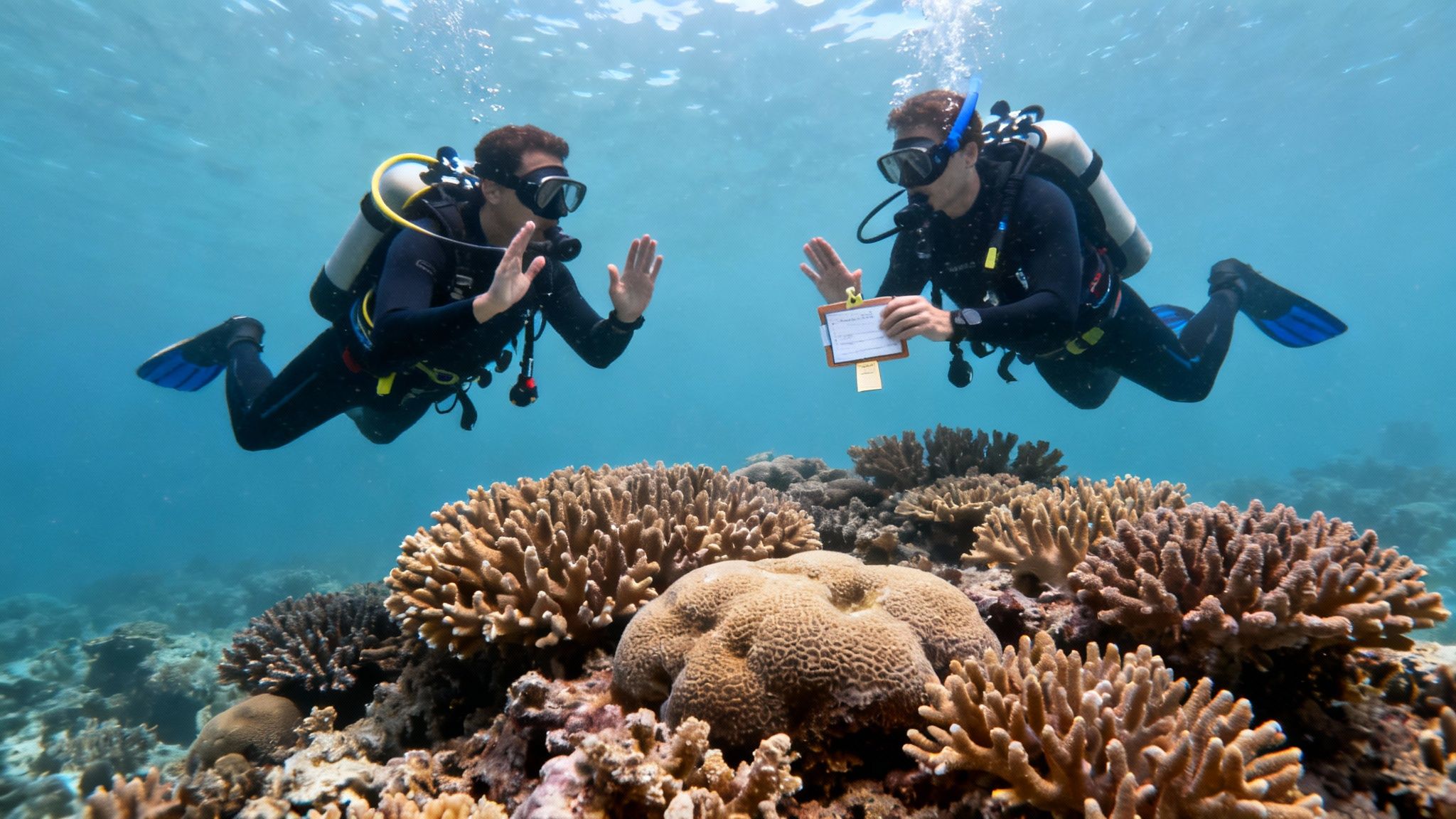
Proper buoyancy control lets you hover gently above the reef, avoiding accidental contact in surge zones or strong drift.
Key Safety Practices
- Check your gear and seals before every entry to prevent mid-dive surprises.
- Maintain neutral buoyancy so you glide effortlessly over fragile corals.
- Use a reef hook when currents surge to keep yourself steady.
- Signal for assistance at the first hint of discomfort.
Respectful Wildlife Observation
When manta rays, turtles, or other ocean dwellers appear, give them space. Quick movements or bright flashes can stress these creatures.
On night and blackwater dives, opt for low-impact lighting and point beams downwards. This keeps nocturnal species comfortable and your dive authentic.
Before surfacing, use underwater landmarks—reefs, rocks, even distinctive sand ripples—to guide your exit. Deploy a surface marker buoy early to alert boat traffic.
"A gentle approach under lights keeps ecosystems undisturbed."
Conservation Efforts
You can make a real difference by sharing your sightings with projects like the Manta Pacific Research Foundation. Your data helps scientists track migrations and reef health.
Small actions add up. Encourage reef-safe sunscreen, refuse single-use plastics, and report any unusual marine behavior.
Stay informed about tides and weather—avoiding rough conditions protects both divers and delicate habitats.
Learn more in our detailed Guide on Responsible and Considerate Diver Etiquette.
Next Steps And Common Questions
Ready to turn your Big Island dive dreams into reality? Booking with Kona Honu Divers is the best way to lock in expert guidance and seamless logistics.
By choosing Kona Honu Divers, you’ll dive from spacious boats, breathe free nitrox, and enjoy priority slots on every tour.
Use these quick questions to finalize your schedule and gear choices:
- What makes the Big Island unique for scuba diving? The volcanic walls, nutrient-rich currents, and vibrant marine populations form ecosystems you won’t find anywhere else.
- When is the best time to dive? Aim for spring through autumn, when visibility tops 100 feet and water temperatures sit between 75–82°F.
- Which certifications do I need? An Open Water certification handles most day dives. Add Night Diver for manta encounters and Deep Diver for walls beyond 100 feet.
- How do I book a manta ray night dive or blackwater drift? Secure your spot via the Manta Ray Night Dive or the Blackwater Dive.
Finalize your dive adventure by booking early—you’ll guarantee a spot on those bucket-list specialty trips.
How To Reserve Specialty Dives
Reserving specialty dives is straightforward. Think of it like picking the best wave: early mornings and moonless nights give you glass-smooth conditions.
Follow the link below to check each tour’s live calendar:
Tips For Smooth Booking
- Book at least 30 days in advance during peak season
- Enter certification details exactly as they appear on your card
- Reserve rental gear up front to lock in the right sizes
- Confirm weather windows about one week before departure
Final Booking Advice
Weather can be as changeable as island trade winds, so check forecasts daily in the week leading up to your trip.
Keep digital copies of your certifications and carry a printed dive log to speed up on-boat check-in.
- Arrive at the shop 30 minutes before departure
- Label every piece of gear to avoid mix-ups
For group outings or special requests, reach out to the Kona Honu Divers support team directly.
By following these steps, you’ll shift from planning mode into underwater adventure with confidence.
Kona Honu Divers https://konahonudivers.com