
Diving on the Big Island isn't just another item to check off your Hawaii itinerary. It's a full-on immersion into a world sculpted by volcanoes and brimming with life you won't find anywhere else. The Kona coast, in particular, is legendary for its crystal-clear, calm waters, offering some of the most spectacular and accessible scuba diving experiences on the planet.
From otherworldly encounters with gentle giant manta rays to exploring underwater lava tubes that feel like ancient cathedrals, the sheer variety here is mind-blowing. Our range of diving tours has something for everyone.
Why The Big Island Is A Diver’s Paradise
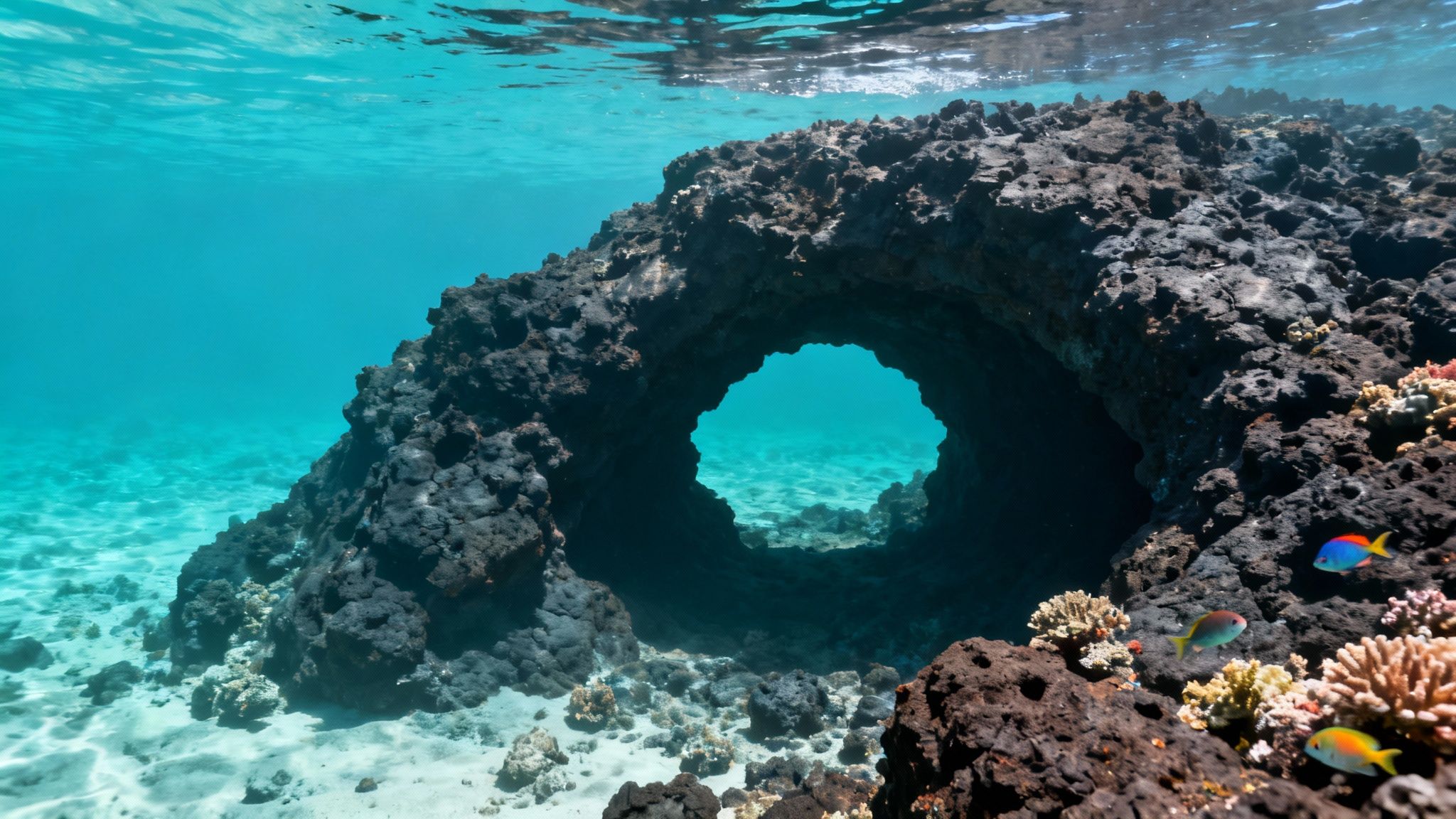
What really makes Big Island diving so special is the dramatic underwater landscape, a direct result of its fiery volcanic past. Picture yourself descending into a realm of submerged lava tubes, massive archways, and intricate caverns that are now home to a kaleidoscope of marine life. These unique formations create a natural playground for divers and the creatures who live here.
The island’s western Kona coast is a diver's dream, perfectly shielded from the persistent trade winds by the colossal volcanoes of Mauna Loa and Hualalai. This natural barrier creates exceptionally calm and clear conditions almost all year long, making it the undeniable hub for diving on the island.
A One-Of-A-Kind Underwater Ecosystem
The waters around the Big Island are a bustling metropolis of marine biodiversity. You can expect to meet a vibrant cast of characters on nearly every single dive.
- Hawaiian Green Sea Turtles (Honu): It’s common to see these serene reptiles resting on the reef or gliding effortlessly through the blue.
- Spinner Dolphins: You'll often see them from the dive boat, and if you're lucky, these playful mammals might even cruise by for a curious look while you're underwater.
- Whale Sharks: While seeing one is rare, these gentle giants are occasionally spotted, providing a truly unforgettable, once-in-a-lifetime encounter.
- Endemic Fish Species: A huge percentage of the fish in Hawaii are found nowhere else on Earth. This makes every dive a unique discovery, and you can learn more about the hunt for these special creatures in our guide to endemic marine animals on the Big Island.
A World-Renowned Diving Destination
The Big Island has rightfully earned its spot on the global stage as a premier scuba destination. The local dive industry has grown tremendously from its humble beginnings, now supporting over 50 dive shops and welcoming more than 150,000 divers every year. The Kona coast is the heart of this thriving scene, famous for visibility that often pushes past 100 feet and its truly unique volcanic seascapes.
To give you a quick snapshot of what to expect, here’s a look at the key details.
Big Island Scuba Diving at a Glance
| Feature | Details |
|---|---|
| Water Visibility | Often exceeds 100 feet, especially along the Kona coast. |
| Water Temperature | Averages a balmy 76-82°F (24-28°C) year-round. |
| Marine Life | Manta rays, sea turtles, dolphins, endemic fish, and seasonal whales. |
| Underwater Terrain | Lava tubes, arches, caverns, and healthy coral reefs. |
| Dive Conditions | Calm, protected waters on the western side (Kona). |
Ultimately, this incredible combination of pristine conditions, unique geology, and reliable encounters with big marine life is what makes the island a true bucket-list destination for divers of all experience levels.
Experiencing The Kona Manta Ray Night Dive

Picture this: you’re kneeling on the ocean floor in the dark, the only real light coming from a central beacon set up by your guides. Then, out of the deep blue, a massive shadow glides into view. It's a gentle giant with a wingspan stretching over 12 feet, soaring just inches over your head. This isn't CGI; it's the world-famous Kona Manta Ray Night Dive, and it feels like you're witnessing an underwater ballet.
This is, without a doubt, one of the most sought-after experiences in all of Big Island scuba diving. The whole setup is a brilliant, beautiful example of symbiosis. Dive operators place powerful lights on the seafloor, which act like a bug zapper in reverse—they attract huge clouds of plankton, the mantas' favorite meal. As the plankton gather, the mantas arrive for their nightly buffet, performing these incredible, graceful somersaults and barrel rolls as they feed.
This isn't just another dive; it's one of the most iconic and reliable big-animal encounters on the planet. For over three decades, pioneers in the local dive community have been able to identify individual rays by their unique belly spots. Thanks to this long-term observation, we know that manta rays are seen on about 85-90% of night dives. It's an almost unheard-of success rate for wildlife viewing, offering an amazing chance to get up close with these magnificent creatures.
Why Garden Eel Cove Is The Superior Manta Dive Site
While a couple of spots host this dive, they aren't all created equal. Garden Eel Cove, often called Manta Heaven, is hands-down the premier location for this adventure, and its geography gives it some serious advantages.
The cove is naturally protected, which usually means calmer water. That makes for a much more comfortable boat ride and a more stable, enjoyable experience once you're on the bottom. Even better, the seafloor at Garden Eel Cove is shaped like a natural amphitheater, letting divers settle into a sandy spot with a perfect, unobstructed view looking up at the action.
On top of that, the surrounding coral reefs are just healthier and more vibrant, which really adds to the beauty of the dive. This mix of comfort, prime viewing, and a thriving ecosystem makes it the undisputed best stage for the nightly manta show. If you want to get into the nitty-gritty, you can learn more about what the manta ray night dive entails.
Choosing Your Manta Ray Adventure
To be a part of this incredible spectacle, you need to go with a professional and ethical tour operator. A top-notch company won't just keep you safe; they'll also put the well-being of the manta rays first, following strict guidelines to make sure the encounter is sustainable and doesn't disturb the animals. You can explore our dedicated manta ray dive tours to book your spot.
When you're looking to book a tour, find an operator with a fantastic safety record and experienced guides who can actually teach you about manta behavior. A great tour starts with a briefing on the boat ride out as the sun sets, where they'll explain the rules—like no touching the mantas, which protects their delicate, slimy coat.
Once you descend, you and your group find your spot on the sand and just watch the show unfold above. The feeling of a massive manta ray gliding silently over you—so close you feel like you could reach out and touch it (but you won't!)—is a moment that will stick with you for the rest of your life.
Discovering Top Dive Sites For Every Skill Level
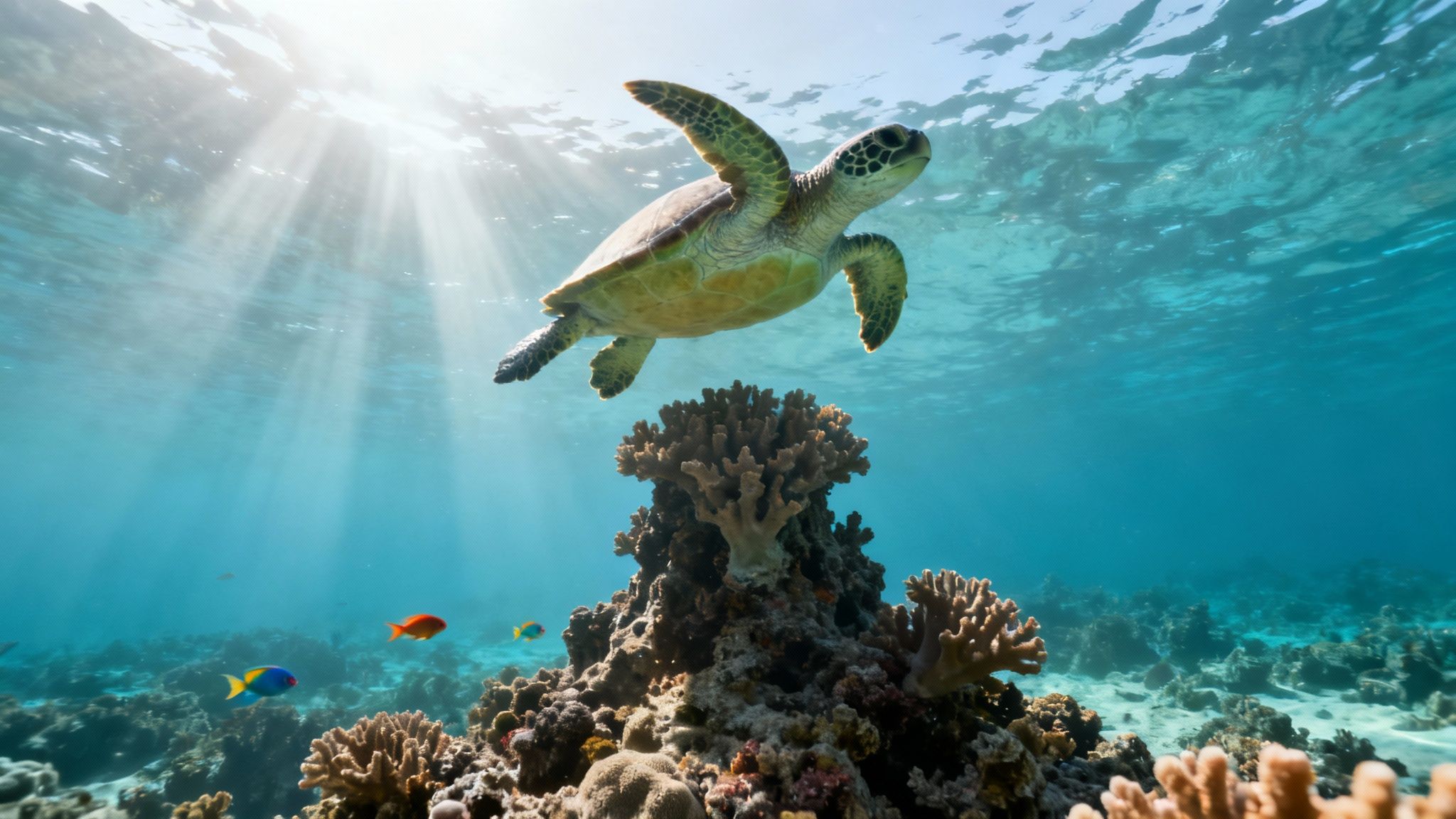
Sure, the manta ray night dive gets a ton of hype, but that's just scratching the surface of what Big Island scuba diving has to offer. The Kona coast is absolutely loaded with incredible dive sites, each with its own personality. Thanks to the island's volcanic past, the underwater world is a playground of lava tubes, dramatic drop-offs, and sprawling coral gardens.
It doesn’t matter if you're about to take your first breath underwater or if you've got hundreds of dives in your logbook—Kona has something for you. The real trick is knowing which sites match your experience level to make your trip truly unforgettable.
Perfect Spots For New Divers
Just getting certified? The Kona coast is a fantastic place to build your confidence. Many of the best beginner spots are tucked away in protected coves, offering calm, shallow waters that are brimming with life.
- Turtle Pinnacle: The name says it all. This site is a well-known "cleaning station" for Hawaiian green sea turtles, or Honu. You can settle onto the sandy bottom at around 40 feet and just watch as these majestic creatures get a full-service grooming from the local reef fish. The conditions are almost always glassy smooth, making it an amazing first or second ocean dive.
- Pawaii Bay: This spot is a dream for new divers. It’s a shallow bay with an easy entry and visibility that seems to go on forever. You'll see an incredible variety of reef fish, moray eels, and if you look closely, octopuses camouflaged among the rocks. Because it's so sheltered, the water stays calm, letting you focus on your buoyancy instead of fighting currents.
These sites are a perfect, gentle introduction to Hawaii's underwater magic. The nearly guaranteed wildlife encounters will have you hooked on diving for life.
Adventures For Intermediate Divers
Once you're comfortable in the water and have a few dives under your belt, a whole new world of exploration opens up. These sites are where you'll find more interesting terrain and dynamic marine life.
This is where you really start to see the island's volcanic soul. You'll be swimming through unbelievable lava formations that look like they belong on another planet, showcasing the raw power that shaped Hawaii.
One of the most iconic intermediate dives is Golden Arches. This site is famous for its massive lava archways that are a blast to swim through—and make for some epic photos. Keep an eye out for schools of colorful fish, white-tip reef sharks snoozing under ledges, and maybe even a graceful eagle ray gliding by.
Another local favorite is Suck ‘em Up, a lava tube that lives up to its name. A gentle surge of water pulls you into a cavern and then pushes you back out. It's like a natural, mellow underwater rollercoaster.
The Ultimate Challenge For Advanced Divers
For the seasoned diver looking for something truly unique, the Big Island delivers some of the most specialized and awe-inspiring dives on the planet. These dives demand excellent buoyancy control, a cool head, and comfort in deep or open water.
The legendary Kona Blackwater Dive is the absolute pinnacle of advanced diving here. This isn't your typical reef dive. It's a pelagic night dive, miles offshore, where you're tethered to a boat drifting over thousands of feet of pitch-black ocean. As you float, you’ll watch bizarre, bioluminescent creatures migrate from the abyss toward the surface. It feels less like a dive and more like a spacewalk. You can book this once-in-a-lifetime trip on a specialized Blackwater Dive tour.
If you’re more into deep reefs and dramatic underwater architecture, there are plenty of spots to explore. You can book one of the premium advanced dive tours that specifically seek out these more demanding sites with deeper profiles and unique topography.
How To Choose The Right Dive Operator

Let's talk about the single most important decision you'll make for your Big Island scuba diving trip: choosing the right dive operator. This choice will absolutely make or break your entire experience.
A great shop is so much more than just a boat ride. They are your guides, your safety net, and your connection to the incredible marine life here. The best operators can turn an average dive into a truly unforgettable adventure, while a mediocre one can leave you feeling underwhelmed and overlooked.
Key Factors To Consider
When you start looking at shops, it's easy to get focused on price, but that's often the least important factor. Here’s what I always look for—the things that separate the truly professional operations from the rest of the pack.
- Safety Record & Crew Experience: Don't be shy about asking. How long have they been in business? What are their safety procedures? You want to be on a boat with seasoned captains and guides who know these waters like the back of their hand.
- Boat Comfort & Amenities: A little comfort goes a long way. After a dive, things like a hot freshwater shower, plenty of shade, and enough space to move around without tripping over gear make a world of difference.
- A Commitment to Conservation: The best operators are stewards of the ocean. They should be passionate about protecting the reefs and have strict rules about interacting with marine life. They're not just tour guides; they're guardians.
- Guide-to-Diver Ratio: This is huge. Look for a low ratio, like one guide for every four to six divers. This means you get personal attention, and your guide can actually point out the cool, hidden critters you’d otherwise swim right past.
Finding The Best Operator In Kona
On the Big Island, Kona Honu Divers has built a reputation for setting the gold standard. They really focus on creating a premium experience, from their incredibly knowledgeable crew to their top-notch boats designed specifically for diver comfort. Above all, their commitment to small groups means you always feel safe and well-cared-for.
Of course, it’s always smart to check out a few different places to find the perfect fit. The Kona coast has several other fantastic, long-standing operators.
Jack's Diving Locker is a true Kona institution. As one of the oldest shops, they're known for their excellent training programs and big, comfortable dive boats.
Big Island Divers is another great choice, well-loved for their friendly, high-energy crews and a massive variety of tour options.
Your dive operator is your gateway to the underwater world. Their professionalism, knowledge, and passion for the ocean will directly shape your adventure, so choosing wisely is the first and most important step of your trip.
When you’re ready, you can explore all the different Big Island diving tours to find the perfect trip for your skill level.
Essential Tips For Planning Your Dive Trip
A little bit of insider knowledge can make all the difference between a good dive trip and an unforgettable one. When you're heading to the Big Island, thinking through the seasons and the local geography will set you up for a smooth, incredible adventure under the waves.
So, when's the best time to visit? Honestly, there's no bad time to dive in Kona. The leeward side of the island is wonderfully protected, giving us great conditions pretty much year-round. Still, the seasons do bring their own unique flavor.
- Summer (June-September): This is when the water feels like a warm bath, often hitting 82°F (28°C). The ocean is typically flat and glassy, which means smooth boat rides and visibility that can feel endless.
- Winter (December-March): The water cools down a bit, usually hovering around 76°F (24°C). But the trade-off is spectacular: it's humpback whale season. You haven't lived until you're on a dive boat watching these gentle giants breach, and then you slip underwater and hear their songs echoing through the reef. It’s pure magic.
Packing Smart and Staying Safe
Let’s talk gear. My advice? Pack light. Unless you're absolutely married to your own BCD and regulator setup, save yourself the airline fees and hassle. The local dive operators, like our friends at Kona Honu Divers, have excellent, well-maintained rental equipment ready to go.
Here's what I tell my friends: definitely bring your own mask for a perfect, leak-free fit and your personal dive computer. If you get chilled easily, packing your own wetsuit or rash guard is a good move. But leave the heavy stuff at home and rent it here.
Once you’re in the water, safety is all about respect. Respect for the ocean and respect for the local expertise of your dive guides. Always pay close attention during the dive briefing—they know these sites like the back of their hand and will have crucial insights for that day's conditions.
The golden rule here is simple: look, don't touch. We practice passive interaction with all marine life. It’s the best way to protect these incredible creatures and the fragile coral reefs they call home.
Kona vs. Hilo: The Clear Winner For Diving
For anyone new to the Big Island, understanding its layout is key. You've basically got two very different sides: the lush, rainy Hilo side to the east, and the sunny, dry Kona side to the west.
While Hilo is stunningly beautiful above the water, it's a non-starter for diving. It gets hammered by the trade winds, which whip up rough seas and churn the water, killing visibility.
The Kona coast is a world apart. Shielded from those winds by the sheer mass of Mauna Kea and Mauna Loa, our waters are calm, clear, and protected. This is precisely why Kona is the undisputed heart of Hawaii's diving scene and where you'll find virtually every dive boat on the island. The difference is truly night and day.
This simple breakdown shows exactly why all your dive planning should be focused exclusively on the Kona coast.
Kona vs Hilo Scuba Diving Comparison
| Aspect | Kona (West Side) | Hilo (East Side) |
|---|---|---|
| Ocean Conditions | Consistently calm, protected from trade winds | Often rough, windy, with strong currents |
| Water Visibility | Excellent, frequently exceeding 100 feet | Poor, often murky from runoff and surf |
| Dive Infrastructure | Dozens of professional dive shops and boats | Very few to no dedicated dive operators |
| Accessibility | Numerous easily accessible dive sites | Difficult to access, shore entries are hazardous |
| Marine Life | Concentrated and diverse due to healthy reefs | Less predictable due to harsh conditions |
As you can see, it's not much of a contest. For the safety, enjoyment, and incredible sights you came for, Kona is the only real choice for your Big Island scuba diving adventure.
Got Questions About Big Island Diving? We’ve Got Answers.
Planning a dive trip to the Big Island for the first time usually brings up a handful of questions. To make sure you feel totally prepared for your underwater adventure, we've put together some simple, straightforward answers to the things we get asked most often.
Think of this as your quick-start guide to clear up any final details, so you can land on the island feeling confident and ready to hit the water.
Do I Need to Be Certified to Try Scuba Diving?
Nope! You don't need a certification card to get your first taste of breathing underwater here. Plenty of top-notch dive operators, including our team at Kona Honu Divers, run what's called a "Discover Scuba Diving" experience. It’s built from the ground up for total beginners.
You'll start with an experienced instructor who walks you through the absolute essentials in a calm, controlled setting. Once you're comfortable, they’ll guide you on an actual dive on a shallow, vibrant reef. It’s the perfect, low-pressure way to see if scuba is your thing.
What’s the Water Temperature Like?
One of the best parts about diving here is the water—it's wonderfully warm all year round, so there's really no bad time to visit.
- Summer (June – September): This is when the water is at its warmest, hovering around a balmy 82°F (28°C).
- Winter (December – March): Things cool down just a tad but stay very comfortable, usually averaging 76°F (24°C).
For nearly everyone, a standard 3mm wetsuit is all you'll need to stay perfectly comfortable on your dives, no matter the season.
Can I Dive If I’m Traveling Solo?
Absolutely. The Big Island is a fantastic, friendly destination for solo travelers, and that welcoming spirit definitely extends to the dive community. Dive shops are pros at getting individual divers out on the boat.
Just give the shop a heads-up that you're diving alone when you book. They’ll pair you up with a dive buddy who has a similar experience level. Honestly, it's a great way to meet fellow ocean lovers.
Should I Be Worried About Dangerous Animals?
It's a fair question! While Hawaii’s reefs are buzzing with all sorts of life, including sharks and eels, any kind of negative encounter is incredibly rare. The marine life here is very used to seeing divers and tends to just go about its business.
The golden rule is simple: look, don't touch. By following your guide's lead, keeping a respectful distance from wildlife, and just being a passive observer, you can safely soak in all the amazing biodiversity. Your guide knows the local marine life's behavior inside and out and will always prioritize your group's safety.
Ready to see it all for yourself? Take a look at the incredible diving tours we offer to find the perfect underwater journey for you.