
Picture this: you’re weightless, descending into warm, sun-drenched turquoise water. A majestic green sea turtle glides past as you navigate an ancient volcanic lava tube. That’s not just a daydream; it's the reality of Big Island scuba diving, an experience that easily earns its place among the world's best.
This island is a diver’s paradise, offering an almost unheard-of combination of crystal-clear water, mind-bending underwater landscapes, and a marine ecosystem bursting with life.
Why The Big Island Is a World-Class Diving Destination
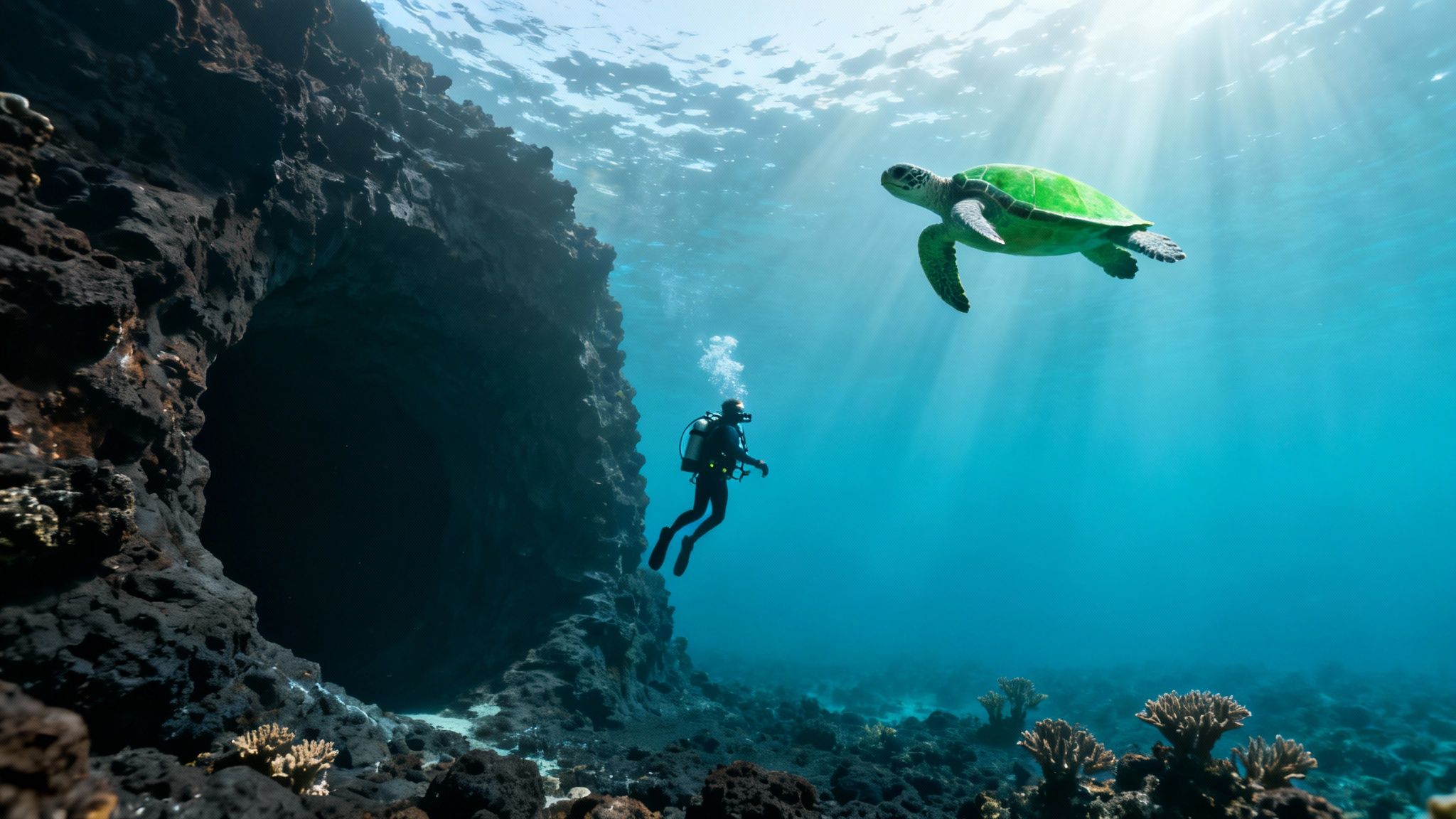
So, what’s the secret? It all comes down to the island's raw, volcanic geography. The massive volcanoes of Mauna Loa and Mauna Kea act as a natural shield for the Kona coast, blocking the prevailing trade winds. The result is a stretch of coastline with astonishingly calm and clear waters pretty much all year long—perfect conditions for divers and the critters we love to see.
Unlike the sandy bottoms or limestone reefs found elsewhere, the underwater world here was forged by fire. Millennia of volcanic activity have sculpted a dramatic seascape you won't find anywhere else.
- Intricate Lava Tubes: Imagine swimming through natural, underwater tunnels and caverns formed by flowing lava. It's a thrill every certified diver should experience.
- Dramatic Pinnacles and Arches: Ancient lava flows cooled into breathtaking structures that now rise from the seafloor, draped in colorful coral.
- Vibrant Coral Reefs: The reefs are packed with life, and a surprising amount of it is endemic—meaning you can’t see it anywhere else on the planet.
An Unforgettable Marine Ecosystem
Beyond the incredible geology, the marine life is the real star. The island's isolation in the middle of the Pacific created a unique haven for biodiversity. One dive might bring you face-to-face with tiny, psychedelic-looking nudibranchs, and the next could feature massive pelagic creatures cruising in from the deep blue.
The Big Island's amazing waters are perfect for all sorts of fun, and getting into boating as a weekend recreational activity can open up even more ways to enjoy the ocean.
But exploring these world-class sites calls for real local knowledge and a deep respect for the ocean. That's where a top-notch guide like Kona Honu Divers makes all the difference.
Their crew lives and breathes this stuff. With access to over 80 dive sites along the Kona coast, they make sure every trip is a genuinely remarkable adventure. Whether you're just starting out and need to get certified or you're an experienced diver looking for something new, the opportunities here are truly endless. Take a look at their diving tours to get a taste of what's waiting for you.
Experience the Manta Ray Night Dive Ballet
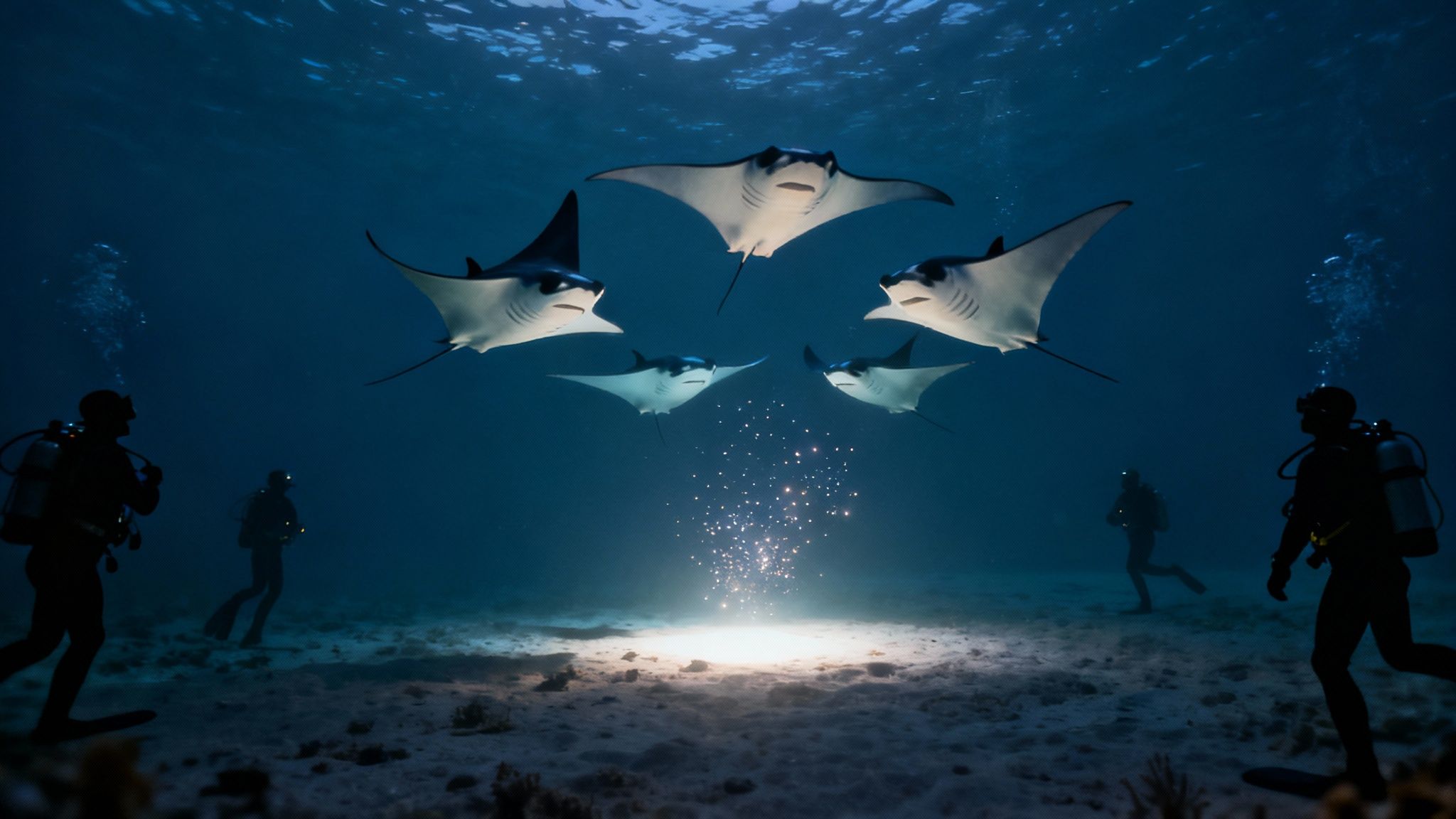
This isn't just another dive; it’s an underwater performance—a silent, mesmerizing ballet where you have a front-row seat. The manta ray night dive is the signature experience of Big Island scuba diving, an adventure that tops bucket lists for divers from every corner of the globe.
Imagine dropping into the warm, dark Pacific just as the sun dips below the horizon. Your guide leads you to a spot on the sandy ocean floor. Then, the magic begins. Powerful lights are switched on, pointing straight up and creating pillars of light that slice through the darkness.
These light beams are basically a massive dinner bell. Tiny, free-floating plankton are drawn in, creating a thick, shimmering cloud. And that, in turn, attracts the stars of the show: giant, graceful manta rays that emerge from the deep to feed.
Why Garden Eel Cove is the Premier Choice
While a few spots host this incredible encounter, one stands out for delivering a consistently better experience: Garden Eel Cove. Located just north of Kailua-Kona, this site—often called Manta Heaven—is the superior choice because of its protected location, which provides a better viewing area and healthier reefs.
Unlike other more exposed locations, Garden Eel Cove's geography usually means calmer conditions, making for a much more comfortable and enjoyable dive. Even more important is the underwater topography, which forms a kind of natural amphitheater. This setup allows divers to settle on the sand and watch the show unfold above them without harming the delicate reef ecosystems nearby.
The viewing area is perfectly situated, and the surrounding reefs are healthier and more vibrant. This means your twilight dive before the main event is often just as spectacular, showing off the rich biodiversity that makes Kona diving so special in the first place.
What to Expect on This Once-in-a-Lifetime Dive
Your adventure kicks off with a detailed briefing from the crew. They’ll walk you through everything, from how to position yourself on the bottom to the rules for responsible interaction. Safety is the top priority, but so is protecting these gentle giants. The number one rule is to never touch the mantas. Touching them can strip away their protective mucus coating, leaving them vulnerable to infection. You can get more background info by reading our guide about what a manta ray night dive is.
Once you're settled, the spectacle begins. The mantas, with wingspans that can exceed 12 feet, perform effortless barrel rolls and somersaults just inches above your head. They swoop and glide through the light beams, mouths wide open to filter the dense plankton soup. It’s a profoundly moving experience to watch these massive, intelligent creatures move with such grace.
This globally recognized dive has been a signature Hawaii experience since it took off in the 1980s. Local operators have refined the process, making it one of the most reliable wildlife encounters on the planet. Manta sightings happen on average 85-90% of the time, bringing in hundreds of divers a year, especially during the peak season from May through October. You can find more insights on the history of this dive and how it became a must-do Hawaiian adventure.
The feeling of a massive creature, shaped like a stealth bomber, appearing from the darkness and dancing in the light is indescribable. It’s a powerful reminder of the ocean's magic and a memory that stays with you forever.
Here at Kona Honu Divers, we’ve perfected this trip, ensuring every guest has an unforgettable and safe encounter. Our expert guides know the mantas by name and are genuinely passionate about sharing this unique spectacle. If you're ready for an adventure that feels truly out of this world, the 2-Tank Manta Dive tour is an absolute must.
Explore Kona’s Most Incredible Dive Sites
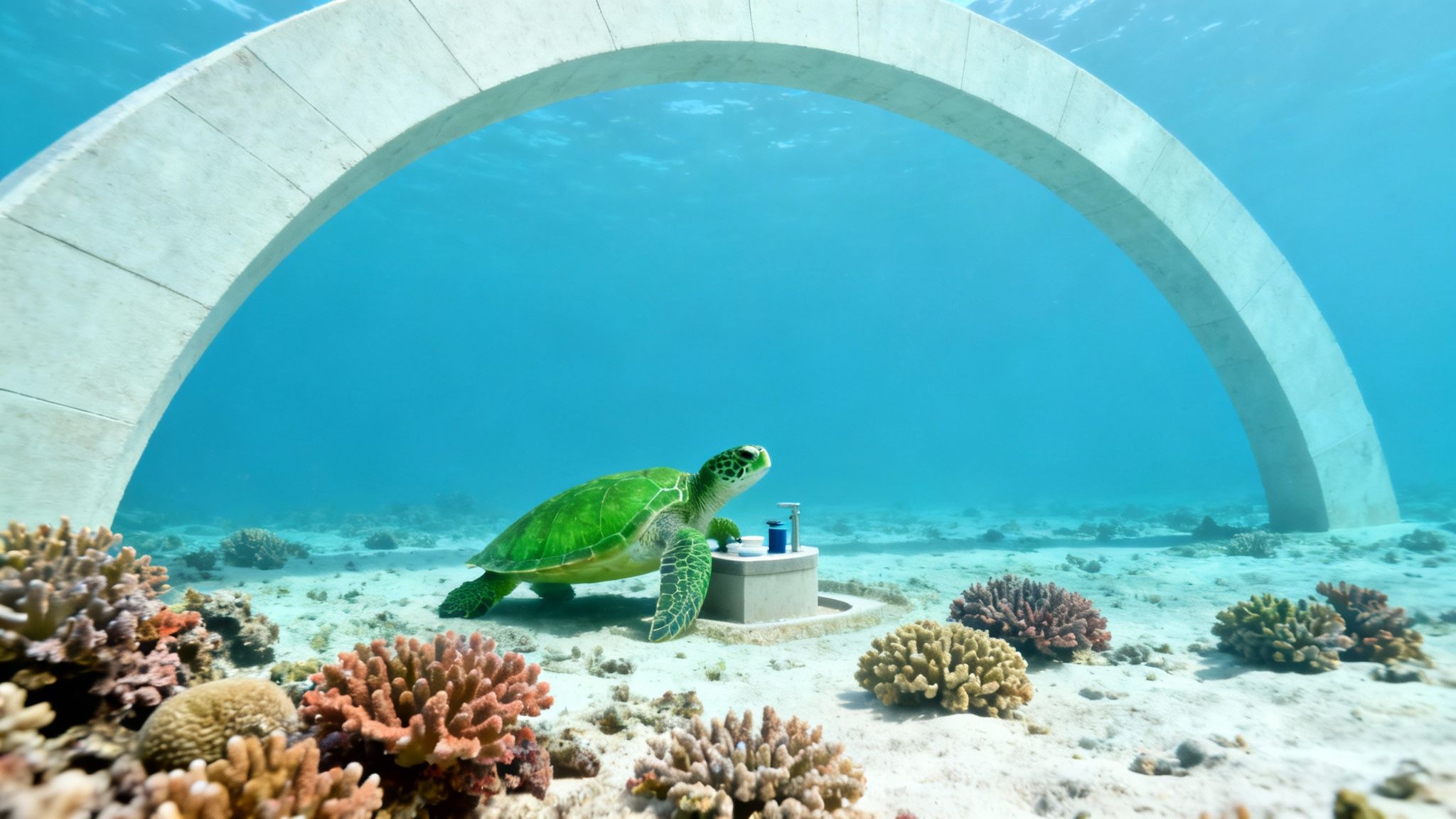
While the manta ray ballet is an absolute can't-miss experience, it’s really just the beginning of what Big Island scuba diving has to offer. The Kona coast is a treasure trove of world-class dive sites, each one sculpted by volcanic fire and kissed by the deep blue Pacific. This is where you get to see the island’s raw, untamed underwater beauty—from mysterious lava tubes to vibrant reefs that are just electric with life.
What makes diving here so special? It all comes down to the island's unique geology and the incredibly clear water. Visibility along the Kona coast often pushes past 100 feet, letting you soak in every detail of the coral gardens and dramatic lava formations. The water temperature is a dream, hovering between a comfortable 75°F in winter and a balmy 80°F in summer, making it perfect for year-round diving.
Now, let's dive into a few of the must-see spots that really show off what Kona is all about.
Turtle Pinnacle: An Underwater Spa Day
Picture this: an underwater cleaning station where Hawaiian green sea turtles, or honu, are lined up, patiently waiting for their turn to get pampered. That’s Turtle Pinnacle. A huge rock pinnacle rises from the seafloor, and it’s become the go-to spot for turtles to get scrubbed down by surgeonfish and other small reef fish who nibble away algae and parasites.
It’s an incredible display of symbiosis in action and a fantastic photo opportunity. The reef around the pinnacle is buzzing with life too, so keep an eye out for moray eels, octopus, and big schools of colorful butterflyfish.
Golden Arches: A Photographer's Dream
Just like its name suggests, this site is a visual masterpiece, famous for two massive lava rock arches. Swimming through these formations feels like you’re exploring the ruins of a lost, submerged city, especially with the golden-hued corals clinging to the rock. The way the sunlight filters through the arches creates this stunning, cathedral-like glow.
This spot is also a magnet for marine life. You’re almost guaranteed to run into:
- Whitemouth Moray Eels: You'll often spot them peeking out from rocky hideouts.
- Frogfish: These are the ultimate masters of camouflage. Finding one is a rewarding challenge!
- Schools of Damselfish: They dart around the coral heads like a cloud of confetti.
Crescent Beach: Lava Tubes and Canyons
If you want a dive that screams "volcanic island," Crescent Beach (also known as Kua Bay) is the place. The underwater landscape here is a wild maze of lava tubes, swim-throughs, and deep canyons. Navigating this terrain is a genuine thrill that makes you feel like a real underwater explorer.
All those complex nooks and crannies provide the perfect shelter for a ton of different creatures. Watch for shy reef sharks resting under ledges and huge parrotfish munching on the coral. The constant play of light and shadow inside the tubes gives the whole dive a moody, mysterious vibe you won’t find anywhere else. To get a better feel for the sheer variety of spots, you can see a more complete list of Kona dive sites Kona Honu Divers visits.
With access to over 80 distinct sites, the team at Kona Honu Divers has the local know-how to get you to the perfect spot based on the day's conditions and your comfort level. They make sure you not only see these incredible places but also understand the amazing ecosystem you're a part of.
Take on a Unique Diving Challenge
If you're a certified diver who feels like you've seen it all, the Big Island has a few tricks up its sleeve. We're talking about the kind of dives that become legends in your logbook—experiences that are less about sightseeing and more about genuine, mind-bending exploration.
These aren't your typical reef tours. For divers hungry for something truly extraordinary, Kona offers challenges that will test your skills and reward you with sights few people ever get to witness.
At the very top of that list is the famed Kona Blackwater Dive. Forget the reef. Forget the seafloor. This is something else entirely.
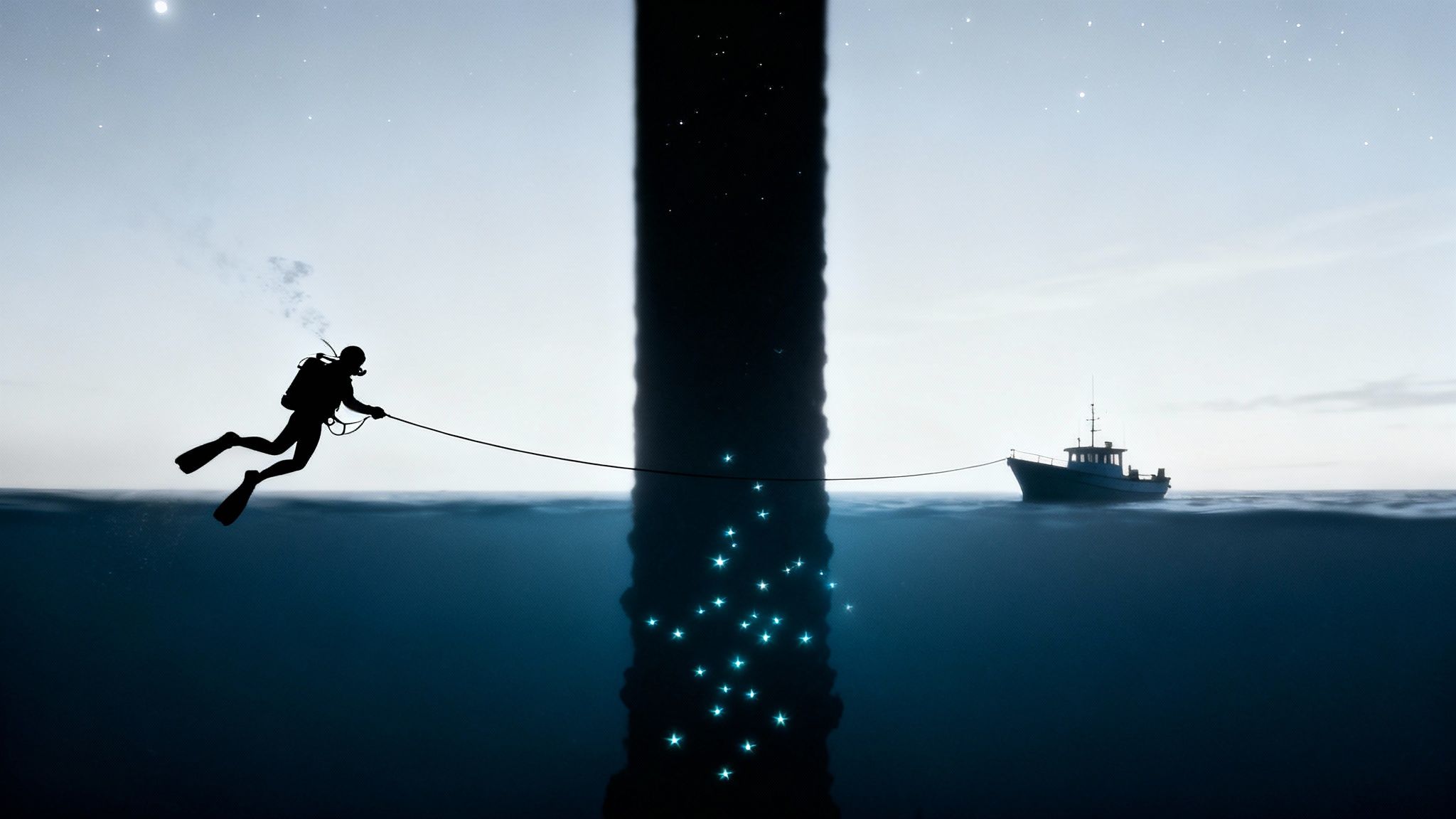
Imagine being miles offshore, tethered to a boat, and drifting through the inky blackness of the open ocean. It’s often compared to a spacewalk, and honestly, that’s not an exaggeration. You are completely suspended in an alien environment, watching the largest migration on Earth unfold right in front of your mask.
Every single night, a universe of bizarre and beautiful deep-water creatures travels from the abyss to feed near the surface. These are organisms that spend their lives in total darkness and under crushing pressure. Many are bioluminescent, creating their own light in the deep. It’s a spectacle you have to see to believe.
Witness Creatures from the Deep
On a blackwater dive, you're a floating island of light in an endless cosmos. The creatures that emerge from the darkness are nothing like what you find on the reef.
- Pygmy Squids: You'll see tiny, iridescent cephalopods zipping through the water column.
- Bizarre Larval Fish: Get a glimpse of the juvenile stages of familiar reef fish, which often look completely alien compared to their adult forms.
- Jellyfish and Siphonophores: Encounter pulsating, glowing creatures that drift past like living spaceships.
This isn't just another night dive; it's a journey into a different dimension. It definitely requires a calm demeanor and excellent buoyancy control, making it a perfect challenge for a seasoned diver. To book this surreal adventure, you can find details on the Blackwater Dive tour page.
Navigating Advanced Underwater Terrain
Beyond the open-ocean abyss, the Big Island’s volcanic origins have sculpted some incredible playgrounds for experienced divers. The underwater landscape here is a maze of complex lava tubes, deep archways, and dramatic caverns that will put your navigation skills to the test.
These aren't simple swim-throughs. They are intricate labyrinths that demand sharp awareness and precision. Exploring a multi-level lava tube or a deep-water pinnacle requires a higher level of certification, but the payoff is huge. Inside these formations, you'll find rare animals seeking shelter, from shy reef sharks to elusive crustaceans hiding in the crevices.
These advanced dives are where the Big Island truly shines. They offer a sense of genuine exploration that reminds you why you fell in love with diving in the first place—the thrill of venturing into the beautiful unknown.
These are the dives that keep even the most traveled divers coming back for more. If you have the training and the spirit for adventure, Kona Honu Divers runs specialized trips to explore these deeper, more complex sites. Ready to see a side of Kona most people miss? Check out our advanced dive tour page.
Getting Your Scuba Certification in Paradise
If you've ever dreamt of breathing underwater, there’s no better place to learn than the warm, clear seas off the Kona coast. Getting certified for Big Island scuba diving isn't just about earning a card—it's your key to unlocking a lifetime of adventure in one of the planet's most stunning marine ecosystems.
The path to becoming a certified diver is designed to build your skills and confidence step-by-step. It’s a rewarding mix of understanding the "why" behind diving physics and safety, practicing essential skills until they're second nature, and finally, putting it all together in the open ocean.
Your Path to Open Water Certification
The first and most popular certification is the Open Water Diver course. Think of it as your passport to the underwater world. The process is broken down into three manageable parts, making it fun and accessible, especially when your classroom is paradise.
Here's what the journey looks like:
- Knowledge Development: This is the theory part. Most people knock this out online before their trip, learning the fundamentals of scuba—from how pressure affects your body to dive planning essentials—all at their own pace.
- Confined Water Dives: Next, you'll gear up with an instructor in a calm, pool-like setting. This is where you get comfortable with the equipment and practice core skills like clearing water from your mask or managing your buoyancy.
- Open Water Dives: This is the grand finale and where the real magic begins. You’ll complete four dives in the ocean, applying everything you’ve learned while exploring Kona’s vibrant reefs under the watchful eye of your instructor.
Choosing the Right Instructor Makes All the Difference
Learning to dive is a big deal, and who you learn from is everything. A great instructor doesn’t just teach you the skills; they build your confidence and make the entire experience feel like an adventure, not a test. This is where a top-tier operator like Kona Honu Divers really shines.
Their instructors are true professionals, passionate about sharing their love for the ocean. They create a supportive, fun environment that turns a potentially nerve-wracking experience into an empowering one.
Taking that first breath underwater is a moment you'll never forget. When you do it surrounded by colorful coral and curious fish, a simple training dive becomes a core memory that will stick with you for life.
Once you have your Open Water certification, you’re qualified to dive with a buddy anywhere in the world to a maximum depth of 60 feet (18 meters). It’s the starting point for a whole new world of exploration, with advanced courses and specialties waiting to take you even deeper into your diving journey.
Ready to take the plunge? You can find all the details on the Open Water Certification process in Kona. Starting your scuba journey here isn't just about getting certified; it's about starting it right, in a place that will spark a lifelong passion for the ocean.
Plan Your Perfect Big Island Dive Trip
Alright, you've got a vision for your dream dives—manta rays, blackwater wonders, you name it. Now, let's talk logistics. A little bit of smart planning on the front end is what turns a good dive trip into an absolutely epic one.
The great thing about diving the Kona coast is that it’s spectacular pretty much any day of the year. We have the massive volcanoes to thank for that; they act as a giant shield, blocking the trade winds and keeping the waters remarkably calm. Still, there are a few seasonal nuances worth knowing about.
Choosing the Best Time to Dive
You can really boil the year down into two main seasons: summer and winter.
- Summer (May to October): This is when you'll find the calmest, flattest, most glass-like ocean conditions. The water is at its warmest, too, often hitting a perfect 80°F (27°C). If you love buttery-smooth boat rides and maximum warmth, this is your season.
- Winter (November to April): The water temperature might dip a bit, hovering around a comfortable 75°F (24°C), and you might see more surface swell. But the tradeoff is massive: this is peak humpback whale season. There's nothing in the world like being underwater and hearing their songs echo through your bones. It’s an experience that will stick with you forever.
Honestly, though, you can't go wrong. Visibility is consistently amazing, often clearing 100 feet, so the view is always world-class.
Now for a quick look at how the seasons shape up for divers. This table breaks it down so you can easily see what to expect and when.
Big Island Diving Seasons at a Glance
| Season | Water Temperature | Visibility | Key Marine Life Sightings |
|---|---|---|---|
| Summer (May-Oct) | 78-80°F (26-27°C) | 100+ ft | Manta rays, dolphins, turtle nesting season |
| Winter (Nov-Apr) | 75-77°F (24-25°C) | 100+ ft | Humpback whales (audible!), manta rays, pilot whales |
No matter the month, there's always something incredible to see beneath the surface here in Kona.
Essential Packing and Safety Checklist
Getting your packing right just means less to worry about and more time to enjoy the adventure. While you can always rent top-notch gear from us at Kona Honu Divers, most divers have a few personal items they can’t live without, like a favorite mask or dive computer.
Here’s a quick rundown of things you won’t want to forget:
- Reef-Safe Sunscreen: This is a big one. Standard sunscreens contain chemicals like oxybenzone that are devastating to our coral reefs. Please, grab a mineral-based, reef-safe brand to protect both your skin and our fragile marine ecosystem.
- Reusable Water Bottle: Hydration is key for safe diving. Bringing your own bottle helps us cut down on single-use plastics.
- Dive Certification Card and Logbook: The essentials! Don't leave home without them.
- Light Jacket or Windbreaker: Even on a warm day, the boat ride back can get breezy and cool, especially after the sun goes down on a night dive.
Now, let's talk about safety. It’s our absolute number one priority on every single charter. It’s also worth understanding just how safe professionally supervised diving is. Many people don't realize that guided scuba diving has a far better safety record than something as common as unguided snorkeling.
Between 2009 and 2018 in Hawaii, there were a shocking 206 snorkeling fatalities, with 189 of them being visitors. In stark contrast, scuba diving fatalities over that same decade were just 28. This isn't to scare anyone, but to underscore the immense value of professional training and supervision—the very foundation of what we do. You can read more about these Hawaiian water safety findings to see the data for yourself.
Choosing a reputable, safety-obsessed operator like Kona Honu Divers is the single most important decision you'll make for your trip. Our experienced crew, detailed briefings, and meticulously maintained gear are what allow you to relax and truly lose yourself in the magic of the underwater world.
With your bags packed and your trip booked, you're all set to discover why the Big Island is a diver's paradise.
Frequently Asked Questions About Big Island Diving
Planning a dive trip to the Big Island always brings up a few questions, even for seasoned divers. It's totally normal. Here are some straightforward answers to the things we get asked most often, so you can feel confident and ready to hit the water.
What Does It Cost to Scuba Dive on The Big Island?
Prices can shift a bit depending on the operator, but you can generally plan on a standard two-tank morning boat dive costing somewhere between $150 and $250. That price almost always covers your tanks and weights.
Of course, specialty dives will have their own price tags. The world-famous manta ray night dive, for example, or a "try-it-out" introductory dive for beginners will be priced differently.
Do I Need to Be Certified to Dive in Kona?
For pretty much any boat dive, yes, you'll need to show your certification card. But if you're not certified and are just itching to see what all the fuss is about, you can! Just sign up for a Discover Scuba Diving experience, where you'll get to dive with an instructor right by your side.
Keep in mind that some of our more advanced dives have stricter prerequisites. To join the one-of-a-kind Kona Blackwater Dive, you’ll need to be at least an Advanced Open Water diver with a solid number of logged dives.
What Is the Best Month to Dive in Kona?
Here’s the great news: the Kona coast offers fantastic diving all year long. Seriously. But if you're chasing the absolute flattest seas and warmest water, aim for the summer months between May and October. The water temperature often climbs to a toasty 80°F then.
That being said, winter diving has a magic all its own. The swells might be a bit bigger, but this is when the humpback whales migrate through. There's nothing quite like being underwater and hearing their songs echo through the reef. It’s an experience that will stick with you forever.
No matter when you book your trip, the Kona coast is uniquely sheltered by the island's massive volcanoes, which means we almost always have great conditions for a dive.
Can I Rent Scuba Gear on The Big Island?
Absolutely. A professional shop like Kona Honu Divers will have full sets of high-quality, meticulously maintained gear ready to go. You can easily rent everything you need.
This typically includes:
- Buoyancy Control Devices (BCDs)
- Regulators with dive computers
- Wetsuits (the right thickness for the season)
- Masks, snorkels, and fins
Our best tip? Reserve your rental gear when you book your diving tours. This way, you know we'll have your size set aside, and you can just show up ready to dive without any last-minute hassle.
Ready to see why Big Island scuba diving is legendary? The team here at Kona Honu Divers would love to show you. Let's get you on an unforgettable underwater adventure.