
Picture this: you're weightless, descending into impossibly clear blue water. Sunlight streams down through the openings of ancient lava tubes, and a massive sea turtle glides past you without a care in the world. This isn't just some diver's daydream—it’s the reality of Big Island scuba diving, a truly world-class experience. The island's volcanic heart has created an underwater playground that draws in divers of every skill level.
Why the Big Island Is a Diver’s Paradise

The Big Island’s dramatic volcanic past is the secret to its mesmerizing underwater world. Over millennia, lava flows cooled to form an incredible network of arches, caves, and intricate reef structures that are now bursting with life. This unique geology is the very foundation of the island's healthy and vibrant marine ecosystem.
What really sets the Kona coast apart, though, is how calm the water is. Unlike a lot of other tropical spots, the coastline here is largely shielded from powerful ocean currents and swells. We have the sheer size of the Mauna Kea and Mauna Loa volcanoes to thank for blocking the winds, creating predictable and serene conditions almost all year. This natural barrier is a huge reason why the visibility is so consistently amazing.
An Underwater Haven for Marine Life
The Big Island is famous for its scuba diving tours, consistently ranked among the best destinations on the planet. Most of the must-see dive sites are dotted along the island’s leeward (west) coast, where the conditions are just right. Kealakekua Bay, for example, is a protected marine sanctuary. With no fishing allowed, the ecosystem flourishes, and the visibility often tops 100 feet.
This pristine environment is the perfect home for a breathtaking variety of marine life. On any given dive, you’re likely to see:
- Honu (Green Sea Turtles): These guys are everywhere! You'll spot them resting on the reef or gracefully swimming by.
- Vibrant Reef Fish: The reefs are painted in a riot of color thanks to huge schools of yellow tang, parrotfish, and butterflyfish.
- Unique Critters: Keep a sharp eye out for the masters of camouflage, like elusive frogfish, colorful nudibranchs, and shy octopuses.
- Majestic Manta Rays: The island is world-famous for these gentle giants, and the night dive with them is an absolute must-do.
The combination of dramatic underwater landscapes and nutrient-rich waters makes every single dive feel like a true exploration. From shallow, sun-drenched coral gardens perfect for new divers to deep, mysterious lava tubes for the more experienced, the Kona coast has it all.
As Kona's top-rated dive operator, we at Kona Honu Divers are passionate about showing you this aquatic wonderland. Our experienced team is dedicated to sharing the magic of Hawaii’s underwater world safely and responsibly. Still wondering what makes the Big Island so good for scuba diving? We've got a detailed guide with all the answers.
Experience the World-Famous Manta Ray Night Dive
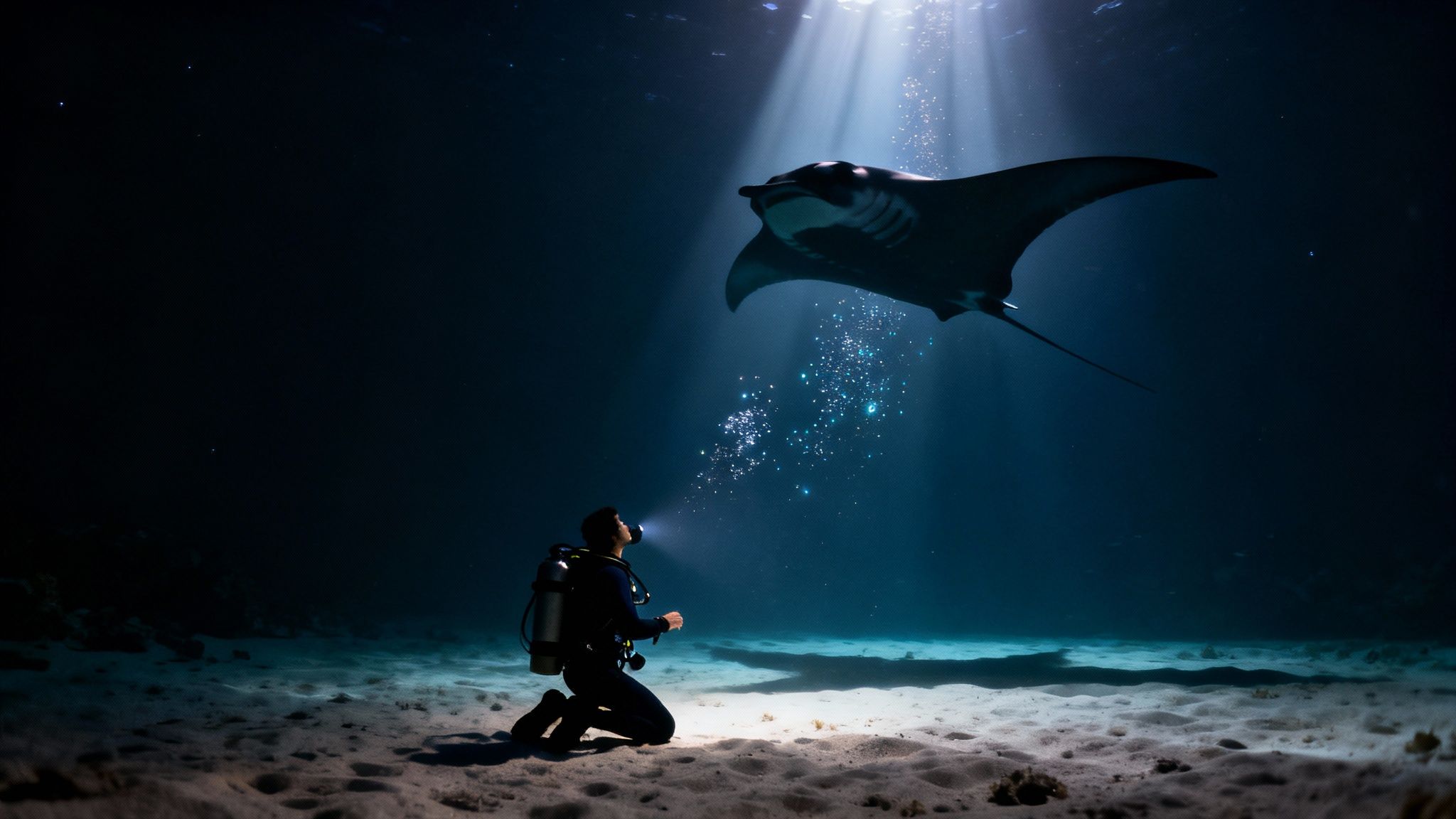
Picture this: you’re kneeling on the sandy ocean floor in the quiet darkness of the Pacific. You switch on your dive light, pointing its beam straight up. Out of the blackness, a huge, winged shadow glides into view, soaring just inches over your head like some kind of alien spacecraft. This is the Manta Ray Night Dive, and it’s the kind of life-changing spectacle that puts Big Island scuba diving on every diver's bucket list.
This whole incredible encounter isn't some happy accident. It’s actually a brilliant setup that works with nature. We call it the "manta campfire." Dive operators place powerful, eco-friendly lights on the seafloor. These lights act like magnets for plankton—the tiny organisms that manta rays love to eat.
Before you know it, the water is thick with plankton, creating an irresistible buffet. That's when the real stars of the show arrive. Dozens of these gentle giants swoop in, performing an underwater ballet as they feed. They glide, spin, and barrel roll right through the light beams, their cavernous mouths open to filter the water. It’s a jaw-dropping display of natural grace and power.
What to Expect on Your Manta Dive
One of the best things about this dive is that you don't have to be a hardcore expert to do it. The site is pretty shallow, usually around 35 feet, and the water is typically calm. If you have your Open Water certification, you’re good to go. You can witness one of the planet's greatest wildlife encounters without needing any advanced training.
The entire experience is built around safety and making sure you have an unforgettable time. Here’s how it usually plays out:
- The Briefing: Your guides will walk you through everything you need to know, emphasizing the most important rule: look, but don't touch. These are wild animals, and we're just visitors in their home.
- The Descent: As dusk settles, you'll descend with your group and find your spot around the circle of lights on the bottom.
- The Show: Once the plankton arrives, so do the mantas. You’ll get a front-row seat for about 45 minutes as they perform their mesmerizing feeding dance.
- The Ascent: You'll head back to the boat feeling a sense of awe that’s hard to put into words.
This one-of-a-kind dive, happening primarily in Keauhou Bay near Kona, is a global phenomenon. Local dive shops see manta rays on about 85-90% of their nightly trips, so your chances of an incredible encounter are extremely high. To get a deeper look into the mechanics of this amazing dive, explore what makes the Manta Ray Night Dive so unique in our dedicated guide.
Why This Dive is a Must-Do
Let's be clear: this dive is the heart and soul of what makes Big Island scuba diving so legendary. It’s more than just watching fish; it’s a genuine connection with the ocean. Being that close to these massive, elegant creatures is a humbling experience that will stick with you forever.
It’s hard to grasp the sheer size of these animals until one is gliding right over you. Some of the local mantas have wingspans stretching over 12 feet! Watching them move so effortlessly is a potent reminder of the wonders hidden beneath the waves.
If you’re planning a trip to Hawaii, don't just add this to your list of potential dives—put it right at the top. This isn't just another dive; for many, it's the dive of a lifetime.
Exploring Premier Dive Sites Along the Kona Coast
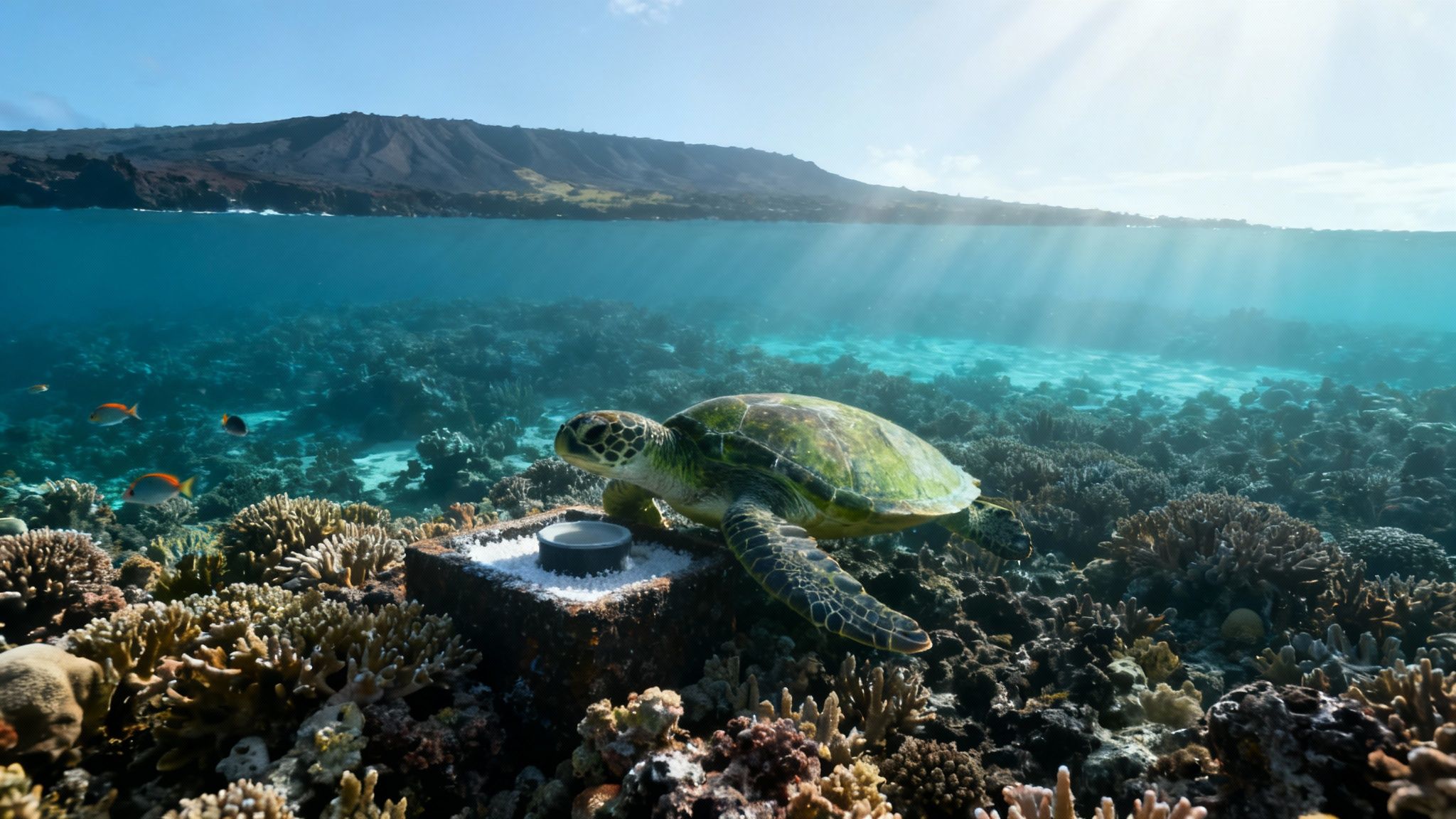
While the Manta Ray Night Dive gets a lot of the spotlight—and for good reason—it’s just the beginning of what the Kona coast has to offer. The Big Island's volcanic past has left behind an absolutely stunning underwater landscape, transforming the entire coastline into a diver's playground.
You could spend weeks here and still discover something new every day. One day you might be drifting through serene coral gardens packed with fish, and the next, you could be navigating dramatic lava formations and thrilling swim-throughs. The best part? The Kona coast is naturally sheltered, which means the water is usually calm and the visibility is fantastic. It's a perfect setup for divers of all stripes.
Kealakekua Bay: A Protected Sanctuary
Kealakekua Bay isn’t just another dive site; it’s a protected marine sanctuary steeped in history. This is where Captain James Cook first landed, but the real treasure today is what lies just beneath the waves.
Because fishing is restricted here, the entire ecosystem is thriving. We're talking about some of the healthiest coral gardens and clearest water you'll find anywhere on the island. With depths ranging from 20 to 110 feet, it’s a fantastic spot for everyone from beginners to seasoned pros. Expect to see massive schools of fish, spinner dolphins playing in the distance, and coral formations that are simply pristine.
Crescent Beach: The Turtle Spa
Ever wanted to see a sea turtle getting a spa treatment? That's exactly what you'll find at Crescent Beach, also known as Honokohau. This spot is famous for its "turtle cleaning stations."
It's an incredible sight: Hawaiian green sea turtles, or honu, gather here and patiently wait as surgeonfish clean algae and parasites right off their shells. The dive itself is pretty relaxed, usually around 30 to 40 feet, over a mix of sand and cool lava rock formations. Besides the guaranteed turtle encounters, keep an eye out for moray eels and octopus hiding in the crevices.
Golden Arches: Dramatic Lava Formations
If you're a diver who gets excited about unique underwater landscapes, Golden Arches is your spot. The name says it all—this site is a stunning maze of lava arches and swim-throughs that feel almost like an underwater cathedral.
Sunlight streams through the openings in the ancient lava tubes, creating these incredible, dancing light beams in the water. It's a powerful reminder of the raw volcanic forces that shaped this island.
Navigating through these ancient volcanic structures feels like exploring another world. It’s a powerful reminder of the geological forces that shaped the Big Island, both above and below the waves.
The main features here are at about 50 to 60 feet, so it’s great for divers who have their buoyancy dialed in and are up for a bit of exploration. You’ll often find whitetip reef sharks, lobsters, and all sorts of fish taking shelter within the formations.
A Quick Guide to Kona's Top Dive Sites
To help you pick your next underwater adventure, here’s a quick rundown of these incredible sites. Each one offers a completely different vibe, which is what makes Big Island scuba diving so special.
Kona Coast Premier Dive Sites Overview
| Dive Site | Key Features | Average Depth | Best For |
|---|---|---|---|
| Kealakekua Bay | Protected marine sanctuary with pristine coral gardens and abundant fish life. | 40-70 feet | All skill levels, snorkelers, and photographers. |
| Crescent Beach | Famous for its "turtle cleaning stations" and high concentration of honu. | 30-40 feet | Beginners, turtle lovers, and underwater photography. |
| Golden Arches | Dramatic lava tubes, arches, and thrilling swim-throughs. | 50-60 feet | Intermediate divers and those who love unique topography. |
Honestly, this is just scratching the surface. The Kona coast has dozens of amazing dive sites, each with its own personality. There's always another reef, ledge, or lava tube waiting to be explored.
For a deeper dive into what's out there, check out our guide to the most beautiful Kona diving sites. Whether you're after a chill afternoon dive or something more adventurous, we can help you find the perfect spot.
Advanced Diving for Thrill-Seekers
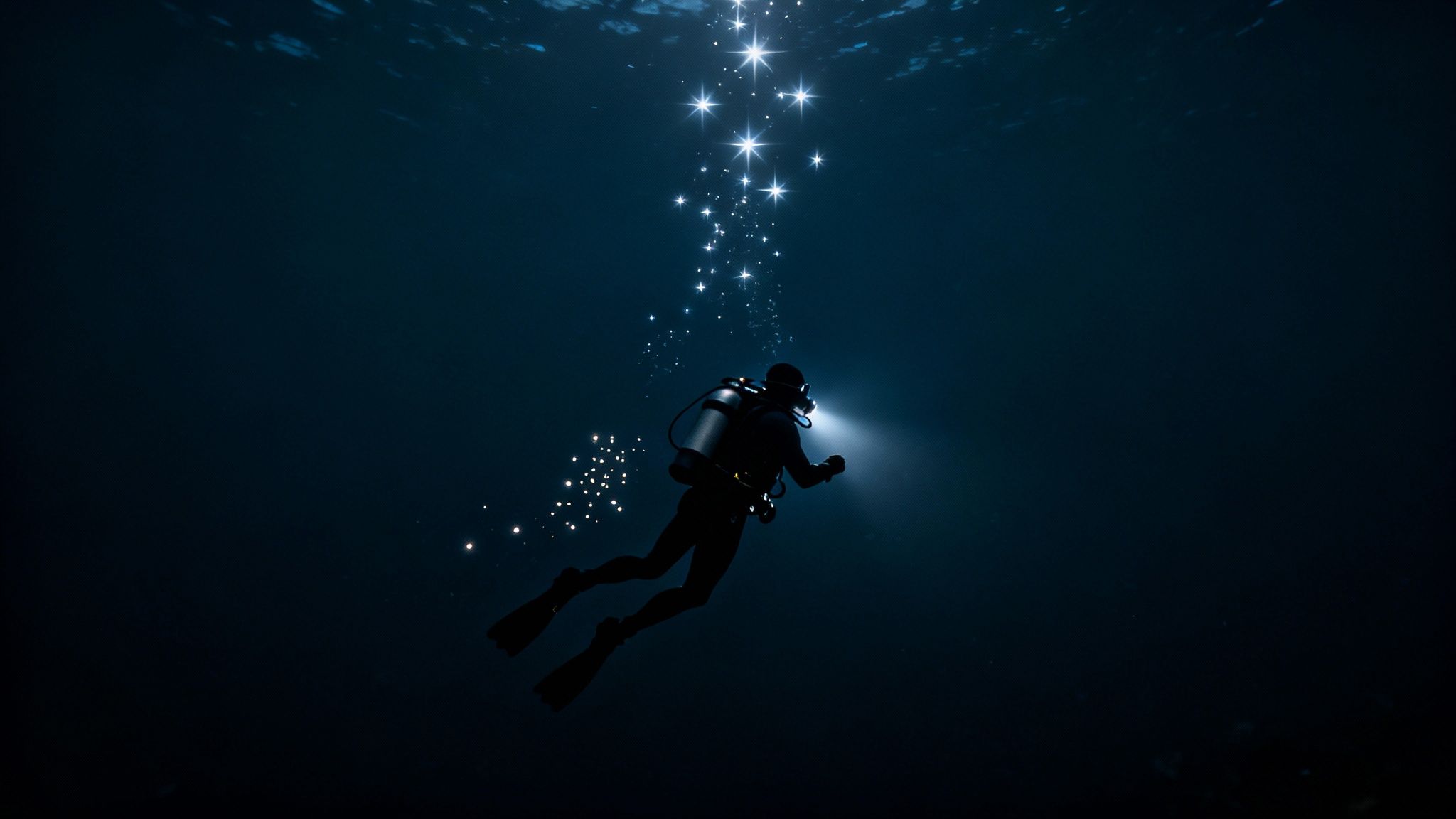
If you're an experienced diver and feel that familiar pull towards something more, the Big Island scuba diving scene has some serious thrills waiting for you. The coastal reefs are spectacular, no doubt, but a wilder, more profound adventure awaits in the deep, dark waters off the Kona coast.
These aren't just about going deeper; they're about entering a completely different world. It takes a higher level of skill, solid confidence in the water, and a genuine taste for adventure. If you're ready to leave the standard reef tours behind for something truly extraordinary, this is where it gets interesting.
The Legendary Blackwater Dive
Picture this: you're suspended in the vast, inky blackness of the open ocean. You’re miles from shore, with thousands of feet of water below you. Instead of exploring a reef, you're floating in the middle of one of the planet's largest migrations. Welcome to the legendary Kona Blackwater Dive, an experience divers often call a "pelagic magic carpet ride." I just call it diving in outer space.
Every single night, a massive vertical migration brings bizarre, alien-like creatures up from the abyss to feed near the surface. The things you’ll see are straight out of a sci-fi movie:
- Bioluminescent jellies pulsing with an otherworldly light.
- Translucent larval fish in their earliest, strangest forms.
- Weird, wonderful cephalopods and invertebrates that look like they belong on another planet.
This is a tethered drift dive, meaning you're connected to the boat as it moves with the current. It’s highly specialized and demands excellent buoyancy control and a cool head, but the payoff is a front-row seat to a mysterious ecosystem that few people ever get to see.
The Blackwater Dive is a truly unique Big Island scuba diving experience. It's a surreal journey into the deep ocean's hidden world, offering a chance to see creatures that spend their entire lives in the dark, open water, far from any reef.
Exploring Remote and Untouched Reefs
Beyond the blackwater experience, advanced charters can take you to remote reefs and complex lava formations that are way off the beaten path. These trips are for experienced divers who are comfortable with deeper profiles, potential currents, and more challenging underwater navigation.
The reward for heading to these less-visited spots is healthier, more vibrant marine life and exceptionally pristine coral structures. You might explore deep pinnacles that jut up from the seafloor, navigate intricate networks of ancient lava tubes, or hunt for shark nurseries hidden in secluded coves. This is your chance to see the wild side of Kona’s underwater world.
Here at Kona Honu Divers, our crew is passionate about delivering these next-level experiences safely. Whether you’re ready to float through the cosmos on our famous Kona Blackwater Dive or explore the untamed coastline on one of our Advanced Dive Tours, we have the adventure you’re looking for. These aren't just another entry in your logbook—they're transformative dives you’ll be talking about for years to come.
How to Choose the Right Dive Operator in Kona
Picking the right dive operator for your Big Island scuba diving adventure is probably the single most important decision you'll make. It’s about so much more than just a boat and some gear. The right crew shapes your entire experience, turning a good dive into one you’ll talk about for years.
When you first start looking around Kona, the number of options can feel a bit much. But if you know what to look for, the best operators quickly stand out. A few non-negotiables separate a standard trip from a truly professional one that cares about you and the ocean.
Safety First, No Compromises
This one is the absolute bottom line. You want a company with a squeaky-clean safety record, period. Look for operators who are open and honest about their safety drills, emergency plans, and staff training.
Well-kept boats and meticulously serviced rental gear are also huge tells. A dive shop that invests in its equipment is investing in your safety. At Kona Honu Divers, safety is the foundation of everything we do, a promise you can see reflected in our thousands of five-star reviews.
Why Small Groups Make a Big Difference
Ever been on a dive that felt more like a crowded bus tour than a personal encounter with nature? That’s where small groups come in. Keeping the numbers down completely changes the vibe, making everything more relaxed and personal, both on the boat and below the surface.
With fewer divers, you get more time and attention from your guide. They can point out that camouflaged frogfish only they know how to spot, help you dial in your buoyancy, or just make sure you’re feeling confident. It's also way better for the reef, minimizing our collective footprint.
Look for Passionate Guides and a Commitment to Conservation
The best dive guides are more than just underwater tour leaders—they're storytellers, biologists, and passionate advocates for the ocean. A great guide knows the dive sites like their own backyard. They know which coral head the octopus likes to hang out under and where to find the resident turtle napping.
A truly exceptional operator doesn't just show you the marine life; they actively work to protect it. Choose a company that walks the walk with responsible tourism, like following the Manta Ray Green List guidelines and promoting reef-safe habits. When you do, your dive actually contributes to a healthier ocean.
This deep-seated commitment to the environment is the hallmark of a world-class operation. It shows they're not just running a business; they're stewards of the incredible underwater world they get to share with you.
Making Your Choice
While we’re obviously proud of what we do, our main goal is for you to have an amazing time in Kona. The island is home to several fantastic, long-standing dive operators who all do a great job. To help you find the perfect fit, here are the reviews for a couple of other top-notch local shops.
Jack's Diving Locker:
Big Island Divers:
By keeping these things in mind—safety, group size, guide experience, and conservation—you’ll find an operator that feels right for you. It’s the best way to ensure your Big Island scuba diving trip is everything you've been dreaming of. Ready to see what it's all about? Check out our world-class diving tours in Kona and let's get you in the water.
Putting Together Your Big Island Dive Trip
Alright, you've seen what makes diving here so special. Now, let’s talk logistics and plan the kind of trip you’ll be talking about for years. Getting the details right beforehand is the secret to a smooth, stress-free time in the water.
The best part? There’s never really a bad time to dive the Big Island. The weather is fantastic year-round. Water temperatures are a comfortable 76°F in the winter and a warm 81°F in the summer, so a simple 3mm or 5mm wetsuit will keep you perfectly comfortable. Visibility is also consistently great, often stretching out past 100 feet, especially along the calm, protected Kona coast.
What to Pack and What to Rent
This is always the big question: what to schlep across the Pacific and what to just rent here? I always tell people to bring their own mask, fins, and dive computer if they can. You know they fit, and you're comfortable with them.
For the heavier stuff like BCDs and regulators, renting is often the smart move. It saves you a ton of hassle and those dreaded airline baggage fees. Every reputable shop on the island, including ours, has top-notch, well-maintained gear ready to go.
Here on the Big Island, we dive with a sense of aloha for the ocean. Every choice we make under the waves helps protect this incredible ecosystem for the divers who will follow in our fin-kicks.
Diving With Aloha: A Few Simple Rules
Protecting this underwater paradise is a team effort. Here’s how you can be a huge part of the solution:
- Use Reef-Safe Sunscreen: This is non-negotiable. Common sunscreens have chemicals like oxybenzone that are devastating to coral. Always grab a mineral-based, reef-safe option.
- Master Your Buoyancy: The goal is to be weightless, floating effortlessly over the reef. Never touch, kick, or bump into the coral—it’s incredibly fragile.
- Look, Don't Touch: We're visitors in their home. Keep a respectful distance from all marine life. Chasing after a turtle or trying to touch a manta ray stresses them out and disrupts their natural behavior.
- Leave Only Bubbles: Pack out everything you pack in. If you see a piece of trash, grab it. It's a small act that makes a big difference.
While you're planning your underwater adventures, why not round out your trip by exploring other exciting water sports activities? Once you have the logistics squared away, the fun part begins—building your dream dive schedule. Check out our complete lineup of Kona diving tours and let's get you in the water.
Your Kona Diving Questions Answered
Still have a few questions swirling around before you take the plunge? Let’s clear them up. Here are the answers to some of the most common things divers ask about exploring the Big Island's underwater world.
Do I Need to Be Certified to Dive in Kona?
For most of the classic boat dives—like exploring the reefs or doing the famous Manta Ray Night Dive—yes, you’ll need at least an Open Water Diver certification.
But if you’re not certified, don’t worry! You can either get your certification right here in Kona or try a Discover Scuba Diving experience, where a professional instructor guides you every step of the way.
When’s the Best Time of Year to Dive the Big Island?
Honestly, any time you can get here is a good time! The Kona coast is uniquely sheltered from the big winds and swells, which means the water stays pretty calm and clear all year long.
Water temperatures are always pleasant, hovering around a comfortable 76°F in the winter and warming up to a balmy 81°F in the summer.
What Kind of Marine Life Will I Actually See?
You’re in for a treat. The reefs are teeming with life, from the graceful Hawaiian green sea turtles (honu) to dazzling schools of yellow tang and butterflyfish. Keep an eye out for eels tucked into crevices, clever octopuses, and even the occasional pod of dolphins swimming by.
But the two encounters that truly define Kona diving are the gentle giants on the Manta Ray Night Dive and the strange, glowing creatures you’ll meet on the advanced Kona Blackwater Dive.
Are Manta Rays Guaranteed on the Night Dive?
While we can't make promises to wild animals, the Kona coast has one of the most reliable manta ray populations on the planet. There's a reason it's world-famous!
Reputable dive shops like Kona Honu Divers see them consistently, with a success rate well over 90%. Many operators even offer a "second chance" guarantee—if the mantas decide not to show, you can join the tour again for free on another night.
Hopefully, that clears things up and gets you even more excited to experience Kona's incredible underwater world firsthand.
Ready for an adventure you’ll never forget? Kona Honu Divers runs a full slate of world-class diving tours in Kona for divers of every skill level.