
Picture this: you're sinking into unbelievably clear, turquoise water, surrounded by a kaleidoscope of coral gardens and ancient volcanic rock. This is what Big Island scuba diving is all about—a perfect mix of otherworldly beauty and pure adventure. From the world-famous Manta Ray Night Dive to mysterious deep-water explorations, the Kona coast is an underwater playground for divers of every stripe.
Exploring an Unforgettable Underwater World
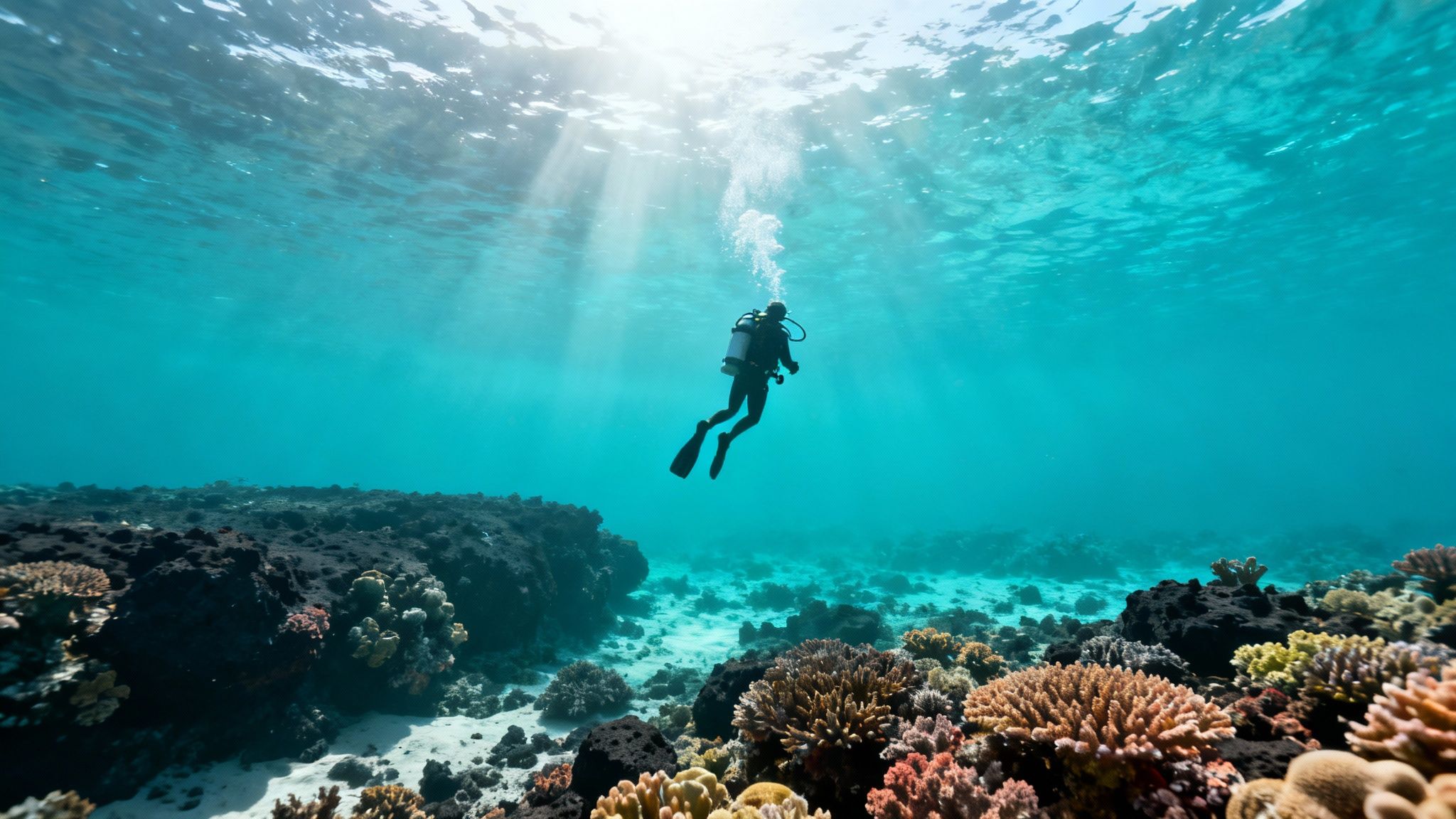
The Big Island isn’t just another pretty spot on the map; it's a world-class destination for anyone who loves being underwater. The western Kona coast is uniquely shielded from the trade winds by the island’s massive volcanoes, which means the water here is exceptionally calm and clear almost all year round. These are the kind of near-perfect conditions divers dream of.
What you see below the surface is a direct reflection of the island's fiery origins. Ancient lava flows have created a stunning underwater landscape you just won't find anywhere else—think dramatic lava tubes, soaring arches, and intricate pinnacles. Over time, these volcanic structures have transformed into bustling habitats for an incredible variety of marine life.
What Makes Kona a Diving Epicenter
The magic of Big Island scuba diving really comes down to its unique blend of accessibility and sheer spectacle. It doesn’t matter if you just got your certification or have hundreds of dives under your belt; the Kona coast has something amazing to offer.
- Iconic Marine Encounters: This is home to true bucket-list experiences. You have the Manta Ray Night Dive, where these gentle giants perform a graceful underwater ballet, and the surreal Blackwater Dive, which brings bizarre, bioluminescent creatures up from the deep.
- Pristine Conditions: Visibility here often pushes past 100 feet. That kind of clarity lets you soak in every vibrant color on the reef and appreciate the intricate details of the volcanic formations.
- Rich Biodiversity: Hawaiian waters are a hotspot for endemic species—critters you literally cannot find anywhere else on Earth. Every single dive gives you a chance to spot something truly unique.
The island’s reputation is well-earned. A robust local dive industry supports the roughly 100,000 certified scuba dives that happen here every year. With over 50 dive shops and charters serving more than 150,000 dive tourists, you can be sure you're in good hands. This thriving community makes it easy for anyone to safely explore the incredible underwater world that puts this island on the map. Learn more about the Big Island's diving industry.
Think of this guide as your personal roadmap. We'll walk you through the must-see sites, point you toward the best diving tours on the Big Island, and give you all the insider info you need to plan an adventure you’ll be talking about for years.
Why Divers Choose the Big Island
So, what’s the big deal with Big Island scuba diving? Lots of places have pretty reefs, but the Big Island brings something entirely different to the table. It’s a wild mix of raw volcanic landscapes, super-protected waters, and marine life you just won't see anywhere else. That combination is the secret sauce that makes for one unforgettable dive after another.
The whole story starts with fire and lava. The Big Island is the baby of the Hawaiian island chain, born from volcanoes. When all that molten rock hit the Pacific Ocean, it didn't just make land—it created an unbelievable underwater playground. As a diver, you get to explore massive lava tubes, glide through ancient arches, and weave around volcanic pinnacles. It’s a constant, powerful reminder of how this island was forged.
This dramatic, rocky foundation is exactly what allows a complex ecosystem to flourish. The porous lava rock creates endless nooks and crannies, providing the perfect home for everything from tiny cleaner shrimp to whitetip reef sharks taking a nap.
Protected Waters and Incredible Conditions
One of the best things about diving here is a simple matter of geography. The Kona coast, on the western side of the island, is tucked into the shadow of the massive Mauna Kea and Mauna Loa volcanoes.
This means the coast is shielded from the strong trade winds that can churn up the water elsewhere. The result? Exceptionally calm, clear water almost all year long. We call it the "Kona coast calm" for a reason. While other places have a specific dive "season," Kona is pretty much always on. It's totally normal to have visibility well over 100 feet, letting you soak in the whole incredible panorama.
The water clarity and calm conditions here are a game-changer. You spend less time fighting surge or straining to see, and more time just enjoying the world around you. That reliability is why people—from brand-new divers to seasoned pros—come back year after year.
This consistency takes a lot of the guesswork out of planning your trip. You can book your Big Island diving tours and feel pretty confident that amazing conditions will be waiting for you.
A Hotspot for Unique Marine Life
Beyond the cool geology and perfect water, you get to the real prize: the incredible animals. The Hawaiian Islands are way out in the middle of nowhere, and that isolation has led to a crazy-high number of endemic species. These are critters you literally can't find anywhere else on the planet.
When you're diving the Big Island, you’re not just seeing tropical fish; you’re seeing uniquely Hawaiian fish.
- Endemic Species: About 25% of the reef fish here are found only in Hawaii. Keep an eye out for the bright yellow Milletseed Butterflyfish, the gorgeous Potter's Angelfish, and the rare Hawaiian Turkeyfish.
- Big Animal Encounters: The Big Island is legendary for its "big ticket" sightings. We're talking about graceful green sea turtles (honu) chilling at cleaning stations and, of course, the world-famous night dive with majestic manta rays.
- Healthy Coral Reefs: The Kona coast boasts some of the healthiest and most vibrant coral reef systems in all of Hawaii. These reefs are the foundation that supports the entire underwater community.
It's this incredible tapestry of life, set against a dramatic volcanic backdrop with near-perfect conditions, that makes Big Island scuba diving an experience that truly stands out. Every time you drop below the surface, you have a chance to see something new.
Big Island Diving vs Other Hawaiian Islands
Curious how the Big Island stacks up against its neighbors? While all of Hawaii offers fantastic diving, each island has its own unique flavor. The Kona Coast's protected geography and volcanic features give it a distinct edge in several key areas.
Here’s a quick breakdown to help you see the differences at a glance:
| Feature | Big Island (Kona Coast) | Maui | Oahu | Kauai |
|---|---|---|---|---|
| Conditions | Calm, clear, protected waters | Can be windy, occasional strong currents | Variable, often choppier on North Shore | More exposed, conditions can be challenging |
| Topography | Lava tubes, arches, pinnacles, caverns | Volcanic crater (Molokini), wall dives | Wreck diving capital, some reef systems | Lava ledges, caverns, less dramatic features |
| Marine Life | Manta rays, turtles, high endemic fish count | Turtles, sharks, occasional whale sightings | Large turtle populations, diverse wrecks | Turtles, monk seals, unique N'ihau diving |
| Visibility | Excellent (80-100+ ft year-round) | Good (50-100 ft), best at Molokini | Good (50-80 ft), can be lower inshore | Fair to Good (40-70 ft), weather dependent |
| Best For | All levels, unique night dives, geology | Intermediate divers, boat diving focus | Wreck enthusiasts, shore diving access | Adventurous divers, experienced boat divers |
Ultimately, while places like Maui have Molokini and Oahu has its incredible wrecks, the Big Island delivers a powerful combination of reliability, unique underwater landscapes, and iconic marine encounters that is tough to beat.
Must-Visit Big Island Dive Sites
The Kona coast is a diver's dream, a treasure trove packed with world-class sites that each offer a completely unique underwater adventure. From otherworldly night dives to serene turtle hangouts, Big Island scuba diving has something for absolutely everyone. Let's dive into some of the iconic spots that make this island a true paradise.
The sheer biodiversity here is staggering. The Big Island is home to roughly 1,100 species of marine life, and get this—129 of those are found nowhere else on the planet. Most of the action happens along the leeward Kona coast, where the underwater world is a playground of caves, arches, pinnacles, and ancient lava tubes. You'll find everything from sleeping whitetip reef sharks to majestic eagle rays cruising by.
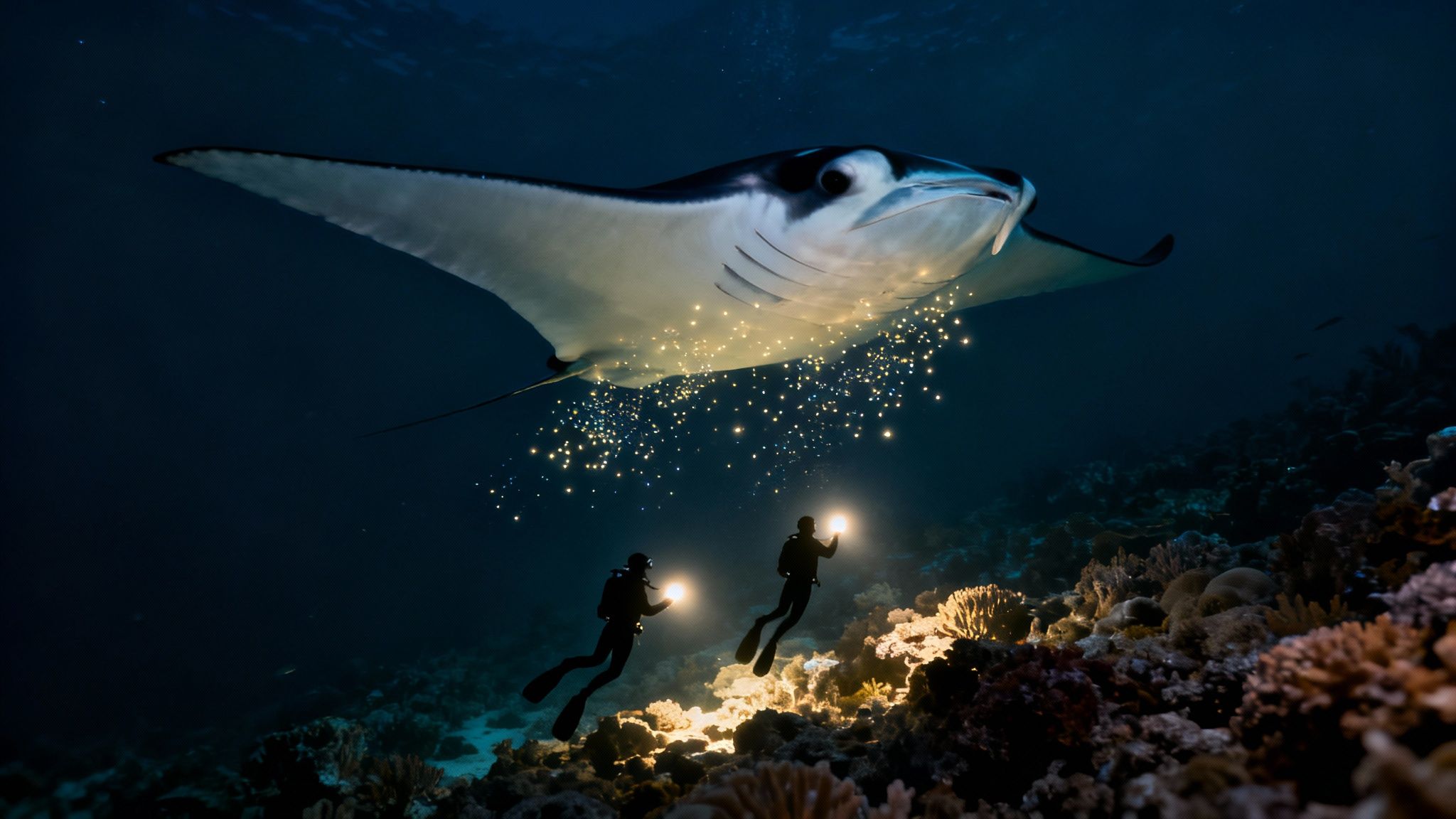
Of course, the headliner is the Manta Ray Night Dive near Keauhou Bay. Divers regularly see 10 or more of these gentle giants swooping down to feed, all at a comfortable depth of around 35 feet. It’s one of those dives that changes you. For a deeper look into Hawaii's incredible marine ecosystems, scubadiving.com offers some fantastic insights.
The Legendary Manta Ray Night Dive
If you do only one dive on the Big Island, this is it. The Manta Ray Night Dive isn't just a dive; it's a world-famous underwater ballet. It's an experience so profound that it consistently leaves even the most jaded, globe-trotting divers completely spellbound.
The setup is pure genius. Powerful lights get placed on the ocean floor, attracting a massive cloud of plankton. This all-you-can-eat buffet rings the dinner bell for the local reef manta rays, some with incredible wingspans stretching over 15 feet.
As a diver, your job is simple: kneel on the sandy bottom, aim your flashlight up, and enjoy the show. The mantas glide, soar, and perform effortless barrel rolls just inches above your head as they filter the water for food. It is a deeply moving and unforgettable encounter. If this is on your must-do list, you can book a Manta Ray Dive Tour and see the magic for yourself.
Turtle Pinnacle (Kailua-Kona)
Are you a fan of the Hawaiian green sea turtle, the beloved honu? Then Turtle Pinnacle is your spot. This site is a classic "turtle cleaning station," which is basically a natural day spa for turtles. They gather here to let surgeonfish and other small reef fish nibble away algae and parasites from their shells.
The dive site is a large pinnacle that rises from the depths to about 35 feet from the surface. The plan is to slowly circle the pinnacle, watching the turtles as they patiently queue up for their turn or just chill out on the reef.
It's an amazing chance to witness natural animal behavior up close and personal. There's something incredibly calming about seeing these ancient, graceful creatures in their own element. It's a humbling experience that really captures the peaceful spirit of Hawaiian diving.
Beyond the turtles, the pinnacle is buzzing with life. You'll spot schools of butterflyfish, moray eels popping their heads out of crevices, and maybe even a passing eagle ray. It’s a wonderfully relaxing dive that's perfect for divers of all skill levels.
Advanced Dives: Au Au Crater and Catacombs
For experienced divers hungry for a bit more of a challenge, the Big Island’s volcanic geology delivers in spades. These sites are typically deeper and involve more complex navigation, making them ideal for those holding an advanced certification.
- Au Au Crater: This submerged volcanic crater serves up a dramatic, almost lunar landscape. You descend along the crater's steep walls, exploring swim-throughs and arches carved by ancient lava. The unique structure attracts different kinds of life, including huge jacks and the occasional shark.
- Catacombs: Just like the name implies, this site is a maze of lava tubes and caverns. It’s an overhead environment, so excellent buoyancy control and a calm mind are non-negotiable. Exploring these underwater passageways is a serious thrill, revealing hidden rooms where you can find lobsters and resting whitetip reef sharks.
These dives are a powerful reminder of the raw volcanic force that created this island. If you're a certified diver ready to level up, an advanced dive trip to these sites is an adventure you won't forget.
The Mysterious Blackwater Night Dive
Ready for something truly out of this world? The Kona Blackwater Night Dive is like a trip to another planet. This is not your average night dive. You head miles offshore, over thousands of feet of water, and drift tethered to the boat in the immense, inky blackness of the open ocean.
You are there to witness the largest migration on Earth, the Diel Vertical Migration. Every night, bizarre and rarely seen creatures rise from the abyss to feed near the surface. What you see looks like something straight out of a sci-fi movie.
What might you see on a Blackwater Dive?
- Pulsating bioluminescent jellyfish
- Tiny, translucent larval fish
- Strange deep-water squid and octopus
- "Sea butterflies," also known as pteropods
This is a highly specialized dive that offers a rare peek into a hidden world. It's a thrilling, surreal, and utterly captivating experience for any diver who loves exploring the unknown. Ready to see what comes up from the deep? Check out a Blackwater Dive tour.
Finding the Right Dive Operator in Kona
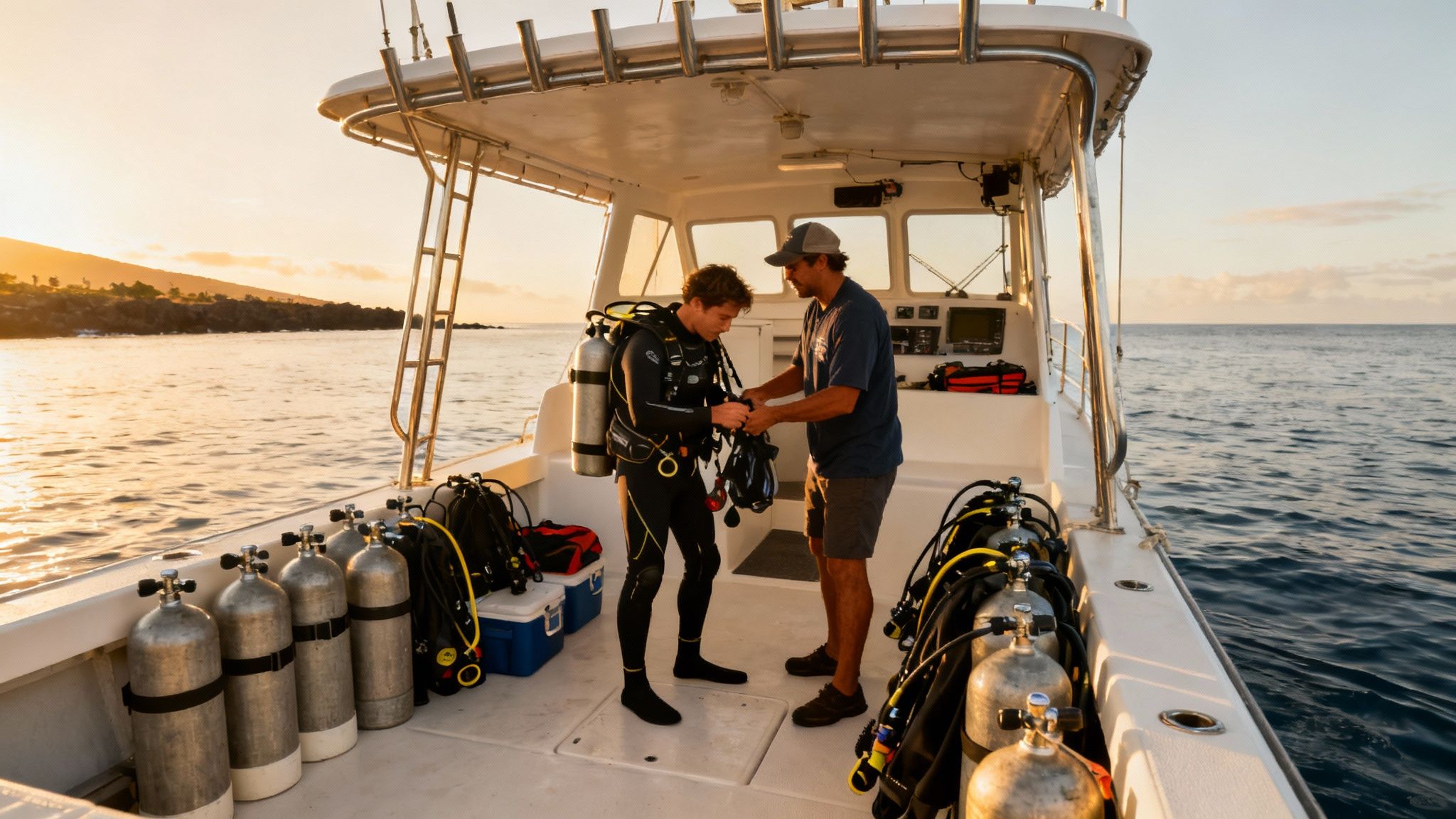
Picking the right dive shop for your Big Island scuba diving trip is probably the single most important decision you'll make. A great operator does more than just drive the boat; they shape your entire experience with their expertise, commitment to safety, and genuine aloha spirit. They set the tone for your adventure, so finding the one that fits your style is crucial for a memorable trip.
With so many options in Kona, it can feel a bit overwhelming at first. But you can quickly narrow it down by focusing on a few key things: a stellar safety record, experienced guides who love what they do, comfortable boats, and a promise to keep groups small. These factors are what separate a good day of diving from an unforgettable one. For a deeper dive into this, check out our dedicated guide on how to choose a Kona dive shop.
What to Look for in a Top-Tier Operator
When you're comparing dive companies, it's the little details that make a huge difference in your safety and fun. This isn't just about finding the cheapest price; it's about the value and peace of mind you're getting.
- Safety First: Does the company have a squeaky-clean safety record? Is there emergency oxygen and first aid readily available on the boat? Pay attention during the dive briefings—are they thorough and professional?
- Quality Gear and Boats: Nothing's worse than faulty rental gear. The boats themselves should be clean, spacious, and offer shade from that strong Hawaiian sun. Creature comforts like a marine head (toilet) and a hot shower for after your dive are a massive plus.
- Small Group Sizes: This is a big one. Smaller groups mean you get more personalized attention from your guide. It also means less crowding on the boat and a more relaxed, intimate experience underwater.
- Passionate Staff: You want PADI-certified divemasters and instructors who are genuinely excited about the ocean. Their expertise is what turns a regular dive into a guided tour of the reef, pointing out critters you'd swim right past otherwise.
A top-notch operator prioritizes your experience over simply filling spots on a boat. They understand that a comfortable, well-informed diver is a happy diver, and they go the extra mile to make every trip special. This commitment is what separates the good from the truly exceptional.
Kona Honu Divers: A Premier Choice
When you're looking for that perfect blend of safety, service, and incredible diving, Kona Honu Divers consistently sets the standard. We’ve built our reputation on a friendly, professional crew, top-of-the-line boats, and an unwavering dedication to small group sizes, making us one of the most trusted operators on the island.
Our fleet was designed with diver comfort in mind, featuring those all-important hot showers, plenty of shade, and room to move around without bumping into everyone. We offer a whole range of Kona diving tours, from the world-famous Manta Ray Night Dive to advanced charters exploring unique lava tubes. But you don't have to take our word for it—our customer reviews tell the story of our commitment to excellence.
Other Highly-Rated Kona Dive Shops
While we're proud of what we do, we also know the Kona coast is lucky to have several other excellent dive companies. To give you the full picture, here are a couple of other highly-regarded operators known for providing fantastic underwater adventures.
Jack's Diving Locker has been a cornerstone of the Kona dive scene for decades. They offer a complete range of courses and tours and are widely respected for their comprehensive training programs and welcoming, family-friendly vibe.
Big Island Divers is another fantastic choice, celebrated for their fun-loving staff and diverse trip offerings. Whether it's the manta dive or a charter up the coast, they consistently earn praise for creating a fun and memorable day on the water.
Essential Big Island Diving Safety Tips
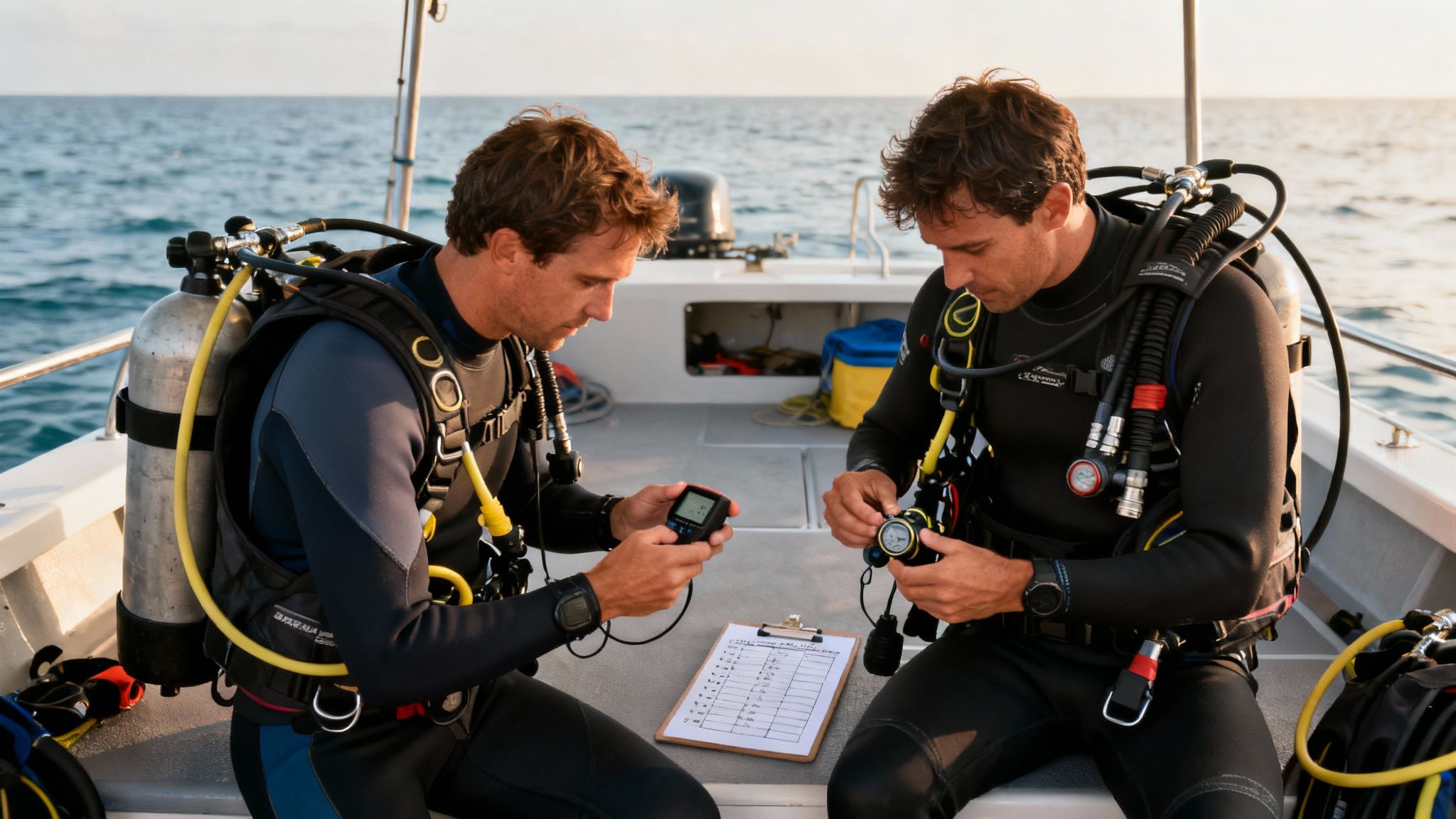
A fantastic day of Big Island scuba diving always boils down to one thing: a commitment to safety. Yes, the Kona coast is famous for its calm, clear waters, but let's be real—the ocean is still the ocean. It's a powerful force that demands our respect.
Following safety protocols isn't about holding you back; it’s about making sure every single dive is as amazing and worry-free as it can be.
The golden rule is simple: always dive within your training and comfort level. If you’re a certified Open Water diver, stick to sites that match your skills. Pushing your limits in a new place is a recipe for trouble. Just as crucial is tuning into your divemaster's briefing. They're giving you the playbook for that specific site, and that information is gold.
Hawaii’s Ocean Safety Record
To put things in perspective, let’s look at the numbers for ocean activities in Hawaii. Between 2009 and 2018, there were 28 scuba diving fatalities across all the islands. In that same timeframe, there were 206 snorkeling deaths, mostly tourists. This really drives home the fact that professional training and diving with reputable operators makes a world of difference.
The relatively low number of scuba incidents underscores a critical point: following the rules works. Professional oversight, proper training, and listening to local experts are the cornerstones of a safe underwater adventure.
Big Island Specific Safety Practices
The Big Island’s unique volcanic coastline and incredible marine life require a few extra points of awareness. These simple habits will protect both you and the fragile ecosystem you're there to see.
- Respect the Lava Rock: If you're shore diving, entries and exits can be tricky. That volcanic rock is sharp. Always wear sturdy booties, take it slow, and shuffle your feet to feel the bottom.
- Stay Hydrated: That Hawaiian sun is no joke. Dehydration seriously increases your risk of decompression sickness, so drink water constantly—before your dives, after your dives, and more than you think you need.
- Give Wildlife Space: Getting to see sea turtles, dolphins, or manta rays is a true privilege. Never touch, chase, or corner them. Admire them from a respectful distance. It keeps you safe and the animals stress-free.
- Check the Conditions: The ocean can change in a heartbeat. Always check the surf and swell reports before you go, especially for shore dives. For a great local resource, check out our guide on how to check ocean conditions for the Big Island.
Keep these tips in mind, and you can focus on what you came here for: soaking in the incredible underwater world of the Big Island with total confidence.
Planning Your Ultimate Dive Adventure
Alright, you’ve seen what makes **Big Island scuba diving** so special, and you know what to look for in a great dive shop. Now for the exciting part—making it happen. Nailing down the logistics is the final step before you’re breathing easy underwater on the Kona coast.
The first question I always get is, "When should I come?" The beauty of Kona is that there’s really no bad time. We're on the leeward side, so the massive volcanoes shield us from the whipping trade winds, keeping the waters calm almost all year.
That said, certain seasons do offer some incredible bonuses. If you visit in the winter, from December to March, you'll be treated to the hauntingly beautiful songs of migrating humpback whales as the soundtrack for your dives. For a full breakdown of what each season has to offer, check out our guide on the best months to scuba dive in Hawaii.
Your Big Island Dive Trip Checklist
While your dive operator will have tanks, weights, and top-notch rental gear, bringing a few personal items can make a world of difference in your comfort. Packing smart means you can spend less time fiddling with gear and more time watching the turtles glide by.
- Dive Essentials: Don't forget your C-card and logbook! If you have personal gear like a mask or dive computer, bring them along. There's nothing better than diving with equipment you know and trust.
- Comfort Items: A reusable water bottle is non-negotiable for staying hydrated. I also highly recommend a light jacket or windbreaker for the boat ride home—especially after a night dive, when the air can feel surprisingly crisp.
- Sun Protection: The Hawaiian sun is no joke. Pack reef-safe sunscreen to protect both your skin and our delicate corals. A good hat and polarized sunglasses are also must-haves for your surface intervals.
Getting these small details sorted out before you leave home eliminates any last-minute stress. You can show up to the boat relaxed, prepared, and ready to soak in every moment of the world-class diving waiting for you.
From the otherworldly dance of the mantas at night to the vibrant fish darting over ancient lava flows, a Big Island scuba diving trip is something you'll never forget. You aren't just booking another vacation; you're getting a front-row seat to one of the most incredible underwater shows on the planet.
Your Kona Diving Questions, Answered
Still have a few questions floating around before you book your Big Island scuba diving trip? You're not alone. We've put together some of the most common questions we hear from divers to give you the clear answers you need to plan your adventure with confidence.
Getting the details sorted out ahead of time means you can relax and just enjoy the incredible world waiting for you beneath the waves. Let's dive in.
What Certification Level Do I Need For Big Island Diving?
Great news for most divers: if you have your Open Water certification, you can access a huge number of the Big Island's most beautiful and famous dive sites. The conditions on the Kona coast are often so calm and clear that it's a perfect playground for divers of all experience levels.
However, if you're looking for a little more adventure, an Advanced Open Water certification will open the door to some truly unique sites. Think deeper lava caverns and intricate lava tubes. It's also a must for specialized dives like the surreal Blackwater Night Dive. If you're hoping to level up your skills while you're here, we offer a full range of PADI courses to get you there.
When Is The Best Time Of Year To Scuba Dive In Kona?
Honestly, there's no bad time. One of the best things about diving the Kona coast is that it's fantastic all year long. The island’s massive volcanoes act as a natural shield, protecting the western shore from the typical trade winds and creating a calm leeward side with consistently great conditions.
That said, if you visit during the winter months from December to March, you're in for a special treat. This is when humpback whales migrate to Hawaii to breed and calve. Hearing their hauntingly beautiful songs echoing through the water while you're on a dive is an experience that will stay with you forever.
While the diving is incredible any month you choose, hearing the powerful songs of humpback whales underwater adds a whole other dimension to a winter dive. It's a profound, almost primal experience that connects you to the ocean in a way you just can't describe.
Can I See Manta Rays During A Day Dive?
It's possible, but it's really a matter of pure luck. Seeing a manta ray during a daytime dive is a rare and unpredictable treat. They are usually on the move, so it's all about being in the exact right place at the exact right moment.
For a virtually guaranteed and absolutely mind-blowing encounter, the famous Manta Ray Night Dive is the way to go. The powerful lights we use attract a massive cloud of plankton, which is basically a dinner bell for the mantas. They show up to feast, performing an incredible underwater ballet just feet away from you.
Do I Need To Bring My Own Dive Gear?
Not unless you want to! Reputable dive shops like Kona Honu Divers have complete sets of high-quality, meticulously maintained rental gear. This makes your travel day a whole lot easier—no need to drag a heavy gear bag through the airport.
Of course, many seasoned divers prefer to bring their own mask for that perfect, no-leak fit and their dive computer so they're familiar with its display and logs. But it's absolutely not required. You can show up with just your certification card and a swimsuit, and we'll handle the rest.
Ready to see the magic of Kona's underwater world for yourself? At Kona Honu Divers, we run a wide range of diving tours designed to show you the very best that the Big Island has to offer.