
When you slip beneath the waves on the Big Island, you’re not just going for a dive; you’re entering a world sculpted by fire and water. The dramatic, ancient lava flows have created an underwater playground that easily ranks among the best on the planet, a volcanic landscape filled with vibrant reef gardens and mysterious sea caves.
What Makes Big Island Diving So Unique?
Imagine descending into crystal-clear water where the visibility often stretches beyond 100 feet. It's an almost surreal feeling, floating through an environment where underwater castles and tunnels, all formed from lava, are now home to thriving coral gardens bursting with color.
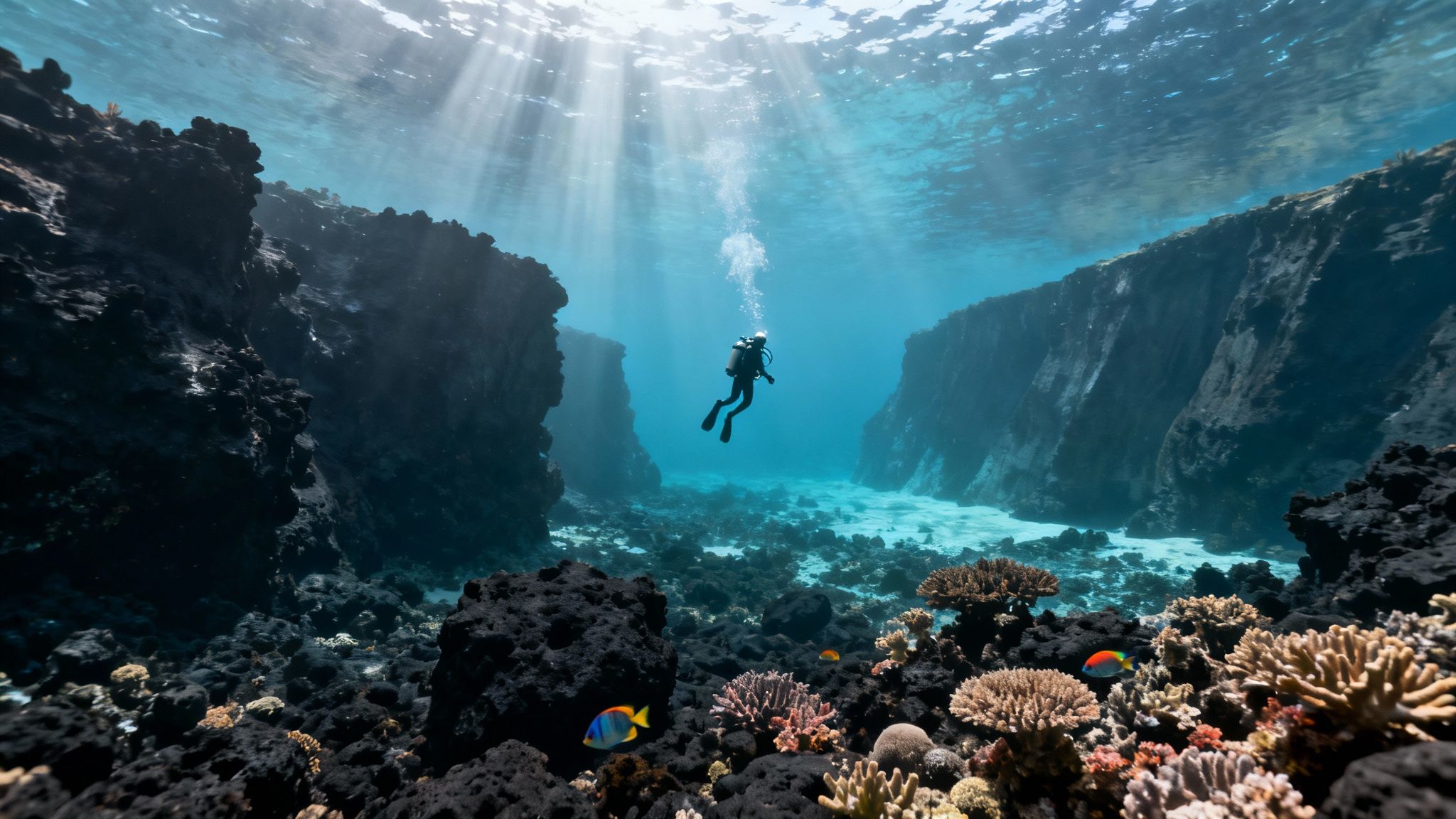
As you drift along the famous Kona coast, you'll likely spot Hawaiian green sea turtles gliding gracefully over the reef. The marine life here is truly special—nearly 23% of the fish you'll see are endemic, meaning they can only be found in these waters. It’s a testament to just how unique this ecosystem is. To get a deeper understanding of this, check out this great article on Hawaii’s marine biodiversity.
For a quick look at what the Big Island has to offer, here's a rundown of the must-do underwater experiences.
Big Island Diving Highlights at a Glance
| Experience Type | Best For | Key Marine Life |
|---|---|---|
| Reef Gardens | All Levels | Parrotfish, Butterflyfish, Triggerfish |
| Lava Caves | Advanced | Eels, Lobsters, Shrimp |
| Manta Night Dive | All Levels | Manta Rays, Plankton |
| Turtle Cleaning Stations | All Levels | Green Sea Turtles, Surgeonfish |
These experiences showcase just a fraction of what you can discover in the waters here, each offering a completely different perspective of the island's marine world.
"Diving here feels like entering a living museum carved in lava, teeming with life at every turn." — Local Dive Instructor
Having a guide who knows these waters inside and out makes all the difference. When you dive with a crew like Kona Honu Divers, their seasoned divemasters bring an intimate knowledge of each site, ensuring every dive feels personal and safe. You can check out their full lineup of dive tours here to find the perfect fit.
Why Kona's Clear Waters and Conditions Matter
That incredible visibility isn't just for stunning photos. The clarity of the water allows sunlight to penetrate deep, fueling the photosynthesis that keeps the coral healthy and vibrant. It also means you can spot wildlife from a distance—like schools of goatfish and ulua that shimmer like silver rain in the blue.
The conditions are fantastic year-round, so you can plan a trip for any season. Spring often brings calmer swells, while the winter waves can sculpt the reef in new and dramatic ways. No matter when you visit, every descent promises something new.
Getting Ready for Your Dive Adventure
A little preparation goes a long way to making your dive experience smooth and unforgettable.
- Gear Up: Water temperatures hover between a comfortable 75 to 80°F, but a 5mm wetsuit is a good idea for staying warm, especially on deeper or longer dives. A reliable dive computer is a must, and a compact underwater light will completely change your night dive, revealing creatures you'd otherwise miss.
- Get Organized: Before you arrive, double-check your certification and any necessary health clearances. We recommend booking at least two dives to get a feel for both the daytime reef life and the magic of a night dive.
- Pack Smart: Don't forget the reef-safe sunscreen to protect both your skin and the coral. A dive slate can also be handy for jotting down notes or communicating underwater.
Taking care of these simple steps beforehand means that once you hit the water, your focus can be entirely on the breathtaking world around you. As the sun sets, watch the water glow with the fiery colors of the sky, a perfect reflection of the island's volcanic soul.
No two dives here are ever the same. Your journey into the heart of the Big Island’s underwater realm starts now—get ready to be amazed.
Why Kona Is a World-Class Diving Haven
So, what makes Kona the undisputed champion of Big Island scuba diving? It's really a story of geology and geography working in perfect harmony. The massive volcanoes, Mauna Loa and Hualalai, stand like giant bodyguards, shielding the western coast from the powerful trade winds that whip across much of the island.
This natural windbreak creates an underwater paradise. Think of it as a massive, protected bay with exceptionally calm and clear water nearly every single day. The result is a diving experience that feels custom-built for underwater exploration, where visibility often pushes past 100 feet and strong currents are a rarity.
This incredible reliability makes Kona a dream for everyone. If you're new to diving, you can build your confidence on gentle, peaceful reefs. If you're an old pro, you can head for the deeper sites without having to fight your way through choppy seas. It’s this consistency that really sets Kona apart.
Unbeatable Access and Incredible Variety
Beyond the serene conditions, the sheer convenience of diving in Kona is a huge part of its appeal. You'll find over 50 unique, moored dive sites dotted along the coast, and most are just a quick, beautiful boat ride from Honokohau Harbor. Less time on the boat means more time in the water.
And the variety of these sites is just staggering. One day you might be weaving through the ancient, hollowed-out passages of a lava tube, watching sunbeams slice through the water from openings in the rock above. The next, you could be drifting past dramatic underwater arches and pinnacles that soar from the seafloor, teeming with life.
The volcanic history of the Kona coast has sculpted a truly unique underwater world. Every dive here is a new discovery, from sweeping archways to hidden caverns. You never run out of amazing terrain to explore.
This complex structure is the perfect foundation for a thriving ecosystem. It's totally normal to see Hawaiian green sea turtles (honu) resting on the reef, while pods of playful spinner dolphins often cruise by on the surface. The nutrient-rich waters also support a dense population of colorful reef fish, curious moray eels, and even the occasional whitetip reef shark patrolling the edges.
A Hub for Top-Tier Dive Shops
These perfect conditions have naturally attracted a community of fantastic, professional dive operators. Companies like Kona Honu Divers have spent years mastering these waters, building a reputation for safe, unforgettable, and personal dive trips. Their local knowledge is priceless—they know exactly which site will be best on any given day and where the most interesting marine life has been spotted.
Choosing a seasoned operator is the key to getting the most out of your Kona experience. They don't just provide gear and a boat ride; they offer insights that turn a good dive into a great one. Whether it's pointing out a perfectly camouflaged frogfish you'd otherwise miss or sharing the story behind a particular lava formation, their expertise makes the whole adventure richer. It's this commitment to a phenomenal experience that keeps divers coming back to Kona year after year, ready to see what else this underwater paradise has to offer. You can see the full range of adventures available with Kona’s best diving tours.
Experience the Famous Manta Ray Night Dive
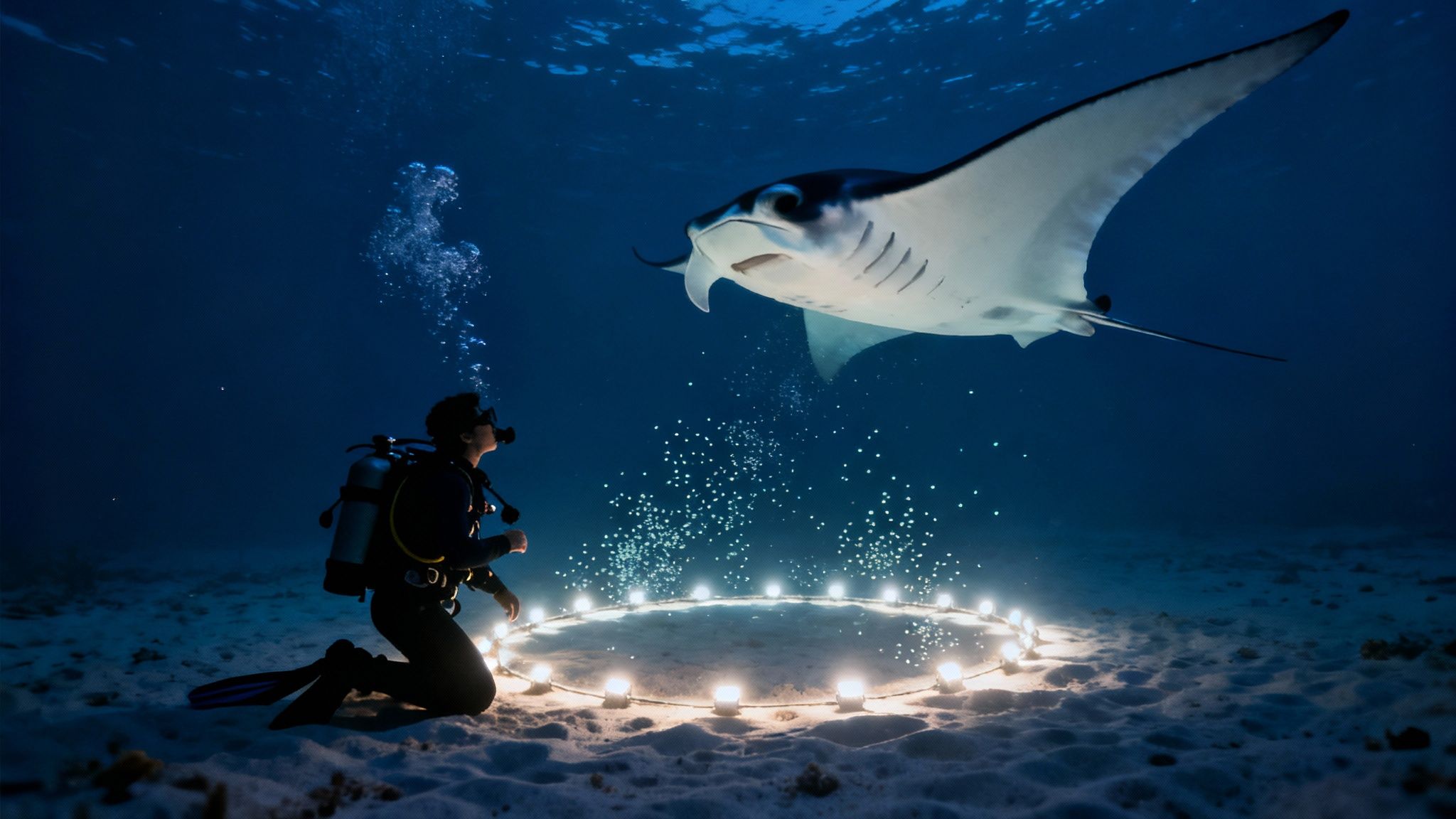
It’s often called a "bucket-list dive," and for once, the hype is absolutely real. The Kona Manta Ray Night Dive is a truly otherworldly experience, easily the crown jewel of Big Island scuba diving and a memory you'll carry with you forever.
Picture this: you're kneeling on the sandy ocean floor as the last rays of sunlight vanish from the surface. Your dive guide flips on a powerful underwater light, creating what everyone affectionately calls the "campfire." Almost instantly, this beacon attracts clouds of plankton, creating a glowing, all-you-can-eat buffet in the dark.
And then, they arrive. Majestic manta rays, with massive wingspans stretching over 12 feet, emerge from the blackness like silent, graceful ghosts. They swoop, glide, and perform effortless barrel rolls just inches over your head, feasting on the plankton. It's a surreal aquatic ballet that is both humbling and utterly thrilling.
How Did This Incredible Encounter Begin?
This amazing spectacle didn't just happen by chance; it grew out of a unique relationship between people and marine life. The now-famous night dive with manta rays off the Kona coast really started to take off back in the early 1980s. A key moment came in 1981 when Jack Clothier and his wife Tina opened Jack's Diving Locker, an operation that was instrumental in popularizing this unique Hawaii dive. You can dive deeper into how this became a global phenomenon in this fascinating overview of its history.
Over the decades, this has become one of the planet's most reliable and awe-inspiring wildlife interactions. It all comes down to the predictable behavior of these gentle giants. They aren't trained or coerced; they just show up for dinner, night after night.
"Watching these massive creatures perform their graceful, looping dance in the beams of your dive light is a core memory in the making. It's impossible to describe the feeling of a 12-foot manta ray gliding right over you."
What to Expect on a Manta Ray Dive Trip
Most manta ray night dives are set up as a two-tank trip, which gives you two fantastic, yet totally different, experiences.
- The Afternoon Reef Dive: Your adventure usually kicks off in the late afternoon with a beautiful dive on one of Kona's vibrant reefs. This first tank lets you get your bearings, check your gear, and enjoy the bustling reef life as it winds down for the day.
- The Main Event: After a surface interval, where you’ll likely catch a spectacular Kona sunset from the boat, it’s time to gear up for dive number two. As true darkness sets in, you’ll descend to the designated viewing spot for the main show.
Protecting these gentle creatures is the top priority. That’s why it’s so important to choose a dive operator committed to the Manta Ray Green List practices. These guidelines ensure the encounter is safe for both the divers and the mantas, guaranteeing this incredible experience is around for generations to come. To get a better sense of the dive specifics, check out our guide on the Kona Manta Ray Night Dive.
This once-in-a-lifetime dive is expertly handled by top operators like Kona Honu Divers, who put safety and manta ray conservation first. Their experienced crew will make sure you have a front-row seat to one of nature's greatest performances. Book this unforgettable experience on their Manta Ray Dive Tours page and prepare to be amazed.
Must-Visit Big Island Dive Sites
While the manta ray night dive rightfully gets the spotlight, it's just the beginning of what Big Island scuba diving has to offer. The Kona coast is absolutely littered with incredible dive sites, each with its own unique personality. Once you look past the famous nighttime spectacle, you’ll discover a world of vibrant reefs, ancient lava tubes, and dramatic pinnacles just waiting to be explored.
A morning or afternoon dive is where you really get to see the island's volcanic soul. The underwater landscape is a direct result of ancient lava flows that have created stunning architecture now bursting with life. Think of it as exploring a living museum of geological history. Here are a few can't-miss spots that really show off the sheer variety of Kona diving.
Turtle Pinnacle (Kalahuipua'a)
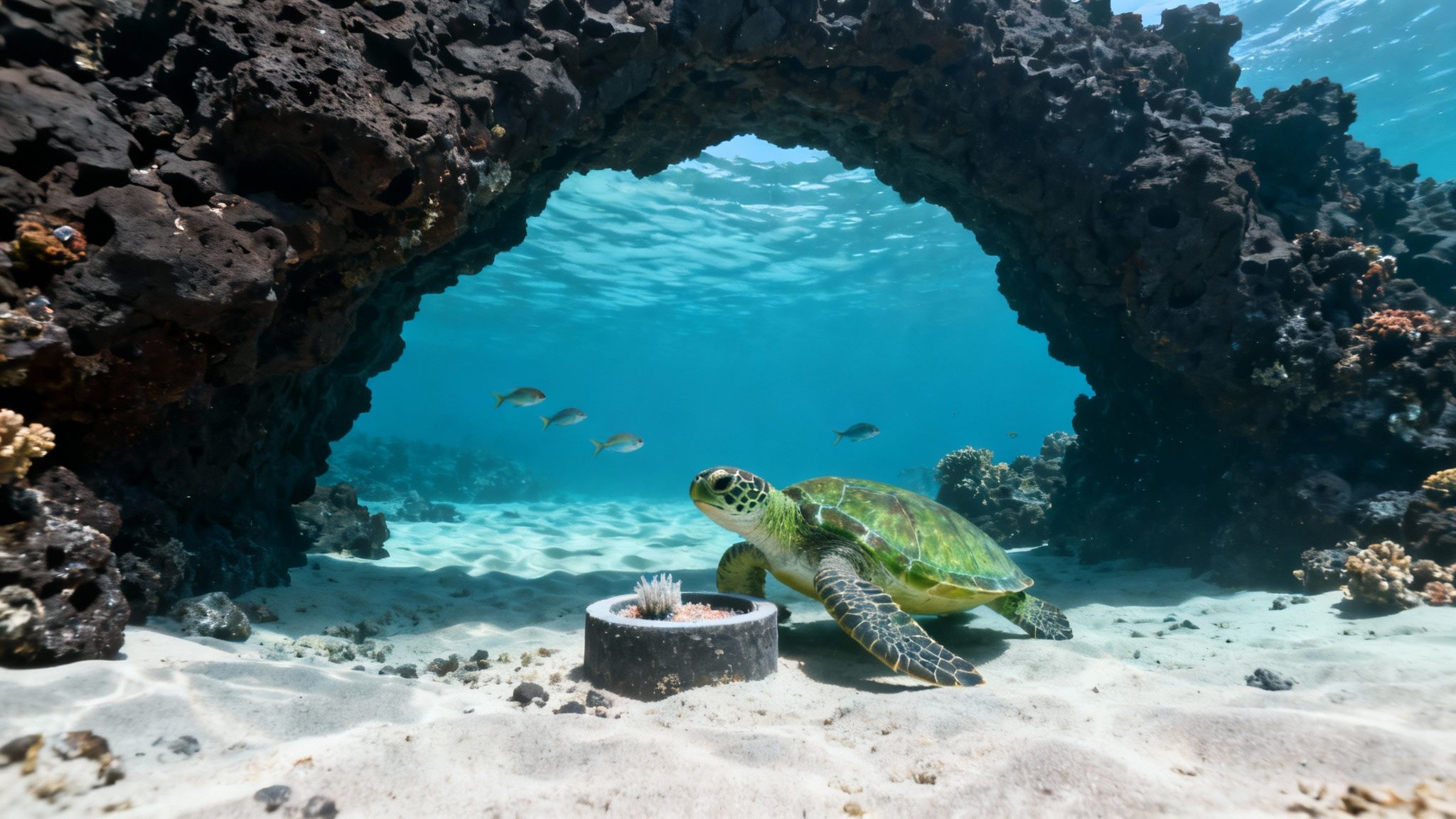
This place lives up to its name. Turtle Pinnacle is legendary for encounters with Hawaiian green sea turtles, or honu, and for a very cool reason: it's a "cleaning station."
Imagine an underwater spa day. That’s what’s happening here. The turtles gather at this submerged lava pinnacle and just hang out, letting smaller reef fish like the bright yellow tangs swim up and nibble away algae from their shells. It’s an amazing display of symbiosis. You can often see several turtles at once, just chilling out while they get groomed. The pinnacle itself rises from the seafloor, with most of the action happening between 30 to 60 feet, making it a fantastic dive for all experience levels.
Crescent Beach (Pahoehoe Beach Park)
If you're a fan of exploring underwater topography, Crescent Beach is your spot. It’s a stunning maze of coral-covered arches, swim-throughs, and caverns carved out by ancient lava.
Diving here feels like you're exploring a sunken cathedral. Sunbeams cut through openings in the rock from above, lighting up the passages. This complex structure is the perfect home for all sorts of marine critters. Keep your eyes peeled in the nooks and crannies for moray eels, octopus, and even whitetip reef sharks taking a nap. With depths around 25 to 50 feet, it’s an accessible and endlessly fascinating dive.
Golden Arches
Named for a series of massive, lava-formed arches, this site is pure underwater drama. Gliding through these huge, golden-hued formations is an experience you won't forget and makes for some epic photos.
But it’s not just about the geology. The arches provide shelter for a ton of marine life. It’s pretty common to spot whitetip reef sharks resting on the sandy bottom under the ledges. You'll see moray eels poking their heads out of rocky dens and big schools of fish using the arches for cover. Golden Arches really puts the raw power and beauty of volcanic creation on display. For a deeper look into even more amazing spots, check out this comprehensive list of Kona's premier dive sites.
Kona's Premier Dive Sites Compared
With so many options, picking the right spot can be tough. This little cheat sheet breaks down our top sites to help you find the perfect underwater adventure for your trip.
| Dive Site | Max Depth | Key Feature | Best For |
|---|---|---|---|
| Turtle Pinnacle | 60 feet | Turtle cleaning station | Photographers, all skill levels |
| Crescent Beach | 50 feet | Arches & swim-throughs | Exploring unique topography |
| Golden Arches | 50 feet | Massive lava arches | Dramatic landscapes, shark spotting |
Ultimately, the best dive for you comes down to what you want to see. Whether you're hoping to witness the calm, quiet world of sea turtles or navigate otherworldly lava tubes, Kona delivers.
Each dive site along the Kona coast tells a different story of the island's volcanic past. Exploring these underwater landscapes is like reading a chapter in Earth's history book, written in stone and brought to life by the sea.
The key to a great experience is going with a professional crew that knows these sites like the back of their hand. They’ll get you to the best spots based on the day’s conditions, ensuring a safe and memorable dive every time.
Unique Adventures for Experienced Divers
So, you've got your certifications and a good number of dives under your belt. Are you ready to see what else the Big Island has to offer? For seasoned divers looking for a real challenge, Kona’s most unforgettable experiences happen long after the sun goes down and far from the comfort of the reef.
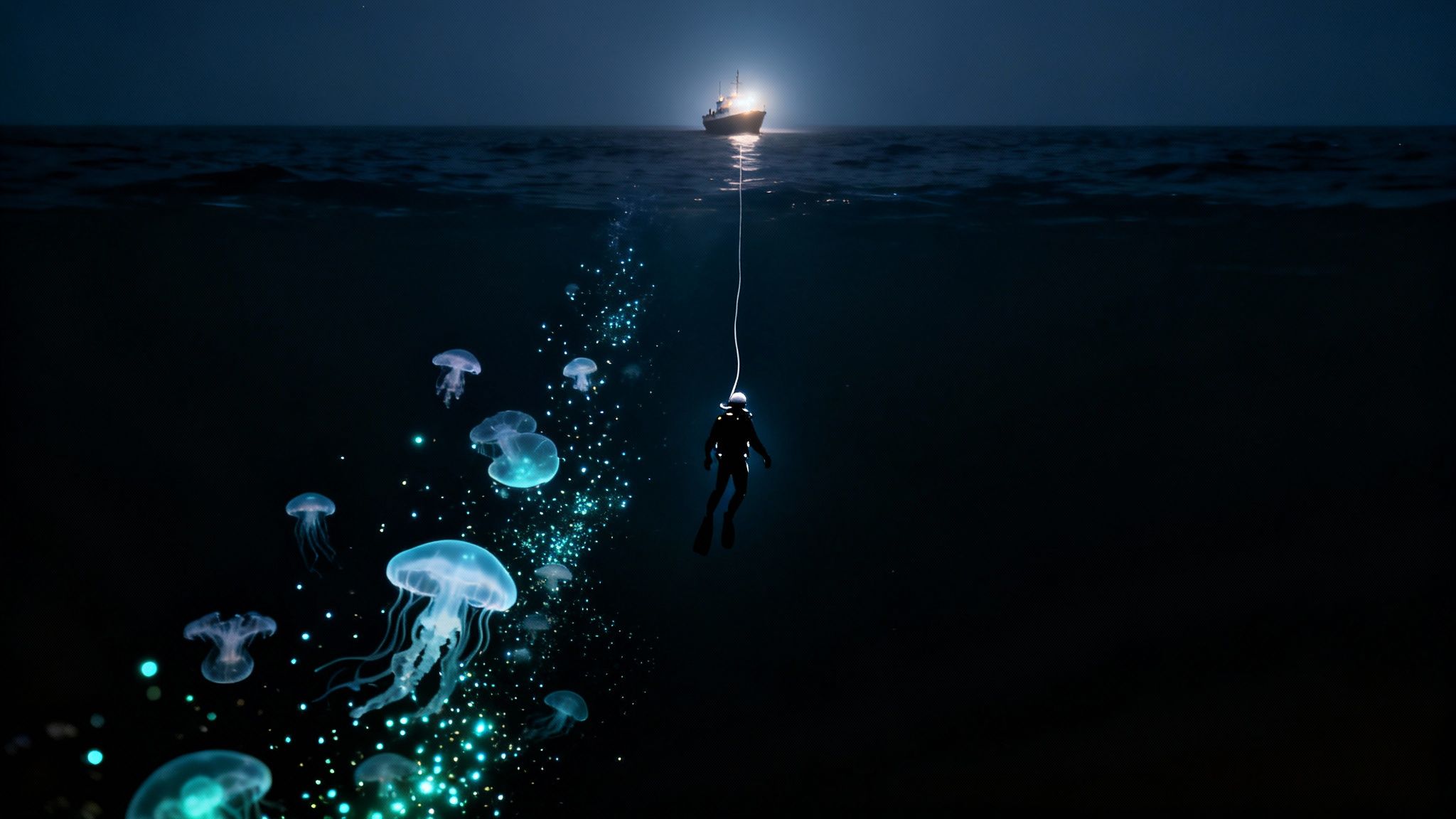
The holy grail for many is the Kona Blackwater Dive. Let’s be clear: this isn’t your average night dive. You’ll be miles offshore, tethered to a boat, floating over thousands of feet of pure black ocean. You’re not exploring a reef on the bottom; you're suspended in the middle of the water column, watching Earth’s largest daily migration happen right in front of your mask.
Every single night, a universe of strange and mesmerizing creatures rises from the deep to feed near the surface. Many of them are bioluminescent, creating their own light show in the dark. It’s a surreal, almost psychedelic experience that photographers and adventure-seekers dream of—a rare chance to see a world that very few people even know exists.
The Pelagic Magic Blackwater Dive
A blackwater dive isn’t something you just decide to do. It’s a highly specialized charter that demands confidence, skill, and a calm mind. You'll come face-to-face with creatures that look like they're straight out of a science fiction movie: see-through squid, bizarre larval fish, and hypnotic, pulsing jellies.
Because you’re in the deep open ocean at night, operators have some pretty strict rules. You'll generally need an Advanced Open Water certification and a solid logbook of night dives to prove you can handle yourself safely. For many, this is the absolute peak of Big Island scuba diving.
The Kona Blackwater Dive is less of a dive and more of an expedition into liquid space. Floating in the dark, surrounded by undiscovered life forms, is one of the most humbling and surreal experiences you can have as a diver.
This is a trip you have to be ready for. You can get all the details on this incredible adventure on the Blackwater Dive tour page.
Advanced Reefs and Remote Pinnacles
Beyond the blackwater, Kona also challenges advanced divers with remote offshore pinnacles and intricate lava tube systems. These dives aren't for beginners; they demand rock-solid buoyancy control and smart dive planning.
These advanced charters usually head further out, exploring sites that are deeper, occasionally have stronger currents, and feature much more dramatic underwater landscapes. It’s on these dives that you’re more likely to have those chance encounters with big pelagic animals like sharks, rays, and even pods of dolphins cruising by.
Thinking of joining one of these elite trips? You'll need to have the right experience.
- Advanced Certification: An Advanced Open Water cert is the standard starting point.
- Logged Dives: Most charters will want to see that you have significant experience, often requiring 50 or more logged dives.
- Good Buoyancy: Your ability to hang perfectly still in the water is non-negotiable, especially when navigating delicate lava formations or deep pinnacles.
These dives are built to be both challenging and incredibly rewarding. They take you to the wilder side of the island's underwater world, to places most divers will never see. If you’re ready to step up your game, check out some of the premium advanced trip options available.
How to Plan a Safe and Memorable Dive Trip
A great dive trip to the Big Island all comes down to smart planning and a healthy respect for the ocean. The good news? Kona's incredible conditions make it a phenomenal place to dive pretty much any time of year. Water temps stay in that perfect sweet spot, usually hovering between a comfortable 75°F to 80°F.
Because the water is so consistent, packing is a breeze. For most divers, a simple 3mm or 5mm wetsuit is all you'll ever need to stay warm without feeling weighed down. While it's always great here, there are a few subtle seasonal perks. Winter brings the unforgettable sound of humpback whale songs echoing through the water, while summer usually delivers the flattest, calmest seas. No matter when you visit, it's always a good idea to get a daily report on the water; you can learn exactly how to check ocean conditions for the Big Island.
Choosing the Right Dive Operator
Let’s be honest, the single biggest decision you’ll make is picking your dive operator. This one choice shapes your entire experience, from how safe you feel to how much you actually enjoy your time underwater. A professional crew does more than just drive the boat; they manage the dive, read the conditions, and share a wealth of local knowledge you can't get anywhere else.
So, what should you look for? I always tell people to prioritize operators that run small groups. You get far more personal attention from your divemaster, and the whole experience feels less crowded and more special. Make sure their team is staffed with experienced, certified professionals who really know the Kona coast. Another dead giveaway of a quality operation is their gear—it should be high-quality and look meticulously maintained.
Personal Dive Safety Best Practices
Your guide is there to lead the dive, but your personal safety starts with you. Building a few simple habits can make all the difference and let you focus on the fun stuff.
- Stay Hydrated: This is a big one. Drink lots of water before and after every dive. Being dehydrated can seriously increase your risk of decompression sickness.
- Be Honest: Don't be shy. Talk to your divemaster about your experience level, how you're feeling, and any concerns you have. Never let anyone pressure you into a dive that feels beyond your skill set.
- Respect the Ocean: The power of the ocean here is no joke. Always listen intently during the pre-dive briefing, stick with your guide, and never underestimate how quickly conditions can change.
Being prepared for the unexpected is just part of being a responsible adventurer. It’s always a good idea to have a solid wilderness first aid kit on hand for any minor issues that might pop up.
The ocean demands respect. By planning carefully, choosing a professional guide, and diving within your limits, you honor that respect and open the door to an unforgettable adventure.
If you need more convincing about going with a pro, just look at the numbers. Between 2009 and 2018, Hawaii recorded 28 scuba diving fatalities. That might sound high until you compare it to the 206 snorkeling deaths over the same period. It's a stark reminder that diving with certified professionals who follow strict safety protocols makes all the difference.
Frequently Asked Questions About Diving in Kona
Got a few last-minute questions before you gear up for your Big Island scuba diving trip? It’s completely normal. We’ve pulled together the questions we hear most often from fellow divers to help you get prepared and excited for what’s to come.
What Scuba Certification Do I Need for the Big Island?
One of the greatest things about diving here is that there’s a dive for everyone. Kona's underwater world is incredibly welcoming, whether you're a seasoned pro or you’ve never breathed through a regulator before.
- No Certification: If you’re brand new to the sport, no problem. A Discover Scuba Dive is your ticket to the ocean. You'll get a quick, thorough briefing before heading out with a professional instructor to explore a beautiful, shallow reef. They're with you every step of the way.
- Open Water Certified: This is the standard certification, and it opens the door to most of Kona's best dive sites. With this card, you can explore vibrant coral gardens, swim through ancient lava formations, and visit the famous turtle cleaning stations.
- Advanced Open Water: Ready to go a little deeper? An Advanced certification will qualify you for the more challenging sites, like exploring intricate lava tube systems, descending on deeper pinnacles, and joining specialized dives that demand a bit more experience.
Will I See Sharks While Diving in Kona?
This is a question we get all the time, usually asked with a mix of excitement and a healthy dose of nerves. While we can never promise a specific wildlife encounter, yes, it's possible to see sharks in Kona—and it's almost always a calm, memorable experience.
The most common shark you're likely to spot is the whitetip reef shark. You'll usually find them resting quietly on sandy patches under ledges or cruising gracefully along the reef. They are famously unbothered by divers. Our guides are experts at creating safe, respectful encounters for everyone involved. For most people, seeing one in its natural habitat becomes a highlight of their trip.
When Is the Best Time of Year for Big Island Scuba Diving?
Honestly, there’s no bad time to dive in Kona. The water stays wonderfully warm year-round, and the massive volcanoes on the island act as a natural shield, protecting the Kona coast from major winds and keeping the seas calm.
That said, a couple of seasons offer something extra special that might tempt you.
The winter months, from December to March, are simply magical. This is when humpback whales arrive in Hawaiian waters to breed and calve. While seeing one underwater is incredibly rare, hearing their songs reverberate through the water on your dive is an experience that will stay with you forever.
On the other hand, the summer months often bring the warmest water and the flattest, calmest seas. If you tend to get cold or just love a glassy boat ride out to the dive site, summer is an absolutely perfect time to visit.
Ready to book your dive? Kona Honu Divers offers a wide range of diving tours perfect for any skill level and any time of year.