
Welcome to the underwater paradise of Hawaiʻi's Big Island, where the island's fiery volcanic heart has created a spectacular world beneath the waves. Big Island scuba diving isn't just an activity; it's an experience. Think crystal-clear water, mind-bending lava tube formations, and unforgettable encounters with some of the ocean's most majestic creatures. From the world-famous Manta Ray Night Dive to peaceful reefs where turtles hang out, the Kona coast has an adventure waiting for every diver.
Why Choose the Big Island for Your Next Dive Adventure
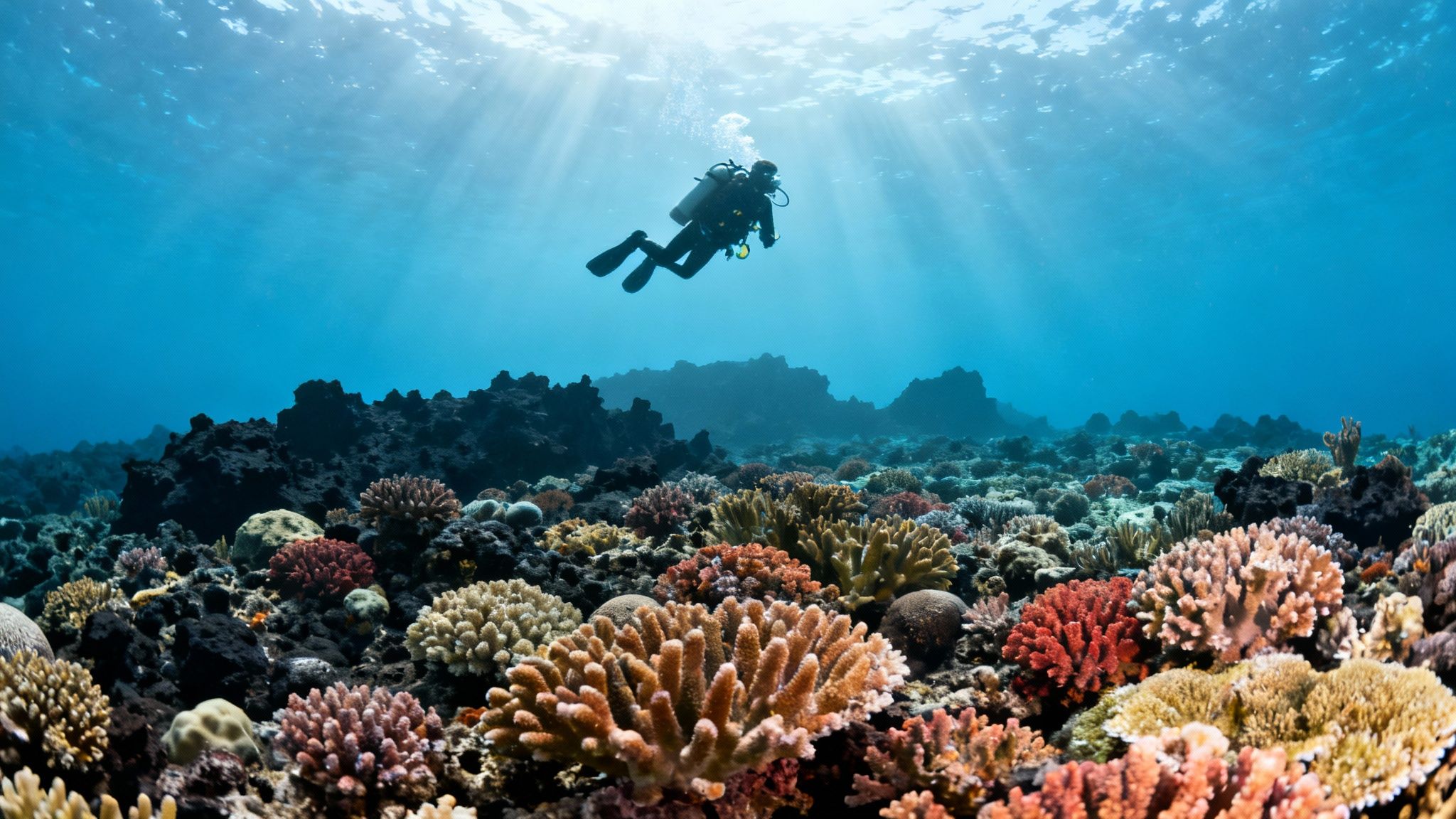
The Big Island isn't just another dot on the map of tropical destinations. It's a premier spot for divers, shaped by volcanic forces and sheltered by nature itself. The Kona coast is tucked away from the powerful trade winds by the sheer mass of volcanoes like Mauna Loa and Hualālai. This creates a diver's dream: some of the calmest, clearest water you'll find anywhere in the Hawaiian Islands, with very little current to fight.
What really sets it apart is the geology. The same lava flows that formed the island also created an incredible underwater landscape. Imagine exploring ancient lava tubes, swimming through dramatic arches, and navigating massive underwater caverns. This unique terrain is the perfect playground for a staggering amount of marine life, making every single dive a genuine discovery.
Unbeatable Diving Conditions
Here's a quick overview of the key highlights and typical conditions for diving on the Big Island.
| Feature | Details |
|---|---|
| Water Temperature | A comfortable 75°F to 80°F (24-27°C) year-round. |
| Visibility | Frequently exceeds 100 feet on the Kona coast. |
| Currents | Generally mild to non-existent at most popular sites. |
| Best Season | Diving is excellent all year, with summer offering the calmest seas. |
| Marine Life | Manta rays, green sea turtles (honu), spinner dolphins, reef sharks. |
| Topography | Lava tubes, arches, caverns, and healthy coral reefs. |
These conditions create a reliable, world-class diving destination no matter when you decide to visit. You can dive deeper into the specifics with the PADI travel guide for the area.
What Awaits You Underwater
Dropping beneath the surface here is like entering another world. The sheer variety is what makes it so special.
- Vibrant Coral Reefs: You'll find sprawling gardens of healthy hard and soft corals, bustling with hundreds of species of colorful fish.
- Iconic Marine Life: This is a sanctuary for green sea turtles (honu), playful spinner dolphins, and of course, the magnificent manta rays.
- Unique Volcanic Formations: Nothing compares to exploring underwater lava tubes, arches, and craters—features you simply won't find anywhere else.
- World-Famous Night Dives: The Big Island is home to the Manta Ray Night Dive, a bucket-list experience consistently ranked as one of the best night dives on the planet.
Whether you just got your certification or have hundreds of dives under your belt, there's something here to blow you away. Highly respected operators like Kona Honu Divers run professionally guided diving tours that showcase the absolute best of this aquatic paradise, ensuring your adventure is both safe and completely unforgettable.
Exploring Kona’s Most Iconic Dive Sites
The Kona coast isn't just a location on the Big Island; it's the heart and soul of its underwater world. Tucked away from the trade winds by the island's massive volcanoes, this shoreline boasts some of the calmest, clearest water you'll find anywhere in Hawaii. It’s the perfect stage for an incredible variety of dive sites.
From ancient lava tubes to sprawling coral gardens, every spot tells a story. This is where your Big Island scuba diving adventure really comes alive, dropping you into an alien landscape sculpted by fire and now teeming with life. Operators like Kona Honu Divers have spent decades learning these waters, and their expertise is what turns a good dive into an unforgettable one.
Turtle Pinnacle: A Famous Cleaning Station
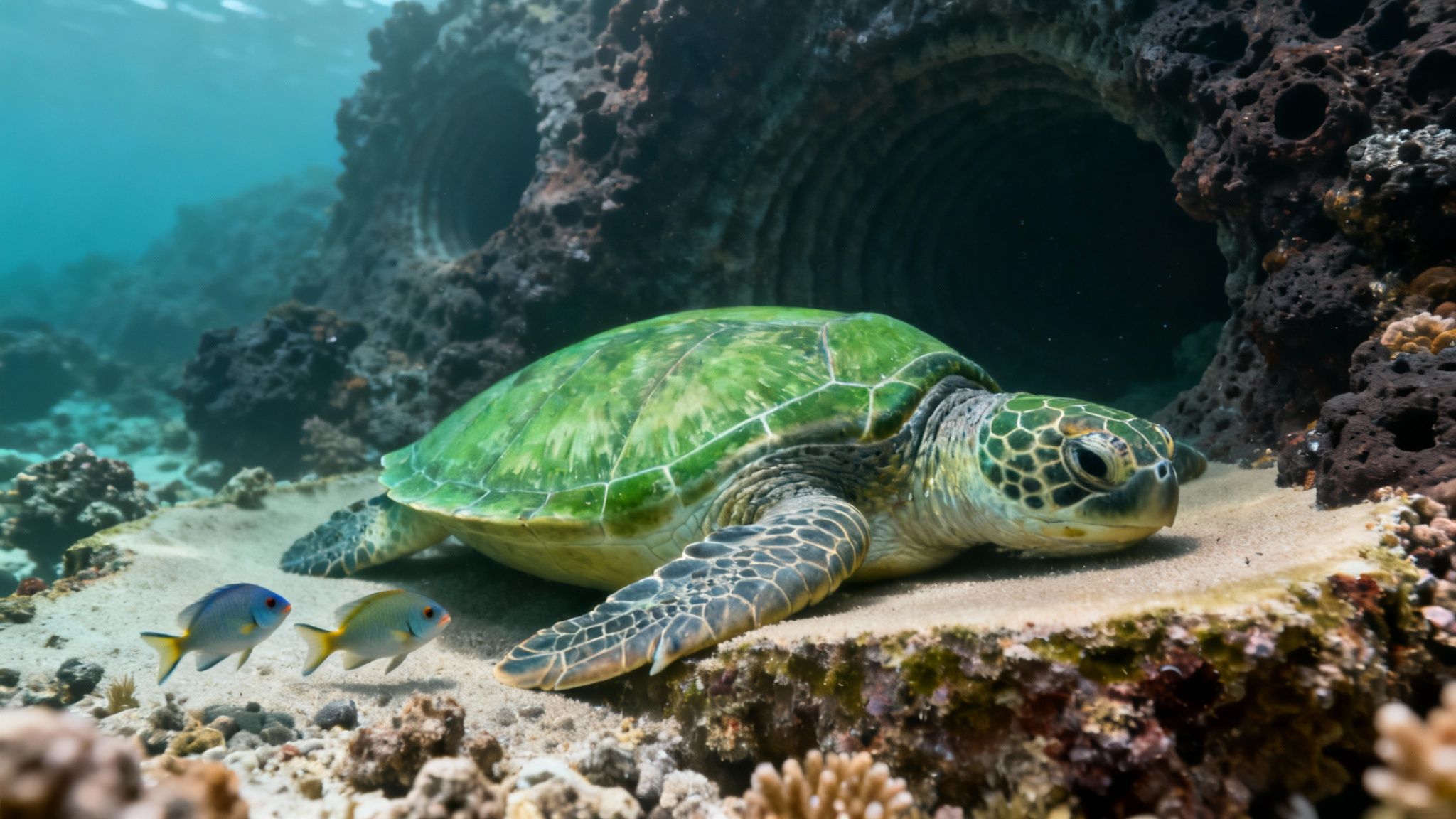
One of the most beloved sites around is Turtle Pinnacle, and it’s a perfect example of the intricate teamwork that happens on a reef. This isn't just a place where you might see turtles; it's a natural "cleaning station."
Green sea turtles (honu) cruise in and patiently wait for surgeonfish and other small reef fish to pick algae and parasites right off their shells. Think of it as a spa day for turtles, and you get a front-row seat to the action. It's a fantastic glimpse into the symbiotic relationships that make the reef tick.
At Turtle Pinnacle, it’s common to see several turtles at once, mingling with butterflyfish and wrasse in depths between 30 to 60 feet, making it a fantastic dive for all experience levels.
Golden Arches And Au Au Crater
Beyond the turtle sanctuary, Kona's volcanic past has left behind some truly breathtaking underwater architecture. Two of my favorite spots that really showcase this are Golden Arches and Au Au Crater.
-
Golden Arches: Just like the name implies, this site is famous for a series of stunning lava rock arches you can actually swim through. It feels like you're exploring the ruins of an ancient city as sunlight streams through the overhead rock, lighting up schools of colorful fish.
-
Au Au Crater: This dramatic, bowl-shaped site was formed by a collapsed lava dome. It's a playground of swim-throughs and small caverns, and it’s a popular hangout for whitetip reef sharks resting on the sandy bottom. You’ll find a huge diversity of critters seeking shelter in all its nooks and crannies.
These sites are prime examples of how volcanic activity created a complex and exciting underwater playground. The dramatic drop-offs, ledges, and lava tubes provide the perfect habitat for a huge diversity of species, from tiny frogfish to majestic eels.
Choosing Your Next Dive Adventure
With so many incredible options, how do you even begin to choose? The best way is to match a site's personality with your own interests and skill level.
Whether you're a new diver looking for a calm, shallow reef or a seasoned explorer ready for dramatic topography, Kona has a site waiting for you. Exploring the different locations is half the fun, and a good dive operator can help tailor the day's plan to the conditions and what the group wants to see.
You can check out a list of over 40 amazing spots in this guide to dive sites Kona Honu Divers visits.
Ready to see these sites for yourself?
The Magic of a Manta Ray Night Dive
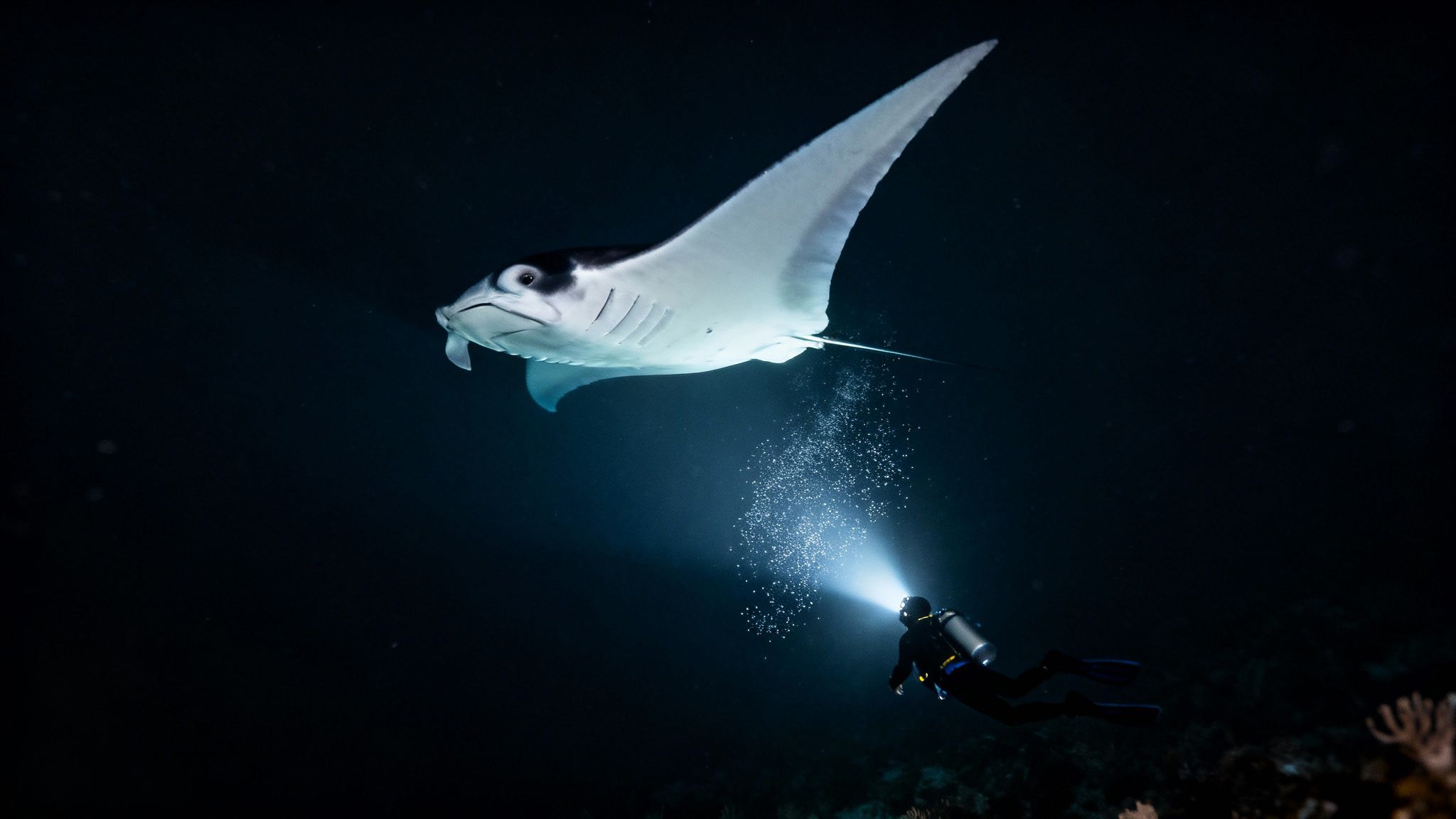
Picture this: you’re settled on the sandy ocean floor after sunset, surrounded by the quiet dark of the sea. All around you, powerful beams of light cut through the blackness, pointing up toward the surface like a beacon. Then, out of the void, a shadow appears. It’s a massive, graceful creature, gliding into the light with a wingspan wider than you are tall. This is the world-famous Manta Ray Night Dive, a signature Big Island scuba diving adventure that’s hands-down one of the best night dives on Earth.
The concept behind this incredible spectacle is brilliantly simple. Dive operators create a massive "campfire" of light on the ocean floor. This light attracts swarms of plankton, the microscopic critters that manta rays absolutely love to eat.
The Underwater Ballet Begins
Once the plankton buffet is set, the real stars of the show make their grand entrance. Giant resident manta rays, some with incredible wingspans of over 12 feet, swoop in for dinner. For a diver, watching from below is simply breathtaking. You get a front-row seat as these gentle giants perform an aquatic ballet, executing effortless barrel rolls and gliding just inches over your head.
They soar through the beams of light with their huge mouths wide open, filtering the plankton-rich water. Being this close to such majestic animals in their own environment is a truly humbling and unforgettable experience that few other dives anywhere can replicate.
The Manta Ray Night Dive is so much more than just watching wildlife; it's an immersive, almost surreal spectacle. The combination of the deep darkness, the bright lights, and the silent, powerful movements of the mantas creates a memory you'll carry with you forever. You can learn more about what is a manta ray night dive in our detailed guide.
This whole encounter is carefully managed to ensure it's completely safe for both the divers and the precious mantas. To get the full scoop on how it works, check out this comprehensive Big Island Manta Ray Night Snorkel Guide for some essential tips.
Ready to see the magic for yourself? You can book your own spot for this unbelievable show on a Manta Ray Dive tour.
Discovering the Kona Blackwater Dive
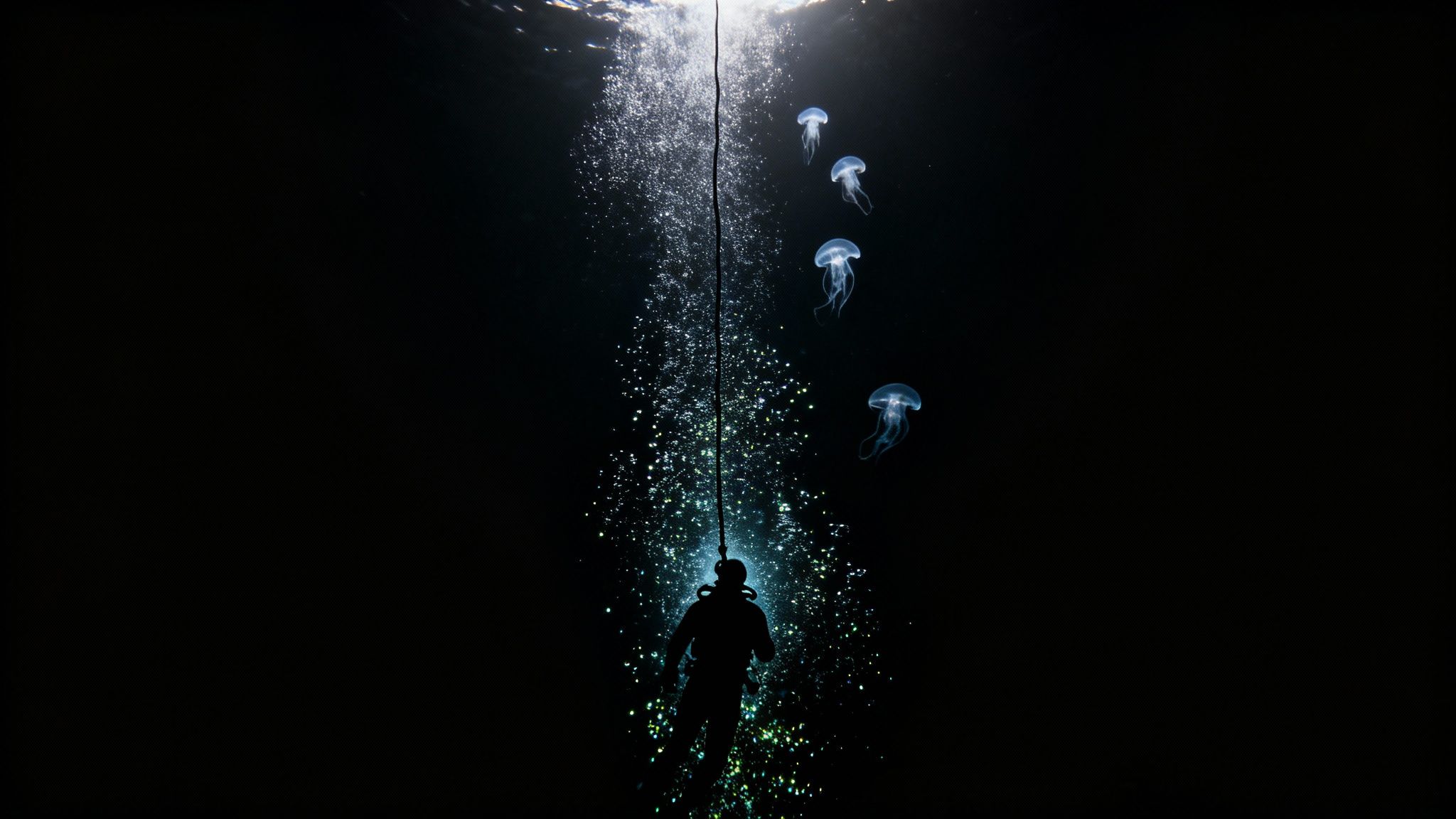
If you're a diver who truly lives for adventure, the Kona Blackwater Dive is calling your name. Forget everything you know about typical night dives; this is a whole different world. You're tethered to a boat, suspended over thousands of feet of inky black water, waiting for the abyss to reveal its secrets.
It’s a front-row seat to the largest migration on Earth. Every single night, countless deep-sea organisms make the long journey toward the surface to feed, and you get to float right in the middle of it. The creatures you'll see are so strange and beautiful they look like they’re from another planet.
What You Might See
For underwater photographers and seasoned divers looking for something completely new, this dive is an absolute dream. The darkness is punctuated by flashes of light and bizarre silhouettes you won’t find anywhere else.
- Larval Creatures: You’ll see baby versions of familiar reef fish, but they look nothing like their adult counterparts. It’s like peeking into a secret nursery.
- Bioluminescent Jellies: Glowing, pulsating jellyfish and siphonophores drift by, creating a living light show in the deep.
- Unique Invertebrates: Get ready for alien-like squid, otherworldly shrimp, and other invertebrates that are rarely, if ever, seen by human eyes.
The Kona Blackwater Dive isn't about exploring a reef—it's about drifting through inner space. It's a surreal, almost meditative experience that gives you a glimpse into a hidden world that only comes alive in the dark.
This is a highly specialized dive that demands excellent buoyancy and a calm attitude, but the payoff is an experience you will never forget. For those ready to take the plunge, Kona Honu Divers offers an incredible guided blackwater dive experience.
How to Choose the Right Dive Operator in Kona
Think of your dive operator as more than just your ride to the cool spots. They're your guide, your safety crew, and the ones who really know the secrets of the local waters. Picking the right one can make or break your entire trip, so it’s worth a little research. A top-notch crew will always put safety first, show deep respect for the ocean, and know the Kona coast like the back of their hand.
When it comes to big island scuba diving, we’ve had consistently amazing experiences with Kona Honu Divers. They've earned a stellar reputation, and for good reason. They are committed to running small groups, which means you get more personalized attention from the divemaster. It’s a completely different vibe from being on a crowded boat.
This focus on smaller groups also helps protect Hawaii’s fragile coral reefs, which is something we should all care about. The result is a more relaxed, personal dive with better chances for incredible wildlife sightings. You can see what they offer and book their incredible diving tours right on their site.
Other Reputable Dive Operators
Of course, Kona is home to a whole community of excellent, professional dive shops. The perfect fit for one diver might not be the same for another. To help you find your match, here are a few other highly-respected operators in the area, along with real reviews from fellow divers.
Jack's Diving Locker
You can't talk about Kona diving without mentioning Jack's Diving Locker. They are true local legends. Back in 1981, founders Jack and Tina Clothier opened the shop and were instrumental in putting the Big Island on the map as a world-class dive destination. Jack was already a big name in the Hawaiian dive scene in the '70s, but this shop cemented Kona’s reputation.
After Jack's tragic passing, new owners took the helm and continued his legacy, growing it into the international operation it is today. You can dive deeper into their story in this piece from Oceanographic Magazine. They're known for their large, comfortable boats and a huge menu of PADI courses, making them a great pick for divers of all levels.
Big Island Divers
Another long-time fixture in the Kona dive scene, Big Island Divers is known for its super-friendly and professional crew. They really prioritize customer service and run a tight ship—literally. Their boat is spacious and well-equipped for all kinds of ocean adventures.
They offer a bit of everything, from the classic morning reef dives and manta encounters to charters for more technical divers. They are a rock-solid choice if you're looking for a well-organized, reliable day on the water.
Kona Diving Company
Kona Diving Company has built a reputation for its fun, welcoming "ohana" (family) vibe. Their crew is passionate, experienced, and genuinely seems to love what they do, which makes a huge difference in the overall experience.
They run daily trips to Kona's best sites and are a very popular choice for the manta ray night dive. If you want a crew that’s professional but also knows how to have a good time, these guys are a fantastic option.
How to Make Your Final Choice
So, how do you pull the trigger on a decision? It really comes down to what you value most. Ask yourself a few key questions:
- Group Size: Do you want an intimate trip with just a few other divers, or do you prefer the energy and amenities of a larger boat?
- Boat Comfort: Are things like hot showers, plenty of shade, and an easy-to-use dive ladder important to you?
- The Schedule: Does the shop's schedule line up with what you want to do? Maybe you're keen on an advanced drift dive or a specific blackwater trip.
- Recent Reviews: What are other divers saying right now? Read recent feedback to get a current pulse on their safety, crew, and overall vibe.
Weighing these factors will help you confidently book an operator that will make your Big Island scuba diving adventure safe, fun, and totally unforgettable.
Planning Your Big Island Dive Trip
Alright, you've seen the incredible underwater world the Big Island has to offer. Now for the fun part: planning the trip. Getting the logistics right is what separates a good dive vacation from a truly unforgettable one, and it ensures your Big Island scuba diving experience is safe, smooth, and exactly what you dreamed of.
The great news? Kona is a fantastic year-round dive destination. Unlike places that shut down for half the year, there’s really no bad time to jump in the water here. That said, there are a few seasonal quirks you'll want to know about.
Best Time of Year To Visit
If you're chasing that perfect, glassy-calm ocean, aim for the summer months between June and September. The water is at its warmest, often hitting a toasty 80°F (27°C), and the surface conditions are typically smooth as can be. It's pure comfort.
But winter, from December through March, brings its own kind of magic: humpback whale season. You'll definitely see them splashing from the boat, but the real treat is hearing their songs underwater. It’s an incredibly powerful, almost surreal soundtrack for your dive that you’ll never forget. The water dips a bit to around 75°F (24°C), but the visibility stays just as spectacular.
No matter when you come, the Kona coast is naturally sheltered, giving us reliably clear and calm water pretty much all the time. Visibility often pushes past 100 feet. The "best" time really just comes down to personal preference—do you want the warmest water, or do you want to listen to the whales?
Essential Packing and Dive Gear
Packing smart means you'll be comfortable both topside and underwater. While you can rent fantastic, well-maintained gear from any reputable shop here, most seasoned divers have a few personal items they just can't live without.
Here’s a quick checklist of what to bring:
- Wetsuit: A 3mm or 5mm full wetsuit is all you need for Kona's temperatures. I’d lean toward a 5mm for the night dives or if you know you get chilled easily.
- Reef-Safe Sunscreen: This one is non-negotiable. Standard sunscreens have chemicals like oxybenzone that are devastating to our coral. Please, only pack a mineral-based, reef-safe brand to help us protect this amazing ecosystem.
- Dive Computer and Mask: Even if you rent everything else, having your own mask that fits your face perfectly is a game-changer. Same goes for a dive computer you're familiar with.
- Certification Cards: Don't leave home without them! Bring your physical or digital c-cards and your logbook to show your experience level.
And while you're planning your underwater adventures, don't forget about what's happening on the surface! For a fantastic Captain Cook snorkeling guide for your Big Island trip, which dives deep into the history and marine life of Kealakekua Bay, this is an excellent resource.
Certification and Advancing Your Skills
The Big Island is the perfect classroom to take your diving to the next level. Whether you’ve never breathed underwater before or you’re an old pro, there’s a course here for you.
Just curious? A Discover Scuba Diving (DSD) experience is the way to go. It’s a one-day program where an instructor teaches you the absolute basics and then takes you on a real ocean dive—no long-term commitment required.
For certified divers looking to explore more challenging sites, getting your advanced certification is a great move. It opens the door to deeper dives and unique environments. If you're already an experienced diver, you can join a special advanced dive tour to see some of the dramatic pinnacles and lava tube swim-throughs that are off-limits to beginners.
Diving Responsibly to Protect Our Reefs
This is the most important part of planning any dive. Hawaii's coral reefs are stunning, but they're also incredibly fragile. As divers, we have a responsibility to be good stewards of the ocean.
It all comes down to a few simple things. Nail your buoyancy so you never accidentally kick or touch the coral. Give the marine life its space—never chase or harass an animal for a better photo. And always make sure your gauges and gear are tucked in, not dangling.
Just remember the old diver’s motto: take only pictures, leave only bubbles. If we all dive with that mindset, this underwater paradise will be here for generations to come.
Your Big Island Scuba Diving Questions, Answered
Planning a dive trip can bring up a lot of questions. To help you get ready for an amazing adventure under the waves on the Big Island, we've put together some straight-to-the-point answers to the questions we hear most often.
Do I Need to Be Certified to Scuba Dive on the Big Island?
Not necessarily! While certification opens up a whole world of diving, you don't absolutely need it to get your fins wet for the first time. Many of the best operators, like Kona Honu Divers, offer what's called a "Discover Scuba Diving" (DSD) experience.
Think of a DSD as a one-day introductory course. A certified instructor will teach you the essential safety skills in a calm, controlled environment. Then, you'll head out for a real dive on a shallow, beautiful reef under their direct supervision. It’s the perfect way to see if scuba is for you without committing to the full certification process.
That said, to experience most of the island's famous boat dives—like the Manta Ray Night Dive or exploring deep lava tubes—you'll need at least an Open Water certification. Getting certified is truly your ticket to everything the Big Island has to offer underwater.
What Is the Best Time of Year for Scuba Diving in Kona?
The simple answer? Anytime you can get here. Kona's coastline is uniquely shielded by massive volcanoes, which gives us fantastic, year-round diving conditions.
The water temperature is always comfortable, hovering between 75°F (24°C) in the winter and a warm 80°F (27°C) in the summer. Visibility along the Kona coast is legendary, too, frequently stretching beyond 100 feet.
Summer (June-September): This is when you'll typically find the calmest, glassiest ocean conditions. Boat rides are smooth, and getting in and out of the water is a breeze.
Winter (December-March): This season adds a different kind of magic—it's humpback whale season. You can often hear their hauntingly beautiful songs echoing through the water while you dive. It's an unforgettable experience.
Honestly, the "best" time really comes down to what you're looking for. No matter which month you visit, you're pretty much guaranteed world-class conditions.
What Marine Life Can I See Besides Manta Rays and Turtles?
The majestic manta rays and the beloved honu (green sea turtles) are definitely the stars of the show, but the Kona coast is home to an incredible all-star cast of marine life. The volcanic underwater landscape creates a rich, complex habitat for a huge variety of species.
On any given reef dive, you can expect to run into:
- Whitetip reef sharks lounging on sandy patches.
- All sorts of moray eels—like zebra, dragon, and yellowmargin morays—peeking out from their rocky homes.
- Masters of disguise like octopus and the hard-to-spot frogfish.
- Huge, colorful schools of reef fish, including yellow tang, butterflyfish, and Hawaii's state fish, the humuhumunukunukuāpuaʻa (reef triggerfish).
It's also common to be greeted by pods of playful spinner dolphins on the boat ride out to the dive sites. And for those looking for something truly different, the Kona Blackwater Dive reveals a bizarre and beautiful world of bioluminescent creatures that rise from the deep every night. Ready to jump in? See all the diving tours available.
Is the Manta Ray Night Dive Safe for Beginners?
Absolutely. In fact, the Manta Ray Night Dive is one of the most beginner-friendly signature dives in the world. The whole experience is designed from the ground up with safety and comfort as the main priorities.
The dive itself happens in a shallow, sandy area, usually no deeper than 25-35 feet. It's also a stationary dive, so you won't be swimming around. Instead, you'll settle onto the ocean floor, point your light up, and just watch the incredible show unfold above you.
Divemasters give a thorough briefing before you get in the water and are right there with you the whole time to make sure everyone feels safe and comfortable. As long as you're okay with being in the water at night and have basic buoyancy skills, you'll find the dive is both incredibly safe and completely mesmerizing. You can confidently book your spot on a professionally guided manta ray dive tour.
Ready to see the best of Big Island scuba diving for yourself? The expert crew at Kona Honu Divers is waiting to show you Hawaii's underwater wonders. Check out their full range of tours and book your adventure today.