
Picture this: you descend into warm, turquoise water so clear it feels like you're flying. All around you, vibrant coral gardens burst with color, and ancient lava tubes create a dramatic, otherworldly landscape. This isn't a dream—it's just another day of Big Island scuba diving.
The Kona coast, in particular, is legendary among divers for a reason. Its calm waters and jaw-dropping biodiversity make it one of the best places on the planet to explore the underwater world.
Embark on Your Underwater Kona Adventure
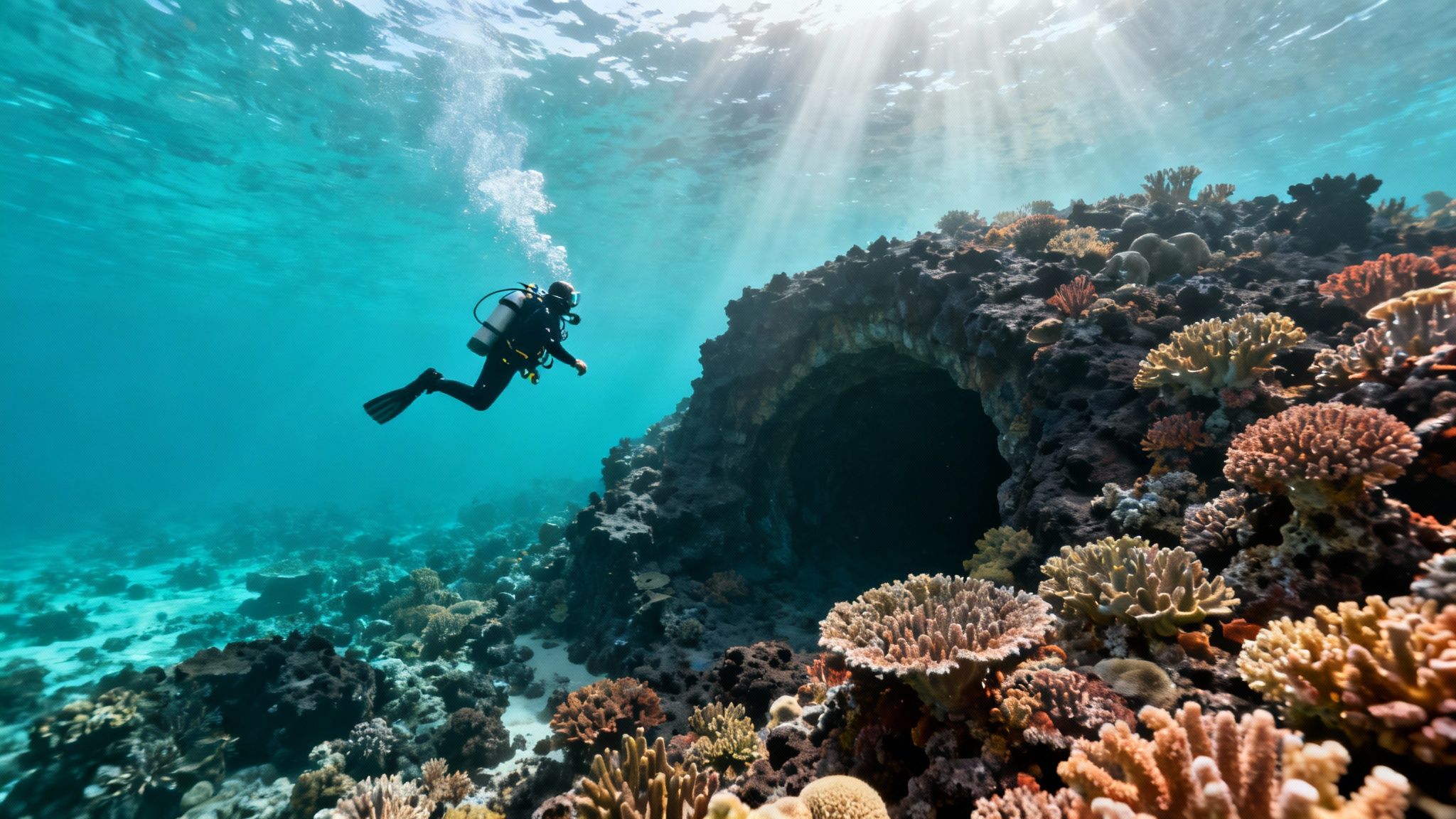
This guide is your passport to that world. We're here to give you an insider's look at what makes the Kona coast a can't-miss destination for everyone, from first-timers to seasoned pros. We’ll go beyond the postcard pictures to show you what the adventure beneath the waves is really like.
The experience here is truly unique. One night, you could be witnessing the silent, graceful ballet of giant manta rays feeding on plankton. The next day, you might find yourself face-to-face with a honu (Hawaiian green sea turtle), peacefully gliding by. The island's volcanic origins have sculpted an incredible underwater playground of lava tubes, arches, and craters that are just begging to be explored.
What Makes Kona Diving Special
So, what’s the secret? It’s all about geology. The Kona side of the island is shielded from the powerful trade winds by the colossal volcanoes of Mauna Loa and Hualālai. This massive natural barrier creates exceptionally calm and clear waters, year-round.
Big Island scuba diving is known for its phenomenal visibility, often reaching well over 100 feet, and comfortable water temperatures that barely change with the seasons. It's the perfect setup for amazing marine encounters.
In this guide, we'll walk you through everything you need to plan the perfect trip, including:
- The absolute best dive sites you don't want to miss.
- The incredible marine life you can only find in Hawaiian waters.
- How to pick the right dive charter for your skill level and interests.
Whether you're gearing up for your very first dive or you're a veteran looking for your next great adventure, you’ll find everything you need to know right here. Let's get started. For a look at the incredible experiences we offer, check out our diving tours page.
Why the Big Island Is a World-Class Dive Destination
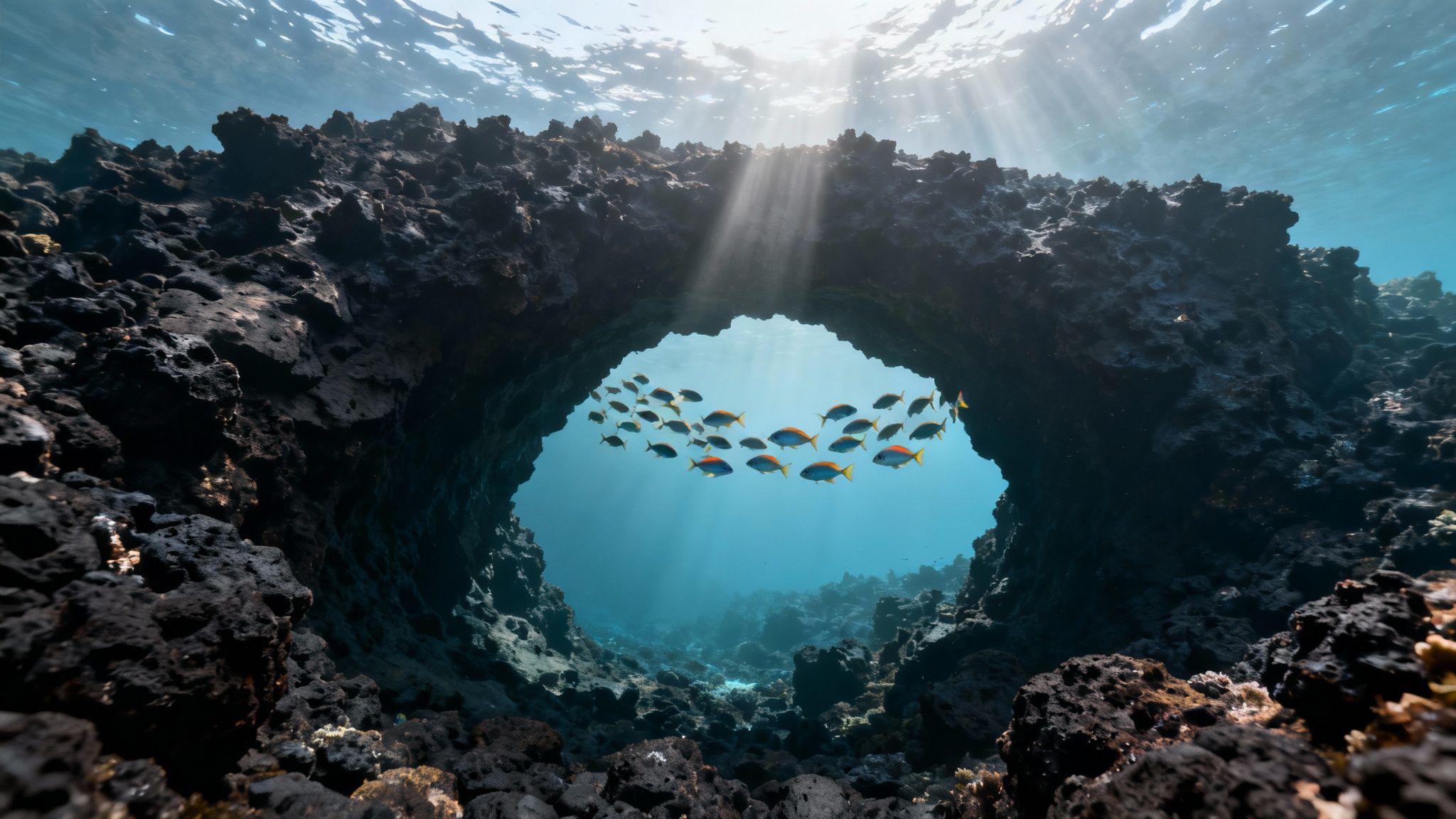
So, what is it that takes the Big Island from being just another great dive spot to a truly legendary, world-class destination? It’s not just one thing. It's the powerful combination of geology and geography that creates underwater conditions you just won't find anywhere else on Earth.
The island’s very origin story—born from raw volcanic power—is the secret behind its underwater magic. Over millennia, lava flows sculpted a dramatic and breathtaking subaquatic playground. As a diver, you get to explore intricate lava tubes, swim through majestic arches, and navigate around massive submerged craters. This kind of topographical variety keeps every single dive fresh and exciting.
You're not just swimming over sand here; you’re interacting with a piece of the planet's creative force. These ancient lava structures provide countless nooks and crannies for marine life to hide and thrive, turning every dive into a genuine treasure hunt.
The Kona Coast Advantage
The western side of the island, known as the Kona coast, has a massive geographical ace up its sleeve. The colossal volcanoes of Mauna Loa and Hualālai act as a natural shield, blocking the powerful trade winds that batter other parts of Hawaii. This protection gives us consistently calm, almost lake-like seas, which means comfortable boat rides and even more comfortable dives.
That calmness is also key to another huge factor: incredible water clarity. With minimal wind and wave action to stir up sediment, the visibility along the Kona coast is just phenomenal. It’s not uncommon for visibility to surpass 100 feet, and the water stays beautifully warm year-round, hovering around 75°F in the winter and creeping into the low 80s in the summer.
These ideal conditions are why so many consider this a premier global destination. You get an crystal-clear view of the unique volcanic formations and the incredible marine animals that call this place home. You can dive deeper into what makes the island a diver's paradise in this comprehensive Hawaii tour guide.
Think of the Kona coast as a massive, natural aquarium. The calm, clear water allows sunlight to penetrate deep, fueling vibrant coral growth and creating a healthy, thriving ecosystem that attracts an incredible density of marine life.
Big Encounters and Biodiversity
This perfect environment supports a truly astonishing array of marine creatures, especially the big pelagic animals that divers dream of seeing. Because the deep ocean is just a stone's throw from shore, it brings in the bigger species. Encounters with spinner dolphins, sharks, and even humpback whales (during the winter) are a real possibility on any Big Island scuba diving trip.
Here at Kona Honu Divers, we’ve spent years exploring these waters. Our experienced guides know these sites like the back of their hand, and they know exactly where to take you for the most active and vibrant dives.
To put it all into perspective, let's see how the Big Island stacks up against a couple of other famous diving hotspots.
Big Island Diving vs. Other Global Hotspots
| Feature | Big Island (Kona Coast) | Great Barrier Reef | Caribbean |
|---|---|---|---|
| Topography | Volcanic: lava tubes, arches, craters, dramatic drop-offs. | Primarily coral reef system, some walls and pinnacles. | Varied: walls, wrecks, sandy flats, coral gardens. |
| Water Clarity | Excellent, often 100+ ft due to volcanic rock and calm seas. | Good to excellent, can be affected by weather/runoff. | Good, but can vary significantly by island/season. |
| Marine Life | High chance of large pelagics (mantas, dolphins, sharks, whales). | Massive coral biodiversity, reef fish, some sharks. | Colorful reef fish, turtles, smaller reef sharks. |
| Best Season | Year-round diving with consistently good conditions. | April-December (avoids cyclone season). | December-May (avoids hurricane season). |
| Unique Encounters | Famous for the Manta Ray Night Dive, seasonal whale migrations. | Sprawling coral gardens, migrating minke whales. | Famous wreck dives, diverse island cultures. |
While every destination offers something special, the Big Island truly delivers a unique blend of conditions that are tough to beat. From its one-of-a-kind volcanic underwater landscapes to its reliable encounters with megafauna, it absolutely stands in a class of its own.
Must-Do Dives: The Manta Ray Night Dive and Beyond
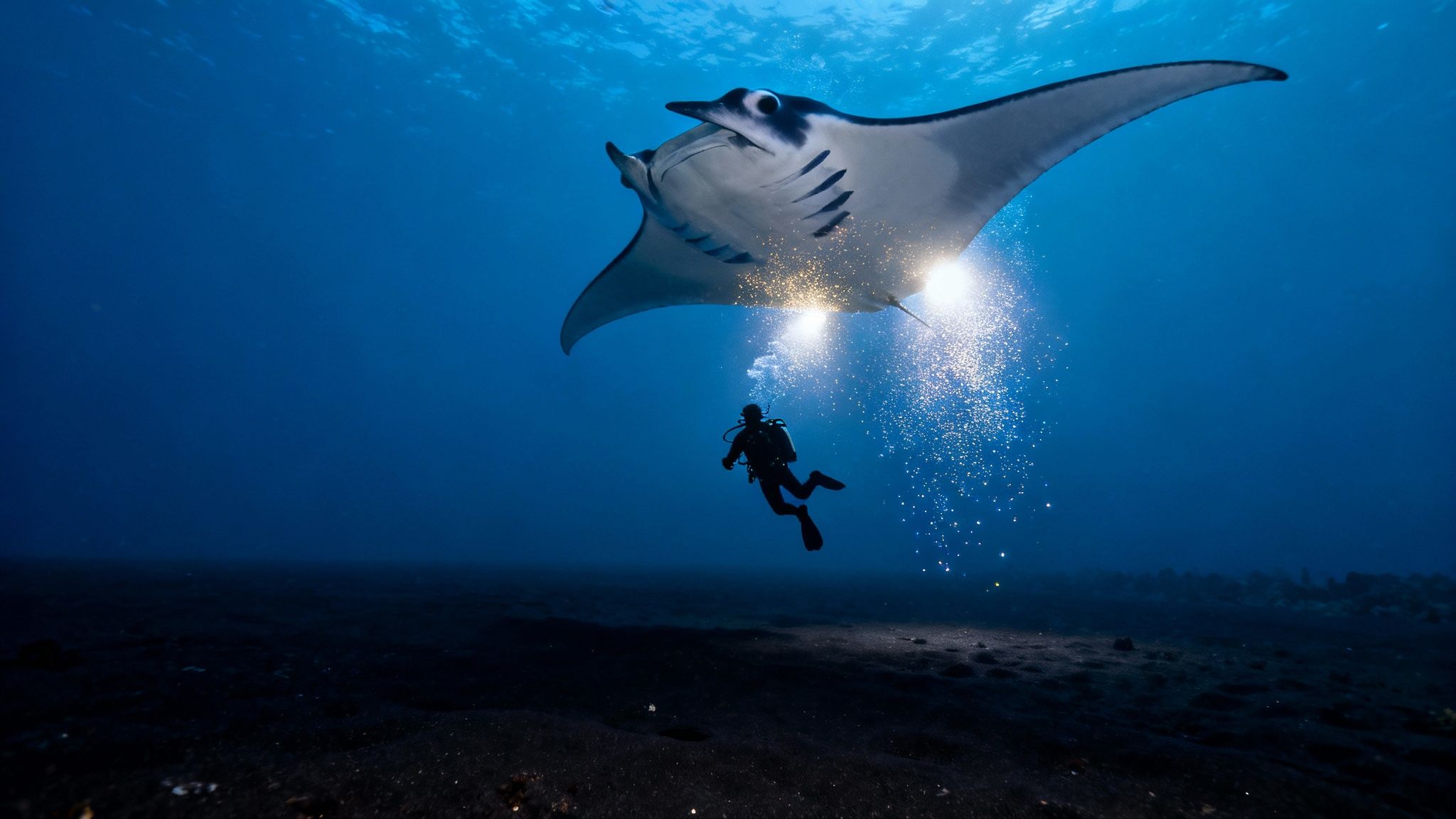
Some underwater moments are so powerful they completely redefine what you thought was possible. On the Big Island, that experience is without a doubt the Manta Ray Night Dive. It’s more than just a highlight of Big Island scuba diving—it’s consistently ranked as one of the best night dives in the entire world. And for very good reason.
Think of it as an underwater ballet. After the sun dips below the horizon, we descend to a sandy spot on the ocean floor and point our powerful dive lights straight up. These beams attract swarms of plankton, which rings the dinner bell for the real stars of the show: majestic manta rays.
These gentle giants, with wingspans stretching over 12 feet, glide, swoop, and barrel-roll through the water, feeding on the plankton just inches above your head. It’s an intimate, breathtaking, and utterly unforgettable spectacle. You feel like you've been transported to another planet.
Turtle Pinnacle: Where Honu Gather
Beyond the nighttime magic with mantas, the Big Island serves up daytime dives that are just as compelling. One of the most famous and beloved sites is Turtle Pinnacle. This isn't just a spot where you might see a turtle; it's a bustling hub for the Hawaiian green sea turtle, or honu.
This unique reef acts as a natural "cleaning station." Turtles from all around come here to let surgeonfish and other small reef fish nibble away algae and parasites from their shells. It's a critical part of the ecosystem, and watching this symbiotic relationship unfold is incredible. You'll often see several honu lined up, patiently waiting their turn.
The site itself sits at a comfortable depth of 30 to 60 feet, with a gentle slope that makes it perfect for divers of almost any skill level. It's an amazing place for photos and a chance to observe these ancient creatures in their element.
Exploring Volcanic Underworlds and Hidden Gardens
The island’s volcanic DNA has created a spectacular underwater playground that goes far beyond typical coral reefs. Many of the most exciting dives here involve navigating the intricate lava tubes and swim-throughs that pepper the Kona coastline. These ancient formations create a dramatic and thrilling experience, with tunnels and arches that open into hidden caverns where light and life pour in.
Navigating a lava tube is like exploring the veins of the island itself. Sunlight filters through cracks in the ancient rock, illuminating schools of fish that have made these structures their home. It's a surreal and powerful reminder of the island's fiery origins.
But it’s not all dramatic rock formations. In stark contrast to the lava tubes, Kona is also home to serene coral gardens bursting with endemic species you won’t find anywhere else on Earth. Sites like Garden Eel Cove are famous for their vast colonies of garden eels poking their heads from the sand, alongside a vibrant collection of butterflyfish, triggerfish, and frogfish. For a deeper look at this iconic location, check out our guide on the Kona Manta Ray Night Dive.
This sheer variety is what truly makes Big Island scuba diving so special. In a single trip, you can witness the grandeur of giant mantas, observe the peaceful rituals of sea turtles, and explore the geological wonders of ancient lava flows. Every dive tells a different story.
Finding the Right Dive for Your Skill Level
One of the greatest things about Big Island scuba diving is just how much variety there is. The Kona coast isn't just a playground for the pros; it's an incredible underwater classroom for newcomers and a genuine thrill for divers with years of experience under their belts.
No matter where you are in your diving journey, there’s an adventure waiting that’s perfectly matched to your comfort and skill. From your very first breath underwater to exploring the deep, dark sea, the Big Island has you covered.
Starting Your Scuba Journey
Never tried diving before? You couldn't have picked a better place. The calm, protected waters along the Kona coast are practically made for beginners.
A great way to start is with an introductory experience, often called a "Discover Scuba Dive." Think of it as a test drive—you get to experience the magic of breathing underwater with a certified instructor right by your side, all without committing to a full course.
If you’re hooked and ready to get certified, earning your Open Water Diver card here is a game-changer. Your training dives won’t be in some chilly, murky quarry. Instead, you'll learn over stunning coral reefs. Completing a Kona scuba certification course gives you a skill for life while immersing you in one of the planet's most vibrant ecosystems from day one.
Adventures for Certified Divers
For those of you who already have your certification, the Kona coast is your oyster. The vast majority of our local dive sites are perfect for Open Water divers, and the experiences are absolutely top-notch.
- Vibrant Reef Dives: Get ready to explore shallow coral gardens bursting with life, from Hawaii's unique endemic fish to moray eels and clever octopuses.
- Turtle Encounters: We have spots we call "cleaning stations" where you can respectfully watch Hawaiian green sea turtles (honu) go about their day. It's an unforgettable sight.
- Lava Tube Exploration: Where else can you swim through ancient volcanic formations? These underwater arches and caverns are home to all sorts of unique marine creatures.
These classic Kona dives are usually done in small groups, so the pace is always relaxed. You get plenty of bottom time to just take it all in. Reputable operators like Kona Honu Divers run daily diving tours that showcase the very best of these underwater landscapes.
Pushing the Boundaries: Advanced and Specialty Dives
Ready for something truly out of this world? For more experienced divers, the Big Island offers some unique advanced diving opportunities that you just can't do anywhere else. These adventures definitely require an advanced certification and rock-solid buoyancy control, but the reward is an experience you'll be talking about for the rest of your life.
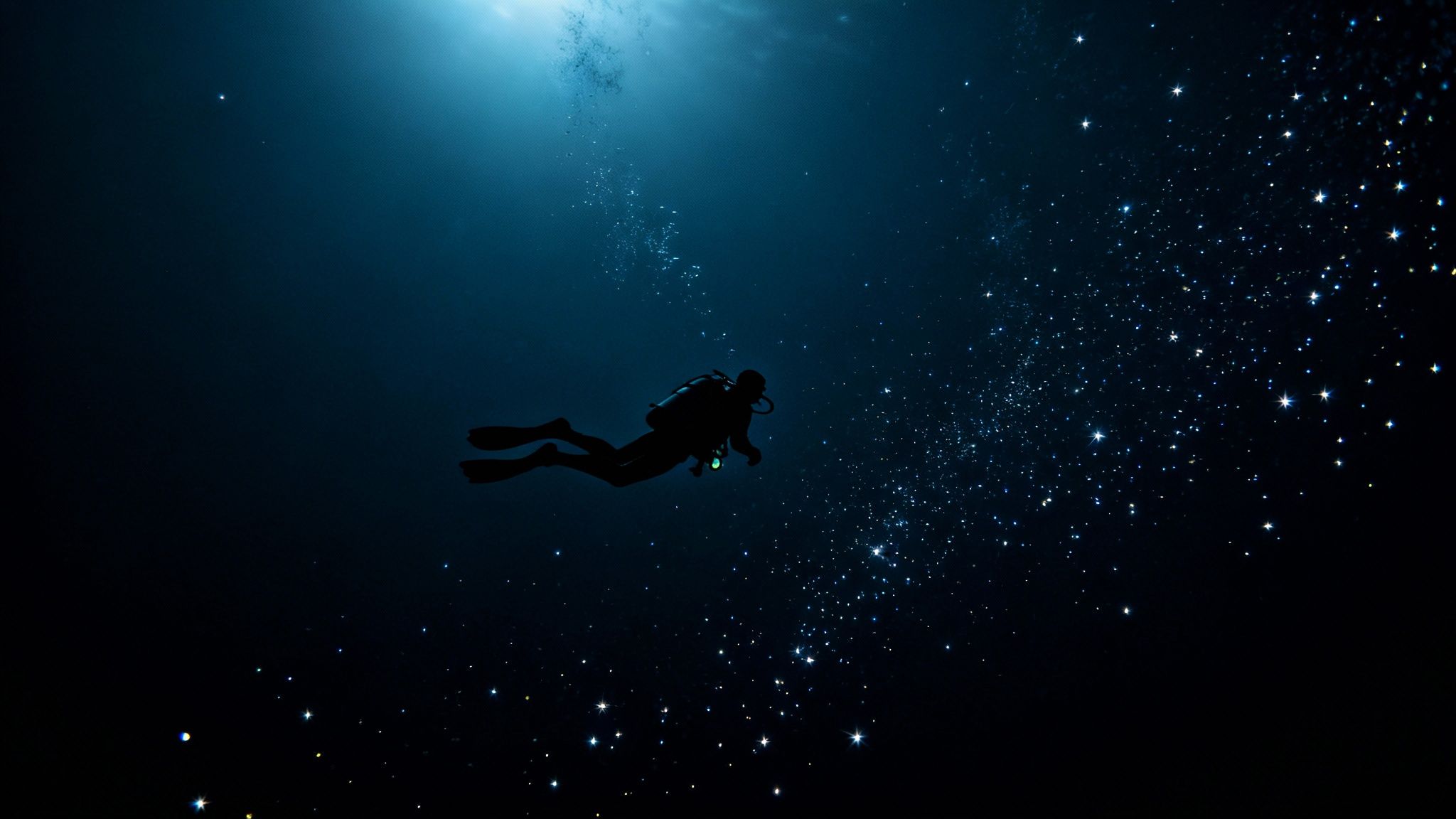
The one everyone talks about is the Kona Blackwater Dive. Picture this: you're drifting miles offshore in the deep, open ocean, suspended in total darkness. Your lights attract the strangest and most beautiful deep-sea creatures as they migrate toward the surface to feed. Many of them are bioluminescent, glowing in the dark. It’s like floating through outer space, surrounded by aliens.
The Blackwater Dive isn't about reefs or big animals. It’s about witnessing a part of the ocean's life cycle that almost no one ever gets to see. You're a visitor in a world of translucent, gelatinous, and glowing creatures rising from the abyss.
For specialized dives like this, choosing the right operator is everything. You need a team with the right gear and deep expertise. Companies like Kona Honu Divers are pros at guiding divers in these challenging environments, offering premium advanced dive trips and the famous Blackwater Dive tour. Their stellar safety record and local knowledge, backed by countless five-star reviews, make them a trusted choice for any Big Island scuba diving adventure.
The Legacy of Scuba Diving on the Big Island
The world-class scuba diving you'll find on the Big Island today didn't just happen overnight. It was built, piece by piece and dive by dive, on the backs of some truly dedicated pioneers. Knowing a bit about this history really gives you a deeper appreciation for the dive community and the sheer passion that turned Kona into a global diving hotspot.
The story really starts in an era of pure adventure. Think about it: a remote island outpost with basic, often home-brewed gear. The journey from that to a premier underwater destination is a testament to the handful of people who first saw the potential just beneath the waves. They’re the ones who laid the groundwork for the professional, safety-focused dive culture we all benefit from today.
The Pioneers of Kona Diving
Organized Big Island scuba diving really began to take shape in the late 1960s and early 1970s. Back then, the first wave of divers faced some serious hurdles with limited technology and not much in the way of infrastructure. It was an age of true exploration, where every dive meant charting new sites and documenting the incredible biodiversity that, until then, was a complete mystery.
A huge moment in this story was the founding of Jack's Diving Locker by Jack and Tina Clothier in 1981. Their shop quickly became a cornerstone of the Kona diving community, setting a new standard for safety, education, and professionalism. Honestly, their work was instrumental in putting Kona on the map for a whole new generation of divers.
The influence of those early shops is still alive and well. They nurtured a community around a shared love for the ocean and a deep-seated commitment to protecting it, creating the very foundation for the thriving industry that now welcomes divers from every corner of the globe.
From a Quiet Coast to a Global Destination
With such a solid foundation, the Big Island's reputation just exploded. Today, the island boasts a robust infrastructure with over 50 dive shops and charters. It’s a staggering operation, welcoming more than 150,000 dive tourists annually who log around 100,000 certified scuba dives each year. That kind of growth is a direct result of the passion poured in by those who first explored these waters. You can get even more insights into how Big Island diving became what it is today on konahonudivers.com.
But this evolution was never just about business—it was about stewardship. As the dive community grew, so did the commitment to protecting the fragile ecosystem that makes this place so magical. Kona's dive operators have become leaders in marine conservation, actively participating in reef clean-ups, championing sustainable practices, and teaching divers how to interact respectfully with our incredible marine life.
This shared sense of responsibility is what ensures the underwater wonders of the Big Island will still be here for generations of divers to come.
Planning Your Big Island Dive Trip FAQ
Thinking about a scuba trip to the Big Island? You've picked an amazing spot. It's normal to have a few questions before you go, and a little bit of prep work can make all the difference. To help you sort things out, here are answers to the questions we hear most often from divers planning their Kona adventure.
What Is the Best Time of Year for Big Island Scuba Diving?
Honestly, there's no bad time to dive in Kona. The conditions are fantastic pretty much year-round.
If you love warm water and glassy seas, aim for the summer months, roughly April through October. This is when you'll find the calmest conditions, with water temperatures creeping into the low 80s°F (around 27-28°C).
The winter, from November to March, is a little cooler—the water averages a comfortable 75°F (24°C). But don't let that fool you; the Kona coast is naturally sheltered from the big winter swells. The real magic of winter diving? That's when you can often hear the incredible songs of humpback whales echoing through the water on your dives. Visibility stays great all year, often clearing 100 feet or more.
Do I Need to Be Certified to Scuba Dive in Kona?
Not at all! If you're new to diving and just want to see what it's all about, you can join a "Discover Scuba Diving" experience. We'll pair you with a certified instructor who will guide you on a beautiful, shallow reef dive. It’s the perfect way to get your feet wet, literally.
That said, if you want to explore the deeper sites or join our charter boats—especially for the world-famous Manta Ray Night Dive—you’ll need at least an Open Water Diver certification. And don't forget to bring your certification card with you!
What Marine Life Can I Expect to See?
Kona is famous for its incredible "big animal" encounters. It's a place where seeing manta rays, pods of spinner dolphins, and whitetip reef sharks is just another day at the office. You’re practically guaranteed to spot Hawaiian green sea turtles (honu) on almost every single dive.
Beyond the big stuff, the reefs are buzzing with life. Keep an eye out for moray eels peeking out of crevices, cleverly camouflaged octopuses, and a whole spectrum of colorful tropical fish you can only find here in Hawaii. For the exceptionally lucky, you might even cross paths with eagle rays, tiger sharks, or the gentle giant of the sea, the whale shark.
What Should I Pack for My Dive Trip?
First things first: bring your certification card and logbook. While we have excellent rental gear, many divers prefer bringing their own mask, fins, and dive computer simply because they know it fits and works for them. A 3mm wetsuit is perfect for most of the year, but if you tend to get chilly or are diving in the winter, you might be happier in a 5mm.
Pro Tip: One of the most important things you can pack is reef-safe sunscreen. It’s a small choice that makes a huge difference in protecting Hawaii’s fragile coral reefs. A reusable water bottle is also a great idea to stay hydrated, and a dry bag is a lifesaver for keeping your phone and keys safe on the boat.
Once your gear is packed, you'll need a place to stay. For our recommendations on the best spots for divers, check out our guide on the best places for divers to stay on the Big Island. If you need help organizing the rest of your vacation, you can find some fantastic comprehensive travel planning resources to help with the other details.
Ready for an unforgettable Big Island scuba diving trip? Let the crew at Kona Honu Divers show you the way. With our comfortable boats, top-of-the-line gear, and the most experienced team on the island, we're here to help you discover the absolute best of Kona's underwater world.