
So, you’re thinking about scuba diving on the Big Island? Good choice. You're about to discover an underwater world shaped by raw volcanic power and home to some of the most incredible marine life on the planet. From the legendary manta ray night dive to exploring ancient lava tubes, Hawaii's biggest island delivers an experience that's truly in a league of its own. This is your starting point for an unforgettable adventure.
Your Essential Guide to Diving on the Big Island
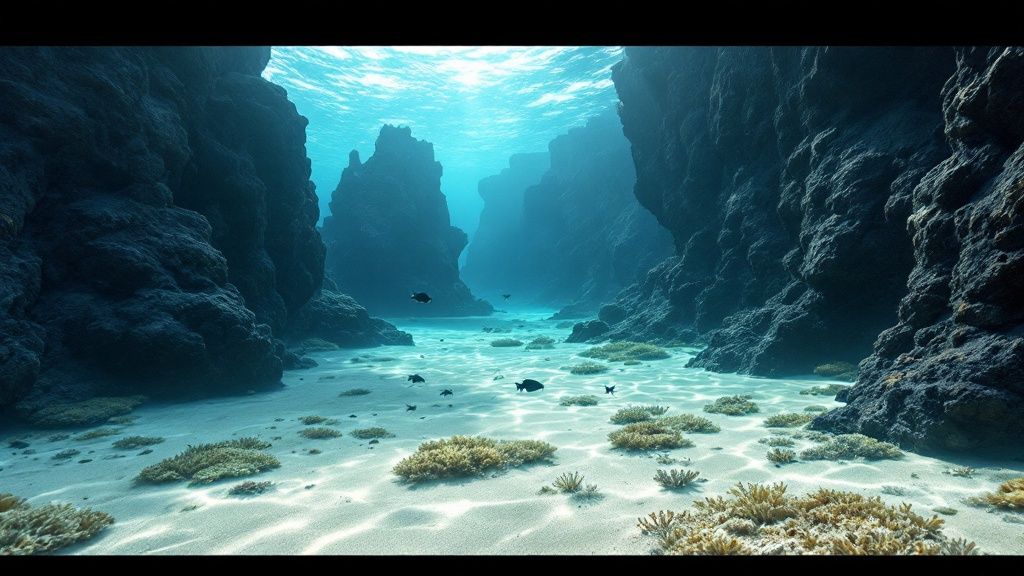
The Big Island isn’t just another pretty place to dive; it’s one of the world's premier destinations where geology and biology meet in the most spectacular way. The island’s fiery origins have left behind a dramatic underwater landscape—think sprawling archways, deep canyons, and intricate lava tubes just waiting for you to explore. It’s this unique topography that creates the perfect home for a staggering variety of marine creatures.
One of the best parts about diving here, especially along the Kona coast, is how protected it is. The island's massive volcanoes act as a natural shield, which means we get stunningly calm and clear water almost all year round. This isn't just a small detail; it means you spend less time battling rough seas and more time enjoying visibility that often stretches beyond 100 feet. Whether it’s your first dive or your hundredth, conditions like these make every moment count.
What Makes This a Diver’s Paradise?
The real secret to Big Island scuba diving is its incredible biodiversity. The Hawaiian archipelago is so isolated that a huge percentage of the species here are endemic—you literally can't find these fish and invertebrates anywhere else on Earth.
But it’s not just about the rare critters. You'll be sharing the water with some of the ocean's most iconic animals. Here’s a little taste of who you might run into:
- Honu (Green Sea Turtles): It’s common to see these gentle giants gliding over the reefs or kicking back at an underwater "cleaning station."
- Spinner Dolphins: You’ll often spot pods of them leaping and playing in the boat's wake, a sight that never gets old.
- Manta Rays: The Kona coast is globally famous for its nighttime manta ray encounters. It’s a bucket-list dive for a reason.
At Kona Honu Divers, we get it. A fantastic dive is about the whole experience, not just what you see through your mask. We take care of everything—from providing top-notch gear and comfortable boats to ensuring our expert guides keep things safe and fun. You just focus on the adventure.
We’ve set up our diving tours to suit every skill level and interest, from peaceful morning explorations of the reef to the adrenaline rush of the Manta Ray Night Dive. We’ll get into all those details so you can plan the perfect trip. Of course, having the right gear is crucial, so we've also put together a complete guide on the gear you will need for your Kona diving adventure. Consider this your go-to resource for an amazing underwater journey.
Why Kona Is a World-Class Diving Destination
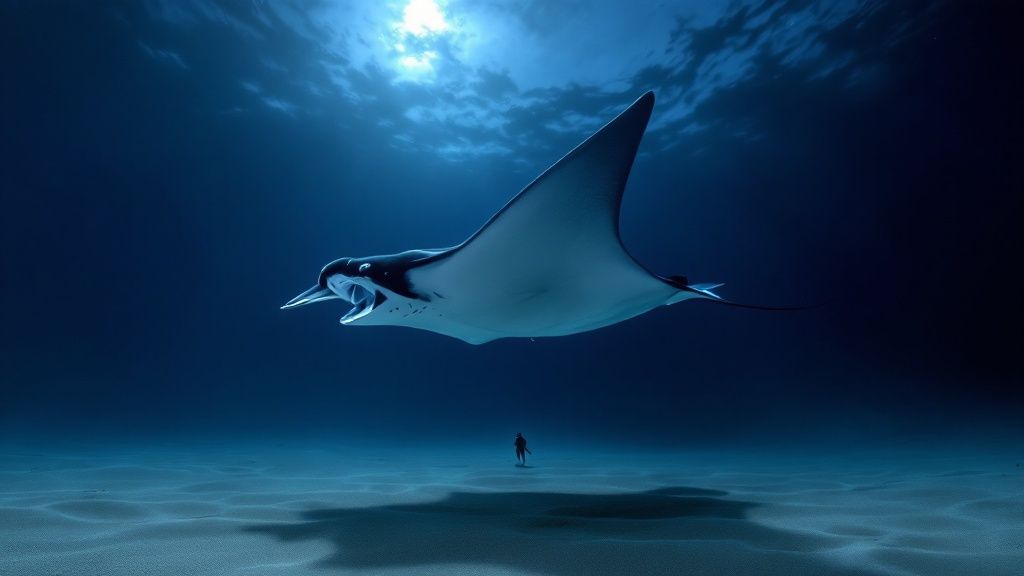
The Kona coast of the Big Island isn't just another pretty spot; it's a diver's paradise, and its geology is the main reason why. The island’s massive volcanoes, Mauna Loa and Hualalai, act like giant shields, protecting the western shoreline from the powerful trade winds that batter the other side of the island. This natural barrier creates an aquatic haven with consistently calm, clear water.
What does that mean for you? It means you can expect fantastic conditions pretty much year-round. Visibility often stretches beyond 100 feet, turning the ocean into a brilliant blue stage for the marine life. You get to spend less time fighting currents and more time just soaking in the incredible underwater world.
The island's volcanic past has also sculpted an underwater landscape you won't find anywhere else. Centuries of lava flows have created a dramatic seascape of arches, deep canyons, and intricate swim-throughs. These lava tubes and caverns aren't just cool to look at—they’re vital habitats for countless marine animals, making every dive a dynamic and thriving adventure.
The Unique Topography of Kona’s Reefs
Picture this: you descend into a world where molten lava was frozen in time, forming complex structures that are now bursting with life. Exploring these unique formations is at the heart of the Big Island scuba diving experience.
You can actually navigate through ancient lava tubes where sunlight streams through cracks in the ceiling, lighting up schools of fish that have taken shelter inside. These natural aquariums offer a sense of discovery around every corner, whether you stumble upon a hidden octopus den or a whitetip reef shark taking a nap. It’s this varied and dramatic terrain that keeps divers coming back to Kona again and again.
The Big Island’s underwater landscape showcases the raw power of nature. From vibrant coral gardens flourishing on volcanic rock to dramatic drop-offs that plunge into the deep blue, every dive site offers a distinct adventure and a new story to tell.
The sheer variety of dives here is what really draws people from all over the globe. The island's volcanic terrain has created everything from shallow, colorful coral gardens perfect for beginners to deep lava tubes that will challenge even the most seasoned divers. This, combined with that phenomenal water clarity, makes the Big Island a premier scuba destination. The Kona coast is especially celebrated for its vibrant marine life at spots like Turtle Pinnacle, a known cleaning station for sea turtles. To really get the full picture, you can explore more about what makes Big Island scuba diving exceptional.
Encounters with Endemic Hawaiian Marine Life
The incredible biodiversity is the other piece of the puzzle. Thanks to its extreme isolation in the middle of the Pacific, Hawaii is home to a huge percentage of endemic species—that’s critters you literally can’t find anywhere else on Earth. When you dive in Kona, you're not just seeing tropical fish; you're seeing fish that evolved to live right here and nowhere else.
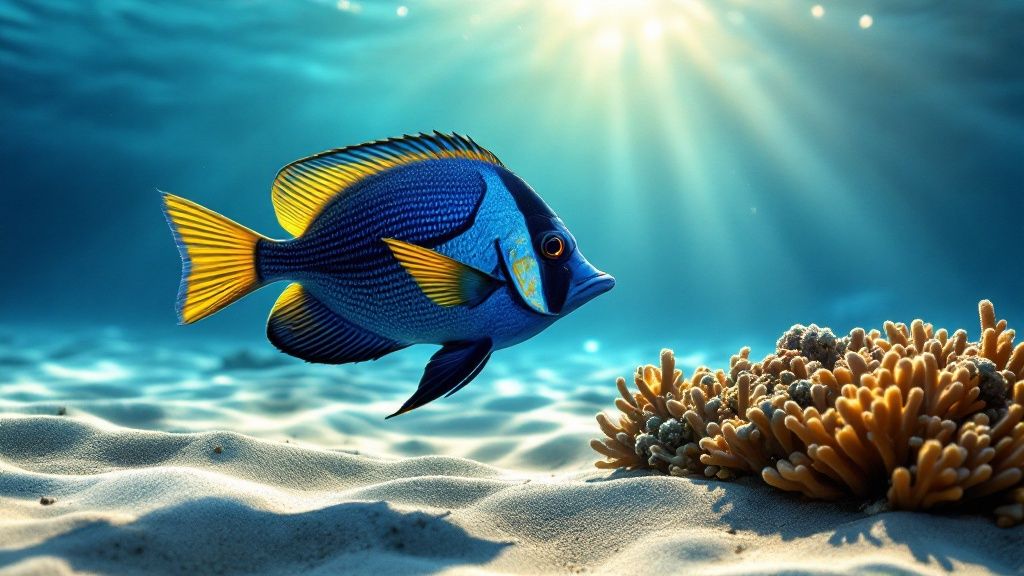
You'll come across a dazzling array of life, from the striking Bandit Angelfish to the charming little Hawaiian Gregory. But the encounters go way beyond the smaller reef residents. The list of potential marine life sightings is truly world-class.
Big Island Marine Life Encounters
Kona offers a chance to see some of the most sought-after animals in the ocean. Here’s a quick guide to what you might find swimming alongside you.
| Marine Life | Common Sighting Area | Best Time to See |
|---|---|---|
| Honu (Green Sea Turtles) | Reef "cleaning stations" like Turtle Pinnacle and Pawai Bay. | Year-round, often seen resting on the reef. |
| Spinner Dolphins | Often seen from the boat in bays along the Kona coast. | Morning trips offer the best chance to see them. |
| Manta Rays | Famous night dive sites like Manta Heaven and Manta Village. | Year-round, attracted to plankton after sunset. |
| Humpback Whales | Offshore, with their songs heard underwater during dives. | During their winter migration (December – March). |
| Whitetip Reef Sharks | Resting in lava tubes or under ledges during the day. | Year-round, especially on morning and advanced dives. |
This rich tapestry of life, combined with nearly perfect diving conditions and a stunning volcanic seascape, is exactly what makes Kona a must-visit destination for any serious diver. The adventure waiting just beneath the waves is simply unforgettable.
Experiencing the Manta Ray Night Dive
Of all the incredible underwater adventures the Big Island offers, one stands head and shoulders above the rest as a true global icon—the Manta Ray Night Dive. This isn't just another dive; it's more like witnessing an underwater ballet, and it’s consistently ranked as one of the best night dives in the world. This is the bucket-list spectacle that defines Big Island scuba diving and leaves you with stories you’ll tell for the rest of your life.
The magic starts to build just before sunset as you cruise out along the Kona coast. The anticipation is palpable while your guide walks you through the dive plan and, just as importantly, the right way to interact with these magnificent creatures. As soon as the sun disappears below the horizon, it's time. You gear up and descend into the twilight ocean.
The Underwater Stage is Set
At its core, the experience is built on a simple yet brilliant concept. Divers get settled on the sandy ocean floor in a designated area, usually forming a semi-circle. In the center, powerful lights are placed facing upward, creating a brightly lit column of water that acts like a massive bug zapper for microscopic plankton.
This brilliant beacon in the dark water draws in enormous clouds of plankton—the manta rays' favorite meal. And what happens next is nothing short of breathtaking. Drawn in by the all-you-can-eat buffet, giant manta rays—some with wingspans exceeding 12 feet—materialize from the darkness and begin to feed.
They glide, swoop, and perform effortless barrel rolls right through the light beams, often coming within inches of your mask. Imagine a creature the size of a small car moving with the grace of a ballerina, its enormous mouth wide open as it filters plankton from the water. There is simply nothing else like it. You can learn more about this unique phenomenon by reading about the Kona manta ray night dive.
The feeling of a massive manta ray gliding silently just over your head, so close you can see every intricate detail, is impossible to put into words. It's a humbling and awe-inspiring connection with one of the ocean's most majestic animals.
What makes this dive so special is that it’s reliably available year-round. The local reef manta rays (Mobula alfredi) aren't migratory; they live right here in Kona's coastal waters. This means your chances of an incredible encounter are exceptionally high, often exceeding a 90% success rate at the established dive sites.
Safety and Ethical Manta Encounters
An encounter this profound requires a deep commitment to protecting the animals. Choosing a responsible tour operator is the most important step in ensuring the dive is both safe for you and sustainable for the mantas. A professional guide will make sure everyone follows the strict, locally-established guidelines for the interaction.
Here are the golden rules for a safe and ethical manta dive:
- Observe Only, Never Touch: Manta rays are covered in a protective mucous layer. Touching them can strip this coating away, leaving them vulnerable to infections.
- Stay on the Bottom: Divers are instructed to remain stationary on the sand. This creates a predictable and safe environment, leaving the water column clear for the mantas to maneuver.
- Control Your Buoyancy: Nailing your buoyancy is key to preventing accidental contact with the mantas or the nearby reef.
- Lights Point Up: Your dive lights should always be aimed toward the surface. This helps attract more plankton and avoids shining the bright beam directly into the mantas' eyes.
By following these simple rules, we can all help ensure this amazing spectacle is around for generations to come.
Ready for More? Exploring Kona’s Advanced and Unique Dives
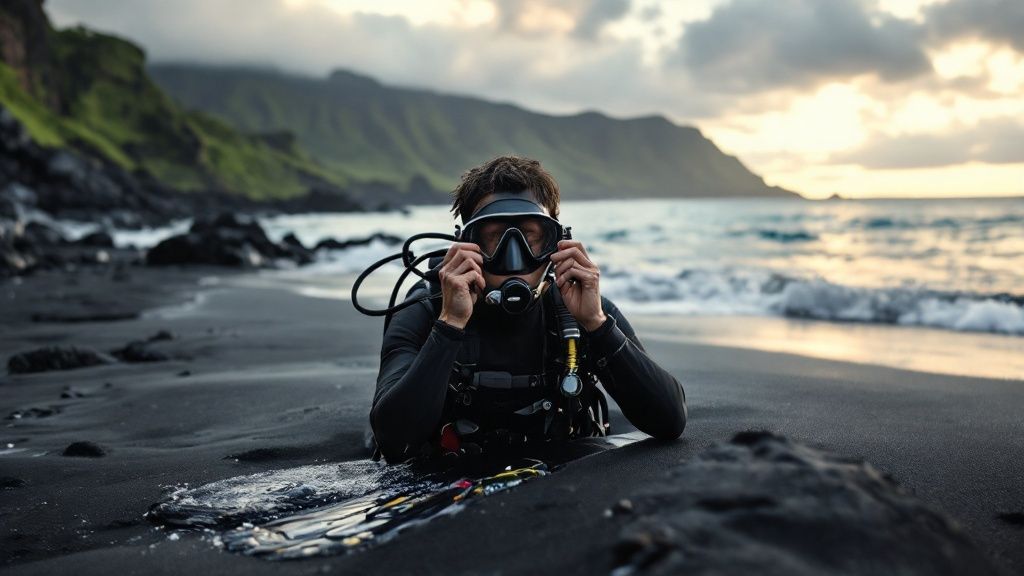
Sure, the Manta Ray Night Dive is an absolute must-do, but the Big Island scuba diving scene has so much more to offer if you're an experienced diver looking for a real adventure. For those with solid skills and a craving for something truly different, Kona delivers advanced dives that go way beyond a standard reef tour. These aren't just about going deeper; they're about entering entirely new worlds that most people will never see.
What makes Kona's advanced diving so special is the island's raw, volcanic geology and its immediate access to the deep open ocean. These dives are a testament to why the Big Island is a world-class destination, offering endless challenges and incredible rewards for divers who have their buoyancy dialed in and are comfortable in more demanding conditions.
The Famous Kona Blackwater Dive
Picture this: you're floating in the pure blackness of the open ocean, miles from shore, with thousands of feet of water right below you. That's the Kona Blackwater Dive. It’s a surreal, mind-blowing experience that feels less like scuba diving and more like spacewalking. Hands down, it's one of the most unique night dives on the entire planet.
This isn't your typical night dive over a reef. Instead, you drift with the current over the deep ocean abyss. We use powerful lights to attract creatures making the largest migration on Earth—the nightly vertical migration, where deep-sea organisms rise toward the surface to feed. What you’ll see is straight out of science fiction.
You'll come face-to-face with an unbelievable assortment of bioluminescent and larval-stage creatures, many of which look completely alien. It’s an opportunity to witness life forms that are rarely, if ever, seen anywhere else. To get a better sense of this incredible trip, you can learn more about blackwater diving in Kona.
The blackwater dive is a humbling peek into the deep ocean's hidden world. You're not just observing marine life; you're witnessing a fundamental process of the planet's ecosystem in a way that is profoundly moving and unforgettable.
Navigating Lava Tubes and Deep Walls
Beyond the blackwater experience, Kona’s advanced daytime dives are all about exploring incredible underwater structures. The same volcanic forces that created the island also left behind a maze of submerged lava tubes, caverns, and stunning archways. Getting to navigate these formations is a thrilling challenge that rewards you with unbelievable sights and unique marine encounters.
In these spots, you’ll often find intricate swim-throughs where schools of fish hide out and whitetip reef sharks rest during the day. The way the sunlight filters through cracks in the lava rock creates a magical, cathedral-like atmosphere.
Many of our more remote sites also feature breathtaking deep walls and pinnacles that just drop off into the deep blue. On these advanced dives, you can explore:
- Deep Ledges: Find rare fish and invertebrates that thrive in the deeper, cooler waters.
- Sheer Drop-Offs: Hover next to vertical walls covered in corals and sponges while keeping an eye out for pelagic species like sharks and rays cruising by in the open water.
- Remote Pinnacles: Dive on underwater mountains that rise from the ocean floor, acting as magnets for all kinds of marine life.
These are the kinds of dives that keep experienced divers coming back to Kona again and again. It’s a whole different side of the island, and one that’s waiting to be explored.
How to Choose the Best Dive Operator in Kona
Picking the right dive operator for your Big Island scuba diving trip is probably the most important decision you'll make. It’s not just about getting on a boat; it’s about who you trust with your safety, comfort, and the overall quality of your underwater adventure. A great shop can turn a good dive into an unforgettable one, so it pays to know what to look for.
The difference between operators can be night and day. A top-notch company doesn’t just shuttle you to a dive site—they elevate the entire experience. Think experienced guides, well-maintained boats, top-of-the-line gear, and a genuine passion for marine conservation. The best ones always prioritize small groups, because quality always trumps quantity when you're 60 feet down.
What Sets a Premier Dive Shop Apart
So, how do you spot the good ones? A premier operator is an open book. They're proud of their crew, their boats, and their safety record, and they're not afraid to show it.
Here are a few non-negotiables to look for:
- Safety First, Always: This is paramount. Look for an operator with a flawless safety record. Their boat should be equipped with emergency oxygen, and their guides should be seasoned pros trained in first aid and rescue.
- An Experienced Crew: You want guides who know Kona’s waters like the back of their hand. Decades of local experience mean they can find the hidden gems and point out marine life you'd swim right past otherwise.
- Comfort on the Water: Don't underestimate the boat! You'll spend a lot of time on it between dives. A vessel with a hot shower, plenty of shade, and an easy way to get in and out of the water makes a world of difference.
- Small Guide-to-Diver Ratios: Smaller groups are safer, more personal, and less disruptive to marine life. You get more attention from your guide and a better chance to see amazing things without a crowd of fins in your face.
- A Commitment to Conservation: The best operators are stewards of the ocean. They follow strict ethical guidelines, especially for sensitive encounters like the manta ray night dive, and actively work to protect the reef.
Choosing a dive operator is like choosing a trusted guide for an important journey. Their expertise, equipment, and philosophy shape your entire adventure, turning a simple dive into a lasting memory.
Kona Honu Divers: Your Trusted Partner
Here at Kona Honu Divers, these principles are the bedrock of our entire operation. We live and breathe Kona’s underwater world, and our main goal is to share that magic with you safely and comfortably. Our crew has a combined 200 years of experience diving these very waters—that’s a level of local knowledge you just can't fake.
We believe in a premium experience, which is why we offer perks like free nitrox for certified divers and run some of the most comfortable and spacious boats in Kona. We know this is a big decision, so don't just take our word for it. Check out our live Google Reviews below to see what fellow divers have to say.
Other Reputable Operators in Kona
We believe an informed diver is a happy diver, so we want you to know all your options. The Big Island has an amazing dive community that started with a few pioneers back in the late 1960s. A huge step forward came in 1981 when Jack's Diving Locker opened its doors, helping set the high standards we all strive for today.
Now, with over 50 operators serving more than 150,000 dive tourists each year, there are several fantastic choices out there. If you're curious, you can read more about the evolution of Big Island scuba diving to get a feel for the history.
Here are a couple of other highly-regarded shops in the area:
Jack's Diving Locker
Big Island Divers
Your Big Island Diving Questions Answered
Planning a dive trip always brings up a few questions. To make sure you feel completely prepared for your underwater adventure on the Big Island, we’ve put together answers to some of the things we get asked the most.
What's the Best Time of Year to Dive the Big Island?
Honestly, there’s no bad time to dive here. The leeward Kona coast is wonderfully protected, giving us great conditions pretty much year-round.
That said, there are some subtle differences. The summer months, roughly from May to October, tend to have the flattest, calmest seas and the warmest water—often hitting a perfect 80°F (27°C).
Winter, from November to April, can bring slightly bigger swells, but the diving is still fantastic. The water rarely drops below 75°F (24°C). The real bonus? It's humpback whale season, and hearing their songs echo through the water on a dive is an experience you will never, ever forget.
Do I Need to Be Certified to Scuba Dive in Kona?
You do need to be certified to join our regular boat dives, but that doesn't mean you have to miss out if you're new to diving! We have the perfect solution: our "Discover Scuba Diving" program.
It’s a fantastic introductory course where a certified instructor teaches you the basics of safety and essential skills. You'll then get to make your very first dive in a shallow, controlled environment under their direct supervision. It’s the ideal way to see if diving is for you without committing to a full course.
The Discover Scuba program is all about giving you a safe, fun, and confidence-boosting first taste of the underwater world. It's your ticket to experiencing the magic of breathing underwater and seeing the reef up close.
What Kind of Wetsuit Should I Pack?
With our water temperatures staying in that comfortable 75-80°F (24-27°C) range all year, most divers find a 3mm or 5mm full wetsuit is perfect. A 3mm suit is usually plenty for the warm summer months.
However, many divers prefer a 5mm suit for that extra bit of warmth, especially on deeper dives or during our famous manta ray night dive. If you're someone who gets chilly easily, the 5mm is a great choice. Don't worry if you don't have one—all our rental packages include high-quality wetsuits suited for local conditions.
A quick pro-tip: diving is a physical activity, so it helps to be prepared. Understanding the importance of electrolytes for your body can help you stay hydrated and feeling your best. Your body will thank you after a few incredible days in the water.
Here at Kona Honu Divers, our mission is to make your dive trip seamless, safe, and absolutely unforgettable. Whether you’re a seasoned pro with thousands of dives or just starting your journey, we have the perfect underwater experience waiting. Take a look at our full range of diving tours on our website and get ready to discover the magic of Kona.