
Picture this: you're sinking slowly into impossibly clear water, surrounded by ancient volcanic landscapes that plunge into the sea, now decorated with vibrant coral life. Scuba diving on the Big Island isn't just another dive trip; it's a chance to explore one of the most unique underwater ecosystems you'll ever see. Think of this guide as your personal logbook for planning an unforgettable Kona diving adventure.
Embark on Your Big Island Diving Adventure
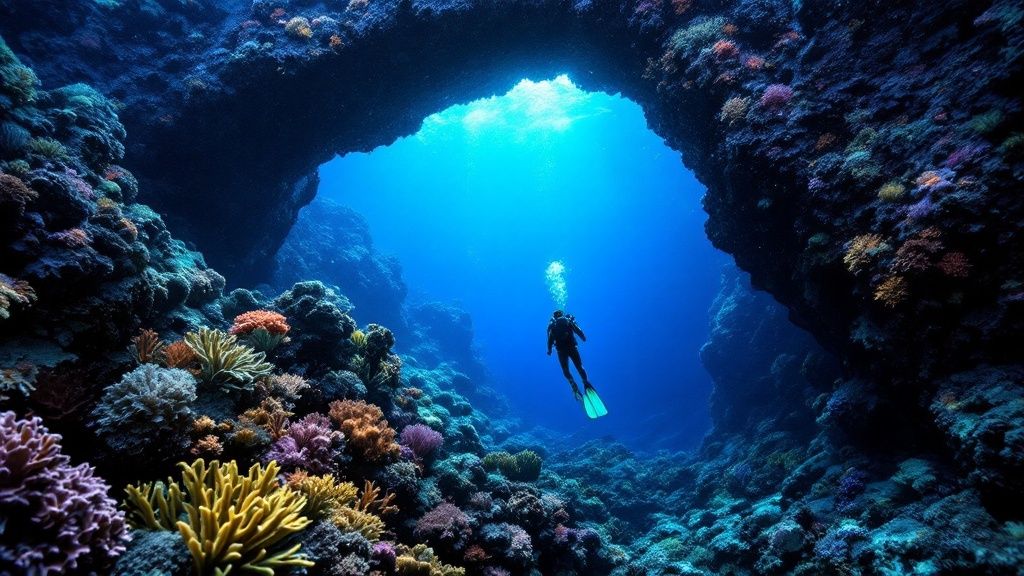
We're going to cover it all, from the world-famous manta ray night dive to quiet moments watching Hawaiian green sea turtles (honu) at their cleaning stations. You'll quickly see why the island's lava tubes and remarkably clear waters have earned it a reputation as a true diver's paradise.
The Kona coast is the Big Island's sweet spot for diving. Sheltered from the powerful trade winds by the colossal Mauna Loa and Hualalai volcanoes, the waters here are consistently calm. It's not uncommon for visibility to stretch well beyond 100 feet, making it a fantastic year-round destination whether you're a seasoned pro or just getting your fins wet.
What Makes Kona Diving So Special?
The secret to Kona's magic lies in its volcanic soul. The dramatic underwater world you'll explore was shaped by ancient lava flows, creating a stunning seascape of arches, swim-throughs, and caverns that you just won't find anywhere else. This one-of-a-kind topography is the perfect foundation for a thriving, vibrant marine ecosystem.
Here’s a little taste of what's waiting for you beneath the waves:
- The Manta Ray Night Dive: This is the stuff of legends. You’ll witness gentle giants performing an underwater ballet as they feed on plankton drawn to dive lights. It’s an experience that will stick with you forever.
- Turtle Cleaning Stations: Find a spot on the sand and watch as Hawaiian green sea turtles, or honu, peacefully line up to be groomed by smaller reef fish. It’s a fascinating, all-natural spa day.
- Unique Volcanic Topography: Imagine exploring submerged lava tubes and ancient, cathedral-like caverns formed by volcanic activity millions of years ago.
- Healthy, Vibrant Reefs: The reefs are bursting with life. You'll be surrounded by colorful reef fish, moray eels peeking out from their homes, and the occasional octopus making a clever escape.
At Kona Honu Divers, our entire focus is on providing a premier, safe, and genuinely awe-inspiring diving experience. We keep our groups small for a reason—it allows for personalized attention and helps you truly connect with the magic of the Pacific.
We’ve got all the insider info you need to plan your trip with total confidence. Ready? Let's dive in and see what makes this place unforgettable. You can start by checking out our range of diving tours to see what piques your interest.
Why the Big Island is a World-Class Dive Destination
So, what makes a dive trip to the Big Island so special? What sets it apart from every other dot on the map? It really comes down to a spectacular blend of raw geology and vibrant marine life. The island's fiery volcanic past has sculpted an underwater world you just won't find anywhere else.
Imagine dropping beneath the surface and swimming through a reef that was once a flowing river of molten lava. That’s exactly what you get in Kona. The ancient lava flows have created a mind-bending labyrinth of swim-through tubes, massive archways, and dramatic caverns. This isn't just for looks—this incredible structure provides the perfect, complex habitat for a ridiculously diverse ecosystem to thrive.
Pristine Conditions Year-Round
Beyond the wild topography, the Big Island serves up consistently amazing dive conditions, making it a fantastic destination any time you can get away. Tucked in the lee of massive volcanoes, the Kona coast is sheltered from the strong trade winds, which means the waters stay calm and comfortable.
The water temperature is always inviting, hovering between a pleasant 75°F (24°C) in winter and a bath-like 81°F (27°C) in summer. But the real showstopper here is the visibility.
The water clarity off the Kona coast is legendary, often stretching past 100 feet. This kind of visibility completely changes the game, letting you take in the sheer scale of the volcanic seascape and spot marine life from way off in the blue.
These reliable conditions mean you can book a trip for any season and know you're in for an incredible time. It doesn't matter if you're exploring a shallow reef or navigating a deep lava tube; the clarity makes every single dive a breathtaking experience.
A Legacy of Diving Excellence
The Big Island’s reputation as a top-tier dive destination didn’t happen overnight. There’s a rich history here and a world-class network of professional dive operators who have been pioneering the sport in Hawaii for decades.
Diving really started to take off here in the late 1960s and early 1970s, right as training agencies like PADI and SSI were making diver education accessible to everyone. This solid foundation helped the Big Island evolve from a well-kept secret into the premier adventure hub it is today. Now, it draws an estimated 150,000 dive tourists every year, who are supported by over 50 professional dive shops and charter boats.
Pioneering shops like Jack's Diving Locker, which opened its doors back in 1981, were instrumental in putting Kona on the map and now guide over 25,000 dives annually. You can read more about the history of Big Island scuba diving on konahonudivers.com.
This established community means every dive is not only a blast but is also held to the highest standards of safety and environmental care. Whether you're looking for a relaxed morning reef tour or a challenging new adventure, you’re in great hands. Check out the variety of diving tours available to get a sense of what's waiting for you.
Experiencing the Manta Ray Night Dive
Some dives are unforgettable, but the Kona Manta Ray Night Dive is in a class of its own. It consistently lands on "best dives in the world" lists for a reason. This isn't just another item to tick off a bucket list; it's a genuine, profound connection with one of the ocean's most majestic creatures. For many divers, this isn't just a part of their Big Island scuba diving trip—it is the trip.
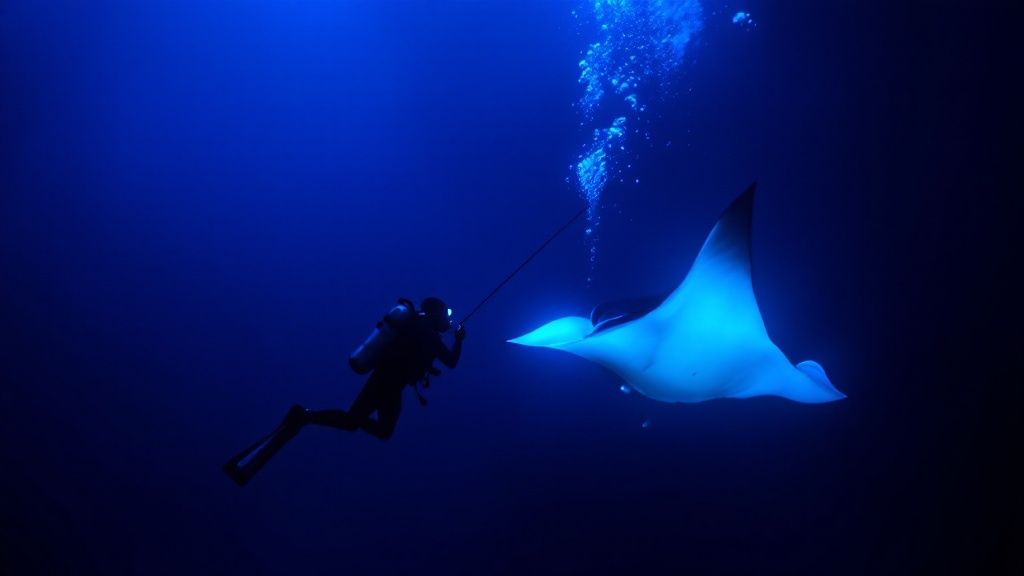
The real show begins after the sun goes down. You’ll descend to a designated spot on the ocean floor, usually somewhere between 30 and 40 feet deep. This is where the world-famous "manta campfire" comes to life. Powerful lights are set up on the bottom, aimed straight up at the surface, turning the dark water into a brilliantly lit underwater stage.
This intense beam of light acts like a magnet for plankton, the manta rays' primary food source. As the plankton swarm to the light, they create a floating buffet that draws in the gentle giants for their nightly feast. What happens next is a silent, mesmerizing ballet as manta rays with wingspans reaching 12 feet or more glide, swoop, and somersault just inches above your head.
The Campfire Phenomenon
The "campfire" concept is brilliantly simple. Divers gather in a circle, find a spot on the sandy bottom, and point their own dive lights upward. This collective beam of light creates a super-concentrated column of plankton, and the mantas perform incredible barrel rolls and loops to gulp down as much as they can.
It’s an experience that’s hard to put into words. Watching these massive animals move with such effortless grace is truly humbling. They're completely wild, yet they seem to acknowledge your presence, sometimes making direct eye contact as they soar past. It's a peaceful, awe-inspiring spectacle you won't find anywhere else on the planet.
This globally unique event has cemented the Big Island’s reputation as a world-class dive destination. To get a complete picture of what to expect, this Kona Manta Ray Night Snorkel Ultimate Adventure Guide is an excellent resource.
Choosing a Responsible Operator
The dive's immense popularity means that choosing the right operator is absolutely critical. A responsible company will always put the well-being of the mantas first, focusing on a quality experience for their guests rather than just packing the boat.
At Kona Honu Divers, we believe this once-in-a-lifetime encounter deserves to be savored. We deliberately keep our groups small to ensure a less crowded, more intimate, and respectful experience for both our divers and the magnificent mantas.
A smaller group means you get a front-row seat to the action without feeling like you're in a crowd. It allows you to fully immerse yourself in the moment. Our experienced guides also provide a thorough briefing on proper "manta etiquette" so everyone understands how to interact passively and safely with these protected animals. Find out more about what makes our trip so special by reading about our Kona Manta Ray Night Dive.
Ultimately, this dive is about being a quiet, respectful guest in their world. When you finally surface, you're left with a sense of pure wonder and a memory that will stick with you for a lifetime.
Top Dive Sites Beyond the Manta Experience

The manta ray night dive is an absolute showstopper, but don't think for a second the magic stops there. The Kona coast is packed with world-class dive sites that prove just how diverse Big Island scuba diving truly is. Thanks to the island's volcanic origins, we have an underwater playground of lava tubes, vibrant reefs, and unique cleaning stations.
Once you’ve had your mind blown by the mantas, it’s time to see what else is hiding beneath the surface. The cool thing about Kona is the sheer variety. There's a perfect adventure waiting for every diver, no matter your skill level or what you're hoping to see.
One day you could be peacefully watching sea turtles get spa treatments, and the next you're navigating a swim-through that was once a river of molten rock. So, let's dive into some of the other spots that make Kona an unforgettable destination.
Turtle Pinnacle: A Natural Spa for Honu
One of the most heartwarming and popular spots along the coast is Turtle Pinnacle. This isn't just a place where you might get lucky and spot a turtle; it's a bustling "cleaning station" where Hawaiian green sea turtles, or honu, gather on purpose.
They come here to get groomed. Seriously. The turtles queue up and wait patiently for reef fish like the Hawaiian cleaner wrasse to pick algae and parasites off their shells and skin. It’s a real-life underwater spa day and a fantastic example of a symbiotic relationship in action.
There's something incredibly peaceful about watching a half-dozen honu just chilling, waiting for their turn. It’s a powerful, quiet moment that really connects you to the intricate balance of the marine world.
The site itself is a pinnacle that rises from the ocean floor, making it a straightforward and rewarding dive for everyone. It's relatively shallow, giving you plenty of bottom time to just hang out on the sand and watch the whole fascinating process unfold.
Exploring Ancient Lava Tubes and Caverns
The Big Island's volcanic past is front and center underwater. Many dive sites are riddled with incredible lava tubes, massive archways, and winding caverns that offer a completely different kind of adventure. These geological features create a dramatic, almost alien-like landscape to explore.
Swimming through these formations feels like you've entered another world. Places like Golden Arches, Kaloko Arches, and Suck 'Em Up are famous for their swim-throughs. When the sun hits just right, you get these beautiful, dancing light rays filtering through the volcanic rock.
These structures are also prime real estate for all sorts of marine life:
- White-tip reef sharks love to nap on the sandy bottoms inside the caverns during the day.
- Moray eels are constantly peeking out from the nooks and crannies in the lava rock.
- Schools of soldierfish and squirrelfish often gather in the shelter of overhangs and lava tubes.
The Rich Reefs of the Kona Coast
Beyond the turtles and lava tubes, the Kona coast boasts some of the healthiest and most colorful coral reefs in all of Hawaii. These reefs are bursting with life, offering a kaleidoscope of activity on every single dive. The unique volcanic structures and thriving biodiversity are what really make Big Island scuba diving stand out.
Sites like Turtle Pinnacle, with depths between 30 and 60 feet, are vital cleaning stations for our native Hawaiian green sea turtles (honu). It's not uncommon to see several turtles on one dive, patiently letting cleaner fish remove algae from their shells—a truly fascinating sight. You can get a closer look at the dive sites we frequent around the Big Island of Hawaii and see just how much there is to explore.
These ecosystems are home to an incredible array of fish, including endemic species like Hawaiian butterflyfish and our state fish, the famously named humuhumunukunukuāpuaʻa. For divers with more experience under their belt who are looking for a bigger challenge, there are plenty of deeper sites and specialized tours to check out.
Planning Your Big Island Dive Trip
Okay, let's get down to the fun part: turning that dream of a Big Island scuba diving trip into a reality. A little bit of smart planning goes a long way, ensuring your underwater adventure is smooth, safe, and exactly what you hoped for. We'll walk through everything from the best time of year to visit to picking the right crew to dive with.
First things first: when should you come? The great news is that Kona offers incredible diving all year long. Seriously. The water is always inviting, hovering around a comfortable 75°F (24°C) in the winter and warming up to a lovely 81°F (27°C) in the summer.
While any month is a fantastic time to get in the water, there are a few seasonal quirks to keep in mind. Winter, from December to March, is humpback whale season. You likely won't see one on a dive, but hearing their haunting songs echo through the water is an experience that will stay with you forever. On the flip side, summer often brings calmer, glassier surface conditions—a huge bonus if you're prone to seasickness. Staying on top of the daily forecast is always a good idea, and you can learn more about how to check ocean conditions for the Big Island, Hawaii to be fully prepared.
Choosing the Right Dive Operator
This is a big one. The dive company you choose can genuinely make or break your entire trip. You want a crew that’s focused not just on fun, but on safety, comfort, and a real respect for the ocean. A top-notch operator like Kona Honu Divers really shines by keeping groups small, which means you get a much more personal and less crowded experience on every single dive.
Here’s a quick checklist of what to look for when you're making your decision:
- Safety Record: This is non-negotiable. Look for a company with experienced, certified guides and a clear, unwavering commitment to safety protocols.
- Boat Comfort: Little things make a huge difference. Amenities like an on-board restroom, a freshwater shower for rinsing off, and plenty of shade can vastly improve your day between dives.
- Small Group Sizes: Smaller groups simply mean more one-on-one time with your guide and more room to explore without fins bumping into you.
- Local Expertise: An operator with deep local knowledge knows all the best spots for any given day's conditions and can point out all the fascinating marine life and unique geological features.
Selecting Your Ultimate Dive Adventure
The Big Island has an incredible menu of dive tours, with something for every skill level and interest. Whether you want to explore sun-drenched reefs in the morning or witness the otherworldly spectacle of a night dive, there's an adventure waiting for you. Knowing what's out there helps you build the perfect itinerary.
Deciding between a vibrant morning reef dive and a surreal night dive isn't about which is better—it's about what kind of magic you want to experience. Each tour offers a completely different, yet equally breathtaking, window into Kona's underwater world.
To help you map out your dives, here’s a quick overview of the most popular tours available on the Big Island.
Big Island Dive Tour Comparison
This table gives you a snapshot of the most popular scuba diving adventures, making it easier to pick the right one for you.
| Tour Type | Best For | Typical Duration | Key Highlights |
|---|---|---|---|
| 2-Tank Morning Dive | All certified divers | 4-5 hours | Exploring vibrant reefs, lava tubes, and seeing diverse marine life. |
| Manta Ray Night Dive | Certified divers & snorkelers | 3 hours | Witnessing the world-famous manta ray feeding ballet at night. |
| Advanced Deep Dive | Experienced divers (AOW+) | 4-5 hours | Exploring deeper sites, unique topography, and potentially larger marine animals. |
| Blackwater Night Dive | Advanced divers with night dive experience | 3 hours | Observing bizarre and rare bioluminescent creatures from the deep ocean. |
Each tour offers a unique slice of what makes Kona diving so special.
The surreal Blackwater Night Dive is a truly mind-bending experience, giving you a peek into a world of strange, beautiful creatures that migrate up from the deep ocean only under the cover of darkness. For those looking for a different kind of thrill, our Premium Advanced Dive Tour is designed to explore deeper, more challenging sites. Ready to build your adventure? Check out all of our amazing diving tours to find your perfect match.
Frequently Asked Questions About Big Island Scuba Diving
Planning a dive trip to the Big Island is exciting, but it’s completely normal to have a few questions before you hit the water. I've pulled together the most common questions we get from divers to give you some clear, simple answers.
Getting these details ironed out now means you can spend less time worrying about logistics and more time getting psyched for the incredible underwater world that awaits.
What Is the Best Time of Year for Scuba Diving on the Big Island?
The short answer? Anytime! That's one of the best parts about diving here. The water is always inviting, hovering around a comfortable 75°F (24°C) in the winter and warming up to a balmy 81°F (27°C) in the summer. Visibility is another huge plus, as it’s almost always fantastic, often letting you see well over 100 feet.
That said, there are a few subtle seasonal perks to consider. If you dive between December and March, you might be treated to the unforgettable sound of migrating humpback whales singing during your dive. On the other hand, the summer months usually bring flatter, calmer seas, which is a big bonus if you're prone to seasickness.
Do I Need to Be an Advanced Diver to Enjoy Diving in Kona?
Not at all! The Kona coast is famous for having an incredible range of dive sites that are perfect for divers of all stripes. In fact, many of our most breathtaking reefs and vibrant cleaning stations are in fairly shallow water—think 30-60 feet—making them ideal for brand-new or Open Water certified divers.
Of course, if you’re an experienced diver looking for something a bit more challenging, the Big Island definitely delivers. We have deeper sites, exciting drift dives, and other unique underwater adventures ready for those with advanced certifications.
This is where choosing a top-notch operator like Kona Honu Divers really makes a difference. Their guides are pros at reading the conditions and picking sites that are a perfect match for the skill level of everyone on the boat, ensuring a fun, safe trip for all.
What Kind of Marine Life Can I Expect to See Besides Manta Rays and Turtles?
While the mantas and our beloved honu (Hawaiian green sea turtles) often steal the spotlight, they're just the headliners. The reefs here are buzzing with an entire cast of colorful characters. You'll see schools of butterflyfish, parrotfish, and even Hawaii's state fish, the famously named humuhumunukunukuāpuaʻa.
But the real magic happens when you slow down and look a little closer into the nooks and crannies of the volcanic rock. Keep an eye out for:
- Different types of moray eels peeking out from their lairs.
- Shy octopuses showing off their incredible camouflage skills.
- Tiny, delicate shrimp and crabs hiding out in the crevices.
And if you’re really lucky, you might even get a surprise visit from a pod of spinner dolphins, a whitetip reef shark cruising by, or the gentle giant of the ocean, the whale shark.
Can I Rent All the Necessary Scuba Gear on the Island?
Absolutely. Every reputable dive shop on the Big Island, including us at Kona Honu Divers, has a full inventory of high-quality, meticulously maintained rental gear. This is a huge convenience, saving you the hassle and cost of lugging your own heavy equipment across the Pacific.
You can rent everything you need in a complete package or just pick up individual items like a BCD, regulator, wetsuit, or fins. My advice? It's always a good idea to reserve your gear when you book your diving tours to make sure you get the right sizes and everything is ready for you when you arrive.