
Imagine slipping beneath the surface into impossibly clear, blue water. Sunlight streams down, lighting up ancient lava tubes and reefs teeming with life. This isn't a dream; it's what awaits you when you go scuba diving on the Big Island—truly one of the best underwater experiences you can have anywhere in the world.
Why the Big Island Is a Diver’s Paradise
So, what’s the secret? What makes diving here so incredible? It all comes down to the island's unique geology. The sheer size of the volcanoes, Mauna Loa and Mauna Kea, acts as a massive shield, protecting the Kona coast from the gusty trade winds. This creates a calm, leeward side with exceptionally clear and still waters—basically, a perfect natural swimming pool for divers.
This protection gives us visibility that often stretches beyond 100 feet, letting you soak in the full grandeur of the underwater scenery. The island's fiery volcanic past has sculpted a breathtaking world of lava tubes, dramatic underwater arches, and complex reef structures you just won't find anywhere else. These formations have become the perfect home for a thriving and diverse marine population.
To give you a quick snapshot, here’s what makes the Big Island a top-tier diving destination.
Big Island Diving at a Glance
| Feature | What This Means for You |
|---|---|
| Volcanic Topography | Explore unique underwater landscapes like lava tubes, arches, and caves. |
| Leeward Coast Protection | Enjoy exceptionally calm, clear waters with minimal currents. |
| High Visibility | Experience stunning underwater views, often exceeding 100 feet. |
| Rich Marine Biodiversity | Encounter hundreds of fish species, including many found only in Hawaii. |
| Year-Round Diving | Consistently warm water temperatures mean any time is a good time to dive. |
This unique combination of features creates an underwater environment that's both thrilling for experienced divers and welcoming for beginners.
An Ecosystem Forged by Fire and Sea
That volcanic underwater landscape is more than just pretty scenery; it's the foundation of an amazing ecosystem. Over millennia, ancient lava flows have cooled to form intricate coral gardens. Today, these gardens are home to hundreds of species of fish, many of which are endemic—meaning you can only find them right here in Hawaii.
You can expect to meet a whole cast of characters on your dives. The Big Island is widely considered the best place to dive in Hawaiʻi, mostly because of that amazing water clarity and one-of-a-kind volcanic seascape. Famous spots like Turtle Pinnacle are bustling "cleaning stations" where Hawaiian green sea turtles (honu) line up to let smaller fish nibble away algae and parasites. You'll also likely see butterflyfish, eels, huge schools of wrasse, and of course, the world-famous manta rays.
Ideal Conditions for Every Diver
Beyond the incredible sights, the diving conditions themselves are a huge part of the appeal. The water stays wonderfully warm all year, usually hovering between a comfortable 75-80°F (24-27°C). This means you can stay down longer and just enjoy the experience without getting chilled.
The Kona coast's consistent calm makes it the perfect spot for divers of all stripes. Whether you're taking your very first breaths underwater or you're a seasoned pro navigating deep lava tubes, the Big Island provides an environment that’s both accessible and endlessly exciting.
This combination of predictable, friendly conditions and a massive variety of dive sites means you can plan your trip with confidence. You can learn more about what makes this area so special by checking out these reasons to scuba dive in Kona. From shallow, sun-drenched reefs perfect for beginners to challenging deep-water adventures, the island always delivers.
Experiencing the Kona Manta Ray Night Dive
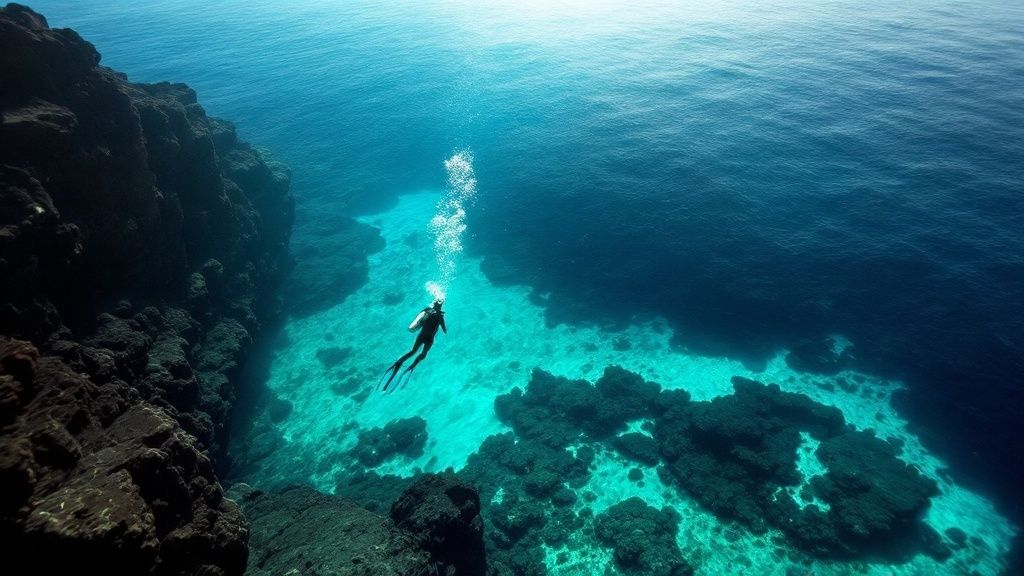
If there's one experience that defines diving on the Big Island, it has to be the world-famous Kona Manta Ray Night Dive. Calling it just a "dive" doesn't quite do it justice; it's more like an otherworldly underwater ballet, and it has rightfully earned its reputation as one of the most unforgettable dives on the entire planet.
Picture this: you descend into the dark, settling on the sandy ocean floor as your guide sets up a ring of powerful, upward-facing lights. These beams cut through the darkness, attracting swarms of plankton—the mantas’ favorite meal. Then, you wait.
Suddenly, a giant, shadow-like shape emerges from the deep. The first majestic manta ray arrives, gliding effortlessly into the light. These gentle giants, with wingspans that can stretch up to a staggering 16 feet, perform a mesmerizing dance just inches above your head, doing graceful somersaults and barrel rolls as they feast on the plankton. It’s a profoundly humbling and truly magical encounter.
Why Is Kona the Ultimate Spot for This Dive?
You can find manta rays in other parts of the world, sure, but the Kona coast is hands-down the most reliable and spectacular place on Earth for this unique feeding experience. The local reef manta rays here aren't just passing through; they are year-round residents with very specific feeding grounds.
This whole tradition started decades ago, completely by accident, when lights from coastal hotels attracted plankton, and the mantas simply followed the food. Today, responsible dive operators have figured out a safe and sustainable way to recreate this phenomenon for divers. This incredible consistency is what makes Big Island scuba diving so special—your chance of seeing mantas on this dive is over 90%.
The dive’s popularity has exploded. A 2015 study revealed a 38% increase in the number of boats visiting the manta sites compared to previous years. This just goes to show how incredible the experience is, but it also highlights how important it is to choose operators who put the animals' welfare first.
A Commitment to Responsible Manta Tourism
The magic of the manta ray dive hinges on two things: a healthy marine ecosystem and respectful human interaction. Manta rays have a delicate, slimy coating on their skin that protects them from infection, which is why a strict no-touching policy is non-negotiable.
The entire philosophy of the manta dive is built around passive observation. You and your group stay on the ocean floor, creating a safe, arena-like space for the mantas to feed naturally and without disturbance. This ensures the experience remains amazing for both the spectators and the stars of the show.
Choosing a dive operator that lives by these guidelines is absolutely critical. By being a responsible guest in their world, you’re helping to ensure this natural wonder can be enjoyed for generations to come, all while protecting Kona’s beloved manta ray population.
To get all the details and prepare for this incredible adventure, you can learn more from our complete guide to the Kona Manta Ray Night Dive.
Exploring Top Dive Sites for Every Skill Level
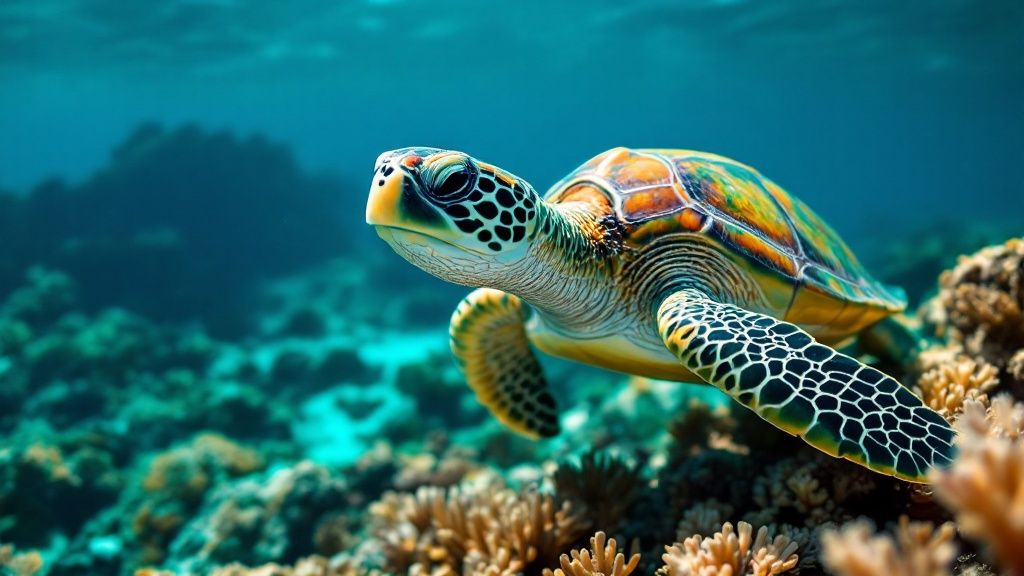
The Kona coast isn’t just one single dive spot; it's an entire underwater world with dozens of unique sites that feel tailor-made for every diver. Whether you're about to take your first breath underwater or you're a seasoned pro with hundreds of dives in your logbook, Big Island scuba diving has something incredible waiting for you. That incredible variety is exactly what puts Kona on the map as a world-class destination.
Of course, knowing where to go is the key to having an unforgettable time. A calm, shallow reef that’s perfect for a brand-new diver might feel a little tame for someone certified for deep dives. Likewise, an advanced drift dive could be overwhelming for someone still getting comfortable in the water. Luckily, the choices are endless, and every site has its own distinct personality and a unique cast of marine residents.
Let’s break down some of the top-tier sites by experience level so you can find the perfect underwater adventure for your trip.
Beginner-Friendly Dive Havens
For anyone new to diving or just looking for a relaxed, easy-going day in the water, Kona has plenty of shallow, protected bays. These are the places where you can build confidence and see amazing sights without a hint of stress. The currents are usually minimal, and the conditions are just right for learning.
One of the go-to spots for new divers is Pawai Bay. The site is built around a beautiful, sprawling reef in relatively shallow water, typically between 20 to 50 feet. Because it's so protected, the water is almost always calm with fantastic visibility. Get ready to see schools of vibrant yellow tangs, butterflyfish, and maybe even a resting honu (Hawaiian green sea turtle).
Another fantastic choice, especially for convenience, is Kailua Bay. Located right near town, it has an easy entry with a gentle, sandy slope that gradually gives way to a healthy reef. It's the perfect spot for a refresher dive or your first post-certification plunge.
Intermediate Underwater Playgrounds
Once you've got a few dives under your belt and feel comfortable in the water, a whole new world of Kona sites opens up. These spots might feature slightly deeper profiles, more complex underwater landscapes, or a better chance of spotting larger marine life.
Turtle Pinnacle is a must-do for just about every diver visiting the island. This famous site is what's known as a "cleaning station"—think of it as a natural spa where sea turtles gather to let smaller fish clean algae and parasites off their shells. At depths of 30 to 60 feet, you can just hang back and watch this incredible symbiotic relationship happen right in front of you.
For something a bit more adventurous, check out Golden Arches. Named for its dramatic lava rock archways, this site is a playground of thrilling swim-throughs. You get to navigate these ancient volcanic formations while surrounded by fish, making for some absolutely spectacular photos.
Advanced and Thrilling Adventures
For certified divers chasing a bigger thrill, the Big Island delivers. We're talking deep dives, one-of-a-kind night excursions, and more challenging environments that demand excellent buoyancy control and a true sense of adventure. Hopping on an advanced dive tour is the best way to experience these more remote and demanding locations safely.
The most famous advanced dive here is, without a doubt, the Kona Blackwater Dive. This isn't a reef dive; it's a journey into the deep, open ocean at night. Tethered to the boat, you drift over thousands of feet of water, witnessing one of the largest migrations on Earth as bizarre, bioluminescent creatures rise from the abyss. It’s a surreal, almost alien experience that attracts divers from across the globe.
The Blackwater Dive is truly in a league of its own. It’s a chance to see creatures in their larval stages and deep-sea oddities that you’ll almost never encounter during the day. You’re basically exploring a part of the ocean that feels like another planet.
If you're looking for a deep reef, Au Au Crater is a collapsed lava dome that has created impressive walls and caverns to explore. It's a great place to spot larger pelagic species like sharks and eagle rays cruising by. This site really showcases the raw, volcanic power that formed the island itself. To see a full list of where we go, check out this guide to the best Kona dive sites.
Finding the Right Big Island Scuba Tour
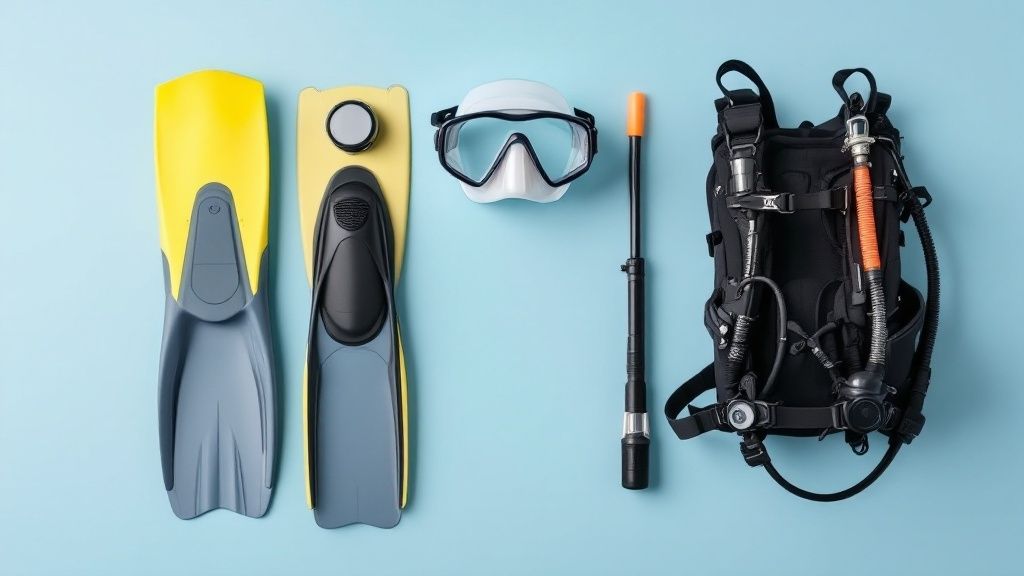
Picking the right dive operator for your Big Island scuba diving adventure is probably the single most important decision you'll make for your trip. A good crew doesn't just drive the boat; they shape your entire experience, turning a pretty good dive into an absolutely unforgettable one. They're your guide, your safety net, and your personal connection to the underwater world.
So, what makes a great dive shop? It's a lot like hiring a guide for a trek through a remote jungle. You want someone who knows the trails inside and out, puts safety first, and has a deep respect for the environment. The same goes for diving.
Look for operators who run comfortable boats, keep their groups small, and employ guides who are genuinely passionate about marine life and conservation. It really does make all the difference.
What Separates the Good from the Great
The best dive companies think about the little things. It all starts with the boat—a spacious vessel with nice perks like hot showers, shade, and an easy way to get in and out of the water can completely change your day, especially on a two-tank dive. Being crammed onto a crowded boat is no fun for anyone, which is why a commitment to small group sizes is a huge green flag.
Smaller groups mean you get more one-on-one time with your divemaster. This not only makes for a safer, more relaxed dive but also gives you the chance to really learn about the amazing creatures you're seeing down there.
Even more important is the crew's local knowledge. The top guides know these reefs like their own backyard. They're the ones who can spot a perfectly camouflaged octopus, find a tiny, vibrant nudibranch that everyone else misses, and tell you the stories behind the ecosystem. That's how a dive goes from just looking at fish to truly understanding the underwater world of the Big Island.
Kona Honu Divers: A Premier Choice
When you put all those pieces together—expert crew, top-notch safety, and a real love for the ocean—Kona Honu Divers consistently rises to the top. They've earned a stellar reputation for having a professional and enthusiastic crew that brings their passion for diving to every single trip.
From their well-maintained boats to their careful stewardship of the local reefs, you can see their commitment to quality in everything they do. But don't just take my word for it; their reputation is backed by thousands of glowing reviews from divers who've seen their exceptional service firsthand.
Their dedication to offering world-class diving tours in Kona makes them a fantastic choice for anyone, from brand-new divers to seasoned pros, looking for the best the Big Island has to offer.
Other Reputable Operators to Consider
While Kona Honu Divers is a tough act to follow, the Big Island is fortunate to have several other highly-regarded dive shops. It's always a good idea to check out a few options to find the perfect fit for you.
Jack's Diving Locker is another institution in the Kona diving scene. They’ve been around for a long time, have a fantastic reputation, and offer a huge variety of tours and courses for every skill level.
You'll also hear great things about Big Island Divers, known for their friendly, welcoming staff and fun-filled underwater adventures. They run a great operation and offer everything from classic reef dives to the can't-miss manta ray night dive.
Ultimately, the best choice really comes down to your own diving style and what you hope to get out of your trip. By sticking with operators who have a proven commitment to safety, service, and the environment, you can book with confidence and get ready to fully experience the magic of diving on the Big Island.
The Story Behind Kona’s World-Famous Dive Scene
Every reef and lava tube along the Kona coast has a backstory. It's a history shaped by the pioneers who first saw the magic beneath the waves and turned the Big Island into a must-dive destination for people all over the world. Knowing a bit of this history adds so much more to your own dives; you’re not just exploring a reef, you’re connecting with a legacy of adventure.
When you dive here, you're tapping into a community with deep roots. It’s a culture built on a shared passion for the ocean, conservation, and the thrill of discovery. You’re becoming part of the island’s story.
The Pioneers Who Put Kona on the Map
The story of Big Island scuba diving really comes down to a few key people who had the vision to see what was possible here. While scuba diving was gaining traction globally in the 1970s, it wasn't until the early 80s that Kona truly started to shine. That was thanks in large part to Jack Clothier and his wife, Tina.
Back in 1981, they opened a little shop called Jack's Diving Locker. It quickly became more than just a place to fill tanks; it was the heart of the budding dive community and played a huge role in transforming Kona into a premier destination. They took scuba from a fringe hobby to a core part of the island's identity.
The passion of these early explorers created the foundation for everything we have today—a vibrant community focused on safety, conservation, and unforgettable underwater experiences. You can still feel that spirit every time a dive boat heads out from the harbor.
Tragically, Jack passed away just eight months after they opened the shop, but his legacy was already cemented. The small operation he started grew into one of Hawaiʻi’s most beloved dive businesses, solidifying the Big Island’s reputation for both laid-back fun and serious adventure. You can read more about how these efforts shaped the region's dive culture on oceanographicmagazine.com.
From a Small Community to a Global Hotspot
The groundwork laid by pioneers like the Clothiers allowed a new generation of dive operators to flourish. Shops like Kona Honu Divers have carried that torch forward, combining a love for marine life with a real commitment to giving their guests incredible, safe experiences. They're all part of a larger community dedicated to protecting the very reefs that make this place so special.
This rich history is exactly why Big Island scuba diving feels different. It's more than a simple vacation activity. It's an invitation to step into a story that started decades ago—a story of adventure, deep respect for the ocean, and an unwavering desire to share its wonders with everyone.
Your Kona Diving Questions, Answered
It’s natural to have a few questions before you take the plunge. Here are some quick, straightforward answers to the things divers ask us most about exploring the waters of the Big Island.
What Is the Best Time of Year to Scuba Dive on the Big Island?
Honestly, there’s no bad time to dive in Kona. The conditions are fantastic year-round.
If you prefer the calmest seas and warmest water, plan your trip for the summer months from May to October. The water temperature hovers around a balmy 78-80°F (26-27°C).
But winter, from November to April, has its own magic. It’s when humpback whales migrate through, and hearing their songs echo through the water on a dive is an experience you’ll never forget. Water clarity is consistently great, so you really can’t go wrong.
Can I Try Scuba Diving Without a Certification?
You absolutely can! Look for a "Discover Scuba Diving" program, which nearly every dive shop in Kona offers. It’s a fantastic, low-commitment way to experience the underwater world.
An instructor will walk you through the basics in a safe, controlled setting before taking you on a genuine dive at a shallow, calm reef. It's the perfect way to test the waters and see if diving is your thing.
The real beauty of trying scuba for the first time in Kona is the setting itself. The water is warm, clear, and calm, which makes for a completely relaxed and comfortable first time breathing underwater.
What Marine Life Will I See While Diving in Kona?
Get ready for an incredible show. The sheer variety of life here is staggering. You’re almost guaranteed to encounter Hawaiian green sea turtles (honu) gracefully gliding by, along with a kaleidoscope of reef fish like butterflyfish, tangs, and parrotfish.
Keep your eyes peeled for moray eels peeking out from their dens, and don't be surprised to spot spinner dolphins, white-tip reef sharks, or eagle rays cruising in the blue. And, of course, the main event for many is the world-famous Manta Ray Night Dive, where you can get up close with these gentle giants.
How Do I Get PADI Certified on the Big Island?
Getting your dive certification in Kona is an amazing decision. The process is simple: just sign up for a PADI Open Water Diver course with a reputable local operator like Kona Honu Divers.
The course blends online theory with practical, in-water training right here in the Pacific. Learning to dive surrounded by incredible marine life in warm, clear water makes every step of the certification process feel more like a vacation than a class. Once you’re certified, a whole new world of incredible dive sites opens up.
Ready to see it all for yourself? Booking one of the many diving tours in Kona, Hawaii, is the perfect way to start your adventure.
Whether you’re taking your first breath underwater or you’re a seasoned diver searching for your next great adventure, Kona Honu Divers has a trip that's right for you. Explore our full range of tours and book an unforgettable Big Island dive today. https://konahonudivers.com