
Imagine dropping into impossibly clear, turquoise water, surrounded by ancient volcanic lava tubes that form stunning underwater cathedrals, absolutely buzzing with life. That’s what Big Island scuba diving is all about, and it’s an experience that easily ranks among the best in the world. Think of this guide as your personal compass to the rich waters of the Kona coast, a true sanctuary for everything from graceful sea turtles to majestic manta rays.
Discover a Diver’s Paradise
The Big Island isn't just another pretty spot on the map; it's a world-class destination for anyone who loves exploring beneath the waves. Its unique volcanic past has sculpted an underwater landscape you won't find anywhere else on Earth.
In a single trip, you can dive dramatic drop-offs, weave through intricate lava arches, and drift over sprawling coral gardens. The Kona coast, in particular, is perfectly sheltered from the heavy trade winds, which means we get exceptionally calm and clear water almost all year long.
This geological gift has created the perfect setup for a vibrant ecosystem to thrive. The marine life here is a spectacular mix of Hawaiian species you can't find anywhere else and bigger pelagic visitors just passing through. Of course, there's more to the islands than just the ocean; interesting projects are always happening, like the advanced drone surveying in Hawaii used to inspect local infrastructure.
What Makes Kona Diving So Special
If there's one experience that defines Big Island scuba diving, it has to be the world-famous Manta Ray Night Dive. Ever since it blew up in the 1990s, this incredible spectacle has drawn thousands of divers here every year.
They come to witness the silent, graceful ballet of giant manta rays feeding on plankton attracted to underwater lights. During the peak season from April to October, it's not uncommon for divers to be surrounded by up to a dozen of these gentle giants at once. You can get the full story on the history of this unique dive and its seasonal patterns by checking out more Big Island scuba diving insights on konahonudivers.com.
Here at Kona Honu Divers, we live for this stuff. Our goal is to guide you on safe, awe-inspiring adventures that show off the very best of Hawaii's underwater world, always with an eye on conservation. Our expert guides and top-notch service make sure your dive is more than just another activity—it’s a memory that will last a lifetime.
Whether you're looking to hit the must-see dive sites or discover a few hidden gems only the locals know about, this guide has you covered. Let's dive in and see what makes this island a true diver's paradise. For our full list of adventures, you can explore our complete lineup of diving tours.
Why the Kona Coast Is a Diver’s Paradise
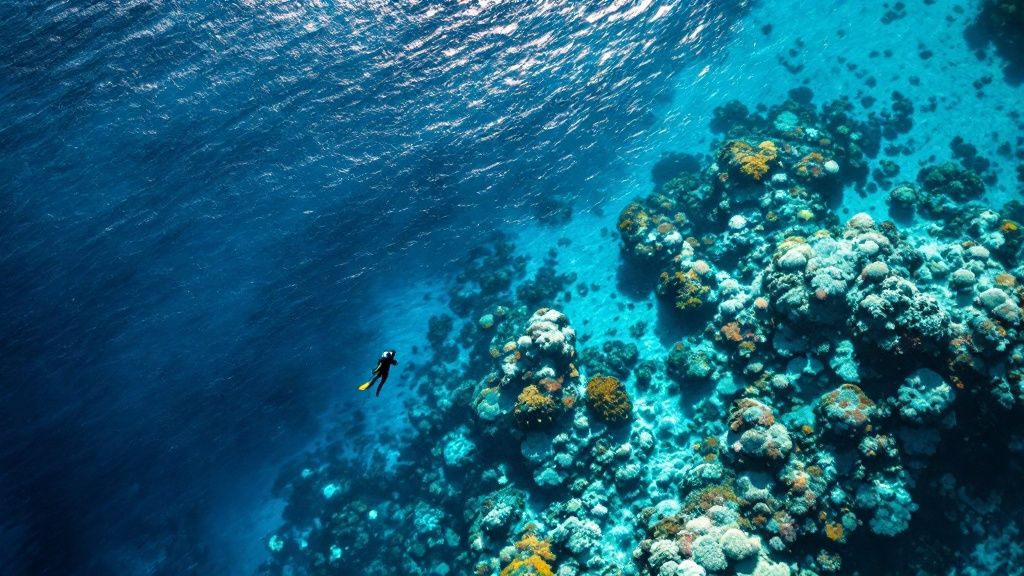
So, what makes the Kona coast the absolute heart of Big Island scuba diving? It all comes down to a perfect marriage of geology and oceanography. This stretch of coastline is tucked neatly into the leeward side of the island, shielded by the colossal volcanic masses of Hualālai and Mauna Loa.
Think of these volcanoes as giant, natural guardians. They block the powerful trade winds that whip across other parts of the island, creating a diver's dream: consistently calm, clear water that’s ready for exploring nearly every single day of the year.
This incredible clarity, often pushing past 100 feet of visibility, lets you soak in the jaw-dropping landscapes carved out by ancient lava flows. The result is a dramatic underwater world you won’t find anywhere else on the planet.
An Underwater Volcanic Wonderland
Thousands of years of volcanic activity have left behind a subaquatic playground of arches, caverns, massive pinnacles, and intricate lava tubes. But these structures are more than just pretty scenery; they're the foundation of a complex and buzzing marine ecosystem. Every little crack and overhang provides a home for an incredible variety of life.
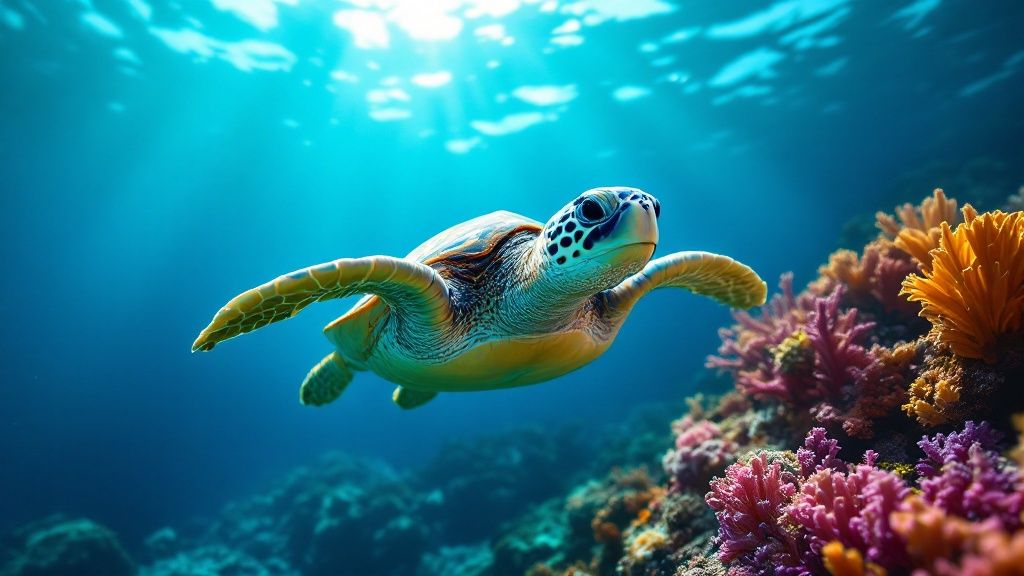
This unique habitat is crawling with amazing creatures. On just about any dive, you can expect to see honu (Hawaiian green sea turtles) cruising by, pods of acrobatic spinner dolphins, and countless endemic fish species—critters you can only find right here in Hawaiian waters. The reefs are just bursting with color and activity.
To really unlock these underwater secrets, you've got to go with a local. A knowledgeable guide can transform a good dive into an unforgettable one, pointing out perfectly camouflaged creatures and safely navigating you through the maze of lava formations.
The Big Island’s dive scene has come a long way since the early 1980s. Pioneers like Jack’s Diving Locker, founded way back in 1981, were instrumental in building this community from the ground up. As a 5-Star PADI IDC center, they’ve certified tens of thousands of divers over four decades, making a huge impact on diving here and worldwide. You can read more about the evolution of Big Island diving on konahonudivers.com.
Your Gateway to Kona Diving
Exploring this underwater paradise the right way means having local expertise and a serious commitment to safety and conservation. As Kona's premier dive operator, we at Kona Honu Divers offer unmatched access to this special environment. Our experienced crew knows these waters inside and out, from the world-famous sites to the hidden gems most people miss.
We run a whole range of trips designed for every kind of diver. Whether you're interested in a mesmerizing daytime reef dive or the legendary Manta Ray Night Dive, our mission is to share the magic of Kona's underwater world with you. Check out our full lineup of diving tours to find your perfect adventure.
To give you a better idea of what to expect, here's a quick rundown of what makes Kona diving so special.
Kona Coast Diving Highlights at a Glance
| Feature | Description | Best For |
|---|---|---|
| Calm Waters | Shielded from trade winds, the Kona coast has exceptionally calm seas year-round, which makes for super comfortable and safe dives. | All divers, especially beginners and anyone who gets a little seasick. |
| Crystal-Clear Visibility | Visibility often tops 100 feet, giving you breathtaking wide-angle views of the underwater world and all its inhabitants. | Underwater photographers and anyone who just loves pristine conditions. |
| Unique Volcanic Topography | Ancient lava flows have created a wild underwater landscape of arches, caves, and lava tubes just waiting to be explored. | Adventurous divers looking for one-of-a-kind underwater structures. |
| Abundant Marine Life | Home to Hawaiian green sea turtles, dolphins, manta rays, and a huge concentration of fish found nowhere else on Earth. | Marine life lovers and divers of all experience levels. |
Pretty amazing, right? When you’re ready to see this paradise for yourself, we’re ready to show you.
The World-Famous Manta Ray Night Dive Ballet
This isn't just another item to check off your Big Island scuba diving list. Far from it. This is a world-renowned spectacle, an experience that sticks with you long after you've dried off. The Kona Manta Ray Night Dive is less of a dive and more of an underwater ballet, and you've got a front-row seat. It all starts with a beautiful boat ride as the sun melts into the horizon, setting the sky on fire.
When you arrive at the dive site, the real magic begins. The setup is brilliantly simple. We descend to a sandy patch on the ocean floor, usually around 30-40 feet, and gather in a circle around a central light source we call "the campfire." All of our collective dive lights point up into the water column, creating a massive beacon in the dark.
This powerful glow is an irresistible magnet for plankton, the tiny organisms that manta rays love to eat. In short, we create a floating, all-you-can-eat buffet for these gentle giants.
The Performance Begins
As the cloud of plankton gets thicker, the stars of the show make their grand entrance. One by one, massive manta rays glide out of the darkness and into the spotlight. Just picture it: you're settled comfortably on the sand, looking up as these incredible creatures perform a weightless, acrobatic dance just inches above your head.
With wingspans that can stretch over 16 feet, they swoop and somersault through the beams of light, their giant mouths wide open to filter the water. It’s a silent, mesmerizing performance that feels both otherworldly and deeply peaceful. If you want to get into the nitty-gritty, you can learn more about this incredible encounter in our guide on what the Manta Ray Night Dive is.
People often describe the experience as profoundly moving. There's just something about watching these intelligent, graceful animals up close that creates a powerful connection you'll never forget.
This famous dive happens at two primary locations, each with its own vibe. These sites have been used for decades, and the local manta population has learned to associate our lights with an easy meal.
The Two Famous Manta Venues
Knowing the two main sites helps you know what to expect. Both locations offer a crazy-high chance of seeing mantas, often with a success rate of over 90%.
- Manta Village (Keauhou Bay): This is the original spot, just south of Kailua-Kona. It's known for being incredibly reliable and easy to get to, which makes it a popular choice. The encounters here are often very close and personal.
- Manta Heaven (Garden Eel Cove): Located north of Kona near the airport, this site can sometimes feel like a grand ballroom, attracting even larger groups of mantas. When it goes off, it really goes off.
It's absolutely critical to dive with an operator that puts the mantas' safety first. Strict guidelines are in place to make sure these encounters are sustainable. That means no touching the mantas (it can damage their protective skin coating) and staying put on the bottom so they have clear, predictable paths to swim.
At Kona Honu Divers, we specialize in this world-famous dive. Our guides are experts, and our eco-conscious practices ensure you have a profound experience while we fiercely protect the marine life that makes it all possible.
Ready to see this breathtaking ballet for yourself? You can check out our top-rated Manta Ray Dive tour and book an evening you will never, ever forget.
Exploring Top Dive Sites for Every Skill Level
While the Manta Ray Night Dive gets a lot of the limelight, it's really just the beginning of the story for Big Island scuba diving. The Kona coast is a massive underwater playground, packed with a huge variety of dive sites that are perfect for just about any certification level or sense of adventure you've got.
It doesn’t matter if you’re about to take your first breaths underwater or you're a seasoned pro with hundreds of dives in your logbook. Kona has a site that will absolutely blow you away. This incredible range is all thanks to the island's volcanic past. Ancient lava flows have sculpted an underwater world loaded with dramatic structures, from shallow, protected coves to deep, mysterious caverns.
Let's dive into some of the top spots that make Kona a world-class diving destination, starting with the mellow ones perfect for newcomers.
Gentle Dives for Beginners
When you're new to scuba, a calm and controlled environment is everything for building confidence. Luckily, Kona has several spots that are not only safe and shallow but also overflowing with cool marine life, making sure your first dives are as magical as they are comfortable.
One of the most loved beginner spots is Kailua Pier. It's known for its super easy entry and calm conditions—it’s basically a natural aquarium. The pier's pilings are crusted with corals and sponges, making it a home for a surprising number of critters. It's a fantastic spot to hunt for frogfish, nudibranchs, and schools of colorful reef fish. For a full rundown of spots like this, check out our guide to the best shore diving sites in Kona, Hawaii.
Another great choice for new divers is Pawikan (Turtle) Pinnacle. This site has a "cleaning station" where Hawaiian green sea turtles, or honu, hang out to let small fish and shrimp clean their shells. It's an awesome chance to see these gentle giants up close in a relaxed setting, usually at mellow depths of 30-50 feet.
Thrills for Intermediate Divers
Once you've got a few dives under your weight belt, a whole new world of underwater scenery opens up. Intermediate divers can start checking out some of Kona's more complex and dramatic volcanic formations, where the marine life gets even more interesting.
Golden Arches is a perfect example of Kona's unique underwater landscape. This site is famous for its massive lava rock arches you can actually swim through. They make for some stunning photo ops as light streams down from above. The reef around it is vibrant and busy, often visited by eels, octopuses, and huge schools of butterflyfish.
Another must-see is Naia (Dolphin) Caverns. This spot has a series of connected lava tubes and caverns that make for a super fun and adventurous swim-through. While spinner dolphins do pop up nearby sometimes, the real stars are the wild geological formations and the creatures hiding inside them.
Exploring these lava tubes feels like navigating an underwater cathedral. The way the light plays through the openings in the rock is a truly surreal experience that highlights the raw, creative power of the island's volcanoes.
Advanced Adventures into the Deep
For experienced divers looking for a bigger kick, the Big Island definitely delivers. We're talking deep dives, drift dives, and some truly one-of-a-kind encounters. These sites require excellent buoyancy control and a cool head, but the reward is huge. You can learn about more advanced dive tours here.
One of the most talked-about advanced dives on the planet is the Kona Blackwater Dive. This is not your typical reef dive. Instead, you're tethered to the boat, drifting in the pitch-black of night over thousands of feet of water. You get to witness the largest animal migration on Earth as bizarre, glowing creatures rise from the abyss to feed. It’s a surreal, alien-like experience that feels more like a spacewalk than a scuba dive. Find out more about the Blackwater Dive here.
How to Plan Your Big Island Dive Trip
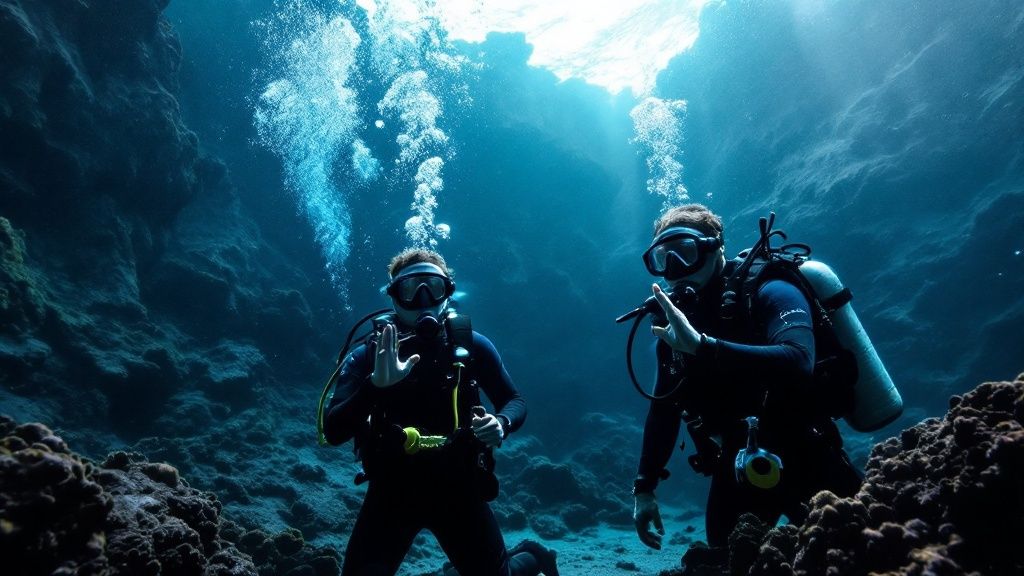
You've got visions of volcanic arches and graceful manta rays dancing in your head. Now it's time to get down to the fun part: planning the perfect Big Island scuba diving vacation. A little prep work upfront is the secret to transforming a good trip into an unforgettable one, freeing you up to soak in every moment underwater instead of sweating the small stuff.
The first big question is always when to come. The beauty of Kona's leeward coast is that the diving is fantastic year-round, but every season has its own special character. Summer brings the warmest, calmest water, while winter delivers the hauntingly beautiful soundtrack of humpback whales.
Picking the Best Time of Year to Dive
When you should visit really boils down to what you want to see and feel. Each peak season offers something incredible.
Big Island Diving Seasonal Guide
Thinking about when to book your trip? This table breaks down what you can expect from the water and marine life throughout the year. It's a quick guide to help you match your dream dive experience with the right season.
| Season | Avg. Water Temp | Visibility | Key Marine Life Sightings |
|---|---|---|---|
| Summer (May-Oct) | 78-80°F (26-27°C) | Excellent (often 100+ ft) | Peak manta ray activity, calm seas, tiger sharks more common. |
| Winter (Nov-Apr) | 75-77°F (24-25°C) | Very Good (often 70-100 ft) | Humpback whale songs (peak Jan-Mar), schooling hammerheads. |
Ultimately, whether you prefer the glassy, warm seas of summer or the epic whale songs of winter, you can't go wrong. Both seasons offer world-class diving conditions.
No matter which season you choose, booking your dive charters well in advance is absolutely key. High-quality shops like Kona Honu Divers get booked up fast, especially for popular trips like the Manta Ray Night Dive. For a deeper dive into planning, you can find a ton of info about Big Island scuba diving on konahonudivers.com.
The Nitty-Gritty: Logistics and What to Pack
Once you've locked in your dates, the rest of the puzzle pieces fall into place. Flying into Ellison Onizuka Kona International Airport (KOA) is your best bet, as it puts you right in the heart of the action. You'll find everything from sprawling beachfront resorts to quiet vacation rentals just a short drive away.
Packing smart is all about being comfortable above and below the water. Beyond your dive gear, one of the most important things you can do is pack reef-safe products to help protect the very ecosystem you're coming to explore.
Here’s a quick checklist to get you started:
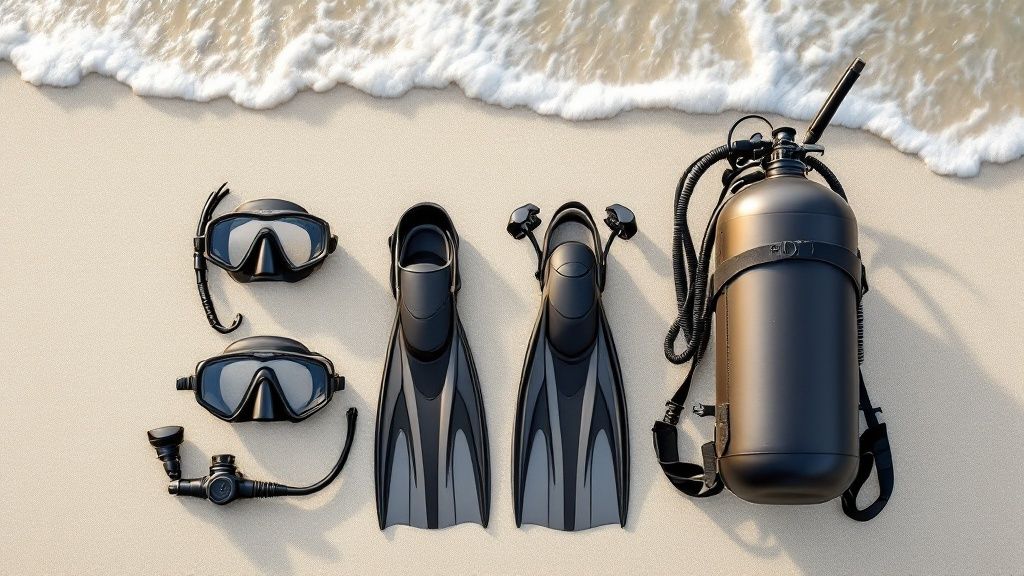
- Your Core Dive Gear: While you can always rent excellent equipment, most divers feel more comfortable bringing their own mask, dive computer, and regulator. And don't forget your certification cards!
- Wetsuit: A 3mm wetsuit is perfect for most divers in the summer. For winter dives or the Manta Ray Night Dive where you're less active, you might appreciate the extra warmth of a 5mm.
- Reef-Safe Sunscreen: Hawaii has banned sunscreens with oxybenzone and octinoxate. Look for mineral-based options with zinc oxide or titanium dioxide to keep both your skin and the coral safe.
- Reusable Water Bottle: Staying hydrated is non-negotiable. Help us cut down on plastic waste by bringing your own bottle to refill.
When you plan with a trusted operator like Kona Honu Divers, you can leave the dive-day logistics to us. We’ve got the tanks, weights, and local knowledge covered. All you need to do is show up, breathe, and enjoy the adventure.
Your Big Island Diving Questions Answered
Jumping into a new dive destination always comes with a few questions. To help you get your fins wet with total confidence, we've pulled together some straightforward answers to the questions we hear most often about Big Island scuba diving. Our mission is to clear up any unknowns so you can focus on the incredible adventure waiting for you beneath the waves.
From what kind of certification you need to what really goes down on the world-famous Manta Ray Night Dive, think of this as your personal cheat sheet. Let's get those last few questions sorted out.
Do I Need to Be Certified to Scuba Dive?
Yes, for most of the boat dives that explore Kona’s stunning reefs, you’ll need a scuba certification like the [PADI Open Water Diver](https://www.padi.com/courses/open-water-diver). This just makes sure everyone in the water has the baseline skills to dive safely and have a good time.
But what if you're not certified? Don't worry, you're not stuck on the boat! The Discover Scuba Diving program is your ticket to the underwater world. Top-notch operators like Kona Honu Divers run these experiences, which include a quick lesson followed by a shallow dive with an instructor glued to your side. It’s the perfect way to test the waters without committing to a full course.
Honestly, with its calm, clear conditions, the Big Island is one of the best places on Earth to get your full certification while you're on vacation.
When Is the Best Time of Year for Big Island Scuba Diving?
Here’s the great thing about the Kona coast: the diving is fantastic year-round. We’re tucked away from the trade winds, so the water stays remarkably calm and clear almost every day. That said, there are a few seasonal perks that might help you pick your dates.
Summer, which runs from about May to October, serves up the warmest water, usually hovering around a balmy 80°F (27°C). This is also when manta ray activity is often at its peak, and the ocean can be as flat as a pancake.
Winter, from November to April, sees the water dip slightly to about 75°F (24°C). But it trades a few degrees for a bit of pure magic. This is humpback whale season, and hearing the haunting songs of the males echo through the reef on a dive is an experience you will never, ever forget. There's truly no bad time to be here.
Is the Manta Ray Night Dive Safe for Beginners?
Absolutely. The Manta Ray Night Dive is an incredibly controlled and safe experience, making it perfect for any certified diver, even if your certification card is still shiny and new. It’s hands-down one of the most unforgettable dives on the planet.
The dive itself is surprisingly shallow—typically between 25 and 40 feet—and you don't even swim around. Divers simply settle into a designated spot on the sandy bottom and watch the spectacle unfold overhead. The professional divemasters at Kona Honu Divers give a detailed briefing beforehand and are right there in the water with you, making sure everyone is safe, comfortable, and following the rules that keep the mantas protected. Even snorkelers can get in on the action from the surface!
This unique setup makes it one of the most accessible and mind-blowing night dives in the world. It’s a must-do for any diver visiting the Big Island, no matter your experience level.
How Do I Choose a Good Dive Operator in Kona?
Let’s be real: the dive operator you pick can make or break your whole trip. It pays to do a little homework. The first thing I’d look for is a PADI 5-Star facility. That designation isn’t just for show; it means they meet high standards for safety, training, and customer service.
Next, hit the recent reviews. See what people are saying about the boats, the state of the rental gear, and the vibe of the crew. The best shops, like Kona Honu Divers, really focus on small group sizes. This means you're not just another bubble-blower in a crowd; you get real, personalized attention.
Finally, go with an operator that walks the talk on marine conservation. Responsible diving practices are what keep this underwater paradise so special for years to come.
Ready to see the best of Big Island scuba diving for yourself? At Kona Honu Divers, we run a full slate of world-class dive tours led by the most experienced and passionate crew on the island. Whether you’re dreaming of the manta ballet or want to explore vibrant volcanic reefs, we’ve got an adventure with your name on it. Check out our complete list of diving tours and book your spot today!