
Picture this: you're sinking into unbelievably clear, turquoise water. Sunlight streams down from the surface, lighting up a wild, underwater landscape carved out by ancient volcanoes. That’s what Big Island scuba diving is all about—an experience you won't find anywhere else on the planet. Hawaii's youngest island is a submerged world of old lava tubes, massive archways, and reefs bursting with life you can't see anywhere else.
Why The Big Island Offers World-Class Scuba Diving
The Kona coast is a diver's dream, and it's all thanks to its unique geography. The colossal volcanoes, Mauna Loa and Hualalai, act like a massive wall, shielding the island's western side from the blustery trade winds. This natural protection results in exceptionally calm, clear water, making for beautiful, easy-going dives nearly every single day of the year.
This calm has allowed a seriously rich and diverse ecosystem to take hold. Unlike the older, more eroded Hawaiian islands, the Big Island's underwater terrain is a direct result of its fiery birth. You’re not just exploring coral reefs here; you’re diving through a submerged world shaped by dramatic volcanic formations.
A Sanctuary for Unique Marine Life
Being so isolated out in the middle of the Pacific means the island has become a hotspot for endemic species—that's marine life you can only find in Hawaiian waters. In fact, about 25% of the fish species here are unique to this archipelago. Every single dive gives you a shot at seeing something truly special, from the flashy ornate butterflyfish to the hard-working Hawaiian cleaner wrasse.
Here's a taste of the local celebrities you're likely to meet:
- Honu (Hawaiian Green Sea Turtles): These gentle giants are everywhere. You'll often spot them chilling on the seafloor or gliding effortlessly over the reef.
- Spinner Dolphins: Famous for their acrobatic jumps out of the water, pods of spinner dolphins are a common sight along the Kona coast.
- Manta Rays: The island is legendary for its population of gentle giant manta rays, especially on the world-famous night dive.
- Vibrant Reef Fish: It’s a color explosion down there, with massive schools of yellow tangs, parrotfish, and Moorish idols painting the reef.
Want to go deeper on what makes this place tick? Check out our complete guide to Big Island scuba diving.
Your Gateway to Underwater Adventure
Getting around this aquatic wonderland takes local know-how and a deep commitment to keeping it safe and pristine. At Kona Honu Divers, our guides aren't just instructors; they are true ocean fanatics. We know the secret spots, the best times to hit certain sites, and exactly how to make sure every diver has a safe, unforgettable trip. Our respect for the ocean is at the heart of every single diving tour we lead.
Exploring The Unique Underwater Volcanic Landscapes
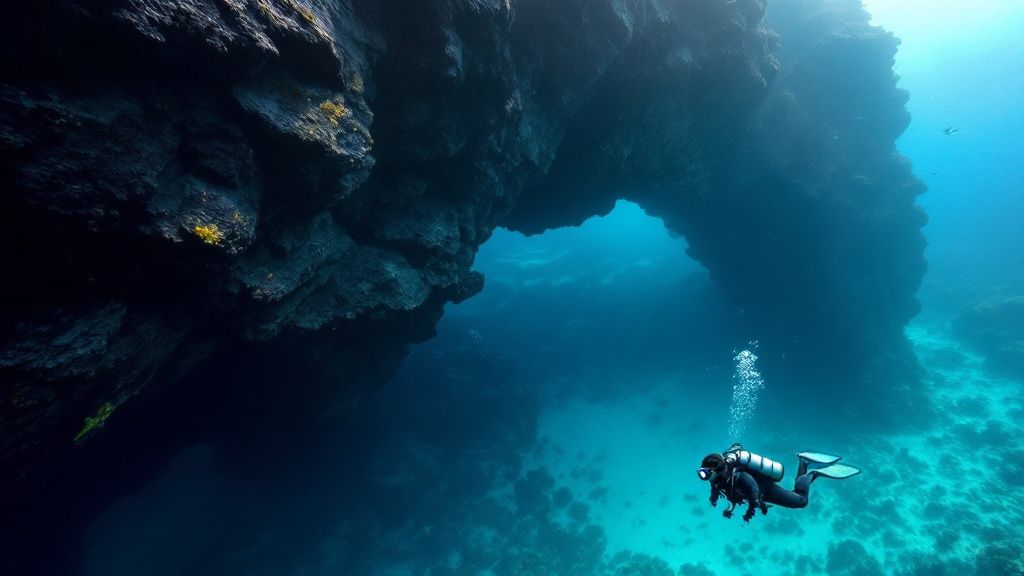
What really sets Big Island scuba diving apart from anywhere else on the planet is its volcanic soul. This island is a geological infant, still being molded by eruptions, and that raw, creative energy plunges right into the ocean. While other tropical spots have beautiful coral reefs, Kona offers something dramatically different—a submerged world sculpted by fire.
Imagine dropping into an underwater playground where centuries of lava flows have been frozen in time. Instead of gentle sandy slopes, you’re greeted by sheer drop-offs, massive underwater canyons, and wild structures formed when molten rock hit the cool Pacific. This isn't just diving; it's exploring the very bones of creation. For more experienced divers looking for a challenge, advanced dive tours explore some of the most dramatic formations.
The Architecture Of The Ocean Floor
The underwater landscape here tells a story. As lava poured into the sea, it flash-cooled, creating a labyrinth of features that are now home to a seriously thriving marine ecosystem. This unique geology makes for dive sites that are structurally complex and just jaw-droppingly beautiful.
- Lava Tubes: Think of these as natural underwater tunnels. They formed when the outer crust of a lava flow hardened while the molten rock inside kept moving. Swimming through one feels like exploring an ancient, underwater cathedral.
- Archways and Pinnacles: As lava cooled and fractured, it left behind massive archways and towering pinnacles. These structures are magnets for marine life, providing shelter and crucial cleaning stations.
- Craters and Calderas: Some spots, like Au Au Crater, are literally submerged volcanic cones. You get to descend right into the heart of a geologic wonder.
This rugged terrain is the perfect foundation for coral to take hold, and it offers countless nooks and crannies for critters like octopuses, eels, and crustaceans to hide out.
A Haven For Endemic Species
The Big Island's isolation, combined with its one-of-a-kind volcanic habitat, has led to an explosion of biodiversity. This unique underwater architecture created a specialized environment where certain species have thrived—many of which are endemic, meaning they're found only in Hawaii.
That means every dive holds the promise of an encounter you literally cannot have anywhere else on Earth. This unique geology and the island's protected status have created a vibrant, healthy ecosystem unlike any other.
Ready to see these geological wonders for yourself? Check out our full range of Big Island diving tours to find your perfect underwater adventure.
Diving Conditions Any Time Of Year
One of the best things about diving the Big Island is how consistent the conditions are. Thanks to the massive volcanoes acting as a shield, the Kona coast has calm seas and fantastic visibility pretty much year-round. This makes planning a trip a breeze because there's truly no "off-season."
Water temperatures are stable and comfortable, usually hovering between 75-80°F (24-27°C). This isn't just great for us divers; it also supports an incredibly rich marine ecosystem. You’ll find abundant wildlife, including the famous manta rays and various shark species, all year.
Here's a quick breakdown of what to expect season by season.
Big Island Diving Conditions Throughout The Year
| Season | Average Water Temp (°F/°C) | Primary Marine Life Sightings | Notes |
|---|---|---|---|
| Winter (Dec-Mar) | 75-77°F / 24-25°C | Humpback whales (audible), Hammerhead sharks, Manta rays | The absolute best time to hear whale song on your dives! |
| Spring (Apr-Jun) | 76-78°F / 24-26°C | Manta rays, Dolphins, Green sea turtles | Water begins to warm up, and visibility is typically excellent. |
| Summer (Jul-Sep) | 78-80°F / 26-27°C | Tiger sharks (more frequent), Manta rays, Eagle rays, Reef fish | Peak season for warm water and calm seas. Great for spotting tigers. |
| Fall (Oct-Nov) | 77-79°F / 25-26°C | Manta rays, Whale sharks (possible), Dolphins | A great "shoulder season" with fewer crowds and still-amazing conditions. |
As you can see, any time is a great time to dive here. The winter months from December to March are particularly special, offering the incredible chance to hear migrating humpback whales singing underwater during your dives. It’s an experience you’ll never forget.
This perfect blend of geological wonders and diverse marine life solidifies the Big Island's status as a world-class diving destination. You can explore more about Hawaii's dive conditions on the PADI website to get even more details.
Must-Visit Dive Sites Along The Kona Coast
Alright, now for the exciting part—planning your dives! The Kona coast is stacked with world-class dive sites, each one a direct result of the island's unique volcanic past. We're talking about an incredible variety of underwater playgrounds suited for every diver out there.
From calm, protected bays that feel like swimming in an aquarium to dramatic sunken craters, every spot has its own vibe. Here’s the inside scoop on the places you absolutely can't miss, the sites that truly define Big Island scuba diving.
Kealakekua Bay A Protected Paradise
If there’s one "crown jewel" of Kona diving, Kealakekua Bay is it. This isn't just any pretty spot; it’s a protected Marine Life Conservation District, which means it's a thriving sanctuary packed with a stunning amount of sea life. The water here is famously calm and unbelievably clear, often with visibility pushing past 100 feet.
Because fishing is strictly prohibited, the entire ecosystem is just buzzing with energy. You get crystal-clear views of vibrant coral gardens that are home to everything from tiny, colorful reef fish to much larger marine animals. The bay also has a rich history as the place where Captain James Cook first landed, adding another cool layer to your dive. You can find more on what makes this spot a top-tier destination for Big Island scuba diving.
Kealakekua Bay's protected status means it’s only accessible by boat or a serious kayak trip. This little bit of extra effort helps keep it pristine and makes for a peaceful dive away from the crowds—totally worth it.
Au Au Crater A Submerged Volcano
Ready for a dive that feels like you're exploring another planet? Au Au Crater is an absolute must. It’s a submerged volcanic cone, offering some of the most unique underwater terrain on the island. As you drop down into the crater, you’re surrounded by incredible lava formations, arches, and swim-throughs carved by ancient flows.
The crater’s walls provide shelter for a ton of marine life. It's the perfect place to peek into all the nooks and crannies of the lava rock to see what critters are hiding out.
- Skill Level: Great for all levels. The inside of the crater is sheltered and perfect for new divers, while the outer walls drop off for more advanced exploration.
- Typical Depth: 40-70 feet (12-21 meters), with deeper options available.
- What You'll See: Eagle rays love cruising along the crater rim. Inside, you'll find big schools of pyramid butterflyfish, eels, and maybe even a whitetip reef shark taking a nap.
The wild topography and sheer amount of life make Au Au Crater a favorite for local dive guides and visitors alike. It never gets old.
Turtle Pinnacle The Ultimate Cleaning Station
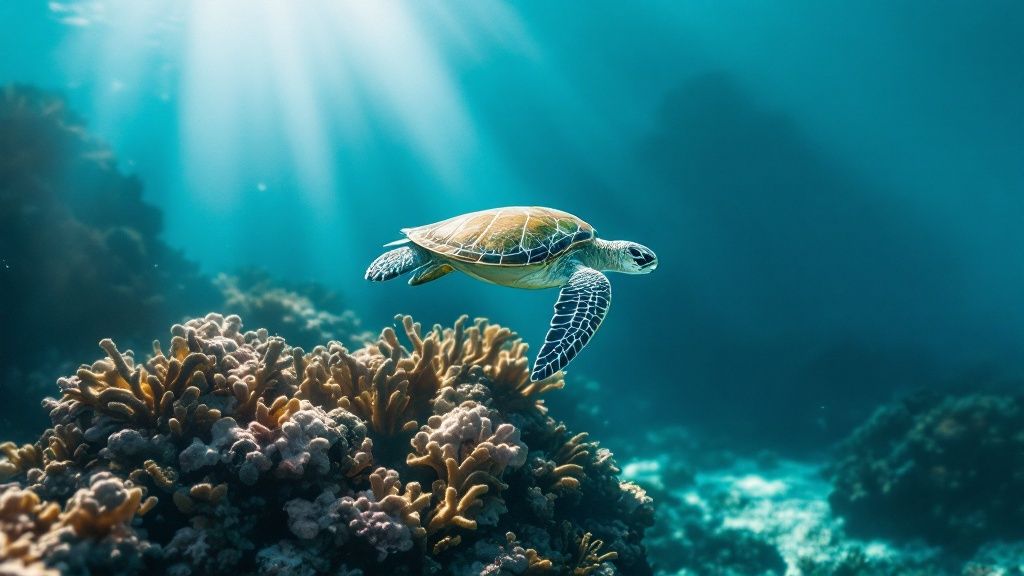
Just like the name says, Turtle Pinnacle is the place to go for an encounter with our beloved Hawaiian green sea turtles, the honu. The site is centered around a big coral pinnacle that rises up from the seafloor, acting as a natural "cleaning station."
You get to see a fascinating partnership in action. The honu pull up to the pinnacle and just chill out while reef fish—mostly yellow tangs and Hawaiian cleaner wrasse—get to work, nibbling algae and parasites right off their shells. It's a calm, captivating thing to witness.
The whole surrounding reef is healthy and full of life, too, making the entire dive a beautiful experience. Watching these ancient mariners get a shell-detailing is a memory that will stick with you long after you surface.
Ready to see these incredible sites for yourself? Kona Honu Divers runs guided trips to all the best spots on the Kona coast. Check out our diving tours page to learn more and book your adventure.
Discovering Two Unforgettable Signature Dives

While just about every dive along the Kona coast is something special, there are a couple of experiences that are in a league of their own. These are the ones that put Big Island scuba diving on the global map—the dives people fly thousands of miles for. They aren't just dives; they're encounters that will completely reshape what you think is possible underwater.
Both of these adventures kick off after sunset, turning the familiar daytime reef into a world of mystery and wonder. One is a graceful, silent ballet; the other is a trip into the deep abyss. Both are absolutely unforgettable.
The World-Famous Manta Ray Night Dive
Picture this: you're kneeling on the sandy ocean floor in the dark, aiming your dive light straight up. You're basically setting the table for one of nature's greatest shows. Your light pulls in clouds of plankton, creating a floating buffet that attracts the evening's headliners: giant manta rays.
Then, out of the blackness, they appear. These gentle giants, some with wingspans stretching over 12 feet, glide effortlessly through the beams of light. They barrel roll and loop gracefully, mouths wide open to filter plankton from the water, often coming within inches of your mask. It's a serene, mesmerizing, and powerful underwater performance.
This is more than just a dive; it's a genuine interaction. The mantas are locals, and they’ve been showing up to these feeding spots for decades. The experience is incredibly reliable, with a sighting success rate of over 90% all year long. You can get the full scoop on what makes the manta ray night dive so unique in our detailed guide.
One of the most important rules is to never touch a manta ray. They have a protective mucus coating on their skin that our touch can damage, leaving them vulnerable to infection. Just watch their beauty and let them lead the dance.
This is a true bucket-list experience and a must-do for anyone visiting the Big Island. You can grab a front-row seat for this incredible show on the manta ray dive tour page.
The Kona Blackwater Dive: An Otherworldly Journey
For the truly adventurous diver, there’s an experience that leaves the reef far behind and heads into the vast, open ocean: the Kona Blackwater Dive. This dive isn't about the bottom; it's about exploring the water column itself. We head miles offshore, over thousands of feet of water.
You'll descend to about 50 feet and clip onto a tether connected to the boat, which keeps everyone together in the darkness. Suspended in the inky black, you become a spectator to the largest migration on Earth. Every single night, countless bizarre and beautiful creatures rise from the deep to feed near the surface.
What you'll see is straight out of science fiction.
- Translucent Squids: With their intricate internal organs completely visible.
- Bioluminescent Jellies: Pulsating with their own otherworldly light.
- Alien-like Larval Fish: In their strange, temporary juvenile forms that look nothing like their adult selves.
This is pelagic diving at its most fascinating and mind-bending. It feels less like scuba diving and more like floating through outer space, encountering creatures from another dimension. This unique adventure is available for experienced divers ready for a new challenge. You can find out more about this trip to another planet on the Blackwater Dive tour page.
How To Choose The Best Dive Operator In Kona
Let's be honest: your Big Island scuba diving trip is only as good as the crew leading the way. Picking the right dive operator is probably the biggest decision you'll make. It affects everything—your safety, your comfort, and whether you see that one amazing creature you've been dreaming about.
A great company doesn't just motor you out to a dive site. They bring the whole experience to life with their local knowledge and a genuine love for the ocean.
So, where do you start? The absolute must-haves are a squeaky-clean safety record, guides who know Kona's waters like the back of their hand, and gear that's clearly well taken care of. That's the foundation of a professional shop that puts your well-being first.
What To Look For In A Kona Dive Shop
When you're comparing shops, a few things really make an operator stand out. A PADI 5-Star Instructor Development Center (IDC) rating is a huge gold star. This isn't just a fancy title; it means the shop meets the highest possible standards for training, safety, and customer service in the entire scuba industry.
Beyond that official stamp of approval, here's what I always look for:
- Experienced Local Guides: You want divemasters and instructors who've spent years, not just a season, in these exact waters. They know the secret lava tubes, they can predict where the critters will be, and they make sure you see the absolute best of what Kona has to offer.
- Small Group Sizes: This is a big one. Smaller groups mean you get more personal attention from your guide. It also means you're not bumping into a dozen other divers, making for a much more relaxed and intimate time underwater.
- Commitment to Conservation: Look for shops that are actively involved in protecting the reef. It shows they're not just running a business; they're passionate stewards of the very ecosystem they're sharing with you.
Top-Rated Operators In Kona
Kona Honu Divers is a perfect example of a PADI 5-Star IDC that gets it right. Their whole crew is focused on delivering amazing, safe adventures, and they have a dive for pretty much every skill level and interest. Their commitment to small groups and top-notch service shines through in all their reviews.
Another local legend is Jack's Diving Locker. Seriously, they've been a pillar of the Kona diving community since 1981! As a full-service PADI 5-Star IDC, they've been the backbone of the island’s dive scene for over four decades, training everyone from wide-eyed beginners to seasoned pros.
Ultimately, you're looking for a team you click with—one that makes you feel confident and genuinely excited for your dive. A little bit of homework goes a long way in making sure your underwater adventure on the Big Island is everything you'd hoped for. If you want to see what a day with a top-tier crew looks like, check out what it's like to dive the Big Island of Hawaii with Kona Honu Divers.
Your Top Kona Diving Questions Answered
Planning your dive trip to the Big Island can bring up a lot of questions. We get it. To make sure you feel totally ready for your adventure, we’ve gathered the most common queries we hear from divers just like you.
When Is The Best Time Of Year For Big Island Scuba Diving?
Honestly, there's no bad time to dive in Kona. The water stays a comfortable 75-80°F all year, and the visibility is consistently great.
If you prefer the calmest seas possible, the summer months are typically your best bet. But if you're diving in the winter (around December-March), you get an incredible bonus: the chance to hear the haunting songs of migrating humpback whales echoing through the water on your dives.
And don't worry about the mantas—they show up to the party year-round. You really can't go wrong.
Can I Do The Manta Ray Dive Without Certification?
You absolutely can! While certified divers get the awesome view from the seafloor looking up, non-divers can join the fun as snorkelers. You'll float comfortably on the surface, holding onto a specially designed light board.
This board illuminates the plankton in the water, which in turn draws the manta rays right up to the surface to feed just inches below you. It's a completely different perspective but every bit as breathtaking.
What Marine Life Can I See Besides Manta Rays?
The Kona coast is absolutely packed with life. Manta rays might be the headliners, but the supporting cast is just as impressive. On almost any dive, you can expect to run into Hawaiian green sea turtles (honu), moray eels peeking out from their dens, octopuses, and huge schools of vibrant reef fish like yellow tangs.
It’s also pretty common to spot whitetip reef sharks resting on the sand, pods of spinner dolphins playing in the boat's wake, and graceful eagle rays gliding by.
The secret to amazing wildlife encounters is simple: be a respectful observer. Never, ever touch the coral or marine animals. It can damage their protective coatings and seriously disrupt their natural behavior.
What Should I Bring On A Dive Boat?
We've got you covered with all the essential dive gear, snacks, and drinks. You just need to bring your personal items to stay comfortable before and after your dives.
Here’s a quick checklist to make packing easy:
- Swimsuit: The easiest thing is to just wear it under your clothes to the harbor.
- Towel: An absolute must for drying off between dives.
- Reef-safe sunscreen: This is so important. It protects your skin and Hawaii's fragile coral reefs.
- Sunglasses and a hat: The Hawaiian sun is no joke, even on the water.
- Certification card: Don't leave home without it! We'll need to see it.
- Waterproof camera: Trust us, you're going to want to capture these moments.
Pro tip: If you have your own mask that fits your face perfectly or a dive computer you're used to, feel free to bring them along. Familiar gear always adds a little extra comfort and confidence.
Ready to dive into Kona's underwater paradise? Kona Honu Divers has a full lineup of guided diving tours in Kona perfect for any experience level.