
When you think of unforgettable underwater adventures, Big Island scuba diving is in a league of its own. It’s a world defined by dramatic volcanic landscapes and waters so clear and calm you have to see them to believe them. The island’s Kona coast, in particular, offers some of the most consistent and breathtaking diving conditions on the planet, making it a go-to for divers of all stripes.
Why the Big Island Is a World-Class Diving Destination
The Big Island isn’t just another pretty spot to get wet; it's a dynamic underwater world actively being shaped by volcanic forces. Unlike the older, more eroded Hawaiian islands, the submerged terrain here is a wild tapestry of lava tubes, massive archways, and intricate caverns carved out by ancient lava flows. This unique geology creates a complex, thriving habitat for marine life that you simply won’t find anywhere else.
What really seals the deal is the leeward Kona coast. Shielded from the trade winds by the colossal volcanoes Mauna Loa and Mauna Kea, the water stays remarkably calm and clear pretty much year-round. This natural protection makes Big Island scuba diving perfect for everyone, whether you’re taking your first breath underwater or you're a seasoned pro looking for a new challenge.
Unforgettable Underwater Encounters
The Big Island is home to some of the most iconic dive experiences you can have, period. It’s globally famous for its Manta Ray Night Dive, where you can watch dozens of these gentle giants glide and feed in the glow of underwater lights. It’s pure magic.
For the truly adventurous, the Kona Blackwater Dive is a surreal trip into the deep, open ocean. You’ll see bizarre, bioluminescent creatures rise from the abyss—it’s like diving on another planet. You can check out the full lineup of these incredible experiences on the Kona Honu Divers' diving tours page.
Statistically, the Kona coast is one of the most stable diving locations on Earth. The best conditions are often from June to September, but the diving is fantastic all year. Winter brings its own reward: migrating humpback whales fill the ocean with their songs, a sound you can often hear on dives from December to March. You can get more details on the Big Island’s ideal dive seasons over on the Kona Honu Divers blog.
Big Island Scuba Diving at a Glance
To give you a quick snapshot of what to expect, here’s a breakdown of the key conditions and highlights for diving off the Kona coast.
| Metric | Details |
|---|---|
| Average Water Temperature | 76-81°F (24-27°C) |
| Average Visibility | 80-100+ feet (24-30+ meters) |
| Peak Dive Season | Year-round, with the calmest seas from June to September |
| Signature Dives | Manta Ray Night Dive, Blackwater Night Dive |
| Key Marine Life | Manta Rays, Green Sea Turtles, Spinner Dolphins, Reef Sharks, Humpback Whales (seasonal) |
In short, the conditions are just about perfect. The water is warm, the visibility is incredible, and there’s always something amazing to see no matter when you decide to visit.
Comparing the Top-Rated Kona Dive Sites
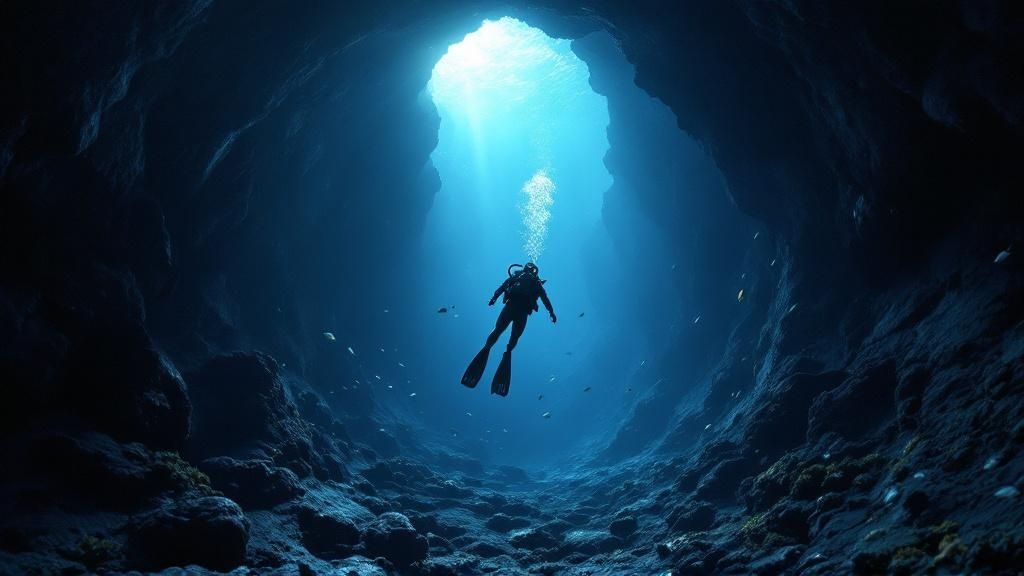
Picking the right dive site really comes down to what you want to get out of your time underwater. It’s all about matching the spot to your vibe and what you hope to see. While pretty much the entire Kona coast serves up spectacular Big Island scuba diving, some sites are just legendary for delivering specific kinds of experiences.
So, instead of just a random list, let's break it down by situation. Are you the type who gets amped about exploring massive, dramatic underwater structures, or does swimming through a thick cloud of fish sound more like your thing? Your answer points you to two totally different, but equally incredible, dives.
For the Underwater Photographer
In photography, your subject is everything. Luckily, Kona gives you a choice between capturing sweeping, grand landscapes and hunting for tiny, intricate critters.
-
Golden Arches: If you’re shooting with a wide-angle lens, this place is your playground. It’s famous for its huge lava arches and swim-throughs, which make for an absolutely stunning backdrop. The way the sunlight slices through the formations creates these incredible light rays, perfect for capturing the raw scale of Kona's volcanic seascape.
-
Nudibranch City (also known as Au Au Crater): Got a macro lens and a passion for the small stuff? This is your spot, no question. Divers come here with one mission: to hunt for rare and brilliantly colored nudibranchs. It takes a sharp eye and a bit of patience, but the payoff is unreal—you’ll find vibrant sea slugs and other tiny creatures you’d swim right past anywhere else.
For photographers, the choice is pretty straightforward. If you want to capture the epic, geological grandeur of Hawaii, make a beeline for Golden Arches. If you’re on the hunt for the small, strange, and beautiful, Nudibranch City is the perfect underwater studio.
For the Marine Life Enthusiast
So, are you hoping for a run-in with some big pelagic animals, or are you more fascinated by the buzzing, organized chaos of a healthy reef?
-
Turtle Pinnacle: The name gives it away. This is one of the most reliable places on the island to encounter our beloved Hawaiian Green Sea Turtles (Honu). The "pinnacle" itself is a natural cleaning station where turtles line up for a spa day, giving you plenty of time for respectful, up-close observation. The reef around it is just humming with endemic fish, too, so there’s never a dull moment.
-
The Hive: If it’s pure numbers you’re after, The Hive lives up to its name. This site is known for its absolutely massive schools of fish, from Heller's Barracuda to all kinds of snapper. The sheer density of marine life here can be breathtaking. It's a truly immersive experience where you're just surrounded by constant movement and color.
Choosing Your Adventure
Every dive site tells a different story. Figuring out which ones to visit is all about deciding what kind of story you want your Big Island scuba diving adventure to be. When you line up a site's strengths with your own interests, you're pretty much guaranteed that every single drop will be a memorable one.
Ready to find your perfect underwater journey? Chat with a trusted local operator like Kona Honu Divers to explore all the possibilities.
The Unforgettable Manta Ray Night Dive Experience
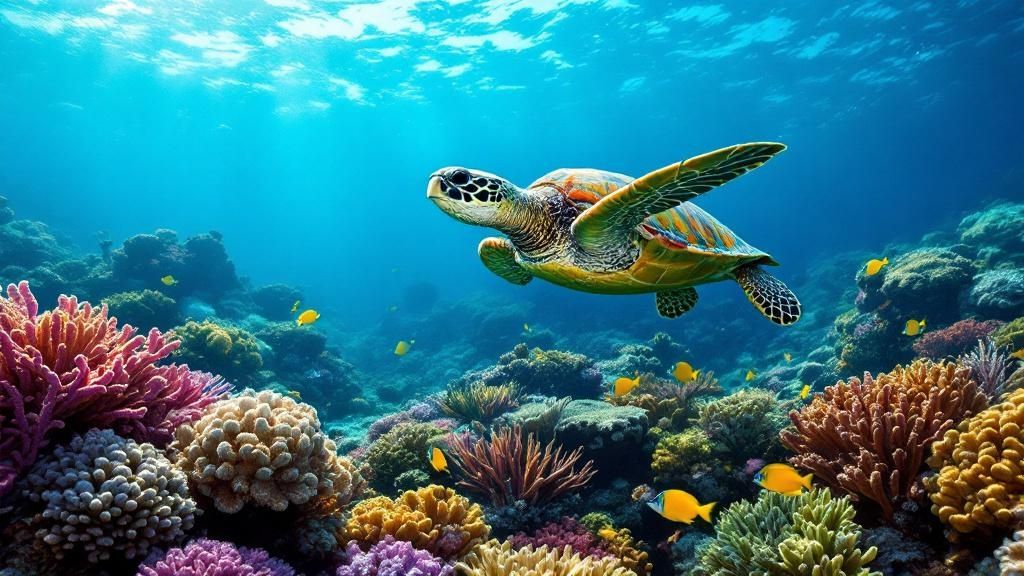
Of all the reasons people come for Big Island scuba diving, one experience stands head and shoulders above the rest: the Manta Ray Night Dive. This isn't just another dive; it's a world-famous underwater ballet that consistently lands on "best of" lists across the globe.
Picture this: you descend into the dark, warm Pacific just after sunset, settle onto a sandy patch of ocean floor, and aim your flashlight straight up. And then, you wait for the magic to happen.
The concept is beautifully simple. Our powerful dive lights create a beacon in the darkness, attracting clouds of plankton—the mantas' favorite meal. What happens next is a silent, breathtaking performance. These gentle giants, with wingspans stretching over 12 feet, glide, swoop, and barrel roll just inches over your head, feasting on the buffet of light.
A Dive Decades in the Making
This now-famous encounter didn't just pop up overnight. The Kona coast Manta Ray Night Dive has a history stretching back to the early 1980s, pioneered by local legends like Jack Clothier of Jack's Diving Locker. They were the ones who first realized that by lighting up the water, they could create a reliable feeding spot, giving divers a front-row seat to one of nature's most mesmerizing spectacles.
It's a profoundly humbling experience. Watching a creature the size of a small car move with such effortless grace leaves you in silent awe. They materialize from the darkness and vanish back into it without a sound.
What to Expect on Your Tour
Every guided Manta Ray Night Dive tour is built around safety and providing the best possible show. Dive operators set up a "campfire" of lights on the seafloor where all the divers gather. From there, your only job is to stay put and enjoy.
Here are a few ground rules:
- Look, don't touch: This is the golden rule. Manta rays have a protective mucous layer on their skin that our touch can damage. Be a passive observer.
- Stay low: By remaining on the ocean floor, you give the mantas plenty of open water above you to maneuver and feed safely.
- Listen to your guide: The divemasters are experts on manta behavior. They'll ensure the encounter is safe for everyone—divers and mantas alike.
If you’re coming to the Big Island to dive, this is the one you absolutely cannot miss. It’s a powerful reminder of the incredible beauty hiding just below the surface.
Finding Your Perfect Big Island Dive Adventure
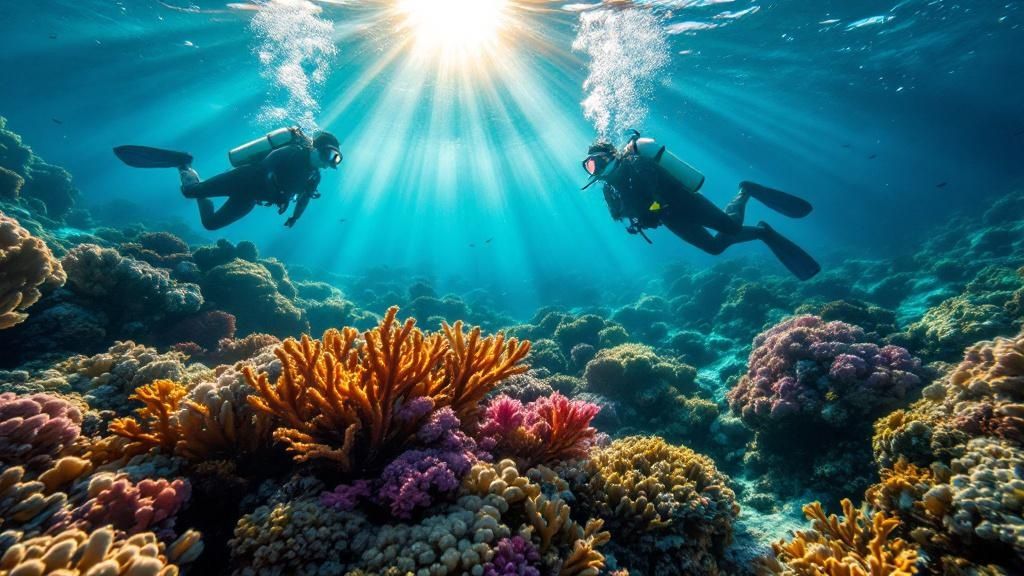
The best Big Island scuba diving experiences are the ones that line up perfectly with what you want out of a dive. Some divers are all about the calm beauty of a sunlit reef, while others are chasing that next big thrill.
Thankfully, Hawaii's underwater world has a bit of everything. Choosing the right adventure is what turns a good dive day into one you’ll be talking about for years. It's all about matching the dive to your personal style.
Thrill-Seekers and Night Owls
If you're after something truly different—a dive that feels like a trip to another planet—then the Kona Blackwater Dive is in a league of its own. This isn't your standard night dive on a reef. Not even close.
You’ll find yourself tethered to the boat, drifting in the pitch-black open ocean miles from shore. From the depths below, a strange and wonderful parade of bioluminescent creatures rises to meet you. It's often called a "pelagic safari" for a reason, revealing tiny, alien-like organisms you won't see anywhere else. For an experience that redefines night diving, the Blackwater Dive tour is a must. Just know, this is an advanced dive for those comfortable in the deep dark.
Advanced Divers Seeking a Challenge
Are you a certified diver looking to put your skills to the test? The Big Island's dramatic underwater landscape is the ultimate playground. Thanks to its volcanic origins, the coastline is carved with deep canyons, massive lava tubes, and breathtaking pinnacles that demand excellent buoyancy control and real-world experience.
These sites often come with stronger currents and greater depths, but the rewards are huge. Think pristine coral gardens and encounters with the larger marine life that patrols the edges of the reef. It takes confidence and skill to explore these spots, but the payoff is unforgettable. Kona Honu Divers runs specialized Advanced Dive Tours specifically designed to explore these more demanding locations safely.
New Divers and Reef Explorers
Not every dive has to be an adrenaline-fueled adventure. For those just getting into the sport or divers who simply love a relaxed, easy-going exploration, the Big Island’s shallow reefs are pure paradise. The calm, protected waters along the Kona coast are perfect for getting certified or just enjoying a beautiful, stress-free day underwater.
These spots are absolutely packed with colorful tropical fish, green sea turtles (honu), and vibrant coral gardens. It’s the perfect, low-stress environment to work on your skills, build confidence, and just soak in the incredible marine life that makes Hawaii so special.
No matter what kind of diver you are, the perfect Big Island scuba diving adventure is here waiting for you. By matching the dive to your skill level and what gets you excited—whether that’s floating over a quiet reef or drifting in the deep sea—you're guaranteed to have an amazing time.
How to Choose the Right Dive Operator in Kona
Picking your dive operator is probably the single most important decision you'll make for your Big Island scuba diving trip. It's not just about getting on a boat and into the water; the right crew shapes your entire experience. Your choice will literally determine whether you have a crowded, cookie-cutter dive or a relaxed, personal adventure where you see the coolest stuff.
When I talk to divers, I tell them to look beyond the price tag. Think about what kind of experience you want. Consider their safety record, how big their groups are, what their boats are like, and the experience level of their divemasters. Every shop has its own vibe. Some are all about small, intimate groups for a more hands-on trip, while others run bigger boats with more creature comforts.
Why Small Groups Matter
For a lot of us, the perfect dive means getting personalized attention and not feeling like you're just another tank in a crowd. This is where an outfit like Kona Honu Divers really shines. They’ve built their entire reputation on small group charters, and for good reason.
When you have a smaller group, the guides can give you individual pointers, show you that camouflaged frogfish a bigger group would swim right past, and make sure everyone feels totally comfortable and safe. It's a different world.
Their focus on a premium, intimate experience has earned them a ton of awards and a seriously loyal following. You can get a feel for their story and see why they were voted the best dive operator in Kona to really understand what makes them tick. In a busy dive town like Kona, that commitment to quality over quantity is a huge deal.
Don't just take my word for it, though. See what other divers are saying about their time with the Kona Honu crew.
Comparing Top Kona Dive Shops
While Kona Honu Divers is my go-to recommendation for that personalized adventure, Kona has several other fantastic operators, each with its own niche. Figuring out these differences is key to finding the shop that’s the perfect match for your dive style.
To help you sort through the options, here's a quick look at some of the top players on the Kona coast. This table breaks down what each is known for, so you can line up your priorities with the right shop.
Kona Dive Operator Comparison
| Operator | Best For | Key Feature |
|---|---|---|
| Kona Honu Divers | Personalized attention & small groups | Focus on intimate, high-quality dive experiences. |
| Jack's Diving Locker | Comprehensive training & family trips | Large, comfortable boats and a wide range of PADI courses. |
| Big Island Divers | Variety of tours & retail selection | Offers a broad schedule and has a large, well-stocked dive shop. |
This isn't about one being "better" than the others, but about finding the right fit for you.
Your ideal operator really comes down to what you're looking for. If a tight-knit group and expert, focused guidance are your jam, a shop like Kona Honu Divers is a no-brainer. But if you’re traveling with a big family or need to knock out a specific certification course, another operator might be a better fit.
This is especially true when planning your Manta Ray Night Dive. You absolutely want a reputable crew for that experience. To get a sense of who's who, check out this guide to the top-rated Manta Ray Night Snorkel Kona tours to compare companies.
At the end of the day, picking the right dive shop boils down to a bit of research and matching their specialty to your own dive philosophy. Read the reviews, check out their boat sizes, and understand what they're all about. Do that, and you can book with confidence, knowing your Big Island scuba diving trip will be one for the logbooks.
Essential Planning for Your Big Island Dive Trip
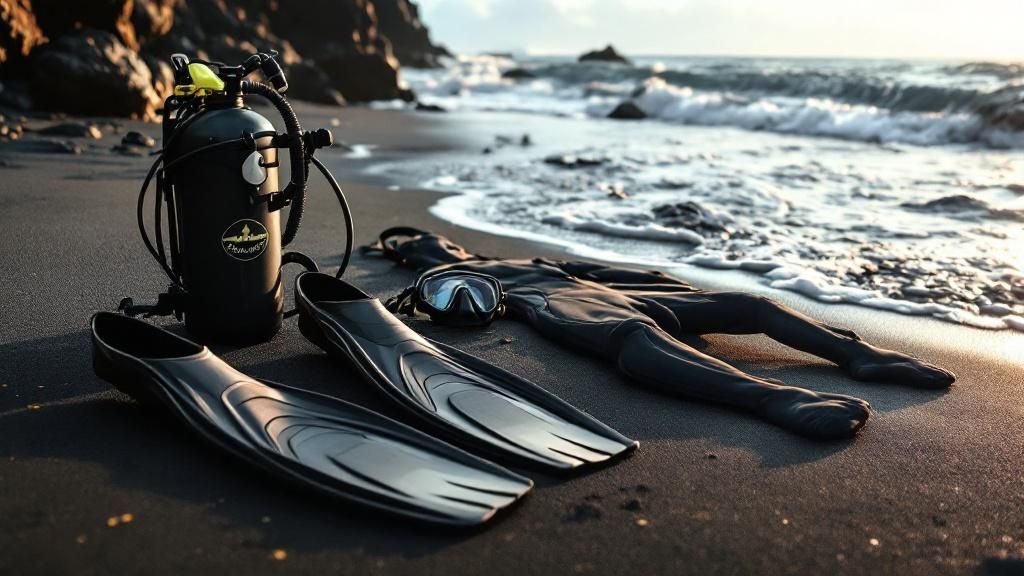
A little bit of planning is all it takes to make your Big Island scuba diving vacation run smoothly. Once you get the logistics sorted out—from the best time of year to visit to where you’ll stay—you can spend less time stressing and more time enjoying the incredible world just below the waves.
The Kona coast serves up phenomenal diving year-round, but there are some subtle shifts between seasons. Summer, from June through September, is when you’ll find the warmest water, often hitting 81°F (27°C), paired with exceptionally calm seas. Winter, running from December through March, is a touch cooler, but it brings something truly magical: the unforgettable soundtrack of humpback whale songs echoing through your dives.
No matter when you come, visibility is almost always fantastic, frequently pushing past 100 feet. Before any dive, it’s a good habit to get familiar with how to check ocean conditions for the Big Island to stay safe.
Gearing Up Your Trip
One of the first decisions you'll make is whether to haul your own gear or rent when you arrive. Renting from a top-notch shop like Kona Honu Divers means you'll have well-maintained, modern equipment without paying extra baggage fees. Still, many seasoned divers can't beat the comfort and familiar fit of their own gear, especially when it comes to personal items like masks and dive computers.
If you do bring your own stuff, your exposure suit is the most important piece to get right. A 3mm wetsuit is usually perfect for the warm summer months. For the slightly cooler winter waters, a 5mm suit is a better call to keep you comfortable, especially if you're doing multiple dives a day.
Where to Stay and What to Pack
For sheer convenience, you can't beat staying right on the Kona coast. It puts you just minutes away from the island’s best dive charters, restaurants, and shops, which means less time in the car and more time on vacation.
Beyond your dive kit, here are a few other must-haves for your packing list:
- Reef-Safe Sunscreen: This is non-negotiable. You have to protect both your skin and Hawaii's fragile coral ecosystems.
- Reusable Water Bottle: Staying hydrated is key, and bringing your own bottle helps cut down on plastic waste.
- Dry Bag: A good dry bag will keep your phone, keys, wallet, and a towel safe from splashes on the boat.
With these details squared away, you’re all set to focus on what really matters—having the best Big Island scuba diving adventure of your life.
Your Big Island Diving Questions, Answered
As you get closer to your trip, you're bound to have a few last-minute questions bubbling up. That's totally normal. Getting the right info ahead of time is the key to making sure your underwater adventure is everything you've been dreaming of. Here are a few things divers always ask when they're planning a visit to Kona.
When Is The Best Time of Year To Scuba Dive The Big Island?
One of the best things about the Kona coast is that the diving is fantastic and reliable all year long. You really can't go wrong. That said, there are some subtle differences between the seasons that might influence when you decide to book your flights.
Summer, from about June to September, usually delivers the warmest water and the flattest, calmest seas. It’s pretty much ideal for any and all divers. But winter has its own unique magic. From December to March, you get the once-in-a-lifetime chance to hear the haunting songs of migrating humpback whales echoing through the water on your dives. It's an experience that will stick with you forever.
Is The Big Island Good For New Divers?
Absolutely. The Big Island is a world-class destination for divers of every skill level, whether you're taking your first breaths underwater or you're a seasoned pro with thousands of dives logged.
The Kona coast is naturally protected from the big ocean swells, creating tons of calm, shallow reef sites. These spots are perfect for getting your PADI certification, doing an introductory dive, or just enjoying a beautiful, stress-free tour of the reef. And for the experienced crowd? We've got plenty of deep lava tubes, thrilling pinnacles, and more advanced dives to keep you challenged.
What Kind of Marine Life Will I See In Kona?
Get ready for an incredible show. You'll be sharing the water with a huge diversity of marine life. It's almost a guarantee you'll see green sea turtles (honu), and close encounters with majestic manta rays, playful spinner dolphins, and whitetip reef sharks are super common.
The reefs themselves are bursting with color and life, home to hundreds of species of tropical fish like butterflyfish, parrotfish, and angelfish. Depending on the season and a little bit of luck, you might even cross paths with bigger pelagic visitors like whale sharks. Honestly, every single dive out here gives you a chance to see something new and unforgettable.
Ready to see Kona's underwater world for yourself? The expert crew at Kona Honu Divers is waiting to show you an unforgettable time, whether it's on the world-famous Manta Ray Night Dive or a tour of our pristine coral reefs.