
Picture this: you’re descending into brilliant turquoise water, surrounded by an underwater playground carved out by ancient lava flows. This isn't a dream—it's what Big Island scuba diving is all about. It's a world-class destination, famous for its wild volcanic topography, unbelievably calm conditions, and a buzzing city of marine life. Your underwater journey starts right here.
A Diver’s Playground Forged by Fire and Sea
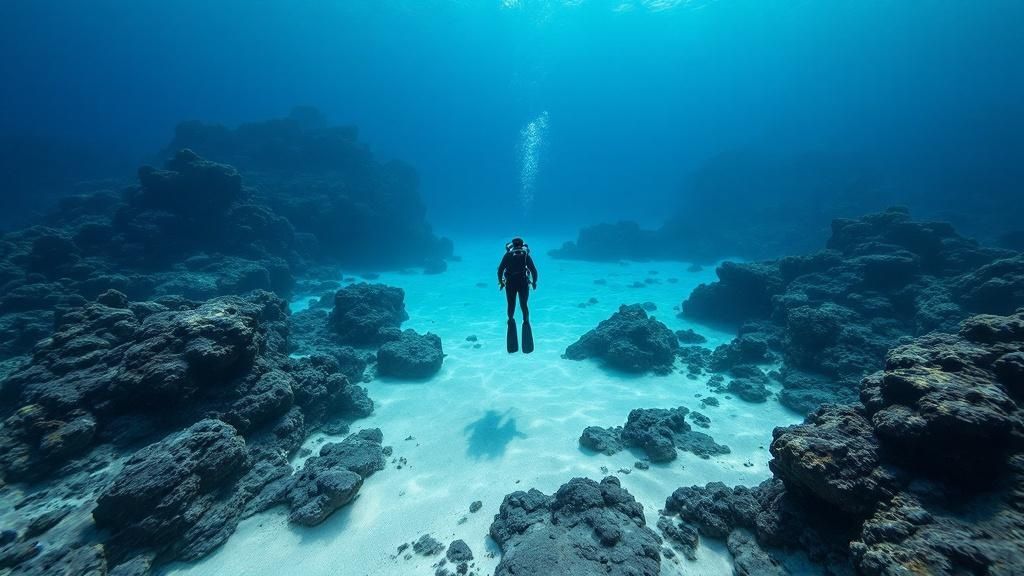
The Big Island isn't just another dot on the map of tropical dive spots. It’s a raw, underwater frontier sculpted by volcanic fire and cooled by the vast Pacific. The Kona coast, especially, is a diver’s paradise. Massive volcanoes shield this side of the island from the strong trade winds, leaving the waters consistently calm and shockingly clear. We’re talking visibility that often pushes past 100 feet, creating the perfect stage to explore the dramatic scenery below.
Forget endless sandy bottoms. Diving Hawaii Big Island means navigating a maze of lava tubes, massive archways, and sunken volcanic craters. It’s this unique structure that creates the perfect home for a mind-boggling array of marine creatures. You'll find everything from tiny critters hiding in the cracks to graceful sea turtles gliding past. The biodiversity is just incredible.
What Puts Big Island Diving on the Map?
It’s the one-of-a-kind experiences that truly set this place apart. There are two dives, in particular, that have earned Kona global fame among adventure seekers:
- The Manta Ray Night Dive: A world-famous spectacle. You settle on the seafloor and watch as majestic manta rays perform an underwater ballet, feeding on plankton drawn to the dive lights. It’s surreal. You can book one of these incredible manta ray dive tours to see it for yourself.
- The Blackwater Dive: A genuinely thrilling drift dive far offshore in the deep, dark ocean. Here, you’ll meet the bizarre and beautiful bioluminescent creatures that rise from the abyss. It’s like diving on another planet.
These are the kinds of dives that land on every serious diver’s bucket list and are exactly why so many consider Big Island diving a must-do.
Of course, having the right guide is everything when it comes to pulling off these adventures safely and making them truly unforgettable. Top-tier Kona diving companies like Kona Honu Divers live and breathe this stuff. They specialize in creating these incredible memories, focusing on small groups, expert guidance, and a deep-seated respect for the ocean. It ensures every single dive is as responsible as it is thrilling.
To get a full picture of the underwater world waiting for you, check out our complete guide to Big Island scuba diving. Think of this article as your first step. We’ll cover everything from the can't-miss dive sites to gearing up and staying safe, so you can make the most of your adventure in the pristine waters of Kona.
Why Kona Is a World-Class Diving Destination

The story of scuba diving Big Island Hawaii wasn’t written on a map; it was forged in fire millions of years ago. Unlike the endless sandy bottoms or simple fringing reefs you find in other parts of the world, Kona’s underwater landscape is a direct product of its volcanic soul. This geological drama is what makes diving Hawaii Big Island less of a hobby and more of an epic adventure.
Picture ancient rivers of lava flowing into the ocean, cooling instantly into a mind-bending maze of structures. That’s your playground here. You'll swim through massive underwater archways, navigate lava tubes that feel like secret tunnels, and explore collapsed craters that have become natural amphitheaters for marine life. It’s a complex, three-dimensional world that you just can’t find anywhere else.
The Protective Embrace of the Volcanoes
Beyond the jaw-dropping topography, Kona’s real secret sauce is its location. The west coast, where all the action happens, is tucked into the protective shadow of two absolute giants: the Mauna Loa and Hualalai volcanoes. These mountains are so massive they create a weather shield, blocking the fierce northeasterly trade winds that hammer the rest of the Hawaiian islands.
What does that mean for you? Exceptionally calm water. The result is an ocean that’s consistently clear, with visibility often soaring past 100 feet, and conditions so gentle you’ll feel like you’re in a giant, natural aquarium. You get to spend your energy soaking in the beauty, not fighting against currents and surge.
This incredible one-two punch of volcanic architecture and sheltered seas makes scuba diving Big Island perfect for just about everyone, from a brand-new diver taking their first breaths underwater to a seasoned pro looking for a challenge. When you’re ready to see it for yourself, you can check out the different diving tours available to find your perfect trip.
The Big Island's volcanic coast isn’t just beautiful; it's a living ecosystem. The lava rock provides a perfect surface for coral to grow, which in turn supports thousands of species of fish and invertebrates, creating one of the most vibrant underwater environments on the planet.
From Hidden Gem to Global Diving Hub
It wasn’t always this way. Back in the late 1960s and early 70s, scuba Big Island was a secret shared only among a few hardy pioneers. Fast forward to today, and the island hosts around 100,000 certified scuba dives annually, drawing more than 150,000 dive tourists to its shores every year. This boom was built on the backs of early operators who saw the potential, with a major milestone being the founding of Jack's Diving Locker in 1981, which really helped put Kona on the world map. You can dive deeper into the local scuba scene on konahonudivers.com.
That evolution from a quiet outpost to a premier destination means you get the best of both worlds: a mature, professional dive community with decades of experience, deep knowledge of every site, and an ironclad commitment to safety and conservation.
When you dive here, you’re not just exploring a reef. You’re floating through geological time and becoming part of a legacy of adventure that continues to inspire people from across the globe. It's this powerful mix of geology, history, and a passionate local community that makes diving Big Island an experience that sticks with you long after you’ve dried off.
Experiencing the Famous Manta Ray Night Dive
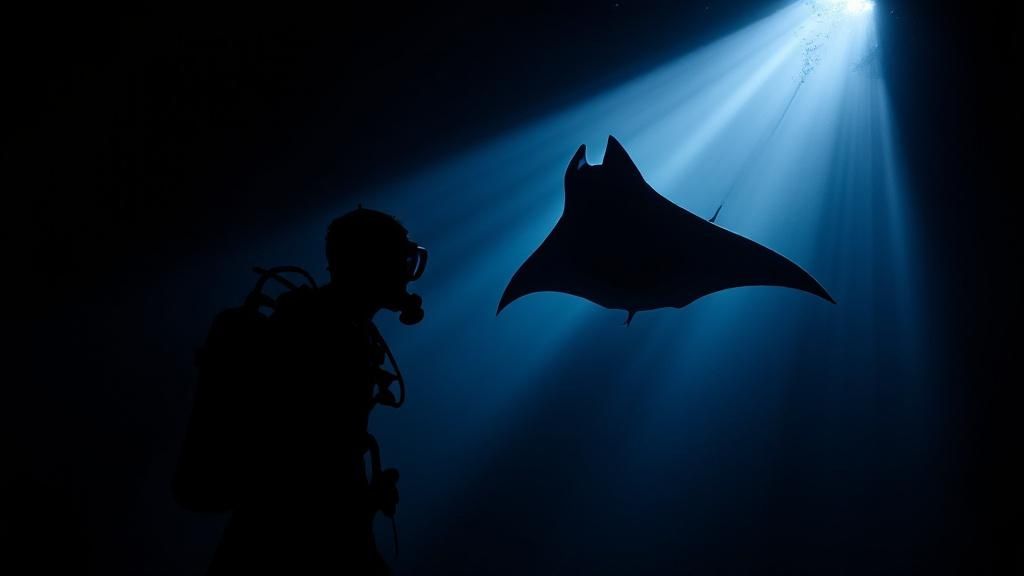
Some experiences are so iconic they come to define a place, and for Big Island scuba diving, the Manta Ray Night Dive is exactly that. This isn't just another dive on the log; it's a world-famous underwater spectacle, a surreal ballet of gentle giants that has rightfully earned its spot on every diver's must-do list.
It's an encounter so profound, many divers I've talked to call it the single most memorable dive of their lives.
So, how does it all work? The concept is actually pretty clever and surprisingly simple. Think of it like a giant underwater bug zapper, but way more beautiful. Dive operators set up powerful lights on the ocean floor, which beam up into the water column. These lights act like magnets for clouds of plankton—the manta rays' favorite buffet.
What happens next is pure, unadulterated magic. You descend into the dark, settle down on a sandy spot, and just wait. Before long, the stars of the show arrive. Majestic manta rays, with wingspans stretching over 12 feet, glide out of the darkness and into the light to feast.
They swoop, barrel-roll, and somersault in a mesmerizing dance, sometimes passing just inches over your head. It’s a humbling, heart-pounding experience you will never forget. You can get more of the inside scoop on this incredible event by reading our guide on what the manta ray night dive is all about.
Safety and Sustainability: The Heart of the Experience
This incredible encounter is only possible because of a dedicated community of Kona diving companies committed to protecting these amazing animals. The manta ray night dive isn't a free-for-all; it requires specialized boat operations and strict safety protocols to keep both divers and mantas safe.
Years ago, trying to see them from shore was a hit-or-miss affair. Purpose-built dive boats changed the game, making the interactions consistent and safe. As the dive grew in popularity, the need for clear guidelines became critical for sustainable tourism.
The number one rule for every single person in the water is simple: never touch the manta rays. Their bodies are coated in a protective mucus that acts as a shield against infection. Touching them strips this layer away, making them vulnerable to disease. The best thing to do is stay still and let their natural curiosity bring them to you.
Choosing a responsible operator like Kona Honu Divers means you're not just a tourist; you're actively supporting the conservation of this natural wonder. Their mission goes beyond just a cool dive—it's about fostering respect for the mantas and their home.
Kona Honu Divers: A Premier Manta Ray Experience
With a true passion for Kona diving, Kona Honu Divers delivers an exceptional manta ray night dive from start to finish. They get that a great dive isn't just about what you see; it's about feeling safe, comfortable, and well looked-after.
Their experienced crew gives detailed briefings, making sure every diver knows the plan and understands how to interact respectfully with the mantas. Plus, their boats are custom-designed for comfort, and a commitment to small group sizes means you get a more personal, less-crowded experience at the "campfire."
Ready for More? Exploring Advanced and Specialty Dives

Okay, so you've floated through the stunning reefs and witnessed the surreal manta ray ballet. Now you're feeling that pull, the itch for something more… something a little wilder. If you're a certified diver looking for the next level of underwater adventure, Big Island diving has you covered. Kona offers some truly unique specialty dives that are as thrilling as they are unforgettable, rewarding experienced divers with sights most people will never see.
The crown jewel of advanced Kona diving is, without a doubt, the legendary Blackwater Dive. It's often called a "pelagic magic carpet ride," and honestly, that's the perfect description. Picture this: you're tethered to a boat, floating miles offshore over thousands of feet of pure, inky-black ocean. The boat’s powerful lights cut a bright column down into the darkness, luring the most bizarre and beautiful bioluminescent creatures up from the abyss.
This is absolutely not your typical reef dive. It’s a sensory overload in the best way possible. You just hang there, suspended in the deep, as alien-like larval fish, shimmering squid, and otherworldly jellyfish drift past your mask. For underwater photographers, the Kona Blackwater Dive is a bucket-list experience, offering a chance to capture images of animals that look like they're from another planet.
Advanced Dive Site Opportunities
Beyond the blackwater experience, scuba diving Big Island Hawaii has a whole playbook of sites that cater to seasoned divers. These spots are usually a bit deeper, might have some current to play in, and definitely increase your odds of seeing larger pelagic animals.
Many of these advanced sites have dramatic drop-offs, underwater pinnacles, and cool lava tube mazes that demand sharp buoyancy control and real confidence in the water. These are the places you're more likely to see sharks cruising the blue, schools of eagle rays gliding by, and maybe—if you’re incredibly lucky—a passing whale shark. Professional Kona diving companies run specific advanced dive tours to get you to these more challenging and rewarding spots safely.
The Kona coast, on the leeward side of the island, provides excellent year-round diving conditions due to its protection from strong winds. The best sea conditions typically occur during the summer months (June-September), while winter months (December-March) offer the unique possibility of hearing humpback whales singing underwater. The combination of pristine coral reefs, dramatic volcanic formations, and abundant marine species establish the Big Island as the best Hawaiian island for scuba diving. Discover more about the prime conditions for Big Island scuba diving on konahonudivers.com.
Taking on these dives requires more than just your certification card; you need solid skills and a calm head. Key abilities include:
- Excellent Buoyancy Control: You’ll be navigating delicate structures and deeper profiles without kicking up sand or bumping into fragile life.
- Air Management: Being on top of your gas consumption is crucial on deeper dives.
- Comfort with Currents: Knowing how to go with the flow (or hold your position) when the ocean decides to move.
For those ready to take the plunge, the advanced opportunities for diving Big Island promise a serious adrenaline rush and some truly wild encounters.
Choosing the Best Kona Diving Companies
Let’s be honest: your choice of dive operator can single-handedly make or break your entire Big Island scuba diving adventure. A great company doesn't just take you diving; they transform a good dive into a truly unforgettable experience. On the flip side, a poor one can lead to frustration or, far worse, serious safety issues. This isn't just about booking a spot on a boat. It's about placing your trust, your safety, and your vacation memories in the hands of a professional team.
When you're looking at Kona diving companies, there are a few things that are absolutely non-negotiable. An impeccable safety record is number one, period. Right behind that are well-maintained equipment and comfortable, reliable dive boats. You also want guides who aren't just certified, but are genuinely fired up and knowledgeable about Kona’s one-of-a-kind marine ecosystems.
What Defines a Top-Tier Dive Operator
A premier Kona diving company like Kona Honu Divers is a perfect example of what to look for. Their whole approach highlights the difference between a standard tour and a high-quality, memorable experience. One of the biggest signs of excellence is a commitment to small group sizes. This means you get personal attention, never feel like you're being herded, and can have a much more intimate encounter with the underwater world.
Another huge factor is top-notch customer service, both on land and at sea. Does the shop staff patiently answer all your questions? Do the divemasters give thorough, clear briefings that make you feel totally confident before you hit the water? This level of care says a lot about a company's professionalism and how much they care about your experience.
Finally, the best operators have a deep-seated respect for marine conservation. They live and breathe responsible diving practices, like the strict "no-touch" policy during the manta ray dive, to protect the very environment you came all this way to see. Their passion for the ocean is infectious and adds a whole other layer of meaning to your diving Hawaii Big Island trip. You can see how the pros stack up by comparing the top-rated Kona dive shops and what makes them stand out.
Making Your Final Choice
With this knowledge, you’re ready to make a great decision. Before you pull the trigger, read recent reviews, look into their safety protocols, and don't ever hesitate to call them and ask questions. Building that trust in your chosen operator is the final, crucial step to ensuring your scuba Big Island adventure is in the best possible hands. When you're ready, an amazing experience is just a click away.
Frequently Asked Questions
Is there good diving on the Big Island?
Absolutely! The Big Island diving scene is world-class. The Kona coast is especially amazing because it's sheltered from the winds, giving us calm, clear water almost all year. The underwater volcanic terrain, with its lava tubes and arches, is packed with marine life, making it a top global destination.
What are the best months to scuba dive in Hawaii?
You can dive year-round, so it really depends on what you're looking for. Summer (June-September) brings the warmest water and calmest seas. Winter (December-March) is truly special because you can often hear humpback whale songs during your dives. Both seasons offer fantastic visibility, often over 100 feet.
Is Kona good for scuba diving?
Kona is phenomenal for scuba diving Big Island Hawaii—it’s the heart of the island's dive scene. Its protected location guarantees great conditions for bucket-list dives like the Manta Ray Night Dive. With tons of sites and professional shops, Kona is a top-tier choice.
Is it better to snorkel or scuba dive in Hawaii?
It all comes down to what you want to experience. Snorkeling gives you a great view of the shallow reefs from above. But scuba diving Big Island is a fully immersive experience, letting you explore deeper structures and get up close with marine life in a way snorkeling just can't match.
Which Hawaiian island is best for scuba diving?
Most divers will tell you the Big Island is the best for diving Hawaii Big Island. This is mainly due to the incredible conditions in Kona, its one-of-a-kind volcanic underwater landscapes, and world-famous specialty dives you won't find on the other islands.
When to dive Kona?
Anytime is a great time for Kona diving! Pick summer (June-September) for the warmest, calmest water. Visit in winter (December-March) to hear the humpback whales. The shoulder seasons are fantastic, too, offering amazing diving with fewer people around.
When you're ready to experience the best Big Island scuba diving for yourself, we can’t recommend the crew at Kona Honu Divers enough. Their commitment to safety, small groups, and genuinely unforgettable experiences means you'll be in the best possible hands. You can see their full range of options on the diving tours page.