
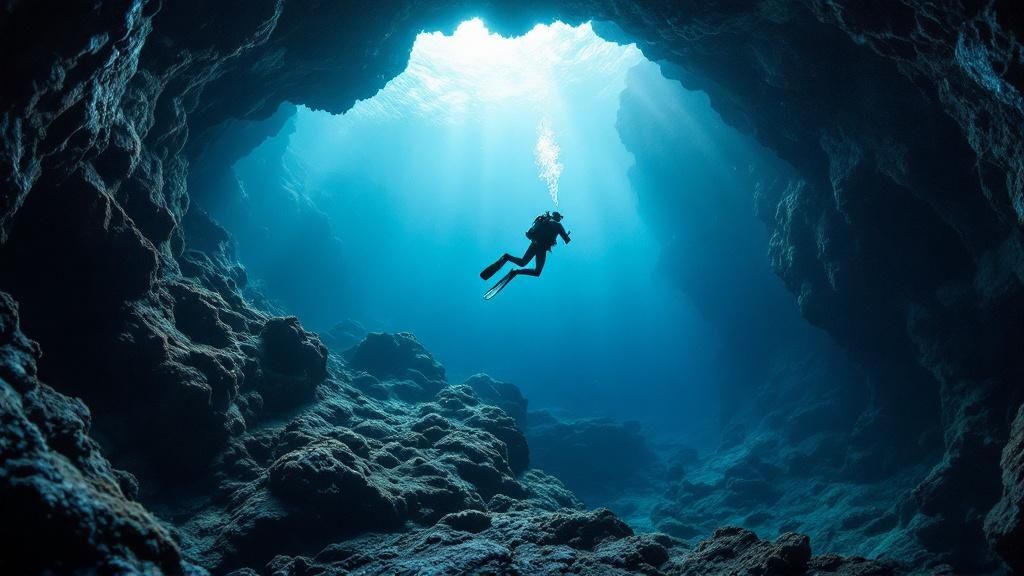
Picture this: you're descending into calm, crystal-clear water. Sunlight streams down through ancient lava tubes, illuminating the volcanic rock, as a giant sea turtle—a honu—glides serenely past. This isn't a once-in-a-lifetime moment here; it's just another day of Big Island scuba diving.
This island offers some of the most consistent and breathtaking diving conditions on the planet, thanks to its unique geology that creates an incredible underwater sanctuary.
Why is the Big Island a Diver's Paradise?
The Big Island of Hawaii isn't just another pretty tropical spot; it’s a diver’s dream destination, literally sculpted by volcanoes. The massive shields of Mauna Kea and Mauna Loa act as a colossal barrier, blocking the powerful trade winds that batter the other Hawaiian islands.
This natural protection creates an exceptionally calm leeward side, especially along the Kona coast. The result? Some of the clearest and most tranquil water you’ll find anywhere in Hawaii. It’s this unique geography that sets the stage for an unforgettable diving Hawaii Big Island experience.
What you see underwater is a direct reflection of the island's volcanic past, with dramatic landscapes you just won't find anywhere else. Forget endless, flat reefs. Here, you'll explore:
- Lava Tubes: Imagine swimming through ancient underwater caves and caverns carved out by flowing lava centuries ago.
- Archways and Craters: Discover stunning rock formations that have become bustling neighborhoods for all sorts of marine life.
- Pinnacles: These are submerged volcanic spires that shoot up from the ocean floor, acting as magnets for schools of fish.
A Vibrant Underwater World
Beyond the jaw-dropping topography, the scuba diving Big Island Hawaii scene is defined by its incredible biodiversity. The nutrient-rich waters support vibrant coral reefs that are bursting with a dizzying array of species. On any given dive, you might swim alongside playful spinner dolphins, majestic green sea turtles, and countless colorful reef fish.
The island’s reputation as a world-class diving hub is well-earned. Around 100,000 certified scuba dives are logged here every single year, supported by a network of over 50 professional dive shops and charters. These operators guide more than 150,000 diving tourists annually, a clear testament to the island's magnetic pull.
You can find more Big Island scuba diving information at konahonudivers.com to get a sense of just how popular it is.
Finding the Right Guide for Your Adventure
The well-established network of Kona diving companies ensures that every trip below the surface is safe, fun, and memorable. Operators like Kona Honu Divers have built a stellar reputation for their experienced crews, a deep commitment to marine conservation, and a focus on small group sizes. This means you get a much more personal and impactful adventure.
Whether you're a brand-new diver looking for a calm, confidence-building experience or a seasoned pro hunting for a new challenge, the Big Island has a dive for you.
With a huge portfolio of sites suited to every skill level, Big Island diving is truly for everyone. The best guides know all the secret spots and make sure you see the absolute best of what the island’s underwater world has to offer, from quiet, pristine reefs to the world-famous manta ray night dive.
Exploring the Top Big Island Dive Sites
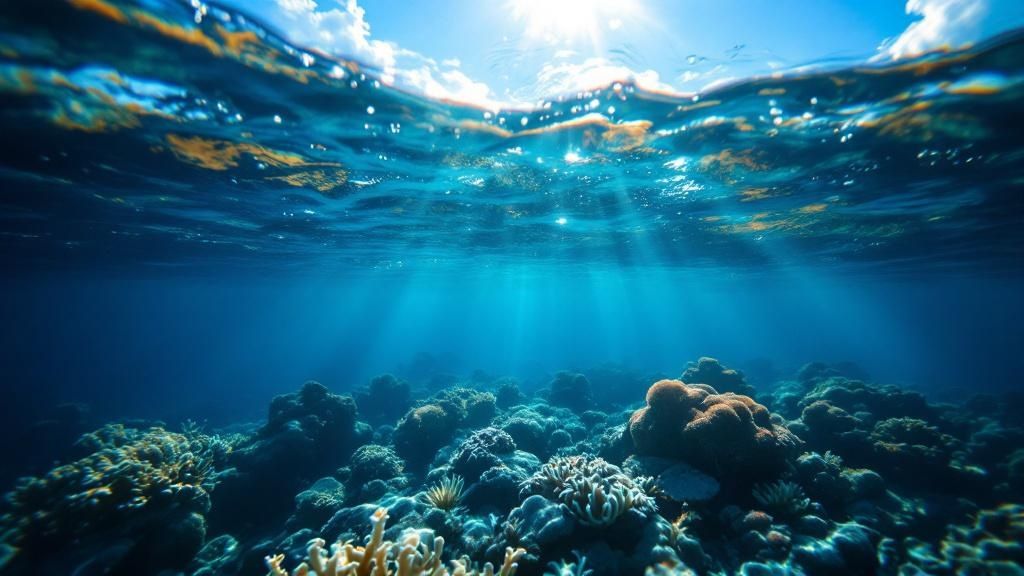
The Big Island isn't just another dive destination; it's a living, breathing underwater museum of volcanic history. The Kona diving scene, especially, offers such a wild variety of sites that every single drop feels like a brand-new adventure. This is where the raw, creative power of ancient lava flows has sculpted a world now teeming with fragile, beautiful coral ecosystems.
What really sets scuba diving Big Island apart is the mind-blowing underwater landscape. You're not just gliding over flat reefs here. You’re exploring a submerged world of massive lava tubes, stunning archways, and collapsed craters that are now bustling cities for marine life. The clear, calm waters along the Kona coast are the perfect window into this incredible world.
The right dive site for you really boils down to your experience level and what you're hoping to find. From sun-drenched shallow reefs perfect for your first breaths underwater to thrilling, deep drift dives for seasoned pros, there’s a perfect spot waiting. Let's dive into some of the most famous types of sites you'll find.
Dive Sites for Beginners
For anyone just getting into scuba Big Island, or for divers who just want a chill, relaxed experience, Kona is home to countless shallow reefs bursting with life. Sites like Pawai Bay and Turtle Pinnacle are fantastic choices, with typical depths between 20-50 feet.
These spots are usually tucked away from any strong currents, making for a calm and easy-going dive. It’s the perfect environment to practice your buoyancy and get comfortable with your breathing, all while being completely surrounded by marine life.
- Tons of Reef Fish: Get ready to see massive schools of yellow tangs, delicate ornate butterflyfish, and maybe even the humuhumunukunukuāpuaʻa—Hawaii's quirky state fish.
- Guaranteed Turtle Sightings: These sites are famous for their resident Hawaiian green sea turtles (honu). You'll see them snoozing on the reef or gracefully cruising by.
- Healthy Coral Gardens: Explore sprawling fields of finger and cauliflower corals, which provide the perfect hiding spots for critters like eels and octopuses.
Intermediate and Advanced Diving Opportunities
Ready to kick things up a notch? The diving Hawaii Big Island experience has plenty to offer divers with a few more logbook entries. Sites like Au Au Crater and Golden Arches put the island’s dramatic volcanic soul on full display in deeper water.
These dives often mean navigating more complex terrain, like lava tubes and swim-throughs, which demands solid buoyancy control and a cool head. The payoff is huge—a truly immersive experience where you're swimming through geologic formations millions of years in the making. For those seeking a guided challenge, check out the advanced dive tour options available.
The real magic of Big Island diving is its verticality. One minute you're cruising over a shallow reef, and the next you're looking over a wall that drops straight down into the deep blue, where you might just spot bigger pelagic animals cruising by.
Knowing how to navigate these sites safely and find all the cool stuff is exactly why diving with an expert guide is so crucial. Experienced Kona diving companies like Kona Honu Divers know these locations like the back of their hand. They understand the currents, know the best entry points for lava tubes, and can point out the secret hiding spots of unique critters. Their knowledge turns a good dive into one you'll never forget. You can see the full range of what's out there in our comprehensive guide to Big Island diving.
Whether it's your first time seeing a coral reef or your fiftieth time exploring a lava tube, the waters of Kona are ready to show you something spectacular.
The World-Famous Manta Ray Night Dive
If you ask any diver about their ultimate bucket list, there's one Big Island experience that always makes the cut: the Manta Ray Night Dive. This isn't just another dive. It's an otherworldly ballet, a spectacle so unique it has become famous across the globe and a true cornerstone of Kona diving.
The setup is brilliantly simple. After sunset, your group descends to a sandy spot on the ocean floor. You'll switch on powerful dive lights and point them straight up, creating beams that cut through the darkness. This light show acts like a giant magnet for plankton, drawing in a massive cloud of microscopic critters. All you have to do is kneel, breathe, and wait in the quiet dark.
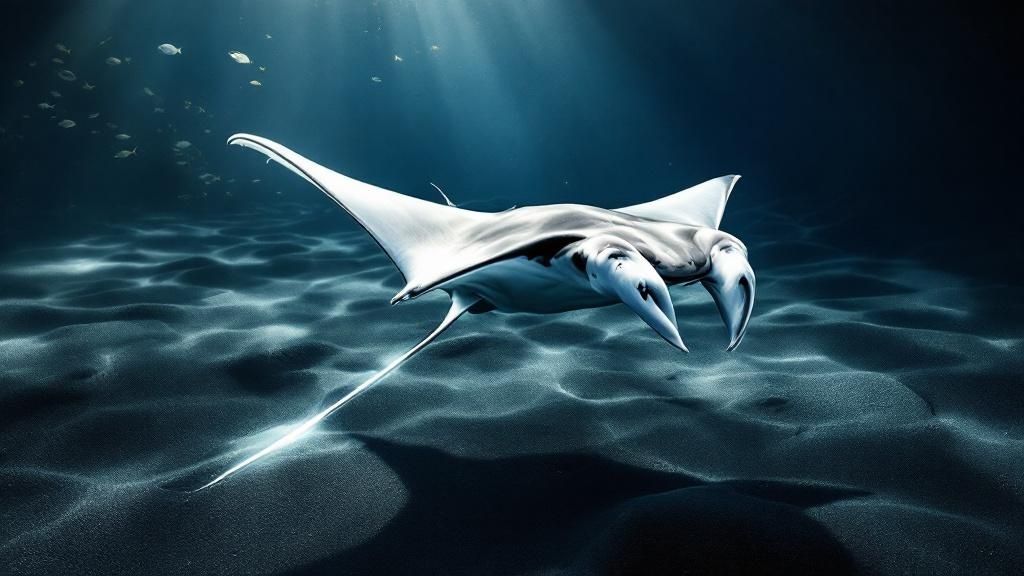
And then, it happens. They glide in from the blackness like colossal starships. Giant manta rays, some with mind-boggling wingspans of up to 16 feet, arrive for the feast. They perform effortless barrel rolls and graceful somersaults right over your head, filtering the plankton-rich water. It's a hypnotic, humbling, and utterly unforgettable sight that defines what makes diving Hawaii Big Island so special.
How The Manta Encounter Works
What makes this dive so incredible is how reliably the mantas show up. This isn't a shot-in-the-dark experience; it’s a finely tuned interaction that has been carefully managed for decades. The consistent presence of these gentle giants is one of the main reasons the Big Island is considered by many to be the best Hawaiian island for scuba diving.
Here in Kona, reputable dive companies work together, following strict guidelines to make sure the encounters are safe and respectful for both the mantas and the divers. It's a world-class example of sustainable ecotourism. If you want to dive deeper into the specifics, check out our guide on what the Manta Ray Night Dive is all about.
I'll never forget the feeling of a massive manta ray gliding inches above my head, its cavernous mouth wide open. It’s a peaceful, powerful, and profoundly moving moment that connects you directly to the magic of the ocean.
Booking this adventure is easy. Kona Honu Divers runs a specialized Manta Ray Night Dive tour led by seasoned guides who know these animals and the site like the back of their hand, ensuring a safe and memorable experience for everyone.
The Pelagic Magic Of The Blackwater Dive
Looking for a completely different kind of nighttime thrill? The Kona Blackwater Dive is less like diving and more like floating through deep space. Forget the reef. On this dive, you’re tethered to the boat, drifting in the open ocean miles from shore, suspended over thousands of feet of inky black water.
They call it "pelagic magic" for a reason. You're witnessing one of the largest migrations on the planet, as creatures from the deep ascend toward the surface to feed under the cover of night. The things you see out here are straight out of a sci-fi movie.
- Bioluminescent jellies pulsing with their own eerie, internal light.
- Strange larval-stage creatures that look absolutely nothing like their adult selves.
- Translucent squid and other bizarre, rarely-seen pelagic animals hunting in the darkness.
This dive is proof that scuba diving the Big Island offers far more than just pretty reefs. It's a highly specialized dive that absolutely requires expert guidance, and our team provides a safe, thrilling Blackwater Dive tour for certified divers ready for the ultimate adventure.
Planning Your Dive Trip Around the Seasons
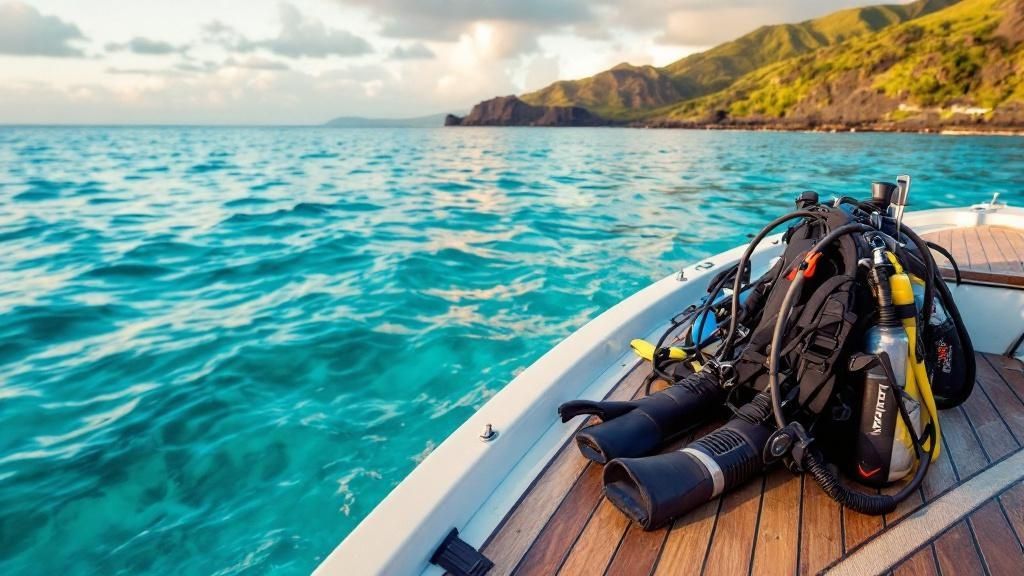
One of the best things about Big Island scuba diving is that you can have a spectacular time any day of the year. Unlike so many dive spots around the world that have strict "on" and "off" seasons, the Big Island's sheltered Kona coast serves up reliably calm and clear water almost 365 days a year.
That said, the different seasons do offer their own unique flavor. Deciding when to book your diving Hawaii Big Island adventure really just comes down to what you’re hoping to experience. Are you dreaming of bathtub-warm water and perfectly flat seas? Or does the idea of an otherworldly soundtrack for your dive give you goosebumps?
Summer Diving: Prime Time for Calm Seas
For many divers, the summer months from June through September are the absolute pinnacle of the Kona diving season. This is when the Pacific Ocean often lays down completely, looking more like a vast, glassy lake than a massive ocean. The water temp climbs to a balmy 79-82°F (26-28°C), making for some incredibly comfortable dives, even if you prefer a thinner wetsuit.
These serene conditions are perfect for everyone, from brand-new divers getting their fins wet for the first time to seasoned underwater photographers who need perfectly still subjects. Visibility can be mind-blowing, often stretching beyond 100 feet, which makes the vibrant coral reefs and dramatic lava formations really pop.
Winter Diving: The Season of Whale Song
Diving here in the winter, from December to March, is a totally different kind of magic. The water gets a touch cooler, dipping to around 75-78°F (24-26°C), but the trade-off is something you'll never forget. This is when thousands of humpback whales make their way to Hawaiian waters to breed and give birth.
Imagine exploring a reef when you start to hear it—the complex, haunting songs of male humpbacks echoing through the water. The sound can be so powerful it literally vibrates through your chest. It’s a profoundly moving experience that adds an unforgettable layer to any scuba diving Big Island trip.
You don't just see the magic of Kona underwater; in the winter, you can hear it. Floating weightlessly while listening to the symphony of humpback whales is a moment that will stay with you forever.
No matter when you decide to visit, the island is ready to deliver an incredible time. The real key is knowing what each season brings to the table so you can plan the perfect underwater adventure for you.
To help you pick the best time for your scuba Big Island getaway, we’ve put together a simple breakdown of what you can expect throughout the year.
Seasonal Diving Conditions on the Big Island
This table gives you a quick summary of what to expect, helping you plan the perfect trip based on your preferences.
| Season | Water Temperature | Sea Conditions | Key Marine Life Sightings |
|---|---|---|---|
| Winter (Dec – Mar) | 75-78°F (24-26°C) | Generally calm, occasional swells | Humpback whales (singing), dolphins, turtles |
| Spring (Apr – May) | 76-79°F (24-26°C) | Calm, excellent visibility | Manta rays, various reef fish, pilot whales |
| Summer (Jun – Sep) | 79-82°F (26-28°C) | Typically very calm, flat seas | Peak season for mantas, dolphins, large schools of fish |
| Fall (Oct – Nov) | 78-80°F (26-27°C) | Calm, transitioning seasons | Consistent manta sightings, turtles, occasional whale sharks |
As you can see, there’s truly no bad time to dive here. It just depends on whether you’re chasing the warmest water, the clearest visibility, or the chance to hear a whale sing.
Choosing the Right Big Island Dive Company
Think of your dive operator as more than just a water taxi. They're the architects of your entire underwater experience. With so many Kona diving companies out there, picking the right one can feel like a chore, but it’s the single most important decision you'll make. The right crew can elevate your Big Island scuba diving trip from just "good" to something you'll talk about for years. It's about so much more than just the price tag.
The best operators know what really counts once you're on the water: top-notch safety protocols, gear that's in perfect working order, comfortable boats, and divemasters who know the local reefs like the back of their hand. When you're planning on diving Hawaii Big Island, these are the non-negotiables. It's the difference between a great day and a day you'd rather forget.
What Defines an Excellent Dive Operator?
A first-rate dive company invests heavily in two things: its people and its gear. The crew should be more than just guides; they need to be passionate teachers and hyper-aware safety professionals. These are the folks who can point out the subtle shift in a current, know the secret hideout of a resident octopus, or tell you the life story of the local manta ray family. That deep, personal connection to the reef is what transforms a simple dive into a story.
You also need to feel 100% confident in the equipment. High-quality, meticulously serviced rental gear and boats built with a diver's comfort in mind are dead giveaways of an operator that doesn't cut corners. Another huge factor? Small group sizes. This ensures you get personal attention and don't feel like you’re just another set of bubbles in a massive crowd.
If you want a crystal-clear example of a company that gets it right, Kona Honu Divers is a perfect benchmark. Their seasoned crew, unwavering commitment to small groups, and a fleet of top-tier dive boats all come together to create an adventure that feels safe, personal, and genuinely premium.
A Spectrum of Underwater Adventures
The best diving Big Island operators get that every diver is different. They offer a whole menu of diving tours designed for various skill levels and interests. Whether you're about to take your very first breath underwater or you're a seasoned pro looking for a challenge, there should be a trip that fits you perfectly.
This personalized approach is a reflection of how far the industry has come. The history of scuba diving Big Island Hawaii is pretty amazing. Back in the 1980s, explorers were charting these very waters with manned submersibles and ROVs. That pioneering spirit, combined with the rise of modern training standards from organizations like PADI and SSI, turned scuba Big Island into the safe and professional industry it is today. You can actually dive deeper into this on the history of Hawaiian underwater exploration at NOAA.gov.
For divers with plenty of logbook entries, operators like Kona Honu Divers offer premium advanced trips. These charters push into deeper sites and more challenging environments, rewarding your skills with truly unique encounters you just can't get on a standard tour.
Diving with a Conscience
Here’s what I believe is the most important quality of a truly great dive company: a deep and genuine respect for the ocean. The vibrant coral and incredible marine life are the whole reason we go diving, and the best operators are on the front lines of protecting it.
Choosing a conservation-focused company means your tourist dollars are directly supporting the preservation of the fragile marine ecosystems you've traveled so far to see.
Look for shops that live by a strict "look, don't touch" philosophy. Do they participate in reef cleanups? Do they take the time to teach guests about responsible diving? This commitment is what ensures the underwater world of the Big Island will be here for our kids, and their kids, to enjoy. Before you book anything, check out our full guide on scuba diving the Big Island for more insider tips.
Your Big Island Scuba Diving Questions Answered
Let's tackle some of the most common questions we hear about diving on the Big Island. This should give you some quick, clear answers to help you lock in your plans and get excited for your trip.
Is there good diving on the Big Island?
Absolutely. The Big Island has some of the best scuba diving on the planet. Its Kona coast is shielded from the trade winds, which means the water is incredibly calm and clear pretty much all year. The underwater landscape, shaped by volcanoes, is otherworldly—think dramatic lava tubes, massive arches, and old craters. The marine life is off the charts, with reliable sightings of manta rays, spinner dolphins, turtles, and huge schools of colorful reef fish. With world-famous dives like the Manta Ray Night Dive and the Kona Blackwater Dive, the Big Island offers adventures you just can't find anywhere else.
What are the best months to scuba dive in Hawaii?
You can have a great dive any time of year, but the "best" months are usually in the summer, from June through September. That's when the ocean is flattest, water temps climb to a balmy 80°F (27°C), and visibility can easily top 100 feet. But, diving in the winter (December to March) has a special kind of magic: you can often hear the songs of migrating humpback whales underwater. It's an unforgettable experience. The shoulder seasons in spring and fall are also fantastic, with great conditions and fewer people.
Is Kona good for scuba diving?
Kona isn't just good; it's a world-class diving destination. Its position on the leeward side of the island protects it from the winds, creating the calmest and clearest water in all of Hawaii. This makes for comfortable and safe diving nearly every single day. Kona is the hub for all the Big Island's most famous sites, including the Manta Ray Night Dive, countless pristine reefs, and unique volcanic formations. The mix of amazing visibility, tons of marine life, and a huge variety of sites makes Kona a top-tier choice for any diver.
Is it better to snorkel or scuba dive in Hawaii?
It really depends on what you want to see. Snorkeling is easy, requires almost no gear, and is perfect for checking out the shallow reefs from the surface. But if you want to truly immerse yourself—to swim through lava tubes, explore deeper reefs, and get eye-to-eye with animals like manta rays and sharks—scuba diving is the only way to go. For bucket-list experiences like the Manta Ray Night Dive, scuba is essential. It offers a much more intimate and powerful perspective.
Which Hawaiian island is best for scuba diving?
While all the islands have something to offer, the Big Island consistently tops the list as the best for scuba diving. The massive volcanoes block the trade winds, creating exceptionally calm and clear conditions on the Kona and Kohala coasts. Plus, the island's young volcanic geology creates a dramatic underwater world you won't find on the older islands. Most importantly, it's home to signature dives like the Manta Ray Night Dive and the Pelagic Blackwater Dive—globally unique experiences that seal its reputation as Hawaii's premier diving spot.
When to dive Kona?
Anytime is a good time! If you want the absolute calmest seas and warmest water, plan your trip for the summer (June-September). That's prime time for visibility and comfort. If you're captivated by the idea of hearing humpback whales on your dive, winter (December-March) is your window. The shoulder seasons (April-May and October-November) hit a sweet spot with excellent conditions, warm water, and fewer crowds. Bottom line: Kona's protected coast means great diving is on the menu 365 days a year.