
Picture this: you're descending into brilliant, crystal-clear water, sunlight dancing through the surface. Around you, ancient volcanic archways rise from the seafloor, and a whirlwind of colorful marine life swims past. This isn't a dream; this is Big Island scuba diving, and it's absolutely legendary.
As Hawaii's largest island, the Big Island is a world-class diving destination, defined by dramatic underwater landscapes and unique creatures you simply won't find anywhere else on Earth.
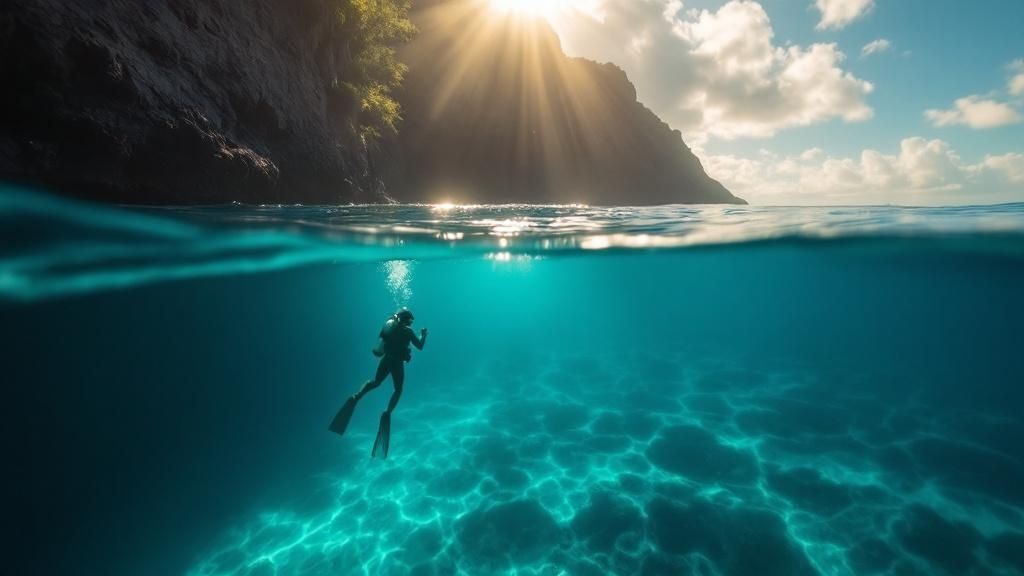
The Big Island isn't just another pretty tropical dive spot; it’s an underwater frontier forged by raw, volcanic power. The very geology that created these islands has sculpted a spectacular submarine world. You can explore intricate lava tubes, swim through massive, cathedral-like archways, and glide over vast, solidified lava flows that are now home to vibrant coral gardens. This unique topography makes scuba diving Big Island Hawaii an adventure unlike any other.
This dynamic environment is the perfect playground for an incredible diversity of marine life. The island is a sanctuary for Hawaiian green sea turtles (honu), playful spinner dolphins, and, of course, the world-famous manta rays. But the real magic of diving Hawaii Big Island often lies in the smaller residents—many of the colorful reef fish you’ll see are endemic, meaning they can only be found in Hawaiian waters.
To give you a quick snapshot, here’s what makes diving here so special.
Big Island Diving Highlights
| Feature | What You Will Experience |
|---|---|
| Volcanic Topography | Swim through underwater lava tubes, arches, and canyons. |
| Incredible Visibility | Enjoy crystal-clear water, often exceeding 100 feet. |
| Rich Marine Life | Encounter manta rays, turtles, dolphins, and endemic fish. |
| Year-Round Diving | Calm, warm waters make for ideal conditions any time of year. |
| Sites for All Levels | From gentle reefs for beginners to deep blackwater dives. |
It's this combination of geology, marine life, and perfect conditions that puts the Big Island on every serious diver's radar.
Unmatched Diving Conditions
One of the biggest reasons divers flock to the Big Island is the consistently fantastic conditions, especially along the Kona coast. The massive volcanoes of Mauna Loa and Hualalai act as a natural wall, blocking the trade winds and creating remarkably calm, clear water. This protected leeward side is the heart of Kona diving.
Visibility often hits an incredible 100 feet or more, and the water stays a balmy 75-80°F (24-27°C) all year. These dream-like conditions create a safe and absolutely breathtaking environment for divers of all stripes.
Whether you're exploring a shallow reef or venturing into deeper waters, that kind of clarity makes every detail pop. From the intricate patterns on a tiny butterflyfish to the gentle sway of coral in the current, the visibility elevates every moment of your scuba Big Island experience.
A Dive for Every Skill Level
The sheer variety of dive sites here is another huge plus. The Big Island truly has something for everyone, no matter your certification level or what you're hoping to see.
- Beginner Divers: You can enjoy calm, shallow reefs that are absolutely teeming with fish. It's a perfect, gentle introduction to the underwater world.
- Intermediate Divers: You'll be in heaven exploring the lava tubes, underwater arches, and pinnacles that define the coastline.
- Advanced Divers: Ready to push your limits? Try a thrilling deep dive, a challenging drift dive, or the world-renowned Kona blackwater dive.
This diversity means you can always find a new adventure waiting for you. It’s easy to see why Big Island diving holds a top spot on divers' bucket lists worldwide. Ready to see it for yourself? Check out our amazing diving tours to find your perfect underwater adventure.
Exploring the Legendary Kona Coast
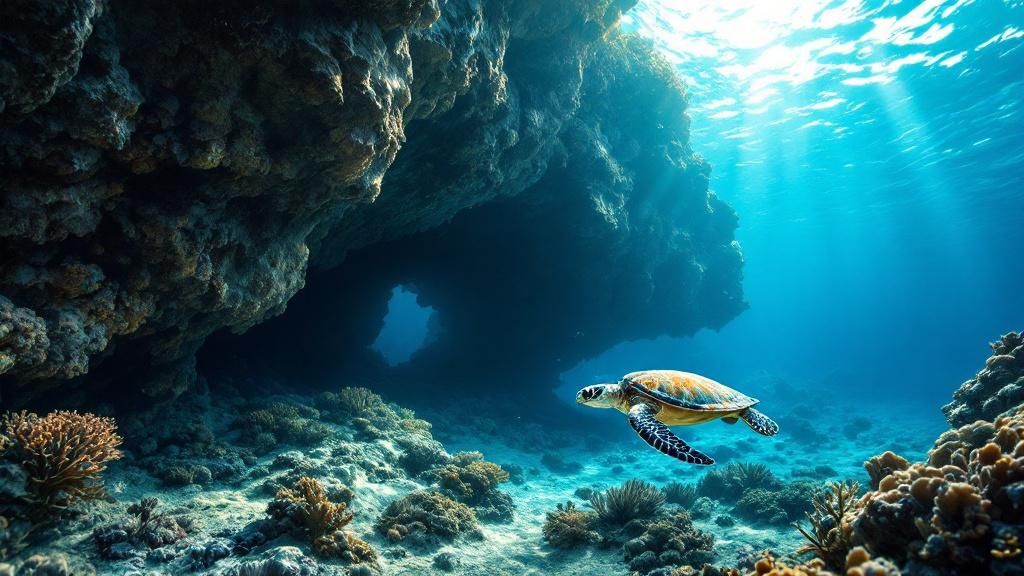
When you hear someone talking about Big Island scuba diving, chances are they're dreaming of the Kona coast. This isn't just another stretch of shoreline; it's the absolute epicenter of diving Hawaii Big Island. The reason it's so legendary comes down to some epic geology: the island's massive volcanoes, Mauna Loa and Hualalai, act like giant bodyguards for the coast.
These mountains effectively block the blustery trade winds, creating a calm, protected leeward side. The result? Water that's consistently serene and unbelievably clear. This natural shield makes Kona diving a year-round paradise for anyone with a tank on their back, setting the stage for some truly mind-blowing underwater adventures.
The World-Famous Manta Ray Night Dive
Let's be honest, the star of the show in Kona is the manta ray night dive. This isn't just another dive on the logbook; it's a world-renowned spectacle that people fly across the globe to witness. As the sun dips below the horizon, boats head out to special sites and shine powerful lights down into the water. This light show attracts a thick buffet of plankton, the manta rays' favorite meal.
What happens next is pure underwater magic. Massive manta rays, some with wingspans stretching over 15 feet, emerge from the dark. They put on an incredible acrobatic display, barrel-rolling and swooping through the light beams to scoop up the plankton, often coming within inches of awe-struck divers. It’s a humbling, goosebump-inducing experience that truly defines scuba diving Big Island Hawaii. To see it for yourself, booking a specialized Manta Ray Dive Tour is the way to go.
Volcanic Seafloors and Unique Topography
Beyond the mantas, the seafloor itself tells the story of Kona's volcanic birth. Your entire dive unfolds over a landscape of cooled lava, which has created a dramatic and complex underwater world. The diving Big Island experience is all about exploring these incredible natural structures. You can glide through ancient lava tubes—massive tunnels carved out by molten rock—that make you feel like you're in another world.
The volcanic origins of the island have created fascinating underwater landscapes of cooled lava flows, including natural lava tubes, arches, and caverns. These features provide otherworldly dive environments and make the region a top destination for both its marine life and its exceptional underwater topography. You can learn more about why Kona is a diver's paradise from this insightful article.
You'll also discover massive archways and swim-throughs that feel like exploring sunken cathedrals. This wild architecture is a huge part of what makes scuba Big Island so special. Every dive site has a different layout, from intricate reefs to sheer underwater cliffs, so no two dives are ever the same. It’s a treasure hunt every time you drop in.
The mix of calm, clear water, the unforgettable manta ray night dive, and the jaw-dropping volcanic scenery makes the Kona coast the undisputed champion of Big Island diving. It's a place where every descent is a new adventure waiting to happen.
Alright, let's craft your ultimate Big Island dive plan. The island is packed with incredible sites, each offering a completely different flavor of adventure. Think of it less like a checklist and more like a menu of underwater experiences. We'll go way beyond just a list of names to help you find the dives that perfectly match what you’re looking for.
From world-famous spectacles that belong on every diver's bucket list to deep, dark adventures for the seasoned pros, let's jump into the must-do dives of the Big Island.
The Manta Ray Night Dive: A True Bucket-List Spectacle
If there’s one dive that defines the Big Island, this is it. The manta ray night dive isn’t just a dive; it’s an underwater ballet starring the ocean’s most graceful giants. It’s pure magic.
Here’s how it works: after sunset, you’ll descend to a sandy spot where the dive operators have set up a "campfire" of powerful lights on the ocean floor. These lights attract swarms of plankton, ringing the dinner bell for the local manta rays.
You simply kneel on the sand and watch the show unfold. These massive creatures, with wingspans often stretching over 12 feet, swoop and barrel-roll just inches over your head. It’s a humbling, almost spiritual experience you will never, ever forget.
Turtle Pinnacle: A Haven for Honu
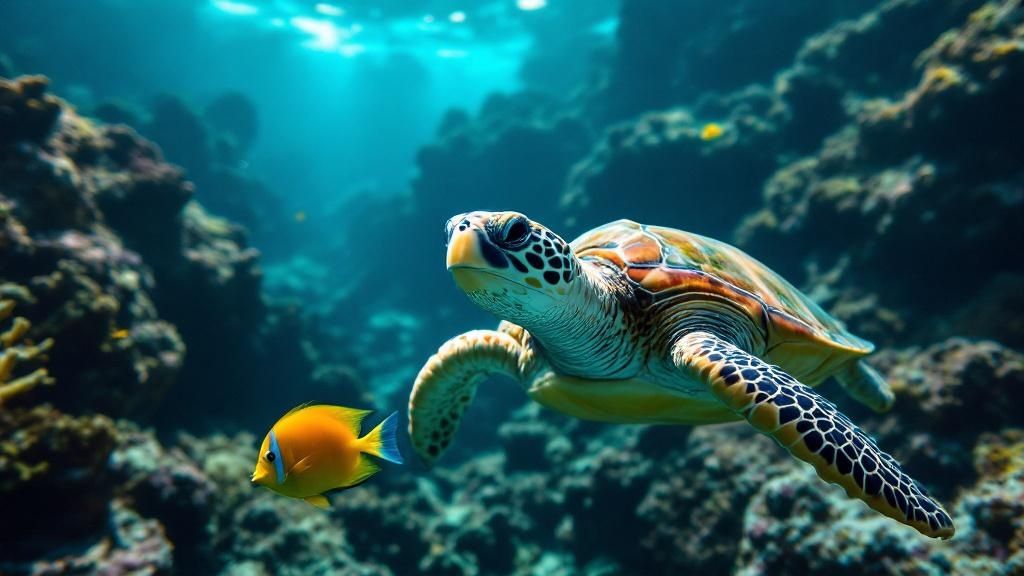
Looking for an almost guaranteed run-in with Hawaiian Green Sea Turtles, or honu as they’re known locally? Turtle Pinnacle is your spot. The site is famous for its "cleaning station"—think of it as a day spa for sea turtles.
Turtles gather here and patiently wait for small reef fish to come and nibble away algae and parasites from their shells. You can hang back at a respectful distance and watch this whole fascinating ritual play out, with multiple turtles often lined up waiting for their turn. Beyond the honu, the reef is bursting with vibrant corals and colorful fish, making it a fantastic day dive for everyone.
To get a better feel for what makes this island's marine world so special, take a look at our complete guide to Big Island diving.
The Kona Blackwater Dive: A Journey into the Abyss
Ready for something completely different? For the truly adventurous, the Kona Blackwater Dive is an experience that feels like it’s from another planet. This is not a reef dive. At all.
You'll drift at night, suspended over thousands of feet of inky black ocean. Your powerful dive lights illuminate the water around you, revealing the largest vertical migration of life on Earth as it rises from the deep.
The Blackwater Dive is your ticket to see the bizarre and beautiful creatures that live in the deep ocean. We're talking about alien-like larval fish, glowing jellies, and strange squids that only come up to the surface under the cover of darkness. It’s surreal, mesmerizing, and something few people ever get to witness.
This is a highly specialized dive that demands calm nerves and rock-solid buoyancy control. If you're an advanced diver looking for a genuine, once-in-a-lifetime thrill, consider booking a Blackwater Dive tour.
Advanced Dives: For the Experienced Explorer
Once you've checked off the famous spots, the Big Island still has plenty of challenges waiting for seasoned divers. These sites often bring stronger currents or deeper profiles, but the payoff is huge.
- Drift Dives: Sites like Au Au Crater let you go with the flow, effortlessly soaring over stunning volcanic landscapes and pristine, untouched reefs.
- Deep Reefs: Head down to explore deeper ledges and canyons. This is where you have a better chance of spotting larger pelagic animals and rare fish that shy away from the shallower, busier sites.
These dives are perfect for divers who have their skills dialed in and are hungry for more. Many local operators, including Kona Honu Divers, run trips specifically for experienced divers to explore these more demanding and rewarding locations. You can check out their advanced dive tour options.
Choosing the Right Dive Operator in Kona
Let's be real—the dive operator you choose can make or break your entire Big Island scuba diving trip. The boat, the crew's vibe, and the company's whole philosophy directly impact your safety, comfort, and whether you surface with a massive grin on your face.
With a bunch of Kona diving companies out there, knowing what to look for is the key to an amazing adventure instead of just an okay one.
What Sets the Best Apart
The truly great operators aren't just running a business; they live and breathe diving. They share a few core values that turn a good dive into an experience you'll be talking about for years.
Here's what really matters:
- Seasoned Guides: A great guide is more than a navigator. They're the person who spots the camouflaged frogfish you would've missed, shares cool facts about reef ecology, and makes sure everyone feels safe and confident, no matter their skill level.
- Small Groups: This is a game-changer. Diving in a small group means you get more one-on-one time with your guide, you aren't bumping elbows on the boat, and the whole vibe at the dive site is more relaxed and intimate.
- A Passion for Conservation: Look for shops that walk the talk on marine conservation. It’s a clear sign they respect the ocean and are committed to protecting the incredible reefs you’ve traveled so far to see.
- Top-Notch Service: From the first email to the final "see you next time," a friendly, professional, and genuinely helpful crew makes everything smoother and more fun.
Why Kona Honu Divers Earns Top Marks
When you start asking around about Kona diving, one name pops up again and again: Kona Honu Divers. They've built their stellar reputation by getting all those little details right, driven by a real passion for the ocean and their guests.
Their guides aren't just experts at navigating the incredible sites for diving Hawaii Big Island; they’re true ocean ambassadors who love sharing its magic.
Kona Honu Divers is famous for keeping their groups small, which guarantees every single diver gets that premium, personal experience. It's this commitment to quality that has earned them so much respect in the community. You can discover more about what makes them a top-rated operator and read the stories from divers who come back year after year.
Their menu of dive trips has something for everyone. Whether you're dreaming of the world-famous Manta Ray Night Dive, the mind-bending Blackwater Dive, or more technical trips for advanced divers, they’ve got you covered.
How Big Island Diving Became World-Famous
Every legendary dive destination has an origin story, and the Big Island's is a pretty special one. It's the tale of how a remote volcanic island transformed into a global hub for underwater explorers. This didn't happen overnight—it was built piece by piece, dive by dive, by passionate pioneers who saw the unbelievable potential hiding just beneath the waves.
The island's dive scene really started to take shape back in the 1960s and 70s. In those early days, diving was a rugged, bare-bones affair. But as professional training organizations like PADI and SSI came on the scene, they helped standardize safety and opened up the sport to a much wider audience, setting the stage for what was to come.
The Rise of a Diving Destination
The real turning point, though, came in 1981 with the opening of Jack's Diving Locker, one of the first major Kona diving companies. This was a huge deal. It helped put Kona diving on the map, attracting divers from all over the country and eventually, the world.
Fast forward to today, and the Big Island boasts a thriving community of over 50 dive shops and charter boats. These operators welcome more than 150,000 dive tourists and log around 100,000 certified dives every single year. This incredible growth shows just how far diving Hawaii Big Island has come, morphing from a niche hobby into a world-class industry.
What made it all possible? A perfect storm of incredible conditions and totally unique underwater landscapes. The sheltered Kona coast offers consistently calm, clear waters—a dream for divers. It became a natural laboratory for exploring the intricate lava tubes, dramatic drop-offs, and vibrant reefs created by millennia of volcanic activity.
The pioneers of Big Island diving recognized something special: the volcanic geology wasn't just beautiful, it created an entirely unique underwater playground. This fundamental advantage is what has allowed the island to maintain its reputation as a premier destination for decades.
This history adds so much to every dive here. When you descend into these waters, you’re not just a tourist; you're becoming part of a long tradition of adventure and exploration. You’re literally following in the fin-kicks of the people who first discovered the magic of scuba diving Big Island. To get fully prepped for your own adventure, you should check out our guide covering everything you should know about Big Island diving.
Planning Your Ultimate Dive Vacation
Alright, let's turn that dream Big Island diving trip into a reality. It's way easier than you might think. A little bit of smart planning takes care of all the boring logistics, freeing you up to focus on what really matters: the epic underwater world waiting for you off the Kona coast.
The first question I always get is, "When's the best time to go?" The honest answer? Pretty much any time. The Kona coast is so well-sheltered that diving Hawaii Big Island is fantastic year-round. Sure, the summer months from May to September usually have the flattest, calmest seas and toasty water temps. But winter is just as magical. You might get a bit more chop on the surface, but the Kona diving underneath is still incredible, and you get the bonus of hearing humpback whales singing on your dives. It’s an unreal experience.
Gearing Up and Getting Certified
When you're packing, you'll have to decide what to bring and what to rent. Most divers I know, myself included, always bring our own mask, fins, and dive computer. It's all about comfort and familiarity. But lugging a BCD and regs across the Pacific? No thanks. Renting high-quality gear from top-notch Kona diving companies like Kona Honu Divers is the way to go—it just makes travel so much easier.
As for certification, your basic Open Water card is your ticket to most of the beautiful reef dives here. But if you really want to unlock everything scuba diving Big Island has to offer, I can't recommend an Advanced Open Water certification enough. It opens up the deeper sites and the really unique specialty dives. For those with the right certs looking for a challenge, you can book an advanced dive tour and get to some truly special spots.
Where to Stay and Booking Your Trip
If you want to be in the heart of the action, your best bet is to stay in or around Kailua-Kona. This puts you just minutes from the dive boat harbors, not to mention all the great restaurants and shops for your surface intervals. When you're putting together the perfect trip, checking out different places to stay is key. You can get some great ideas by looking into guides on the best vacation rental locations.
The scuba diving Big Island Hawaii scene is a huge part of the local economy. We're talking over 50 operators taking care of around 150,000 dive tourists every year. This massive infrastructure means booking your trip is a total breeze. If you're curious about the industry itself, you can explore the details of Hawaii's dive tourism here.
Ready to lock it in? You can book your diving tours right now to make sure you've got a spot on the boat.
Frequently Asked Questions
Is there good diving on the Big Island?
Absolutely! The diving on the Big Island is considered world-class. Its unique volcanic underwater topography, including lava tubes and arches, combined with incredible visibility (often over 100 feet) and rich marine life, makes it a top-tier destination. It's especially famous for the manta ray night dive, a truly unforgettable experience.
What are the best months to scuba dive in Hawaii?
The great news is that you can enjoy fantastic scuba diving in Hawaii year-round, with warm water temperatures between 75-80°F (24-27°C). For the calmest, glassiest ocean conditions, the summer months from May to September are ideal. However, winter diving is also spectacular, particularly on the Big Island's sheltered Kona coast.
Is Kona good for scuba diving?
Kona is exceptional for scuba diving. It's the epicenter of Big Island diving because the massive volcanoes shield the coast from trade winds, creating consistently calm and clear water. This makes it the perfect launching point for iconic dives like the Manta Ray Night Dive and the Pelagic Blackwater Dive, as well as countless vibrant reef sites.
Is it better to snorkel or scuba dive in Hawaii?
It depends on the experience you want. Snorkeling is accessible and offers a great view of shallow reefs from the surface. However, scuba diving offers a fully immersive adventure. Scuba diving Big Island Hawaii allows you to explore deeper, swim through ancient lava formations, and have more profound encounters with marine life like turtles, dolphins, and sharks. For a true underwater exploration, scuba is unparalleled.
Which Hawaiian island is best for scuba diving?
While all the islands offer great diving, the Big Island is widely regarded as the best for scuba enthusiasts. This is due to the sheer diversity of its dive sites, the unique volcanic seascapes, and the world-famous, reliable conditions of the Kona coast. Dives like the Manta Ray and Blackwater experiences are unique to the Big Island and place it at the top of the list for many divers.
When to dive Kona?
Any time of year is a great time to dive Kona. The Kona diving season is year-round. If you prefer the calmest possible seas, plan your trip between April and October. But don't rule out winter (November through March); the diving is still incredible, and you get the added bonus of hearing the songs of migrating humpback whales during your dives—a truly magical experience.
Ready to experience the magic for yourself? Kona Honu Divers offers a wide range of world-class diving tours for every skill level.