
You're probably in one of two places right now. Either you're already certified and trying to figure out whether the Big Island is worth building a whole Hawaii trip around, or you're not certified yet and wondering if this is the place to finally learn. Both questions lead to the same shoreline.
On the west side of the island, diving feels unusually approachable. The water is warm, the reefs are full of life, and the underwater terrain looks like it was designed for explorers. You descend next to black lava rock, pass through arches and swim-throughs, and then look up to see turtles gliding across blue water that often feels almost unreal in its clarity.
The Ultimate Guide to Big Island Hawaii Scuba Diving
A lot of travelers start with a vague plan. They want “Hawaii diving,” maybe a manta ray night dive, maybe a couple reef dives, maybe a lesson if someone in the group has never tried scuba before. Then they start comparing islands and get stuck. Maui sounds good. Oahu is familiar. Kauai is beautiful. But when divers talk seriously about big island hawaii scuba, the conversation keeps circling back to Kona.
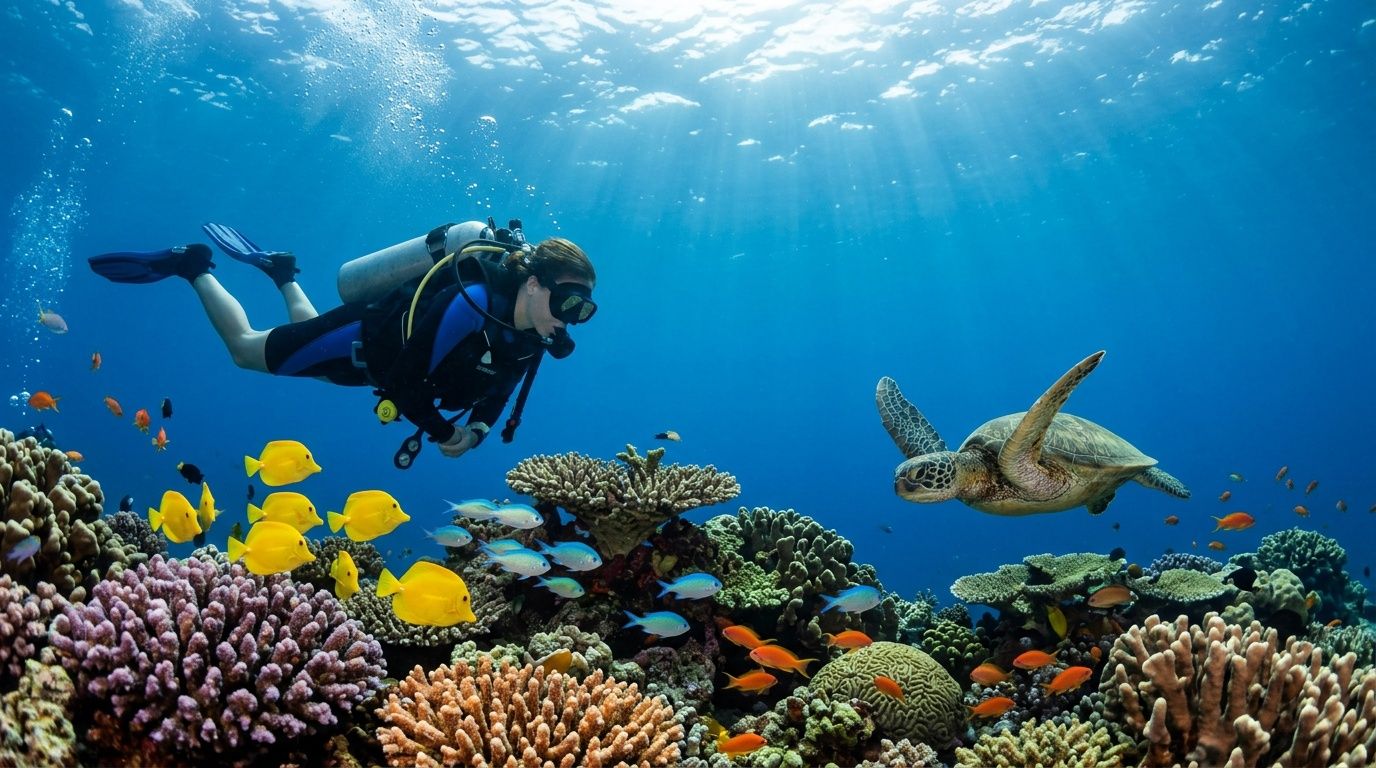
That's because the Big Island offers a rare mix of things that usually don't show up together. You get dramatic volcanic structure underwater, reliable dive conditions, famous marine life encounters, and options for almost every skill level. A new diver can have a calm, confidence-building reef dive. An experienced diver can go offshore at night and watch open-ocean creatures rise out of the dark.
If manta encounters are high on your list, this practical guide to manta ray diving tips for 2026 is worth reading before you lock in dates. It helps answer the questions people usually ask too late, like what kind of site layout makes viewing easier and what experience level matters most.
Big Island diving works best when you match the dive to the diver, not when you chase the most famous name on a map.
The rest of this guide is built the way I'd brief a guest on the boat. First, why Kona is so dependable. Then the three standout dive experiences people remember for years. After that, the practical planning side: seasons, packing, seasickness, choosing an operator, training, and booking.
Why Kona is a World-Class Diving Destination
You notice Kona's advantage before you even descend. The boat ride is often calmer on the west side of the island, the horizon looks orderly instead of messy, and once you drop in, the water can feel open and readable in a way that immediately settles new divers.
That starts with geography. Mauna Kea and Mauna Loa block the prevailing northeast trade winds, which helps shelter the Kona coast from the rougher conditions that can affect other parts of Hawaii. For divers, that usually means easier boat days, clearer sightlines underwater, and more consistency from trip to trip.
That consistency matters more than many visitors expect.
A lot of travelers assume Hawaiian diving is one category, as if every island offers the same experience with a different backdrop. Kona feels different in the water. The leeward coast is often more forgiving, which is a big reason instructors like bringing newer divers here and experienced divers keep coming back for longer, more specialized trips.
Why the water feels so diver-friendly
Good diving conditions are not just about comfort. They affect how well you learn, how relaxed you stay, and how much of the reef you notice.
Clear water helps with orientation. You can see your buddy, the bottom, and the shape of the site around you without that closed-in feeling that raises stress. Calmer surface conditions make entries and exits simpler, which is a bigger deal than it sounds if you are still building confidence. Comfortable water temperatures also reduce distraction. You spend more attention on buoyancy, marine life, and your air, instead of counting the minutes until the dive ends.
For a newer diver, that works like training wheels you barely notice. For an advanced diver, it means more bandwidth to appreciate photography, fish behavior, navigation, and the structure of the site itself.
Volcanic topography changes the whole dive
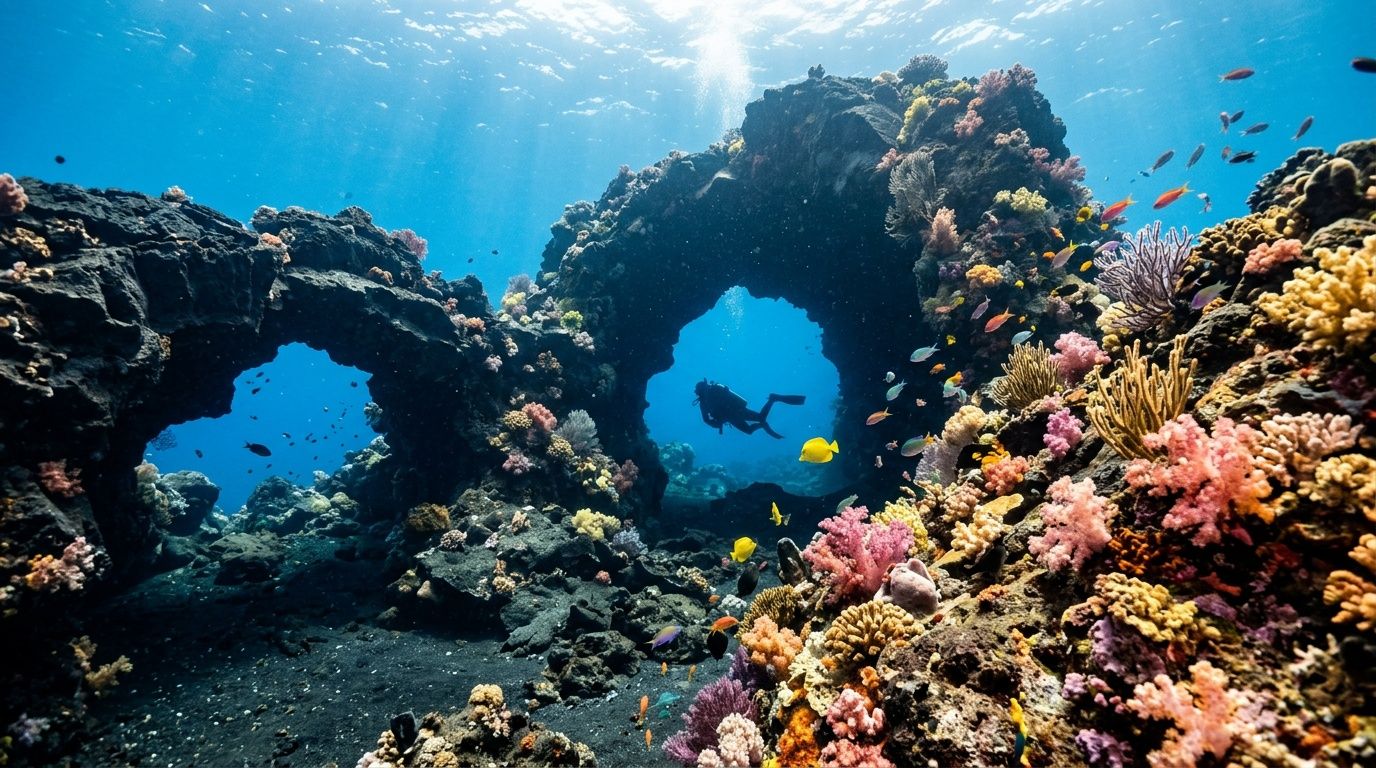
Kona's underwater terrain has a personality of its own. The island was built by volcanoes, and the seafloor reflects that with lava tubes, arches, pinnacles, and caverns that shape how each dive unfolds.
A reef here often feels less like a flat garden and more like a trail system. One turn opens into an archway. Another reveals a finger of lava that acts like a fish apartment building, with eels, squirrelfish, and reef species all using different ledges and cracks. Even a simple site can feel exploratory because the structure keeps changing around you.
If you want a local explanation of how that geology affects the dive experience, this guide to what is unique about diving in Kona gives useful context.
Site variety makes trip planning easier
Kona also stands out because operators have options. That matters for safety, comfort, and getting the right dive for the right person.
On a well-run boat, the crew is not just asking, “What is famous?” They are asking, “What fits this group today?” A newly certified diver, a photographer, and a guest hoping to see lava structure may all need different site choices. A coast with many workable dive sites gives the operator room to match conditions and experience level instead of forcing everyone onto the same plan.
This is one reason experienced local operators such as Kona Honu Divers are valuable. Superior service includes more than just taking people to the water. It involves choosing sites, timing departures, grouping divers well, and adjusting the plan when ocean conditions call for a smarter option.
Practical rule: Kona is easy to recommend because it combines approachable conditions with underwater terrain that still feels adventurous.
That mix is rare. It is also why Kona works so well as the base for a full dive trip, whether you want a relaxed first reef dive, a signature night experience, or several days of varied boat diving organized around your goals.
The Three Unforgettable Big Island Dive Experiences
You spend the day on a sunny Kona boat, then after dark you drop into black water and watch giant manta rays glide overhead like silent aircraft. The next night, you drift offshore with nothing below you but open ocean, studying tiny transparent animals that look almost unreal. Then, on a morning charter, you follow old lava formations through clear blue water while turtles cruise past the reef.
That range is what makes Big Island Hawaii scuba so satisfying. You are not booking one famous dive and filling the rest of the trip with backups. You are choosing among three very different experiences, each with its own mood, skill fit, and planning questions. Knowing how they differ helps you decide what belongs on your itinerary, and it also helps you choose an operator who runs each trip well.
The manta ray night dive
This is the experience that puts Kona on many divers' wish lists. It is also one of the easiest signature dives to understand once you know the setup.
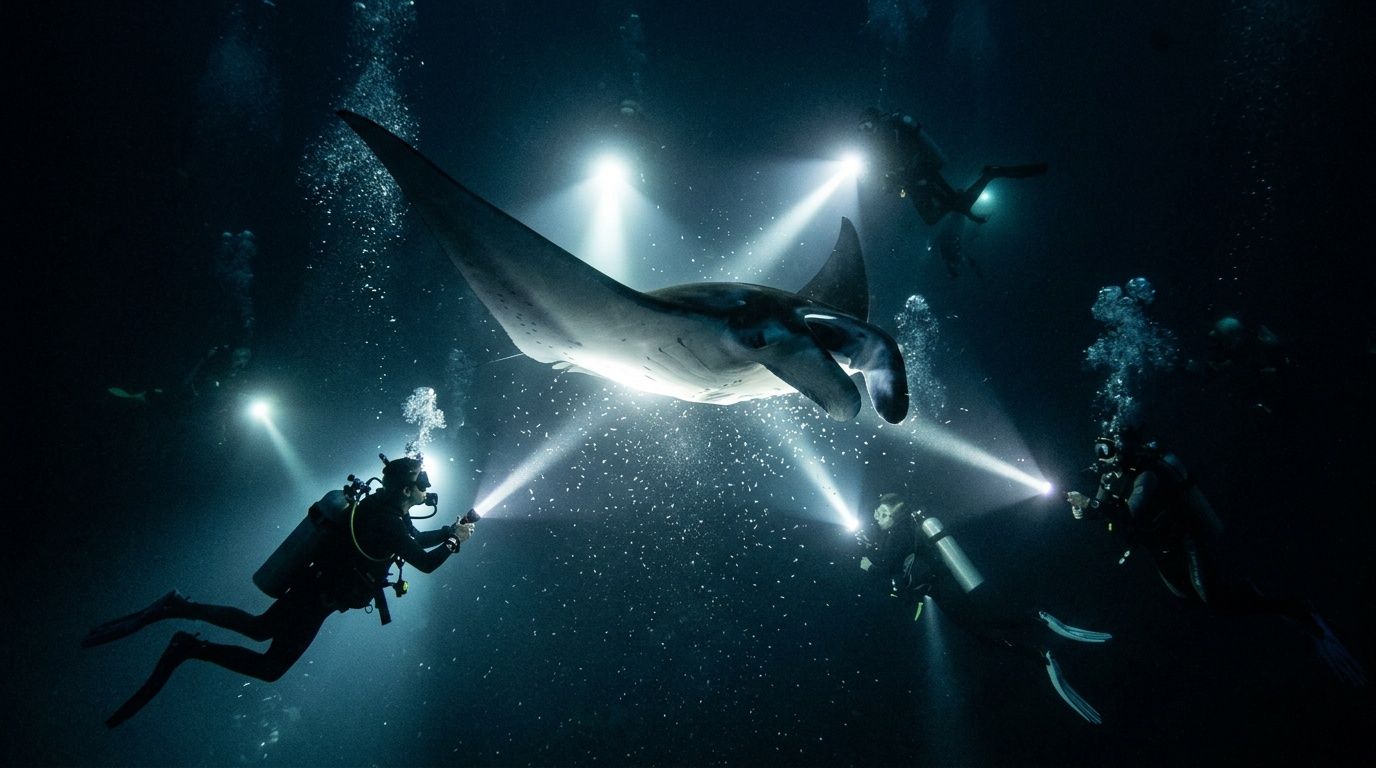
Divers gather near the bottom in a designated viewing area. Lights attract plankton. The plankton draws in manta rays. Then the mantas begin looping, banking, and passing overhead as they feed. The structure is simple, which is part of why the experience works so well. You are not swimming hard or searching a huge area. You are settling in and letting the encounter come to you.
For many visitors, this is the right specialty dive to book first. Newly certified divers can often enjoy it if they are comfortable in the water, can follow directions, and are calm at night. A good briefing matters here. So does a crew that keeps the group organized, places divers correctly, and explains how to use lights without disrupting the animals.
Why Garden Eel Cove gets so much attention
Garden Eel Cove is popular for practical reasons, not just name recognition. The site layout works well for organized manta viewing, and the dive tends to feel more controlled than a night dive built around wandering a reef and hoping for a surprise.
That distinction matters. A manta night dive is less like a hunt and more like taking your seat in a natural amphitheater. Your job is to stay stable, protect the reef, and keep your beam where the guide instructs. The mantas do the rest.
If you are still deciding whether this should be a snorkel, a dive, or the centerpiece of your trip, this guide to manta ray tours on the Big Island helps clarify what the evening is like and who tends to enjoy it most.
The blackwater dive
The blackwater dive is the Big Island's strangest and most fascinating specialty. It appeals to divers who have already done ordinary night dives and want something that feels completely different.
Instead of descending onto a reef, you head offshore at night and drift in open water over great depth. Lights reveal creatures rising from the deep during their nightly migration. You may see larval fish, jellies, squid, and delicate pelagic life that rarely appears in a standard reef dive. Many of these animals are tiny, transparent, or oddly shaped. The experience feels part science expedition, part night dive.
The challenge is mental as much as physical. There is no reef for reference and no bottom in view. Good buoyancy and comfort in the dark matter more here than speed or air consumption. Advanced divers usually settle in fastest, especially those who already know how to stay relaxed when visual cues are limited.
Operator selection significantly shapes the overall experience. Offshore night drifting requires careful procedures, clear supervision, and a crew that explains exactly how the line system, lights, and diver positioning work. If a diver asks, "Is this for me?" the honest answer depends on comfort level, recent experience, and how well the trip is run.
The classic daytime reef and lava dives
Day dives are the foundation of a strong Kona trip. They are also the easiest dives to underestimate from your couch at home.
In daylight, the island's volcanic character becomes clear. Lava tubes, arches, ledges, and broken rock fingers create the structure. Coral and reef life soften it. Turtles, reef fish, and cruising predators turn that geology into a living scene instead of a pile of rock. If the manta dive is the headline event, daytime reef diving is the part that gives the whole destination depth and variety.
This is also where many divers find their rhythm. A morning reef dive works well as a check-in after time away from the water. It gives you a chance to dial in weighting, buoyancy, and camera setup before adding a specialty night dive later. For photographers, it is often the best way to capture the island's color and texture. For newer divers, it is often the most comfortable place to build confidence.
Some sites suit a wide range of divers. Others are better for guests with stronger air use, sharper buoyancy, or more experience around surge and lava structure. That is why a thoughtful operator matters so much. Kona Honu Divers, for example, is known for matching divers to appropriate charters rather than treating every guest as if they want the same profile. That kind of planning can make the difference between a trip that feels random and one that feels well designed.
If you are building a full itinerary, the smartest approach is usually to combine these experiences rather than choose only one. A classic daytime charter gives you orientation and bottom time. A manta night dive gives you the signature Kona memory. A blackwater trip adds the rare, advanced experience that few destinations can offer. Together, they create a trip that feels complete from first booking to final dive.
Your Dive Trip Planner What You Need to Know
You land in Kona, smell the salt in the air, and start thinking about manta rays, lava tubes, and long blue drop-offs. Then the questions that shape the trip show up fast. Which days should you dive first? What do you bring from home? What if your stomach dislikes boats more than your brain loves diving?
That practical side of planning is what turns a good Big Island scuba trip into a well-run one. The underwater part may last an hour. The booking choices, gear choices, and timing choices affect the whole vacation.
When to dive
The Big Island does not have a single short "dive season" in the way some destinations do. You can have excellent diving at different times of year, but the feel of the trip changes.
Summer often brings warmer water and that easy, blue-water comfort many vacation divers want. Winter still offers very good diving, and many divers enjoy hearing humpback whales underwater while they explore the reef. If you are choosing between seasons, ask a simple question. Do you care more about the warmest conditions possible, or about the atmosphere of winter in Hawaii?
A good operator can help with that decision before you ever step on the boat. Kona trips work best when the charter schedule matches your goals, your experience, and the time of year.
What to pack
Pack for comfort first. A dive day works like a road trip. Small annoyances feel bigger when you are already in motion.
Bring these if you have them:
- Your own mask: Fit matters more than brand. A mask you trust removes a common source of frustration.
- Dive computer: Using your own computer keeps your profile familiar and simple.
- Reef-safe sunscreen: You need sun protection on the ride out and between dives.
- Light layers or a cover-up: Even warm days can feel cool after a dive, especially with wind on the boat.
- Certification card and recent log information: Easy access helps the check-in process move smoothly.
- Any personal seasickness remedy: Bring it with you, not as an afterthought.
If you want to understand swell, wind, and exposure before you pick your dive dates, this guide on checking ocean conditions for the Big Island of Hawaii gives you a useful starting point.
Seasickness planning
Divers often hesitate to ask about this, but they should ask early.
Seasickness does not care whether you have 20 dives or 2,000. It can hit certified instructors, vacation divers, underwater photographers, and brand-new open water students. Fatigue, dehydration, skipped breakfast, and anxiety can all make it worse.
Plan for it before trip day. Common options include Ship-EEZ Seasickness Patch, Dramamine pills, Bonine pills, Sea Band wristbands, and Ginger chews. Different bodies respond to different tools, so use what has worked for you before, or test your preferred remedy on a less important boat day rather than on your must-do charter.
Eat lightly, hydrate early, and take your preferred seasickness remedy before you feel symptoms. Recovery is harder than prevention.
Is this trip for beginners or experienced divers
Both. The better question is which dives fit your current skills.
Many Kona reef dives work well for newer divers because the lava formations are easy to follow and conditions are often approachable. More experienced divers can add night diving, blackwater trips, or more demanding site profiles to make the trip richer. The key is honest matching. A newly certified diver does not need the same itinerary as someone who dives every month, and that is completely fine.
Trip planning for dive groups involves more than a list of famous dives. If your group has mixed experience, book in layers. Start with a daytime charter that lets everyone settle in, check weighting, and get comfortable in local conditions. Then add specialty dives only where they make sense. Operators such as Kona Honu Divers are often valuable here because they can help sort out which charters fit the least experienced diver without wasting the trip for the rest of the group.
That is how you go from "Can we all dive together?" to "Yes, and here is the right way to set it up."
How to Choose the Right Big Island Dive Operator
A dive site doesn't run itself. The operator determines how the day feels from the first briefing to the ladder climb at the end. That's why choosing well matters more than many travelers expect.
Start with safety. Not in a vague marketing sense, but in the practical sense. Does the company explain site selection clearly? Do they brief entry and exit procedures in plain language? Do they screen divers accurately for experience-sensitive trips? Those answers tell you more than glossy photos ever will.
What to look for
Use a simple filter when comparing operators.
- Crew judgment: You want guides who can adapt the plan to the group and the conditions.
- Boat setup: Easy entries, clean organization, and enough space reduce stress.
- Equipment standards: Rental gear should look maintained, not merely available.
- Trip fit: A good operator matches divers to dives instead of overselling every trip to everyone.
- Communication: Clear answers before booking usually predict clear briefings on the boat.
A lot of people focus only on price and site name. That's understandable, but it's incomplete. A cheaper seat on the wrong trip isn't a value if the diver isn't comfortable, the logistics are sloppy, or the group mix doesn't make sense.
Questions worth asking before you book
Some of the best screening questions are simple:
- What experience level do you recommend for this specific trip?
- What's included, and what's rented separately?
- How is the briefing handled for mixed-skill groups?
- What happens if conditions aren't right for the original plan?
If you want a fuller framework, this article on how to choose a Kona dive shop is a useful checklist.
The right operator doesn't just take you diving. They reduce uncertainty before you ever leave the harbor.
Featured Operator Diving with Kona Honu Divers
You land in Kona with three free dive days and a simple question. Should you book one signature experience, or hand your whole trip to one operator and let the pieces fit together cleanly? For many visiting divers, that second option reduces guesswork, especially on an island where conditions, site access, and trip timing matter.
When people compare choices for big island hawaii scuba, Kona Honu Divers stands out because it covers the full trip puzzle in one place: boat charters, training, rental gear, and staff who can help match the dive to the diver.
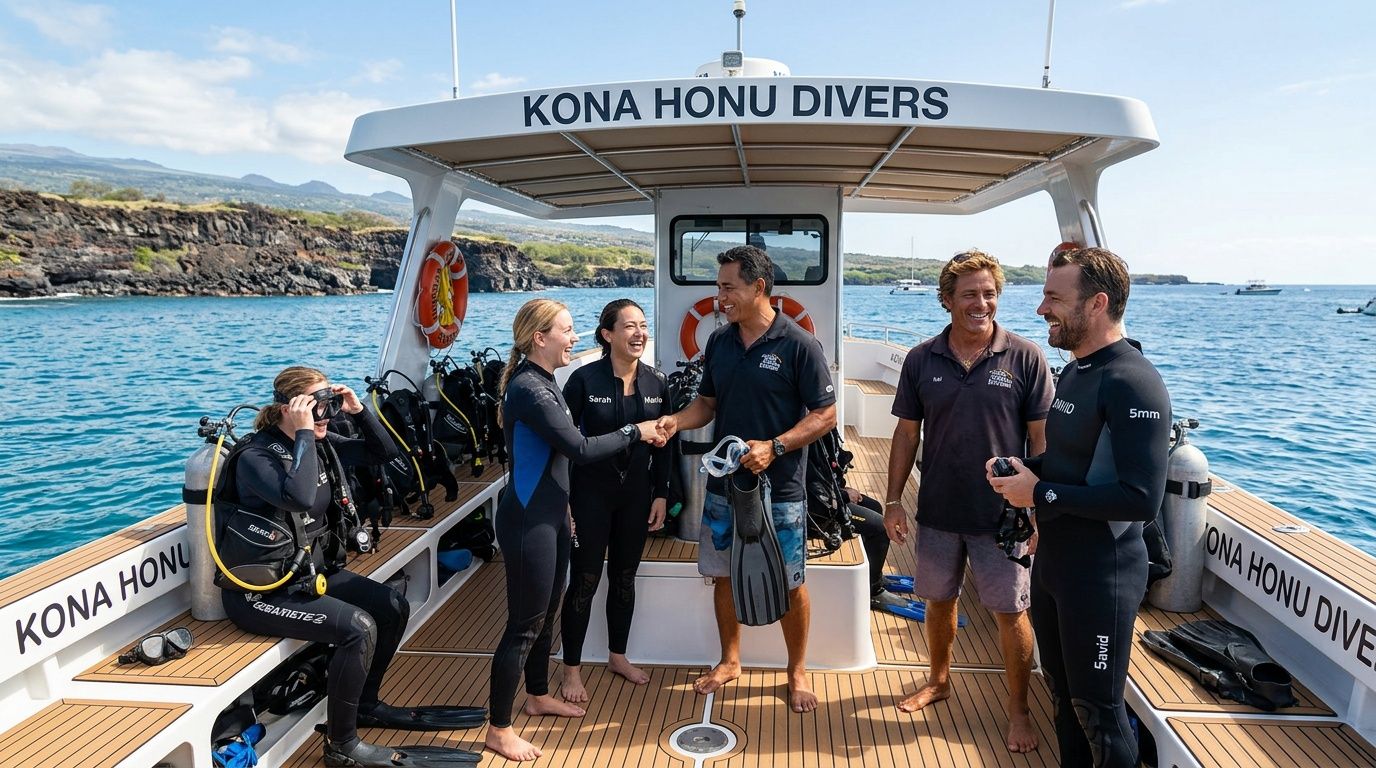
That matters more than many visitors expect. A dive trip works like a chain. If one link is awkward, the whole day feels harder. Boat location, check-in process, rental fit, site selection, and guide judgment all shape how relaxed you feel before you even hit the water.
Kona Honu is a good fit for travelers who want that chain handled well instead of built piece by piece. Rather than booking a manta dive with one company, a morning charter with another, and training somewhere else, you can set up a trip that follows a clear plan from your first checkout email to your last surface interval.
Why many divers book more than one trip with the same operator
The advantage is consistency.
If you dive with the same crew across several days, your guides learn your air consumption, buoyancy habits, comfort level, and what kind of marine life excites you. That makes later dives easier to tailor. A photographer may need a slower pace. A newer certified diver may benefit from simpler entries and extra setup help. An experienced diver may want a more ambitious charter if conditions allow.
That continuity is hard to get when every day is booked separately.
Kona Honu also appeals to mixed groups. One person may want the manta night dive. Another may want a classic two-tank reef morning. Someone else may be curious about training or need rental gear for the whole week. Keeping those decisions under one roof usually means fewer emails, fewer forms, and fewer chances for a planning mistake.
Who it tends to suit
A few groups tend to get the most value from this setup:
- Vacation divers who want guided boat diving without spending their trip sorting out logistics
- Returning certified divers who need a refresher or want help choosing the right first day back
- Advanced divers interested in experiences such as blackwater diving
- Families and friend groups with different goals, schedules, or experience levels
- Travelers who may want training during the same trip, whether that means a beginner experience or a full course
If that last group includes you, Kona Honu also offers options for people who want to learn to scuba in Kona while building the rest of their trip around it.
A smart way to book
Start with your anchor dive. On the Big Island, that is often the manta night dive, a blackwater trip, or a daytime two-tank charter.
Then build around it in a way that respects energy, surface intervals, and weather. That sounds obvious, but many visitors overschedule. They see a short vacation window and try to stack every famous dive into consecutive days. A better plan leaves a little breathing room, both in terms of physical space and your schedule.
Kona Honu fits well into that A-to-Z approach because the company can support more than a single excursion. If you already know what you want, booking is straightforward. If you do not, their team can help you sort out what makes sense for your certification level, your comfort in current, and the kind of experience you want to remember.
Get Certified Scuba Courses and Training in Kona
Kona isn't only for people who already dive. It's also one of the easier places to start because calm, clear conditions remove some of the stress that beginners feel in rougher locations.
If you're not certified, your first step usually isn't a full course. It's a trial program where an instructor introduces the equipment, teaches the basic skills, and gets you breathing underwater in controlled conditions. That's ideal for travelers who are curious but not yet ready to commit to the full certification process.
The path from curious to certified
For many divers, the progression looks like this:
- Try scuba first: A beginner experience lets you test how comfortable you feel underwater.
- Move into Open Water training: That's the entry-level certification most divers start with.
- Complete skills and open water dives: You learn the fundamentals that make later dives safer and more enjoyable.
- Add advanced training later: Once you know what kind of diving you enjoy, specialty courses make more sense.
A common misunderstanding is that certification is mainly about collecting a card. It isn't. Good training is about building comfort with buoyancy, breathing, communication, and problem-solving. Those basics matter far more than people think on a vacation dive.
Why further training helps on the Big Island
The Big Island rewards extra training because the menu of dives is broad. Nitrox training can be useful for divers planning multiple boat days. Advanced training can prepare you for deeper profiles, more task loading, and stronger confidence on unusual dives. Even if you never plan to become a technical diver, continuing education makes you a calmer recreational diver.
If you want to explore local options, this page on learning to scuba in Kona shows the common starting points and course paths.
Who should consider training on vacation
Training in Kona makes sense if:
- You learn best in calm conditions
- Your group includes both divers and non-divers
- You want a trip that mixes education with fun diving
- You've been uncertified for years and want a proper restart
Some people worry that training will “waste” a Hawaii vacation. Usually the opposite happens. Learning in a place with warm water and striking reef scenery tends to make the entire process more engaging.
Your Underwater Adventure Awaits
The Big Island earns its reputation the old-fashioned way. It gives divers memorable conditions, unusual volcanic terrain, and a short list of distinctive experiences that are hard to replicate elsewhere. You can watch manta rays wheel through lights at night, spend a morning tracing lava formations across a reef, or head offshore for a blackwater drift that feels closer to space exploration than conventional diving.
That range is what makes big island hawaii scuba so compelling. It's not one kind of trip. It's a destination that can fit the newly curious diver, the vacation diver rebuilding confidence, and the experienced diver who wants something rare.
The key is to plan it like a diver, not just like a tourist. Match the dives to your experience. Handle the logistics early. Choose an operator carefully. Then leave enough room to enjoy the part you can't manufacture, which is the feeling of dropping below the surface and realizing the reef is every bit as good as you hoped.
If you're ready to turn the planning into actual dive dates, take a look at Kona Honu Divers and compare the available trips for the style of diving that fits you best.