
A diver lands at Kona International Airport with a certification card, a half-packed gear bag, and one practical question: which dive deserves the limited days on the Big Island? The answer depends on more than finding the highest-rated tour. Kona rewards divers who match their goals to the conditions, understand how wildlife encounters work, and choose an operator that treats safety and reef protection as part of the experience.
For Big Island divers in Kailua-Kona, the menu is unusually varied. You can explore volcanic reef structure in daylight, watch reef manta rays feed beneath lights after sunset, or drift over deep Pacific water while rarely seen organisms rise toward the surface. The best trip is not the one with the most dramatic description. It's the one that fits your training, comfort in the water, and expectations.
Welcome to Kailua-Kona Diving
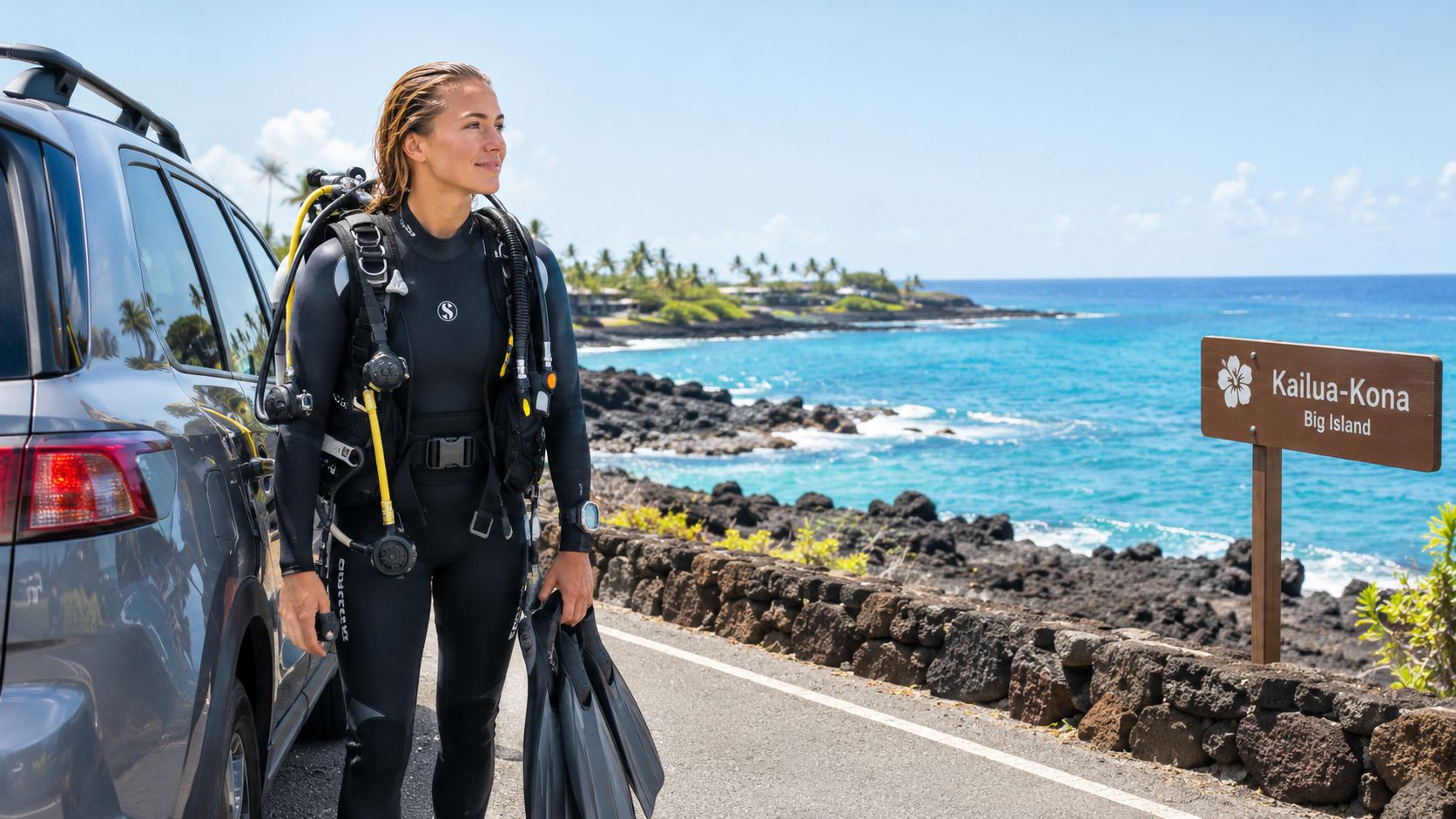
You leave the airport and follow the western coast, with black lava shoreline on one side and the broad Pacific on the other. The drive is short enough to keep the first dive feeling close, yet the area already tells you that Kona isn't a conventional reef destination. Volcanic rock, steep underwater contours, and a leeward coastline shape the experience before you ever assemble a regulator.
Kailua-Kona became the Big Island's marine-tourism hub partly because visitors could reach the western coast efficiently. A Hawaii County record using Hawaii Visitors and Convention Bureau data reported more than 1.2 million visitors to the Big Island in 1997, with over 70% arriving or departing through Kona International Airport. That historical concentration helped place lodging, boat operations, scuba instruction, snorkeling, and other ocean activities along the Kona corridor. The figures describe a past tourism milestone, not current arrivals, but they explain why the area developed into the island's practical base for diving. The Hawaii County historical record provides that context.
Why the leeward coast matters
Kona's position on the island's leeward side generally reduces the direct exposure found on windward coasts. Few river outlets and limited coastal sand input mean less sediment is available for resuspension, which helps support the coast's reputation for clear water. Independent diving references commonly describe visibility exceeding 100 feet, or about 30 meters, although the exact conditions change with wind, swell, current, and site exposure. This overview of Kona diving conditions explains how the coast's geographic setting contributes to favorable visibility.
Clear water doesn't mean still water. A diver can see a long way and still need to manage a current, a slow descent, or a buddy who drifts outside the planned position. That combination is one of Kona's defining lessons. The environment often gives you excellent visual information, but it still demands disciplined buoyancy, navigation, and gas management.
Instructor's rule: Treat visibility as an advantage, not a safety plan. Your safety plan should account for movement, exposure, and the possibility that conditions will differ from the previous dive.
The result is a destination that works for a broad range of divers without being simplistic. New divers can build confidence on guided reef dives, while experienced divers can seek lava formations, open-water night encounters, and longer-range sites. What makes Kona exceptional is not a promise of identical conditions every day. It's the combination of access, underwater variety, and a coast that supports serious diving when divers respect its changing conditions.
What to Expect on a Kona Dive Trip
A good Kona dive day starts before you reach the harbor. Read the operator's confirmation carefully, verify meeting instructions, and arrive with enough time to handle parking, equipment setup, and paperwork without rushing. The exact itinerary varies, but a typical two-tank morning includes a boat briefing, a first reef dive, a surface interval, and a second dive before returning to shore.
Before leaving the dock
Eat a familiar, moderate meal rather than arriving dehydrated or overly full. Pack a swimsuit, a light warm layer, reef-safe sun protection, a towel, water, certification documentation if requested, and any personal medication you already know works for you. Bring a camera only if you can manage it without sacrificing buoyancy or awareness. A camera is a poor trade if it causes you to miss a descent signal, lose contact with your buddy, or kick the reef.
Operators commonly provide tanks, weights, cylinders, and standard rental equipment when selected during booking. Confirm the details instead of assuming a mask, computer, exposure protection, lights, or nitrox are included. Divers using their own equipment should check hoses, batteries, computer settings, and surface signaling equipment before boarding.
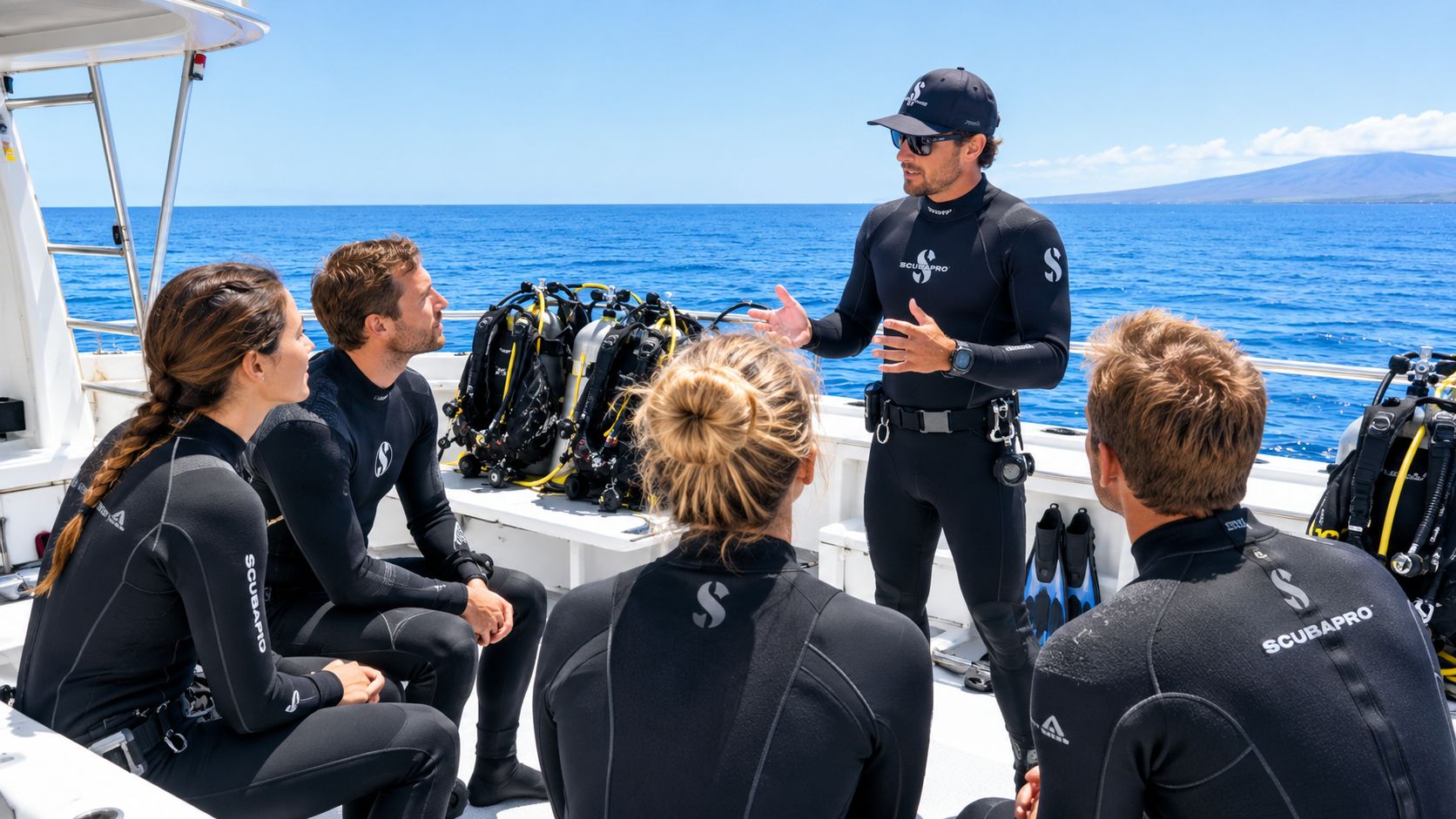
The briefing should cover the site, entry and exit method, depth limits, current expectations, buddy procedures, emergency equipment, and the boat's recall signal. Listen for the site-specific details. A generic briefing doesn't tell you how the crew expects you to respond if visibility falls, a current separates the group, or the boat changes the plan.
During the dives
Use the descent to establish control. Check your buoyancy, locate your buddy, and confirm that your equipment is behaving normally before you move away from the boat. Kona's visibility can make a site feel larger than it is, so agree on a maximum separation and don't rely on being able to spot your buddy from a distance.
The surface interval is more than a snack break. Drink water, review your gas use, and tell the guide about any unusual fatigue, ear discomfort, equipment concern, or anxiety. A diver who speaks up early gives the crew more options than one who waits until the second descent.
Divers planning boat trips should also account for the ride itself. The ocean may be calm near the harbor and more active at an exposed site. If you need practical preparation for boat comfort, review this Kona dive-day guidance for managing motion concerns. Choose any medication or preventative approach well before entering the water, and follow its label and medical guidance.
After surfacing
Complete a deliberate post-dive check. Confirm that your computer is tracking the dive, secure loose equipment, and report anything that could affect the next group. Don't schedule a flight or high-altitude activity immediately after diving. Your operator should provide specific post-dive altitude guidance based on the itinerary and your computer profile.
Seasonal planning is useful, but conditions still control the day. Summer is generally associated with a calmer manta experience, while Kona's manta encounters operate year-round and animal numbers and water movement can vary. Build flexibility into your itinerary rather than booking every dive back-to-back. One open block gives the crew room to respond to weather, maintenance, or a wildlife encounter that requires a changed departure plan.
Signature Experiences and Manta Rays and Blackwater Diving
Kona's manta night dive and blackwater dive both happen after sunset, but they demand different mindsets. The manta experience is structured around a reef and a feeding aggregation. Blackwater diving places you in the open water column, where the attraction is discovery rather than a predictable animal route.
The manta encounter
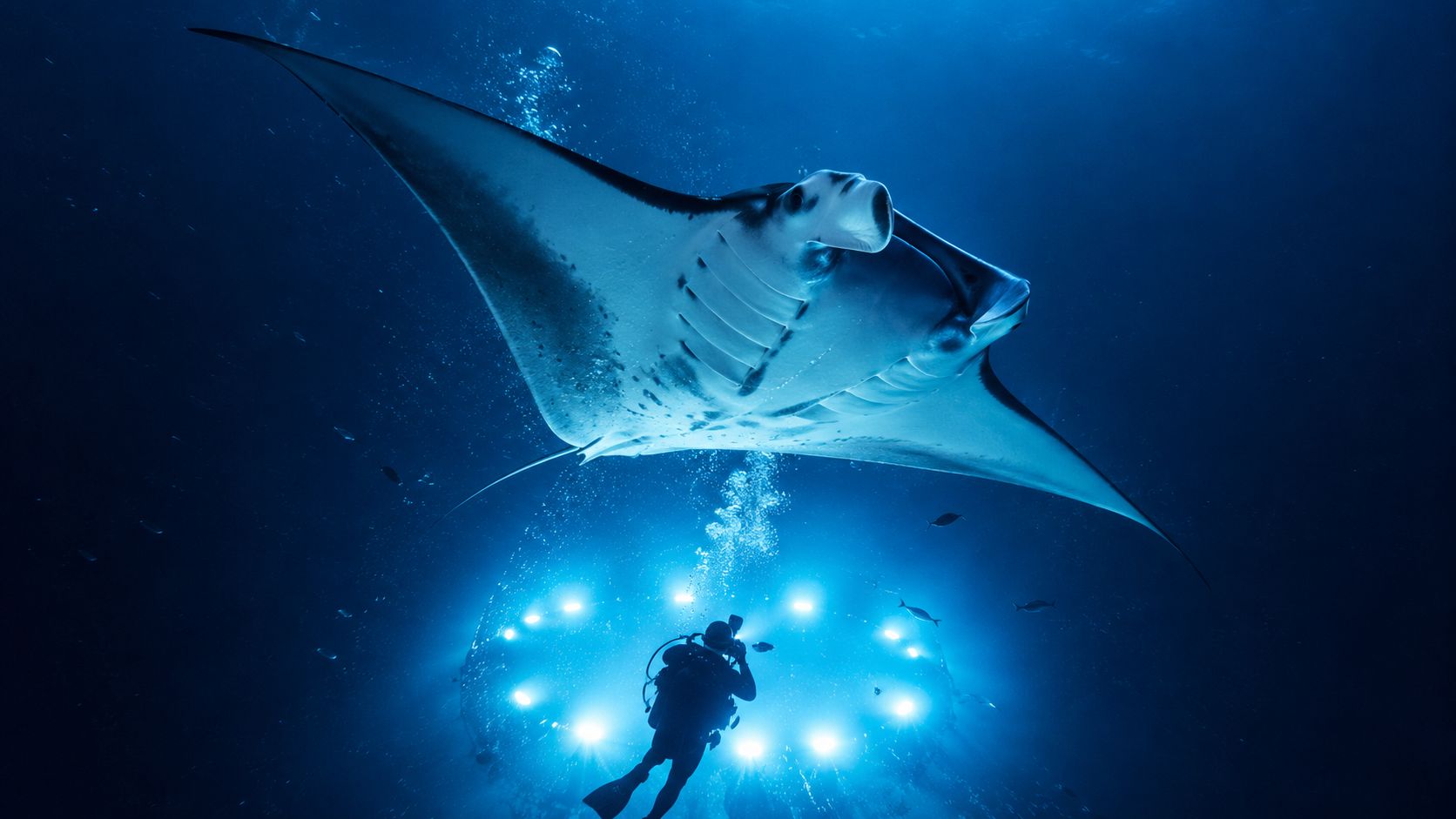
Artificial lights attract plankton into the illuminated water. Reef manta rays then maneuver through that concentrated food source, often passing above divers who sit low on the bottom and direct their lights upward. Individual mantas can reach wingspans of approximately 18 feet, and the in-water viewing period is typically about 45 minutes. This guide to Kona manta tours describes the feeding mechanism and viewing format.
A responsible manta dive doesn't turn the animal into a prop. Divers remain low, keep the central water column open, control their bubbles, and avoid touching, chasing, grabbing, or riding the mantas. Direct contact can remove the animals' protective mucus layer, while unstable positioning creates collision and coral-contact risks. The wildlife-interaction guidance for West Hawaii sets out these practical behaviors.
Garden Eel Cove is the superior choice for this type of tour because its protected location provides a better viewing area and stronger surrounding reef environment. The location still isn't a guarantee. Mantas are wild animals, and a responsible crew should be willing to manage limited visibility, crowding, or an absent aggregation rather than pressure divers to pursue animals.
For a dedicated manta itinerary, review the Kona Honu Divers manta dive and snorkel tour. Divers who want the full details of the night format can also read about Kona's manta ray night snorkeling experience.
The blackwater experience
Blackwater diving follows diel vertical migration, the nightly movement of deep-ocean organisms toward shallower water after sunset and their return toward depth during daylight. Kona offers unusually deep conditions for this activity, with divers working over water approximately 6,000 feet deep. The dive leaves the reef behind and focuses on the open water column, where planktonic animals, larvae, gelatinous organisms, and other deep-sea life can appear in the beam of a light. This background on Kona blackwater diving explains the setting and scientific importance of the experience.
The attraction is uncertainty. You aren't waiting for a known manta to complete a familiar pass. You're watching the dark water for a small, translucent, or unfamiliar animal that may be present only briefly. Kona-based blackwater work has also supported larval-fish research, including the use of DNA barcoding to help identify species and document development.
| Experience | Best Season | Dive Depth | Typical Duration | Wildlife Focus |
|---|---|---|---|---|
| Manta night dive | Summer is generally described as the strongest season, although encounters occur year-round | Reef-bottom viewing depth set by the site and operator | About 45 minutes in the water | Reef manta rays feeding on plankton |
| Blackwater dive | Conditions depend on the operator's weather and sea-state assessment | Open ocean over approximately 6,000 feet of water | Set by the operator's briefing and safety plan | Plankton, larvae, gelatinous organisms, and deep-sea migrants |
Choose the manta dive if you want a focused wildlife encounter with a clear viewing structure. Choose blackwater if you prefer a technically more unusual night dive and can stay calm when the subject may be tiny, transient, or completely different from what you expected. A dedicated Kona blackwater night dive is a better fit for divers who value exploration over guaranteed visual drama.
Diving Conditions and Safety Considerations
Kona's most important operational truth is simple: excellent visibility can coexist with meaningful current. A diver who sees the reef clearly may still need to adjust the descent, shorten the route, protect reserve gas, or end the dive earlier than planned. Conditions also change across exposed sites, wind shifts, swell, and local current patterns.
Read the water before entering
Ask the crew what changed since the previous departure. Don't settle for a general statement that the ocean is calm. You want to know whether the site is exposed, whether a current is expected at depth, how the descent will be controlled, and what the crew's turnaround or abort criteria are.
Hawaii ocean-safety guidance warns that currents can be difficult to see and may occur without posted warnings. The state's strong-current guidance supports a conservative approach, while NOAA provides short-range model information for water levels, currents, and wind. A strong operator converts that information into a clear decision for the specific site rather than treating a forecast as a guarantee.
Use a conservative dive plan
Your plan should include a controlled descent, a bottom-time limit, reserve gas appropriate to the site's exposure, and a surface signaling strategy. Maintain a stable buddy position and keep your ascent route clear. If you lose the group, follow the pre-dive lost-buddy procedure instead of spending your reserve gas searching in the wrong direction.
Training matters most when the environment stops matching the brochure. Open Water certification may be appropriate for guided introductory reef diving, but advanced training becomes valuable for deeper profiles, night work, current management, low-visibility response, and long-range sites. Experienced divers should still avoid treating familiarity with another destination as proof that every Kona site will feel easy.
A useful test: If the operator can't explain what happens when the site is crowded, the current increases, or the animals don't appear, you haven't received enough information to judge the plan.
Cancellation is sometimes the correct outcome. Hawaii County safety assessments identify adverse-condition cancellation, participant skill screening, and adequate flotation as important drowning-prevention measures for in-water operations. That may disappoint a traveler with a fixed itinerary, but it demonstrates that the crew values a controlled experience over completing every departure.
How to Choose the Right Dive Operator
The cheapest listing and the largest review count don't tell you enough. Choose the operator by asking how its decisions affect your specific dive, especially if you're bringing a family member, carrying camera equipment, or planning a night or advanced trip.
Start with the questions that matter
Ask these before paying a deposit:
- Who leads the dive: Find out whether guides have local site knowledge and how they supervise divers with different experience levels.
- What does the boat provide: Confirm rental equipment, exposure protection, lights, nitrox availability, food, water, shade, and emergency equipment.
- How does the crew handle change: Ask what happens if the site becomes unsuitable, visibility drops, the group is too crowded, or wildlife doesn't appear.
- How are divers grouped: A mixed group can work well, but only when the guide explains how different certification levels and air consumption are managed.
- What protects the reef: Ask whether the boat uses moorings where available, how guides prevent coral contact, and whether the briefing covers wildlife distance and equipment control.
The answers reveal more than polished marketing language. A reputable crew should be comfortable explaining limits, prerequisites, weather decisions, and what isn't included in the advertised price.
Read reviews for patterns
Look for repeated comments about briefings, guide attention, equipment condition, boat handling, and how the company responded when plans changed. One complaint about a canceled trip doesn't automatically indicate poor service. A pattern of unclear meeting instructions, rushed briefings, or pressure to enter conditions that concern you deserves more weight.
Marketplace listings can help compare dates, but they may obscure the actual operator and the details of the boat or crew. Booking direct often makes it easier to verify certification requirements, cancellation policies, equipment inclusions, and the exact itinerary. Use this Kona diving company resource as a starting point for comparing the practical features of local operations, not as a substitute for asking direct questions.
Match the operator to the diver
A small-group operation may suit a photographer who needs room and time to frame a subject. A larger schedule may suit a traveler who needs multiple departure choices. A dedicated scuba boat can be useful when every passenger is diving, while a mixed scuba and snorkel itinerary may make more sense for a family with different interests.
Environmental performance also depends on the diver. Independent Hawai'i Marine Biology Institute research found that scuba divers caused greater impact per dive than snorkelers, while boat-based activities generally caused less impact per dive than shore-based activities. The same research identified individual diver behavior as a major determinant of reef damage. The institute's reef-impact research supports a more useful question than “Is this boat sustainable?” Ask how the operator manages buoyancy, fin technique, equipment placement, group spacing, and anchoring or mooring practices.
Why Choose Kona Honu Divers
A practical reason to consider Kona Honu Divers is the breadth of its Kona program. The company offers two-tank morning reef dives, manta night dives, blackwater diving, certification courses, freediving programs, and premium advanced long-range trips. That range lets divers build an itinerary around their training and goals instead of treating every day as the same reef charter.
The company also provides an early diver discount program and complimentary nitrox for certified divers. Those details matter when planning several dives because they affect the daily routine, gas strategy, and total value of the schedule. Verify current eligibility and booking terms directly, since tour policies can change.
A guided approach to the manta dive
The manta experience depends on positioning more than pursuit. At Garden Eel Cove, the protected location, viewing area, and reef environment support a more controlled observation format. Divers sit low, keep lights aimed upward, secure protruding equipment, and leave room for mantas to maneuver through the plankton-rich water.
That guided structure benefits both wildlife and participants. The crew can correct poor buoyancy before a diver contacts the bottom, manage spacing when the viewing area becomes busy, and explain what to do if conditions change. It also helps photographers resist the common mistake of moving toward an animal for a closer frame.
Equipment and experience should support the plan
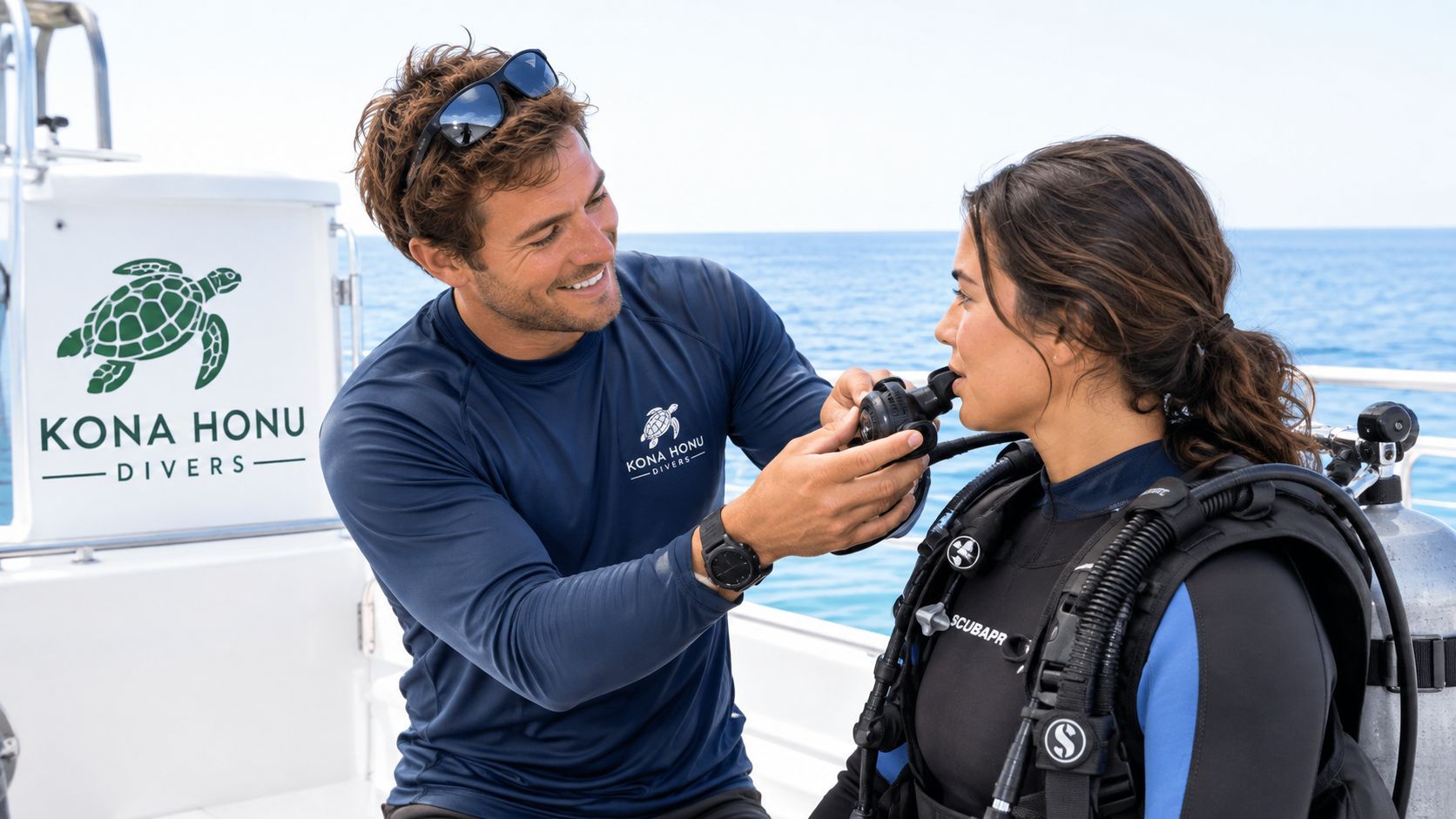
Equipment maintenance is not a background detail. Regulators, buoyancy systems, lights, exposure protection, and boat safety equipment all need consistent attention, particularly when a trip involves night operations or deeper open water. Ask what the crew provides, how rental equipment is fitted, and whether you can test unfamiliar gear before entering the water.
The company describes its crew as serving both novice and advanced divers, with courses ranging from Open Water through Advanced and Rescue Diver training. Experienced divers looking for more demanding sites can review the premium advanced long-range dive option, then confirm prerequisites and current conditions before booking.
A strong review reputation can help establish consistency, but reviews shouldn't replace your own questions. Compare recent comments about safety briefings, guide supervision, equipment, and how the crew handles cancellations or low-visibility conditions. You can review the operator's current offerings and policies through Kona Honu Divers.
Planning Your Kona Diving Adventure
Book the signature night dives early enough to preserve flexibility for weather and recovery, then leave room for a daytime reef trip. Bring certification details, personal essentials, a light layer, water, and equipment you know fits. Be honest about your experience, ask how the crew handles changing conditions, and avoid stacking strenuous activities around your dives. For cost and itinerary planning, review this guide to the expense of scuba diving in Hawaii. With the right operator and a realistic plan, Kona gives Big Island divers a rare combination of accessible reef diving, close wildlife observation, and unusually deep-ocean exploration.
Kona Honu Divers offers guided reef dives, manta ray night dives at Garden Eel Cove, blackwater diving, certification courses, and advanced long-range trips for divers with the appropriate experience. Visit Kona Honu Divers to compare the current options, confirm requirements, and reserve a Kona dive plan that matches your goals.