
Table of Contents
- Control your ascent and your equipment
- Blackwater is a different kind of night dive
- Reef structures reward steady buoyancy
- Prevent seasickness before it builds
- What if no manta rays appear?
- Does Nitrox help experienced divers?
- How far ahead should experienced divers book a premium long-range trip?
Big Island divers can choose from coral reefs, lava formations and specialized night dives, but the best plan starts with conditions, not a wildlife wish list. Across the main Hawaiian Islands, reefs cover approximately 640 square miles and contain about 80 coral species and more than 1,500 reef-fish species, including over 1,250 found nowhere else in the world, according to NOAA's Hawaiʻi coral-reef overview. That distinctive marine life is the draw. Swell, visibility, current and your comfort in the water decide what kind of dive makes sense on a particular day.
For most visitors, a practical mix is a morning reef dive, a manta night dive and, if your training and recent experience fit, a specialty trip. Choose the site and time that match your skills, then leave room for the crew to adjust the plan to sea conditions.
Big Island Dive Experiences at a Glance
| Experience | Skill level | Best time | What you see |
|---|---|---|---|
| 2-Tank Morning Dive | Any certified diver | Morning, year-round | Coral gardens, lava tubes, swim-throughs, green sea turtles, moray eels |
| Manta Night Dive | Open Water Diver and up | After dark, year-round | Manta rays feeding under dive lights |
| Blackwater Night Dive | Advanced Open Water and comfortable with buoyancy | After dark, year-round | Plankton and drifting animals in open water |
| Lava Tube and Swim-Through Reef Dives | Open Water Diver and up | Calm morning windows | Caverns, arches and reef fish |
| Premium Advanced 2-Tank Long-Range | Experienced divers with logged dives | Calm-weather days | Remote sites away from the main Kona coast |
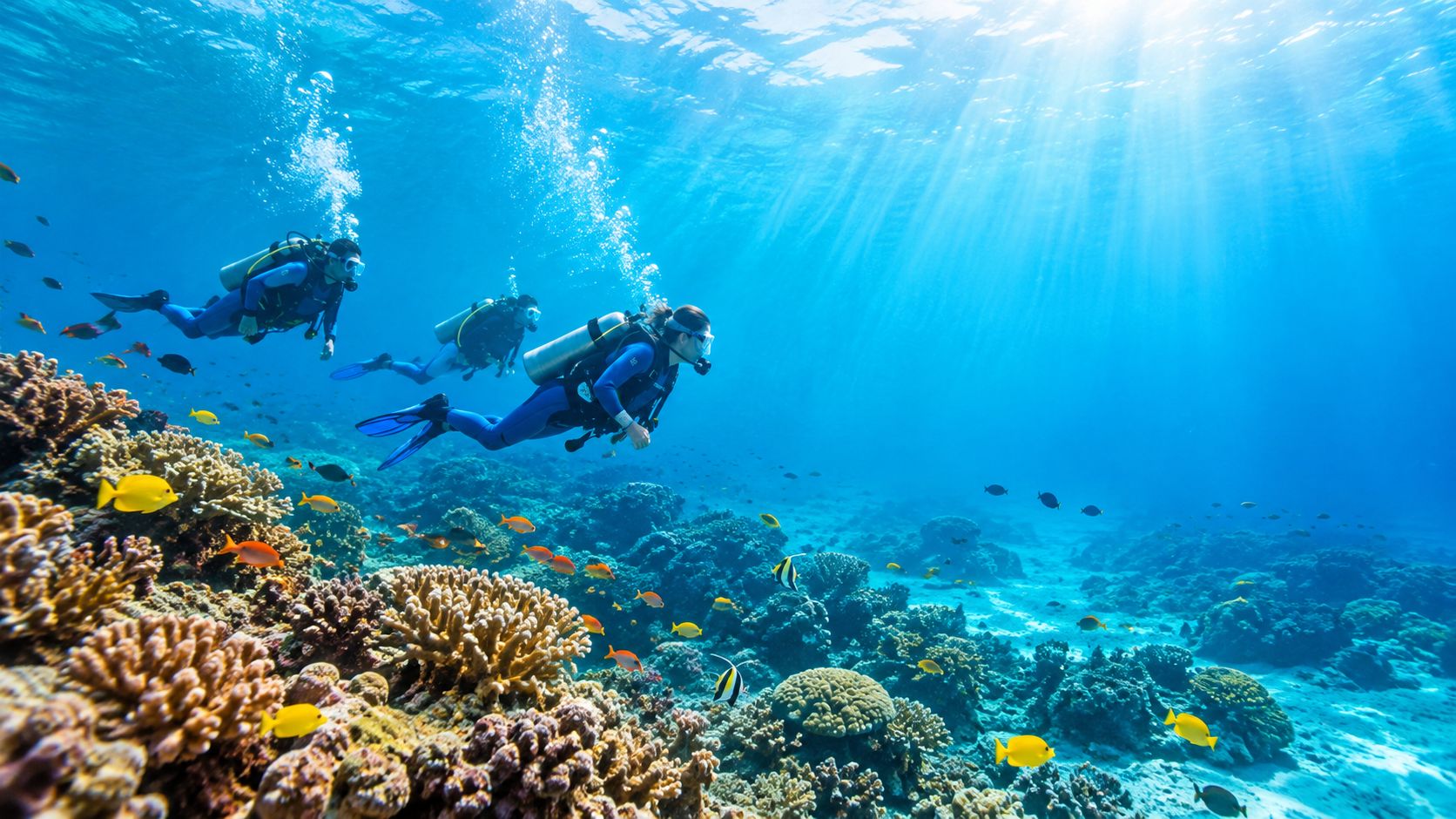
The Big Island's volcanic coastline creates extensive nearshore reefs and steep underwater drop-offs, so a short boat ride can lead to very different profiles. The table gives a starting point, not a promise about a specific site's depth or conditions. Depth and difficulty shift with the site, swell and current, and the boat crew should make the final call.
The reef is a living habitat, not a backdrop. NOAA rates the Main Hawaiian Islands' overall coral-reef ecosystem at 71%, categorized as “fair,” with some indicators meeting reference conditions. Maintain neutral buoyancy, keep fins clear of coral, and don't touch or pursue wildlife.
Browse the full range of Big Island scuba tours to compare reef, night and advanced options. Then make the decision in two steps: match your certification and recent experience to the skill level, and choose the time of day that fits your comfort with darkness and currents.
Matching Your Certification to the Right Dives
Your certification card is the starting point, not the whole story. Most regular charters require at least Open Water Diver certification from a recognized agency such as PADI, SSI or NAUI. Recent practice, buoyancy and comfort in the water matter when the crew matches you to a site. If you're considering training or need to refresh, review the Big Island scuba certification options.
Open Water Diver gives you access to regular morning reef dives, guided manta night dives and many lava-tube reef dives. Tell the crew when you last dived and what skills feel rusty, rather than relying on the card alone.
Advanced Open Water training is a useful foundation for more demanding profiles, including blackwater dives when the operator's requirements are met. It also develops navigation and comfort in a wider range of dive situations. A qualification doesn't automatically make every night or deep dive a good fit.
Nitrox can support longer allowable bottom times on repetitive recreational profiles, within the limits of your training and dive plan. It doesn't improve buoyancy, add a safety margin by itself, or make cold, fatigue and poor conditions disappear.
Deep training matters for deeper reef and drop-off profiles. Greater depth changes gas use and narrows the time available within no-decompression limits, so plan conservatively and follow the operator's site requirements.
Logged experience is important for a premium long-range trip to remote sites. Operators can use your logbook and recent dive history to judge whether the conditions and profile match your ability. Compare the premium advanced long-range dive trip with your actual experience, not just the name of your certification.
Control your ascent and your equipment
Air trapped in your body expands as you rise, which is why a controlled ascent and steady breathing matter. The University of Hawaiʻi recommends an ascent rate of 0.3 to 1 meter per second and explains that dive tables help divers plan depth and time to avoid decompression problems in its guide to diving technology. Never hold your breath while scuba diving.
Bring your certification card and a logbook with recent dives. Operators need those details to make sensible site and profile decisions. For night dives, also plan for the required surface marker and flag, covered in the packing checklist below.
Seasons, Sea Conditions and Wildlife by Month
Wildlife can be predictable while visibility, current and comfort are not. Kona's manta rays are individually recognizable by the unique markings on their undersides, and a local record described 258 manta rays observed along the Kona Coast. The Manta Identification Project began cataloging the animals in 1991, according to this Hawaiʻi Tribune-Herald report on Kona's manta population. That history helps explain why manta dives are established here, but it can't guarantee a sighting or calm water.
The Kona and Hilo coasts aren't interchangeable. NOAA's reef resilience overview highlights differences in resilience between the coasts, another reason to plan around the conditions at your actual site rather than treating the island as one uniform dive environment.
| Season | Sea and visibility | Water temperature | Wildlife | Best dive plan |
|---|---|---|---|---|
| Summer, May to September | Calmest leeward water, usually good visibility | Warmest seasonal conditions | Turtles and manta nights year-round | First open-water dives and long-range trips |
| Fall, October to November | Transitional swells, variable visibility | Transitional seasonal conditions | Reef fish and manta nights | Sheltered sites and night dives |
| Winter, December to March | Larger north and west swells, choppier surface | Cooler seasonal conditions | Humpback whales offshore, manta nights | Sheltered Kona-coast sites and manta nights, with a backup plan |
| Spring, April to May | Seas settling, visibility improving | Seasonal conditions warming | Turtles and reef fish | Advanced trips in calm windows |
Seasonal patterns help you choose a starting plan, but the forecast should decide the day's details. Sheltered Kona-coast sites are a more sensible choice for a first open-water dive; exposed sites can bring surge that demands better control and comfort. Check the marine forecast 24 to 48 hours ahead and keep an alternative for the same evening if a night dive becomes unsuitable.
For a month-by-month planning overview, see the guide to the best months for scuba diving in Hawaiʻi. Build flexibility into the itinerary, especially if the manta dive is the only activity you consider essential.
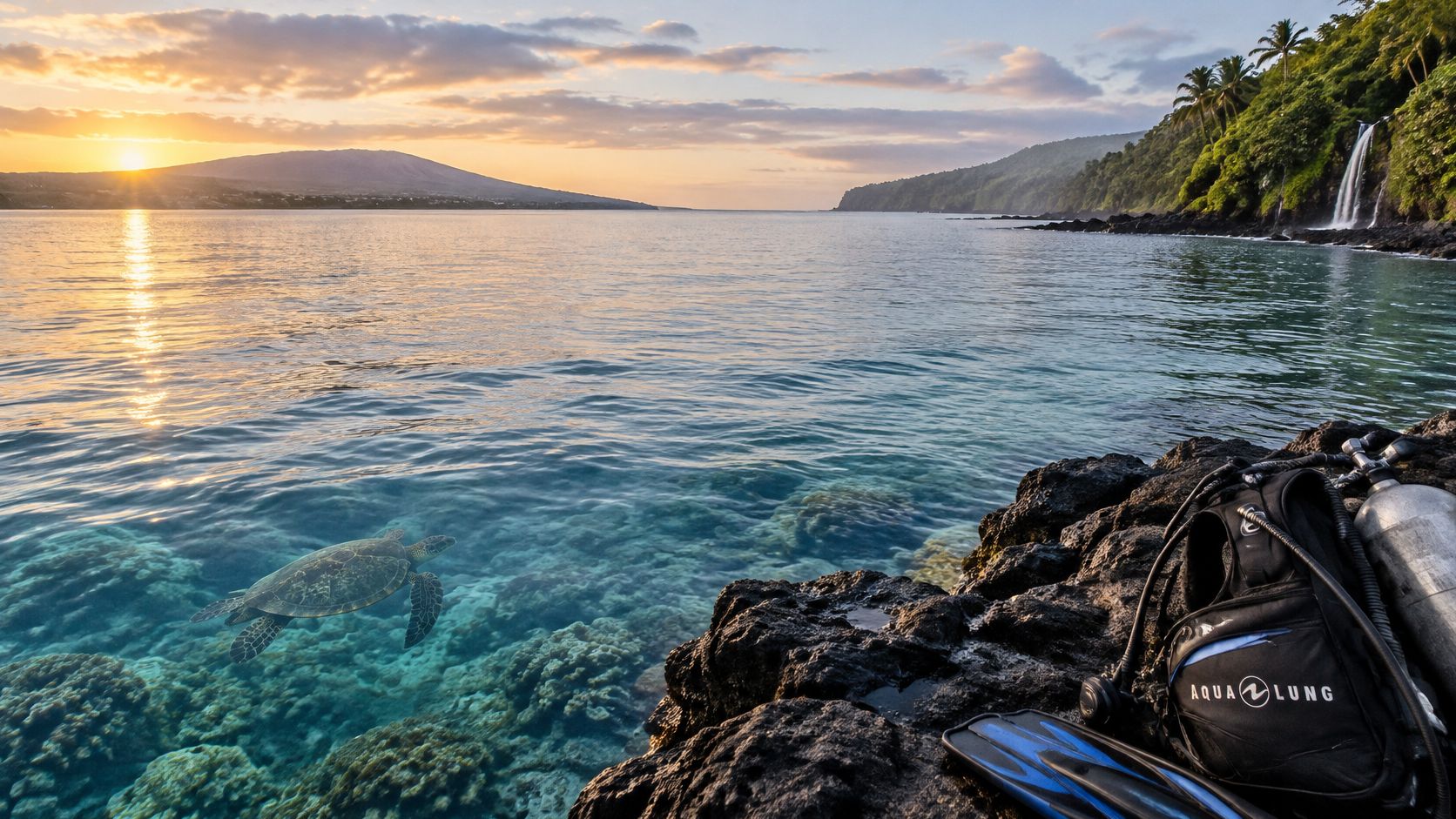
Manta, Blackwater, Lava Tube and Reef Sites Worth Diving
For most manta divers, Garden Eel Cove is the stronger choice. Its protected location offers a better viewing area and better reefs, so the encounter combines the manta experience with a more appealing setting. Makako Bay, also called Garden Eel Cove, and Keauhou Bay, also called Manta Village, are the two principal nighttime manta-viewing sites named in a Hawaiʻi County manta-viewing safety assessment. Legislative testimony cited in that assessment reported mantas on 80% of dives at Garden Eel Cove. That is a historical encounter figure, not a guarantee for your trip.
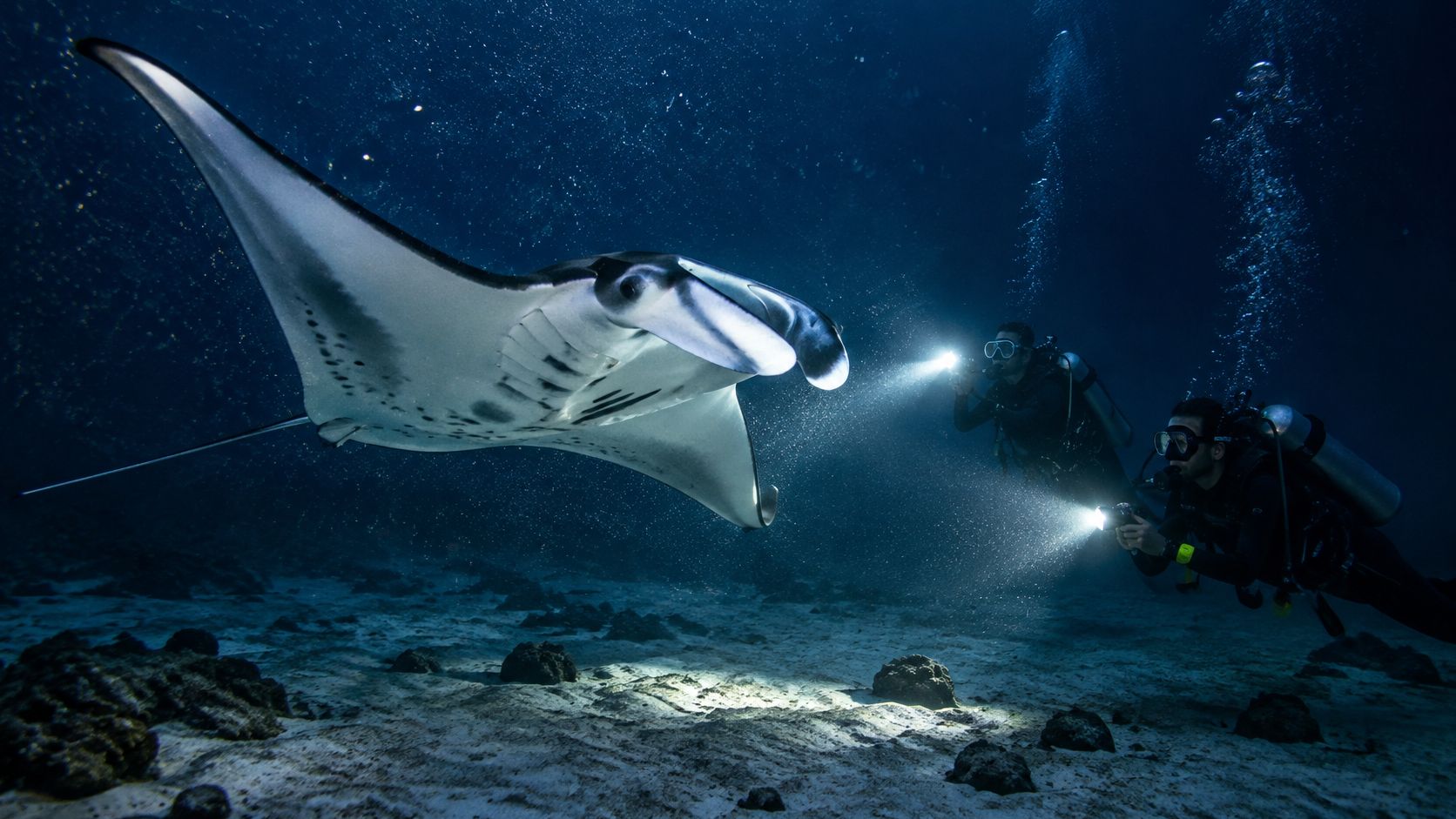
Kona's manta encounters involve a repeatedly observed regional population, rather than only occasional visits from passing animals. The Manta Identification Project began cataloging Kona mantas in 1991; one project record reported more than 211 identified individuals, and a later local database grew to 258. Researchers and local catalogers identify individuals by the distinctive markings on their undersides. Treat that long record as a reason to protect the animals, not as a promise they'll appear on cue.
Crowding is a real trade-off. Reporting cited in a Big Island Now story about manta tourism and management says manta tourism may attract about 80,000 people annually. As of April 2025, no new Commercial Use Permits were being issued while environmental-review and court issues remained unresolved, and existing operators could not increase capacity. Choose a crew that briefs guests clearly, holds people to viewing boundaries and doesn't encourage chasing, touching or blocking a ray. Compare the Kona manta dive tour with your group's comfort and experience.
Blackwater is a different kind of night dive
A blackwater dive takes place in open water after dark. Dive lights reveal plankton and drifting animals, but you're not following a reef or sitting at a manta viewing site. It suits divers who are comfortable managing buoyancy in darkness and meeting the operator's experience requirements. See the blackwater night dive details before choosing it.
Reef structures reward steady buoyancy
Morning reef dives offer a contrast: coral gardens, lava tubes, arches and swim-throughs, with green sea turtles, moray eels and schools of reef fish. Keep your fins up and your buoyancy controlled around confined spaces. Surge can make some reef sites more demanding on bigger days, so a calm morning is the time to choose a swim-through rather than force the plan in rough conditions.
Packing List and Health Limits Before You Dive
Start with the legal item. Hawaiʻi requires a diver's flag at least 12 by 12 inches in navigable state waters, and the flag must be clearly illuminated for dives between sunset and sunrise. In ocean waters, divers generally may not surface more than 100 feet from the flag except in an emergency. The Hawaiʻi Division of Boating and Ocean Recreation's diving rules apply to individuals and groups, so confirm how the boat handles flag placement and night lighting.
Pack for function, not for an ideal forecast:
- Mask, fins and snorkel: Bring gear that fits and that you know how to use.
- Exposure protection: A rash guard or 3mm wetsuit suits many divers; bring what keeps you comfortable in the water and on the boat.
- Reef-safe sunscreen: Apply it before boarding so you're not handling a bottle on deck.
- Timing and certification: Carry a dive computer or watch with a timer, your certification card and a logbook.
- Night equipment: Pack a dive light and a surface marker, and confirm the required setup with the crew.
Prevent seasickness before it builds
If you're prone to seasickness, take a preventative before boarding and follow the product label. Options include the Ship-EEZ Seasickness Patch, Dramamine pills, Bonine pills, Sea Band wristbands, and ginger chews. Sea Band is a cheaper generic option described as having better ratings. If you use medication or have a health condition, check with a healthcare professional about what's appropriate. For more practical planning, use this guide to avoiding seasickness.
Equalize your ears early and often during descent; don't wait for discomfort to become pain. Skip the dive if you have a cold that prevents equalizing, and tell the crew if pressure won't clear. For flying after diving, follow current guidance from the Divers Alert Network, and allow a longer interval after decompression diving than after recreational no-decompression dives.
How to Choose a Big Island Dive Operator
| Criterion | What to ask or check | Why it matters |
|---|---|---|
| Certification check | Do they verify your card and logbook? | Site matching depends on your experience |
| Group size | What's the maximum number of divers per guide? | Smaller groups mean more coaching and attention |
| Gear setup | Who sets up and services rental gear? | Fewer mistakes at the surface and better equipment |
| Night-dive compliance | How do they handle site rules and surface markers? | Protects the manta population and meets state rules |
| Trip variety | Are reef, night, lava-tube and advanced options available? | Lets you progress over several days |
| Weather policy | What are the rebooking rules when swell cancels a dive? | Helps you avoid losing a trip to conditions |
| Reputation | What do recent reviews and local recognition show? | Offers a view beyond one good day |
Kona Honu Divers focuses on small groups and personal attention from the moment divers step aboard. Its crew handles gear setup and checks each diver's certification and logbook before choosing sites that fit their skill set. The company says it was voted best dive operator in Kona. Treat each of those points as something to verify against your needs, not as a guarantee that every trip or site will suit you.
For any operator, ask the same three things: How many divers are with each guide? Who sets up and services the gear? What happens if swell cancels the trip? Compare the answers, and look at the guide to choosing a Kona dive company before you book.
A larger operator with more departures may suit divers who put schedule flexibility first. Ask about guide-to-diver ratio either way, then weigh that answer against the attention and trip variety you want.
Book Your Dives and Plan the Itinerary
Reserve the manta and blackwater dives early if those are central to your trip. Night outings have limited capacity, and swell can disrupt plans, so don't leave the only suitable evening until the last minute. Use the online calendar, read the weather and cancellation policy before paying, and find out how a canceled night dive is rebooked.
Compare the total cost per dive, not just the headline price. Check whether each quote includes tanks, weights, rental gear, Nitrox, boat fees and gratuity, then compare the full package against your actual itinerary. Kona Honu Divers offers early diver discount packages and multi-day packages, which may help if you're booking more than one day.
Use a sequence that leaves room for rest and changing conditions. A night dive followed by a demanding morning can make the next day less enjoyable, so don't stack every specialty dive without a recovery window.
| Trip length | Morning dives | Night dives | Buffer or advanced day |
|---|---|---|---|
| 2 days, certified beginners | 2-tank morning reef dive | Manta night dive | Lava-tube and reef day as backup |
| 3 days, active divers | 2-tank morning reef dives | Manta night dive, then blackwater on a second night | Premium advanced long-range trip if conditions allow |
| 5 days, experienced divers | Reef and lava-tube dives on two mornings | Manta and blackwater nights with a rest night | Premium advanced long-range trip as a weather-flex day |
A rest night after blackwater and a buffer day for weather are what keep a tightly planned trip workable. If the forecast changes, keep the order flexible rather than trying to force a particular site.
Common Questions From Recreational and Experienced Divers
What if no manta rays appear?
Treat the manta dive as a wildlife encounter, not a guaranteed performance. Don't chase an animal or leave your assigned position to improve the view. If no mantas appear, a morning reef or lava-tube dive is a realistic alternative, and a flexible schedule gives you more room to adjust.
Does Nitrox help experienced divers?
It can help with repetitive or deeper recreational profiles when the diver is trained and the dive plan supports it. It doesn't compensate for poor buoyancy, cold stress, fatigue or unfavorable sea conditions. Choose the gas for the profile, not as a shortcut around skills or judgment.
How far ahead should experienced divers book a premium long-range trip?
Prioritize flexible dates and a backup day. Calm-weather windows are the practical constraint, so a schedule with room to move gives you a better chance of making the trip when conditions suit the site. Review the premium advanced 2-tank trip and ask how a weather cancellation is rebooked before you pay.
Kona Honu Divers offers morning reef dives, manta and blackwater nights, and advanced long-range trips for divers with suitable experience. Match your recent dive history to the conditions and trip you want, then visit Kona Honu Divers to compare options and plan your Big Island dives.