
If you're planning a dive trip to Hawaii, you're in for some of the best underwater experiences on the planet. For divers who just want the short answer to, "Which island is the best for scuba?"—it's the Big Island, hands down. Specifically, the Kona Coast is consistently ranked as the top spot. It just has that perfect mix of calm, clear water and incredible marine life that puts it a step above the rest.
Comparing the Top Hawaiian Islands for Diving
Picking the right island really comes down to what you're looking for in a dive. We'll break down the key factors that make a destination great—from the biodiversity and water clarity to unique underwater attractions and how well each spot caters to different skill levels. This will give you a solid foundation for comparing the major islands.
The Kona coast of the Big Island has earned its reputation as Hawaii’s premier dive destination. The proof is in the numbers: the area supports over 1.5 million scuba dives every year, with more than 215 licensed dive shops ready to get you in the water.
You can dive here year-round, too. Summer brings beautifully calm seas and warm water, typically between 78-82°F. But diving in the winter is magical in its own way—you can actually hear the songs of humpback whales echoing through the water. It’s an unforgettable experience. You can get a deeper look into Big Island scuba diving on konahonudivers.com.
To help you get a quick lay of the land, here’s a snapshot of what each of the main islands brings to the table for divers.
Hawaiian Islands Scuba Diving At a Glance
This table offers a quick comparison of the top Hawaiian islands for scuba diving, highlighting what makes each one unique so you can find the perfect fit for your trip.
| Island | Best For | Key Dive Attraction | Visibility | Skill Level |
|---|---|---|---|---|
| Big Island (Kona) | Overall Experience & Unique Dives | Manta Ray Night Dive | Excellent (80-100+ ft) | All Levels |
| Maui | Vibrant Reefs & Unique Topography | Molokini Crater | Very Good (70-100 ft) | All Levels |
| Oahu | Wreck Diving & Accessibility | YO-257 & Sea Tiger Wrecks | Good (50-80 ft) | Intermediate to Advanced |
| Kauai | Lava Tubes & Turtle Sightings | Sheraton Caverns | Variable (40-70 ft) | Intermediate to Advanced |
This quick overview makes it easy to see why Kona consistently gets top marks from divers around the world. Now, let’s get ready to explore what lies beneath the waves and find the perfect underwater paradise for your next adventure.
Why Kona on the Big Island Is a Diver’s Paradise
Ask any seasoned diver, "Where's the best place to dive in Hawaii?" and you'll hear the same answer again and again: the Kona Coast on the Big Island. This isn't just local pride talking. Kona has earned its world-class reputation thanks to a perfect storm of geography, geology, and marine life that puts it in a league of its own.
The magic really starts with the island’s geography. The sheer size of the Mauna Loa and Hualalai volcanoes acts as a massive natural barrier, shielding the western coast from the churning trade winds that batter the other islands. This creates a lee side with exceptionally calm, clear water, where visibility often pushes past an incredible 100 feet. For divers, that means predictable, serene conditions day in and day out—a perfect window into the world below.
Volcanic Topography Creates a Thriving Ecosystem
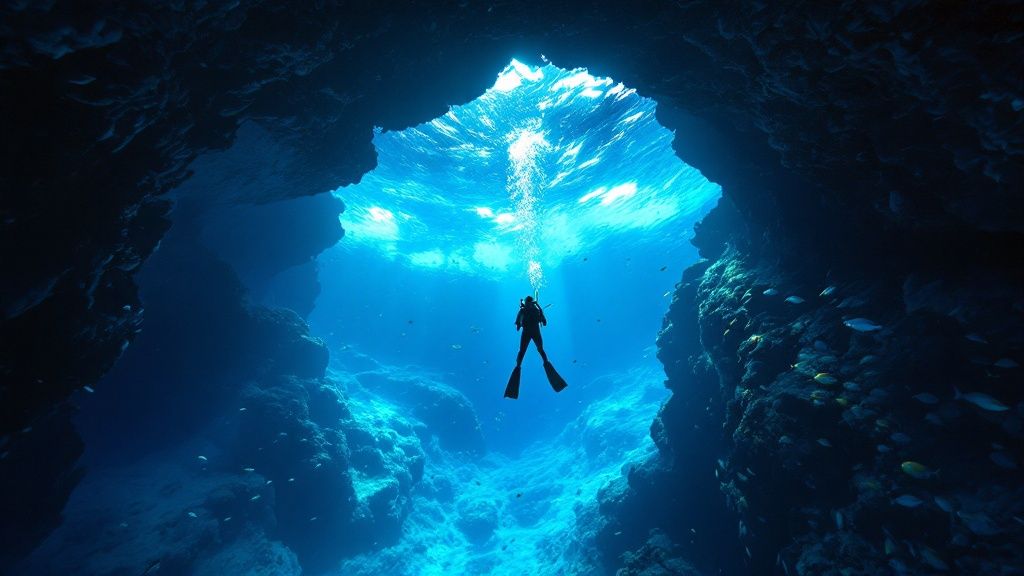
Kona’s underwater world is a direct reflection of its fiery, volcanic past. Millennia of lava flows have sculpted a dramatic seascape of lava tubes, sweeping arches, and intricate swim-throughs. This isn’t just for show; this complex, rugged terrain is the ideal habitat for an unbelievable density of marine animals.
Kona's volcanic underwater structures create a vast network of shelters and cleaning stations, attracting an incredible concentration of marine life, from tiny endemic fish to large pelagic visitors.
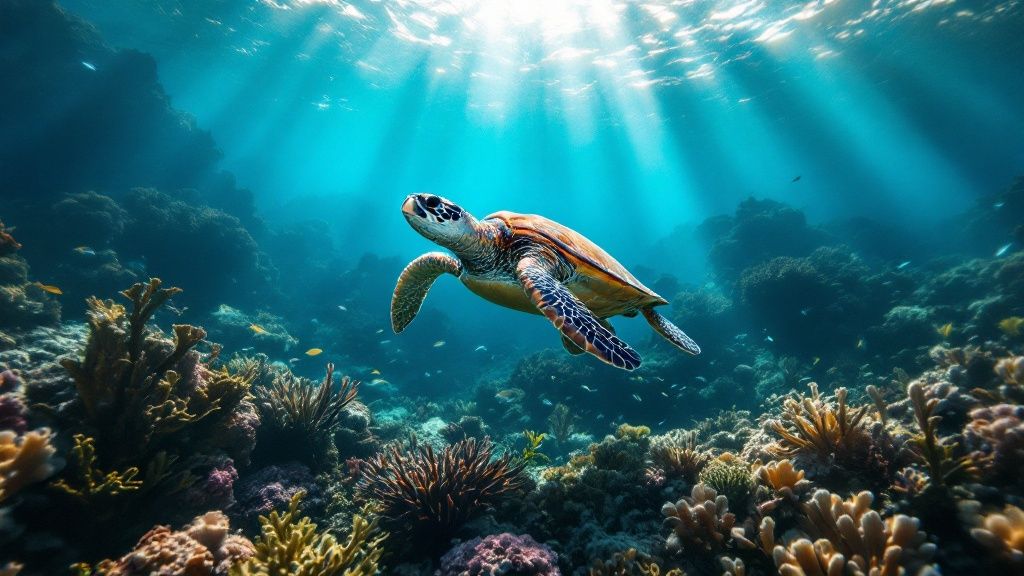
It’s precisely these formations that make Kona’s reefs so vibrant. You’ll find Hawaiian green sea turtles (honu) resting comfortably on old lava flows, schools of bright butterflyfish swarming the reef, and secretive moray eels poking their heads out from countless crevices. To really get a feel for what makes this island so special, take a look at our complete guide on diving the Big Island.
Home to Unforgettable, World-Famous Dives
What truly cements Kona's legendary status are its signature dives—experiences so unique they are consistently ranked among the best on the planet.
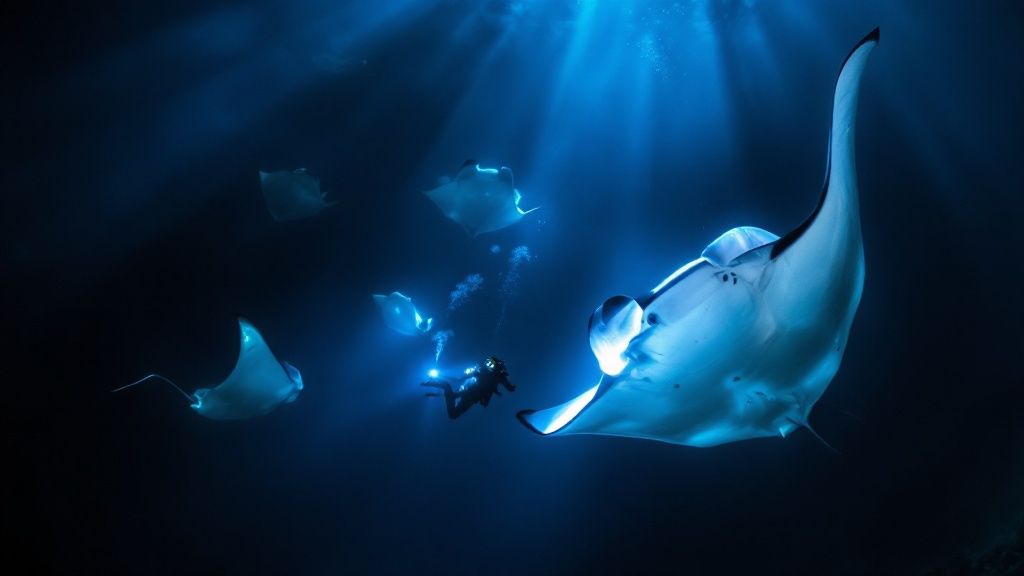
- The Manta Ray Night Dive: This is the one you’ve heard about, and it's every bit as incredible as it sounds. You descend into shallow, illuminated water and simply watch as giant, graceful manta rays swoop and barrel roll just inches away, feeding on plankton. It's a surreal, beautiful ballet you won’t find anywhere else with such reliability.
- The Kona Blackwater Dive: For those with a taste for adventure, this is an experience like no other. You drift miles offshore, suspended over thousands of feet of water, and witness the planet's largest vertical migration. Strange and bioluminescent creatures rise from the abyss, and you never know what you'll see.
These iconic dives are a huge part of why the global diving community holds Kona in such high regard. In fact, a survey by Scuba Diving magazine highlighted Hawai'i as a top global destination, with readers specifically recognizing Big Island operators like Kona Honu Divers for their exceptional guided experiences. You can read more about these reader's choice awards on scubadiving.com.
When you're ready to experience the best of Big Island scuba diving, Kona Honu Divers offers a range of unforgettable tours to these incredible sites.
What Maui’s Unique Underwater World Has to Offer
While the Big Island often gets the lion’s share of attention, Maui holds its own with a completely different, yet equally compelling, lineup of underwater experiences. Known as “The Valley Isle,” Maui serves up unique geological formations and vibrant marine life that make it a top-tier dive destination in its own right.
The island's crown jewel is without a doubt the Molokini Crater, a stunning crescent-shaped volcanic caldera that rises out of the ocean just a few miles offshore. This place is a protected Marine Life Conservation District, which basically means it's a natural aquarium with some of the clearest water you’ll find anywhere in Hawaii. The inside of the crater is almost always calm and protected, making it a fantastic playground for divers of every skill level.
The Magic of Molokini Crater
Don't mistake Molokini for a single dive spot—it's a whole collection of incredible underwater environments. The inner reef is a bustling city of colorful fish, eels darting in and out of crevices, and maybe an octopus or two if you have a sharp eye. It's not uncommon for visibility here to push past 100 feet, which gives you this amazing feeling of floating in an endless blue expanse.
But for seasoned divers, the real adventure is on the "back wall." This is a sheer, dramatic drop-off that plummets to over 300 feet. The currents sweeping along this wall are a magnet for larger pelagic species. It's your best chance to see reef sharks, schools of jacks, and occasionally even manta rays gliding through the deep.
The dual nature of Molokini is what makes it so special. You get the calm, aquarium-like dives inside for beginners, and then a heart-pumping, deep-water drift dive for advanced folks on the outside. It’s the best of both worlds in one location.
Beyond the Crater to Lanai's Cathedrals
Another one of Maui’s signature dive trips isn't actually on Maui. A quick boat ride gets you over to the island of Lanai, which is home to the world-famous "Cathedrals." These aren't buildings, but massive underwater caverns formed by ancient lava tubes.
The experience is surreal. Sunlight pours through holes in the ceiling, creating beams of light that look just like stained-glass windows in a grand cathedral. Navigating these immense, hollowed-out chambers is something you'll never forget.
- Cathedral I: Known for its huge main chamber and a rock formation that looks eerily like an altar.
- Cathedral II: A bit more of a maze, offering more intricate swim-throughs and tunnels for a bigger challenge.
Maui absolutely delivers with its pristine reefs and these incredible geological sites. Of course, it's always worth weighing these experiences against the sheer biodiversity and scale of the Big Island. For a full island-by-island comparison, check out our best scuba diving in Hawaii guide. In the end, Maui is a fantastic choice, especially if you're drawn to dramatic underwater landscapes and crystal-clear visibility.
What About Diving on Oahu and Kauai?
Most people automatically think of the Big Island or Maui when it comes to Hawaii diving, and for good reason. But that doesn't mean you should count out Oahu and Kauai. These two islands bring something entirely different to the table, offering unique underwater adventures that cater to very specific tastes: sunken history on Oahu and wild, rugged beauty on Kauai.
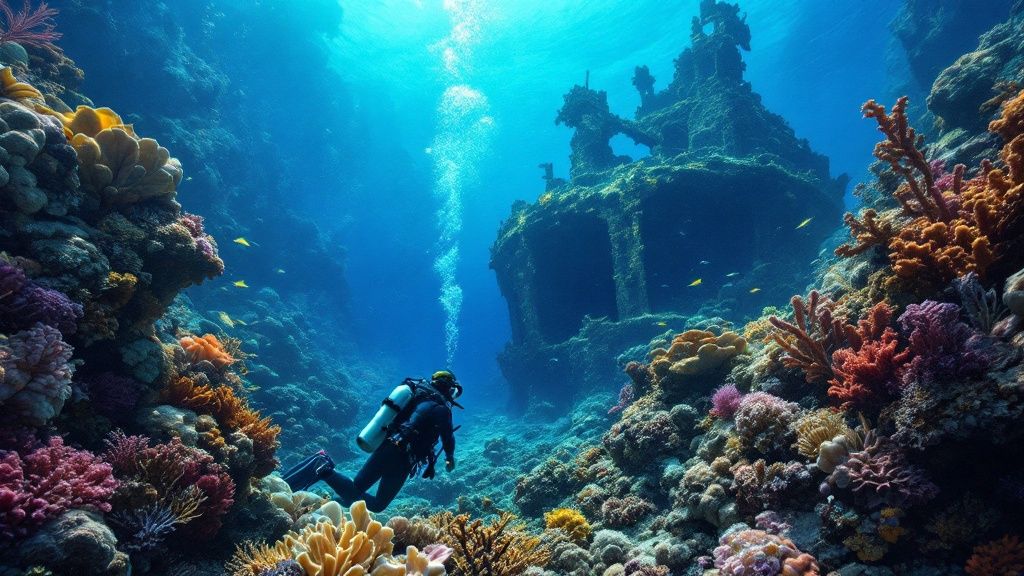
Oahu is easily the most developed island, but beneath the waves, it's a graveyard of sunken treasures. It stands alone as the wreck diving capital of Hawaii. For divers fascinated by history and the way nature reclaims man-made objects, Oahu is an absolute must.
Oahu: A Playground for Wreck Divers
Just off the coast of Waikiki on the island's south shore, you’ll find some of Hawaii's most iconic wrecks. These aren't just hunks of rusting metal; they’re vibrant artificial reefs, completely colonized by marine life.
- The YO-257: A former Navy oiler, this ship was sunk on purpose back in 1989 and now sits perfectly upright in about 100 feet of water. It’s an incredible multilevel dive where you’re almost guaranteed to see green sea turtles, whitetip reef sharks, and huge schools of fish.
- The Sea Tiger: This old trading vessel is a deeper dive, resting at around 120 feet. For divers with the right training, its open cargo holds and pilothouse are a thrill to explore.
These wrecks offer a completely different vibe, where maritime history and thriving ecosystems collide. Pulling off these dives requires solid planning, and choosing the right dive shop is critical. To help you out, we put together a guide on the best dive shops in Oahu, Hawaii.
Kauai: The Garden Isle's Wild Underwater Frontier
Kauai is a world away from Oahu. Its reputation as the "Garden Isle" extends beneath the surface, where the underwater landscape is just as dramatic and untamed as its famous cliffs. Think ancient lava tubes, dramatic caverns, and a much more rugged feel.
Kauai’s dive sites are far less crowded than those on the other islands. This gives you a real sense of raw, untouched beauty. The trade-off? The conditions can be more challenging, but the reward is a pristine environment bursting with life.
The crown jewel of Kauai diving is undoubtedly Sheraton Caverns. It’s not one cavern, but a network of collapsed lava tubes that have formed a stunning series of arches, ledges, and swim-throughs. This spot is a well-known hangout for Hawaiian green sea turtles—the honu—who come here to rest. When the light filters through the overhead cracks in the rock, it creates an almost spiritual, cathedral-like atmosphere.
One thing to keep in mind is Kauai's exposure to open-ocean swells, particularly during the winter. This makes conditions unpredictable. For this reason, Kauai is often a better fit for intermediate and advanced divers who are comfortable with a little bit of a challenge. It may not be for everyone, but for those seeking a truly wild adventure, Kauai delivers.
How to Choose an Island Based on Your Skill Level
Picking the right Hawaiian island for your dive trip isn't just about what you want to see—it’s about matching the ocean's personality to your own experience. What makes for a perfect, tranquil dive for a beginner could feel a bit tame for a seasoned pro. Your comfort and skill level in the water should be the first thing you consider.
Getting this right is the key to a great trip. A dive that's over your head can be nerve-wracking and unsafe, but one that’s too simple might leave you bored. Thankfully, Hawaii has it all, from glassy, protected bays to exhilarating deep-water drift dives.
For Beginner Divers
If you’re just starting out or still getting your fins wet, make a beeline for the Big Island’s Kona Coast. It’s the undisputed champion for new divers. The island's enormous volcanoes act as a natural shield, blocking the trade winds and creating incredibly calm, predictable conditions. On most days, the water is like a swimming pool.
Most of Kona's top dive sites are tucked away in protected bays. You'll find gentle, sandy slopes leading down to vibrant reefs, which makes for easy, stress-free descents. It’s the ideal place to build your confidence while being surrounded by colorful fish, without having to fight currents or surge. Dive shops like Kona Honu Divers are masters at crafting safe, unforgettable first dives in these forgiving waters.
For Intermediate Divers
Once you have a solid number of dives under your weight belt, your options really open up. Both Maui and the Big Island offer fantastic diving for the intermediate crowd. You're comfortable with your gear and skills, so you're ready for more dynamic environments. Maui’s Molokini Crater is a classic choice, offering stunning reef dives inside its crescent and a gentle, exciting drift dive along its back wall.
The Big Island also steps things up a notch, with sites featuring more complex underwater landscapes like ancient lava tubes and fun swim-throughs. These dives are perfect for honing your buoyancy and navigation in a setting that’s engaging but still very safe. This is also the perfect time to experience the world-famous manta ray night dive—an easy but truly life-changing adventure.
For Advanced Divers
For those who crave a real challenge, the Big Island delivers experiences that will test your skills. We're talking deep walls, ripping currents, and one-of-a-kind specialty dives that demand rock-solid buoyancy and sharp situational awareness. While Kauai also has some rugged, advanced diving, the conditions there can be far more unpredictable.
Kona is home to some of the most demanding—and rewarding—dives in the entire state. You can explore deep volcanic structures far offshore or take on the legendary Kona Blackwater Dive, where you drift untethered in the deep ocean at night, watching bizarre creatures rise from the abyss. Operators like Kona Honu Divers run premium advanced dive tours specifically for experienced divers looking to see something truly unique.
To make it even clearer, here’s a quick breakdown of where you should be looking to dive based on your certification and experience.
Island Dive Recommendations by Skill Level
| Skill Level | Recommended Island(s) | Why It's a Good Fit | Example Dive Sites |
|---|---|---|---|
| Beginner | Big Island (Kona) | Exceptionally calm, clear water with minimal currents. Gentle, sloping reefs in protected bays build confidence. | Pawai Bay, Crescent Beach, Kealakekua Bay |
| Intermediate | Maui, Big Island (Kona) | Offers more dynamic environments like mild drifts, walls, and lava tube swim-throughs to hone skills. | Molokini Crater (Maui), Old Airport (Kona), Two Step |
| Advanced | Big Island (Kona), Kauai | Features challenging conditions like deep walls, strong currents, and unique specialty dives (e.g., blackwater). | The Hive (Kona), Blackwater Drifts (Kona), Sheraton Caverns (Kauai) |
Ultimately, the best island is the one that offers dives you can safely enjoy. There's no shame in sticking to calmer sites—the goal is to have fun and come back with amazing stories.
The Final Verdict: Why the Big Island Is My Top Choice
So, which Hawaiian island truly has the best scuba diving? After logging countless hours underwater across the archipelago, the answer is pretty clear in my book. While Maui offers the spectacular Molokini Crater and Oahu is a wreck diver's paradise, nothing quite compares to the overall experience you get on the Big Island’s Kona Coast.
It really comes down to a few key things that set Kona apart.
First, you have an incredible diversity of world-class experiences all in one place. We're talking about the legendary Manta Ray Night Dive and the mind-blowing Blackwater Dive. These aren't just cool dives; they are genuine, bucket-list adventures that you'll remember for the rest of your life.
Then there are the conditions. The Kona coast is tucked behind some of the world's largest volcanoes, which shelter it from the wind and rough seas. This means you get consistently calm, clear water, with visibility often pushing past 100 feet. You can plan a trip here with a lot more confidence, knowing the weather is less likely to spoil your plans.
Finally, the diving infrastructure here is just top-notch. Kona is a diver's town, full of seasoned professionals who know these waters inside and out. If you really want to see the best scuba diving the Big Island has to offer, booking a well-run diving tour is the way to go.
For that unbeatable mix of unique marine encounters, near-perfect conditions, and expert support, the Big Island is, without a doubt, the winner for your Hawaiian scuba adventure.
Answering Your Hawaii Scuba Diving Questions
Planning a dive trip to Hawaii always brings up a few questions. Getting the answers sorted out beforehand is the key to a truly incredible underwater adventure. We’ve pulled together the most common things people ask to help you get ready.
What Is the Best Time of Year to Dive in Hawaii?
The great thing about Hawaii is that the diving is fantastic all year round. That said, the experience changes a bit between the two main seasons.
Summer, from May to October, is when you'll find the calmest, warmest water. Temperatures usually sit in a comfortable 78-82°F range, making for smooth boat rides and exceptionally clear conditions, especially on the sheltered Kona coast.
Winter, from November to April, is whale season. While you can't actually dive with the humpbacks, hearing their songs echo through the water during your dive is a powerful, uniquely Hawaiian experience you won't forget.
Do I Need to Be Certified to Scuba Dive?
Nope! If you've always wanted to try scuba but aren't certified, you can jump right in with a PADI Discover Scuba Diving experience. It’s a program designed specifically for first-timers.
A professional instructor will guide you through the basics in shallow water, and once you're comfortable, you'll head out for a genuine dive on a beautiful reef. It’s the perfect way to see if diving is for you without committing to a full certification course.
What Marine Life Can I Expect to See?
Hawaii's isolation has created an underwater world you can't find anywhere else. In fact, over 25% of the marine life here is endemic, meaning it's native only to these islands.
You're almost guaranteed to see Hawaiian green sea turtles (honu) gliding by on any given dive. You’ll also spot moray eels, octopuses, and tons of colorful reef fish—keep an eye out for the triggerfish, our state fish. On the Big Island, you have an incredible opportunity to encounter majestic manta rays and a variety of reef sharks, too.
Ready to dive into the crystal-clear waters of Kona? Kona Honu Divers offers tours for every skill level, from introductory dives to advanced charters. Let our expert crew show you the best of Hawaii's underwater world.