
When divers start talking about the best scuba in Hawaii, one name always comes up: the Kona coast of the Big Island. Sure, every island has something incredible to offer beneath the waves, but Kona consistently delivers with its calm waters, insane biodiversity, and dives you simply can't do anywhere else on Earth.
A Quick Comparison of Hawaii’s Top Dive Islands
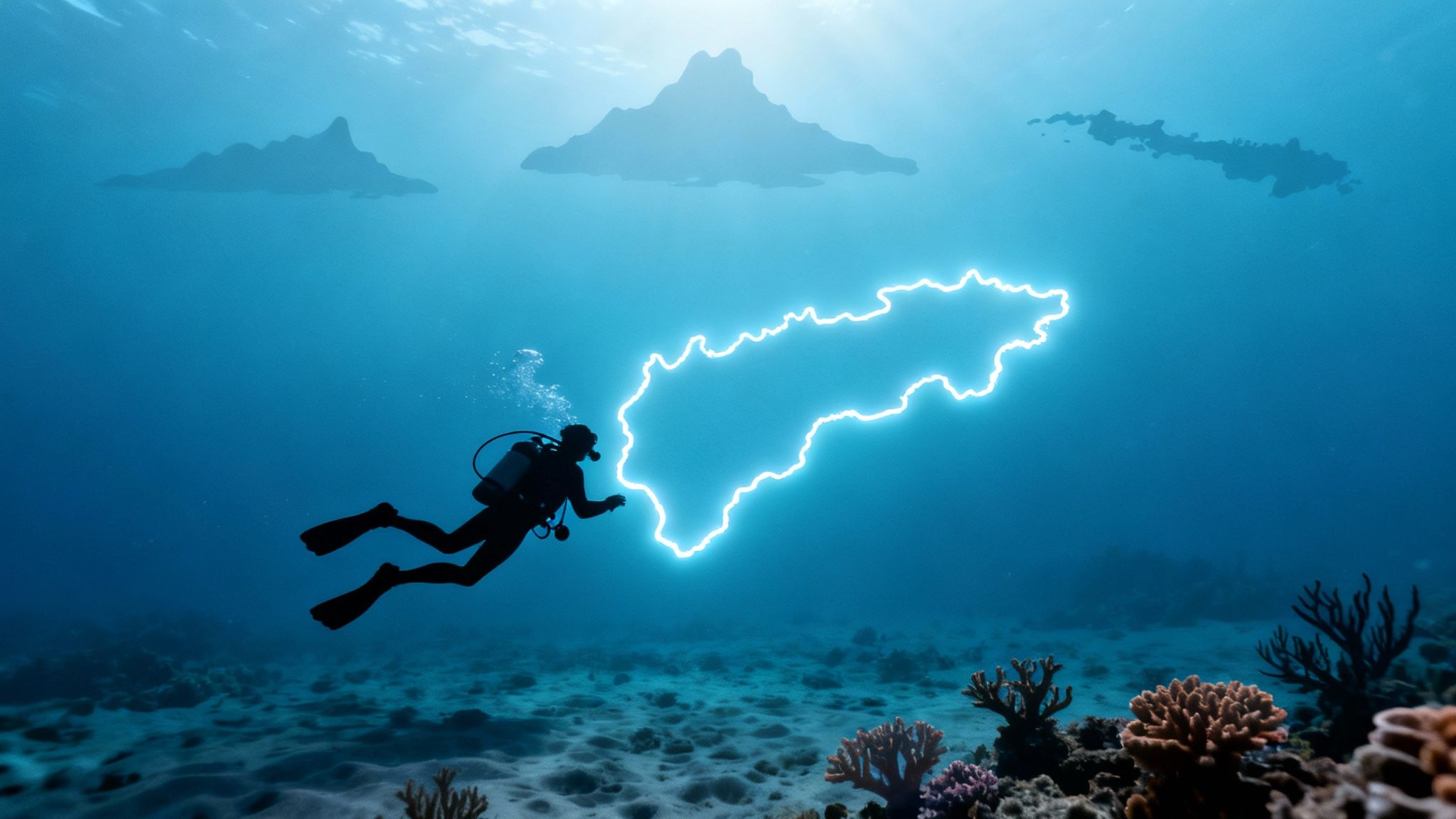
So, how do you choose the "best" island for your dive trip? It really comes down to what you're hoping to find. Each island has its own underwater personality, thanks to its unique geology and position in the archipelago.
Take the Big Island, for instance. Its massive volcanoes act as a giant shield, blocking the trade winds and creating incredibly calm, clear conditions along the Kona coast. This protection has allowed vibrant coral gardens to flourish, attracting a density of marine life that's hard to beat.
Maui, on the other hand, is famous for the Molokini Crater, a submerged volcanic caldera that offers some of the clearest water you'll ever dive in. Oahu is the top spot for wreck enthusiasts, with sunken ships now acting as thriving artificial reefs. And for those seeking a bit of adventure, Kauai's dramatic lava tubes and sea caves offer a wilder, more untamed experience.
To help you find your perfect dive destination, here's a look at what makes each island stand out. If you want to go even deeper, be sure to read our complete guide to the best scuba diving in Hawaii.
Comparing Hawaii's Top Scuba Diving Islands
This table offers a quick look at the unique diving experiences each major Hawaiian island offers to help you find the right fit for your underwater adventure.
| Island | Best For | Signature Dive Experience | Typical Marine Life |
|---|---|---|---|
| Big Island (Kona) | Biodiversity & Unique Dives | Manta Ray Night Dive | Manta Rays, Dolphins, Sharks, Turtles, Endemic Fish |
| Maui | Visibility & Crater Diving | Molokini Crater & Back Wall | Reef Sharks, Jacks, Moray Eels, Colorful Reef Fish |
| Oahu | Wreck Diving | Sunken Ships (YO-257) | Eagle Rays, Turtles, Large Schools of Fish |
| Kauai | Lava Tubes & Adventure | Sheraton Caverns & Ni'ihau | Green Sea Turtles, Monk Seals, Pelagic Species |
Ultimately, whether you’re swimming with gentle giants in Kona or exploring a sunken piece of history off Oahu, you’re in for an unforgettable experience. Each island has its own magic.
Why the Big Island Is a Top Contender
When divers start talking about the best spots in Hawaii, the Big Island always enters the conversation, and for good reason. The Kona coast, in particular, is a world-class destination, largely thanks to the island's unique geology.
The massive volcanoes on the Big Island act as a natural barrier, shielding the western coast from the powerful trade winds. This creates exceptionally calm and clear waters, making it an ideal environment for divers of all experience levels. It's this protection that has allowed some of Hawaii's most incredible coral reefs to flourish.
The underwater landscape here is something special—a dramatic canvas of ancient lava tubes, sweeping archways, and vibrant coral gardens. This intricate topography provides a perfect habitat for a dense population of fish, eels, and other marine life. To get a better sense of what the area offers, you can explore more about Big Island scuba diving.
The World-Famous Manta Ray Night Dive
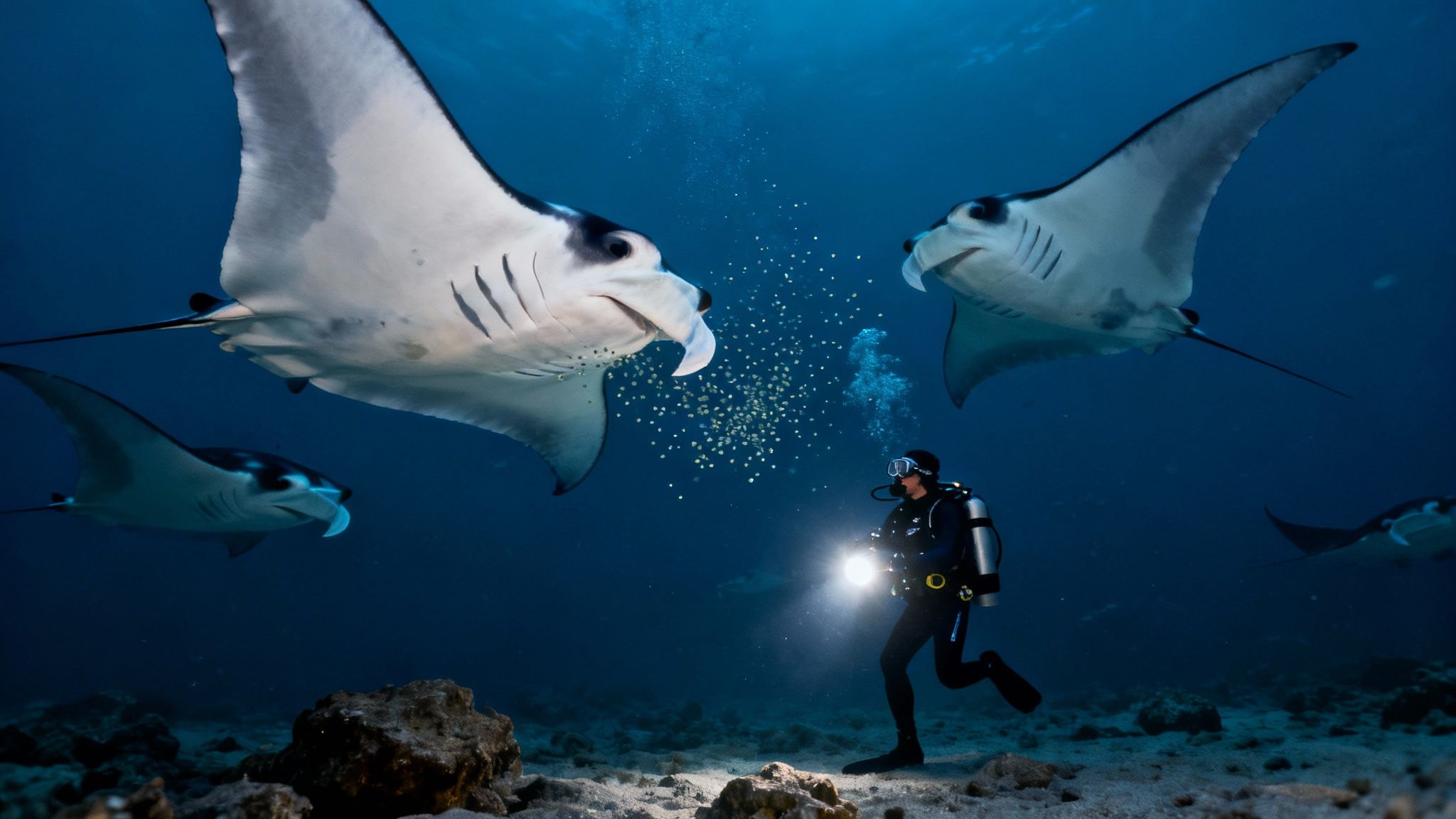
If there's one experience that defines Kona diving, it’s the Manta Ray Night Dive. This isn't just another dive; it's a true bucket-list spectacle known around the globe. Divers descend in the dark and gather around a "campfire" of powerful underwater lights on the seafloor.
These lights attract swarms of plankton, which in turn summons the main attraction: majestic manta rays sweeping in for a feeding frenzy. Watching these gentle giants, with wingspans reaching up to 16 feet, perform graceful somersaults just inches from your face is an unforgettable, almost surreal experience.
It’s an underwater ballet that has made sites like Manta Heaven and Manta Village iconic. The Big Island simply has the most dive sites in Hawaii, and this one is its undisputed crown jewel.
Unique and Advanced Diving Opportunities
Beyond the famous mantas, the Kona coast offers an incredible range of dives that cater to every interest. The coastline's diversity means you can explore something completely different every single day, from shallow reefs packed with endemic fish to thrilling volcanic drop-offs.
The sheer variety of dive sites along the Kona coast is what truly sets it apart. You can spend one day exploring ancient lava tubes and the next drifting in the deep ocean, all within a few miles of each other.
For those with a taste for adventure, Kona is home to the Blackwater Night Dive. This is not your typical night dive. It's an open-ocean drift dive in the deep, dark sea, tethered to the boat. As you float in the abyss, you'll encounter bizarre and rarely seen bioluminescent creatures migrating up from the depths. It’s a dive that feels more like a trip to outer space than an underwater excursion.
Whether you're after incredible day trips or more demanding adventures, Kona delivers.
- Day Trips: Explore vibrant coral reefs and unique volcanic formations.
- Advanced Dives: Tackle deeper sites and navigate complex underwater terrain.
- Night Dives: Experience the ocean's transformation after sunset.
Diving Maui and the Famous Molokini Crater
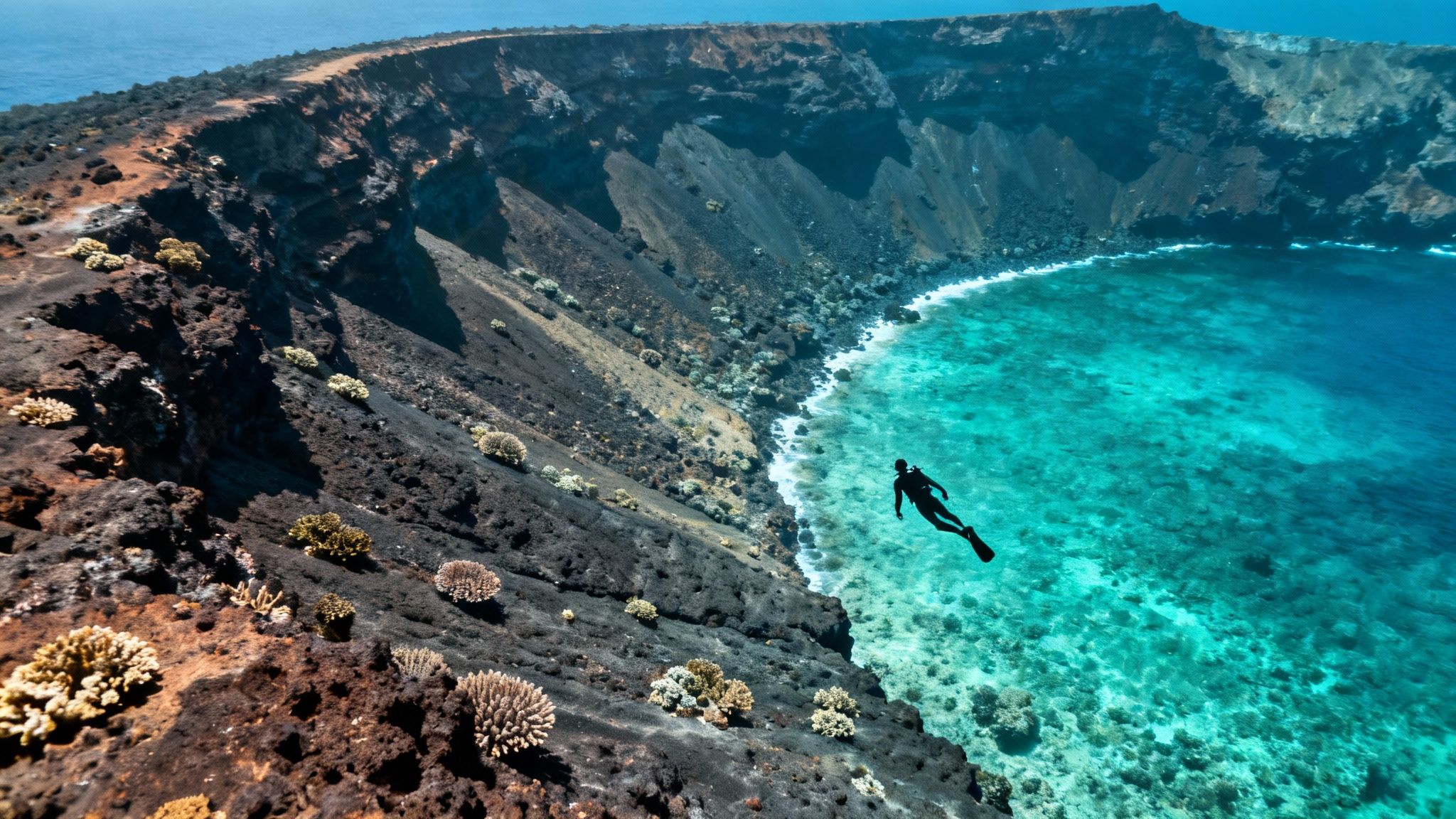
While the Big Island certainly sets a high bar, Maui puts up a serious fight for the best Hawaiian island for scuba, and its trump card is the world-famous Molokini Crater. This crescent-shaped volcanic caldera, sitting just a few miles offshore, is a protected marine sanctuary, and it’s every bit as stunning as the pictures suggest.
What makes Molokini so special? Its unique shape creates a natural shield from the open ocean’s currents and waves. The result is some of the most mind-blowing water clarity you’ll find anywhere in Hawaii—visibility here can easily top 100 feet on a good day.
These glass-like conditions make the inner crater a dream for just about every diver. Whether you're a brand new diver making your first descent or a seasoned photographer trying to nail that perfect shot, the vibrant reef inside Molokini delivers. It’s teeming with healthy corals, schools of reef fish, moray eels, and the occasional whitetip reef shark cruising by.
Beyond the Crater Walls
But Molokini isn't just about placid, shallow dives. For those with more experience and a taste for adventure, the "back wall" of the crater offers a world-class drift dive. This is where the gentle slope gives way to a sheer vertical drop plunging more than 300 feet into the deep blue of the Alalākeiki Channel.
Letting the current carry you along this dramatic wall, you’re far more likely to spot bigger pelagic visitors. Keep an eye out for schooling jacks, rays, and sharks that patrol the depths. It’s a completely different experience from the calm inner reef and a must-do for any advanced diver in Maui.
While Molokini is Maui's crown jewel, it's important to remember that diving here is a different logistical experience. Unlike the easily accessible shore dives in Kona, almost all Maui sites require longer boat rides and are more exposed to wind, which can sometimes impact dive plans.
Exploring Lanai's Cathedrals
Another huge perk of basing your dive trip in Maui is the easy access to the nearby island of Lanai. A charter boat can get you to one of the most unique dive sites in all of Hawaii: the Cathedrals.
No, not actual buildings, but two massive underwater lava caverns known as First Cathedral and Second Cathedral. As you swim inside, sunlight streams through holes in the cavern ceilings, creating ethereal beams of light that look just like stained-glass windows. It’s a surreal, almost spiritual experience and adds incredible diversity to a Maui dive vacation.
So, when you’re weighing which island has the best scuba, Maui’s incredible visibility and geological wonders like Molokini and the Lanai Cathedrals make a very compelling case. It's an ideal choice if you prioritize water clarity and love the adventure of a boat dive to reach spectacular, remote sites.
Oahu: The Wreck Diving Capital of Hawaii
While the Big Island and Maui get a lot of attention for their stunning volcanic landscapes, Oahu has carved out a special niche for itself. If you're fascinated by history and structure, this is your island. It's hands-down the wreck diving capital of Hawaii.
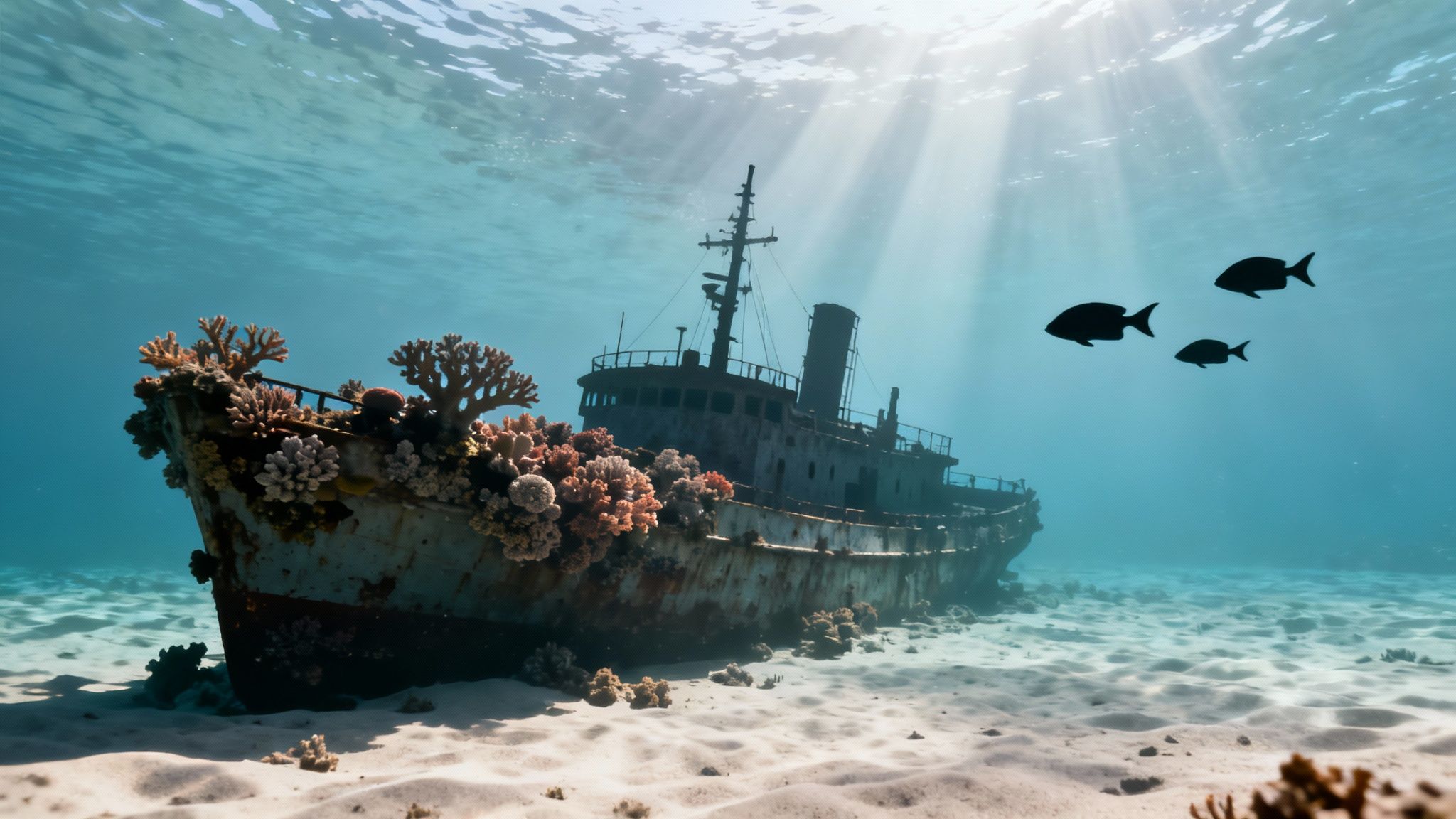
The experience here is completely different. Instead of navigating lava tubes, you'll be exploring the ghostly silhouettes of sunken ships. These vessels were intentionally sunk to serve as artificial reefs, and over time, they've absolutely blossomed into bustling underwater cities.
Nature has taken over completely. What were once steel hulls are now draped in vibrant corals and sponges, creating intricate habitats that attract a staggering amount of marine life.
Exploring Sunken Treasures
Two wrecks that every diver should have on their list are the YO-257 and the Sea Tiger. These purpose-sunk ships sit upright on the seafloor, acting as magnets for wildlife. It's common to see massive green sea turtles napping on the decks, spotted eagle rays gliding effortlessly overhead, and whitetip reef sharks patrolling the perimeter. It truly feels like you're exploring an underwater museum.
For divers who love structure and history, Oahu presents a playground unlike any other in the Hawaiian chain. It's the perfect choice for those who want to combine world-class diving with the energy and attractions of city life.
One of the best parts about diving Oahu is how easy it is. Many of the most famous wrecks are just a quick boat trip from the shores of Waikiki. You can easily squeeze in an incredible two-tank dive in the morning and still have your entire afternoon free to enjoy everything else the island offers.
A Thriving Artificial Reef System
Oahu's reputation as a top-tier wreck diving spot is backed by some serious biodiversity. The island's protected waters are home to more than 400 species of reef fish, and they have all made themselves at home on these artificial structures. The wrecks provide critical shelter, turning them into hotspots for everything from tiny, colorful wrasses to larger game fish.
Of course, a great dive trip starts with a great dive operator. To get the most out of these historic sites, you'll want an experienced guide. Our rundown of the best dive shops on Oahu can point you in the right direction.
For anyone looking for a different flavor of Hawaiian diving—one where maritime history and marine biology collide—Oahu is the place to be.
Exploring Kauai’s Wild Underwater Landscapes
People call it the "Garden Isle," and Kauai's diving lives up to the name. It's every bit as lush, wild, and dramatic underwater as it is on land. While other islands might be known for sprawling reefs, Kauai's real draw is its incredible volcanic topography.
Diving here means exploring a world of ancient lava tubes, winding caverns, and massive archways carved by nature. At a classic site like Sheraton Caverns, you get to swim through these formations while shafts of sunlight pierce the water from above, creating this incredible, almost spiritual feeling. These structures are more than just pretty; they're vital habitats for an amazing amount of marine life.
A Haven for Honu and Monk Seals
Kauai's unique underwater landscape makes it a sanctuary for specific species, especially the Hawaiian green sea turtle, the honu. It's common to find them tucked away inside lava tubes, just resting, or cruising effortlessly along the reef walls. The island’s rugged, less-developed coastline gives them the peaceful environment they need to thrive.
If you’re a diver who craves a bit of raw, off-the-beaten-path adventure, Kauai is your island. The diving feels untamed, like you're genuinely exploring somewhere new, far from the crowds you might find elsewhere.
Many divers will tell you Kauai is the best Hawaiian island for scuba diving, and for good reason. It’s a perfect storm of great conditions, rich biodiversity, and underwater scenery you won’t find anywhere else. Visibility often pushes past 100 feet, and sites like the maze-like Sheraton Caverns offer a direct look into Hawaii’s volcanic past. You can get a deeper dive into why Kauai's diving is top-rated from local experts.
The Ultimate Expedition: Ni'ihau
For those with a serious sense of adventure, Kauai is the only jumping-off point for Ni'ihau, the famed "Forbidden Island." Getting there requires booking a spot on one of the few dedicated dive charters, making it a truly exclusive experience. The trip itself is an adventure, but what's waiting underwater is the real prize.
The water clarity around Ni'ihau is just breathtaking, and its isolation means the marine life is bigger and bolder than almost anywhere else. This is one of the best spots on the planet to dive with the critically endangered Hawaiian monk seal. Add in consistent encounters with big pelagics like sharks and rays, and you have a true bucket-list trip for any serious diver.
So, Which Island Should You Choose?
Alright, let's get down to it. Which Hawaiian island is calling your name for that next dive trip? The truth is, there’s no single “best” island—the right answer really depends on what kind of diver you are and what you're hoping to experience underwater.
Think about what truly excites you. Are you dreaming of those once-in-a-lifetime encounters with huge, graceful animals? If that’s you, the Big Island is, without a doubt, your best bet. The world-famous Manta Ray Night Dive is an experience that belongs on every diver's bucket list, and the volcanic landscapes are unlike anything else on Earth.
Finding the Right Fit for Your Dive Style
To help you narrow it down, here’s a quick rundown matching the island to the diver:
- The Wreck Diver: If you love the thrill of exploring sunken ships and planes, Oahu is the clear winner. It's home to an incredible collection of wrecks that have transformed into thriving artificial reefs, all just a short boat ride from the buzz of Waikiki.
- The "Visibility is Everything" Diver: Craving that crystal-clear, swimming-in-an-aquarium feeling? Maui delivers, especially with its iconic Molokini Crater. It’s a paradise for underwater photographers and anyone who enjoys a more relaxed, resort-centric dive vacation.
- The Explorer: If you're looking to get off the beaten path and dive somewhere a bit more wild and untamed, Kauai is your island. Its dramatic lava tubes and remote, crowd-free sites offer a genuine sense of adventure and discovery.
While you can have an amazing dive on any of the islands, the Big Island’s Kona coast consistently comes out on top for most serious divers. It just has an unbeatable combination of variety, reliable conditions, and truly iconic signature dives.
Ready to see what all the fuss is about? The incredible marine life and volcanic wonders of Kona are waiting for you.
Your Hawaii Diving Questions, Answered
Got questions about planning your dive trip to Hawaii? You’re not alone. Here are some of the most common things divers want to know before they take the plunge.
When Is the Best Time of Year to Dive in Hawaii?
Honestly, there’s no bad time to dive in Hawaii, but your "best" time depends on what you’re looking for. For the calmest seas and warmest water, plan your trip between May and October. The conditions during these summer months are often spectacular and incredibly comfortable.
If you’re visiting in the winter, from November to April, you might encounter larger swells, especially on the northern shores. The trade-off? It's humpback whale season. There's nothing quite like hearing the sound of whale song resonating through the water on your safety stop—it's a truly magical experience.
Do I Need to Be an Advanced Diver for the Best Sites?
Absolutely not! Many of Hawaii's most famous dive spots are accessible to divers of all levels. The incredible reefs along the Kona coast and the vibrant inner sanctuary of Molokini Crater, for instance, are perfect for open-water certified divers.
That said, some of the more epic adventures do require an advanced certification. If you want to experience the thrill of a drift dive along Molokini's back wall, explore the deep wrecks off Oahu, or make the legendary trip to Ni'ihau, you'll need that advanced ticket.
What Exactly Is the Kona Blackwater Dive?
The Kona blackwater dive is one of the most unique night dives on the planet—it’s not for the faint of heart. You descend into the deep, open ocean at night, tethered to a line from the boat, and simply drift over thousands of feet of pitch-black water.
The boat's lights attract a bizarre and fascinating world of tiny, alien-like pelagic creatures that migrate from the abyss toward the surface to feed. It's an otherworldly experience, but it’s definitely recommended for seasoned divers who are completely comfortable in dark, open-ocean environments.
Can I See Manta Rays on Other Islands Besides the Big Island?
While you could technically get lucky and spot a manta ray near another island, it’s a rare and completely unpredictable encounter.
The Kona coast of the Big Island is the only place in the world that has established, reliable night dive sites designed for manta encounters. The dive lights attract a massive plankton buffet, which in turn draws in the giant mantas for a feeding frenzy. If you want a near-guaranteed, up-close experience with these gentle giants, Kona is the place to be.