
Hawaii's crystalline waters are home to some of the most majestic creatures in the ocean: giant manta rays. These gentle giants, with wingspans stretching up to 16 feet, glide through the water in a mesmerizing underwater ballet. Witnessing them in their natural habitat is a truly unforgettable experience, but knowing precisely where and when to go is essential for success.
This guide is designed to answer the ultimate question for any ocean enthusiast planning a trip to the islands: "Where to see manta rays in Hawaii?" We have compiled the definitive list of the top locations across the archipelago, providing actionable details for each spot. From the world-famous Kona manta ray night dive to the lesser-known gems on Maui and Kauai, this article provides everything you need to plan your adventure.
Whether you're an experienced diver ready for an advanced charter, a family looking for a safe and thrilling snorkel tour, or an underwater photographer eager to capture the perfect shot, you'll find the ideal location here. We'll detail the best viewing methods, optimal times, and what makes each site unique. Prepare to discover the perfect spot for your magical Hawaiian manta ray encounter.
1. Kona Coast (Big Island) – The World’s Premier Manta Ray Night Dive
When it comes to answering the question "Where to see manta rays in Hawaii?", the Kona Coast isn't just an option; it's the undisputed global epicenter for reliable, breathtaking encounters. Popularized by iconic documentaries from National Geographic and the BBC, this location offers a spectacle so consistent and magical that it has become a bucket-list experience for ocean lovers worldwide. The magic happens after sunset, creating an otherworldly underwater ballet.
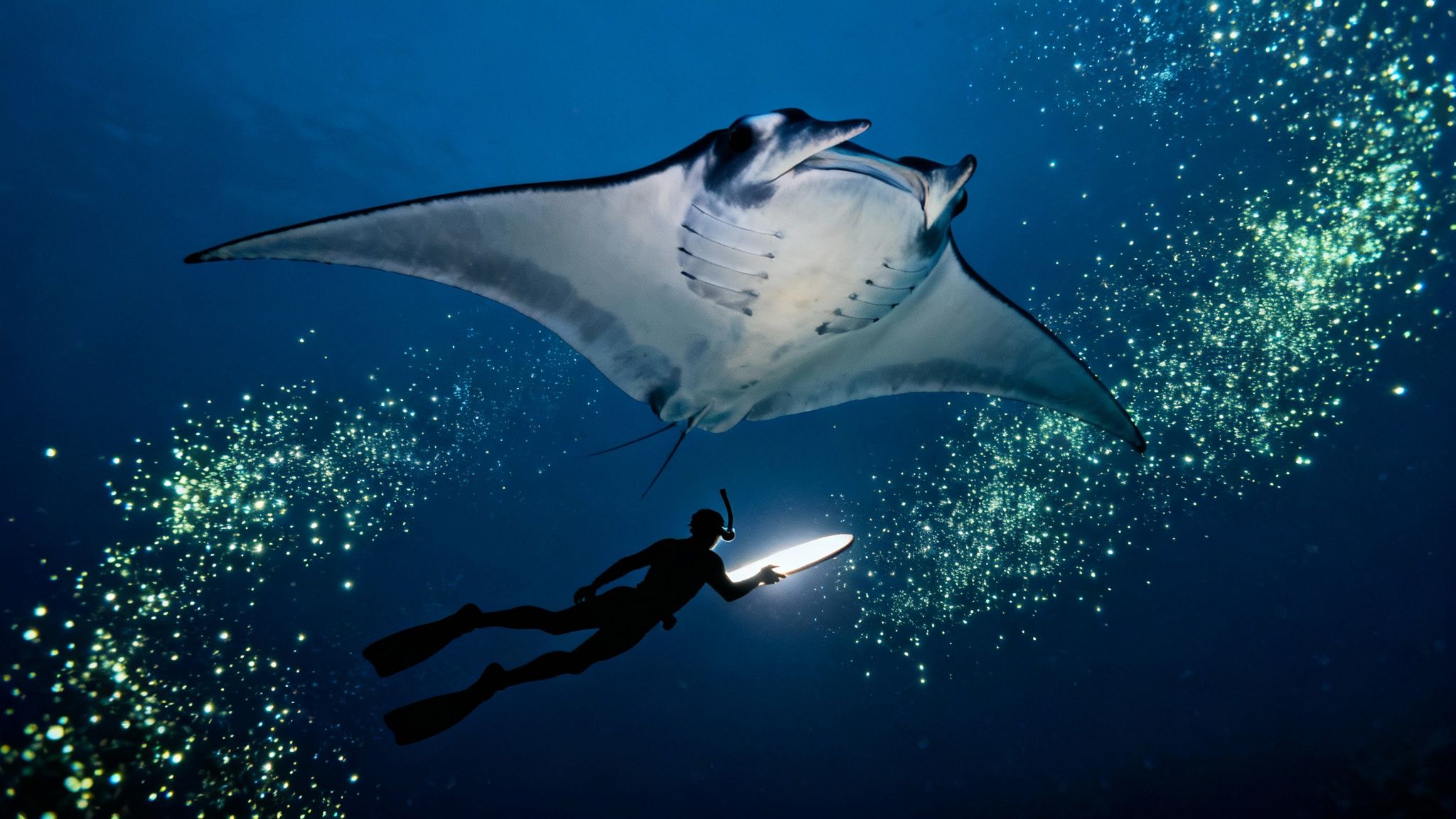
How It Works: The "Campfire" Effect
Tour operators have perfected a method for attracting these gentle giants. They anchor at designated sites like "Manta Village" and submerge powerful, eco-friendly lights into the water. These lights attract massive clouds of plankton, the manta rays' primary food source. This creates a floating buffet that draws in dozens of graceful mantas, who swoop and perform barrel rolls to feed, often just inches from observers. Participants can snorkel at the surface, holding onto a custom light board, or scuba dive on the sandy bottom for a truly immersive, upward-looking view. Learn more about scuba diving with manta rays in Kona.
Top-Rated Tour Operators
The Kona Coast is home to numerous experienced and responsible tour operators. Choosing one certified by the Manta Ray Green List ensures your experience is both amazing and sustainable.
- Kona Honu Divers: A top-rated operator known for its professional guides, comfortable boats, and commitment to manta conservation. Their premier manta ray dive and snorkel tour is a guest favorite.
- Jack's Diving Locker: One of the original operators in Kona, with decades of experience leading world-class manta encounters.
- Big Island Divers: Offers a wide range of manta ray experiences alongside other daytime scuba diving tours on the Big Island.
Actionable Tips for Your Manta Encounter
- Book Early: Schedule your manta tour for the beginning of your trip. This gives you time to reschedule if weather causes a cancellation.
- Prevent Seasickness: If you are prone to motion sickness, take a non-drowsy medication about an hour before departure.
- Practice Passive Interaction: Listen carefully to your guide’s briefing. The key is to remain calm and horizontal in the water, allowing the mantas to move gracefully around you without feeling threatened.
2. Maui – Makena Landing and Molokini Crater
While the Big Island is famous for its night dives, Maui offers a compelling answer to "Where to see manta rays in Hawaii?" with its spectacular daytime encounters. Locations like Makena Landing provide a more natural, intimate experience, allowing divers and snorkelers to observe these gentle giants in their sunlit habitats. Instead of being drawn to plankton-rich light sources, mantas here are often spotted at "cleaning stations," where they visit to have parasites removed by smaller reef fish, offering a unique glimpse into their daily behaviors.
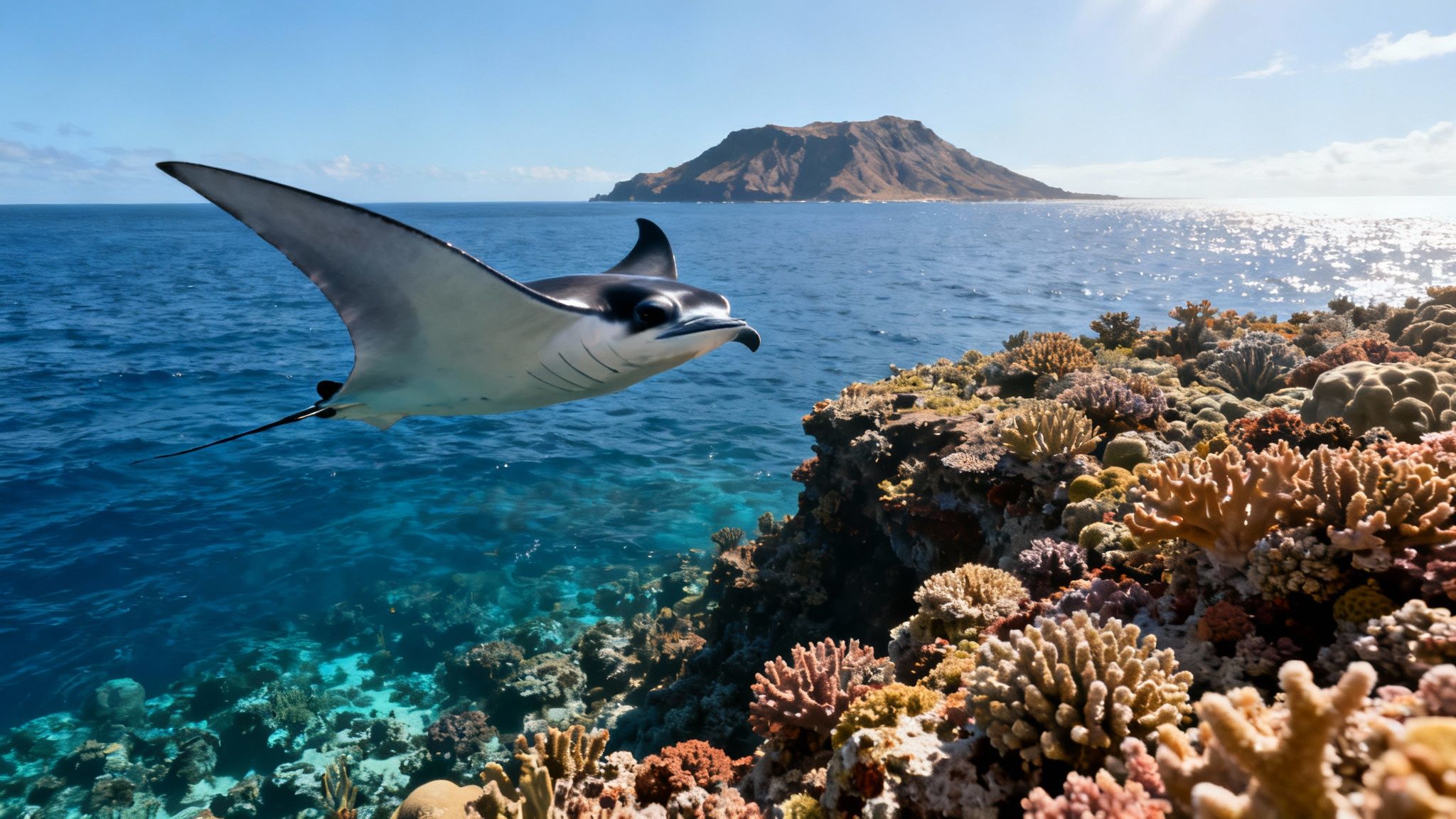
How It Works: The "Cleaning Station" Phenomenon
The magic on Maui happens during the day at specific reef locations known as manta ray cleaning stations. Divers and snorkelers are guided to these spots where they can quietly observe the mantas as they hover gracefully over the reef, allowing endemic Hawaiian wrasse and other small fish to clean them. This symbiotic relationship provides a predictable, non-invasive way to see the mantas. Molokini Crater, a world-renowned dive site, also occasionally features manta ray sightings as they cruise through the clear, protected waters of the sunken volcano. The experience is often less crowded and more serene than the bustling night tours elsewhere.
Top-Rated Tour Operators
Maui is home to highly respected dive operators who specialize in finding these daytime cleaning stations and providing educational, eco-conscious tours.
- Mike Severns Diving: A legendary operator on Maui, known for their expert knowledge of local manta ray behavior and dedication to finding the best, uncrowded dive spots.
- Maui Dreams Dive Co: Offers a variety of manta-focused excursions for both certified divers and beginners, prioritizing small group sizes for a personalized experience.
- Pacific Whale Foundation: Integrates strong conservation and educational components into their eco-tours, offering a chance to see mantas while learning about their protection.
Actionable Tips for Your Manta Encounter
- Best Season: Plan your trip during the summer months (May to September) for the highest probability of daytime sightings and calmer ocean conditions.
- Go Early: Book an early morning dive or snorkel tour. The water visibility is typically at its best, and marine life is most active.
- Shore Dive Option: For a budget-friendly and adventurous alternative, consider a shore dive at Makena Landing, a known cleaning station. Always check conditions and dive with a buddy.
- Stay Informed: Call local dive shops before you book to ask about recent manta sightings, as their patterns can change.
3. Oahu – Electric Beach (Kahe Point)
While the Big Island is famous for its organized night dives, Oahu offers a more unpredictable and adventurous answer to the question "Where to see manta rays in Hawaii?". Electric Beach, on the island's leeward coast, is a renowned shore dive where manta encounters are a thrilling possibility. Popularized by the local diving community and underwater photographers, this site offers a unique marine ecosystem fueled by human engineering.
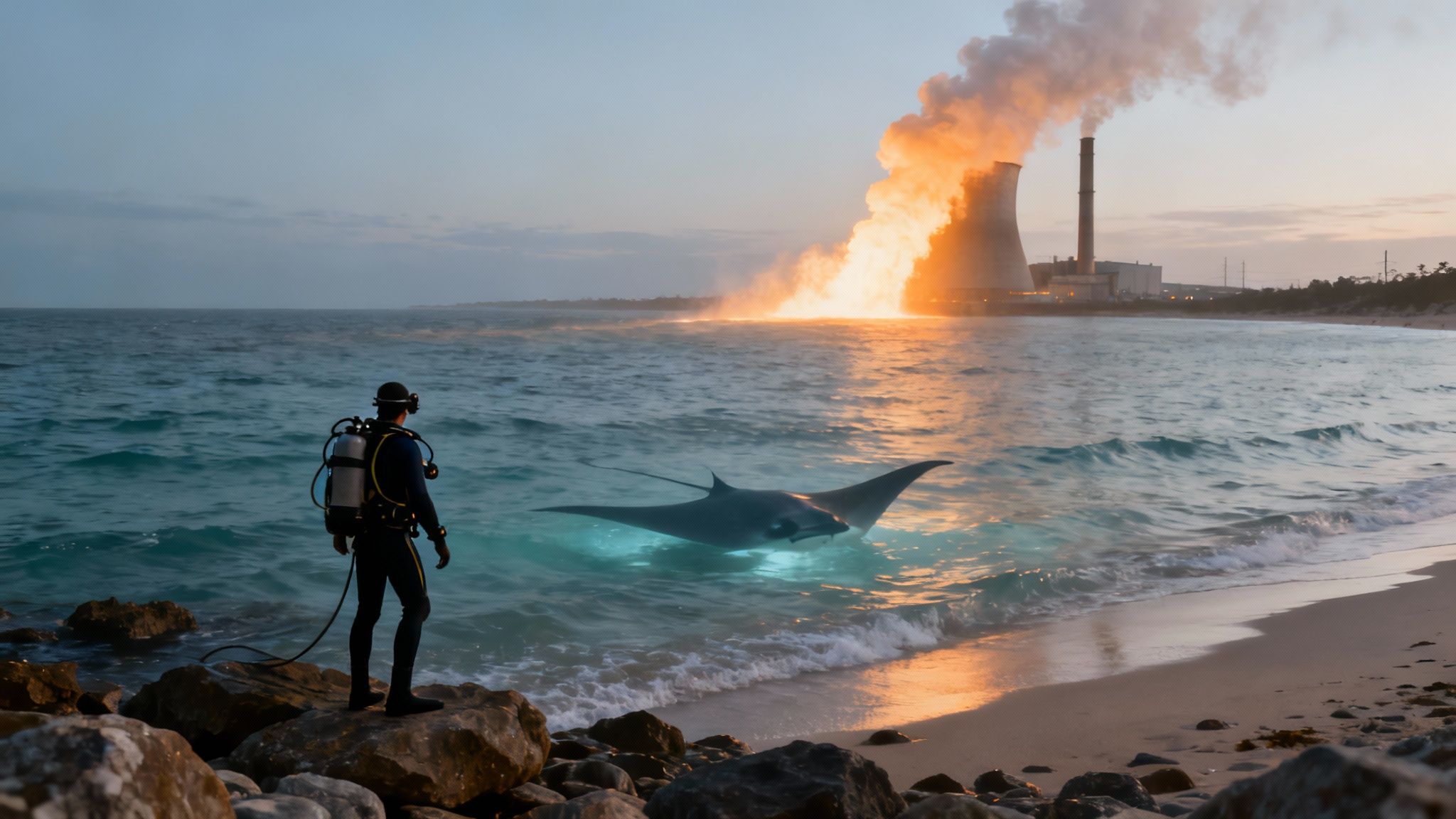
How It Works: The Warm Water Outflow
The magic of Electric Beach stems from the adjacent Kahe Point Power Plant. The plant discharges clean, warm water through large outflow pipes just offshore. This warm water has encouraged coral growth and attracts a dense concentration of marine life, including vast schools of fish, sea turtles, and spinner dolphins. Manta rays are occasionally drawn to this rich feeding ground, particularly during the calmer winter months, offering a chance for a lucky encounter without a dedicated tour.
Top-Rated Tour Operators
While Electric Beach is a shore dive, going with an experienced guide is highly recommended, especially for first-timers. Local dive shops can provide orientation, gear, and expert knowledge of the site's conditions and entry points.
- Oahu Diving: Specializes in guided shore dives and boat trips, often including Electric Beach in their itineraries for certified divers.
- Aaron's Dive Shop: A long-standing Oahu dive center offering gear rentals and local dive packages that can feature this unique site.
- Island Divers Hawaii: Provides shore diving orientations and guided tours, ensuring divers safely navigate the entry and underwater environment.
Actionable Tips for Your Manta Encounter
- Dive with a Buddy: Never dive alone. The buddy system is crucial for safety at any shore diving location.
- Check Ocean Conditions: The west side can experience strong currents and surf. Always check the forecast and only enter if conditions are calm, preferably in the morning.
- Be Cautious on Entry/Exit: The shoreline is rocky. Move slowly and carefully when entering and exiting the water to avoid slips and falls.
- Secure Your Vehicle: Do not leave any valuables in your car at the beach park, as break-ins can occur.
- Hire a Guide: For your first visit, a local guide is invaluable for navigating the site, pointing out marine life, and understanding potential hazards like surge near the outflow pipes.
4. Kauai – Mana Crack and Sheraton Caverns
For adventurous divers searching "Where to see manta rays in Hawaii?" and hoping for an experience off the beaten path, Kauai offers a tantalizing possibility. Unlike the predictable night dives of Kona, manta encounters on Kauai are rare, thrilling surprises. Sites like Mana Crack and Sheraton Caverns are known for their dramatic underwater landscapes and challenging conditions, making any manta sighting an incredible bonus to an already spectacular dive.
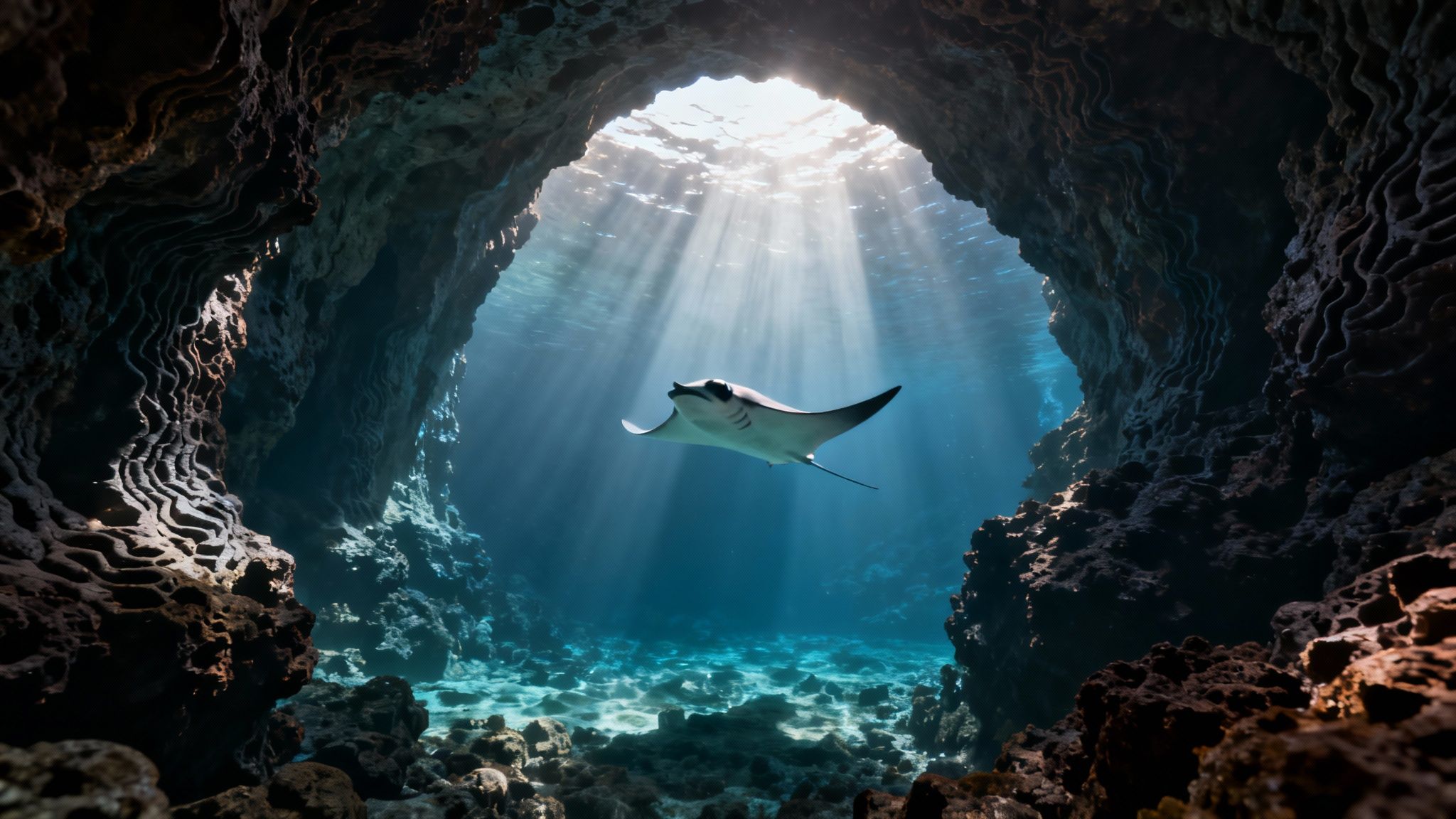
How It Works: A Wild and Unpredictable Encounter
There are no dedicated manta ray tours on Kauai. Instead, these encounters happen by chance during advanced daytime dives. Mantas are occasionally spotted cruising along the deep reef ledges of Mana Crack or gliding through the lava tube archways of Sheraton Caverns. These are not feeding grounds but rather part of the mantas' natural migratory or cleaning station routes. The thrill lies in the unpredictability; you are seeing these gentle giants completely in their wild, unaltered environment. Learn more about how Kauai's dive scene compares with our guide on which Hawaiian island is best for diving.
Top-Rated Tour Operators
Because these are advanced sites, choosing an operator with extensive local knowledge of Kauai's challenging conditions is crucial. These companies specialize in guiding certified divers to the island's most dynamic locations.
- Seasport Divers: A PADI 5-Star facility with decades of experience offering advanced boat dives to Poipu's best sites, including Sheraton Caverns.
- Fathom Five Divers: Specializes in small-group dives from Koloa, catering to experienced divers looking to explore Kauai's unique underwater topography.
- Bubbles Below: Well-regarded for their knowledgeable crew and guided tours of Kauai's caverns and advanced reef systems on the south and west shores.
Actionable Tips for Your Manta Encounter
- Set Realistic Expectations: Do not book a Kauai dive trip solely to see mantas. View any potential sighting as a fortunate and rare bonus.
- Hone Your Skills: These are often drift dives or involve complex navigation. Ensure your advanced open water certification is current and you are comfortable in dynamic conditions.
- Go in the Summer: The best chances for a sighting are during the summer months (May to September) when the south and west shore waters are typically calmer and more accessible.
- Inquire About Sightings: When booking, ask the dive shop about recent marine life activity, but understand that manta sightings are never guaranteed.
5. Lanai – Cathedrals Dive Site
While many seek guaranteed encounters, Lanai offers a different kind of thrill for those wondering where to see manta rays in Hawaii: a world-class dive site where mantas are a spectacular, if not guaranteed, bonus. The Cathedrals, famous for their breathtaking underwater lava formations and caverns, create a dramatic backdrop for any dive. A visit here is about the entire experience, with the potential sighting of a graceful manta ray being the ultimate highlight. The site's popularity in diving magazines and photography competitions speaks to its unique beauty.
How It Works: Diving for the Scenery, Hoping for the Manta
Unlike Kona's "campfire" sites, there is no system to attract mantas at the Cathedrals. Encounters are organic, typically occurring when plankton-rich currents flow through the area, drawing the mantas in to feed. Divers explore the immense underwater caverns, famous for the ethereal beams of light that shine through openings in the lava rock ceilings. A manta ray gliding through these light beams is an unforgettable, almost spiritual sight for the lucky divers who experience it. Access to Lanai's dive sites is almost exclusively via boat tours departing from Maui.
Top-Rated Tour Operators
Most Lanai dive trips originate from Lahaina or Ma'alaea harbors on Maui. These operators are known for their professional crews and excellent knowledge of Lanai's unique dive conditions.
- Extended Horizons: Runs regular dive charters to Lanai from Maui, well-regarded for their experienced divemasters and small group sizes.
- Lahaina Divers: A long-standing operator specializing in Lanai's diverse sites, including advanced options for experienced divers.
- Trilogy Excursions: Known for combining sailing adventures with snorkeling and diving, offering a premium full-day experience to Lanai.
Actionable Tips for Your Manta Encounter
- Book a Full-Day Trip: The boat transit from Maui and the two-tank dive make this a full-day commitment, so plan accordingly.
- Dive in Summer: The calmest sea conditions for crossing the channel between Maui and Lanai typically occur in the summer months.
- Bring a Good Dive Light: A quality underwater camera and light are essential to capture the stunning beauty of the caverns, whether a manta appears or not.
- Confirm Your Experience Level: The Cathedrals can involve overhead environments and varying currents. Ensure you are comfortable and certified for these conditions before booking.
6. Molokai – Remote Dive Sites and Conservation Areas
For the adventurous diver seeking an experience far from the crowds, Molokai offers a glimpse into Hawaii's untamed marine world. Unlike the predictable, light-attracted spectacles on other islands, seeing manta rays here is a rare and completely wild occurrence. Encounters are unpredictable and happen by chance along the island's pristine southern barrier reef, the longest in the Hawaiian Islands. This is not a guaranteed viewing destination but an expedition for those who value pristine environments and the thrill of a chance encounter.
How It Works: Diving into Old Hawaii
Diving off Molokai is an exercise in self-sufficiency and deep respect for local culture. With minimal tourist infrastructure, there are no large-scale manta tour operations. Instead, seeing a manta ray is a matter of luck while exploring healthy, vibrant coral ecosystems that few outsiders ever get to witness. The experience is less about the destination and more about the journey, immersing yourself in an environment that remains profoundly connected to its Hawaiian heritage.
Top-Rated Tour Operators
The concept of a "tour operator" on Molokai is different. The island prioritizes cultural preservation over mass tourism, so options are limited and deeply rooted in the local community.
- Molokai Fish & Dive: A long-standing local institution, this is the primary hub for visiting divers. They offer very limited, small-group dive charters and essential supplies. It's crucial to contact them months ahead to inquire about their availability and operational status.
- Independent Charters: Experienced divers sometimes connect with local boat captains or through online dive forums to arrange private, exploratory trips. This requires significant planning, experience, and adherence to local customs.
Actionable Tips for Your Manta Encounter
- Plan Extensively: Contact local operators like Molokai Fish & Dive far in advance. Services are not always available, and arrangements require patience.
- Be Self-Sufficient: Bring your own well-maintained dive gear, as rental options are extremely limited or nonexistent. This includes safety and navigation equipment.
- Embrace the Unpredictable: Approach this as a pristine reef dive first and a potential manta encounter second. The true reward is exploring a healthy, untouched marine environment.
- Show Respect: Molokai is known as "The Friendly Isle," but it's also the most Hawaiian island. Always act with respect, support local businesses, and understand that you are a guest in a close-knit community.
7. Maui – Olowalu (Mile Marker 14) – The Serendipitous Shore Snorkel
While most guaranteed manta ray encounters in Hawaii require a boat tour, Olowalu on Maui's west coast offers a different kind of magic: the chance for a serendipitous sighting right from the shore. Known as "Turtle Reef" for its thriving sea turtle population and vast, healthy coral gardens, Olowalu is a snorkeler's paradise that occasionally plays host to visiting manta rays, particularly during seasonal plankton blooms. This accessibility makes it a fantastic, budget-friendly answer to "Where to see manta rays in Hawaii?" for those who prefer exploring at their own pace.
How It Works: A Natural Feeding Station
Unlike the organized night dives in Kona, manta sightings at Olowalu are entirely natural and unpredictable. The site’s shallow, expansive reef system creates a sheltered environment where plankton can concentrate, especially during the spring months. When conditions are right, this natural buffet attracts manta rays, which can sometimes be seen cruising gracefully along the outer reef edge. Snorkelers exploring this vibrant ecosystem might be rewarded with the rare and unforgettable sight of a manta ray gliding by in broad daylight.
Top-Rated Tour Operators & Resources
While Olowalu is a shore-access spot, several operators and organizations highlight its significance and can enhance your experience.
- Maui Snorkel Charters: Many West Maui snorkel tours include Olowalu as a key stop, allowing visitors to experience the reef with expert guides who know the area's patterns.
- Pacific Whale Foundation: This respected conservation group conducts research at Olowalu, underscoring the ecological importance of the reef and its inhabitants.
- Local Dive Shops: Maui's dive and snorkel shops are excellent resources for recent sighting reports and can recommend the best times to visit for a potential encounter.
Actionable Tips for Your Manta Encounter
- Arrive Early: Get to Olowalu between 7 AM and 9 AM for the calmest water, best visibility, and smaller crowds.
- Explore the Outer Reef: For the best chance of spotting a manta, snorkel out towards the deeper reef edge, where the coral slopes down to about 20-30 feet.
- Check Conditions: Before you go, check local dive shop reports or online forums for any recent manta sightings in the area.
- Visit in Spring: Your odds increase during the spring months (March-May) when plankton activity is typically higher.
- Protect the Reef: This is a delicate ecosystem. Use only reef-safe sunscreen and never touch, stand on, or harass the coral or any marine life you encounter.
Top 7 Manta Ray Viewing Sites in Hawaii
| Location | Implementation Complexity 🔄 | Resource Requirements ⚡ | Expected Outcomes 📊 | Ideal Use Cases 💡 | Key Advantages ⭐ |
|---|---|---|---|---|---|
| Kona Coast (Big Island) – Manta Ray Night Dive/Snorkel | Moderate – guided night dives, equipment needed | High – boat trips, diving/snorkel gear, lights | Very high success rate (80-90%); close manta encounters | Best for all skill levels wanting guaranteed manta sightings | Most consistent sightings; year-round tours; calm waters |
| Maui – Makena Landing and Molokini Crater | Moderate – day dives/snorkels, some shore access | Medium – less boat reliance, snorkeling/diving gear | Moderate success (40-60%); more unpredictable sightings | Daytime manta viewing & photography enthusiasts | Less crowded; shore access; combines with other snorkeling |
| Oahu – Electric Beach (Kahe Point) | High – shore dive only, advanced dive skills required | Low cost/no tour fees; personal gear essential | Low success rate (10-20%); rare manta sightings | Experienced divers seeking free, flexible diving | Free access; rich marine life; flexible schedule |
| Kauai – Mana Crack and Sheraton Caverns | High – advanced cavern dives, challenging conditions | High – advanced dive gear, certified divers | Very low success (<20%), opportunistic manta sightings | Advanced divers wanting pristine, less crowded sites | Pristine environment; spectacular cave systems |
| Lanai – Cathedrals Dive Site | High – boat charter, cavern diving skills needed | High – boat trips, advanced diving gear | Very low and unpredictable (<15%) manta encounters | Experienced divers seeking dramatic underwater landscapes | Unique photo ops; less crowded; scenic diving |
| Molokai – Remote Dive Sites and Conservation Areas | Very high – self-sufficient, remote access | Very low commercial support; personal, advanced gear | Lowest manta chance (<10%), rare sightings | Expert divers desiring authentic, uncrowded Hawaiian diving | Most untouched, authentic environment; cultural immersion |
| Maui – Olowalu (Mile Marker 14) | Low – easy shore access snorkeling/diving | Minimal – own or rented snorkel gear | Low chance (20-30%) manta sightings | Families, beginners, budget snorkelers | Free access; suitable for all levels; calm conditions |
Your Ultimate Guide to Choosing the Perfect Manta Ray Experience
Hawaii presents an incredible array of opportunities for encountering majestic manta rays, each offering a distinct and memorable adventure. Your journey through the islands reveals that while these gentle giants grace the waters of Maui, Oahu, and even the more remote coastlines of Kauai and Molokai, one destination stands unparalleled for its consistency and sheer spectacle: the Kona Coast of the Big Island. The Kona Manta Ray Night Dive is not just another tour; it is a world-renowned phenomenon, a bucket-list experience that delivers an almost guaranteed, up-close ballet of feeding mantas.
While the thrill of a surprise daytime encounter at Maui's Makena Landing or the adventure of spotting a lone manta gliding through Kauai's Mana Crack are undeniably special, they rely more on chance. For those whose primary goal is to witness this incredible behavior in all its glory, the structured and brilliantly illuminated night-time aggregations off Kona offer an experience that is both profoundly moving and exceptionally reliable.
Key Takeaways for Your Manta Ray Adventure
To make the most of your search for these oceanic acrobats, remember these essential points:
- For Guaranteed Sightings, Choose Kona: The Big Island's nightly manta ray snorkel and dive is the most dependable location in the world to see these animals. Tour operators use powerful lights to attract plankton, which in turn draws in dozens of feeding manta rays for an unforgettable show.
- Daytime Encounters Require Patience: Locations like Olowalu on Maui offer wonderful snorkeling and the chance to see mantas at "cleaning stations," but sightings are not guaranteed. The best approach is to enjoy the vibrant reef and consider a manta sighting a fantastic bonus.
- Know Your Comfort Level: Decide whether you prefer snorkeling on the surface or scuba diving below. The Kona night experiences cater to both, allowing everyone from beginners to seasoned divers to participate. For divers, this is an unparalleled opportunity to see the action from below.
- Respect the 'Alalauā': Manta rays are protected and revered in Hawaiian culture. Always choose a reputable tour operator who follows Manta Ray Green List guidelines. This means no touching, chasing, or blocking the mantas' path, ensuring these encounters are safe for both you and the animals.
Mastering these concepts transforms your trip from a simple vacation into a well-planned expedition. Understanding where to go for the highest probability of success, choosing an activity that matches your skill level, and committing to responsible tourism are the keys to a truly rewarding experience. This knowledge empowers you to invest your time and resources wisely, ensuring the memory you create is one of awe and respect, not disappointment.
The ultimate benefit is connecting with the marine world in a profound way. Seeing a manta ray, with its massive wingspan and graceful movements, is a humbling experience that fosters a deeper appreciation for ocean conservation. It’s a moment that stays with you long after you've returned to shore.
Ready to book the adventure of a lifetime? Kona Honu Divers offers the premier manta ray night dive and snorkel experience on the Big Island. Their expert crew, top-tier safety standards, and deep respect for marine life make them the ideal choice for this unforgettable encounter.
Your quest to find where to see manta rays in Hawaii ultimately leads to a choice: hope for a chance encounter or book a guaranteed spectacle. For an experience that combines breathtaking beauty with world-class expertise, look no further than Kona Honu Divers. They are the top-rated choice on the Big Island for safely and respectfully getting you face-to-face with these magnificent creatures.