
When people ask me, "Where's the best place to dive on the Big Island?" my answer is almost always the same: Kona. There's a reason this stretch of coastline is legendary in the diving community. Its unique geography, sheltered by the island's massive volcanoes, creates some of the most consistently calm and clear water you'll find anywhere in Hawaii. It's a true diver's paradise.
Why Kona Is the Epicenter of Big Island Diving
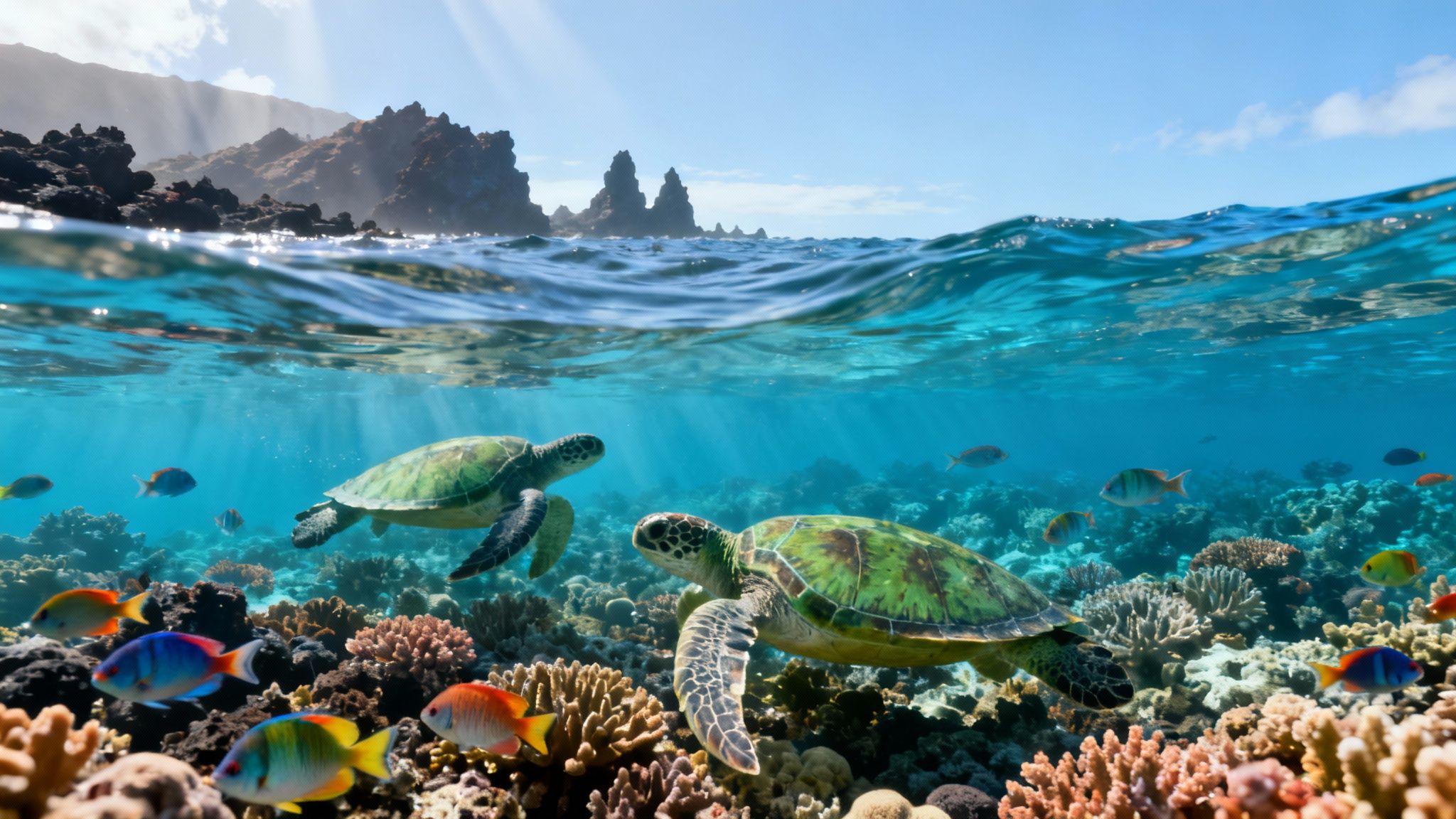
So, what’s Kona’s secret? It all comes down to the island's geography. The colossal mountains of Hualalai and Mauna Loa act as a massive natural barrier, shielding the western coast from the powerful Pacific trade winds. This protection leaves the waters off Kona remarkably placid and predictable, which is why you can have an incredible dive here just about any day of the year.
This calm environment translates directly to phenomenal water clarity. It’s not uncommon for visibility to exceed 100 feet. This is a stark contrast to the eastern Hilo side, which gets hammered by rougher seas and deals with significant freshwater runoff from rain. Kona’s water stays crystal clear, letting you see the stunning underwater world in all its vivid detail.
A Landscape Forged by Fire
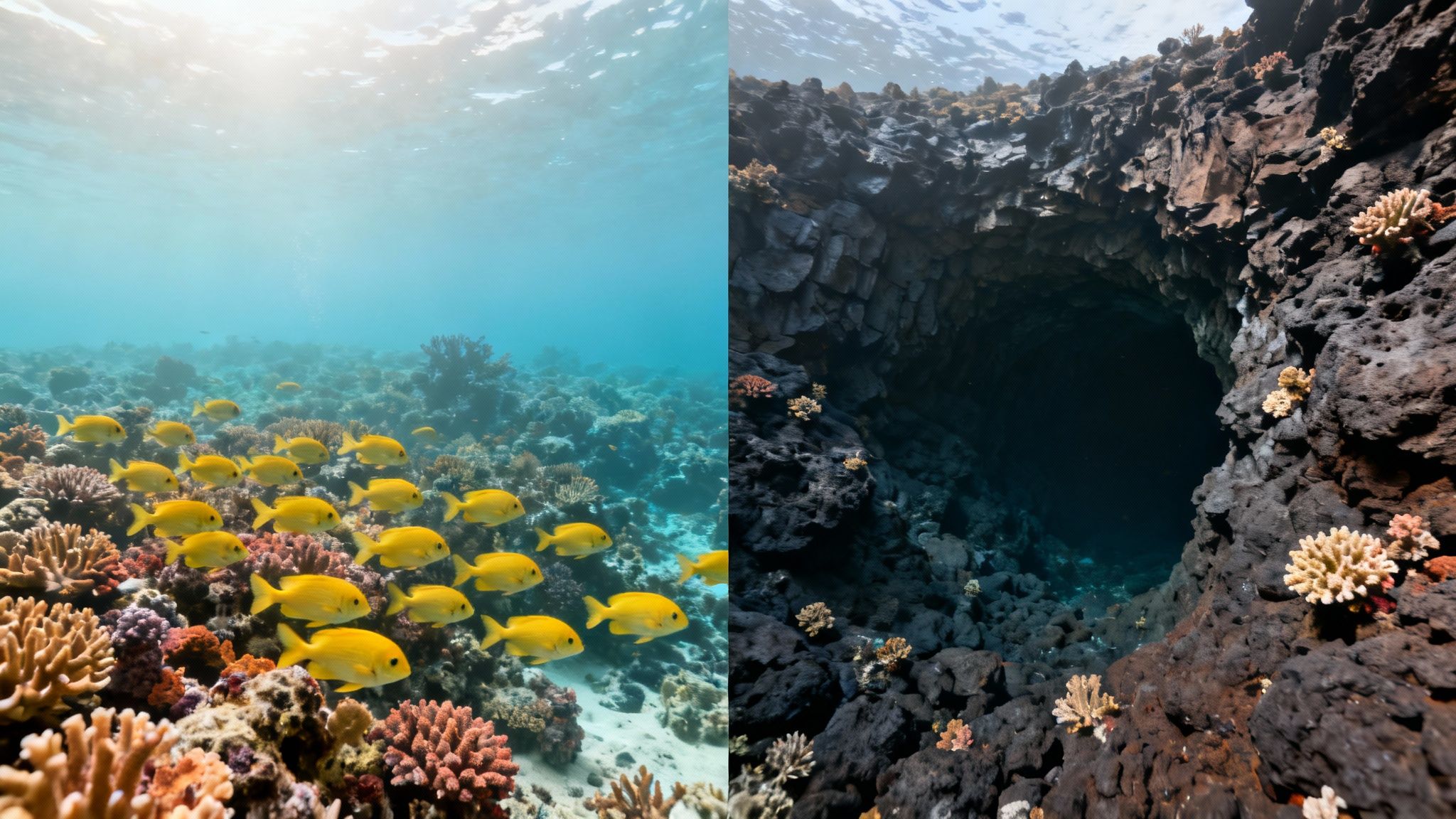
The underwater topography here is nothing short of dramatic. Centuries of volcanic activity have sculpted a breathtaking seascape that feels otherworldly. You're not just diving over sand; you're exploring a world built by lava.
- Ancient Lava Tubes: These are incredible. You can swim through underwater tunnels and archways carved out by ancient lava flows.
- Intricate Caverns: These formations provide perfect hideouts for a huge range of marine life, making every nook and cranny worth a look.
- Vibrant Coral Gardens: The calm, sunlit waters have allowed sprawling, healthy coral reefs to flourish, supporting a dense and bustling ecosystem.
The consistent conditions and unique underwater structures are a direct result of the island's volcanic origins. This makes every dive an exploration of both geology and marine biology, a combination few other places on Earth can offer.
This dynamic environment is what makes the encounters here so unforgettable. Because conditions are so reliable, dive operators can get out to a huge number of sites almost every single day, from deep volcanic drop-offs to shallow, sun-drenched reefs.
Whether you're just getting certified or you’re a seasoned pro, there are countless reasons to scuba dive Kona, Hawaii. The sheer variety and accessibility of its dive sites solidify Kona’s reputation as the ultimate hub for any Big Island diving adventure. From daytime reef explorations to the world-famous manta ray night dive, your journey starts here.
Comparing the Top Big Island Dive Destinations
So, where should you actually take the plunge on the Big Island? To figure that out, we need to compare the top spots head-to-head. While the Kona coast is packed with dozens of world-class sites, a few areas truly define the Big Island diving experience.
Each one offers something different—a unique flavor of the underwater world. This breakdown looks at the most famous dive regions based on what divers really care about: the wildlife, the underwater landscape, water clarity, and the skills you'll need. It's all about matching your personal dive style to the perfect location.
Kealakekua Bay: The Pristine Sanctuary
Ask any seasoned Big Island diver to name the top daytime spot, and you'll almost always hear "Kealakekua Bay." There's a solid reason for that. As a protected Marine Life Conservation District, the ecosystem here is absolutely bursting with life. The bay's unique geography shields it from harsh winds and currents, resulting in incredibly calm, clear conditions.
Diving here feels less like the open ocean and more like a giant, perfectly curated aquarium. You'll spend your time drifting over massive, healthy coral gardens swarmed by schools of yellow tang, parrotfish, and Moorish idols. Because all fishing is off-limits, the animals are plentiful and bold, often swimming right up to you. It's this mix of calm water, history, and dense fish populations that makes Kealakekua Bay a must-do. In fact, the Kealakekua Bay Marine Life Conservation District is widely considered the best overall dive on the island, with visibility that often pushes past 100 feet.
The Manta Ray Night Dive: A Bucket-List Spectacle
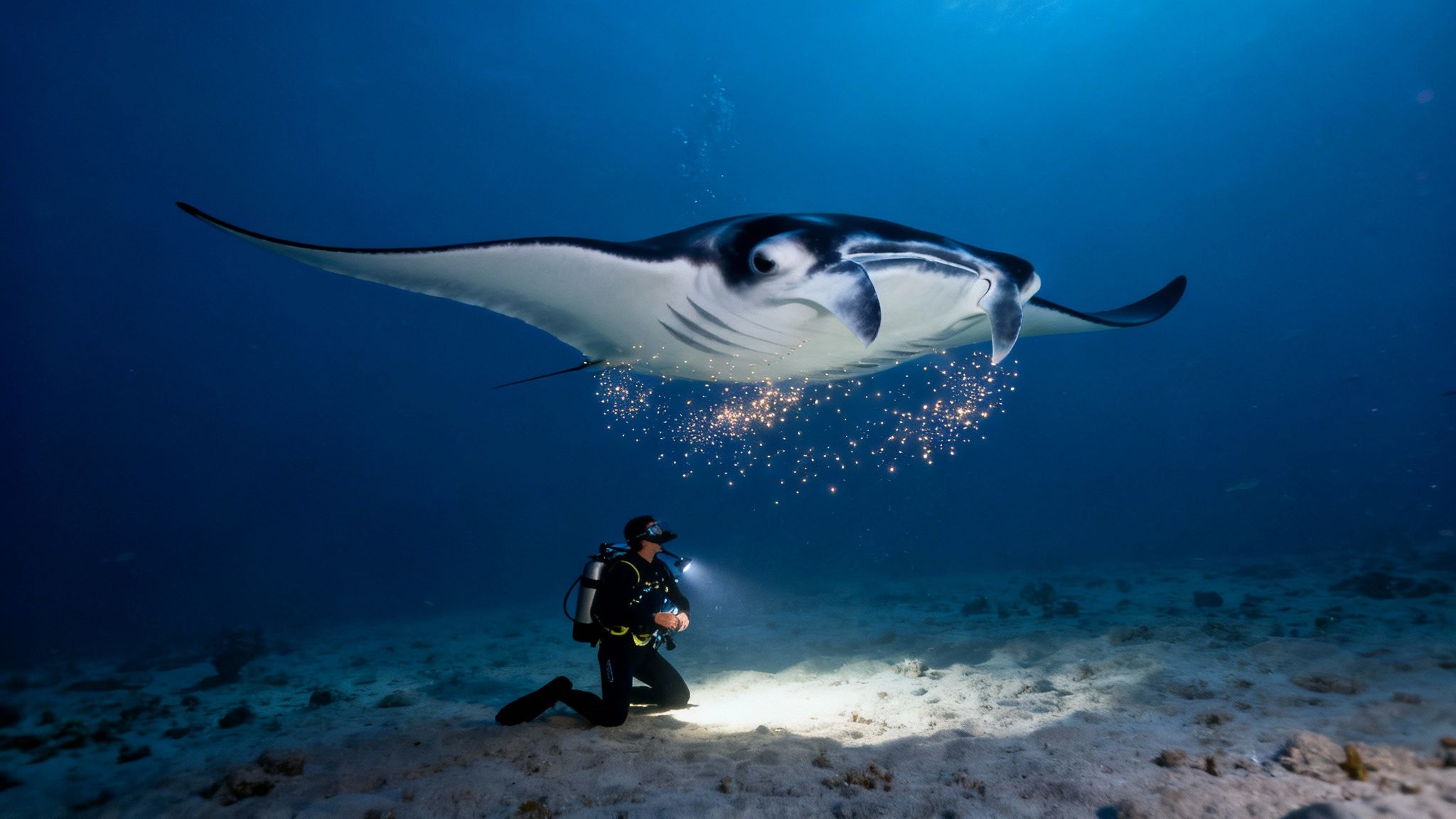
There’s simply nothing else like the Manta Ray Night Dive on the Big Island, or maybe anywhere on Earth. Calling it a "dive" doesn't quite do it justice; it's more like attending an underwater ballet. The entire experience is built around powerful lights placed on the seafloor, which attract massive clouds of plankton. That plankton, in turn, brings in the stars of the show: majestic manta rays.
As a diver, your job is easy. You just settle down on the sandy bottom in about 35 feet of water and watch the magic unfold. These gentle giants, with wingspans that can stretch over 12 feet, perform mesmerizing somersaults and barrel rolls, gliding just inches over your head to feed. It's a surreal and humbling encounter that’s open to certified divers of any level.
The Hilo Side: A Different World
With all the talk about Kona, you might be wondering about the island’s eastern Hilo side. The main reason Hilo isn't a dive hub boils down to one thing: ocean conditions. The east coast gets the full force of the Pacific trade winds, which means much rougher seas and unpredictable currents.
On top of that, Hilo is the wettest city in the United States, and all that rain has to go somewhere. The heavy freshwater runoff carries a lot of sediment into the ocean, which absolutely kills visibility. While a few shore diving spots exist, the conditions are just too inconsistent for the reliable boat diving charters you find on the Kona coast.
To help you see how these spots stack up, here's a quick comparison of the Big Island's premier dive areas.
Big Island Dive Site Comparison
This table gives you a side-by-side look at the top dive destinations on the Big Island, evaluated by key diver criteria.
| Dive Area | Best For | Typical Marine Life | Key Feature | Difficulty Level |
|---|---|---|---|---|
| Kealakekua Bay | Daytime reef diving, photography, beginners | Huge schools of tropical fish, spinner dolphins, eels | Protected bay with pristine coral and 100+ ft visibility | Beginner to Intermediate |
| Manta Ray Night Dive | Once-in-a-lifetime wildlife encounter | Manta rays, eels, crustaceans | Unique underwater light setup attracts feeding mantas | Beginner to Intermediate |
| Hilo Side | Adventurous shore diving (when conditions permit) | Varied, but less concentrated than Kona | Volcanic underwater terrain, fewer crowds | Intermediate to Advanced |
Ultimately, the best dive site is the one that fits your adventure. Whether it's the serene beauty of Kealakekua Bay or the breathtaking spectacle of the Manta Night Dive, Kona delivers unforgettable underwater experiences.
Experiencing the World-Famous Manta Ray Night Dive
You can't talk about the best diving on the Big Island without putting its most famous experience front and center: the Manta Ray Night Dive. This isn't just another dive on the logbook. It’s a true underwater spectacle, consistently landing on bucket lists for divers all over the world.
The whole thing is brilliantly simple, yet the result is pure magic. We place powerful, eco-friendly lights on the ocean floor, which act like a magnet for clouds of microscopic plankton—the favorite food of manta rays. It essentially creates an irresistible, all-you-can-eat buffet that draws these gentle giants in from the darkness.
An Unforgettable Underwater Ballet
As a diver, your only job is to get a front-row seat to one of nature's greatest shows. After a short boat ride, you'll descend to a designated sandy spot, usually around 35 feet deep, and settle onto the ocean floor.
From there, you just watch. These majestic creatures, with wingspans that can stretch over 12 feet, perform a mesmerizing ballet just inches above your head. They gracefully glide, somersault, and barrel roll through the light beams, scooping up plankton.
The feeling of a massive manta ray swooping directly over you is something that stays with you forever. It's a completely safe encounter; you're simply witnessing their intelligence and grace up close. For so many people, this becomes the single most memorable experience of their entire trip to Hawaii. The whole operation is carefully managed to be safe for both divers and the mantas, ensuring we can keep this amazing interaction going for years to come.
If you're curious about what it’s like for snorkelers on the surface versus divers below, check out our guide on the Big Island manta ray night snorkel.
The Heart of Big Island Dive Tourism
The Manta Ray Night Dive at Keauhou Bay is more than just an incredible encounter; it’s the cornerstone of the island's dive tourism. Every year, this one spot attracts thousands of visitors, a huge portion of the over 150,000 dive tourists who visit the Kona coast annually.
This reliable gathering of manta rays offers a chance to see these animals in their natural feeding environment that you just can't get anywhere else.
The consistency of the sightings is what makes this a truly world-class event. It's not uncommon to see more than 10 mantas on a single dive. It's surreal, humbling, and absolutely unforgettable.
The best way to experience this is with a guided tour. A reputable operator like Kona Honu Divers will handle everything, from the boat briefing to all the gear. We make sure your dive is not only breathtaking but also conducted with the utmost respect for the marine life we're so lucky to have here. You can see what past guests have to say about their experience below.
Ready for this once-in-a-lifetime dive? Booking your manta ray dive tour is the first step toward an incredible underwater adventure.
Finding a Dive That Matches Your Skill Level
Everyone talks about Kona’s famous manta ray dive, and for good reason. But the real magic of diving the Big Island is the sheer variety hidden beneath the waves. Once you look past the main attractions, you'll find there’s a perfect dive for every skill set and comfort level. It’s all about matching your experience to the right underwater adventure.
If you're new to diving or just prefer a chill, easy-going day in the water, Kona has plenty of accessible shore dives. They’re a fantastic way to explore beautiful, sunlit reefs without committing to a full boat charter, giving you the freedom to dive on your own time.
But for those of us looking for something a bit more intense, Kona delivers some truly mind-bending experiences that will push your limits.
The Kona Blackwater Dive: An Otherworldly Experience
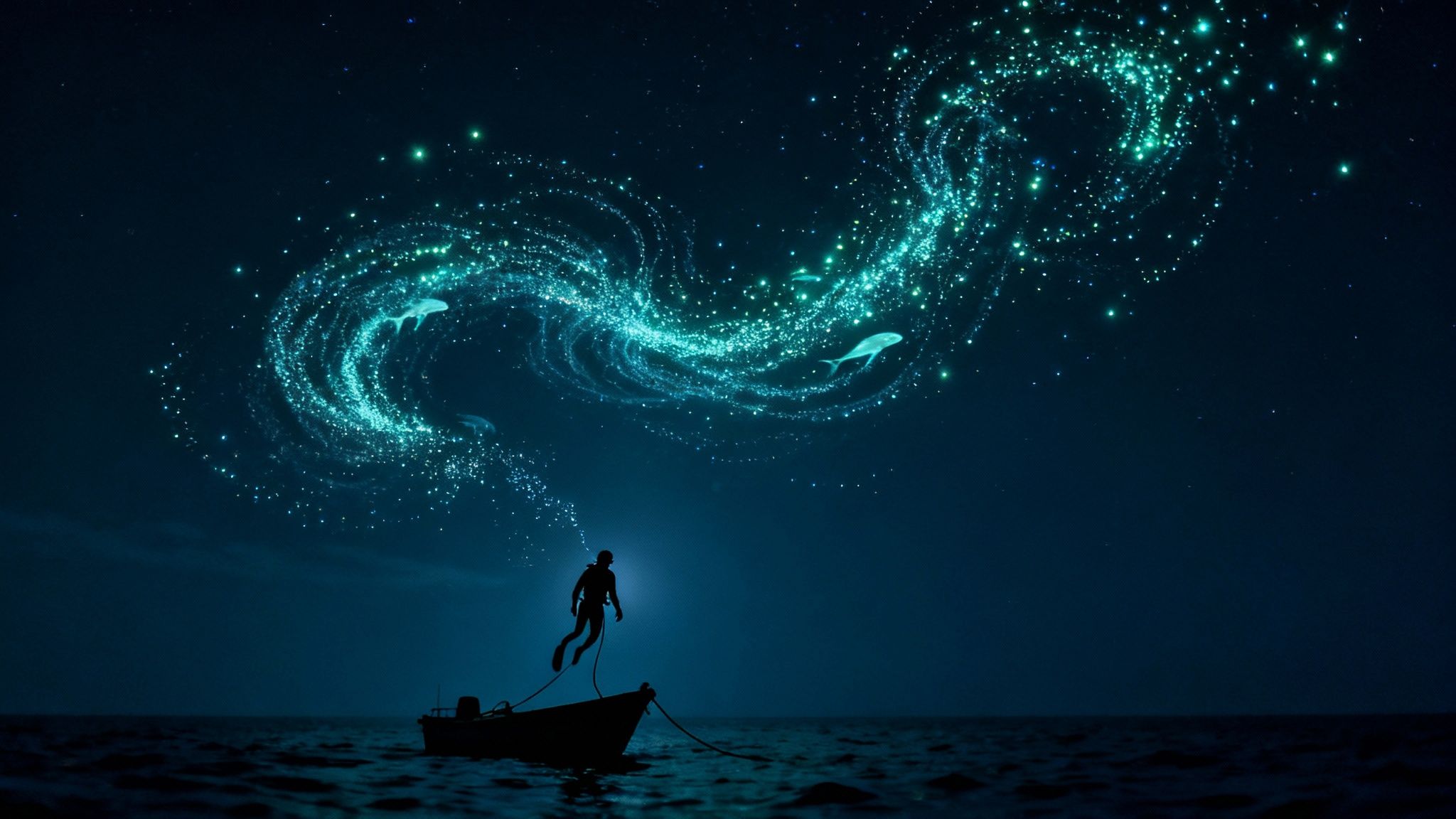
I’ve heard this called an underwater "spacewalk," and honestly, that’s the best way to describe it. The Kona Blackwater Dive is unlike anything you’ve ever done. Forget the reef. This dive takes you miles offshore, where you’ll float tethered to a boat above thousands of feet of inky black water.
The whole point is to witness the largest migration of life on our planet. Every single night, an untold number of strange, often bioluminescent creatures rise from the crushing depths to feed near the surface. You’ll be face-to-face with creatures that look like they belong on another planet—tiny larval fish, see-through squid, and pulsing, glowing jellies drifting right by your light.
The Blackwater Dive is a completely different kind of adventure. It requires a steady nerve and good buoyancy control, but the reward is seeing creatures that few people ever get to witness in their natural, deep-sea habitat.
This is a one-of-a-kind dive for the truly adventurous. If you want to experience an alien world that’s right here on Earth, the Kona Blackwater Dive tour is an absolute must.
Exploring South Kona’s Volcanic Formations
For certified divers who have some solid experience logged, the remote coastline of South Kona is an underwater playground of dramatic volcanic landscapes. This isn’t your typical coral garden; we’re talking about massive underwater structures like ancient lava tubes, complex caverns, and breathtaking archways forged by ancient lava flows.
Getting through these spots takes a higher degree of skill. You absolutely need to have your buoyancy dialed in and be comfortable in overhead environments to safely explore these formations. The dives are often deeper and require more thoughtful navigation than your average reef tour.
But the payoff is huge. You get a firsthand look at the raw, geological power that created the Big Island. There’s nothing quite like swimming through a tunnel carved by molten rock and discovering the unique marine life that has made these volcanic structures home. If you’ve got the training, joining a guided trip to these sites is an experience you won't forget. Kona Honu Divers runs premium advanced dive trips that are specifically designed for these more challenging and rewarding locations.
How to Choose the Right Big Island Dive Operator
Figuring out "where is the best place to dive on the Big Island?" is only half the battle. The other, arguably more important, piece of the puzzle is deciding who you’re going to dive with. A great operator can turn a good dive into a phenomenal one, but the wrong one can sour your whole trip. Honestly, picking a safe, professional, and reputable dive company is the most critical decision you'll make after you book your flight.
What makes a great dive experience? It really comes down to a few key things. You're looking for an operator with a rock-solid safety record, boats that are comfortable and meticulously maintained, and a real commitment to keeping group sizes small. Small groups mean you get the personal attention you deserve from your guide, which is huge for both safety and just having a better time. It’s the difference between feeling like a guest and feeling like a number on a crowded cattle boat.
Why Your Operator Matters
A fantastic dive operator does so much more than just ferry you out to a dive site; they’re the ones who make the underwater world come alive. Experienced local guides have an almost instinctual knowledge of the reefs. They know exactly which coral head the frogfish likes to hang out on or the safest way to navigate a collapsed lava tube. Their expertise is what ensures you see the most incredible marine life and the hidden gems of Kona’s unique underwater landscape.
This is where a company like Kona Honu Divers really shines. As a PADI Green Star operator, they have a deep-seated commitment to the marine environment, and their entire focus is on creating a premium experience that respects the ocean. You can feel the crew's passion for diving and their local knowledge on every single trip, from the thorough safety briefings to the excited chatter after a dive about all the wildlife you just saw. For more insights, check out our detailed guide on how to choose a Kona dive shop.
Choosing an operator is an investment in your safety and enjoyment. A top-tier company prioritizes your experience with comfortable boats, expert guides, and a genuine passion for the ocean, ensuring your memories are incredible for all the right reasons.
To give you a real, unfiltered look at what to expect, you can see what other divers have said about their experiences.
At the end of the day, the best dive operators all share one thing: a passion for creating incredible memories. When you choose wisely, you’re making sure that every moment you spend exploring the best places to dive on the Big Island is safe, comfortable, and absolutely amazing.
Your Big Island Diving Questions, Answered
Heading to a new dive spot always sparks a few questions. To make sure you feel ready to hit the water, we've put together answers to the most common things people ask about diving the Big Island.
Getting these details sorted out ahead of time means less stress and more time to get excited about what’s waiting for you under the surface.
What’s the Best Time of Year to Dive?
Honestly, any time is a good time for scuba diving in Kona. The island’s massive volcanoes act as a natural barrier, which keeps the water on the Kona side remarkably calm and clear year-round. You really can’t pick a bad month.
That said, if you want something truly special, come during the winter months, from December to March. This is peak humpback whale season. There's nothing quite like hearing their songs reverberate through the water while you're on a dive—it's an unforgettable experience. For the absolute flattest, glassiest surface conditions, summer is usually the winner.
Do I Need to Be an Advanced Diver for the Good Stuff?
Not at all. This is one of the biggest myths about diving here, and it keeps too many people from seeing the best sites. Many of our most famous dives are accessible to divers of every skill level.
You don't need any special certifications to have these incredible experiences:
- The Manta Ray Night Dive: This world-famous dive is surprisingly shallow, usually around 35 feet, making it perfectly fine for brand-new divers.
- Kealakekua Bay: As a protected marine sanctuary, its calm waters are perfect for everyone, from beginners to salty old pros.
"Sure, we have thrilling options for experienced divers—like exploring deep lava tubes or trying the mind-bending Kona Blackwater Dive. But the heart and soul of Big Island diving is open to everyone."
Besides Mantas, What Else Am I Likely to See?
The mantas steal the spotlight, and for good reason, but the biodiversity here is just incredible. The volcanic reef structures create a thriving, healthy ecosystem that's packed with life.
On just about any given dive, you'll run into our resident Hawaiian green sea turtles (honu), either cruising by or snoozing on the reef. It’s also common to see pods of spinner dolphins, well-hidden frogfish, moray eels peeking out of their dens, and whitetip reef sharks resting on the sandy bottom. And of course, the reefs are swarming with colorful fish, from schools of bright yellow tangs to our state fish, the hard-to-pronounce humuhumunukunukuāpuaʻa.
Ready to see it for yourself? Kona Honu Divers runs a full schedule of diving tours for every level, from the must-do Manta Ray Night Dive to advanced trips exploring the unique volcanic topography.