
The Big Island of Hawaii is a world-renowned mecca for scuba divers, boasting volcanic lava tubes, vibrant coral reefs, and encounters with majestic marine life found nowhere else on Earth. But with over 250 miles of coastline, the ultimate question for every underwater explorer is: where is the best diving on the Big Island? The answer isn’t a single spot but a collection of diverse, world-class sites, each offering a unique adventure. The Kona coast, in particular, is blessed with calm, clear waters, making it the epicenter of the island’s diving scene.
This guide is your definitive resource for navigating these underwater treasures. We will explore the top six dive locations that make the Big Island a diver's dream destination, detailing what makes each site special, the marine life you can expect to see, and the skill level required. Whether you're a seasoned pro looking for a thrilling night dive or a new diver ready to explore vibrant reefs, this list will help you discover the perfect dive for your Hawaiian getaway.
For those looking to explore these incredible sites, booking a trip with a top-rated operator like Kona Honu Divers ensures a safe, memorable, and expertly guided experience. Their extensive knowledge of local conditions and marine life puts you in the best hands to explore Kona's underwater wonders. You can explore their full range of diving tours to find the right adventure for you.
1. Kealakekua Bay: A Protected Marine Sanctuary
When asking locals, "Where is the best diving on the Big Island?", one name consistently rises to the top: Kealakekua Bay. This stunning location is not just a dive site; it's a designated Marine Life Conservation District, offering an unparalleled underwater experience. Its protected status ensures the coral reefs are extraordinarily vibrant and the marine life is prolific, creating an environment that feels like swimming in a perfectly maintained aquarium.
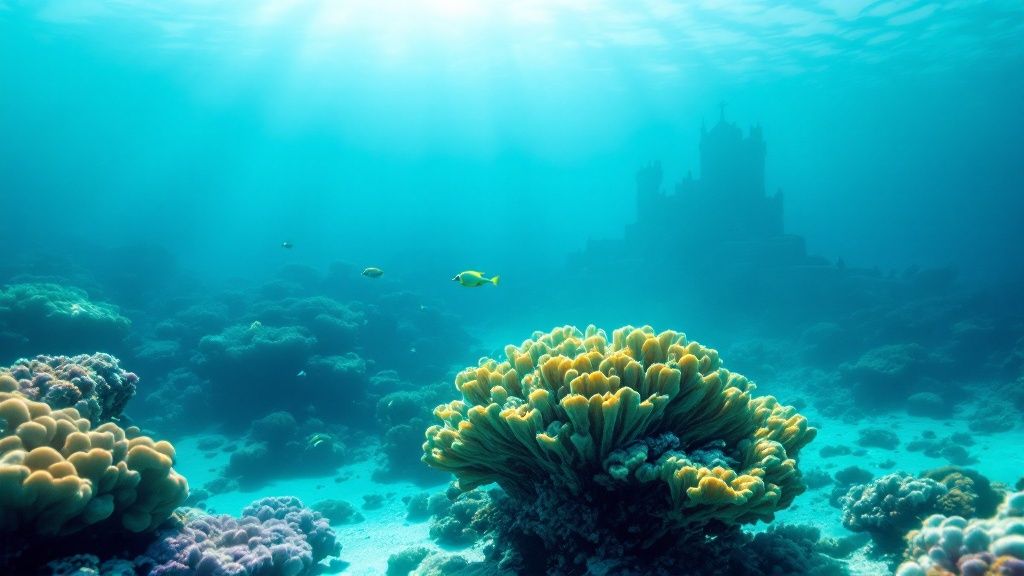
The bay's calm, clear waters boast visibility that frequently exceeds 100 feet, revealing intricate coral gardens that slope gently from the shore. This historical site, where Captain James Cook first made contact with Hawaiians, is now home to an incredible diversity of over 600 documented reef fish species. Divers can expect to see everything from schools of yellow tang and curious parrotfish to serene green sea turtles (honu) gliding effortlessly through the water.
Why Dive Kealakekua Bay?
Kealakekua Bay is ideal for divers of all skill levels, from beginners making their first open-water descent to seasoned experts looking for breathtaking scenery. The bay is also famous for its resident pod of spinner dolphins, which often visit in the mornings to rest and play.
- Pristine Conditions: As a protected sanctuary, the bay's ecosystem is thriving and largely untouched by development.
- Abundant Marine Life: The sheer density and variety of fish are staggering. You might encounter moray eels, octopus, and countless colorful reef dwellers.
- Historical Significance: Diving near the Captain Cook monument adds a unique historical dimension to your underwater adventure.
Practical Tips for Your Dive
To make the most of your visit, proper planning is key. Access to the best parts of the bay is primarily by boat, as a shore entry involves a strenuous hike. Booking a tour not only provides easy access but also ensures you have an expert guide to point out hidden marine life. Consider these tips for a perfect trip:
- Book a Tour: Joining a guided tour is the most convenient and enjoyable way to experience the bay. Explore our guide to the top-rated Kealakekua Bay snorkeling tours to find the best option for your group.
- Go Early: Morning trips often provide the calmest waters, best visibility, and a higher chance of seeing the spinner dolphins.
- Respect the Wildlife: Always maintain a respectful distance from all marine life, especially the dolphins and turtles. Never touch the coral, as it is a fragile living organism.
2. Manta Ray Night Dive: An Otherworldly Underwater Ballet
For a truly unforgettable experience that defines Big Island diving, look no further than the world-famous Manta Ray Night Dive. This isn't just another dive; it's a breathtaking, almost surreal encounter with gentle giants of the deep. Off the Kona coast, dive operators have established viewing sites where powerful, submerged lights illuminate the water. This light attracts swarms of plankton, creating a floating buffet that draws in magnificent manta rays.
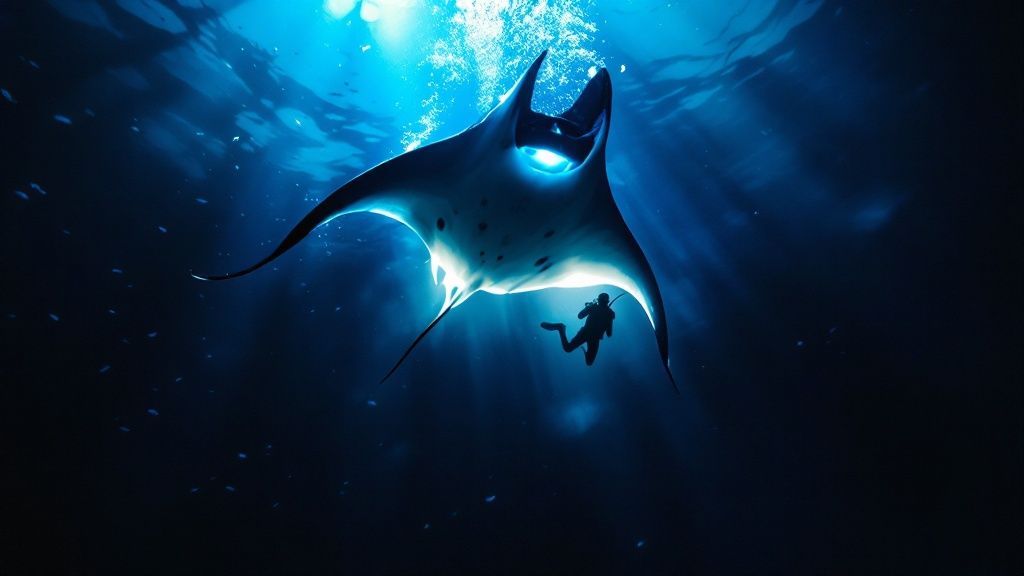
Divers settle on the sandy bottom, shining their lights upward to contribute to the plankton bloom. Soon, the mantas arrive, some with wingspans stretching up to 20 feet. They glide and swoop through the beams of light, performing graceful barrel rolls just inches above the observers' heads. Featured in documentaries by National Geographic and the BBC, this experience is consistently ranked as one of the top ten dives in the world, offering a mesmerizing spectacle you have to see to believe.
Why Dive with the Manta Rays?
The Kona Manta Ray Night Dive is a bucket-list adventure suitable for certified divers, snorkelers, and even those just wanting to watch from the boat. It's an unparalleled opportunity to witness a natural feeding behavior up close in a safe and controlled environment.
- A World-Class Spectacle: There are few places on Earth where you can reliably have such close, awe-inspiring encounters with these majestic creatures.
- Unique Night Dive Experience: The combination of darkness, powerful lights, and the silent, graceful dance of the mantas creates an unforgettable atmosphere.
- Accessible Adventure: Most dive sites are in relatively shallow water (around 30-40 feet) with minimal current, making it an accessible dive for most certified divers.
Practical Tips for Your Dive
To ensure a magical and safe experience, a bit of preparation goes a long way. This is an extremely popular activity, so planning ahead is crucial. The following tips will help you make the most of your manta encounter:
- Book Your Tour in Advance: This is one of the most sought-after tours on the Big Island. Secure your spot on a manta ray dive tour well in advance, especially during peak travel seasons.
- Choose a Reputable Operator: Select a company like Kona Honu Divers that follows Manta Ray Green List guidelines for wildlife protection, ensuring the animals' well-being is the top priority.
- Prepare for the Boat: If you are prone to motion sickness, consider taking medication beforehand as the boat will be stationary for a period.
- Relax and Observe: When the mantas arrive, remain calm and stay in your designated spot. Let them come to you; their graceful movements are part of the show.
3. Puako Reef (Puako Bay): A Shore Diver’s Paradise
For divers who value independence and easy access, Puako Reef is a top answer to the question, "Where is the best diving on the Big Island?". Located along the sunny South Kohala coast, this expansive reef system offers a premier shore diving experience, allowing certified divers to explore a vibrant underwater world on their own schedule. It’s a vast playground of coral gardens, lava tubes, and diverse marine habitats just steps from the shore.
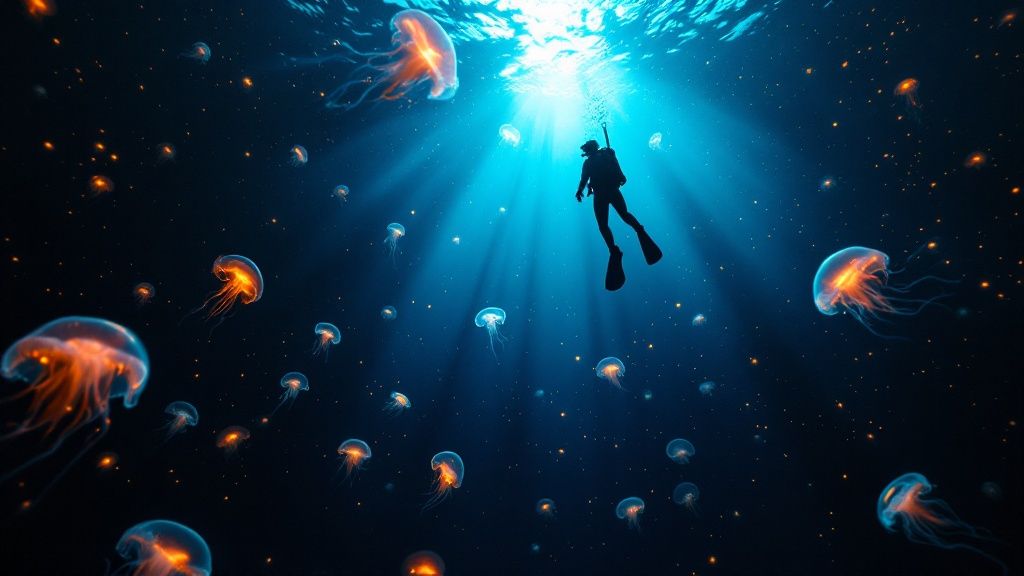
This location is renowned for its generally calm conditions and excellent visibility, making it a favorite for underwater photographers focusing on macro life and a popular training site for certification courses. The reef is teeming with life; you can expect to find green sea turtles, colorful reef fish, eels hiding in crevices, and occasionally eagle rays or even manta rays passing by. The series of public access points along Puako Beach Drive allows divers to choose different entry points for varied underwater topographies.
Why Dive Puako Reef?
Puako Reef is perfect for certified divers who enjoy the freedom of shore diving and for those looking to hone their skills in a calm, yet rewarding environment. Its accessibility and the sheer size of the reef mean you can return multiple times and have a new experience with each dive. The shallow sections are also great for snorkelers, making it an excellent spot for mixed groups.
- Unmatched Accessibility: Multiple public shore access points make it easy to plan and execute your own dives without needing a boat.
- Diverse Underwater Landscape: Explore intricate coral gardens, small caverns, and fascinating lava rock formations all in one area.
- Rich Marine Biodiversity: The healthy reef supports a dense population of marine life, offering fantastic opportunities for observation and photography.
Practical Tips for Your Dive
Proper planning is crucial for a safe and enjoyable shore dive at Puako. The entries can be rocky, and conditions can change, so being prepared is key. While it’s an ideal spot for independent divers, understanding the local environment will enhance your adventure.
- Check Conditions: Always check local tide charts and ocean reports before heading out. Mornings typically offer the calmest conditions.
- Use Proper Gear: Sturdy booties are essential for navigating the rocky entry points. A dive flag and surface signaling device are mandatory for safety.
- Dive with a Buddy: Never dive alone. The buddy system is critical for safety, especially when shore diving.
- Explore Different Entries: To truly appreciate the site's diversity, consider exploring the various access points. For a complete guide to this location and others, check out our article on the best shore diving on the Big Island.
4. Black Water Diving: An Otherworldly Abyss
For the truly adventurous seeking an experience that feels more like space exploration than scuba diving, Black Water Diving off the Kona coast is an absolute must. This is not your typical reef dive. Instead, it's a specialized, advanced night dive in the deep, open ocean. Divers are tethered to a boat and descend to a shallow depth (typically 40-60 feet) over thousands of feet of water, where powerful lights illuminate the darkness, attracting some of the ocean's most bizarre and rarely seen creatures.
This unique dive provides a front-row seat to the largest migration on Earth: the nightly vertical migration of deep-sea organisms toward the surface to feed. The creatures you'll encounter are often in their larval or juvenile stages, appearing completely different from their adult forms. You'll float in the blackness, mesmerized by translucent larval fish, pulsating jellyfish, and colonial siphonophores that look like alien lifeforms. It's an experience so unique that it has been featured in National Geographic and is a favorite among underwater photographers and marine biologists.
Why Dive Black Water?
Black Water Diving is for the certified diver who craves something beyond the reef. It's a surreal, thrilling adventure that offers a glimpse into a hidden world. Kona Honu Divers helped pioneer this incredible type of dive, making the Big Island one of the best places in the world to experience it. More experienced divers can explore advanced opportunities with an advanced dive tour.
- See Unique Creatures: Encounter pelagic life that is almost never seen during the day or on standard reef dives.
- Ultimate Night Dive: This takes night diving to an entirely new level, offering a sensory experience unlike any other.
- Photographic Opportunities: The subjects are fascinating, providing a challenge and reward for macro photographers.
Practical Tips for Your Dive
This is an advanced dive that requires a high level of comfort in the water and excellent buoyancy control. Preparation is crucial for both safety and enjoyment.
- Meet Requirements: Ensure you have the necessary advanced certifications and experience. This is not a dive for beginners.
- Master Buoyancy: Your ability to maintain neutral buoyancy is critical for safety and to avoid drifting.
- Prevent Sea Sickness: You will be on a boat in open water at night. Take preventative measures if you are prone to motion sickness.
- Listen Carefully: The safety briefing is extremely important. Pay close attention to your guide's instructions.
Kona Honu Divers provides one of the most reputable and thrilling black water experiences. You can book your Black Water Night Dive tour directly with them to ensure a safe and unforgettable adventure into the deep.
5. Honaunau Bay (Two Step): Accessible Shore Diving Excellence
For those seeking an exceptional shore dive, Honaunau Bay, affectionately known as "Two Step," is a must-visit destination. Located adjacent to the historically profound Puʻuhonua o Hōnaunau National Historical Park, this site gets its nickname from the natural lava rock steps that provide a convenient and easy entry into the crystal-clear water. Its protected nature and accessibility make it a favorite for divers and snorkelers alike.
The bay is renowned for its calm conditions and incredible visibility, which often allows for stunning underwater photography. Divers can explore a vibrant coral reef that slopes from shallow depths of 10 feet to over 100 feet, showcasing a diverse array of marine life. It’s common to encounter graceful green sea turtles (honu) resting on the reef or swimming by, along with colorful schools of butterflyfish, surgeonfish, and the occasional eel peeking from its rocky home.
Why Dive Honaunau Bay?
Honaunau Bay is the perfect answer to "Where is the best diving on the Big Island?" for those who prefer the freedom of a shore dive without sacrificing quality. The bay's easy entry makes it an excellent location for dive training and certifications, while its rich ecosystem provides plenty of excitement for experienced divers.
- Effortless Access: The "two-step" entry point on the smooth pahoehoe lava shelf is one of the easiest shore entries in Hawaii.
- Cultural Significance: Diving next to a sacred historical site adds a unique layer of reverence and beauty to the experience.
- Reliable Turtle Sightings: The bay is a well-known resting and feeding ground for green sea turtles, offering near-guaranteed encounters.
Practical Tips for Your Dive
A successful trip to Two Step involves a bit of planning, especially since its popularity can lead to crowds. The site is a treasure for both its natural beauty and cultural heritage, so mindful diving practices are essential to its preservation.
- Arrive Early: Parking is limited and fills up quickly. An early start ensures you get a spot and enjoy the water before it gets busy.
- Protect Your Feet: The lava rock can be sharp and hot. Wear sturdy water shoes or booties for the entry and exit.
- Respect the 'Aina (Land): You are adjacent to a sacred Hawaiian site. Be respectful, pack out everything you bring in, and follow Leave No Trace principles to protect this special place. Combining your dive with a visit to the historical park is highly recommended.
6. Kahaluu Beach Park: The Ultimate Beginner’s Paradise
For those wondering, "Where is the best diving on the Big Island for newcomers?", Kahaluu Beach Park is the definitive answer. Located just south of Kailua-Kona, this beloved spot is renowned as one of the most accessible and family-friendly snorkeling and dive training locations on the island. A natural rock wall (breakwater) protects the bay from large surf, creating a calm, pool-like environment perfect for those just getting their fins wet.
The bay's shallow depths and clear water offer a gentle introduction to the Big Island's vibrant underwater world. The reef, though easily accessible, is teeming with life and is a major habitat for Hawaiian green sea turtles (honu), which are often seen grazing on algae close to shore. It's a fantastic place to build confidence and observe marine life in a relaxed setting, with lifeguards on duty and excellent public facilities nearby.
Why Dive Kahaluu Beach Park?
Kahaluu Beach Park is the ideal training ground for first-time divers and an exceptional snorkeling spot for the whole family. Its ease of access and the sheer volume of turtles make it a must-visit location. The Kahaluu Bay Education Center on-site provides valuable information about reef etiquette and conservation.
- Beginner-Friendly: The calm, shallow waters are perfect for introductory dives and snorkelers of all ages.
- Turtle Haven: It's one of the most reliable places on the island to see green sea turtles in their natural habitat.
- Active Conservation: The area is a hub for coral restoration projects, offering a chance to learn about marine conservation efforts firsthand.
Practical Tips for Your Dive
To enjoy your visit while protecting the fragile ecosystem, a little planning goes a long way. The park can get crowded, so arriving early is always a good strategy. Given its convenient location, you'll find plenty of snorkel rental shops and food vendors just across the street.
- Arrive Early: Visit in the morning or late afternoon to avoid the midday crowds and find easier parking.
- Use Reef-Safe Sunscreen: Help protect the coral by using only mineral-based sunscreens (zinc oxide or titanium dioxide).
- Respect the Honu: Always keep a respectful distance of at least 10 feet from the sea turtles and never attempt to touch them.
- Stay Nearby: Its proximity to Kona makes it an easy stop. Check out some of the best places for divers to stay on the Big Island for convenient accommodation options.
Top 6 Big Island Dive Sites Comparison
| Location | Implementation Complexity 🔄 | Resource Requirements ⚡ | Expected Outcomes 📊 | Ideal Use Cases 💡 | Key Advantages ⭐ |
|---|---|---|---|---|---|
| Kealakekua Bay | Moderate – boat/kayak needed, some currents | Moderate – boat/kayak rental, basic gear | High biodiversity, clear water, historical interest | Snorkeling/diving all skill levels, historical exploration | Exceptional visibility, rich marine life, historical site |
| Manta Ray Night Dive | Moderate to high – night dive, boat transport | High – night dive gear, boat tour, lighting systems | Near-guaranteed manta ray encounters, unique nighttime experience | Night diving/snorkeling with manta rays, special experiences | Spectacular manta close-ups, safe guided dives, beginner-friendly |
| Puako Reef (Bay) | Low – shore access, easy entry points | Low – personal gear, no boat needed | Good visibility, diverse reef life, flexible schedule | Shore diving/snorkeling, free access, photography | Easy shore entry, free diving, less crowded |
| Black Water Diving | High – advanced night dive, tethered system | High – advanced cert, specialized gear, safety setup | Rare deep-sea species encounters, unique scientific value | Advanced divers seeking rare pelagic marine life | Unique deep-sea experience, professional safety, research contribution |
| Honaunau Bay (Two Step) | Low – easy lava rock entry from shore | Low – shore gear only, public facilities | Calm, clear waters with diverse marine life | Beginner shore diving, cultural and historical interest | Very easy entry, free access, cultural significance |
| Kahaluu Beach Park | Low – beach entry, lifeguarded | Low – minimal gear, good facilities | Safe beginner snorkeling/diving, reef restoration supported | Families, beginners, educational visits | Lifeguard on duty, excellent facilities, conservation programs |
Ready to Dive into the Big Island’s Best?
The question of "Where is the best diving on the Big Island?" doesn't have a single answer; it has a multitude of spectacular ones. As we've explored, the Kona coast offers a diverse underwater tapestry woven with vibrant coral gardens, dramatic volcanic formations, and encounters with some of the ocean's most majestic creatures. Each site presents a unique chapter in Hawaii's aquatic story.
We've journeyed through the historically rich and protected waters of Kealakekua Bay, a perfect spot for divers of all levels to witness flourishing marine ecosystems. We've illuminated the world-renowned Manta Ray Night Dive, a truly unforgettable ballet of gentle giants that defines Kona diving for so many. For those with an adventurous spirit, the alien world of the Black Water Dive offers a glimpse into a rarely seen dimension of nocturnal sea life, while the intricate lava tubes and healthy reefs of Puako and Honaunau Bay provide endless exploration for certified divers. Even accessible spots like Kahalu'u Beach Park showcase the incredible density of life just a few feet from shore.
From Inspiration to Implementation: Your Next Steps
Your underwater adventure is closer than you think. The key takeaway is that the "best" dive is the one that matches your skill level, interests, and sense of wonder. To transform this knowledge into an unforgettable experience, follow these actionable steps:
- Assess Your Comfort Level: Are you a new diver looking for calm conditions, or an experienced adventurer ready for a challenging drift or deep dive? Match your choice of site, such as Kealakekua Bay for beginners or a charter to more advanced locations, to your certification and experience.
- Define Your "Must-See": Is your heart set on seeing manta rays? Prioritize booking the Manta Ray Night Dive. Are you fascinated by the strange and unusual? The Kona Blackwater Dive should be at the top of your list. Having a clear goal will help narrow down your options.
- Choose a Premier Operator: The quality of your guide and vessel can make or break your dive day. Look for a company with a stellar safety record, experienced guides who are passionate about marine conservation, and a commitment to small group sizes for a more personalized experience. This is where a top-rated operator like Kona Honu Divers makes all the difference.
Ultimately, the Big Island’s volcanic legacy has created a world-class diving destination unlike any other. The combination of deep offshore waters, protected coastlines, and nutrient-rich currents fosters an environment where marine life not only survives but thrives. Your perfect dive is waiting for you just beneath the waves.
Ready to experience the best diving on the Big Island with a crew that treats you like family? Explore the full range of unforgettable underwater adventures with Kona Honu Divers. As Hawaii's most awarded and top-rated dive company, they offer expertly guided diving tours to all the premier sites, ensuring your adventure is safe, spectacular, and truly memorable.