
Figuring out the best wetsuit for a dive trip to Hawaii is, thankfully, a pretty straightforward affair for most people. For the vast majority of dives, a standard 3mm full wetsuit is your golden ticket. It's the perfect sweet spot—warm enough for deeper explorations yet flexible enough that you won't feel restricted while kicking around in Hawaii's stunningly clear waters.
Your Quick Guide to the Best Hawaii Wetsuit
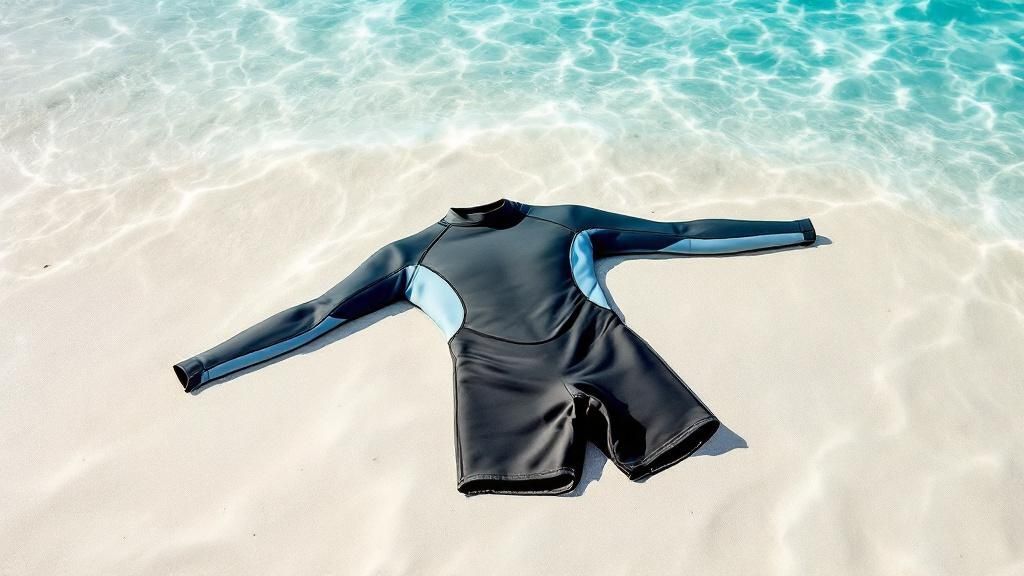
Don't overthink it. Picking a wetsuit is a lot like grabbing a jacket for a cool evening out. You just need something that keeps you comfortable without causing you to sweat or feel like you can't move your arms. In Hawaii, that's what a 3mm suit does.
The secret is Hawaii's incredibly stable ocean temperatures. Year-round, the water hovers between a pleasant 71°F and 79°F (22°C to 26°C). A 3mm suit provides just enough insulation to keep the slight chill at bay, preventing your body from losing heat too quickly. This means you can stay focused on the incredible sea turtles and vibrant fish, not on shivering. For a deeper look into the local conditions, the folks at OahuDiving.com have some great info.
Wetsuit Recommendations for Diving in Hawaii
To make it even easier, I've put together a simple table outlining what works best based on the time of year and the type of dive you have planned.
| Season | Average Water Temp | Recommended Wetsuit | Best For |
|---|---|---|---|
| Winter (Nov-Apr) | 71°F – 75°F (22°C – 24°C) | 3mm Full Suit | All scuba dives, especially deeper or night dives. |
| Summer (May-Oct) | 76°F – 79°F (24°C – 26°C) | 3mm Full Suit or Shorty | Scuba diving, long snorkeling sessions, and manta ray dives. |
| Snorkeling/Freediving | 71°F – 79°F (22°C – 26°C) | 1.5mm Top or Rash Guard | Short, shallow sessions and sun protection. |
| Night Dives (Year-Round) | Can feel cooler | 3mm Full Suit (minimum) | Manta Ray or Blackwater dives where you're less active. |
Think of this as your starting point. Ultimately, a good 3mm suit is the most versatile and reliable choice you can make, ensuring you're ready for almost any underwater adventure the islands throw at you.
How Hawaii’s Ocean Temperatures Shape Your Gear Choice
Before you can pick the right wetsuit, you have to get a feel for the water you'll be jumping into. Luckily, Hawaii's ocean is pretty consistent. You're looking at water temperatures that hover between a refreshing 74°F (23°C) in the winter and a downright balmy 80°F (27°C) in the summer.
Now, a six-degree range might not sound like much, but trust me, your body feels it, especially over the course of a 60-minute dive. Water is incredibly effective at pulling heat away from you. Even in seemingly warm tropical water, that slow, steady heat loss adds up, leaving you with a sneaky chill by the end of your dive. It’s even more noticeable on your second or third tank of the day.
This is exactly why the 3mm full wetsuit is the gold standard here. It's the perfect middle ground—it stops that energy-draining chill from creeping in, so you can stay comfortable and completely focused on the incredible world unfolding around you.
The Hidden Chill of Thermoclines
Surface temperature is only part of the story. Every so often, you'll encounter a thermocline on a dive in Hawaii. The best way to picture it is as an invisible, underwater layer where the temperature suddenly takes a nosedive. You could be cruising along in 80°F water, drop down another 15 feet, and bam—you've just hit a patch that’s 75°F.
A thermocline feels like hitting a pocket of cold air while driving on a hot day—it’s an unexpected and noticeable shift. Without the right gear, that sudden drop can be jarring and turn a great dive into a chilly one, fast.
This is another huge point in favor of the 3mm suit. It gives you the insulation you need to pass through those colder layers without even flinching. Instead of shivering and thinking about heading up, you can keep your eyes peeled for a passing eagle ray or a shy octopus tucked into the reef.
Day Dives vs. Night Dives
The time of day you're diving also makes a big difference. During the day, the sun does a great job of keeping the surface water feeling warm and inviting. But once the sun goes down, that all changes.
Think about our world-famous Manta Ray Night Dive. You’re not swimming around much; you’re mostly holding on and watching the show. Because you're less active, you're not generating as much body heat.
Without the sun and with less movement, the water will feel significantly cooler. That 3mm wetsuit goes from being a good idea to an absolute essential, keeping you warm so you can fully enjoy the magic of watching those gentle giants.
Before heading out for any dive, it’s always smart to get a real-time report on the water. You can learn more by checking out our guide on how to check ocean conditions for the Big Island, Hawaii.
Why Wetsuit Thickness and Fit Are Your Best Friends
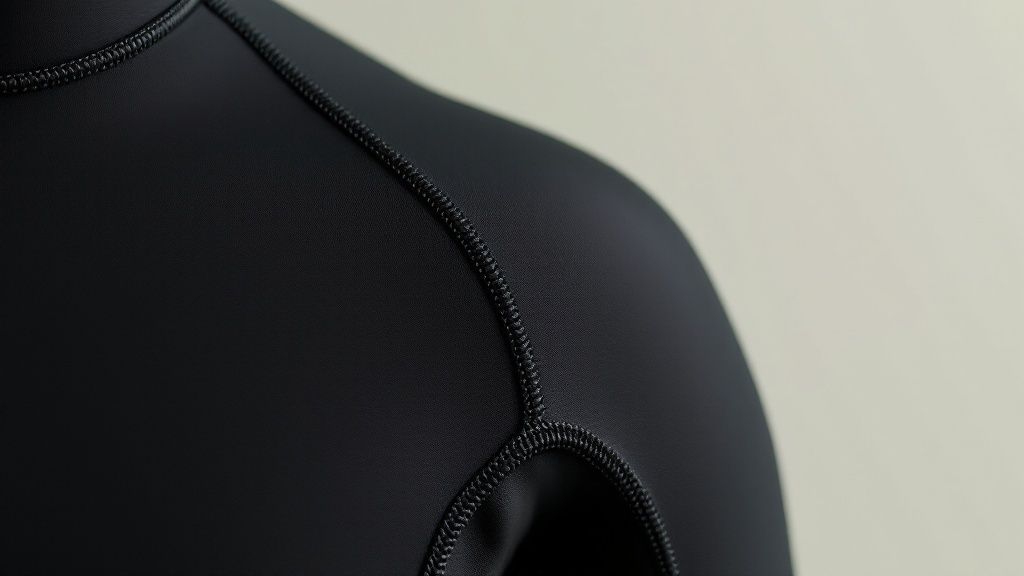
Ever wondered how that thin layer of neoprene keeps you warm in the middle of the Pacific? It's a clever bit of engineering. A wetsuit doesn’t keep you dry—that’s a drysuit. Instead, it traps a very thin layer of water right against your skin.
Your body quickly heats that trapped water, creating a cozy, personal thermal barrier against the cooler ocean. This simple principle is why the two most important factors for any diver are wetsuit thickness and fit. Get those right, and you'll stay comfortable for hours.
Finding the Sweet Spot in Thickness
When you’re shopping for a wetsuit, you’ll see numbers like 1mm, 3mm, and 5mm. That’s the thickness of the neoprene, and it dictates how much warmth you get. For diving in Hawaiian waters, the 3mm suit is the undisputed champion for almost everyone.
Here’s a quick breakdown:
- 1mm Wetsuits or Tops: These are more like rash guards. They offer a little warmth but are really best for snorkeling or surface sports on a hot day. Their main job is sun and abrasion protection.
- 3mm Wetsuits: This is the Goldilocks thickness for Hawaii. A 3mm suit provides plenty of insulation for staying comfortable at depth, even on a second or third dive, without feeling bulky or restricting your movement.
- 5mm Wetsuits: You’ll see these in colder places like California, but a 5mm suit is generally overkill for Hawaii. You’d likely get too hot, and the thicker material can feel cumbersome, making it harder to kick freely.
The demand for suits that hit this perfect balance of warmth and flexibility is huge. In tropical diving destinations, about 50% of wetsuit sales are for this middle-ground thickness, which really highlights how popular the 3mm option is.
Why Fit Is Everything
Now for the single most important part: the fit. A baggy wetsuit is like having a drafty window in your house during winter. No matter how good your furnace is, if cold air is constantly blowing in, you'll never get warm.
It’s the same exact principle underwater. If your suit has gaps at the neck, wrists, or ankles, cold water will constantly "flush" through, washing away that nice warm layer your body just heated up. This flushing effect will leave you shivering and sap your energy in no time.
A wetsuit should fit like a second skin. It needs to be snug everywhere, with no baggy spots or air pockets. If it slides on without any effort, it's almost certainly too big.
Getting the fit right ensures that thin layer of water stays put, letting your body maintain its temperature so you can focus on the manta rays and coral reefs, not on the creeping cold.
For a full rundown of what to pack for your trip, take a look at our guide on the gear you will need for your Kona diving adventure.
Matching Your Wetsuit to Your Hawaiian Dive Adventure
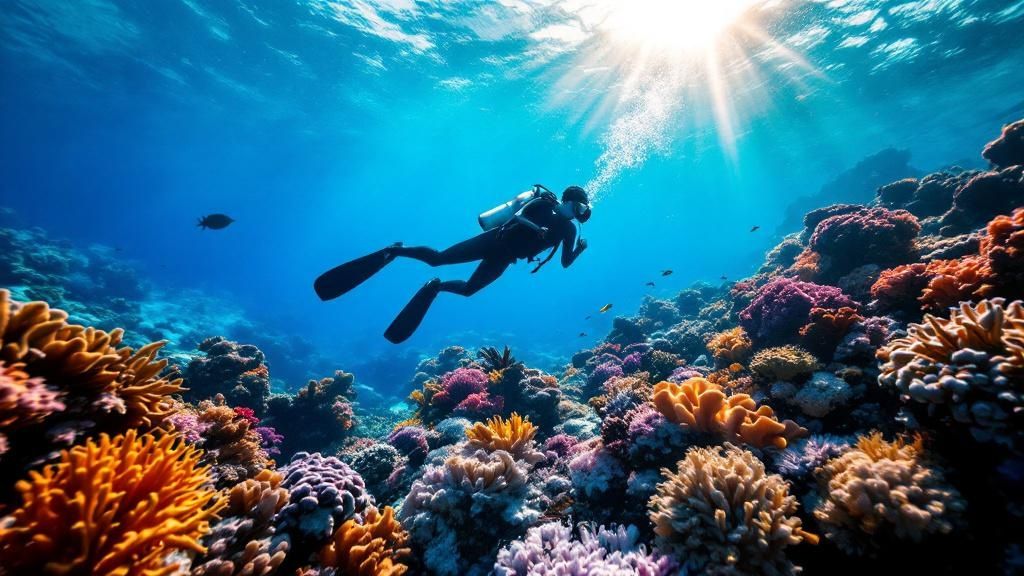
Not all dives are created equal, and your gear should always match your game plan. Choosing the right wetsuit for Hawaii really boils down to the specific adventure you have in mind. A sunny, shallow reef exploration presents a completely different challenge for your body than a deep descent for a world-famous night dive.
Think of it like this: you wouldn't wear a light windbreaker in a snowstorm. The same logic applies underwater, where your activity level, the time of day, and your depth all dictate how your body handles the cold.
Day Dives Versus Night Dives
During the day, the powerful Hawaiian sun does a great job warming the surface waters. You’re also usually kicking around quite a bit, exploring vibrant coral gardens and ancient lava tubes. For these conditions, a 3mm full wetsuit hits the sweet spot—it keeps you comfortable without making you feel overheated.
But when the sun goes down, everything changes.
Take the legendary Manta Ray Night Dive for example. You spend most of your time kneeling or sitting on the ocean floor, watching these gentle giants glide above you. Since you're barely moving, your body isn't generating much heat. With no sun to warm the water, that same ocean now feels significantly cooler.
This is where a 3mm full suit goes from a nice-to-have to a must-have. It provides the insulation you need to keep a distracting chill from ruining the moment, letting you stay fully immersed in the incredible spectacle unfolding in front of you.
Deeper Dives and Unique Conditions
For those chasing more advanced thrills, Hawaii delivers some truly mind-blowing experiences. Take the Kona Blackwater Dive, where you drift in the deep, open ocean at night. Suspended in total darkness, you’ll witness some of the planet’s most bizarre and beautiful bioluminescent creatures. This isn't a dive you want to cut short because you're cold; you need thermal protection you can count on.
The versatility of a 3mm wetsuit is its greatest strength. It’s robust enough for the unique demands of a night dive but flexible enough for a relaxed reef tour, making it the go-to choice for nearly every situation.
This adaptability is precisely why local dive operators report that more than 75% of divers opt for a 3mm full wetsuit. It’s the perfect tool for the job across a huge range of activities, from standard scuba to freediving and exploring shipwrecks. For more on this, check out these great insights on Hawaii diving from local pros.
To make it even clearer, here’s a quick guide to what you might need for some of Hawaii's most popular dives.
Wetsuit Guide for Popular Hawaiian Dives
| Dive Type | Typical Conditions | Recommended Wetsuit | Key Consideration |
|---|---|---|---|
| Shallow Reef Tour | Sunny, active swimming, 20-50 ft depth | 1.5mm top or 3mm shorty | Sun protection is as important as warmth. High activity keeps you warm. |
| Manta Ray Night Dive | Dark, stationary, 30-40 ft depth | 3mm full suit (minimum) | You'll be sitting still for a long time, so you'll get cold much faster. |
| Kona Blackwater Dive | Night, deep open ocean, minimal movement | 3mm or 5mm full suit | It's colder in the deep, open ocean. Extra insulation ensures comfort. |
| Lava Tube/Cavern Dive | Shaded from the sun, can be cooler | 3mm full suit | Water inside formations can be slightly colder and you'll want abrasion protection. |
This table shows just how versatile a good 3mm suit is, but also highlights when you might want something a little different.
Ultimately, whether you're planning a week of varied underwater adventures or just one unforgettable dive, the 3mm full wetsuit is almost always the right call. It's the reliable workhorse that ensures you're prepared for the incredible diversity of Hawaii’s underwater world.
Ready to plan your trip? Kona Honu Divers offers a fantastic selection of diving tours in Kona, Hawaii for every skill level.
Dive Hawaii in Comfort With the Right Gear
So, what’s the bottom line after all this? It’s actually pretty simple.
For just about any scuba diving Kona, Hawaii adventure, a well-fitting 3mm full wetsuit is your best friend. Think of it as the trusty multi-tool of your dive kit—versatile enough for a sun-drenched afternoon exploring the reefs and still warm enough for a less active night dive when the water feels a bit cooler. It strikes that perfect balance between keeping you warm and giving you the flexibility to move freely.
The goal, after all, is to focus on the incredible marine life, not on being chilly.
Don’t have a 3mm wetsuit, or just don’t want to lug yours all the way to Hawaii? No problem at all. A top-notch dive operator like Kona Honu Divers will have you covered with high-quality rental gear that fits just right. If you want to see what's available, you can check out their wetsuit rentals online.
Renting takes the guesswork out of it and saves you a ton of space in your luggage. You can just show up knowing you’ll have the perfect gear waiting for you, dialed in for local conditions.
Ready to jump in and explore Kona’s vibrant underwater world with the perfect gear?
Your Top Questions About Hawaii Wetsuits, Answered
We talk to divers heading to Hawaii every single day, and a lot of the same great questions pop up. Let's get them answered so you can pack your bags and get out here with total confidence.
Do I Really Need a Wetsuit Just for Snorkeling in Hawaii?
For a quick dip on a sunny afternoon? Probably not. But for any real time in the water, it's a smart move. At the very least, we always tell people to bring a rash guard or a 1mm top.
Think of it this way: that thin layer is your best friend against the strong Hawaiian sun, giving you UPF 50+ protection so you don't have to worry about a nasty burn. It also cuts the chill on longer swims or if a cloud rolls in, meaning you can stay out and explore as long as you want without getting cold.
Should I Rent or Buy a Wetsuit for My Trip?
This one’s pretty straightforward and comes down to how often you'll be getting in the water.
- Renting is perfect for the casual vacation diver. Why haul gear across the ocean? Renting saves you precious luggage space, it's super convenient, and you know you're getting a quality suit that's a perfect match for the local water temps.
- Buying is a great investment if you're a serious diver. If you're in the water a lot or know you need that absolutely perfect, second-skin fit, then owning your own suit is the way to go. It guarantees you'll be comfortable on every single dive.
What's the Best Way to Care for My Wetsuit After a Dive?
A little bit of care goes a long, long way in making your wetsuit last. It’s simple, but you have to do it every time.
As soon as you're out of the water, give it a good rinse with fresh water, both inside and out. This gets rid of all the salt, sand, and chlorine that can eat away at the neoprene.
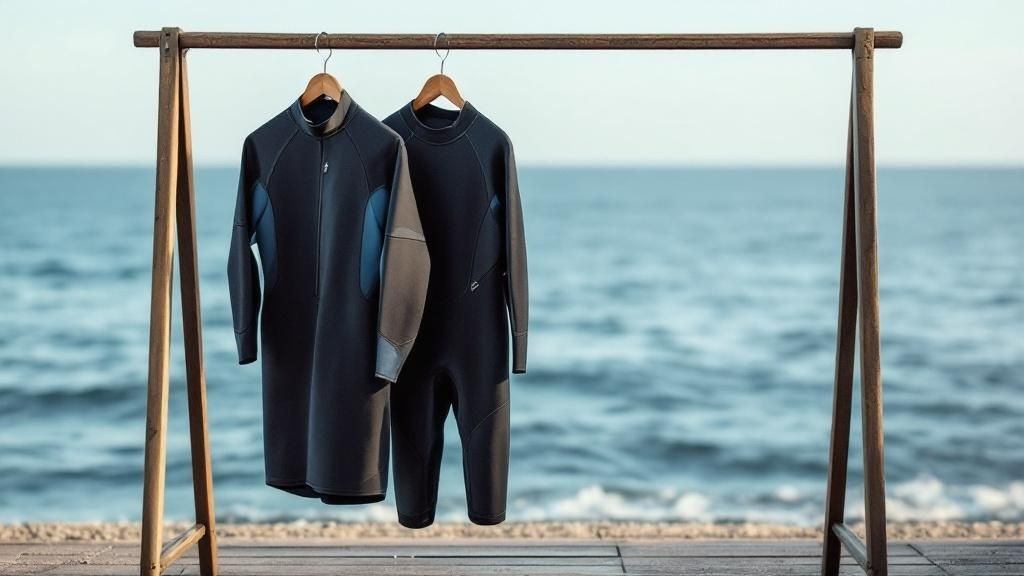
Once it's rinsed, hang it up to dry on a proper, wide wetsuit hanger—never a thin wire one, which will stretch out the shoulders. And here's the most important part: keep it out of direct sunlight. Those UV rays are the number one enemy of neoprene.
Ready to experience the vibrant underwater world of the Big Island? Kona Honu Divers has you covered. From unforgettable diving tours in Kona, Hawaii to top-of-the-line rental gear and expert advice, we’re here to make your trip incredible.
Let our crew show you the magic hiding just beneath the waves.