
Let's cut right to the chase. If you want the absolute best time to see manta rays in Kona, you should plan your trip for the evening, anytime from late spring to early fall (April to October). This is when the seas are generally calmer and the water is warmer, setting the perfect stage for one of the most reliable and magical wildlife encounters on the planet.
While you can spot these gentle giants all year long, timing your visit during these peak months really stacks the odds in your favor for an unforgettable underwater ballet.
Your Quick Guide to Kona Manta Ray Viewing
Picture this: you're floating in the calm, dark Pacific, and just below you, magnificent giants with wingspans stretching up to 16 feet glide and swoop through the water. This isn't just a quick glimpse of an animal; it's a full-blown performance, and Kona is the world's best theater for it.
Kona, Hawaii, is famous for being the most reliable place on Earth to see manta rays, with a staggering 80-90% success rate on night snorkel and dive trips. It's no wonder that around 80,000 people come here every year for this very reason. It's a testament to just how special this corner of the ocean is.
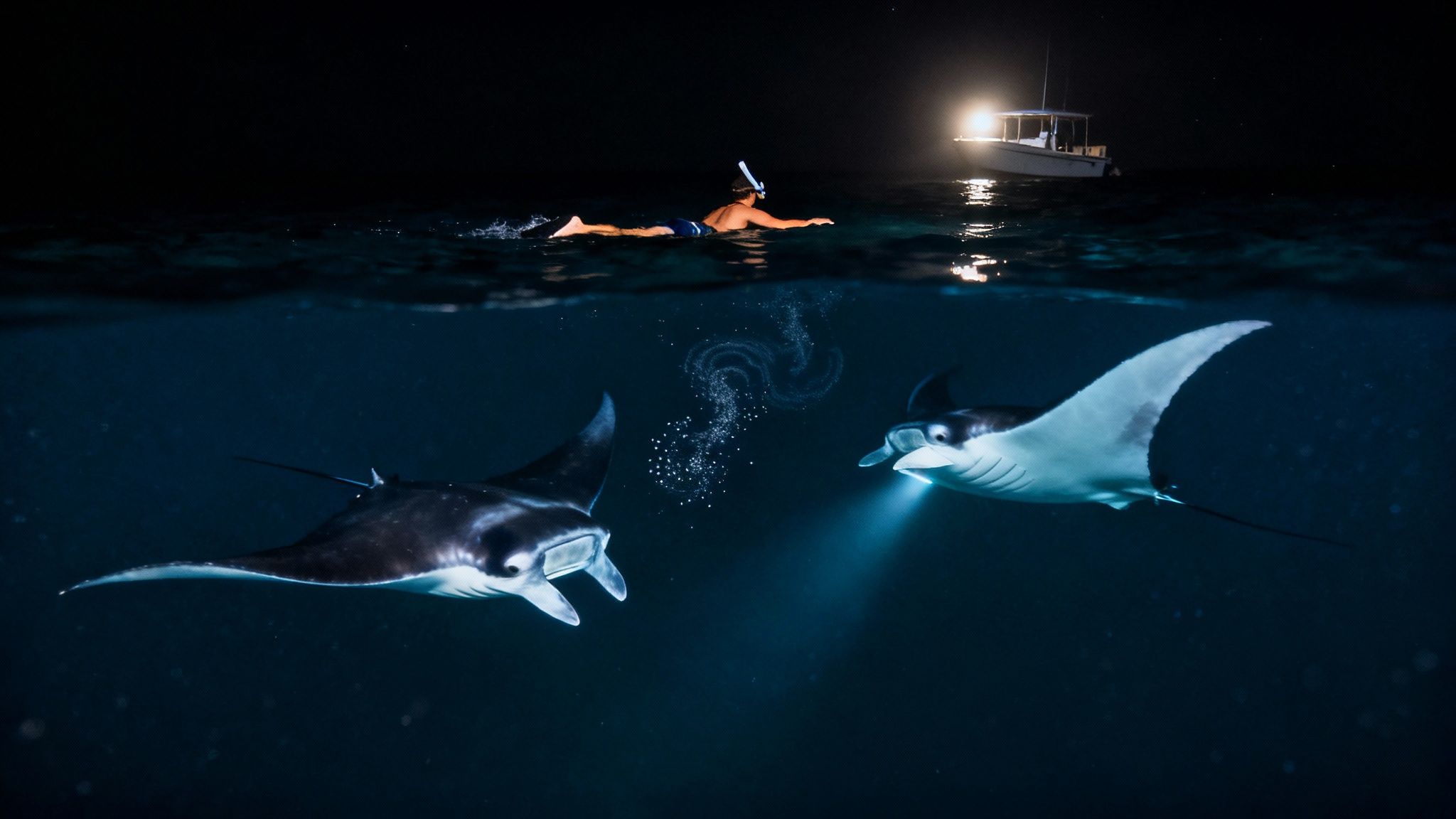
This incredible consistency means your trip isn't just a roll of the dice; it's an opportunity for a genuine connection with one of the sea's most majestic creatures. Knowing the ideal conditions is the key to making it happen.
Key Factors for Your Trip
To really nail your planning, it helps to understand the "why" behind Kona's reliable manta encounters. Before we get into the nitty-gritty, here's a quick look at the most important factors. And if you're curious about other spots, we've also put together a guide on where to see manta rays in other parts of Hawaii.
Here's what you need to know for a perfect trip:
- Best Season: Plan for April to October. This window gives you the calmest seas and most comfortable water temperatures.
- Time of Day: It's always a night swim. Tours head out after sunset because the darkness is essential for the lights to attract the plankton that mantas feed on.
- Moon Phase: A new moon (darkest sky) is ideal. The less moonlight there is, the more effective the tour boats' lights are at drawing in a plankton feast.
For an even deeper dive into how seasons and other conditions affect sightings, check out this ultimate guide on the best time to see manta rays in Kona.
To make it even simpler, here's a quick reference table summarizing the perfect conditions for your manta ray adventure.
Optimal Kona Manta Ray Viewing Conditions at a Glance
| Factor | Optimal Condition | Why It Matters for Your Trip |
|---|---|---|
| Best Months | April–October | Calmer seas and warmer water make for a more comfortable and predictable experience. |
| Time of Day | After Sunset | Darkness is crucial for the tour lights to attract a dense cloud of plankton—the manta's food. |
| Moon Phase | New Moon (or Darker Nights) | Less ambient light from the moon makes the boat's "plankton magnet" lights even more effective. |
| Tides | Less Critical in Kona | Unlike other locations, Kona's manta sites are less affected by tides, giving you more flexibility. |
Ultimately, planning around these factors—especially the season and time of day—will give you the highest probability of having a truly mind-blowing experience.
Why Kona Is the World’s Manta Ray Capital
Ever wondered what makes Kona the absolute best place on the planet to see manta rays? It’s no accident. The secret lies in a perfect storm of geography and ecology, a combination that turns the Big Island’s coastline into a manta paradise.
The underwater landscape here, carved out by ancient volcanoes, has created the perfect nooks and crannies for microscopic plankton to gather. These tiny organisms are the main course on a manta ray's menu. Certain spots, like the famous 'Manta Village' and 'Manta Heaven,' are natural funnels for this food source, drawing the mantas in every single night.
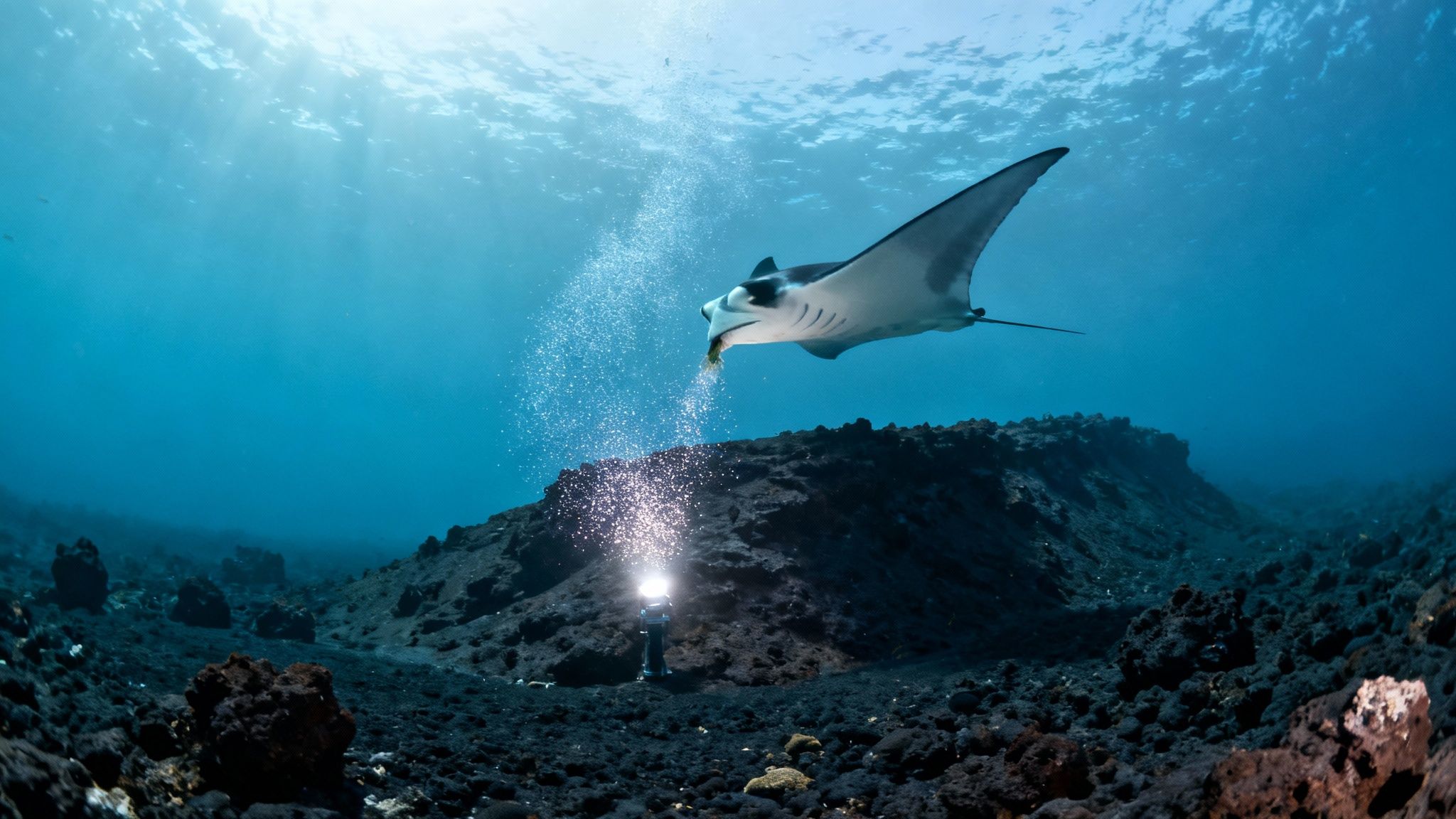
The iconic night tours amplify this effect. Tour operators use powerful, eco-friendly lights that shine into the water, attracting even more plankton. For the mantas, it’s like a five-star, all-you-can-eat buffet that opens for business as soon as the sun goes down.
A Thriving Resident Population
This incredibly reliable food source has led to something truly special: a large, non-migratory population of manta rays. They don't just visit Kona; they live here. That’s why the encounters are so consistent and why Kona has earned its reputation as the most dependable place in the world to see them.
Decades of dedicated research along the Kona Coast have given us amazing insights. Scientists and local guides have cataloged over 450 individual manta rays over the years, with more than 120 of these regulars showing up at the main sites annually. This ongoing work helps everyone understand their patterns and ensures our interactions are safe and sustainable. You can dive deeper into the manta ray statistics here.
Knowing the story behind this natural wonder transforms the experience. It’s not just a cool dive; it’s a chance to connect with one of the ocean's most majestic animals and the fragile ecosystem that they call home.
Choosing an operator that respects this delicate balance is crucial. A company like Kona Honu Divers is committed to these responsible practices, helping to ensure the mantas will be here for generations to come. It's this deep respect that has made the Kona Manta Ray Dive a truly iconic adventure.
Ready to see this natural wonder for yourself?
Planning Your Trip Around the Best Seasons
Timing is everything when it comes to planning a truly unforgettable manta ray adventure. While you can find these gentle giants in Kona’s waters any day of the year, some seasons just make for a better, smoother, and more magical experience.
If you're looking for the absolute sweet spot, aim for late spring, summer, or early fall. The window from April to October is widely considered the prime time to visit.
Peak Season vs. Off-Season
So, what makes these months so special? It all comes down to the weather. The Pacific tends to be much calmer, with smaller swells and beautifully warm water that hovers around a comfortable 75-80°F.
This calm ocean means tour cancellations are very rare, so your plans are likely to go off without a hitch. More importantly, these conditions create the perfect environment for plankton to bloom. Think of it as the 'manta buffet' being fully stocked, which naturally draws in more mantas for their nightly feast.
By planning your trip during this calmer season, you're not just booking a tour; you're stacking the odds in your favor for a front-row seat to Kona's world-famous underwater ballet.
On the other hand, the winter months from December through March can be a bit more unpredictable. This time of year often brings rougher seas, with swells sometimes reaching 3-6 feet. For safety, this can occasionally lead to tour cancellations. The mantas are still out there, but getting to their feeding sites can be a challenge.
While you can absolutely have a fantastic experience in the winter, booking between April and October significantly boosts your chances of a smooth and comfortable trip.
For a deeper dive into how the seasons affect all of Kona's underwater activities, take a look at our complete guide on what is the best season for diving in Kona.
How Time of Day and Moon Phases Affect Your Tour
You might wonder why every manta tour in Kona happens after the sun goes down. The answer is simple: it’s all about dinner.
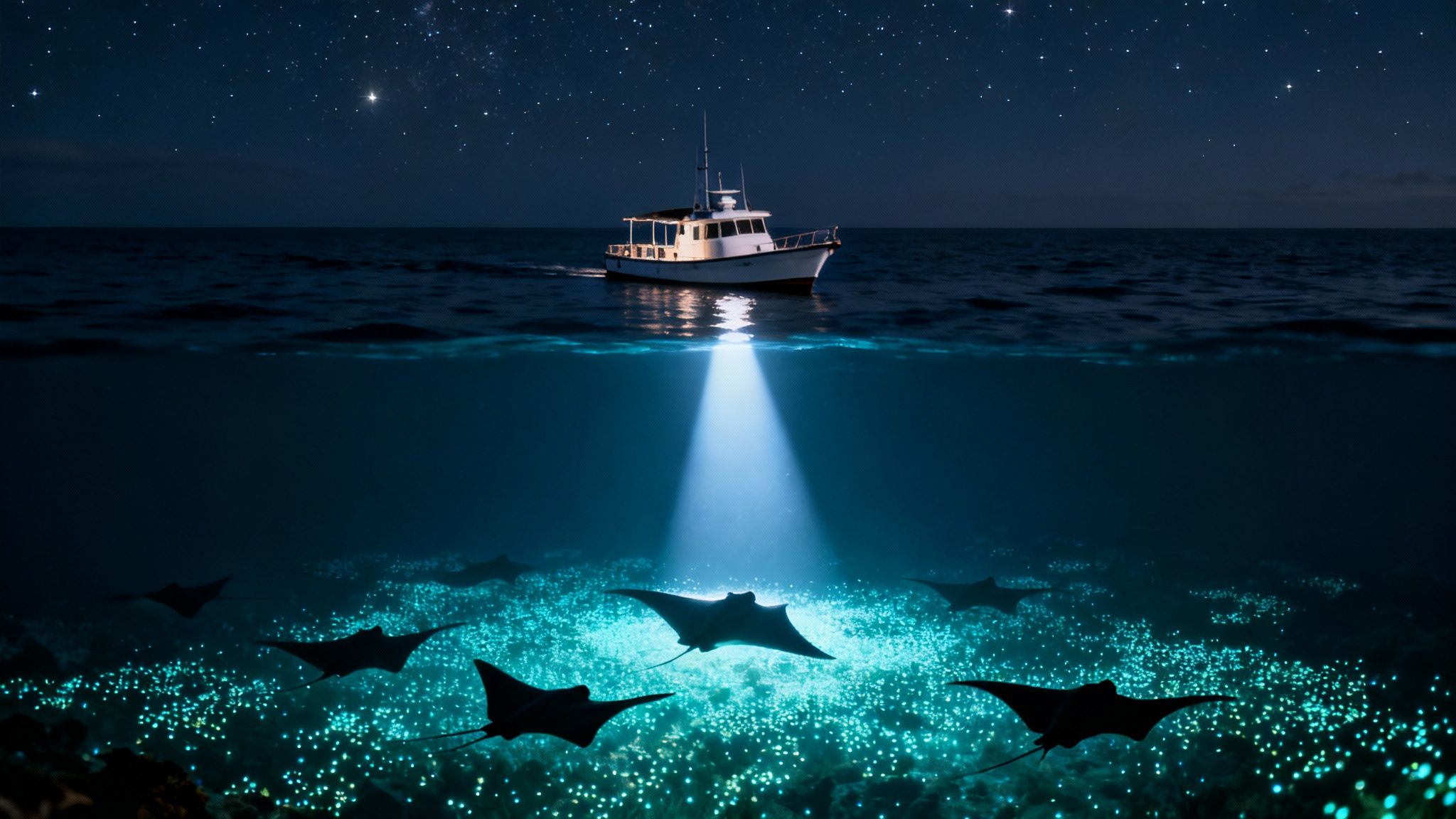
Manta rays' favorite food is plankton, tiny microscopic organisms that are drawn to light. So, tour operators set up powerful, eco-friendly lights in the water. In the dark, these lights become an irresistible beacon, creating a concentrated plankton buffet that brings the mantas right to us. This is the secret sauce behind the incredible, up-close encounters on every Kona manta ray night dive.
The Moon's Surprising Role
Here’s a little insider tip that can turn a great night into an unforgettable one: check the moon calendar before you book.
A new moon, when the sky is pitch-black, is often the best time to go. With no competing moonlight, our underwater lights become the brightest thing around, attracting an even denser cloud of plankton.
A darker sky helps create a thicker "plankton soup," which can mean more mantas and more spectacular feeding right below you.
On the flip side, a full moon can sometimes spread the plankton out a bit, as the natural light gives them more places to go. But don't let that stop you! We see mantas consistently all year long, regardless of what the moon is doing. For a deeper dive into how these nighttime trips work, check out this Ultimate Guide to the Kona Manta Ray Night Snorkel.
Choosing the Perfect Manta Ray Tour in Kona
Now that you know the best time to see manta rays in Kona, the fun part begins: deciding *how* you want to witness this incredible underwater ballet. Your two main choices are snorkeling or scuba diving, and each offers a completely unique—but equally stunning—perspective.
Snorkeling gives you a fantastic bird's-eye view. You'll float comfortably on the surface, usually holding onto a custom light board that illuminates the water below. From this vantage point, you can watch the mantas glide, swoop, and perform their famous barrel rolls right beneath you. It’s an amazing and accessible option for almost anyone, regardless of your in-water experience.
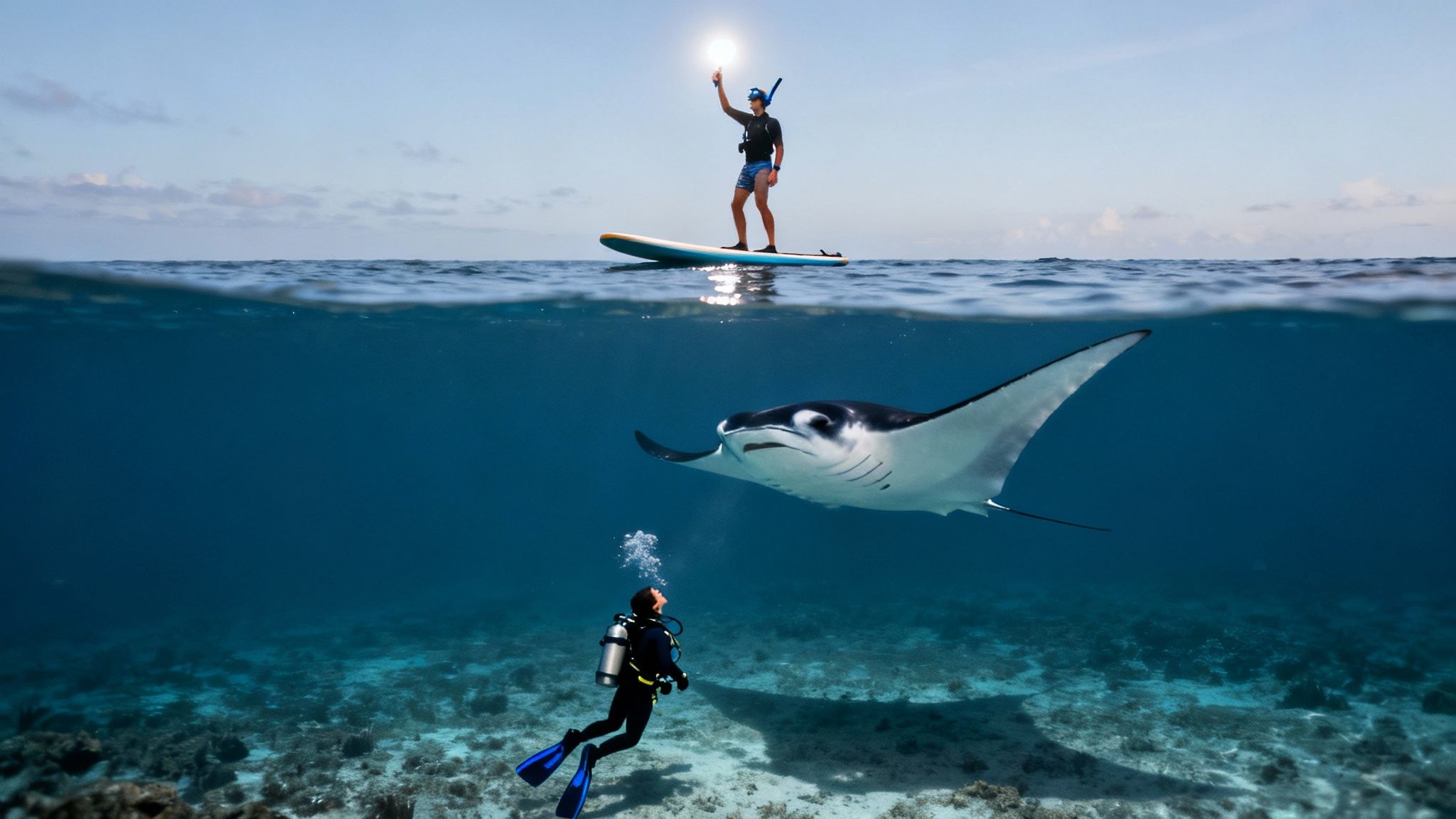
Scuba diving, on the other hand, puts you right in the middle of the action. If you're a certified diver, you’ll descend to the sandy ocean floor—about 35 feet down—and look up. From there, you get to see these gentle giants soar overhead, their massive silhouettes eclipsing the lights from the boats above. It truly feels like you’ve been invited into their world.
Selecting a Responsible Operator
Whether you snorkel or dive, the most important decision you'll make is choosing an operator who puts the mantas' well-being first. Responsible tourism is the only way to ensure this amazing natural wonder continues for years to come.
Look for companies on the Manta Ray Green List. These operators have committed to strict, eco-friendly guidelines that protect the rays and their habitat. It’s your guarantee of a safe and respectful encounter for everyone involved—human and manta alike.
A great example of a Green Listed operator is Kona Honu Divers. They are well-known for their serious commitment to marine conservation while delivering unforgettable adventures. Checking out their famous manta ray dive and snorkel tour is a perfect way to see what a top-tier, responsible trip looks like.
Hearing from other travelers is one of the best ways to get a feel for the experience.
Ready to book your spot for this unforgettable night?
Got Questions? We’ve Got Answers.
Thinking about your manta ray trip likely brings a few things to mind. Let’s walk through some of the most common questions we hear so you can head out on the water feeling excited and fully prepared.
Is It a Sure Thing We’ll See Manta Rays?
It's important to remember we're visitors in their world, and these are wild animals with their own plans. That said, the success rate in Kona is incredibly high—somewhere between 80-90% on most nights. It's one of the most reliable wildlife encounters on the planet.
Still, nature doesn't offer a 100% guarantee. That’s why top-tier operators like Kona Honu Divers have a "Manta Guarantee." If the mantas decide not to show up on your tour, you can come back another night for free. It’s our way of making sure you have the best possible shot at seeing the show.
How Good of a Swimmer Do I Need to Be for the Snorkel Tour?
You really don’t need to be an Olympic swimmer. In fact, you barely need to swim at all.
We set you up for success with everything you need to feel safe and comfortable:
- Buoyant Wetsuits: These help you float with almost no effort.
- Floating Light Boards: Everyone holds onto a large, custom-made raft with handles. This keeps you stable and gives you a perfect view of the action below.
Your job is simply to float, watch, and be amazed as the mantas glide just a few feet beneath you.
Are Manta Rays Dangerous?
Not in the slightest. They're called "gentle giants" for a reason. Manta rays are completely harmless to people.
They don’t have teeth, stingers, or any kind of barb. They're filter feeders, so their only interest is the microscopic plankton drawn to the lights. The most important rule is to be a passive observer—no touching—which keeps both you and these incredible animals safe and stress-free.
What Other Epic Dives Can I Do in Kona?
The manta ray dive is a bucket-list experience, but Kona's underwater world has so much more to offer. If you want to keep exploring, you're in one of the best places on Earth to do it.
For certified divers looking for something truly different, the Kona Blackwater Dive is a mind-bending experience. You'll drift in the open ocean at night and watch bizarre, bioluminescent creatures rise from the deep. More advanced divers can also explore otherworldly lava tubes and vibrant coral gardens on a premium advanced dive tour.
Honestly, the best way to see what Kona has to offer is to check out all the diving tours available and see what sparks your imagination.
Here at Kona Honu Divers, we live for this stuff. Our whole mission is to provide safe, respectful, and absolutely unforgettable adventures. Whether it's your first time putting on a snorkel mask or you're a seasoned diver, our crew is ready to show you the magic of Kona's ocean. Book your Manta Ray Adventure today!