
Hands down, the best time to see manta rays in Kona is from late spring through early fall. Think April to October. This is when the ocean tends to be at its calmest and the water is warmer—ideal conditions for us in the water and for the plankton the mantas come to eat.
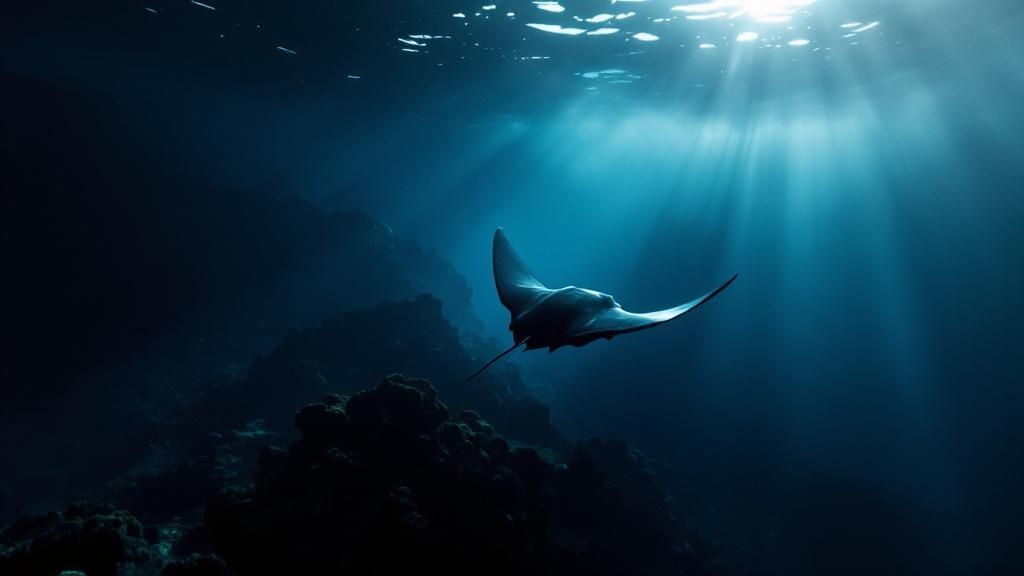
While you can have an amazing manta encounter any time of year in Kona, a few key factors can stack the deck in your favor. Nailing the timing isn't just about seeing mantas; it's about having the most comfortable and magical experience possible.
Think of it like planning a stargazing trip—sure, you can see stars on any clear night, but you'll see the Milky Way in all its glory during a new moon in a dark-sky park. We're doing the same thing here, but for an underwater ballet.
Decoding the Perfect Manta Encounter
To help you plan, we've put together a quick cheat sheet. It breaks down the most important elements, from the season all the way down to the phase of the moon.
| Factor | Best Conditions | Why It Matters |
|---|---|---|
| Season | April – October | You'll get calmer seas, warmer water, and more plankton in the water, which is like ringing the dinner bell for mantas. |
| Time of Day | After Sunset | The classic night dives use powerful lights to attract plankton, creating a reliable feeding spot that mantas can't resist. |
| Moon Phase | New Moon (Darkest Nights) | With less moonlight, the tour boat's lights become the brightest beacon around, creating a super-concentrated plankton buffet. |
| Ocean Conditions | Calm, Low Swell | This means crystal-clear visibility and a much smoother, safer, and more enjoyable time for everyone in the water. |
Looking at this, you might worry about getting the timing just right, but here's the good news: Kona’s resident manta ray population is incredibly reliable. Even outside of these "perfect" conditions, the local operators have an amazing 80-90% sighting success rate all year long.
Why Kona Is a Global Manta Ray Hotspot
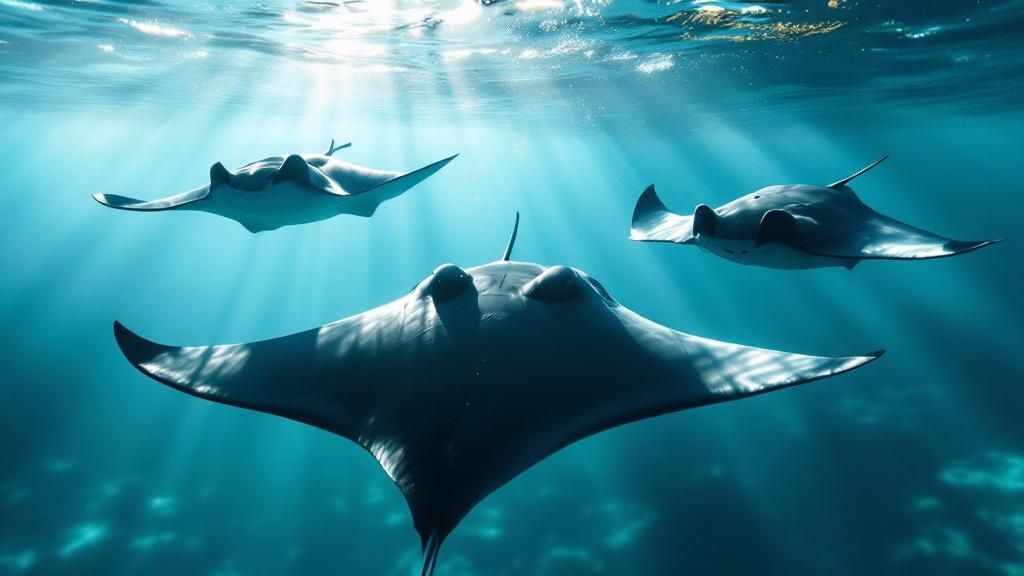
Kona's title as one of the best places on Earth to see manta rays isn't just hype—it's the result of a perfect storm of geology and marine biology. This incredible combination makes it possible to encounter these gentle giants reliably, all year long.
The secret lies beneath the waves in the Big Island's volcanic origins. The unique shape of Kona's coastline, carved from ancient lava flows, has created sheltered bays that act as natural nets for plankton, which is the main dish on a manta ray’s menu.
When ocean currents sweep past the island, they carry a constant stream of these tiny organisms. Kona's bays concentrate this plankton, turning the nearshore waters into a dependable, all-you-can-eat buffet that the local manta population has come to rely on every night. This is what makes Kona so uniquely consistent for manta sightings.
The Science of Sightings
This natural feeding phenomenon has created a truly special opportunity for both tourism and scientific research. Kona boasts an astonishingly high success rate, with an 80-90% sighting rate on tours throughout the entire year.
That incredible consistency draws around 80,000 visitors each year, cementing Kona’s reputation as a world-class destination. The famous sites, like Manta Village and Manta Heaven, are particularly effective because their shallow, protected waters are perfect plankton traps, bringing in crowds of mantas almost every single night.
Having such a reliable food source is what allows the Big Island to support a large, resident population of manta rays. While Kona provides this one-of-a-kind experience, it's interesting to see how it compares to other renowned manta ray destinations like Lady Elliot Island on the Great Barrier Reef. Exploring where to see manta rays in Hawaii really drives home just how remarkable the Kona coast is.
Finding the Perfect Season for Your Adventure
When it comes to planning an unforgettable night out with Kona's manta rays, timing is everything. While you can spot these gentle giants any time of year, certain months truly set the stage for a spectacular show.
If you ask any seasoned local diver, they'll tell you the magic window is from late spring through early fall. Think April to October. This is when the ocean conditions off the Kona coast are at their absolute best.
During these months, the Pacific usually calms down, meaning smaller swells and a much smoother boat ride out to the dive site. It makes for a more comfortable and enjoyable experience for everyone, whether you’re on snorkel or scuba.
Why Summer and Shoulder Seasons Shine
It's not just about the calm seas. The water is warmer, too, typically hovering between a pleasant 75–80°F. This creates the perfect environment for plankton—the mantas' favorite meal—to bloom. More food means a more reliable and impressive gathering of rays.
In fact, data from local researchers often shows nightly sightings of 8–12 manta rays during this peak period. It's this combination of calm water and a buffet of plankton that makes for that world-famous underwater ballet.
What About a Winter Trip?
So, what if your vacation plans land you here between November and March? Don't stress. The mantas are residents, not tourists, so they're here year-round, feeding along the coast every single night.
The only real wild card in the winter is the weather. The ocean can get a bit more turbulent, with bigger swells that can sometimes force tour operators to cancel trips for safety. The mantas will be there, but getting out to them can be a bit hit-or-miss.
Key Takeaway: For the best shot at glassy seas and epic manta encounters, plan your trip between April and October. But even if you visit in the off-season, your chances of a mind-blowing experience are still incredibly high.
Knowing these seasonal trends helps you line up your expectations with reality. If you're curious to learn more about how the weather plays a role, you can get more details about when to dive with manta rays in Kona.
How Nature’s Timetable Impacts Your Sighting
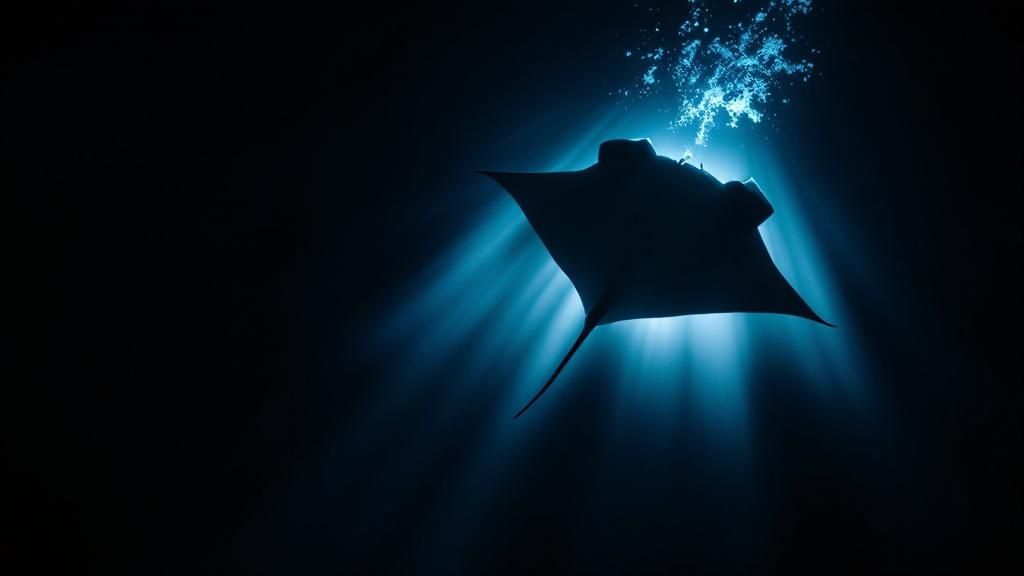
While picking the right time of year gets you in the ballpark, the daily and lunar cycles are what really dial in the experience. These subtle, natural rhythms can be the difference between a good night and an unforgettable one.
Understanding these factors—the moon phase, the tides, even the day's weather—gives you a deeper appreciation for the complex world these creatures inhabit. They're small pieces of a much bigger puzzle.
Reading the Ocean's Clues
The moon cycle acts like a giant dimmer switch for the ocean. On a new moon, the sky is pitch-black. This makes the bright lights from the tour boats the most powerful beacon for miles, creating a super-concentrated buffet of plankton that draws the mantas in.
Even a bright full moon rarely spoils the show; the tour lights are just too tempting. But other factors definitely come into play:
- Weather Conditions: Calm seas and clear skies are what you hope for. Choppy water from wind or storms can stir things up, reducing visibility and making the boat ride a bit more adventurous than you might like.
- Ocean Currents: Strong currents can be tricky. They can make it harder for the mantas to hover and feed, and they require a bit more work from snorkelers and divers to stay in position.
- Tidal Flow: The tides are constantly shifting the plankton around. An experienced boat captain knows how to read this flow, positioning the lights and the group to put you right in the middle of the action.
Don't let these variables worry you too much. The Kona manta dive is one of the most reliable wildlife encounters on the planet. Local operators consistently report sighting rates of 85-90%. Your odds of seeing an incredible spectacle are always sky-high. If you want to get into the nitty-gritty, you can find more expert tips on choosing the best manta ray snorkel tours in Kona.
At the end of the day, you can't control the moon or the tides. What you can control is choosing an experienced operator who knows how to read these signs. Their expertise is your ticket to being in the perfect spot when the curtain rises on the manta ballet.
Choosing the Best Manta Ray Experience
Figuring out the best time to see manta rays is just the first step. The next, and arguably more exciting, part is deciding how you want to see them. This choice completely shapes the memory you’ll take home, whether it’s a peaceful float on the surface or a front-row seat on the ocean floor.
You’ve got two main ways to join the underwater ballet: snorkeling or scuba diving. Both are incredible, but they offer totally different perspectives. Snorkelers get a bird's-eye view, watching from the surface as the giants glide gracefully beneath them. Certified divers, on the other hand, get to go deeper for a truly eye-level encounter.
The Iconic Manta Ray Night Dive
If you want the most immersive experience possible, nothing beats the world-famous manta ray night dive. It’s legendary for a reason.
Picture this: you descend into the warm, dark Pacific and settle onto a sandy spot on the ocean floor. Your guides set up powerful, upward-facing lights, creating a kind of "campfire" that illuminates the water and attracts a buffet of plankton.
This glowing beacon is basically a dinner bell for the local mantas. Soon, they emerge from the darkness, swooping in to feed. They perform mesmerizing barrel rolls just inches over your head, and it's an experience that’s intimate, humbling, and absolutely awe-inspiring. You’re not just watching the show; you're part of it.
For an adventure this special, you’ll want to go with a top-notch crew. A highly-rated operator like Kona Honu Divers is known for its expert guides, serious commitment to safety, and a deep, genuine respect for the animals. Their local knowledge means you'll be in the right place at the right time. You can learn more about what makes the Kona manta dive a once-in-a-lifetime trip in our detailed guide.
Going with a professional team isn't just about having a better, safer time. It also means you're supporting the kind of sustainable, responsible tourism that helps protect these incredible creatures for generations to come.
Answering Your Manta Ray Questions
Alright, let's tackle some of the questions we hear all the time. Getting these details sorted out beforehand means you can just relax and look forward to the main event—one of the most incredible wildlife encounters on the planet.
Can I See Manta Rays During the Day in Kona?
It's possible, but honestly, it's a long shot. While you might get lucky and spot a manta cruising by on a daytime scuba diving tour in Kona, Hawaii, it's pretty rare.
The real magic happens at night, and that's not by accident. The entire experience is built around attracting the mantas. Tour operators shine massive lights into the water, which draws in swarms of plankton. This creates a glowing, all-you-can-eat buffet that the mantas simply can't resist, guaranteeing you a front-row seat to their famous underwater ballet.
Is This Experience Safe for Beginners?
Absolutely. If you're snorkeling, you just need to be comfortable in the water. No previous snorkeling experience is necessary.
For the manta ray night dive, you do need to be a certified diver. That said, it’s an ideal first night dive. The site is shallow, usually calm, and everything is very controlled, making it a fantastic and low-stress way for even newly-certified divers to experience something truly breathtaking.
How Close Will I Get to the Manta Rays?
You’ll get so close you can count their spots! These gentle giants often glide within inches of you, swooping and barrel-rolling as they feed on the plankton concentrated in the lights. It's a truly mesmerizing sight.
But there's one golden rule everyone must follow: do not touch the mantas. Touching them can rub off the protective mucus coating on their skin, leaving them vulnerable to infections. Just stay still, be a passive observer, and let them put on the show. Trust me, the experience of having a creature that big and graceful willingly come so close is something you'll never forget.