
Welcome to your ultimate guide for exploring the underwater world of Hawaii's Big Island. The Kona coast, in particular, is a scuba diver's dream, a place sculpted by ancient volcanoes into a breathtaking landscape of lava tubes, dramatic arches, and reefs teeming with life. For anyone asking if the Big Island is good for scuba diving, the answer is a resounding yes. It's truly world-class.
Your Guide to Scuba Diving The Big Island
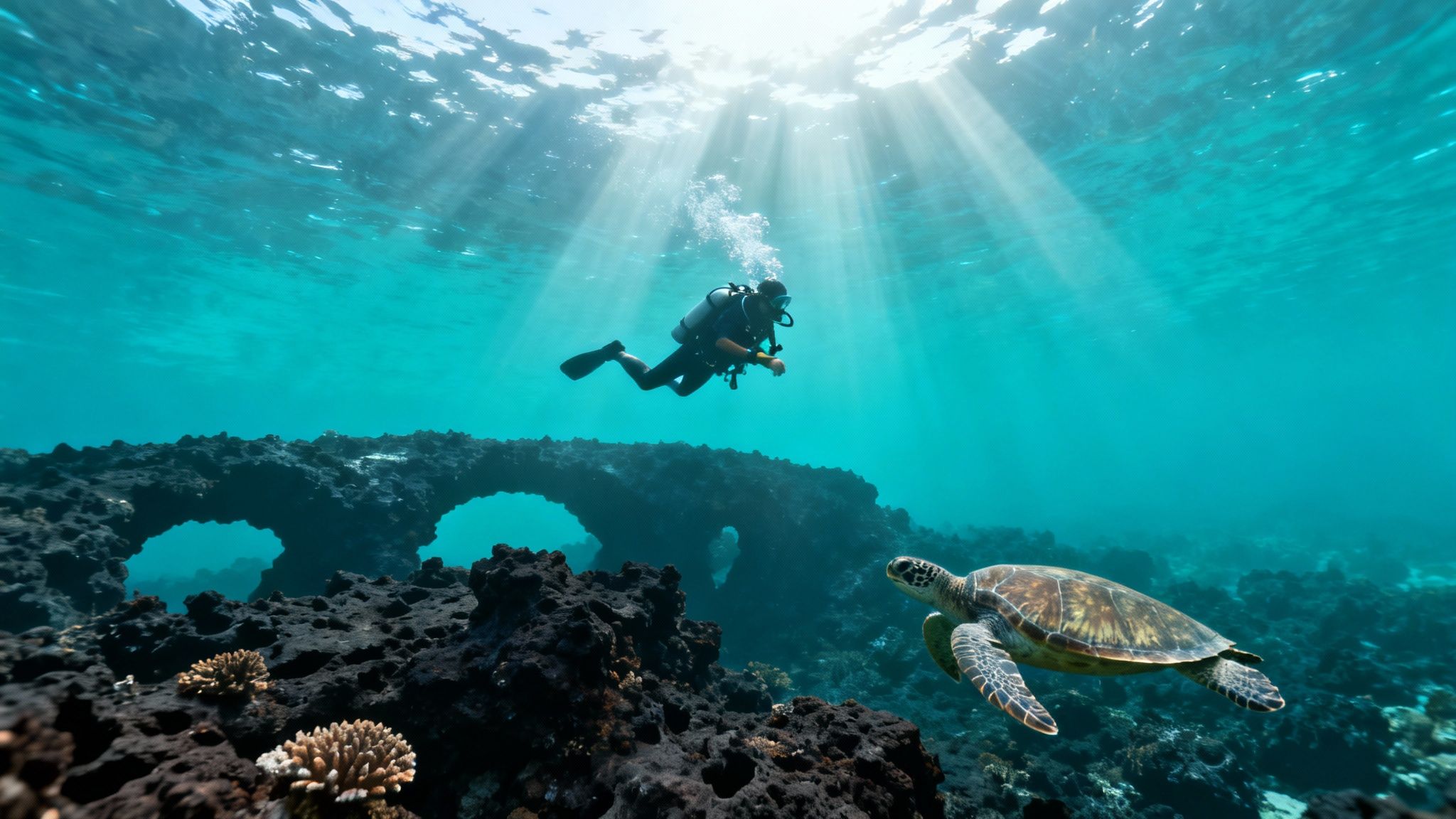
This guide is your one-stop shop for an adventure of a lifetime. We'll cover everything from the must-see dive sites to the logistics of the world-famous manta ray night dive. You'll quickly see what makes the Big Island Hawaii’s top spot for diving—the incredible conditions, the easy year-round access, and the one-of-a-kind underwater terrain.
Consider this your personal dive briefing. We're here to get you ready for unforgettable moments with sea turtles, spinner dolphins, and the gentle giants of the deep. Let's jump in and plan a dive trip that's safe, thrilling, and absolutely memorable.
The famous manta ray night dive in Kona is widely regarded as one of the most memorable dives on the planet. Experts agree that swimming with manta rays is one of the Big Island activities that you shouldn’t miss.
The experience here is more than just one dive; it's a whole collection of unique underwater adventures waiting for you. Whether you're a seasoned pro with hundreds of dives logged or you're just getting certified, the Kona coast has something incredible to offer.
What To Expect On Your Dive
Diving in Kona is all about variety. One day you could be effortlessly drifting through a massive lava arch, and the very next, you might find yourself watching dozens of manta rays perform a stunning underwater ballet just a few feet away. The island's volcanic past has created a subaquatic playground unlike anywhere else on Earth.
To give you a better idea, here's a quick look at what makes diving here so special.
Big Island Scuba Diving Highlights at a Glance
| Feature | Description |
|---|---|
| Pristine Conditions | Shielded from trade winds, the Kona coast boasts exceptionally calm, clear water. Visibility often exceeds 100 feet. |
| Unique Topography | Explore dramatic underwater landscapes formed by ancient lava flows, including arches, caves, and massive pinnacles. |
| Abundant Marine Life | Encounter Hawaiian green sea turtles, spinner dolphins, reef sharks, and a vibrant array of endemic fish found nowhere else. |
| World-Famous Night Dives | Experience the magic of the manta ray night dive or the mysterious blackwater dive, both signature Big Island adventures. |
This table just scratches the surface of what's waiting for you beneath the waves.
At Kona Honu Divers, our entire crew lives and breathes diving. We're dedicated to showing you the very best of this underwater paradise, making sure every dive is as safe as it is amazing.
Why Kona Has The Best Scuba Diving in Hawaii
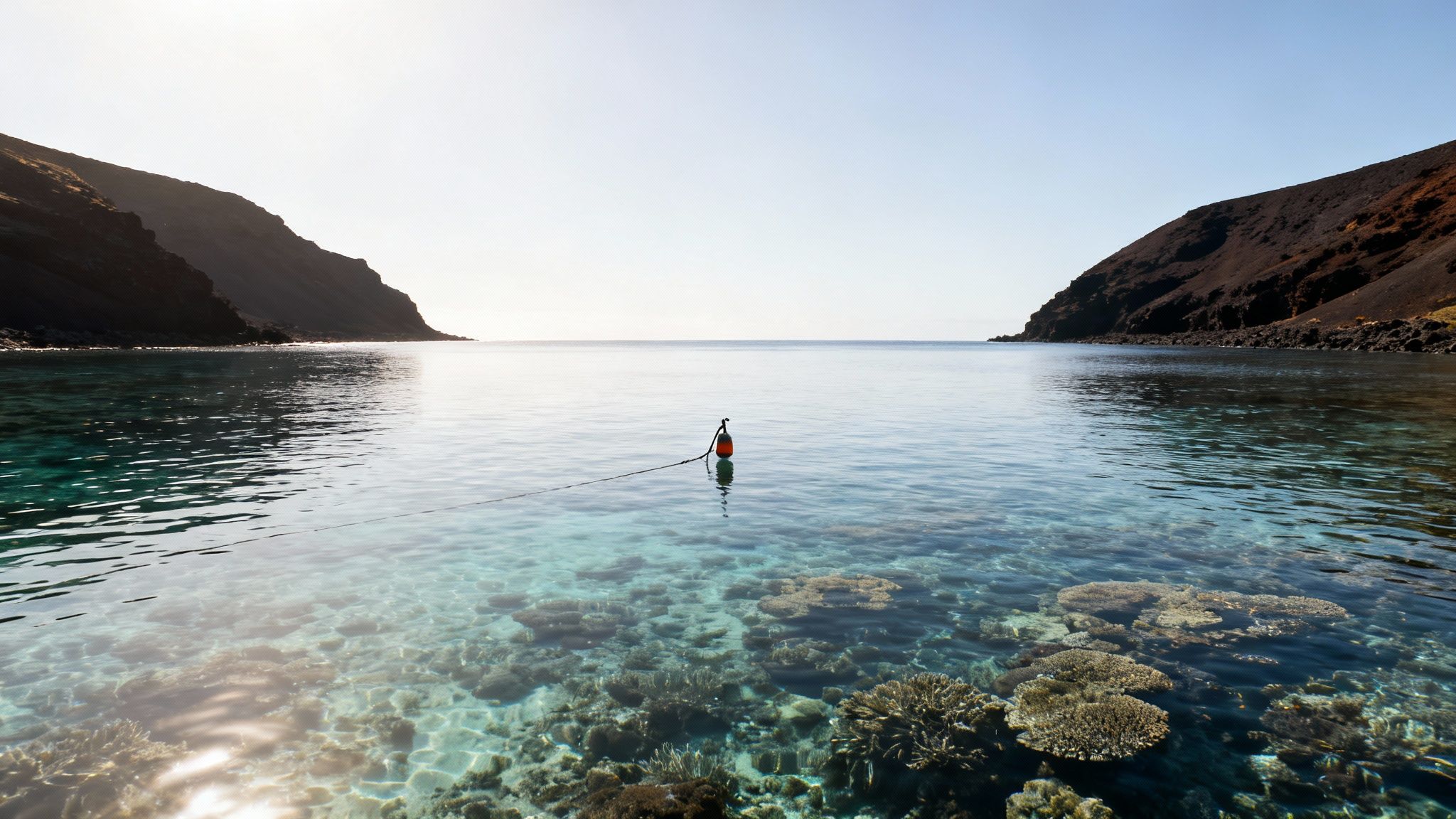
So, what makes the Kona coast the undisputed champion of Hawaiian diving? The secret is all about geography. Think of two massive volcanoes, Mauna Loa and Hualalai, acting as the island's personal bodyguards.
These giants form a natural barrier, shielding the Kona coastline from the powerful trade winds that often whip up the seas around the other islands. This protection creates a peaceful underwater sanctuary. The result? Conditions are often so calm and clear it feels less like the open ocean and more like diving in a giant, natural swimming pool. It’s not uncommon for visibility to push past 100 feet, letting sunlight stream down to light up the vibrant reefs below.
This unique shield allows fragile coral gardens to thrive, creating complex, sprawling habitats. And where healthy coral goes, marine life follows. The sheer density and diversity of fish and critters you’ll find here is simply on another level compared to the rest of the state—from tiny, jewel-like endemic fish to majestic manta rays and visiting whales.
A Volcanic Underwater Playground
The seafloor here is a direct reflection of the island's fiery birth. The underwater landscape is a diver's dream, a playground sculpted by ancient lava flows. You’ll find incredible lava tubes, dramatic archways, and volcanic pinnacles that seem to shoot up from the abyss. Every dive site tells a different story, whether you're exploring a cathedral-like cavern or weaving through a maze of coral-encrusted canyons.
With over 80 permanently moored dive sites dotted along the coast, there’s a perfect adventure waiting for every experience level.
- Beginner Divers: Can drift over calm, shallow reefs bustling with colorful fish and gentle sea turtles.
- Intermediate Divers: Get to explore fascinating lava tubes and natural swim-throughs.
- Advanced Divers: Can descend to deeper pinnacles and drop-offs for a chance to see larger pelagic species.
It's this rare combination of protected waters, dramatic topography, and incredible biodiversity that truly puts The Big Island scuba diving scene in a league of its own. When you’re ready to see it for yourself, the best way is with a knowledgeable crew on one of the many available Big Island diving tours.
The Heart of Hawaii's Dive Economy
The word is out: The Big Island is the engine of Hawaii's dive industry. The state's overall dive market is projected to grow from USD 1,101.6 million in 2025 to USD 1,585 million by 2035, and Kona's world-famous attractions like the manta ray night dive are a huge reason why. Top-tier operators like Kona Honu Divers are at the center of it all, bringing over 200 years of combined staff experience and thousands of five-star reviews from divers around the world.
Year-round, you’ll find warm water hovering between 75-80°F. From December to March, you might even spot migrating humpback whales from the boat. While safety is always our top priority, professional shops make it a seamless experience with spacious boats, free nitrox, and certified instructors. Find out more about what makes Big Island diving unique.
Kona's protected coastline not only provides exceptional diving conditions but also serves as a critical habitat for many of Hawaii's endemic marine species, some of which are found nowhere else on Earth.
At Kona Honu Divers, we take immense pride in our deep knowledge of these waters and our commitment to sharing unforgettable—and safe—underwater adventures. Our guests tell us time and again that diving in Kona blew all their expectations out of the water.
Exploring The Top Big Island Dive Sites
So, you're ready to see what really makes Kona diving special? The Big Island's volcanic past didn't just shape the land; it created an underwater playground of dramatic arches, ancient lava tubes, and sprawling reef systems. Each site has its own distinct personality and a unique cast of marine characters.
Let's dive into some of the must-see spots that put The Big Island scuba diving on every diver's bucket list. We'll explore everything from serene bays perfect for spotting turtles to exhilarating deep-water structures. With our guides leading the way, all you have to do is breathe and take it all in.
Kealakekua Bay: An Underwater Sanctuary
You can't talk about Kona diving without starting at Kealakekua Bay. This is more than just a dive site—it's a protected Marine Life Conservation District, rich in both history and marine life. The moment you dip below the surface, you'll understand why. The water is often impossibly clear, with visibility pushing past 100 feet.
This protected status, combined with its historical significance as the place Captain Cook landed in 1779, draws divers from all over the world. Since fishing is prohibited, the fish populations have absolutely boomed. You'll see massive schools of tropical fish swirling through healthy coral gardens, while spinner dolphins and sea turtles cruise by. For certified divers, the boat-accessible sites here reveal stunning lava fingers and archways just begging to be photographed. You can get an even deeper look into what makes this spot so incredible by reading about Big Island scuba diving at this historic bay.
Kealakekua Bay's protected status makes it a nursery for marine life. The density of fish can be so immense that schools can momentarily block out the sun, creating a truly awe-inspiring spectacle for divers below.
Golden Arches and Turtle Pinnacle
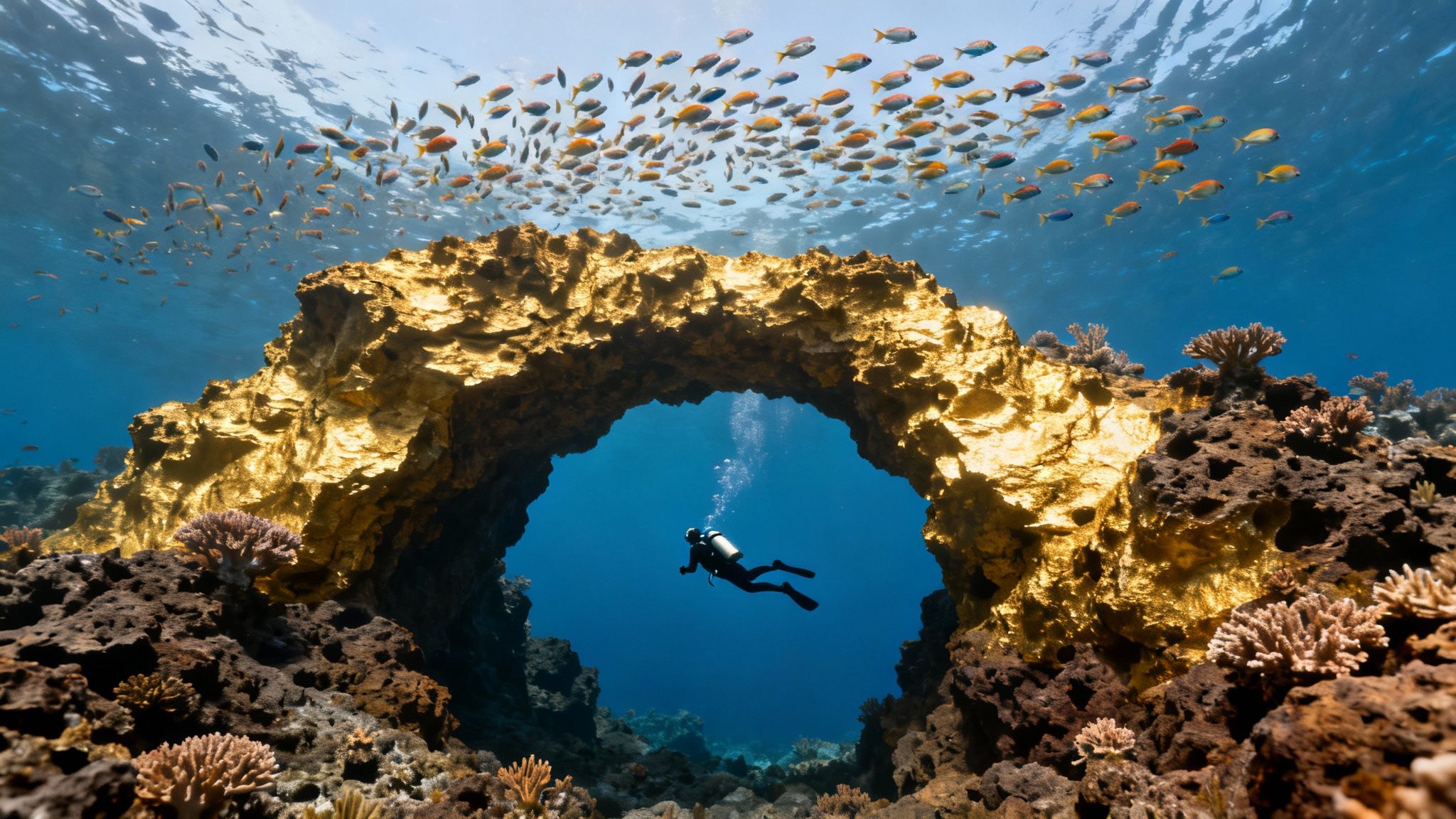
As we move along the Kona coast, the volcanic architecture becomes the star of the show. Golden Arches is a perfect example—a breathtaking lava archway covered in rare gold and orange tube corals. Swimming through it feels like crossing a threshold into a different dimension, with schools of squirrelfish and soldiers peeking out from the shadows.
And then there's Turtle Pinnacle, a legendary spot famous for being a bustling "cleaning station." This is where Hawaiian green sea turtles, our beloved honu, gather to have algae and parasites nibbled off by smaller reef fish. It's a front-row seat to one of nature's most fascinating partnerships and an absolute dream for photographers.
- Golden Arches: Celebrated for its dramatic lava formations and the vibrant, colorful corals that give it its name. It’s a fantastic multi-level dive that’s accessible for a wide range of skill levels.
- Turtle Pinnacle: A classic Kona dive where turtle sightings are practically guaranteed. The pinnacle itself acts as a magnet, drawing in a huge concentration of marine life.
Thrills for More Experienced Divers
If you've got a few more dives under your belt and are looking for a bigger adrenaline rush, the Kona coast has you covered. Our deeper, more advanced sites often feature stronger currents and jaw-dropping drop-offs that attract larger pelagic species. Dives like Au Au Crater (which we affectionately call "Suck 'Em Up") will have you navigating complex lava tube systems and spotting whitetip reef sharks resting on the sand.
On these advanced dives, it's not uncommon to see majestic spotted eagle rays gliding through the blue or even the occasional Galapagos shark making a pass. These dives require solid buoyancy and comfort with deeper profiles, but the reward is an experience you'll never forget. This is why joining an advanced dive tour with a seasoned crew is the best way to explore these incredible sites safely.
Ready to see these underwater landmarks for yourself? Explore our diving tours and find the perfect trip for your skill level.
The World-Famous Manta Ray and Blackwater Dives
As incredible as Kona's reefs are by day, the real magic happens after sunset. This is where The Big Island scuba diving scene delivers the kind of experiences people talk about for the rest of their lives—starting with the legendary Manta Ray Night Dive.
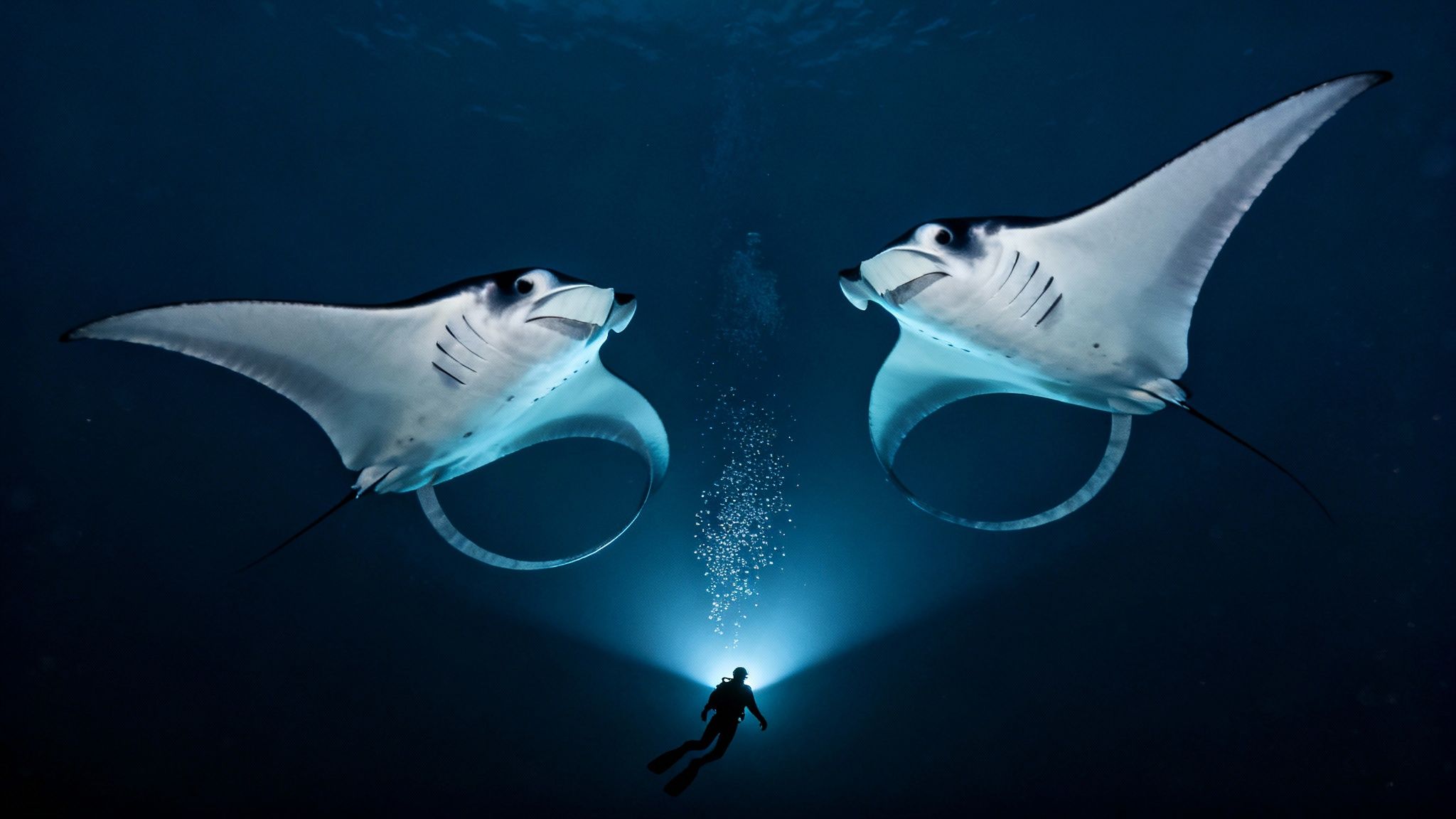
Picture this: you settle onto a sandy spot on the ocean floor, watching as powerful lights cut through the darkness, illuminating the water above. The light is a magnet for plankton, and the plankton, in turn, is a dinner bell. Then, out of the deep blue, they appear. Giant, graceful manta rays swoop and barrel roll right over your head, performing an otherworldly ballet as they feed.
It’s a mesmerizing, almost spiritual encounter that has firmly put Kona on the global diving map. This isn't just another dive; it's a front-row seat to one of the most incredible shows in the natural world.
Garden Eel Cove: The Premier Manta Destination
When it comes to the manta dive, your location is everything. While a few spots attract these gentle giants, there's a good reason we at Kona Honu Divers exclusively take our guests to Garden Eel Cove. Simply put, it's the superior choice for the dive tour.
The cove sits in a naturally protected bay, which translates to calmer water, better reefs, and more reliable conditions than other, more exposed sites. This protection also means consistently better visibility and a better viewing area, giving you a crystal-clear view of the mantas gliding through the light beams. The viewing area is affectionately known as "The Campfire" and it's here that divers kneel in a circle looking up at the majestic animals. On top of that, the surrounding reefs are healthier and more vibrant, which only adds to the magic.
The consistency of manta sightings in Kona is truly remarkable. Nothing beats this experience, and local operators report successful encounters on 85-90% of trips. We've seen some incredible nights lately, with recent logs showing as many as 23 mantas in one go, and an average of 8-12 per successful outing.
These resident reef mantas, with wingspans reaching up to 14 feet, are a signature of Big Island diving and can be found here year-round.
The Kona Blackwater Dive: An Adventure Into The Abyss
If the manta dive is an underwater ballet, then the Kona Blackwater Dive is a trip to another planet. This one is for the truly adventurous—a dive that takes you miles offshore to drift in the deep, dark ocean over thousands of feet of water. Tethered to the boat, you become a solitary satellite in an alien universe.
At night, the largest animal migration on Earth takes place as countless bizarre, tiny creatures rise from the depths to feed near the surface. The blackwater dive puts you right in the middle of it. You'll float alongside organisms you’ve never imagined: strange larval fish, otherworldly jellies, and bioluminescent squid that pulse with their own light.
It’s a dive that blends the thrill of deep-water exploration with the pure wonder of discovering life forms that seem to defy imagination. Many of the creatures seen on this dive are so rare they are still being identified by scientists. For a deeper look into this unique experience, see our full guide on what to expect during a Kona blackwater dive.
These two dives are the absolute pinnacle of night diving on the Big Island. And while scuba offers a truly immersive perspective, you can also witness the spectacle on an unforgettable night snorkel with manta rays in Hawaii.
Either way, these aren't just dives to check off a list. They are profound, awe-inspiring encounters that create memories you’ll cherish forever.
Planning Your Big Island Dive Adventure
Alright, you're picturing yourself gliding over Kona's vibrant reefs. Now, let’s make it happen. A little bit of planning is all it takes to turn that daydream into a dive log full of incredible memories. Think of this as your personal checklist for a flawless dive vacation.
The key to a successful Big Island scuba diving trip is matching your plans to the right conditions and the kind of diving you love to do. The best part? Kona’s protected coastline makes amazing dives possible pretty much any day of the year.
When Is The Best Time to Visit?
Honestly, you can't go wrong. The Kona coast is a diver's playground 365 days a year. That said, different seasons do have their own special appeal.
- Summer & Fall (May – October): This is when we typically see the flattest, calmest seas and the warmest water. The temperature often climbs to a toasty 80°F (27°C). It's a fantastic time for any diver, but especially perfect if you're new to the sport or just love that bathwater feel.
- Winter & Spring (November – April): The water might dip a few degrees, but what you get in return is pure magic: humpback whales. From December through March, these gentle giants are our neighbors, here to breed and give birth. Hearing their songs echo through the water during a dive is something you’ll never, ever forget.
No matter when you come, visibility is almost always fantastic, frequently stretching beyond 100 feet. You really can’t lose.
Choosing The Right Dive Trip For You
Every diver has a different style, so we run a few different kinds of trips to match. Whether you’re looking for a laid-back tour of the reef or something a little more adventurous, we have a boat with your name on it.
Our standard two-tank morning charter is hands-down the most popular choice. It’s the perfect way to see a great cross-section of Kona’s stunning reefs and marine life, and it works beautifully for divers of all experience levels.
If you’re a seasoned diver looking for deeper walls, more advanced topography, and a shot at seeing bigger pelagic animals, our advanced trip is definitely your speed. These charters head to more remote pinnacles and dramatic lava formations. And for those who want to eat, sleep, and breathe diving for several days, exploring a range of liveaboard diving experiences can open up a whole new world of remote sites and total immersion.
Pro Tip: Haven't been in the water for a while? No sweat. A quick refresher course is the perfect way to knock the rust off and get your confidence back before the boat even leaves the dock. It makes for a much safer and more relaxing dive day.
Shore Diving vs. Boat Diving in Kona
While you might see a few shore divers around, the real crown jewels of Kona diving are found offshore. Getting on a boat is the only way to reach them, and it comes with some serious perks.
- Access to Prime Sites: The most spectacular lava tubes, arches, and pristine reefs are just too far to swim to from shore.
- Safety and Convenience: Our professional crew handles everything—the navigation, the safety gear, and all the heavy lifting. You just relax and dive.
- Comfort: Forget hauling gear down a rocky path. Our boats are spacious and comfortable, with snacks, drinks, and plenty of shade for your surface interval.
Simply put, boat diving unlocks Kona’s true potential while keeping you safe, comfortable, and stress-free.
Packing For a Perfect Day on The Water
A little preparation goes a long way toward a comfortable day at sea. While we've got all the big scuba equipment covered, you’ll want to pack a small bag with your personal essentials. We have a complete guide that details all of the gear you will need for your Kona diving adventure, but here’s a quick list to get you started:
- Sun Protection: Reef-safe sunscreen, a good hat, and polarized sunglasses are non-negotiable.
- Comfort: A towel and a warm, dry layer like a sweatshirt or jacket to put on after diving.
- Personal Items: Your certification card, logbook, and any personal medications you might need.
With just a little bit of planning, your dive adventure on the Big Island will be as smooth and memorable as you've imagined.
Your Kona Diving Questions, Answered
Planning a dive trip always brings up a few questions. We hear them all the time from divers getting ready for their first Kona adventure, so we’ve put together the answers to the most common ones right here.
Our goal is to give you the clear, straightforward info you need to feel confident and ridiculously excited about your dives. From the best time of year to visit to what our world-famous night dives are really like, we've got you covered.
What’s the Best Time of Year to Dive the Big Island?
Here’s the great news: it's always a good time to dive in Kona. The massive volcanoes on the Big Island act as a natural shield for the Kona coast, blessing us with consistently calm, clear water pretty much every single day.
You can also count on the water being warm and comfortable, usually hovering between a balmy 75-80°F (24-27°C).
- Summer & Fall: This is when the ocean is often at its absolute calmest and warmest. It’s a perfect time for any diver, especially if you get chilly easily.
- Winter: From December through March, the humpback whales are here. The diving is still fantastic, but now you get a live underwater soundtrack of whale songs. It's truly magical, and seeing them from the boat is an experience you won't forget.
No matter when you visit, visibility is typically amazing—often over 100 feet. You really can't pick a bad time to dive here.
Do I Have to Be an Advanced Diver to Dive in Kona?
Not at all! Kona is a fantastic spot for divers of all experience levels. With over 80 moored dive sites dotted along the coast, we have the perfect underwater playground for everyone, from first-timers to seasoned pros.
A lot of our most beloved sites are ideal for beginners and those finishing up their open water certification. Think calm conditions, gentle to no current, and comfortable depths around 40-60 feet. It’s all about relaxing and soaking in the incredible reef life.
For our more experienced divers, Kona delivers the thrills. We've got deeper pinnacles, winding lava tubes, and the kind of currents that bring in bigger marine life. We run a whole range of diving tours designed for different skill sets, including introductory courses and dedicated advanced dive tours, making sure everyone has an amazing—and safe—time.
Kona Honu Divers Fun Fact: Many of our guides have thousands of dives logged right here in Kona. That deep local knowledge means we can always pick the absolute best site for the day's conditions and our divers' comfort levels, maximizing both safety and fun.
Is the Manta Ray Night Dive Okay for Beginners?
Absolutely, yes! The Manta Ray Night Dive is a mind-blowing experience that’s open to certified divers of any level, even if you just got your C-card yesterday. For many of our guests, it’s their very first night dive.
What makes it so beginner-friendly is that it’s a stationary dive. You aren't swimming around in the dark trying to navigate. Instead, you'll settle into a designated spot on the sandy bottom, hold onto a light, and simply watch the show as these gentle giants swoop and feed in the light beams right above your head.
Our professional guides give a detailed pre-dive briefing, walking you through every single step so you feel completely at ease. Snorkelers can even join in on the action from the surface, making it the perfect outing for the whole family. Find out more about our manta ray dive tours.
Besides Manta Rays, What Other Marine Life Will I See?
The sheer amount of life on Kona's reefs is staggering. While the mantas definitely steal the spotlight, a daytime dive here is like visiting a bustling underwater city.
You can pretty much guarantee you’ll see Hawaiian green sea turtles (honu) napping on the reef or cruising by. We also see spinner dolphins all the time, either playing in the boat's wake on the way to the site or zipping past us underwater.
But the reef itself is where the real action is:
- Eels and Octopus: Moray eels of all shapes and sizes peer out from their rocky homes, and if you have a sharp eye, you can often spot a perfectly camouflaged octopus.
- Fish, Fish, and More Fish: Get ready to be surrounded by huge schools of yellow tangs, butterflyfish, triggerfish, and parrotfish. The color is unreal.
- Sharks and Rays: Whitetip reef sharks are a common sight, usually resting on sandy patches. If you're lucky, you might also see a majestic spotted eagle ray glide past in the blue.
- Weird and Wonderful Critters: Kona is a great place to find macro life, too. Keep an eye out for bizarre-looking frogfish and colorful nudibranchs.
And for the truly adventurous, our Kona Blackwater Dive lets you meet the strange and beautiful creatures that rise from the deep ocean every night—organisms you’ll rarely see anywhere else on Earth.
Ready to see why The Big Island scuba diving is world-famous? The friendly pros at Kona Honu Divers are here to make your underwater trip unforgettable. Take a look at our full range of diving tours to find the perfect adventure for you.