
Scuba diving on the Big Island isn't just world-famous; it’s a truly special experience. We're talking about pristine conditions, underwater landscapes shaped by volcanoes, and encounters with marine life that you'll remember for a lifetime. With visibility often stretching past 100 feet and waters sheltered from the big ocean swells, Kona offers some of the most consistently beautiful diving on the planet. It’s perfect for everyone, from first-timers to seasoned pros.
Why Kona Is a World-Class Diving Destination
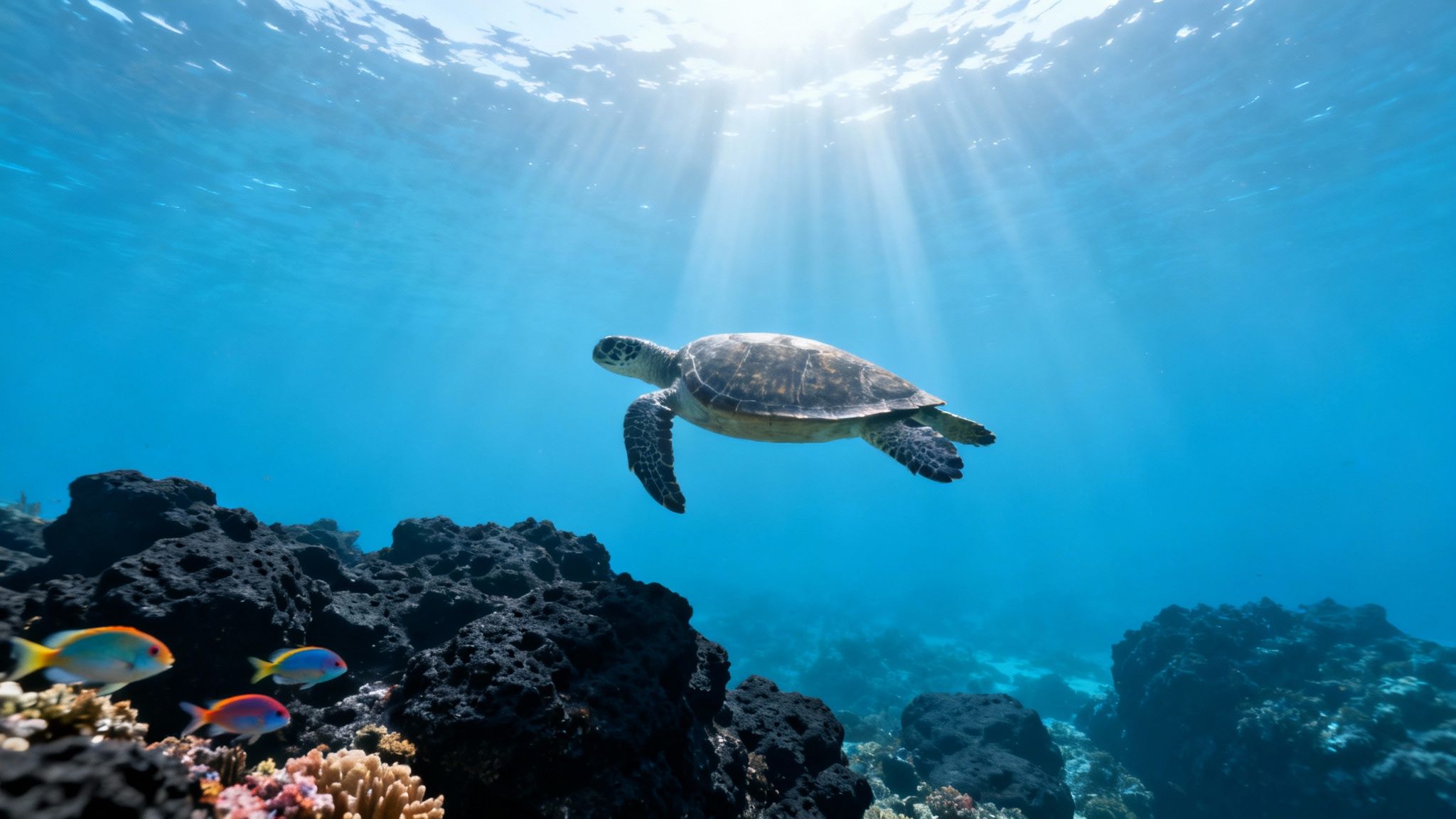
Picture yourself descending into the calm, deep blue of the Kona coast. The secret to our incredible diving is the island itself. The massive volcanoes of Mauna Loa and Hualalai act as a giant shield, protecting the western shoreline from the wind and open-ocean swells. This creates a calm, leeward coast where diving conditions are ideal nearly every day of the year.
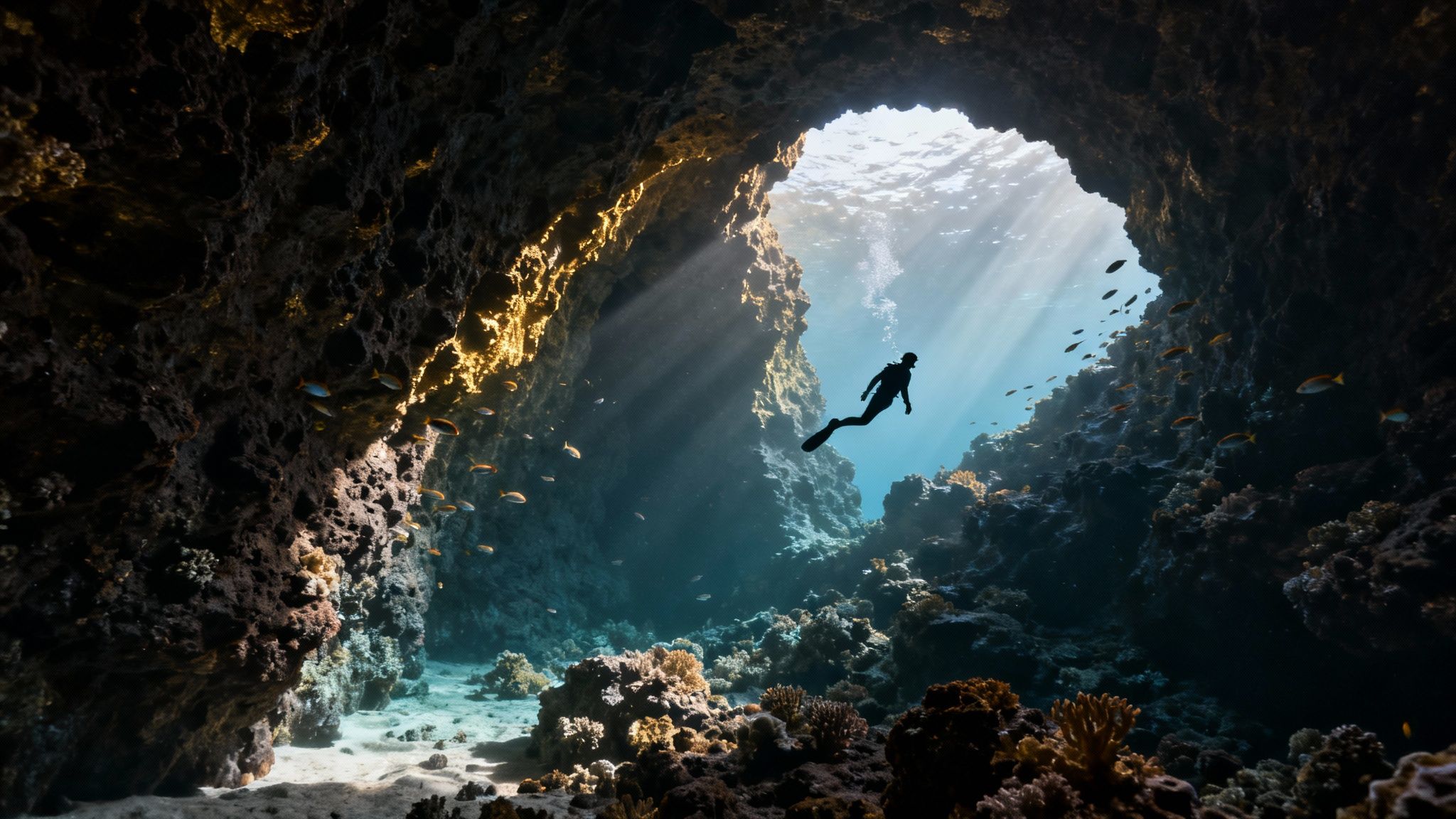
This unique geology has also sculpted an unbelievable underwater world. You’ll explore dramatic lava tubes, swim through massive archways, and drift over submerged volcanic ridges that have blossomed into vibrant coral gardens. These ancient formations are the perfect foundation for a thriving marine ecosystem.
What Makes Kona Diving So Special
Diving here is about so much more than just spotting fish; it's about immersing yourself in a living, breathing environment. The water clarity is legendary—it's not uncommon to see the entire reef structure from the boat before you even jump in.
To give you a better idea of what makes Big Island diving so unique, here's a quick snapshot.
| Big Island Diving Snapshot: Why Kona Is Unique | |
|---|---|
| Feature | Description |
| Volcanic Formations | Explore otherworldly seascapes like caves, caverns, and swim-throughs formed by ancient lava flows. |
| Abundant Marine Life | We regularly see Hawaiian green sea turtles (honu), spinner dolphins, eels, and thousands of colorful reef fish. |
| Exceptional Visibility | The water is typically crystal-clear, with visibility often reaching and sometimes exceeding 100 feet (30 meters). |
| Signature Dives | Kona is home to bucket-list experiences you can't find anywhere else, like the world-famous Manta Ray Night Dive. |
This combination of geology and protected waters makes Kona an absolute paradise for divers.
A Thriving Underwater Haven
From a niche activity back in the 1960s, diving in Kona has exploded into a global phenomenon. Today, the Big Island hosts around 100,000 certified scuba dives every year, drawing people from all corners of the globe. They come for the reliable conditions, the stunning beauty, and the chance to explore those dramatic lava tubes that make our underwater world one-of-a-kind. You can dive deeper into how Kona became a premier diving hub on konahonudivers.com.
Whether you're exploring a shallow reef teeming with life or drifting over a deep ledge into the blue, the vibrant ecosystem is simply unforgettable. If you’re ready to see it for yourself, our team at Kona Honu Divers offers expertly guided diving tours in Kona that showcase the very best the Big Island has to offer.
Exploring Kona’s Most Spectacular Dive Sites
So, you're ready to jump in and see the best of what the Kona coast has to offer? Smart move. With over 50 named dive sites, it can be tough to know where to start, but a few spots consistently blow divers away. These are the sites that truly define The Big Island scuba diving experience, showing off everything from dramatic volcanic architecture to coral gardens absolutely buzzing with life.
The Kona coast is a massive underwater playground, and knowing where to drop in makes all the difference. While you can access some great spots from shore, the really pristine, world-class sites are a boat ride away. Heading out with a seasoned local crew not only gets you to these premier locations safely but also puts you on spots that aren't overrun with other divers. This is where a great guide earns their keep, turning a good dive into one you'll talk about for years.
Must-Visit Lava Tube and Reef Formations
Kona's volcanic past isn't just a dramatic backdrop on land; it has sculpted a mind-blowing underwater landscape. Exploring these formations is what Big Island diving is all about.
- Golden Arches: This site is exactly what it sounds like. A huge lava tube collapsed long ago, leaving a magnificent archway you can swim right through. When the light hits just right, it feels like you're entering an underwater cathedral, often filled with schools of bright yellow tangs that give the whole scene a golden glow.
- Suck 'em Up: Don't let the name fool you—this one is pure fun! It’s a network of lava tubes and swim-throughs where the gentle ocean surge gives you a little push into one cavern and a gentle pull out of another. It’s like a natural, underwater rollercoaster and a fantastic place to find whitetip reef sharks enjoying a nap.
Prime Locations for Marine Life Encounters
You can find incredible marine life almost anywhere you look in Kona, but some sites are absolute magnets for it. These spots, often "cleaning stations" or offshore pinnacles, are hubs of activity where you’re practically guaranteed an amazing encounter.
What's a "cleaning station"? Think of it as a day spa for marine life. It's a specific spot on the reef where small cleaner fish and shrimp set up shop, and larger animals—like turtles, rays, and big reef fish—line up to get parasites and dead skin picked off. It’s a perfect place to witness nature’s fascinating partnerships up close.
One of the most famous is Turtle Pinnacle. This place is a hot spot for our beloved Hawaiian green sea turtle, the honu. It's not uncommon to see several turtles patiently waiting their turn to get their shells cleaned by schools of surgeonfish. For photographers, it’s a dream come true. At a comfortable depth of 40-60 feet, it's an accessible dive for just about everyone.
Unlock the Best Sites with a Trusted Guide
While there's a certain freedom to shore diving, you really unlock the full potential of Kona diving by boat. Booking a trip with a top-tier operator like Kona Honu Divers gets you to the best of the best. Their crew knows the secret spots, the right time of day to hit a site to avoid crowds, and exactly where to look for the marine life on your checklist.
That deep local knowledge means you're not just diving—you're getting a curated experience at the most vibrant reefs and dramatic lava formations, all handled with professional safety and care. But don't just take our word for it; see what other divers have to say.
Exploring Kona’s underwater world is a remarkable journey. By choosing to dive with experts, you ensure every moment is spent soaking in the beauty and wonder of Hawaii's premier dive destination. Ready to see these incredible sites for yourself? Explore a variety of expertly guided diving tours along the Kona coast and book your adventure today.
The Unforgettable Manta Ray Night Dive Experience
If there's one dive on the Big Island that everyone talks about, it’s the world-famous manta ray night dive. Honestly, it lives up to the hype and then some. It’s consistently rated one of the best night dives on the planet, and once you’ve done it, you understand why.
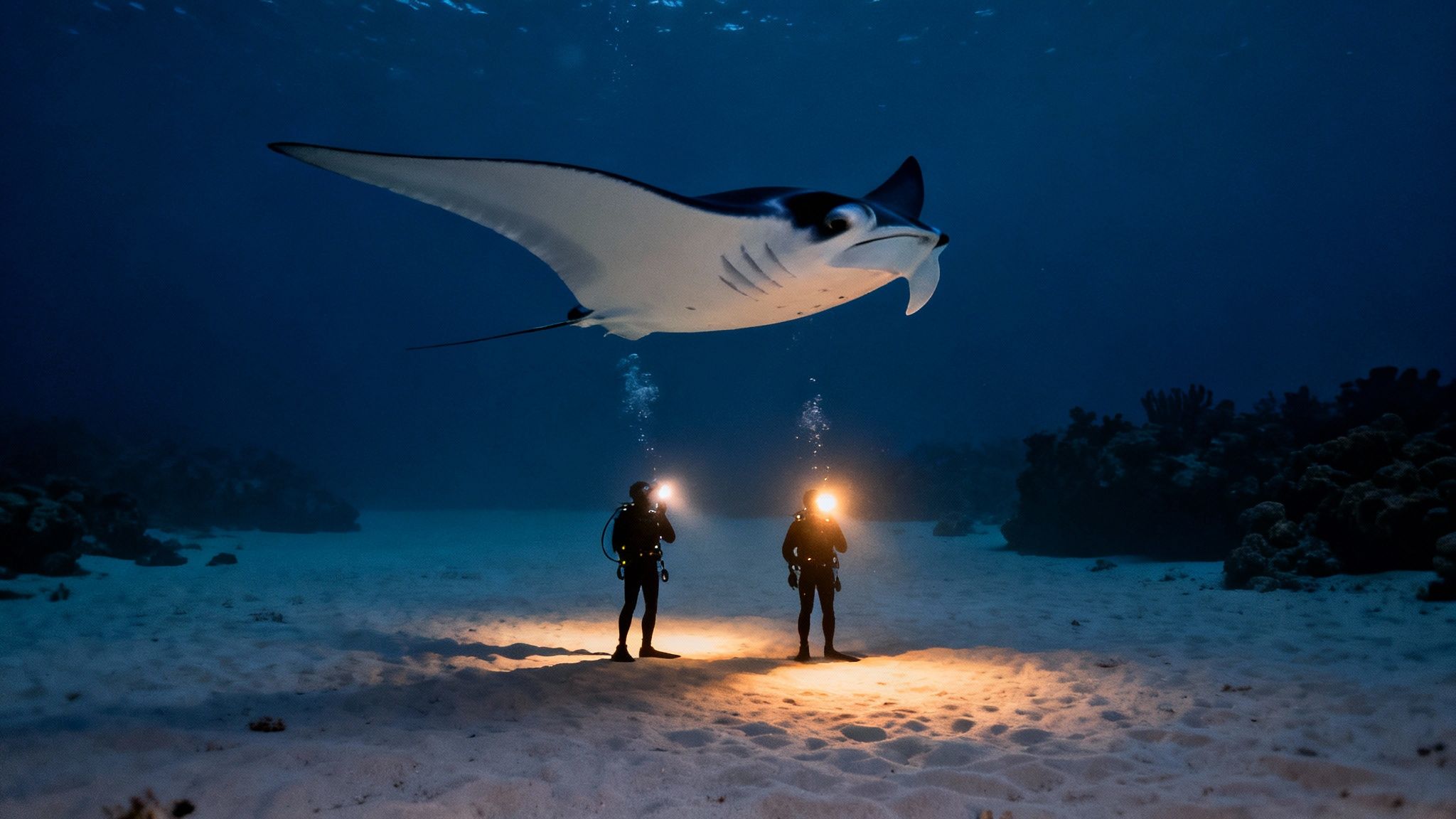
Imagine kneeling on the sandy ocean floor in the dark. Suddenly, a giant, graceful shadow emerges from the gloom. Then another, and another. Soon, you're surrounded by massive, gentle creatures with wingspans up to 16 feet, performing an effortless underwater ballet just inches above your head. It’s pure magic.
The setup is simple but brilliant. We set up bright lights on the ocean floor, which attract swarms of plankton—the mantas' favorite meal. The mantas then swoop in, gliding and somersaulting through the light beams to scoop up the tiny creatures. It's a completely surreal and humbling experience to witness these majestic animals so close.
This whole thing started by accident. Years ago, a hotel on the Kona coast had bright lights shining on the water, which attracted the plankton, and the mantas followed. By 1992, local dive operators realized what was happening and started running dedicated night tours. Today, we see mantas on 85-90% of our trips, and it’s not uncommon to have more than 30 show up for the party.
Why Garden Eel Cove is The Premier Manta Spot
You might hear about a couple of different sites for the manta dive, but Garden Eel Cove (sometimes called Manta Heaven) is the superior choice for the dive tour. It’s just perfectly set up for this experience.
For one thing, it's located in a naturally protected bay. This means we're shielded from most of the wind and open-ocean swell, which makes for a much calmer and more enjoyable boat ride. Once you're in the water, the conditions are usually much more relaxed, too.
The real secret to Garden Eel Cove's success is its layout. The site has a huge, sandy patch right in the middle, creating a sort of natural amphitheater. This gives every diver a perfect, unobstructed front-row seat to the show without anyone needing to touch or damage the beautiful coral reef surrounding the area.
A Healthier Reef, A Better Experience
The environment at Garden Eel Cove is just teeming with life. The coral reefs here are incredibly vibrant, which supports a robust food chain. A healthier ecosystem means more plankton, and more plankton means more mantas.
Diving on a healthy reef doesn't just benefit the animals; it makes the whole experience better for us. You get better visibility, a stunning natural backdrop, and the feeling that you’re truly a guest in their pristine world.
For a deeper look into what makes this dive so special, check out our complete guide to the Kona manta ray night dive.
Booking Your Manta Ray Adventure
If you're coming to the Big Island, this is one experience you absolutely cannot miss. It’s crucial to go with a top-notch, professional operator who puts the safety of both the divers and the mantas first. At Kona Honu Divers, our 2-Tank Manta Dive & Snorkel trip is something we're incredibly proud of, and our guests consistently tell us it was the highlight of their trip.
But don’t just take our word for it. Here’s what other divers have said about their unforgettable night with the mantas.
This is an incredibly popular dive, so spots fill up fast, especially during peak season. We highly recommend booking well in advance to make sure you don't miss out on this once-in-a-lifetime experience.
Advanced Dives For Experienced Divers
If your logbook is already filled with adventures and you're looking for a real challenge, the Big Island has something special for you. We’re moving beyond the beautiful, sun-drenched reefs and into dives that test your skills and reward you with truly unforgettable moments.
Kona's advanced diving scene is all about exploring the wilder side of the island's underwater world. Think navigating the intricate, cathedral-like lava tubes that wind through ancient reefs—that requires rock-solid buoyancy control and a cool head. It also means dropping down to deeper sites where you might spot larger pelagic species like sharks, rays, and maybe even a whale shark cruising through the deep blue.
For divers ready to take on that kind of adventure, Kona Honu Divers runs a Premium Advanced 2-Tank Trip that specifically targets these more demanding and spectacular sites.
The Kona Blackwater Dive: An Otherworldly Experience
Among all the incredible advanced dives here, one stands in a class of its own: the Kona Blackwater Dive. Forget everything you know about reef diving. This is a journey into the deep open ocean at night, an experience often compared to floating through outer space.
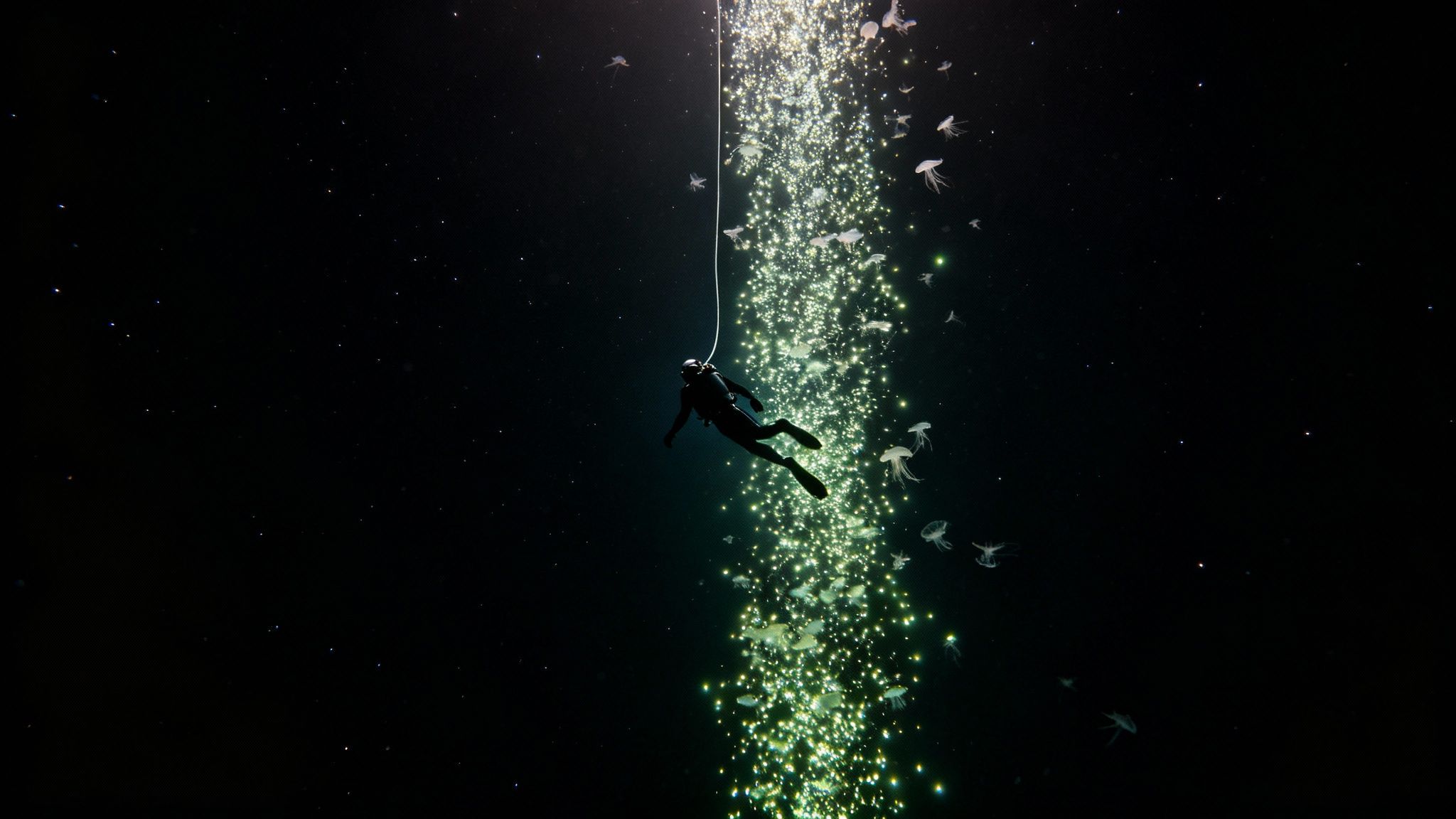
Here’s the setup: we head several miles offshore where the seafloor is thousands of feet below. You descend on a tethered line into the pitch-black water, suspended in the immense, silent void of the open ocean. Your mission? To witness the largest migration on Earth, a phenomenon that happens every single night.
The Vertical Migration: As darkness falls, countless deep-water organisms—many of them bioluminescent or nearly transparent—rise from the abyss toward the surface to feed. You are positioned directly in their path, witnessing a dazzling parade of life that few people will ever see.
The creatures you'll encounter look like they were pulled straight from a sci-fi film. You’ll see iridescent ctenophores pulsing with light, larval fish that are completely see-through, and shimmering siphonophores that glow from within. It’s a sensory experience that redefines what you think is possible on a dive.
This isn’t for the faint of heart. The blackwater dive demands exceptional buoyancy and a high level of comfort with being surrounded by darkness and open sea. It is a true adventure for the seasoned diver.
Choosing Your Night Adventure
The Big Island is famous for its night dives, and two in particular stand out. But the Manta Ray Night Dive and the Blackwater Dive are worlds apart, offering completely different experiences. Understanding the difference is key to picking the right adventure for you.
Unique Big Island Dives for the Adventurous
| Dive Type | Focus | Environment | Best For |
|---|---|---|---|
| Manta Ray Night Dive | Observing large, majestic animals in a predictable, high-energy spectacle. | A relatively shallow, sandy-bottom site with fixed lights, creating an underwater amphitheater. | Divers of most skill levels looking for a breathtaking and iconic "big animal" encounter. |
| Kona Blackwater Dive | Discovering strange, alien-like micro-creatures from the deep ocean. | Suspended in the deep, open-ocean water column, tethered to the boat in complete darkness. | Experienced divers seeking a unique, mysterious, and technically demanding adventure. |
Whether you want the grandeur of the giant mantas or the surreal mystery of the deep, a night dive in Kona is something you'll talk about for years.
The blackwater experience is a highly specialized charter that requires expert guidance. If you’re ready to float through Kona’s mesmerizing inner space, you can book a dedicated Black Water Night Dive tour and prepare for the dive of a lifetime.
Planning Your Big Island Scuba Trip: A Guide
So, you're ready to dive into the incredible waters of the Big Island? Fantastic choice. A little bit of planning goes a long way in making your trip seamless, ensuring that once you get here, your only focus is on the breathtaking world beneath the waves.
Let's walk through the key details, from figuring out the best time to visit to choosing the right crew to show you around Kona's underwater paradise.
When Is The Best Time To Dive In Kona?
Here’s the great news: there’s really no bad time to scuba dive on the Big Island. Our waters are consistently calm and clear, making it a year-round destination. That said, there are some subtle differences that might help you pick the perfect window for your trip.
Water temps are always comfortable, hovering around a cool 75°F (24°C) in the winter and warming up to a lovely 81°F (27°C) by late summer. Visibility is almost always fantastic—we're talking 100 feet or more on a good day—but it can be just a touch clearer in the drier summer months.
- Summer (June-September): This is our peak season for a reason. You'll get the warmest water and the flattest, calmest seas. It’s absolutely ideal for any diver, from a seasoned pro to someone just getting certified.
- Winter (December-March): The water might be a few degrees cooler, but winter brings something truly magical: humpback whales. While you're diving, it’s common to hear their hauntingly beautiful songs vibrating through the water. It’s an experience that’s impossible to describe and one you’ll never forget.
If you want to get really granular, check out our detailed guide on the best months to scuba dive in Hawaii.
The Nuts and Bolts: Getting Here and Where to Stay
Getting your logistics sorted is pretty straightforward. You’ll want to fly into Kona International Airport (KOA), which is perfectly situated close to all the main dive hubs and places to stay.
The Kona and Kohala coasts are dotted with everything from luxury resorts to charming vacation rentals. For the most convenient access to the dive boat harbors, we always suggest staying as close to Kailua-Kona as you can.
Now for one of the most important decisions you'll make: choosing who to dive with. The right dive operator doesn't just drive the boat; they shape your entire underwater adventure.
A great dive operator doesn't just take you to a dive site; they elevate the entire experience. They prioritize your safety, respect the marine environment, and use their deep local knowledge to show you things you would have missed on your own.
When you're looking for a dive company, here's what truly matters:
- Small Group Sizes: This is non-negotiable for a good experience. It means you get personalized attention and a much more relaxed, uncrowded dive.
- Impeccable Safety Record: Do they talk about safety? Check reviews for mentions of their procedures and professionalism.
- Commitment to Conservation: Look for an operator that actively protects the very reefs they're showing you.
- Experienced Guides: Nothing beats local knowledge for finding that elusive octopus or navigating a lava tube safely.
We’re proud to say we check all these boxes at Kona Honu Divers, offering expertly guided diving tours that are safe, fun, and always respectful of our ocean home.
Gear, Certifications, and Taking the Plunge
The age-old question: bring your own gear or rent? If you have your own kit and you love it, bring it along! There's nothing like diving with gear you're comfortable with. But, if you want to avoid the hassle of extra luggage and airline fees, renting high-quality, professionally serviced equipment from us is an easy and reliable option.
Not certified yet? The Big Island is one of the best classrooms in the world. The calm, clear conditions here create a wonderfully low-stress environment to take your first breaths underwater.
If you’re already a certified diver, why not use your vacation to level up? You can earn your Advanced Open Water, get Nitrox certified for longer bottom times, or explore a new specialty. It's the perfect way to turn a fantastic trip into a real skill-building adventure.
Diving Safely And Protecting The Reef
Your adventure beneath the waves should be as safe as it is awe-inspiring. It’s natural to have questions about safety, but here’s something that might surprise you: scuba diving on the Big Island is statistically much safer than many other ocean activities. The constant professional oversight is a huge factor.
Between 2009 and 2018, Hawaii saw 206 snorkeling-related fatalities. In that same timeframe, there were only 28 scuba diving fatalities, even with over 100,000 certified dives happening every year. This incredible safety record, especially in the calm, clear waters of the Kona coast, really speaks to the value of diving with seasoned experts. For a closer look at these numbers, you can read more about ocean safety in Hawaii on Divernet.com.
Prioritizing Safety Above and Below the Surface
A safe dive doesn't just happen when you splash into the water; it starts on the boat. It begins with choosing a top-notch operator who insists on thorough briefings, keeps their equipment in perfect shape, and runs small, manageable groups.
Once you’re in the water, your guide is your key to understanding local conditions, like the occasional mild current. They’ll also help you master your buoyancy, which is crucial for navigating around Kona's delicate lava formations and coral gardens. Great buoyancy isn't just a skill—it's a sign of a respectful diver.
For those planning to explore more remote offshore sites, having a personal safety plan is smart. Beyond your standard dive gear, carrying a reliable device like an ACR rescue beacon can add a serious layer of peace of mind when you're on a more adventurous dive.
Embrace the Spirit of Malama Hawaii
Diving in Hawaii isn't just about what you see; it's about what you give back. You have a responsibility to protect the very environment you’ve traveled so far to experience. This idea is woven into the local culture and is known as Malama Hawaii—caring for the land and sea. As a visitor, you're invited to be a temporary steward of this underwater paradise.
"Malama i ke kai, a malama ke kai ia ʻoe." (Care for the ocean, and the ocean will care for you.) This Hawaiian proverb perfectly sums up the give-and-take between us and the marine world. It's a powerful reminder that our actions have a direct impact on the health of the ocean we love.
Becoming a mindful diver is easier than you think. It really just comes down to a few golden rules:
- Look, Don't Touch: This is the big one. Never touch, chase, or harass any marine animal. This is especially true for sea turtles (honu) and manta rays, as touching them can strip away their protective slime coat and make them sick.
- Protect the Coral: It's easy to forget that coral is a living animal. A single touch can damage or even kill it. Keep a respectful distance and make sure all your gear is tucked in and not dangling or dragging.
- Use Reef-Safe Sunscreen: Many popular sunscreens contain chemicals like oxybenzone and octinoxate that are incredibly harmful to coral reefs. Always opt for a mineral-based, reef-safe formula.
- Leave No Trace: Whatever you bring on the boat, make sure it comes back with you. Never leave trash behind—not even a single piece.
By embracing these simple principles, you become an active part of the solution, helping to preserve Hawaii's underwater treasures for years to come. To learn more, check out our guide on practicing responsible and considerate diver etiquette. Every thoughtful action you take makes a huge difference.
Your Kona Diving Questions, Answered
Still have a few questions floating around? You're not alone. Here are some of the most common things people ask us before they take the plunge. We hope these answers help you lock in your Big Island dive plans.
Do I Need to Be Certified to Do the Manta Ray Dive?
Nope, you don’t need a scuba certification to witness the incredible manta ray ballet! While certified divers get a unique perspective from the ocean floor, snorkelers get an equally breathtaking show from the surface.
You'll hold onto a specially designed float equipped with bright lights. These lights attract the plankton, which in turn brings the majestic mantas right up to you for an unforgettable, up-close experience.
What Should I Bring on the Dive Boat?
Packing a small bag with a few key items will make your trip much more comfortable. We always suggest bringing along:
- A towel for drying off after your amazing time in the water.
- A reusable water bottle—staying hydrated is key.
- Reef-safe sunscreen (make sure to apply it before you board).
- A warm jacket or hoodie. It can get surprisingly cool on the boat ride back, especially after the sun goes down.
What Happens if We Don't See Any Manta Rays?
It's a great question. Manta rays are wild animals, so their appearance can never be 100% guaranteed. That said, sightings happen on over 90% of our trips, making it a very reliable adventure!
On the rare occasion the mantas decide to be shy, any reputable dive operator will typically invite you to join another tour on a different night, free of charge. This is why we always recommend booking your manta experience for one of your first nights on the island—it gives you a little wiggle room just in case.
Is Diving in Kona Good All Year Round?
Absolutely! One of the best things about diving here is that Kona’s sheltered coastline provides amazing conditions 365 days a year. The water is always warm, and the visibility is consistently fantastic.
Plus, if you visit during the winter, you might even get the surreal experience of hearing the songs of migrating humpback whales echoing through the water while you dive. It’s truly magical.
Ready to book your own underwater adventure? The expert crew at Kona Honu Divers would love to show you the very best dive sites the Big Island has to offer. Take a look at our full range of Kona diving tours and find the perfect trip for you.