
Imagine dropping into water so clear it feels like you're flying, with ancient volcanic landscapes plunging into the deep blue abyss below. That’s scuba diving on the Big Island in a nutshell—a truly world-class adventure defined by dramatic lava tubes, stunning coral reefs, and legendary encounters with incredible marine life. Whether you're dreaming of the famous manta ray night dive or hoping to spot rare fish, Hawaii's Kona coast is a paradise for divers. Ready to dive in? Check out our full list of diving tours to find your perfect underwater adventure.
What Makes Big Island Scuba Diving So Unique
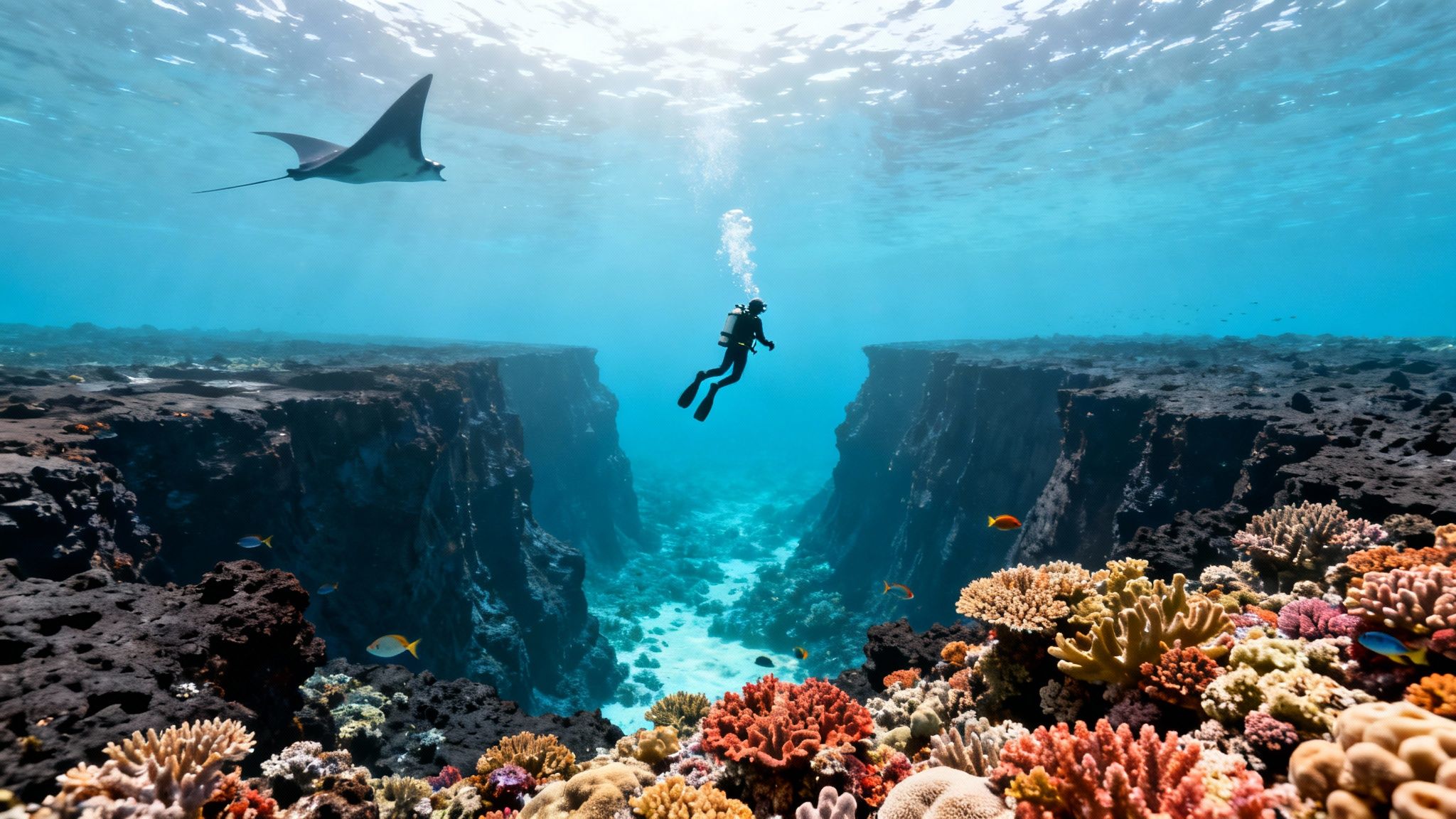
The secret to Kona’s incredible diving conditions isn't magic; it's geography. The sheer size of the Mauna Loa and Hualalai volcanoes acts as a natural shield, protecting the entire western coastline from the strong trade winds. This creates an enormous leeward side, resulting in exceptionally calm and clear water almost every day of the year. It's a perfect setup for divers of all experience levels.
We’re not just talking about good conditions; we're talking about phenomenal ones. It's common for visibility along the Kona coast to exceed 100 feet, and on a good day, it can push an unbelievable 150 feet. Compare that to the global average of 50-80 feet at other famous spots, and you'll understand why this place is so special. Protected areas like the Kealakekua Bay Marine Reserve are packed with over 200 fish species, many of which you can't find anywhere else on the planet.
For a quick overview of what makes diving here so incredible, take a look at this table.
Big Island Diving Highlights at a Glance
| Feature | What Makes It Special | Best For |
|---|---|---|
| Calm Waters | The massive volcanoes block trade winds, creating a calm leeward coast. | Divers of all skill levels, from beginners to seasoned pros. |
| Crystal-Clear Visibility | Routinely exceeds 100 feet, offering unparalleled clarity. | Underwater photographers and anyone who loves wide-angle views. |
| Volcanic Topography | Unique underwater landscapes like lava tubes, archways, and canyons. | Adventurous divers looking for exploration and unique structures. |
| Rich Marine Life | Home to manta rays, sharks, turtles, and over 200 fish species. | Everyone! Especially those hoping for big animal encounters. |
| Year-Round Diving | Consistent, warm water temperatures and calm conditions all year. | Planning a dive trip any time of the year without weather worries. |
As you can see, the combination of unique geology and abundant wildlife creates an unforgettable diving experience.
An Underwater Volcanic Wonderland
What really sets the Big Island scuba diving experience apart is the dramatic underwater world shaped by millennia of volcanic activity. This isn't your typical sandy-bottom reef. The ocean floor here is a spectacular maze of:
- Lava Tubes: Imagine swimming through ancient lava conduits that have become hollowed-out caverns. These are now quiet havens for sleeping white-tip reef sharks and shy crustaceans.
- Pinnacles and Archways: You'll discover massive underwater spires rising from the seafloor, creating breathtaking vertical walls and natural archways completely covered in coral.
- Craters and Canyons: Get ready to descend into submerged volcanic craters and navigate deep, winding canyons that shelter a huge diversity of marine life.
This volcanic foundation is the perfect canvas for a thriving ecosystem. The rough lava rock provides an ideal surface for coral to attach and grow, which in turn supports a vibrant community of reef fish, eels, and octopuses. This dynamic environment means no two dives are ever the same, offering endless new sights to discover.
If you're still wondering if this is the right destination for you, we explore this in more detail in our article: Is The Big Island Good for Scuba Diving?.
Exploring Kona’s Most Iconic Underwater Adventures
While you can find incredible diving all along the Kona coast, a few signature experiences have cemented the Big Island’s legendary status in the dive community. These are the dives that fill logbooks and become stories you tell for a lifetime, from graceful nighttime ballets to thrilling deep-water explorations.
At the very top of that list is the world-famous Manta Ray Night Dive. Honestly, calling it just a "dive" doesn't do it justice. It's a surreal, magical underwater spectacle that you truly can't find anywhere else on Earth.
The World-Famous Manta Ray Night Dive
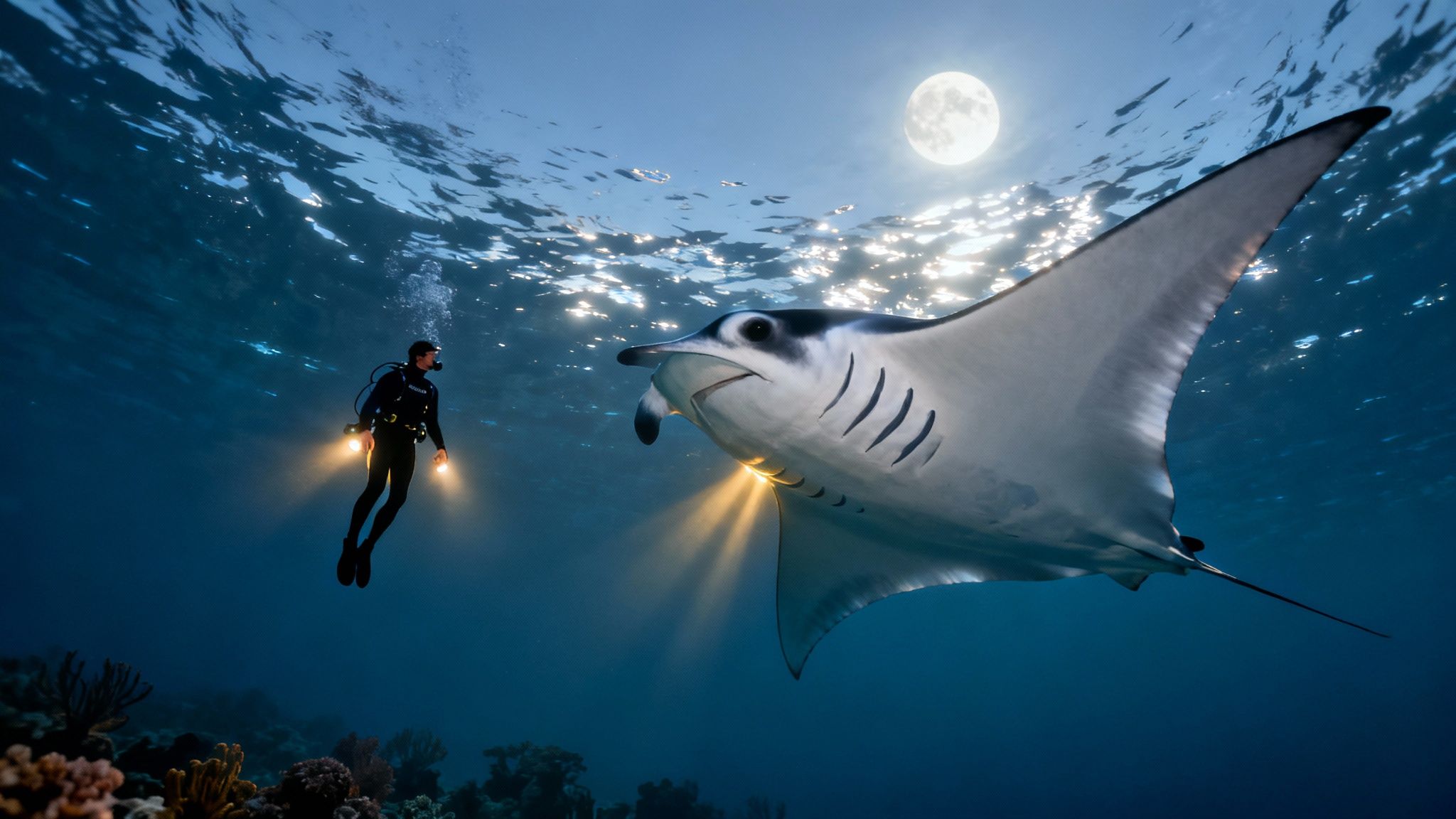
Picture this: you’re kneeling on a sandy patch of the ocean floor after sunset, with bright lights illuminating the water around you. Suddenly, out of the darkness, they appear—huge, gentle manta rays, gliding effortlessly just inches over your head. They perform mesmerizing barrel rolls, their giant mouths open to filter the microscopic plankton drawn to the light.
This is hands-down one of the most reliable big-animal encounters on the planet. Operators have reported a staggering 96% success rate for sightings, and it's not uncommon to see an average of 11 rays per dive. Those are world-class numbers, but Kona delivers them in calm, protected waters where visibility often tops 100 feet.
While there are a couple of sites for this dive, Garden Eel Cove is widely considered the superior choice. It’s better protected from ocean swells, which means a smoother, more comfortable experience for everyone. The underwater viewing area is perfectly situated, and the surrounding reefs are healthier and more vibrant, making it the premier location for our manta ray dive tours.
To get the full picture of this incredible adventure, take a look at our complete guide to the Kona Manta Ray Night Dive.
Journey into the Abyss: The Kona Blackwater Dive
If you're an experienced diver looking for a different kind of thrill, the Kona Blackwater Dive is your ticket to one of the most mysterious environments on Earth. Forget the reef—this is a pelagic adventure into the deep, open ocean. Suspended in inky blackness miles offshore, you'll witness one of the planet's largest migrations.
Every single night, countless bizarre and beautiful creatures rise from the depths toward the surface to feed. This vertical migration brings up life forms that look truly alien—bioluminescent jellies, translucent larval fish, and otherworldly cephalopods. It’s a dive that feels like floating through outer space.
This dive is definitely for adventurous divers who have their buoyancy dialed in. Tethered to the boat and led by our expert guides, you get a front-row seat to a side of the ocean very few people ever see.
Daytime Adventures Through Lava and Coral
Beyond the legendary night dives, the Big Island scuba diving scene truly comes alive during the day. The island's volcanic origins have created an underwater playground unlike any other, filled with dramatic structures and packed with life.
- Lava Tubes and Caverns: You can explore ancient lava tubes that have become magnificent underwater caves and swim-throughs. Sites like Golden Arches and Turtle Pinnacle feature stunning archways where sunlight filters down, creating an almost cathedral-like effect.
- Pristine Coral Gardens: Discover vibrant, healthy coral reefs that are home to hundreds of fish species, many found only in Hawaii. You’ll almost certainly see huge schools of yellow tang, ornate butterflyfish, and of course, the state fish—the humuhumunukunukuāpuaʻa.
- Encounters with Marine Life: Always keep your eyes peeled. You’ll find Hawaiian green sea turtles resting on the reef, moray eels peeking out from crevices, and graceful eagle rays gliding past in the deep blue.
These daytime dives are perfect for every skill level, from freshly certified divers to salty veterans. With so many sites to choose from, every single dive offers a new adventure along the Kona coast.
How To Choose Your Perfect Kona Dive Trip
With so many incredible options, figuring out which adventure is right for you is the first step to an amazing Big Island scuba diving experience. Are you a brand new diver looking to get your fins wet, or a seasoned pro hunting for a unique challenge? Kona has something for everyone. Let's walk through the most popular trips so you can find your perfect match.
The classic 2-Tank Morning Dive is really the quintessential Kona experience. It’s hands-down the best way to see the reefs when marine life is most active. The mornings here usually bring the calmest seas, and the bright sunlight makes the vibrant colors of the coral and fish absolutely pop. We’ll take you to two different spots, so you get a great feel for the variety of our underwater world in just one outing.
Here at Kona Honu Divers, we're all about amazing guides and unwavering safety, which is the recipe for an unforgettable trip. Our crew knows these waters like the back of their hand, meaning we always get you to the best spots based on that day's conditions.
Finding the Right Trip for Your Skill Level
Picking a dive that matches your experience is a huge part of having a great (and safe) time. While our morning dives are a blast for any certified diver, some of our other trips are geared toward those with a few more dives in their logbook.
- For All Certified Divers: The 2-Tank Morning Dive is a fantastic choice for just about everyone. We pick sites known for their beauty and easy-to-navigate layouts, with most dives in the 40 to 80-foot range.
- For Experienced Divers: If you're craving a bit more of a challenge, our Premium Advanced Dive Trips are designed with you in mind. These trips head to deeper, more remote sites that often feature unique lava formations and the chance to see rarer marine life.
- For Groups and Families: Nothing beats the flexibility of a Private Charter. It’s the perfect solution for families with a mix of snorkelers and divers, photographers who want to spend as long as it takes to get that perfect shot, or any group that wants a completely customized day on the water.
Remember, choosing the right operator is just as important as choosing the right trip. An experienced crew, well-maintained boats, and a serious commitment to safety are what turn a good dive into a great one.
For a deeper dive on this, check out our guide on how to choose a Kona dive shop to make sure you're in the best hands.
The Ultimate in Personalization: Private Charters
Think of a private charter as your own personal ocean adventure. You're not just booking a boat; you're designing your perfect day of Big Island scuba diving from the ground up, with our crew there to make it happen. You call the shots.
Want to hang out at one site a little longer, waiting for the light to be just right for your photos? Done. Got a mixed group of certified divers, people who want to snorkel, and maybe even some Discover Scuba first-timers? We can create an itinerary that keeps everyone safe, comfortable, and having a blast. It’s the ideal way to go for family reunions, special occasions, or any group that wants a truly personal experience.
In the end, the best dive trip is the one that lines up with what you love to do, your comfort in the water, and the kinds of memories you want to take home.
Getting Certified And Advancing Your Dive Skills
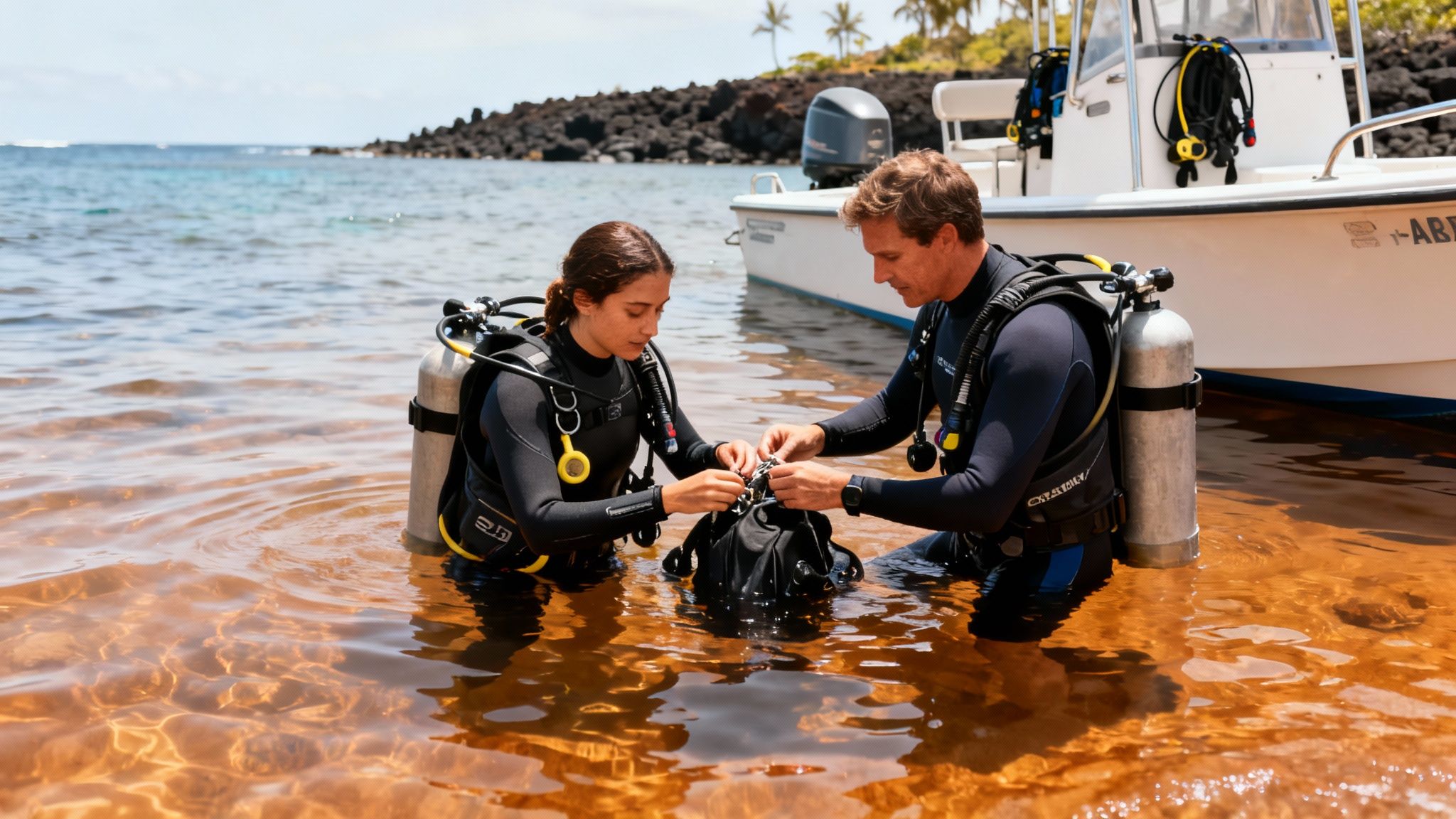
Ready to take your first breath underwater or push your skills to the next level? You couldn't have picked a better place. The calm, warm, and exceptionally clear waters along the Kona coast are the perfect natural classroom for divers of all stripes.
Learning to dive is an incredible journey, and where you learn makes a massive difference. You want quality instruction from experienced, patient pros who can help you become a safe and confident diver. It’s about building a solid foundation, not just checking a box.
Your First Step: The PADI Open Water Certification
Earning your PADI Open Water Diver certification is your passport to the other 71% of the planet, and Kona is an unbeatable spot to get it stamped. The whole process is designed to build your skills piece by piece, so you’re comfortable and competent every step of the way.
It breaks down into three main parts:
- Knowledge Development: First, you’ll learn the theory—the why behind what we do underwater. Most people knock this out online with PADI eLearning before they even pack their bags, saving precious vacation time for the fun stuff.
- Confined Water Dives: In a calm, pool-like environment, you'll get hands-on with the gear and practice all the essential scuba skills with your instructor, from clearing a flooded mask to getting your buoyancy just right.
- Open Water Dives: This is where it all comes together! You'll complete four dives in the ocean, putting your new skills to use while exploring Kona's incredible reefs under the watchful eye of your instructor.
Once you’re certified, you have a credential that’s recognized worldwide, opening up a lifetime of adventure.
Brushing Up Your Skills: A Refresher Course
Has it been a while since you’ve been in the water? A refresher course is the best way to get back into the swing of things with confidence. It's a quick and easy way to review your core skills with a professional before hopping on a dive boat.
A refresher isn't just about safety; it's about comfort. Shaking off the rust allows you to relax and actually enjoy your dives, focusing on the amazing marine life instead of fumbling with your gear.
We highly recommend a refresher if it's been more than a year or two since you last logged a dive. It's a small investment that pays off big time in comfort and enjoyment for the rest of your Big Island scuba diving trip.
Advancing Your Diving Adventure
Getting your Open Water card is just the beginning. The Big Island’s diverse dive sites are the perfect training ground for a whole range of specialty courses that can seriously expand your abilities.
Why not take the next step with an Advanced Open Water certification? This course is all about diving. You'll do five different "adventure dives," including a deep dive and an underwater navigation dive, plus three others you get to pick. It’s a fantastic way to gain more experience and build confidence with an expert by your side.
Kona is also the ideal place to earn specialty certifications that match its unique dive scene:
- Underwater Photography: Learn how to capture incredible shots of the turtles, eels, and vibrant corals you'll be seeing.
- Peak Performance Buoyancy: This is the secret to becoming a great diver. You'll learn to hover effortlessly, conserve air, and protect the fragile reef.
- Night Diver: Get the skills you need to fully appreciate world-famous night dives, like the incredible manta ray experience.
No matter where you are in your diving journey, Kona offers an amazing opportunity to learn and grow. Investing in your skills will make every single dive you do from here on out safer and way more fun.
Planning Your Dive Trip Logistics And Pro Tips

A fantastic dive trip starts long before you feel the splash. A little bit of smart planning is what separates a good vacation from a truly unforgettable one, letting you relax and focus on the incredible underwater world waiting for you.
Here, we'll walk through the practical tips and local knowledge you need to prepare for your Big Island scuba diving adventure with confidence. From timing your visit to packing essentials and understanding safety, getting these details right makes all the difference.
When To Visit The Big Island For Diving
One of the absolute best things about diving in Kona is that there’s no real “off-season.” The massive volcanoes on the island act as a natural shield, keeping the leeward coast calm and dive-friendly all year round. Water temperatures are always inviting, typically hovering between a comfortable 75-80°F (24-27°C).
While you really can't go wrong any month of the year, there is one period that adds an extra layer of magic.
Whale Season (December – March): This is when thousands of humpback whales make their way to Hawaiian waters to breed and calve. On a dive during these months, it's not uncommon to hear their hauntingly beautiful songs vibrating through the water. It’s a surreal experience that will stay with you forever.
Honestly, the best time to visit is whenever your schedule allows. The diving is always spectacular.
What To Pack And Expect On The Dive Boat
Packing for a dive trip is all about being prepared and comfortable. We handle the heavy scuba equipment, but there are a few personal items you’ll want to bring along to make your day on the water perfect.
- Reef-Safe Sunscreen: This is a must. Hawaii state law bans sunscreens containing chemicals like oxybenzone and octinoxate that damage our fragile coral reefs.
- Swimsuit and Towel: Arrive with your swimsuit on under your clothes and bring a towel. Our boats even have hot freshwater showers for a quick rinse between dives.
- Change of Clothes: A dry shirt or a light jacket feels great for the boat ride back, especially when there's a nice breeze.
- Certification Card and Logbook: Don't forget your C-card! Bringing your logbook is a great way to document your incredible dives with us.
- Sunglasses and Hat: The Hawaiian sun is intense. Protect your eyes and skin while you’re enjoying the view from the boat.
Our crew takes care of the rest. We provide snacks, drinks, and a thorough safety briefing before every dive. Your only job is to kick back, relax, and get excited.
Renting Gear vs. Bringing Your Own
It's the classic diver's dilemma: pack your own gear or rent it when you get here? While there’s comfort in using your own equipment, let’s be real—it can be a huge pain. Lugging heavy bags through the airport and paying those extra baggage fees isn't the best way to kick off a vacation.
At Kona Honu Divers, we make it easy. We offer top-quality, meticulously maintained rental gear from the best brands. Our regulators, BCDs, and computers are all proactively serviced by certified technicians, so you can be confident everything is in perfect working order for your safety and comfort.
Renting from us means less to pack, zero maintenance worries, and gear that's perfectly suited for local dive conditions. It all starts with choosing the right dive operator. Safety is everything to us, from our gear to our expert guides. We’re here to make every single part of your Big Island scuba diving experience exceptional. Check out all of our expertly guided Diving Tours to find the perfect adventure for you.
Common Questions About Diving The Big Island
Alright, let's wrap this up by tackling some of the questions we hear all the time from divers getting ready to visit the Big Island. Think of this as your final checklist before you pack your bags and head for the airport.
What’s The Best Time Of Year To Dive In Kona?
Honestly, there's no bad time. One of the best things about diving the Kona coast is its incredible consistency. The massive volcanoes on the island act as a natural shield, protecting the leeward side from rough weather and keeping the waters remarkably calm year-round.
We're talking about visibility that often pushes past 100 feet and water temperatures that hover comfortably between 75-80°F (24-27°C). That said, if you want a truly unique experience, plan your trip during whale season (December through March). Hearing humpback whale songs reverberate through the water while you’re exploring a reef is something you'll never forget.
I'm A Beginner. Is Kona Diving Too Advanced For Me?
Not at all! Kona is one of the best places to dive, no matter what your logbook looks like. For new divers, or those just getting certified, there are dozens of beautiful, mellow reef sites at shallower depths. They're calm, easy to navigate, and absolutely packed with life.
But if you're an experienced diver looking for a challenge, we've got you covered. There are deep pinnacles, dramatic lava tubes, and one-of-a-kind adventures like the surreal Kona Blackwater Dive or our Premium Advanced Dive Trips that will push your skills and blow your mind.
Is The Manta Ray Night Dive Safe If I’m Newly Certified?
Absolutely. It might sound intense, but the world-famous manta ray night dive is actually a very controlled and safe experience, perfect even for divers fresh off their open water course.
The key is good buoyancy, but you won't be swimming around in the dark. The entire dive is stationary. You'll settle into a spot on the sandy bottom at about 30-40 feet, and the show comes to you.
At Kona Honu Divers, our guides give a detailed briefing beforehand and use powerful lights to create a "campfire" effect on the ocean floor. This ensures a well-lit, secure environment, letting you focus on the magic of having these gentle giants glide just inches above your head.
What Else Will I See Besides Mantas And Turtles?
The volcanic geology of the Big Island has created an underwater world bursting with life. Mantas and honu (turtles) get a lot of the spotlight, but every dive here is a treasure hunt.
Here’s just a sample of what you can expect to find hiding in the reef:
- Several different species of moray eels, peeking out from their homes.
- Incredibly smart octopuses, often masters of camouflage.
- Huge schools of colorful reef fish, many of which are endemic to Hawaii.
- Spinner dolphins, eagle rays, and whitetip reef sharks cruising by.
- Oddball critters like the camouflaged frogfish or a well-hidden scorpionfish.
You truly never know what you'll see on any given dive. Ready to find out for yourself?
At Kona Honu Divers, we're excited to show you why the Big Island is a world-class diving destination. Explore all of our charters on our diving tours page.