
Picture this: you’re floating in the calm, dark waters off the Kona coast, the moonlight shimmering on the surface. Suddenly, a magnificent manta ray, with a wingspan wider than a car, glides effortlessly just inches beneath you. This isn't just an activity; it's an awe-inspiring ballet performed by nature's most gentle giants. And Kona is one of the only places on Earth where you can reliably witness this spectacle any night of the year.
Experience the Magic of Kona’s Manta Ray Night Snorkel
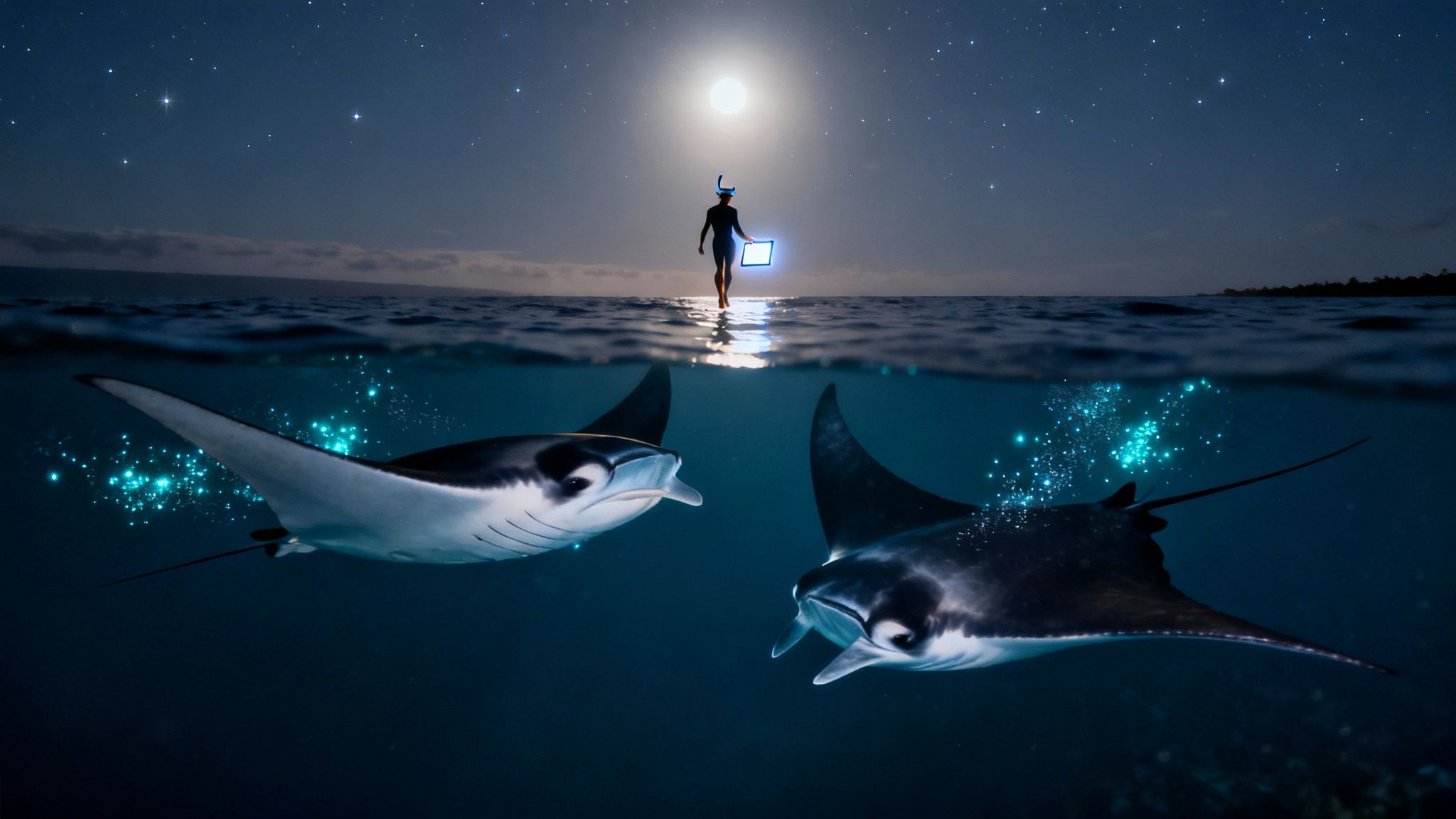
This guide is your complete playbook for an unforgettable adventure, covering everything from picking the right tour to what to do when you’re in the water with these incredible creatures. There's a reason snorkeling with manta rays in Kona is consistently ranked among the world's top marine encounters. It’s a powerful experience that connects you with the ocean in a way few other wildlife adventures can.
So how does it all work? The magic is created by a clever combination of biology and light. We use powerful, submerged lights to attract huge clouds of plankton—the manta rays' favorite food. This essentially creates a floating buffet that draws the mantas in for their nightly meal, allowing you to get a front-row seat to their graceful, acrobatic feeding behaviors.
Why Kona is the Global Epicenter for Manta Encounters
Kona's unique underwater landscape and protected coastline create the perfect stage for this nightly show. The Big Island is home to a large, resident population of reef manta rays, with local researchers having identified and named over 250 individual rays. This means your chances of seeing them are incredibly high; most reputable operators, including us, have a success rate of over 90% year-round.
This isn't just a quick glimpse from afar. You’re right there, watching these intelligent animals perform barrel rolls and somersaults to scoop up as much plankton as possible.
The experience is often described as surreal and almost magical. Floating in the dark ocean while these massive, graceful creatures soar beneath you is a memory that truly lasts a lifetime. It’s peaceful, mesmerizing, and deeply moving.
At Kona Honu Divers, we've built our reputation on five-star experiences that put safety, comfort, and respect for marine life first. We take our guests to the superior Garden Eel Cove, a calmer, more protected viewing area with healthier reefs than other sites. Our commitment is to make sure your encounter is not just safe, but absolutely spectacular.
How to Choose the Best Manta Ray Snorkel Tour
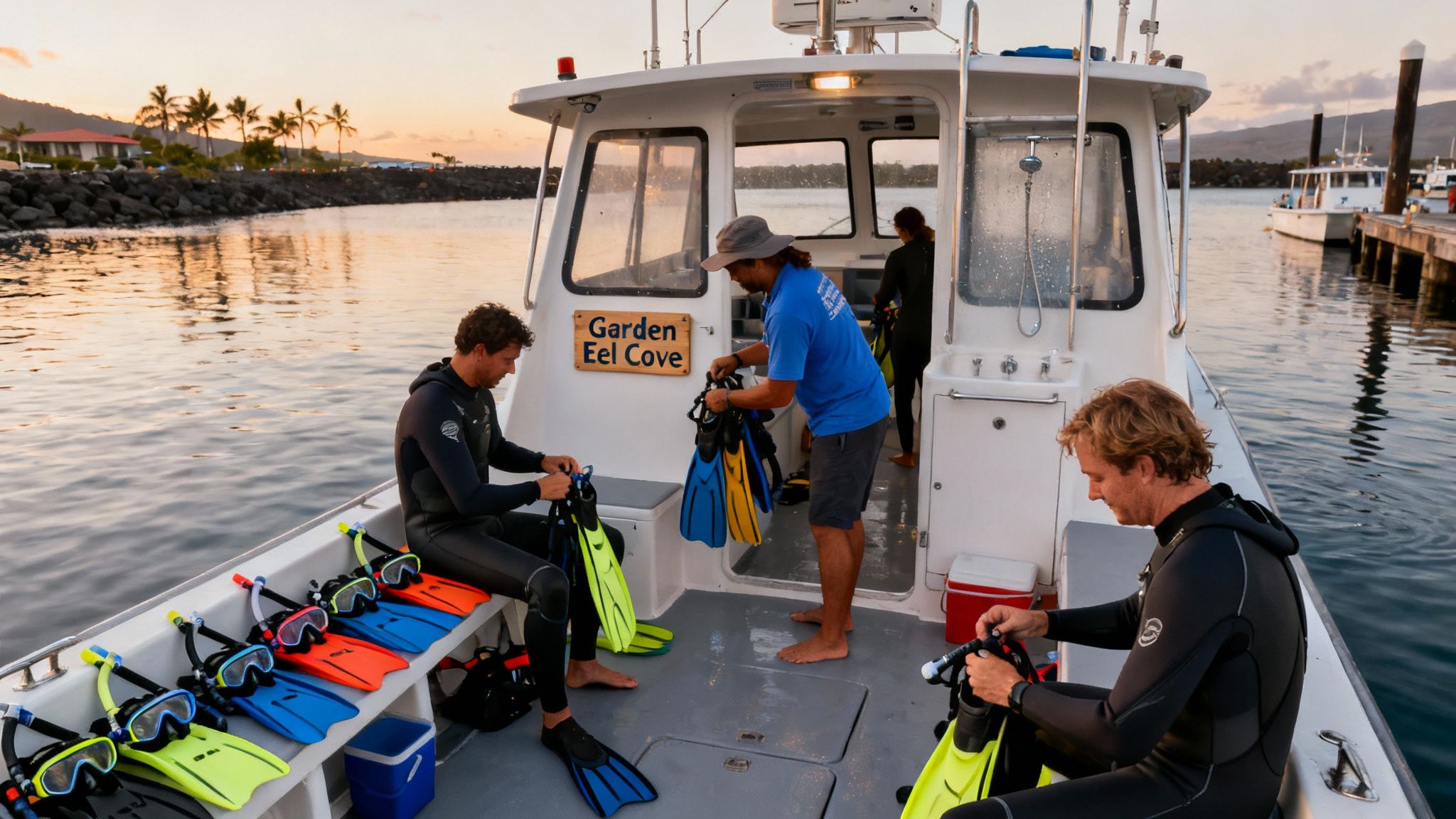
When you start looking for a manta ray snorkel tour in Kona, it’s easy to get overwhelmed by all the options. My advice? Don't just shop by price. The real value is in the quality of the experience, the crew’s expertise, and, most importantly, the company's commitment to safety and responsible wildlife viewing.
Look for operators with a stellar safety record and a crew that’s both knowledgeable and genuinely passionate. Little things end up making a big difference, especially after you’ve been in the ocean at night. A comfortable boat with amenities like a hot freshwater shower isn't just a luxury; it's a game-changer.
Why Location Is Everything
While a great crew and a comfy boat are essential, the single most important factor in your decision is where the tour goes. There are two main spots in Kona for manta snorkeling, and they are definitely not created equal. I can’t stress this enough: choose a tour that takes you to Garden Eel Cove, also known as Manta Heaven.
Here’s why it matters so much. Garden Eel Cove is tucked away near the airport, which protects it from the open ocean. This means the water is almost always calmer—a huge plus for a nighttime swim. That calm water also translates to better visibility, giving you crystal-clear views of the mantas.
On top of that, the reef at Garden Eel Cove is simply healthier and more vibrant. A thriving ecosystem means more plankton, which is what draws the manta rays in to feed. The light boards operators use to attract plankton are just far more effective in these pristine conditions. You can see what makes our Big Island manta ray tours a cut above the rest.
Choosing a tour to Garden Eel Cove significantly boosts your chances of having a comfortable, clear, and absolutely mind-blowing encounter. The calmer conditions and healthier reef make it the undisputed best choice for snorkeling with manta rays.
Another key piece of the puzzle is group size. A smaller group makes for a much better adventure. With fewer people in the water, you get a more personal, intimate encounter with the mantas—not to mention a front-row, unobstructed view of the underwater ballet.
Kona Manta Ray Snorkel Site Comparison
To really see the difference, it helps to compare the two main locations side-by-side. While you might see mantas at both, the quality of the experience can vary dramatically.
| Feature | Garden Eel Cove (Manta Heaven) | Keauhou Bay (Manta Village) |
|---|---|---|
| Location | North of Kailua-Kona, near the airport | South of Kailua-Kona, near a large resort |
| Water Conditions | Protected and generally calm | More exposed to open ocean swells and wind |
| Visibility | Typically excellent due to less runoff | Can be variable, sometimes murky |
| Reef Health | Healthy, vibrant coral and marine life | Impacted by development and boat traffic |
| Experience | Quieter, more intimate, and natural setting | Often more crowded with numerous boats |
As you can see, Garden Eel Cove just offers a more serene and reliable environment for snorkeling with manta rays. That powerful combination of calm, clear water and a flourishing reef makes it the premier destination for this incredible wildlife encounter.
When you book with Kona Honu Divers, you're choosing a company that is dedicated to giving you the best possible experience, and that starts with taking you to the best possible location. But don't just take our word for it—see what our past guests have to say about their unforgettable nights with us.
Ready to join us for an incredible adventure at Garden Eel Cove?
What to Expect on Your Manta Ray Snorkel Adventure
So, what’s it really like to go on a manta ray snorkel? Knowing the flow of the evening helps you relax and soak in every incredible second. The whole experience is designed to be safe, accessible, and completely awe-inspiring, but a little mental prep makes it even better.
Your adventure kicks off with a simple check-in at the harbor. Once you're all set, you’ll hop aboard the boat for a gorgeous ride out to the snorkel spot. Most trips are timed to catch a legendary Kona sunset, which is a pretty amazing way to build the excitement for the main event.
Gearing Up for the Big Show
Forget about packing a bunch of gear. A top-notch operator like Kona Honu Divers has everything you need waiting for you. This isn’t just basic rental stuff; we're talking high-quality masks, snorkels, and fins that actually fit well.
They’ll also get you sorted with a thick, comfortable wetsuit. This is more important than you might think. Even with Hawaii's warm, inviting water, you can start to feel a chill when you’re floating on the surface after dark. A good wetsuit lets you forget about the temperature and focus completely on the mantas.
Worried because you're not a strong swimmer? Don't be. The tour provides awesome flotation devices, like pool noodles or custom-made light boards, that you simply hang onto. You just float at the surface, which makes this incredible wildlife encounter accessible to almost anyone.
All you really need to bring is a swimsuit for under your wetsuit, a towel for after, and something warm and dry to wear for the boat ride home. Simple.
The All-Important Briefing
Before anyone gets in the water, the crew runs through a comprehensive safety briefing. They'll show you exactly how everything works and what the plan is once you're in the water. This is your chance to ask any and all questions—there are no silly ones.
This briefing is also where the magic really begins. The guides are passionate about these animals and share incredible facts about Kona’s resident manta ray population. You’ll learn about their behavior and why conservation is so critical. Hearing these stories makes seeing the mantas in person so much more powerful.
You’ll also learn the golden rule of manta encounters: passive interaction. It’s simple: no touching, no chasing, and no getting in their way. This ensures the mantas feel safe and the experience remains respectful for everyone.
A quick pro-tip: if you're even slightly prone to seasickness, take some medication beforehand. You don't want anything to distract you from the experience. Preparing properly is key, much like you would when reading through general guides to outdoor adventures to get ready for a big trip.
Once the briefing is done and the last bit of sun disappears, it’s time to slide into the calm, dark water and get ready for a night you'll never forget.
Your In-Water Encounter with Gentle Giants
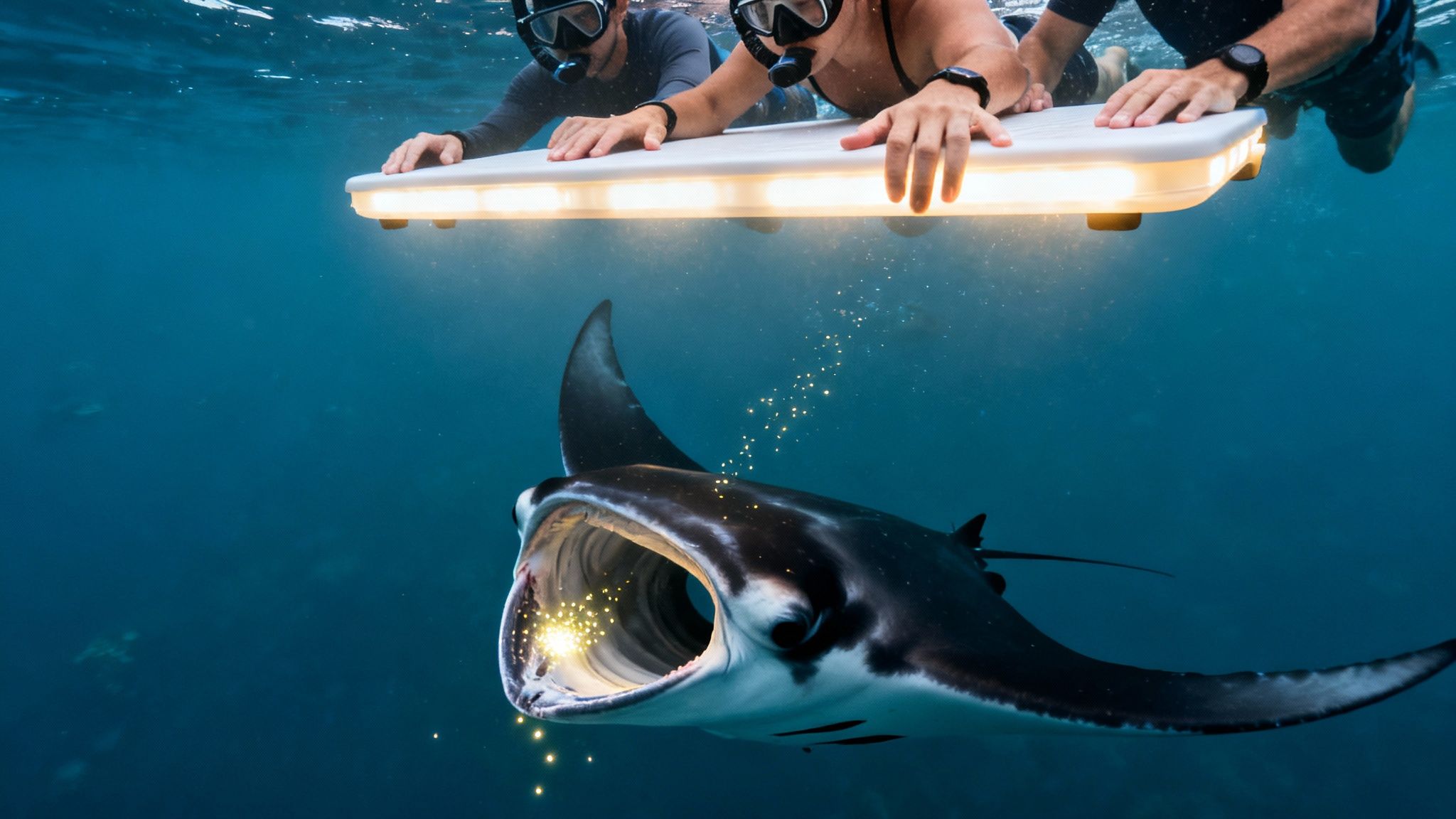
This is it—the moment you've been waiting for. After a beautiful boat ride as the sun sets and stars begin to pop, you’ll slip into the surprisingly warm, dark waters of the Pacific. Your guides will lead you right to a custom-made light board, which will be your floating front-row seat for the show.
This isn’t just any old light. The board is designed to shine powerful beams into the water, and almost immediately, it starts attracting tiny plankton, which is a manta ray's favorite meal. It's a simple yet brilliant setup that creates an all-you-can-eat buffet, drawing the mantas in from the deep.
Once you find your spot at the board, your job is simple: hold on, float, and get ready for a spectacle you'll never forget.
The Art of Passive Observation
The absolute key to an incredible manta encounter is to relax and stay horizontal. Just float flat on the surface, holding onto the light board, and become part of the scenery. This calm, still posture tells the mantas you're not a threat, and that’s when they get comfortable enough to come incredibly close.
We can't stress this enough: you must follow the golden rule of passive interaction. It’s the foundation of responsible and sustainable snorkeling with manta rays. The rules are simple, but they are critical for the health of these amazing animals.
- Never Touch: A manta’s skin has a protective mucus coating. Touching them can rub it off, leaving them vulnerable to nasty infections.
- Never Chase: Swimming after a manta will just scare it away. The best encounters happen when you stay put and let them choose to approach you.
- Never Obstruct: Give them their space. Don't swim directly over or under them, as it can block their feeding path.
When you let the mantas control the interaction, you not only keep them safe but also get a much more authentic and breathtaking experience.
A Front-Row Seat to an Underwater Ballet
Once you’ve earned their trust by respecting their space, the real magic starts. You’ll be completely mesmerized as these graceful giants—some with wingspans over 12 feet—perform effortless barrel rolls and somersaults just inches below you. Their huge, cavernous mouths open wide to filter the plankton concentrated in the light.
It's a connection with nature that feels almost otherworldly. Hearing the quiet whoosh of water as a massive wing glides past and seeing the unique spot patterns on their bellies is something that will stay with you forever.
This incredible spectacle has, not surprisingly, become a bucket-list item for people worldwide. Every year, over one million people go snorkeling or diving with manta rays, generating an estimated $140 million in direct revenue from tours. But with popularity comes challenges. In fact, surveys have shown that 82% of participants at some sites felt the experience was too crowded. This really highlights why it's so important to book with an operator that keeps group sizes small for a better, more respectful encounter. You can dive deeper into the research on manta ray tourism impacts to learn more.
The whole encounter is like a silent, graceful dance. The only sounds you'll hear are the gentle lapping of the water and the sound of your own breathing. Watching these giants feed so peacefully is a powerful reminder of the ocean's raw beauty and fragility. It's an adventure that leaves you with a profound appreciation for marine life and a story you’ll be telling for the rest of your life.
Why Your Manta Ray Encounter in Kona is So Special
The magnificent animals you meet while snorkeling with manta rays in Kona aren't just a fleeting tourist attraction. They’re part of a cherished and closely studied local population—a community of gentle giants that call these coastal waters home.
These highly intelligent creatures, which are close relatives of sharks, pose absolutely no threat to humans. They are harmless filter feeders, dining exclusively on tiny plankton that they gracefully scoop from the water. What makes the Kona population truly unique is the decades of research that have gone into understanding them.
Knowing the Locals by Name
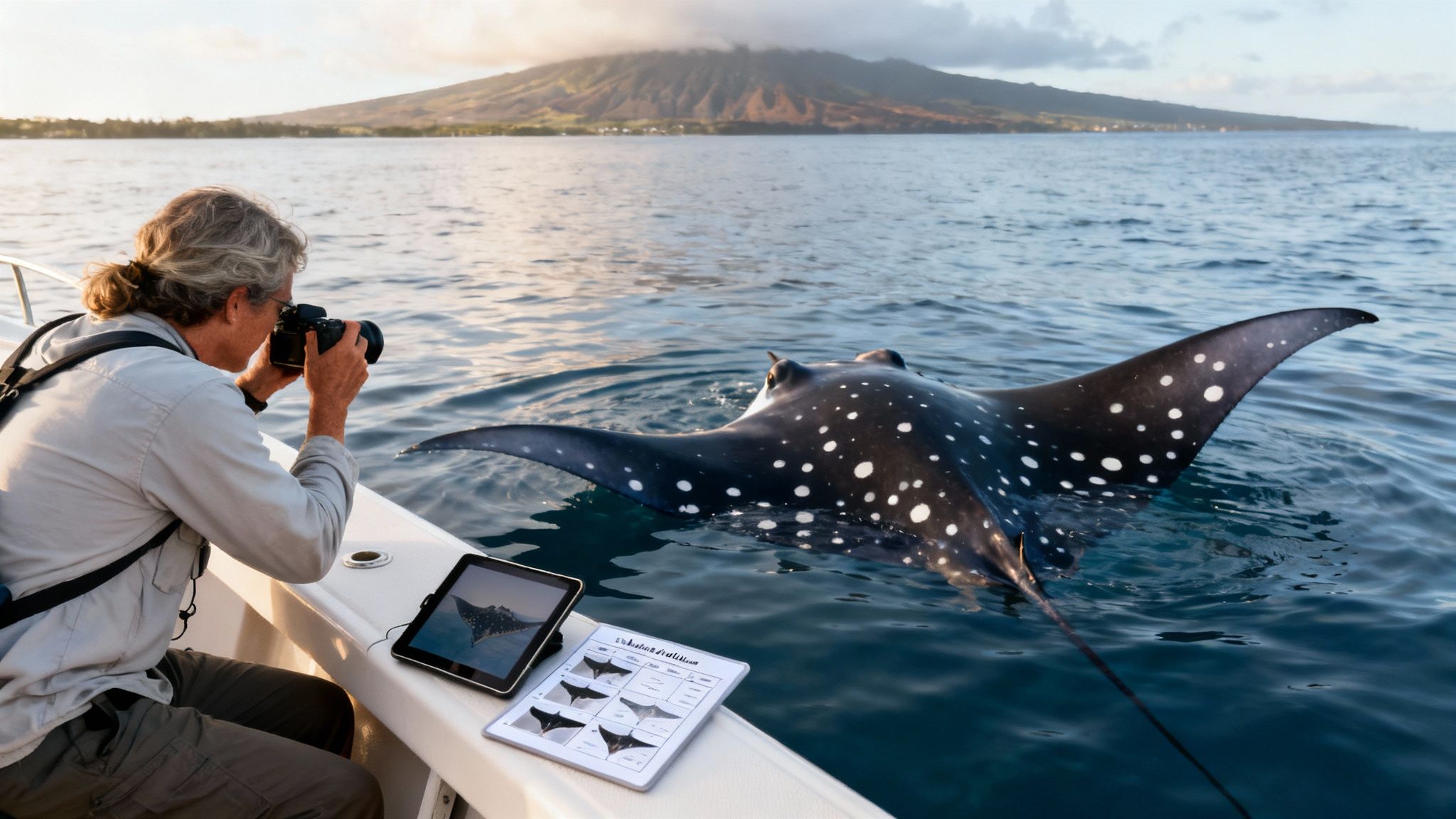
Believe it or not, researchers and seasoned dive operators here can identify hundreds of individual manta rays. How? The unique black-and-white spot patterns on their bellies are like a human fingerprint, completely distinct to each animal.
By documenting these patterns, local conservation groups have actually given names to many of the resident mantas—you might meet Lefty, Big Bertha, or Kailey Ray on your trip! This personal connection transforms your snorkel from a simple wildlife viewing into a genuine encounter with known individuals, each with its own history.
When you book with a responsible operator like Kona Honu Divers, your tour fee directly supports these vital conservation efforts. We are deeply committed to sustainable tourism that puts the well-being of the mantas first. This means we strictly follow viewing guidelines designed to minimize any stress on the animals and protect their natural feeding behaviors.
The Global Fight for Manta Ray Survival
This commitment to conservation is more critical than ever when you look at the immense pressures these animals face worldwide. Manta and devil ray populations are in a steep decline, threatened by overfishing and the destruction of their habitats. Their gill plates are highly valued on some black markets, which drives targeted, unsustainable fishing.
A landmark study by the Manta Trust paints a sobering picture, revealing that an estimated 264,520 mobulid rays are killed annually across the globe. The vast majority of this devastation—87%—comes from small-scale fisheries, with just five countries accounting for most of the catches. The Indian Ocean has been hit the hardest, suffering 74% of global fatalities and seeing population crashes of up to 99% in some areas. To truly grasp the scale of the threat, you can read the full research on the global decline of manta and devil rays.
By participating in a well-managed, eco-conscious tour, you are casting a vote for conservation. Your experience becomes a meaningful act that helps prove these animals are worth far more alive than dead, preserving them for generations to come.
This is exactly why local regulations and operator standards are so important. We actively advocate for rules that protect this precious resource, which we detail in our open letter regarding Hawaii's manta ray regulations. Your choice of tour operator really does matter—it makes your incredible adventure a direct investment in the future of the Kona Manta Rays.
Your Top Manta Snorkel Questions, Answered
If you're getting ready for your first time snorkeling with manta rays, you probably have a few questions. That's completely normal! We get them all the time. To help you feel confident and even more excited for your big night, we've answered some of the most common ones we hear from our guests.
Is It Actually Safe to Snorkel with Manta Rays?
Yes, absolutely. This is one of the safest and most profound wildlife encounters you can experience anywhere in the world.
Manta rays are nicknamed "gentle giants" for a very good reason—they are completely harmless to humans. They don't have teeth, stingers, or barbs of any kind. As peaceful filter feeders, their only interest is the buffet of microscopic plankton attracted by our lights, not the people watching them.
The real safety focus is simply on being in the ocean after dark. That’s why it is so critical to go with a top-notch, safety-conscious operator. A company like Kona Honu Divers, with a spotless safety record and an experienced crew, lets you relax and focus entirely on the magic unfolding below.
Do I Need to Be a Strong Swimmer?
Not at all. You don't need to be an Olympian or even a particularly strong swimmer to join this tour. The entire experience is designed to be accessible and comfortable for almost everyone.
You'll be holding onto a large, custom-built light board that floats on the surface. This board provides all the stability and buoyancy you need, so you can just hang on, float, and enjoy the show. We also provide wetsuits that give you a little extra buoyancy, making it even easier to relax.
Our crew is in the water and on the boat the entire time, keeping a close eye on everyone. Your safety and comfort are their number one priority, from the moment you get in until you're back on the boat.
Will I Get Cold in the Water?
Kona’s ocean temperatures are beautiful year-round, usually hovering somewhere between the mid-70s and low-80s Fahrenheit.
That said, you’ll be floating in the water at night for about 45 minutes without much movement, and that can make anyone start to feel a bit chilly. This is exactly why we provide high-quality, thick wetsuits. They trap a thin layer of water that your body quickly warms up, acting as a personal insulator to keep you comfortable for the whole swim.
A pro tip when booking: look for a boat that has a hot freshwater shower. Trust us, it makes all the difference when you get out!
Are Manta Ray Sightings Guaranteed?
While Kona is arguably the most reliable place on the planet to see manta rays, it's crucial to remember these are wild animals on their own schedule. Because of that, no company can ever offer a 100% guarantee.
The good news? The chances are incredibly high. Most established operators, ourselves included, have a success rate well over 90%. The method of using bright lights to attract their food source is extremely effective, and our local manta population is large and fairly predictable. So while there's no official guarantee, your odds are fantastic.
Should I Snorkel or Dive with the Mantas?
This is a classic question, and the honest answer really comes down to personal preference and your comfort level in the water.
Snorkelers get a stunning bird's-eye view, watching the mantas swoop and barrel roll right beneath the surface. It’s an incredible, up-close perspective. Divers, on the other hand, get to watch from the sea floor, looking up as the mantas' massive silhouettes glide overhead against the glow of the lights. For those who are certified, you can check out the manta ray dive tour.
Both are truly unforgettable experiences. Snorkeling is generally more accessible, especially for families or those without a dive certification. To get a deeper look, check out our guide on whether it's better to snorkel or dive with manta rays to see which sounds right for you.
Ready to book an adventure you'll never forget?