
Picture this: you're floating weightlessly in the warm, turquoise Pacific, the Hawaiian sun on your back. Below you, a kaleidoscope of colorful fish darts through intricate coral gardens while a majestic sea turtle glides by. This isn't just a daydream; it's what awaits you on one of the incredible snorkeling tours Big Island Hawaii is famous for. This guide will help you dive right in.
Why the Big Island Is a World-Class Snorkeling Destination
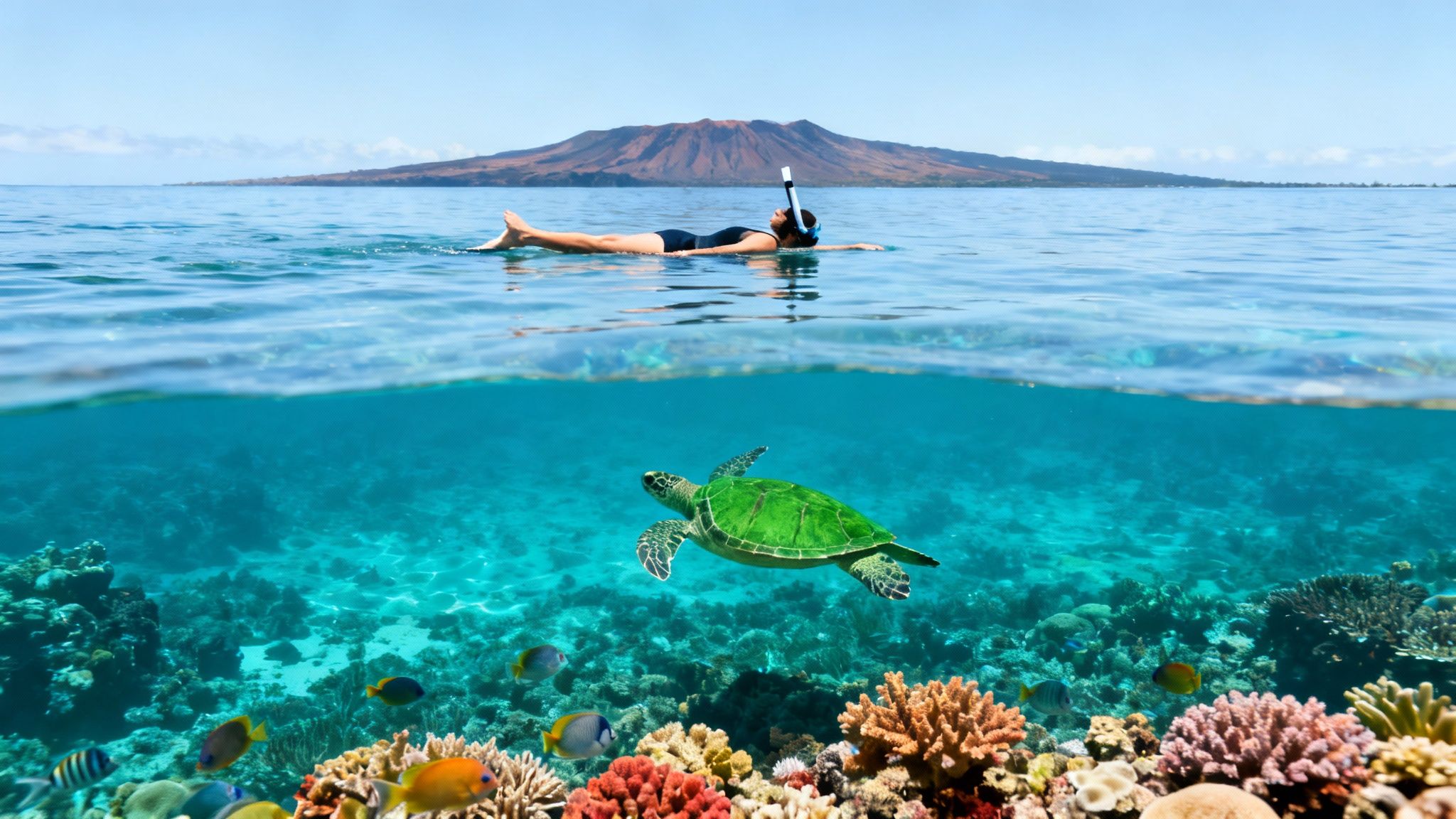
The Big Island isn't just another pretty spot in the tropics—it’s a snorkeler’s paradise, and we have its incredible geology to thank for that. The colossal volcanoes of Mauna Loa and Hualālai create a massive shield along the Kona coast, blocking the gusty trade winds that churn up the waters elsewhere in the islands.
The result? The ocean here is famously calm and exceptionally clear, almost like a giant natural swimming pool. It's not uncommon for visibility to stretch beyond 100 feet, giving you a front-row seat to Hawaii's breathtaking underwater world without fighting currents or peering through cloudy water.
A Sanctuary for Marine Life
These protected Kona waters have allowed some of Hawaii's healthiest and most brilliant coral reefs to thrive. And where there’s healthy coral, there’s an explosion of life. These reefs are bustling underwater cities, home to a stunning variety of marine creatures. On any given day, you could easily spot:
- Honu (Green Sea Turtles): These ancient, gentle reptiles are a hallmark of Hawaiian waters, often seen peacefully munching on algae.
- Playful Spinner Dolphins: You'll know them when you see them! Pods of these acrobatic dolphins often cruise the coastline, leaping and spinning out of the water.
- Vibrant Reef Fish: The reefs are packed with hundreds of species, from brilliant yellow tangs and rainbow-colored parrotfish to Hawaii's quirky state fish, the Humuhumunukunukuāpuaʻa.
The Advantage of a Guided Tour
While you can certainly grab a mask and hop in the water from the beach, joining a guided tour elevates the entire experience. These tours provide safe, often exclusive access to pristine marine sanctuaries that are tough, if not impossible, to reach on your own. Plus, you get the benefit of a professional guide's expertise.
A great guide does more than just keep you safe; they act as your underwater interpreter, pointing out hidden creatures and sharing fascinating insights about the reef's delicate balance.
Taking a guided snorkeling tour on the Big Island takes all the guesswork out of the equation. It guarantees you’ll visit the best spots in the safest conditions, so you can just relax and soak in the magic of the ocean. To see where we go, check out our guide to the top spots for snorkeling in Kona, Hawaii.
Exploring the Big Island’s Premier Snorkel Sites
The Big Island’s coastline is a wild masterpiece—a mix of ancient lava flows, quiet coves, and reefs bursting with color. Each spot offers a different peek into Hawaii's underwater world. While you could spend a lifetime exploring, a few legendary locations always rise to the top of every snorkeler's list.
To really experience these premier sites at their best, you’ll want to go with a pro. The best snorkeling tours Big Island Hawaii has to offer can get you to protected areas that are difficult, if not impossible, to reach from the shore. This isn't just about avoiding the crowds; it's about having an expert guide who knows the currents, the conditions, and exactly where the most amazing marine life likes to hang out.
Kealakekua Bay and the Captain Cook Monument
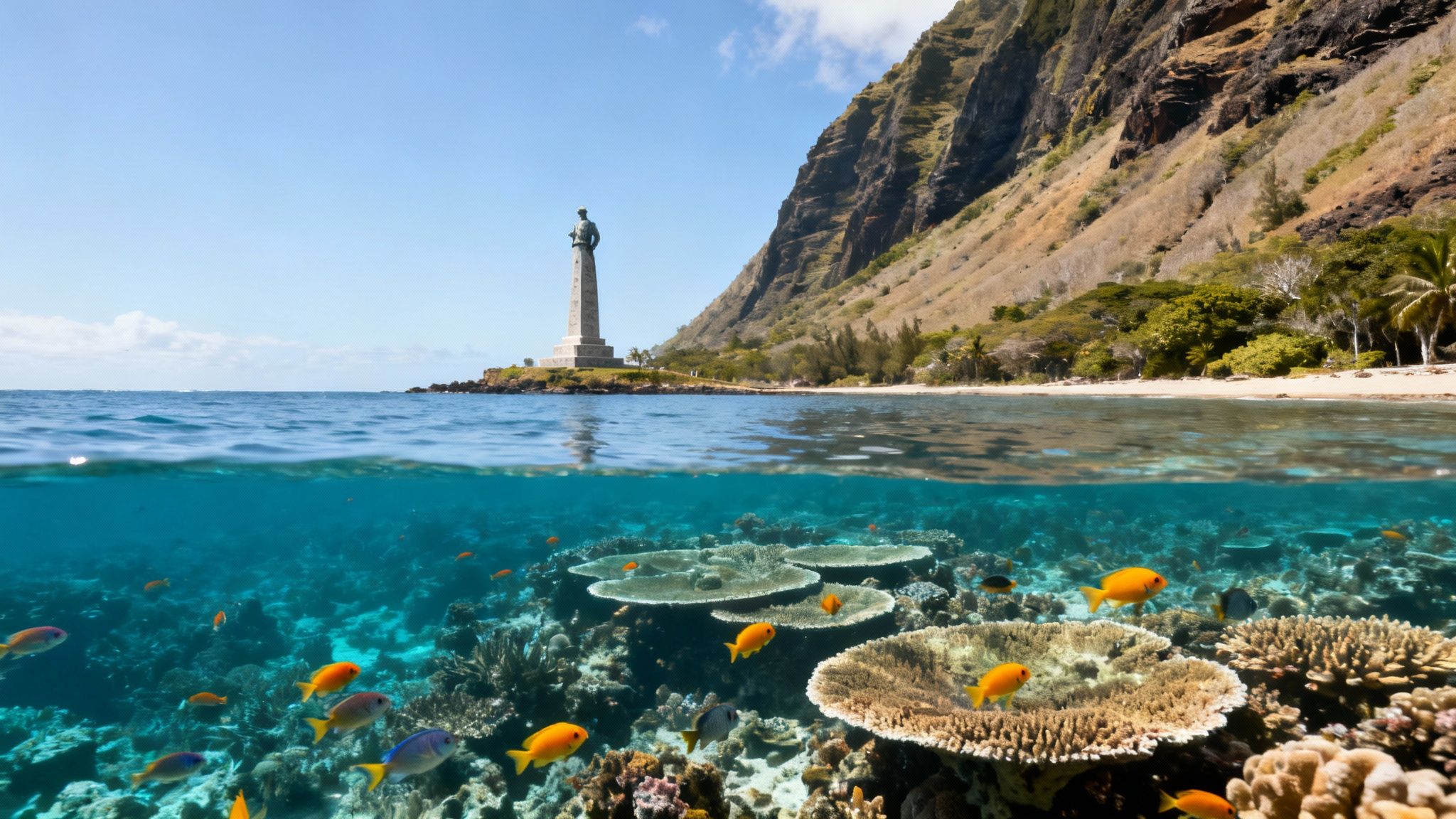
If there's one crown jewel of Big Island snorkeling, it's Kealakekua Bay. This place is steeped in history—it’s where Captain James Cook first met native Hawaiians in 1779 and where he was later killed. Today, the bay is a protected Marine Life Conservation District, which has allowed its ecosystem to thrive without much human interference.
The result? An underwater paradise with visibility that often clears 100 feet. Snorkeling here is like swimming in a giant, crystal-clear aquarium.
The water in Kealakekua Bay is exceptionally deep and clear, with steep underwater drop-offs that attract large schools of fish and other pelagic species. It’s an environment that feels both vast and full of life.
Here's what you can expect to see:
- Vibrant Coral Gardens: The bay is covered in sprawling coral formations that are home to thousands of reef fish—think bright yellow tangs, butterflyfish, and parrotfish.
- Spinner Dolphins: It's not uncommon for pods of playful spinner dolphins to cruise into the bay for a little R&R in the calm, protected waters.
- Honu (Sea Turtles): You'll almost certainly spot Hawaiian green sea turtles gliding gracefully over the reef.
The best snorkeling is right in front of the monument, which is on the opposite side of the bay from any road. So, unless you're up for a serious kayak paddle, a boat tour is the only practical way to get here.
Honaunau Bay (Two Step)
Just south of Kealakekua is Honaunau Bay, better known by its nickname, "Two Step." It earned the name from the natural lava rock ledges that make for a super easy entry into the water. This spot is a local favorite, loved for its calm, shallow waters and an incredible density of marine life. It’s also right next to the Puʻuhonua o Hōnaunau National Historical Park, which adds a powerful cultural feel to your swim.
The bay’s natural layout makes it perfect for snorkelers of all skill levels. The water is clear, the coral gardens are healthy, and the fish seem to be everywhere. If you want a near-guaranteed encounter with a Hawaiian green sea turtle, this is one of your best bets.
Pawai Bay: A Hidden Gem
For those who want to get away from it all, Pawai Bay delivers a more rugged and dramatic snorkeling adventure. You can only get here by boat, which keeps it feeling wild and untouched. The underwater geology is the main event here—ancient lava flows have created a maze of arches, small caves, and cool swim-throughs.
Snorkeling in Pawai Bay is all about exploration. The unique terrain provides a home for a different cast of characters, like moray eels, octopus, and even the occasional reef shark resting inside a lava tube. For underwater photographers, the dramatic landscapes are a dream come true. A guided tour is a must to safely navigate the features and find the bay's best-kept secrets.
These spots truly show off the diversity of the Big Island’s underwater world. From the historic sanctuary of Kealakekua to the easy-going vibe of Two Step and the adventurous terrain of Pawai Bay, a snorkeling tour is your ticket to seeing the best the island has to offer.
How to Choose the Right Snorkeling Tour
With so many incredible snorkeling tours Big Island Hawaii has to offer, how do you pick the right one? It can feel like a big decision, but it really just comes down to what you want out of your day. The key is to match the tour with your vacation style—whether you want to spend as much time as possible exploring the reef, have a truly unique nighttime adventure, or create a special memory just for your family.
Let's break down the main options to help you find that perfect day on the water.
Most people start with a classic morning boat tour. These trips usually run for three to four hours and take you to one or two of the best snorkel spots around, like the famous Kealakekua Bay or the lively reefs of Pawai Bay. They’re a fantastic all-around choice for pretty much everyone and strike a great balance between adventure, relaxation, and value.
But if you're after a "once-in-a-lifetime" kind of story to tell, nothing on the planet compares to the Manta Ray Night Snorkel. It's a completely different experience. You head out after dark to special sites where guides use lights to attract plankton. This, in turn, draws in the magnificent manta rays for a surreal underwater ballet that you just have to see to believe.
Morning Tours vs Specialized Adventures
So, should you go for a daytime reef tour or a nighttime manta encounter? It really depends on the kind of experience you're craving.
-
Morning Boat Tours: Think of these as your classic discovery missions. You'll see the coral reefs when they're buzzing with activity, with the bright sunlight making all the colors of the fish and coral pop. This is your best shot at seeing a huge variety of marine life, spotting a few honu (sea turtles) cruising by, and maybe even getting a visit from a pod of spinner dolphins.
-
Manta Ray Night Snorkels: This is all about one thing: a powerful, up-close wildlife encounter. You won't be looking at colorful reefs in the dark, but you will witness one of nature's most spectacular shows as giant mantas glide, swoop, and barrel-roll inches from your face.
Honestly, for a lot of visitors, the perfect answer is to do both! A morning tour gives you that quintessential Hawaiian reef snorkel, and the manta trip delivers a thrill you'll be talking about for years.
The Value of a Private Charter
For some groups—especially families with little kids, corporate outings, or anyone just wanting a day that’s all their own—a private charter is the ultimate way to see the Kona coast. When you book a private boat, you're the boss.
A private charter transforms your snorkeling trip from a shared excursion into a personalized adventure. You set the pace, choose the destinations with your captain's expert advice, and enjoy the intimacy of having the boat all to yourselves.
This flexibility is the real game-changer. Want to linger a little longer where the dolphins are playing? Or maybe head back a bit early for the kids’ nap time? No problem at all. It’s your day, built completely around what you and your group want to do.
What Sets a Top Operator Apart
In a place with so many options, the best tour operators really stand out. They’re defined by amazing service and a real commitment to keeping guests safe while protecting the ocean. The top companies on the Big Island are incredibly focused on the customer experience.
For example, our sister company, Kona Snorkel Trips, has become Hawaii's premier snorkel company by earning an unbelievable 7,800+ five-star Google reviews. That makes them the highest-rated and most-reviewed snorkel operator in the entire state. A reputation like that doesn't happen by accident; it shows just how much people value safety, knowledgeable guides, and genuine care for the environment when choosing a tour. You can see what guests are saying on their Big Island snorkeling tours blog.
A truly great company invests in comfortable, spacious boats and provides top-notch gear that’s clean and well-maintained. More importantly, they hire passionate, expert guides who can teach you about the local marine life. That dedication is what turns a good day on the water into an unforgettable one. These same principles are just as important when picking any ocean adventure, which we cover in our guide on how to choose a Kona dive shop.
What to Expect on a Guided Snorkeling Adventure
First time on a snorkeling tour? It's completely normal to feel a mix of excitement and maybe a few nerves. Relax. A guided trip on the Big Island is a smooth, safe, and incredible experience from start to finish. Let’s walk through a typical day so you know exactly what’s coming.
Your day starts at the harbor, where the crew will welcome you aboard. After a quick check-in and a warm "aloha," you’ll find a spot on the boat and get settled in. The ride out to the snorkel site is half the fun! This is your chance to take in the stunning Kona coastline and watch for the spinner dolphins that love to show off in the boat’s wake.
Safety First, Then Fun
Before anyone even dips a toe in the water, the crew will gather everyone for a thorough safety briefing. This is the hallmark of any professional snorkeling tours big island hawaii provides. They'll go over everything: how to use your gear, where to swim, what to look for, and how to interact respectfully with marine life.
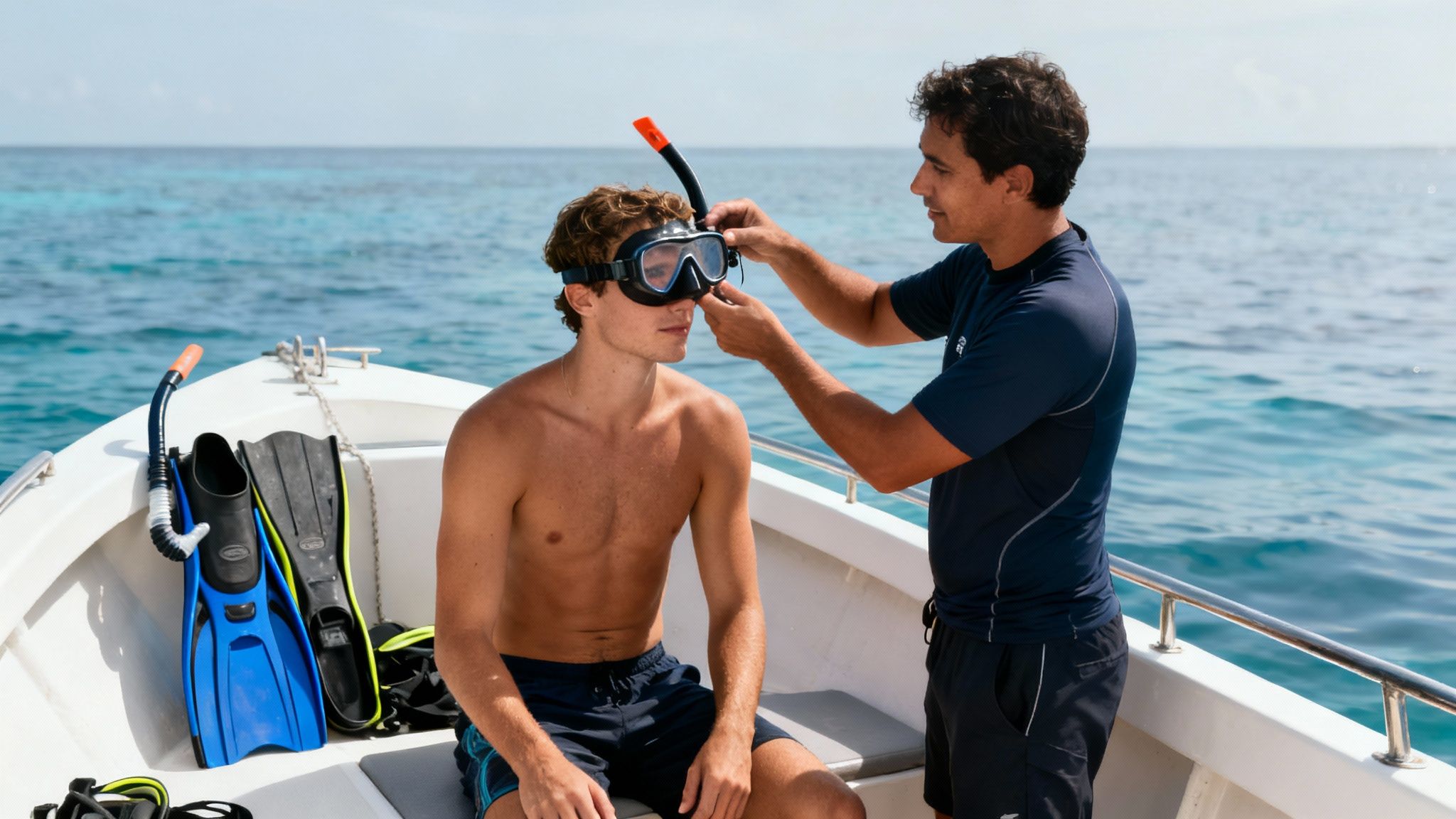
Your guides are pros at getting you fitted with the right gear. They’ll help you find a mask that creates a perfect, leak-free seal on your face, a comfortable snorkel, and fins that are just the right size. They also provide flotation devices like life vests or pool noodles, so you can float effortlessly and just enjoy the view, no matter your swimming skill.
The role of a great guide extends far beyond safety. They act as your underwater interpreters, pointing out hard-to-spot creatures like a camouflaged octopus or a shy moray eel and sharing fascinating facts about the delicate coral reef ecosystem.
In-Water Guidance and Exploration
Once you’re all geared up, the real adventure begins. You'll enter the calm, clear water using an easy-to-navigate ladder, and your guides will be right there with you. They lead the group, making sure everyone sticks together while pointing out all the best parts of the reef.
They’ll show you where to find huge schools of colorful fish, gently guide you toward a grazing sea turtle, and answer questions as you float along. This turns a simple swim into something truly special, creating a much deeper connection to the amazing world just below the surface. The Big Island's appeal is undeniable, with visitor arrivals staying strong between 130,000 and 175,000 each month. These incredible guided experiences are a huge reason why. You can dig into Hawaii's tourism data on the official state website.
Packing for a Perfect Day
A little preparation goes a long way. Here’s a quick checklist of things to bring to make your day on the water as comfortable as possible.
- Reef-Safe Sunscreen: This is non-negotiable. Standard sunscreens have chemicals that bleach and kill our precious coral. Please choose a mineral-based one to protect both your skin and the ocean.
- Towel and a Change of Clothes: Nothing beats a warm, dry towel for the ride back to the harbor.
- Hat and Sunglasses: The Hawaiian sun is powerful, especially with the reflection off the water.
- Reusable Water Bottle: Staying hydrated is key. Most boats have water coolers for refills.
- Waterproof Camera: You are going to see things you’ll want to remember forever. An underwater camera or a waterproof phone case is a must!
- Light Jacket or Cover-Up: It can get a bit breezy on the boat, especially when you’re wet on the trip home.
By the time you step back on shore, you’ll be buzzing with excitement and full of incredible memories. We bet you’ll already be planning your next trip out.
The Unforgettable Manta Ray Night Snorkel
There are some wildlife encounters that stay with you forever, and then there's the Manta Ray Night Snorkel. It's in a category all its own. The Big Island isn't just a good place to see them; it's hands-down the best place in the world for this experience. This isn't just another tour—it's a bucket-list adventure that connects you with one of the ocean's most gentle giants in a way that feels completely surreal.
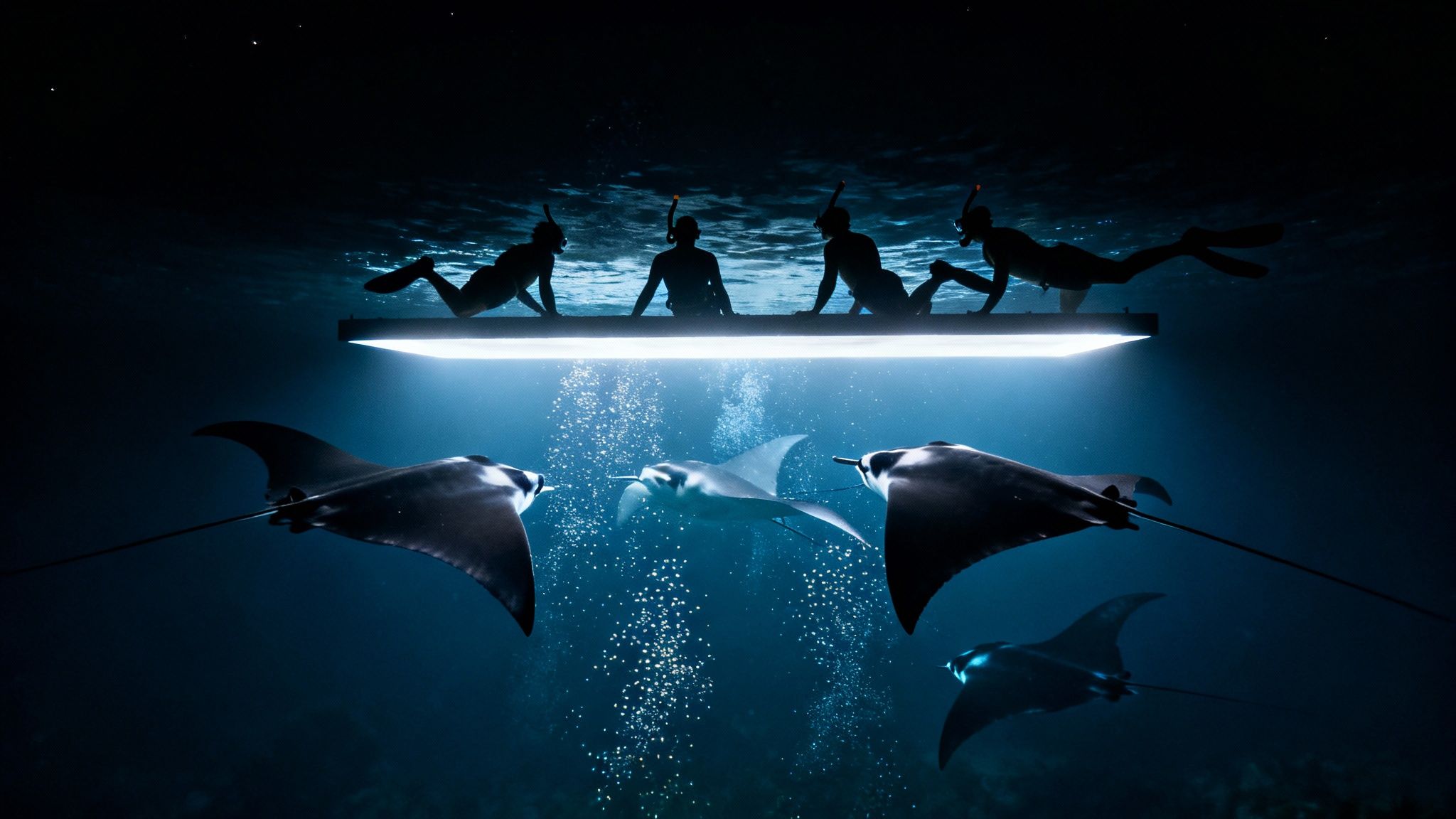
The whole thing is a brilliant mix of nature and a little human ingenuity. After the sun goes down, your boat heads out to a specific manta feeding site. A custom-built light board is floated on the water, and its beams attract clouds of phytoplankton, which are tiny marine organisms. The light essentially creates a glowing, all-you-can-eat buffet right at the surface.
And that's when the magic happens. Out of the deep blue darkness, giant manta rays appear, some with massive wingspans reaching up to 16 feet. They glide effortlessly into the light, performing a silent, hypnotic underwater ballet as they feed.
Watching these gentle giants barrel-roll and swoop just inches below you is a humbling, awe-inspiring experience. It's a peaceful yet powerful encounter that leaves a lasting impression on everyone who witnesses it.
You'll be floating on the surface, holding onto the light board and simply looking down as these magnificent animals dance through the beams of light. It's a memory you will carry with you for the rest of your life.
Why Location Is Everything for the Best Experience
Here's a pro tip: not all manta ray snorkel sites are created equal. While you might see mantas at a few different spots, one location consistently delivers the most breathtaking experience: Garden Eel Cove. Known to locals as Manta Heaven, it has some key advantages that make it the absolute best choice.
For starters, Garden Eel Cove is tucked into a naturally protected bay. This shields it from the open ocean swells and currents that can make other sites choppy and uncomfortable. That calm, predictable environment isn't just better for us; it’s better for the mantas, too.
On top of that, the reefs at Garden Eel Cove are healthier and more vibrant. A thriving ecosystem means a richer concentration of plankton, which translates to more reliable manta ray sightings. When you're booking one of the best snorkeling tours Big Island Hawaii has to offer, choosing an operator that goes to Garden Eel Cove dramatically boosts your chances of a truly spectacular night.
The Science of a Successful Sighting
What makes this encounter so famous is just how consistent it is. Manta ray tours on the Big Island have incredibly high success rates—far better than what you'd expect from most wildlife excursions. This reliability is well-documented and has become a cornerstone of the island's marine tourism. To give you an idea, some of the most established operators report manta ray sightings on 85-90% of their trips. It’s a testament to how dependable this adventure truly is.
When you go with a top-rated operator like Kona Honu Divers, you're setting yourself up for the best possible chance to witness this natural wonder. We're not just running a tour; we live and breathe this ecosystem. We understand the local manta population's behavior and make the health of the reef and the safety of our guests our top priorities. Our expert guides are passionate about these creatures and are dedicated to making your experience unforgettable and completely respectful of the wildlife.
For an even deeper dive into this incredible adventure, check out our complete guide to the manta ray night dive in Hawaii.
Got Questions About Big Island Snorkeling? We’ve Got Answers.
Planning your first snorkeling trip on the Big Island can bring up a lot of questions. We get it! To help you feel confident and excited for your adventure, here are a few answers to the things we hear most often from visitors. A little inside knowledge goes a long way.
When Is the Best Time of Year to Go?
Honestly, any time is a great time to snorkel on the Kona coast. That’s the beauty of this place. The massive volcanoes on the island act as a natural barrier, blocking the trade winds and leaving our waters incredibly calm and clear almost 365 days a year.
That said, there are a couple of seasonal perks. The summer months (think June through September) typically have the warmest water and the flattest, glassiest seas, which is perfect for families or anyone who loves that tropical bathwater feel. But if you visit in the winter (December through March), you get a massive bonus: it’s humpback whale season! You’ll often get a spectacular whale-watching show from the boat on your way to the snorkel spot.
Do I Have to Be a Strong Swimmer?
Not at all. This is probably the biggest misconception we hear. While being comfortable in the water helps, you absolutely do not need to be a powerful swimmer to have an amazing time.
Tour operators are pros at this. We provide all kinds of flotation gear—from life vests and float belts to good old-fashioned pool noodles—that let you just relax and bob on the surface. Plus, professional guides are always in the water with the group, keeping an eye on everyone and ready to lend a hand. It’s all about making sure you feel safe and can focus on the incredible fish below.
Can I See Dolphins and Manta Rays on the Same Tour?
These two incredible encounters are usually separate adventures, simply because they happen at different times of the day.
Spinner dolphins are most active in the daylight. You’ll often spot them on morning snorkel trips as they come into calm, protected bays like Kealakekua to rest and play after a night of hunting. The manta ray snorkel, on the other hand, is a world-famous night event. After the sun goes down, we use bright lights to attract plankton, which in turn draws in the giant, graceful mantas for a feeding frenzy.
To really see the best of the Big Island, most people book both—a daytime tour for the colorful reefs and dolphins, and a night trip for the once-in-a-lifetime manta experience.
What’s Usually Included in a Snorkeling Tour?
A good tour company handles everything so you can just show up and enjoy the ocean. It’s meant to be a stress-free experience. You can almost always expect your tour to include:
- The boat trip out to the best snorkel spots (many of which are only accessible by water).
- All your gear: a quality mask, snorkel, and fins.
- Flotation devices for comfort and safety.
- An expert in-water guide to show you around and point out all the cool critters.
- Snacks and drinks to keep you fueled up for the adventure.
Of course, it’s always smart to confirm the details when you book, but the goal is to provide an all-inclusive package for a perfect day on the water.
Here at Kona Honu Divers, we live for showing people the magic of the Big Island’s underwater world. Whether it’s exploring a sunlit coral reef or floating with gentle giants on our manta ray night snorkel, our crew is here to give you an incredible, safe, and unforgettable adventure.