
Picture this: you're floating weightlessly in warm, brilliantly clear water, watching schools of rainbow-colored fish dart around ancient lava formations. That's not just a daydream—it's the everyday reality of snorkeling in Kona. Thanks to its unique position, shielded from the powerful trade winds, the Kona coast boasts some of the calmest, clearest ocean in all of Hawaii.
This makes it an absolute gem for snorkelers, whether you're just starting out or have been exploring under the waves for years.
Why Kona is a Snorkeler’s Paradise

The secret to Kona's magic lies in its geography. The sheer size of the Mauna Loa and Hualalai volcanoes creates a massive natural barrier, protecting the western coast from the blustery trade winds that often churn up the waters on other islands.
What does that mean for you? Exceptionally calm seas and phenomenal water clarity, often with visibility stretching beyond 100 feet. The world beneath the surface is just as stunning, a dramatic landscape of old lava tubes, thriving coral gardens, and fascinating rock formations teeming with life.
What Makes Kona's Waters So Special
It's this perfect mix of calm conditions and a geologically rich seafloor that allows a vibrant marine ecosystem to flourish. As a snorkeler, you get to reap all the benefits.
- Exceptional Clarity: With less wind to stir up sand and sediment, the water here stays incredibly clear. You can see everything.
- Abundant Marine Life: Healthy coral reefs are a magnet for an incredible diversity of tropical fish, graceful Hawaiian green sea turtles (honu), eels, and even occasional visitors like dolphins and manta rays.
- Accessible Adventure: Many of the very best snorkeling spots are right off the beach. You can literally park your car, gear up, and be in the water in minutes.
Think of this guide as your treasure map to Kona's underwater world. We'll dive into legendary sites like Kealakekua Bay, give you insider tips for spotting sea turtles, and help you pick the perfect tour for your trip.
You can get an even deeper look into what makes Kona's underwater world so famous in our detailed article. Whether you're planning to snorkel from the shore or join a guided boat adventure, everything you need for an amazing experience is right here.
Exploring Kona’s Top Snorkeling Spots
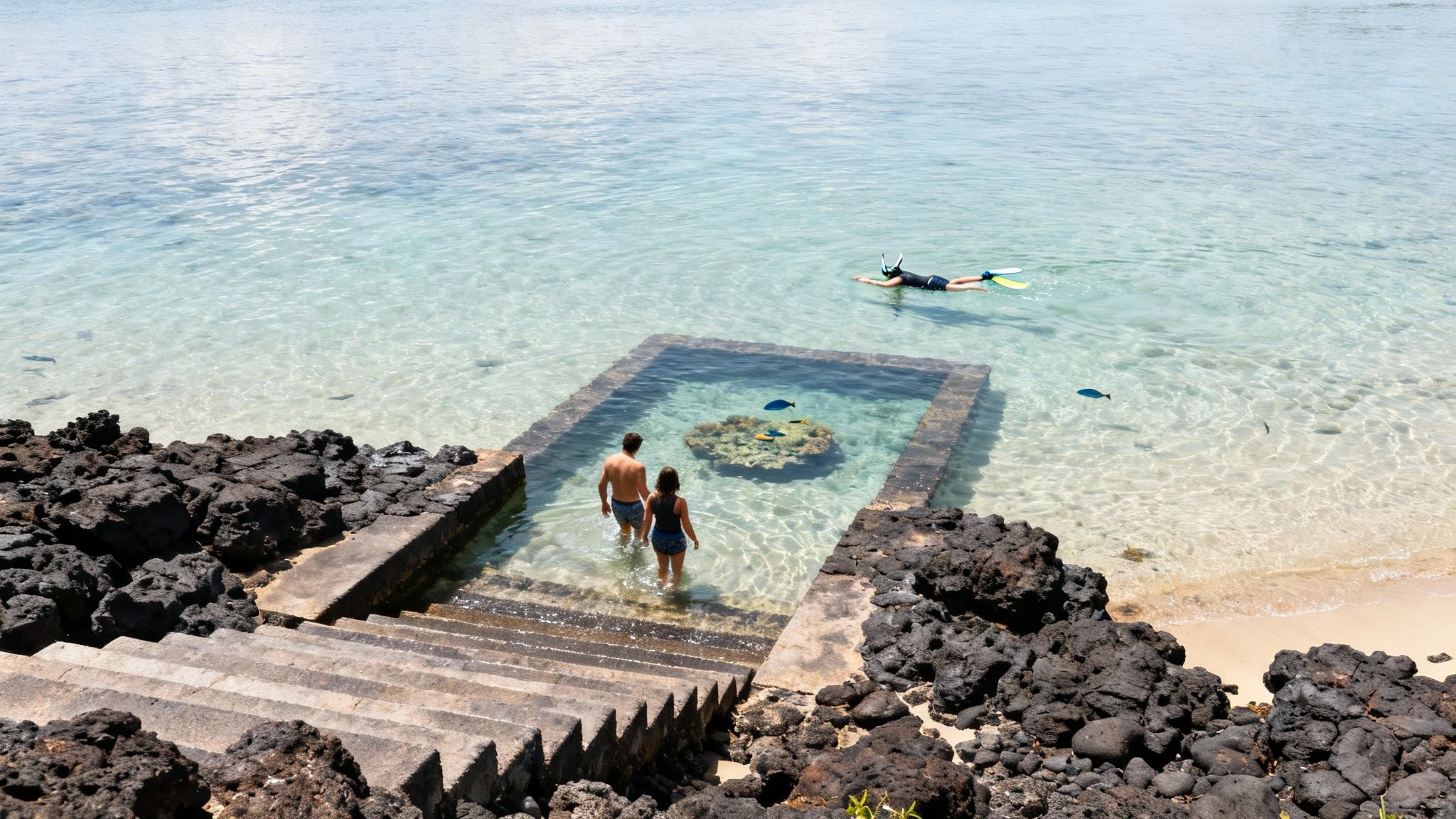
The Kona coast is absolutely brimming with incredible snorkeling sites, each one a unique window into Hawaii’s underwater paradise. You’ve got everything from protected coves you can only reach by boat to super-easy entry spots perfect for a quick afternoon dip. There's truly something for everyone.
The best spot for you really comes down to what you're looking for. Are you after the absolute clearest water and a place steeped in history? Or maybe a family-friendly beach where the kids can safely spot their first tropical fish? Let's dive into the crown jewels of snorkeling in Kona, Hawaii, and find the perfect place for your adventure.
Kealakekua Bay (The Captain Cook Monument)
Kealakekua Bay isn’t just a great snorkeling spot; many will tell you it's the best in all of Hawaii. It's a protected Marine Life Conservation District, which means the ecosystem is pristine. The bay itself is a sunken volcanic crater, creating a natural shield from the open ocean, resulting in calm, aquarium-like water with visibility that often pushes past 100 feet.
The sheer amount of fish here is what really blows people away. You’ll find yourself surrounded by massive, shimmering schools of yellow tang, elegant butterflyfish, and parrotfish munching on coral. The reef is healthy and vibrant, providing a home for countless other creatures.
This bay also holds a significant place in Hawaiian history as the site where Captain James Cook first landed and later died in 1779. Knowing you're swimming in such a historic place adds a whole other dimension to the experience. Over 100,000 snorkelers visit each year, and it's not uncommon to spot more than 50 different fish species on a single trip.
Pro Tip: Getting to Kealakekua Bay can be a challenge. The hike is long and hot, and kayaking in requires a permit. Honestly, the best and most relaxing way to see it is on a guided boat tour. They take you right to the sweet spots, no sweat involved.
Honaunau Bay (Two Step)
If you want world-class snorkeling without the hassle of a boat or a brutal hike, Honaunau Bay is your spot. Known to locals as "Two Step," it's right next to the Pu'uhonua o Hōnaunau National Historical Park. It gets its nickname from two natural lava rock ledges that make for a perfect entry point into the water.
Once you slip in, you’re instantly in a different world. This place is famous for spinner dolphins that often visit in the mornings and the Hawaiian green sea turtles (honu) that are almost always seen cruising gracefully over the reef.
The underwater landscape here is fascinating. A shallow reef shelf drops off to a deeper sandy bottom, attracting a huge variety of life. You'll find tiny fish hiding in the coral and bigger critters swimming through the bay. Just be mindful of sea urchins (wana) in the lava rock crevices as you get in and out.
Kahalu'u Beach Park (A Snorkeler's Nursery)
For anyone new to snorkeling or visiting with kids, Kahalu'u Beach Park is the absolute best place to start. It’s often called a "snorkeler's nursery" for a reason. A breakwater protects the bay, keeping the water shallow and incredibly calm. It’s one of the safest and easiest spots on the Big Island.
Even though it’s easy to access, the bay is packed with fish. They're so used to people that you can observe them up close without them darting away. You'll see dozens of species, including the Humuhumunukunukuāpuaʻa (the state fish!), often in just waist-deep water.
You'll frequently find volunteers on-site who are happy to teach you about reef-safe practices and help you identify the colorful fish you're seeing. It’s a wonderfully supportive environment to get your fins wet before trying out more advanced spots.
Top Kona Snorkeling Spots at a Glance
Choosing between these amazing locations can be tough, so here's a quick comparison to help you find the perfect fit for your snorkeling adventure.
| Location | Best For | Access Type | Key Marine Life |
|---|---|---|---|
| Kealakekua Bay | Unmatched clarity and fish density | Boat, Kayak (with permit), Strenuous Hike | Huge schools of tropical fish, vibrant coral |
| Two Step | Easy shore access and dolphin sightings | Shore (Lava Rock) | Spinner dolphins, sea turtles, diverse fish |
| Kahalu'u Beach Park | Beginners and families with children | Shore (Sandy/Rocky) | Tame fish, turtles, eels, calm waters |
Each of these spots offers a spectacular look into Kona's underwater world. For an even more comprehensive list, check out our guide to the top 10 Kona snorkeling spots to discover a few more local secrets. Whichever you choose, you're in for an unforgettable day.
Meeting Kona’s Famous Marine Life
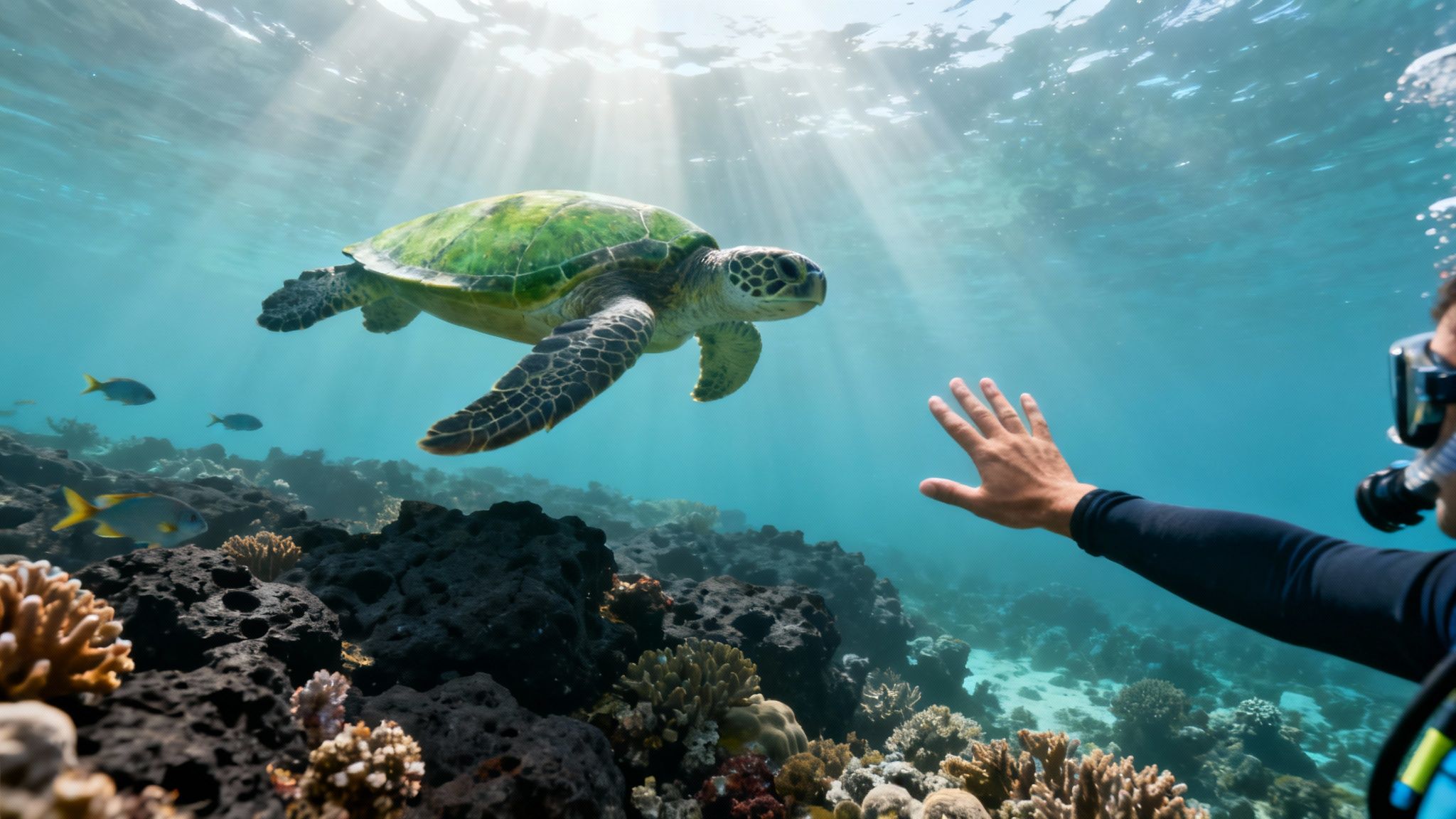
Sure, the underwater topography is incredible, but let's be honest—the real magic of snorkeling in Kona, Hawaii, is coming face-to-face with the creatures who live there. Sharing the water with Kona's famous marine life is an experience that sticks with you, a memory that will pop up long after your towel has dried.
Picture this: you're floating weightlessly, and an ancient Hawaiian green sea turtle, or honu, glides effortlessly past you, completely unbothered. It's these kinds of moments that put Kona on the map for ocean lovers. The healthy reefs and protected bays act as a sanctuary, which means almost every time you dip your head below the surface, you're in for a surprise.
The Gentle Giants and Playful Pods
One of the most common and beloved residents you'll meet is the Hawaiian green sea turtle. There's something truly special about seeing a honu in its natural element, whether it's peacefully munching on algae near the shore or cruising over the coral. It’s a moment of pure, underwater zen.
If you're out on a boat, keep your eyes peeled for pods of spinner dolphins. They're often most active in the mornings, and if you're lucky, you'll see them live up to their name with spectacular leaps and spins. They are wild animals, of course, so we give them their space, but their energy adds a whole other layer of excitement to the day.
And you can't leave without spotting Hawaii’s state fish, the Humuhumunukunukuāpuaʻa. Its name is a mouthful, and its personality is just as colorful!
The Manta Ray Night Snorkel: A Truly Unforgettable Experience
Out of all the incredible wildlife encounters Kona offers, one stands in a class all its own: the world-famous manta ray night snorkel. This isn't just snorkeling; it's like being invited to an underwater ballet performed by some of the ocean's most graceful giants.
The setup is surprisingly simple but wildly effective. Tour boats shine powerful lights into the dark water, which attracts clouds of plankton—a manta ray's favorite meal. In essence, it's a floating buffet that draws these magnificent creatures in from the deep.
You'll hold onto a floating light board at the surface, looking straight down as the mantas swoop, glide, and barrel-roll just inches beneath you. With their massive mouths wide open to filter the plankton, it’s a mesmerizing, humbling experience that feels like you've jumped right into a nature documentary.
This kind of encounter is only possible in a handful of places on Earth, and Kona is hands-down the best. The sheer reliability and closeness of the sightings make it a must-do for anyone visiting the Big Island.
The Kona coast is known around the globe for this experience, bringing in around 80,000 people annually. And the mantas almost always show up! The success rate for sightings hovers between 80% and 90% all year long, thanks to the plankton-rich currents.
For a bucket-list marine encounter, you can find out more about the incredible experience of snorkeling with Manta Rays in Kona.
Respectful Wildlife Observation
Meeting Kona's marine life is an absolute privilege, and with that comes the responsibility to be a good guest in their home. The future of these animals and their stunning habitat depends on all of us.
Here are a few simple but crucial guidelines to follow:
- Keep Your Distance: Never touch, chase, or back an animal into a corner. For sea turtles, state law requires you to stay at least 10 feet away.
- Don't Feed the Wildlife: Feeding marine animals messes with their natural hunting instincts and can make them dangerously dependent on humans.
- Move Slowly and Calmly: Big, sudden movements and lots of splashing can scare animals away. Think slow, deliberate, and graceful.
- Wear Reef-Safe Sunscreen: Many chemical sunscreens are toxic to coral reefs. Always choose a mineral-based, reef-safe option to protect our underwater world.
Following these rules helps ensure that Kona's incredible marine ecosystems will continue to thrive, allowing future generations to experience the same wonder you did.
Finding the Perfect Kona Snorkeling Tour
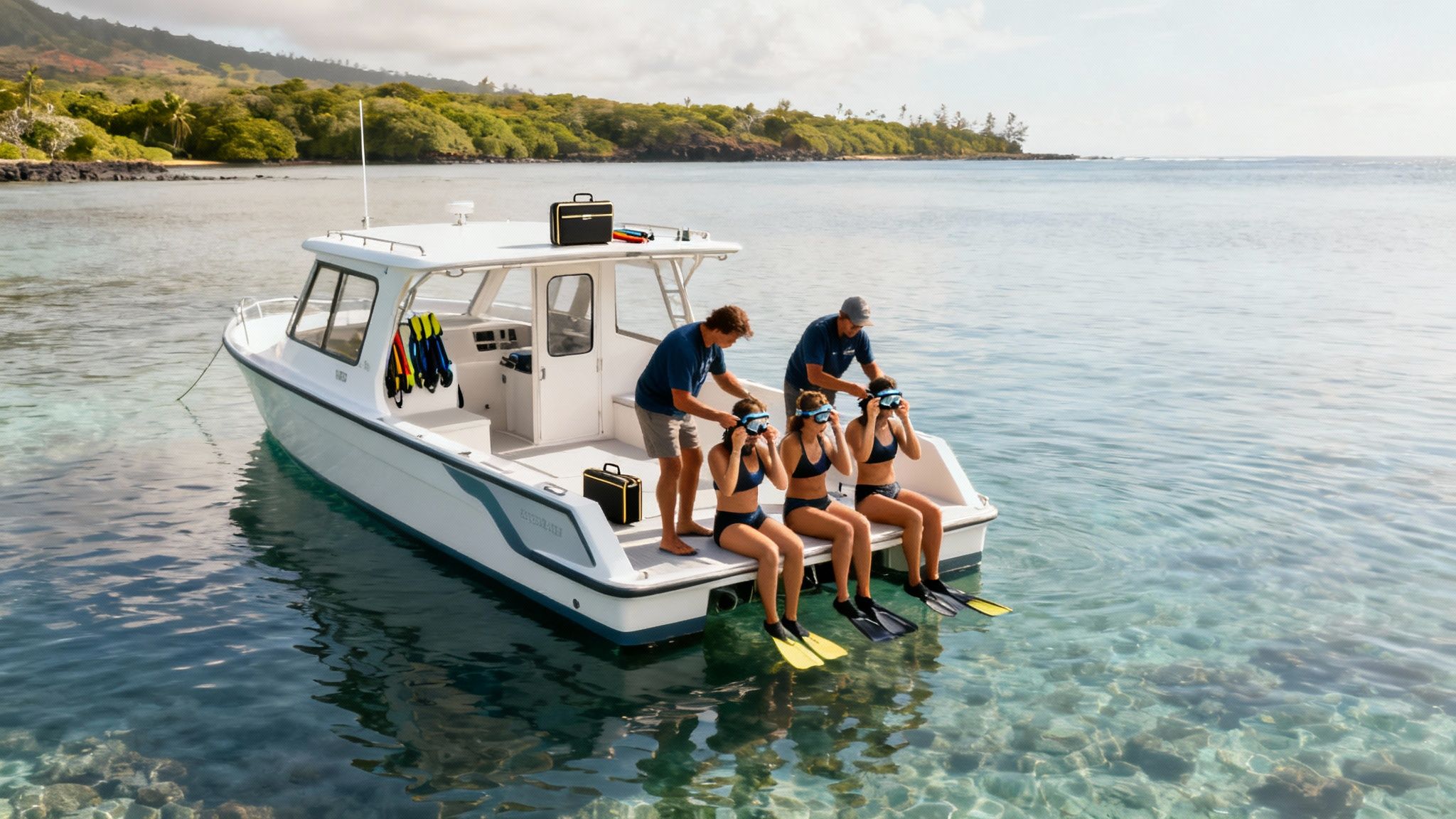
While you can have some incredible adventures snorkeling right from Kona’s shoreline, a guided boat tour unlocks a completely different world. It’s your ticket to the most pristine and remote spots—like the legendary Kealakekua Bay—that are nearly impossible to reach otherwise.
Hopping on a tour isn't just about convenience; it's about making the whole experience better. You get a crew that knows these waters like the back of their hand, high-quality gear that actually works, and a major focus on safety. It lets you just relax and soak in the magic of the underwater world without any of the usual hassle.
When you're looking for a tour for your snorkeling kona hawaii trip, it’s worth finding an operator that truly respects the island. Look for companies that stick to small group sizes and show a real commitment to protecting the delicate marine environment. This makes for a much more personal and responsible way to meet Kona's amazing wildlife.
Choosing a Tour Operator That Cares
A great tour is all about the crew. Companies like Kona Honu Divers are known for their experienced, passionate guides who aren't just experts in safety—they live and breathe sustainable tourism. Their local knowledge completely transforms the trip, turning a simple snorkel outing into an educational and unforgettable experience.
So, what separates a good operator from a great one?
- Small Group Sizes: Fewer people in the water means a more intimate encounter with marine life and less stress on the reef.
- Expert Local Guides: A crew that knows the area can point out hidden critters and share fascinating stories about the ecosystem you won't find in a guidebook.
- Quality and Safety: This is non-negotiable. Look for well-maintained boats, top-notch gear, and clear, professional safety briefings before you get in the water.
Kona Honu Divers has built its stellar reputation on delivering fantastic service and incredible underwater adventures, trip after trip. Their commitment to their guests and to ocean conservation is obvious in everything they do.
What Type of Snorkel Tour is Right for You?
Kona has a tour for just about everyone, catering to different schedules and interests. From exciting morning trips to the world-famous manta ray night snorkel, there's an adventure waiting for you.
A morning boat tour is a classic choice. You'll often head out to explore vibrant reefs when the ocean is at its calmest, keeping an eye out for pods of spinner dolphins. These trips are perfect for seeing the reef when it’s bustling with activity. To see what's out there, you can explore a great variety of Kona snorkeling tours that showcase the very best of the coast.
But the most iconic Kona experience is, without a doubt, the Manta Ray Night Snorkel. It’s a true bucket-list adventure. You float under the stars and watch these gentle giants perform an underwater ballet right below you—an experience you absolutely cannot get on your own.
At the end of the day, the best tour is the one that fits your comfort level and what you want to get out of the experience. Whether you're looking for a chill day on the water or a once-in-a-lifetime wildlife encounter, a guided tour is the smartest and safest way to make it happen.
Essential Snorkeling Safety in Kona
Having a fantastic and safe snorkeling trip all comes down to a little bit of preparation. While Kona's waters are known for being calm and inviting, the ocean always commands respect. A few simple practices can make all the difference, letting you focus on the incredible underwater world without a worry.
First and foremost, never, ever go alone. The buddy system isn't just a suggestion; it's the golden rule of any water activity. Having someone with you means you’ve always got a second pair of eyes, whether you need help with a leaky mask or just feel a bit tired.
Before you even dip a toe in the water, take a quick look at the local weather and surf report. Conditions can change in a heartbeat, and what looks glassy from the beach might have a hidden current. Knowing the tides and what the ocean is doing that day is a non-negotiable first step.
Gear, Sun, and Hydration
Good gear that fits you properly is a game-changer for safety. A mask that's constantly filling with water is more than just annoying—it’s a hazard. Make sure you test everything in shallow water before heading out to deeper spots. A good seal is everything.
The Hawaiian sun is no joke, even when it's cloudy. A bad sunburn or a touch of heat exhaustion can bring a perfect day to a grinding halt.
- Reef-Safe Sunscreen: Slather on a mineral-based, reef-safe sunscreen at least 15-20 minutes before you get in.
- Rash Guard: Wearing a long-sleeved rash guard is a great idea. It gives you an extra layer of UV protection and can keep you a bit warmer.
- Stay Hydrated: Drink tons of water throughout the day. Dehydration is sneaky and can cause fatigue and cramps when you least expect it.
Finally, know your own limits. It’s easy to get lost in the moment and forget how long you’ve been swimming. Snorkeling is exercise! If you start feeling winded or tired, that’s your cue to head back to shore for a rest. Don't push it.
Understanding Local Risks
Kona's waters are beautiful, but they come with their own unique set of conditions. Sadly, many snorkeling incidents in Hawaii happen in what appear to be perfectly calm waters. Research from the Hawaii Department of Health has shown that many snorkel-related drownings occur without obvious distress, often because visitors aren't familiar with subtle ocean risks. You can read the full snorkeling safety in Hawaii study to learn more.
Acknowledging and preparing for these risks is the best way to ensure your adventure is both thrilling and safe. This means being aware of your surroundings, from boat traffic to changing currents, and always having a clear plan for getting in and out of the water.
By keeping these points in mind, you're not just being smart—you're setting yourself up for an unforgettable experience. For a great overview, check out these top snorkeling safety tips before you head out. A few minutes of planning allows you to relax and fully appreciate the magic waiting just below the surface.
Planning Your Kona Snorkel Adventure
Alright, you've got the inside scoop on where to go and what you might see. Now, let's pull all those details together to plan an incredible day of snorkeling in Kona. A little bit of forethought is the secret to a stress-free adventure, letting you focus on the magic happening below the surface.
My best advice? Go early. The mornings in Kona usually offer the calmest, clearest water, and the reefs are buzzing with fish starting their day. Plus, you’ll beat the peak afternoon sun, which can be surprisingly strong.
A Sample Half-Day Itinerary
Want a foolproof plan for a fantastic morning? Here’s a simple schedule that works wonders, leaving you with plenty of time for other island activities.
- 8:00 AM: Get to your chosen spot, say, Kahaluʻu Beach Park. Arriving this early means you'll snag a prime parking spot and have the place mostly to yourself before the crowds roll in.
- 8:30 AM – 10:30 AM: This is your prime time in the water. Glide over the reef, see how many different fish you can identify, and always keep a gentle eye out for a passing honu (sea turtle).
- 10:30 AM – 11:30 AM: Time for a break. Get out of the water, drink plenty of water (more than you think you need!), and slather on another layer of reef-safe sunscreen. A good snack helps, too.
- 11:30 AM: Feeling refreshed? You could hop back in for a quick second look or just kick back on the sand and enjoy the classic Kona scenery.
This rhythm helps you stay energized and safe, making sure the entire experience is a positive one.
Your Essential Packing Checklist
There's nothing worse than getting to the beach and realizing you forgot something important. Run through this checklist before you head out the door.
- Snorkel Gear: Your mask, snorkel, and fins are the absolute must-haves. Make sure your mask fits your face well!
- Reef-Safe Sunscreen: Protect yourself and the coral. Look for mineral-based sunscreens with zinc oxide or titanium dioxide.
- Reusable Water Bottle: The Hawaiian sun is no joke. Staying hydrated is key to feeling good all day.
- Rash Guard or Sun Shirt: This is your best friend for sun protection. It's way more effective than sunscreen alone.
- Underwater Camera: You’ll want proof of that turtle you saw!
- Dry Bag: A small one is perfect for keeping your phone, keys, and wallet from getting sandy and wet.
Pro Tip: Do yourself a huge favor and get some anti-fog spray for your mask. Constantly clearing a foggy mask is incredibly frustrating and can ruin the mood. You can find it at any local dive shop.
Renting vs. Buying Gear
So, should you pack your own gear or rent it here? It really comes down to how much you plan to be in the water.
Renting is perfect if you're just planning to snorkel once or twice, or if you simply don't have the luggage space. The local shops have good quality, sanitized gear ready to go.
On the other hand, if you think you'll be out there every day, buying your own gear is a solid investment. Nothing beats a mask that's been fitted perfectly to your own face—it means no annoying leaks. This is a game-changer, especially for kids, as a comfortable, well-fitting mask helps them feel much more confident and secure in the water.
Common Questions About Snorkeling in Kona
Got a few lingering questions before you grab your fins? We hear these all the time, so we've put together some straight-to-the-point answers to help you plan the perfect Kona snorkeling trip.
Kona really is a special place for underwater exploration, and a little bit of know-how can make a huge difference. Knowing the best times to go, what to expect from the local sea life, and how to stay comfortable in the water will help you have an unforgettable time.
What Is the Best Time of Year to Snorkel in Kona?
Honestly, there’s no bad time to snorkel in Kona. That's the beauty of it. Our west-facing coastline is sheltered from the prevailing trade winds, which keeps the water remarkably calm and clear almost 365 days a year.
Sure, the winter months can sometimes stir up bigger swells, but those days are the exception, not the rule. No matter when you visit, you're very likely to be greeted by sunny skies and that glassy, inviting water Kona is famous for.
Do I Need to Be a Strong Swimmer?
Not at all. You don’t have to be a competitive swimmer to see the incredible world just beneath the surface. Many of our best spots, like Kahalu'u Beach Park, are protected, shallow, and perfect for anyone just starting out or who isn't completely comfortable in the ocean.
If you want an extra layer of confidence, you can always wear a flotation belt or a life vest. This lets you just relax and float without any effort. Joining a guided boat tour is another fantastic option—we provide all the safety gear and our experienced crew is always right there to help, making sure everyone feels safe and has a great time.
Are There Sharks in Kona?
Yes, and that’s a good thing! Sharks are a vital part of a thriving ocean ecosystem here in Hawaii. But let's be clear: the sharks you might see while snorkeling along the reef are typically small, timid reef sharks.
Species like the whitetip reef shark are completely docile and have zero interest in snorkelers. They're actually quite shy and would much rather be resting under a coral ledge than bothering with people. An encounter is rare, and if you're lucky enough to have one, it's a beautiful, peaceful moment you won't forget.