
Picture this: you're floating in the warm, dark Pacific Ocean. Below you, giant, shadowy figures glide effortlessly, their massive wingspans illuminated by underwater lights. It's a surreal, almost dreamlike scene, but it's very real. This is what it's like to snorkel with manta rays in Kona, and it’s a front-row seat to one of nature’s most spectacular underwater ballets.
Your Guide to an Epic Kona Manta Ray Adventure
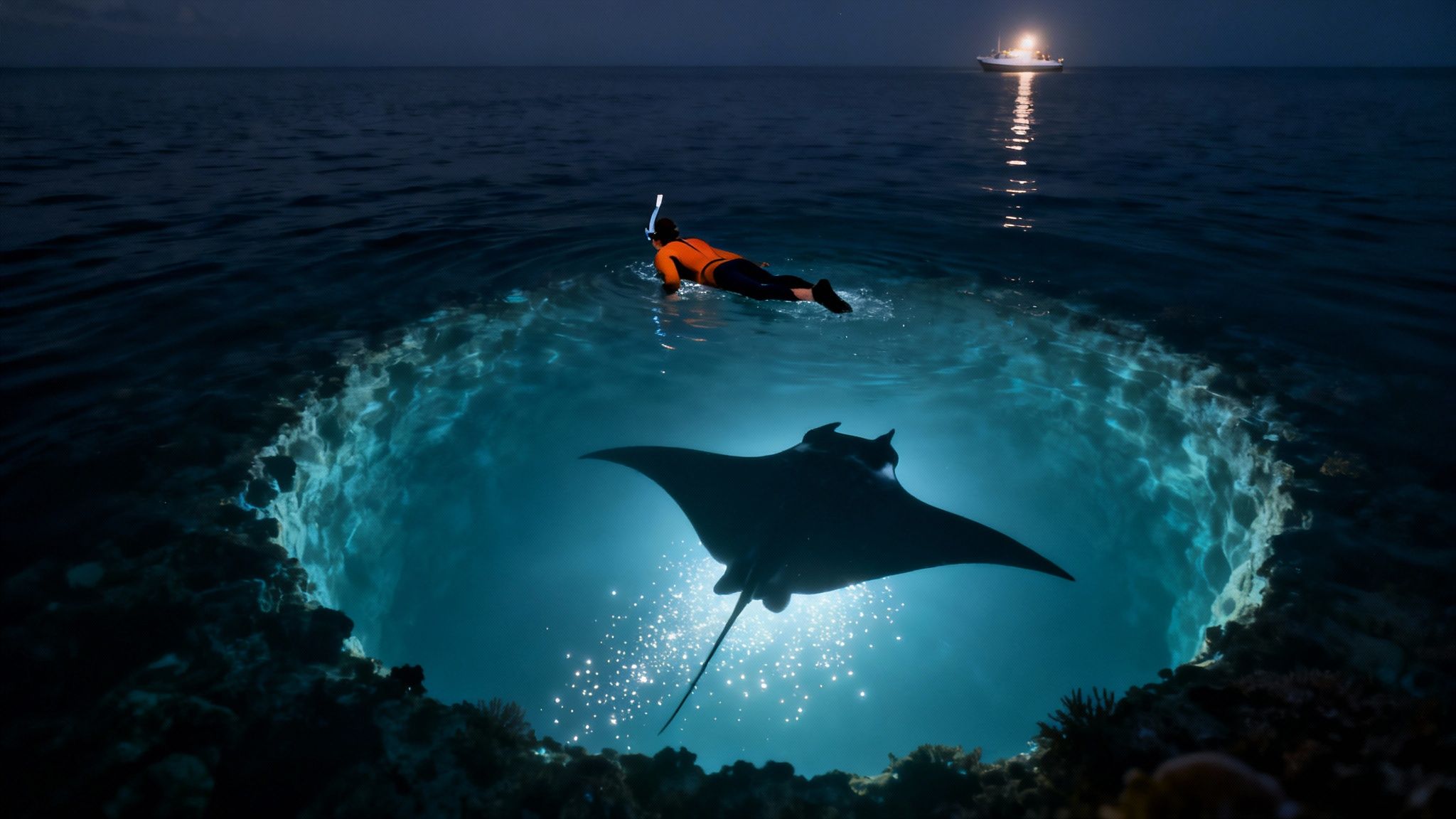
Let's be clear: Kona isn't just a great place to see manta rays. It's arguably the best place on the entire planet for this kind of encounter. The Big Island has become a global hotspot for manta tourism, drawing people from all over who want a wildlife experience that’s not only reliable but genuinely awe-inspiring. This guide is your playbook for making that adventure happen.
We’ll walk through everything—from picking the right tour and preparing for a night on the water to understanding what truly makes this encounter so special. The goal is to give you the confidence to book an experience you'll be talking about for years.
Why Kona is a Manta Ray Paradise
So, what makes Kona the world’s premier destination for manta encounters? It's a unique mix of factors that have created one of the most consistent viewing opportunities anywhere. The waters here are home to a year-round resident population of over 450 individually identified manta rays. That incredible consistency results in a sighting success rate that often hovers between 80% and 95%.
This isn't just luck; it's a perfect storm of ideal conditions:
- A Reliable Food Source: The Kona Coast's nutrient-rich waters provide an abundant, year-round buffet for these gentle filter-feeders.
- Established Feeding Sites: For decades, the mantas have learned to return to the same specific locations to feed on plankton attracted by lights, making them highly predictable.
- Ideal for Snorkelers: The viewing sites are in relatively shallow water, usually just 30 to 40 feet deep, making it a fantastic experience for snorkelers of all skill levels.
These conditions attract about 80,000 people every year to snorkel and dive with Kona's mantas. For an even deeper dive into the specifics, check out a detailed guide to manta ray snorkeling in Kona, Hawaii.
The experience is so much more than just watching animals. You become a quiet observer in their world, a temporary part of the nighttime ocean ecosystem, floating on the surface as these gentle giants perform their intricate feeding dance just inches below you.
This guide will help you cut through the noise, understand the differences between operators, and choose the right trip for you. With a little preparation, you’re not just booking another tour—you're setting the stage for a truly magical encounter with one of the ocean's most majestic creatures. Let’s get you ready.
Picking the Best Manta Ray Snorkel Tour in Kona
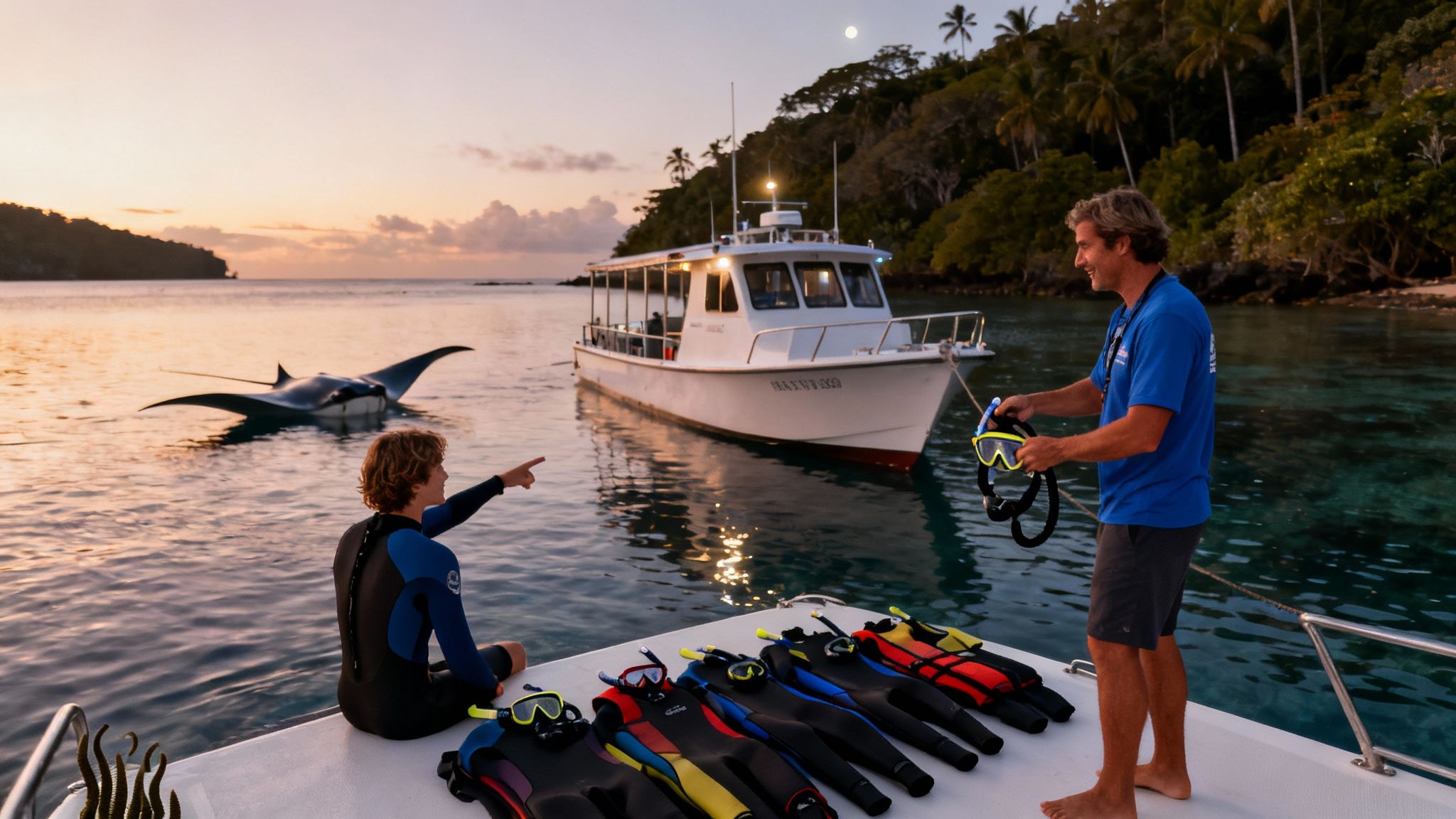
Let's be clear: choosing the right tour operator is the single most important decision you'll make for this adventure. A great trip isn't just about seeing mantas; it's about doing it safely, comfortably, and with a crew that genuinely respects the marine environment. The company you pick is what turns a good night into an absolutely unforgettable one.
When you snorkel with manta rays, the quality of the outfitter is everything. You want an established, professional company like Kona Honu Divers, known for its seasoned guides and boats that are actually built for this unique activity. Don't just look at the star ratings—dig into recent reviews to get a true feel for what the experience is like from people who were just there.
It All Comes Down to Location
You'll want to pay close attention to which snorkel site the tour goes to. While there are a few spots for manta encounters, Garden Eel Cove is widely considered the superior choice. Its geography naturally protects it from the open ocean, which means calmer water and a much more stable, comfortable viewing experience for you. On top of that, the viewing area is better and the reefs are healthier, which just adds to the incredible underwater scenery.
A top-tier company will also have all the gear you need, and I mean good gear. This includes quality wetsuits to keep you warm once the sun goes down and properly defogged masks so you get a crystal-clear view of the action.
The experience you're about to have is more than just a tour; it's a major force for conservation. Manta ray tourism generates an estimated $140 million annually worldwide. This gives local communities a powerful economic reason to protect these gentle giants, making them far more valuable alive than they could ever be to fisheries. Your ticket directly supports Kona's economy and the preservation of its amazing marine life.
What to Look for in a Great Tour Operator
Beyond the right spot and good gear, a premium operator always starts with a thorough safety briefing. The crew should walk you through everything, from how to get in and out of the water to the proper etiquette for interacting with the mantas. A well-run tour is one where you feel completely confident and prepared.
Here’s a quick checklist for what really matters when you book:
- An Experienced Crew: Your guides should be experts not just on safety, but on manta ray behavior and local marine biology. Their knowledge makes the experience richer.
- Purpose-Built Boats: Vessels designed for diving and snorkeling are a world apart. They offer more space, better stability, and make getting into and out of the water a breeze. You can learn more about what to look for on various Kona boat tours to see what makes a boat right for the job.
- A Serious Commitment to Safety: This is non-negotiable. Look for clear safety protocols, well-maintained equipment, and a professional attitude from the entire team.
- The Manta Guarantee: The best operators know that wildlife can be unpredictable. Many offer a "manta guarantee," meaning if you don't see any mantas, you can come back again for free.
Choosing a company that ticks all these boxes ensures your adventure is memorable for all the right reasons. Taking a few extra minutes to select the right guide is the first and most critical step toward an incredible night with Kona's gentle giants.
How to Prepare for Your Night Snorkel
A little bit of prep work can make the difference between a good night and an absolutely unforgettable one. Since these tours usually head out in the late afternoon, I always recommend having a light meal a couple of hours beforehand. You don't want a heavy, greasy meal sloshing around in your stomach on the boat.
And speaking of sloshing, if you even think you might get seasick, take your go-to motion sickness medication about an hour or two before you're scheduled to depart. Trust me on this one—it's way more effective if you take it before you feel that first hint of queasiness. The water might look like glass when you leave the harbor, but it's always better to be safe than sorry. For a deeper dive on what to expect out there, you can learn how to check ocean conditions for the Big Island ahead of time.
What to Bring and What to Wear
The easiest way to start the trip off right is to arrive ready to jump in. Just wear your swimsuit under your clothes. That way, gearing up on the boat is quick and painless.
Your two most important items, besides your swimsuit, are a towel and something warm for the ride back to shore. After spending about an hour in the ocean after sunset, that boat ride back can feel surprisingly brisk. A dry hoodie or a warm jacket will feel like a lifesaver.
We'll provide all the high-quality gear you need—wetsuit, mask, snorkel, and fins. The only thing you really need to bring is the right attitude. Pay close attention during the crew's safety briefing. They've done this thousands of times and will walk you through everything you need to know for a safe and incredible encounter.
A calm, prepared, and respectful attitude is key. Remember, you are a guest in the mantas' home. Following the crew’s instructions ensures the safety of both the snorkelers and the animals, preserving this incredible experience for years to come.
To make packing a breeze, I've put together a quick checklist. It covers the essentials and a few things I've learned are nice to have.
Manta Ray Snorkel Packing Checklist
Use this simple checklist to make sure you have everything you need for a comfortable and successful tour.
| Essential Items | Recommended Additions | What to Leave at Home |
|---|---|---|
| Swimsuit (wear it there) | Waterproof Camera (GoPro with a wrist strap) | Non-reef-safe sunscreen |
| Towel | Motion sickness medication | Valuables or excessive jewelry |
| Dry change of clothes | Reusable water bottle | Your own snorkel gear (unless preferred) |
| Warm jacket or hoodie | Cash for crew gratuity | Any loose items that could blow overboard |
When you pack smart and show up ready to go, you can put all your focus where it belongs: on the mesmerizing underwater ballet that's about to unfold right in front of you.
What to Expect During the Manta Encounter
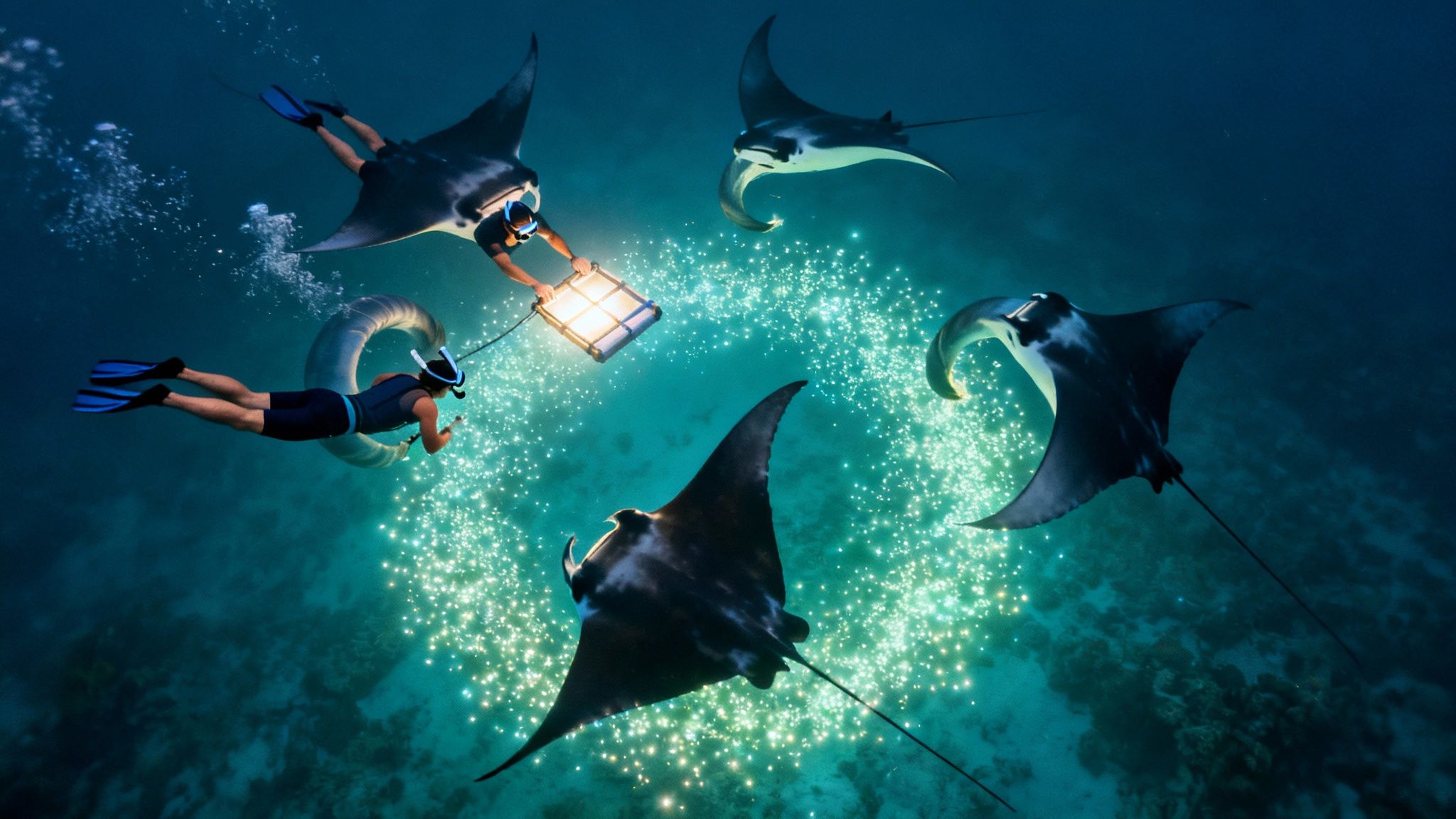
This is where the real magic happens. After a beautiful boat ride while the sun sets, the crew will find the perfect spot and set up a large, floating light raft. This isn't just for visibility; it’s a powerful underwater beacon that attracts clouds of microscopic plankton—the manta rays' favorite meal.
You're essentially helping set the dinner table for some of the ocean's most majestic creatures. Once the raft is secured and the lights are glowing, you’ll slip into the warm Pacific. The crew will guide you right to the raft, where you'll find handles to hold onto. Now, your job is simple: just float, relax, and look down.
The Underwater Ballet Begins
The most important part of this whole experience is being a calm, passive observer. You're not there to swim around and chase the action; you're there to let the action come to you. By holding onto the raft and floating peacefully, you become a predictable and non-threatening part of the environment. This stillness is what makes the mantas feel safe enough to come close.
Soon, as the plankton thickens in the light beams, you'll see the first shadows emerge from the deep. It’s an absolutely surreal moment. These gentle giants glide effortlessly into the light, performing mesmerizing barrel rolls and graceful loops to scoop up the plankton. It's almost impossible to describe the feeling of watching a creature with a 12-foot wingspan move with such elegance, often just inches beneath you.
The golden rule of this encounter is simple: Look, but don't touch. Manta rays have a protective mucous layer that's crucial for their immune system. Touching them can damage this coating, leaving them vulnerable to dangerous infections. Your respect and distance are absolutely vital for their health.
Soaking in the Experience
As you float, just focus on your breathing and take in every single second. The only sounds you'll hear are the gentle lapping of the water and your own breath through the snorkel, which makes for an incredibly serene, almost meditative experience. The rays will continue their feeding dance for as long as the plankton holds out, giving you an extended, front-row seat to one of nature's greatest shows.
To make sure your night is everything you hope for, just keep these tips in mind:
- Stay horizontal. Keep your body flat on the surface and your fins out of the water. This prevents you from accidentally kicking a manta as it passes below.
- Let them come to you. The light raft is designed to bring the mantas right to you. There's zero need to swim after them—patience is key.
- Be present. It's tempting to watch the whole thing through a camera lens, but make sure you put it down for a while. Witnessing this with your own eyes is an experience you'll never forget.
This carefully managed, respectful encounter is what makes the opportunity to snorkel with manta rays in Kona so consistently breathtaking. It's a chance to connect with the ocean in a truly profound way.
The Importance of Responsible Manta Tourism
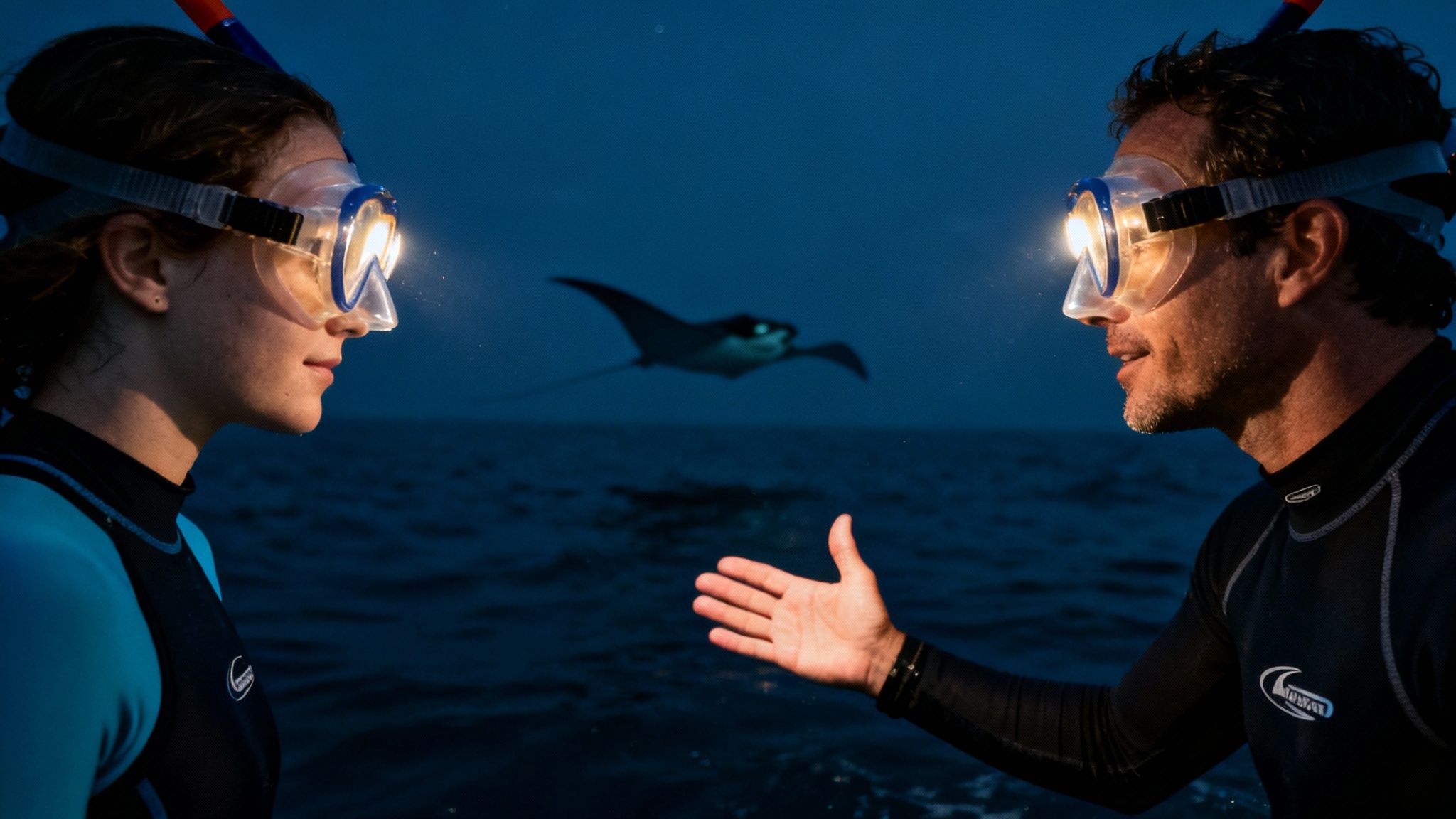
Being able to snorkel with manta rays in Kona is an experience that stays with you forever. It's a true privilege, but it also carries a profound responsibility to protect these incredible animals. The long-term survival of Kona's resident manta population hinges entirely on how we, as visitors, choose to interact with them.
When you book a tour with an operator that puts conservation first, you're doing so much more than just securing a spot on a boat. You're making a conscious choice to support the health of this delicate marine ecosystem. Companies like Kona Honu Divers are built around strict guidelines that put the manta rays' well-being above everything else.
The Power of Passive Observation
The golden rule of any responsible manta encounter is passive observation. It’s a simple but critical concept: no touching, no chasing, and absolutely no blocking the mantas' path as they feed.
Every single detail of a well-run tour is designed to minimize our footprint, from the precise placement of the underwater lights to the requirement that all snorkelers hold onto a central float.
Adhering to these rules isn't just about being polite; it's essential for the mantas' health. It ensures they don't get stressed or change their natural feeding behaviors, which is what keeps them coming back to these sites day after day. A great first step is to familiarize yourself with the principles of responsible and considerate diver etiquette before you even get in the water.
Your decision to join an ethical tour does more than just give you a great experience. It provides a direct economic incentive for the local community to protect the mantas and the entire marine environment they depend on.
A Global Perspective on Manta Conservation
The need for responsible tourism isn't just a local issue in Kona—it’s a global one. Take Ecuador, for example, which is home to the world's largest known population of giant oceanic manta rays, estimated at over 22,000 individuals.
Despite legal protections, recent studies have shown that more than half of these mantas have injuries from entanglement in fishing gear. It’s a stark reminder of the threats these animals face worldwide.
This is why protected, well-managed viewing sites like the ones in Kona are so vital. When you choose a conservation-minded operator, you're supporting a business that is actively invested in the ocean's future, ensuring the magic of this experience will be around for generations to come.
This commitment ensures that the magic of snorkeling with manta rays will be available for many future generations to experience.
Common Questions About Snorkeling with Manta Rays
Heading out to meet Kona's famous manta rays is the thrill of a lifetime, but it’s completely normal to have a few questions before you dive in. Getting the full picture beforehand just means you can relax and soak in every moment of the actual experience.
Let's walk through some of the most common things people ask.
Is Snorkeling with Manta Rays Actually Safe?
Yes, it's incredibly safe, especially when you go with a professional, experienced crew. Manta rays are nicknamed "gentle giants" for a good reason—they are completely peaceful. They don't have teeth, stingers, or barbs. Their sole focus is on the clouds of plankton that gather in the lights.
Every reputable tour operator has strict safety protocols in place to protect both you and the mantas. You’ll hold onto a central float and follow your guide's instructions, which creates a controlled and secure environment for everyone. Honestly, with their outstanding safety records, this is one of the safest wildlife encounters you could ever hope for.
Do I Need to Be a Strong Swimmer to Do This?
Not at all. This is probably the biggest misconception out there, and it keeps too many people from trying this amazing activity. You won’t actually be swimming around. Instead, you'll be holding onto a large, stable flotation board for the entire time.
Plus, the wetsuit you'll be given provides a lot of extra buoyancy, making it easy to just float. If you're comfortable in the water and can breathe through a snorkel, you've got all the skills you need. The crew is always right there to help you feel secure.
The experience is designed to be accessible to almost everyone. It’s far more about being a calm, respectful observer than it is about being an athlete.
What Happens if We Don't See Any Manta Rays?
Kona is one of the most reliable places on the entire planet to see manta rays, but they are still wild animals, so a sighting can never be 100% guaranteed. The best tour operators know this and almost always offer what's known as a "manta guarantee."
This usually means that if the mantas decide not to show up on your night, you can come back for another tour free of charge (based on availability). This is exactly why we always suggest booking your manta snorkel early in your vacation—it gives you a few extra days to reschedule just in case. Reputable companies like Kona Honu Divers are committed to making sure you have an unforgettable encounter.
Can I Bring My Own Underwater Camera?
Absolutely! Getting photos and videos of these graceful giants is a huge part of the fun for many people. A GoPro or a similar waterproof camera is perfect for this.
The single most important tip? Make sure it's securely strapped to your wrist with a lanyard. The last thing you want is to watch your camera sink into the dark abyss. Just be aware of your gear—especially selfie sticks—and give the mantas their space.