
Scuba diving on Hawaii's Big Island isn't just another tropical getaway; it’s an entirely different world shaped by raw volcanic power. The Kona coast, in particular, offers an underwater experience that consistently ranks among the best on the planet, thanks to its dramatic lava-formed landscapes and startlingly clear, calm waters.
Why The Big Island Offers World-Class Scuba Diving
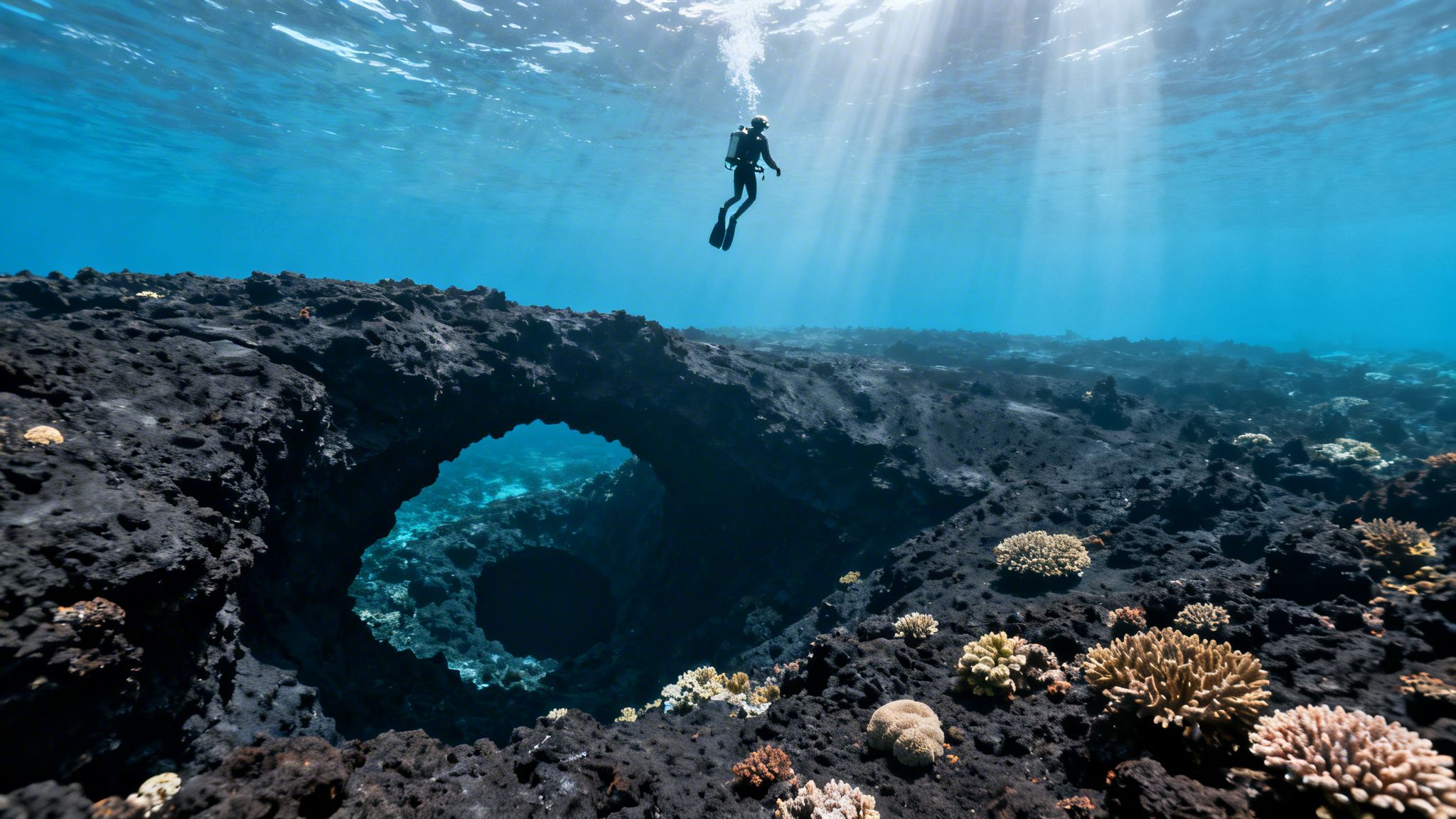
Picture yourself descending into the deep blue, where sunbeams pierce the surface and light up an incredible world sculpted by volcanoes. That's exactly what it feels like to scuba dive off the Big Island. The island's powerful geology has created a diver's playground unlike anywhere else.
The secret to Kona's magic lies in its geography. The massive volcanoes of Mauna Loa and Hualalai act as a natural shield, protecting the coastline from the prevailing winds and ocean swells. This creates some of the most consistently calm and predictable diving conditions you'll ever find, with visibility often stretching beyond 100 feet.
This sheltered environment is a dream for everyone, from first-timers just getting their fins wet to seasoned pros looking for their next great adventure. The underwater terrain is a labyrinth of ancient lava tubes, spectacular arches, and deep pinnacles—all buzzing with life.
For a quick overview of what makes diving here so special, here’s a snapshot of the key conditions and highlights.
Big Island Diving At A Glance
| Feature | Details |
|---|---|
| Visibility | Excellent, frequently exceeding 100 feet |
| Water Temperature | 75-80°F (24-27°C) year-round |
| Marine Life | Manta rays, dolphins, turtles, sharks, endemic fish |
| Topography | Volcanic: lava tubes, arches, pinnacles, caves |
| Currents | Generally mild to none on the Kona coast |
| Best Time to Dive | Year-round, with consistently great conditions |
This table just scratches the surface of the incredible environment waiting for you beneath the waves.
An Underwater Paradise
The dark volcanic rock provides the perfect canvas for vibrant coral gardens to flourish, creating a rich habitat that supports an astonishing amount of marine life. When you glide over these reefs, you’re not just a visitor—you're immersed in a thriving ecosystem.
- Pristine Coral Gardens: Explore reefs with some of the highest coral cover in all of Hawaii, teeming with a kaleidoscope of tropical fish.
- Unique Volcanic Formations: Weave your way through ancient lava tubes and swim-throughs for a dive that feels like exploring another planet.
- Abundant Marine Life: Expect encounters with Hawaiian green sea turtles (honu), moray eels, octopus, and countless species you can only find in Hawaiian waters.
It's this unique blend of calm seas, fantastic visibility, and dramatic underwater structures that puts Kona firmly on every diver's map.
The Manta Ray Phenomenon
If there's one experience that defines Big Island diving, it's the world-famous manta ray night dive. This isn't just a lucky encounter; it's a nightly spectacle. The event is so reliable that local operators like Kona Honu Divers see mantas on an incredible 85-90% of their night dives. This consistency makes Kona one of the best places on Earth to witness the silent, graceful ballet of these gentle giants.
You can learn more about the incredible dive opportunities available on the Big Island's legendary scuba diving scene.
Whether you're exploring a sun-drenched reef by day or watching the mesmerizing manta dance at night, the Big Island delivers unforgettable underwater adventures. Choosing the right guide is key, and Kona Honu Divers has built a top-tier reputation for their expertise, safety, and passion for sharing these amazing waters.
Ready to take the plunge? The first step is to explore the full range of available diving tours and find the perfect trip for you.
The Big Island’s Most Unforgettable Dives
Sure, every single dive off the Kona coast is special. But some experiences are so extraordinary they've become the stuff of legend, drawing divers from all corners of the globe.
These are the bucket-list adventures, the ones you’ll talk about for years to come. They define what it truly means to scuba Hawaii Big Island. From majestic, ghost-like giants in the dark to bizarre life forms from the abyss, let's jump into the three signature dives that make Kona a world-class destination.
The World-Famous Manta Ray Night Dive
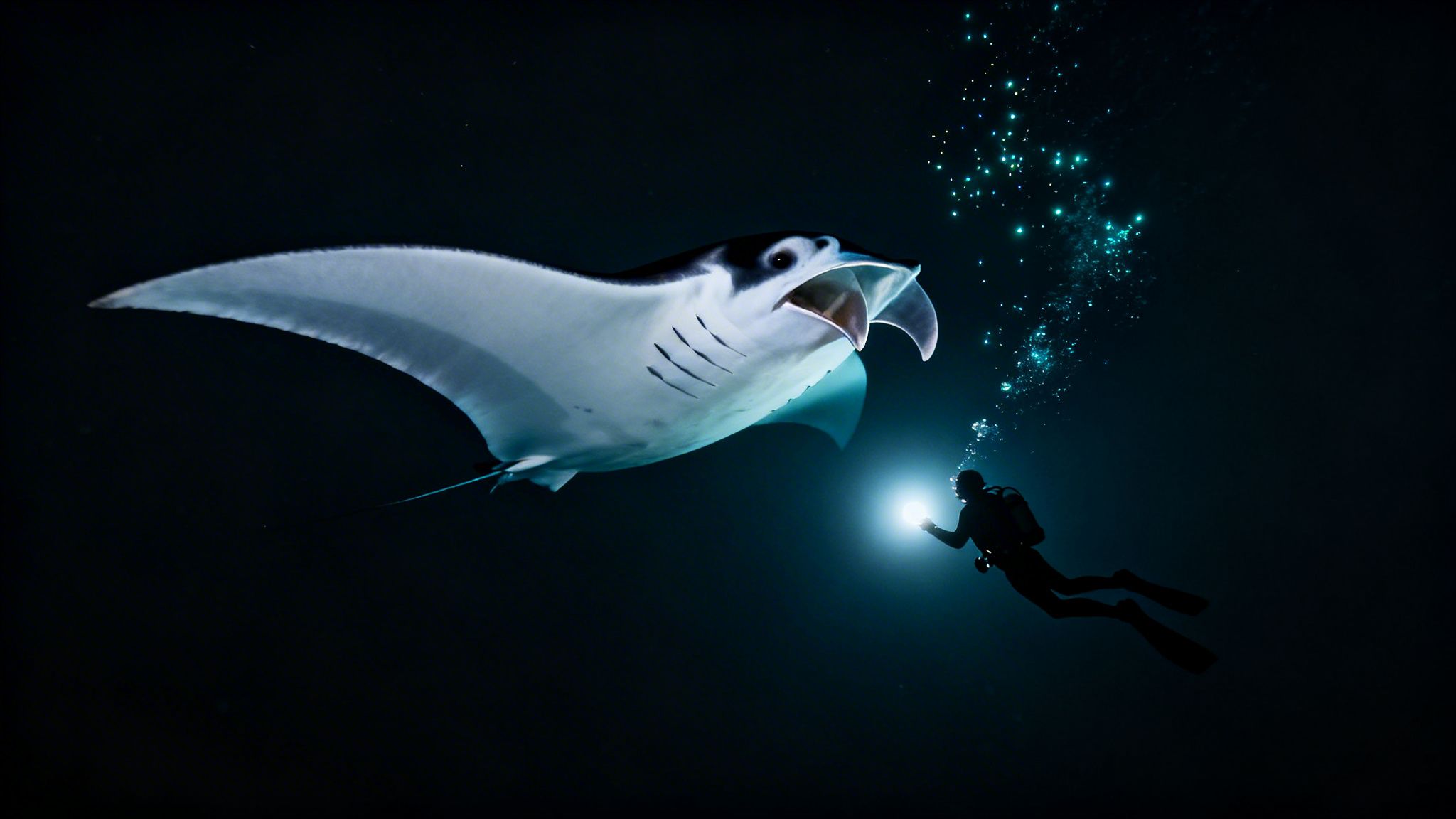
Picture this: you’re kneeling on the sand in the pitch-black ocean, your dive light pointing up. Out of the darkness, a colossal, winged creature glides into your beam, performing a silent, weightless ballet. This isn't a dream; it’s the Manta Ray Night Dive, and it’s consistently hailed as one of the best night dives on the entire planet.
So, how does it work? We set up powerful lights on the ocean floor, which attract swarms of plankton. The mantas, with wingspans that can stretch over 12 feet, show up for an easy meal. You get a front-row seat to the feast, watching these gentle giants swoop, barrel roll, and glide right over your head.
The Manta Ray Night Dive is more than just a cool encounter. It's a deeply moving, almost spiritual experience that connects you to the raw beauty of the ocean and its incredible inhabitants.
While a few spots are known for this, Garden Eel Cove (also known as Manta Heaven) is hands-down the superior choice for a manta ray dive tour. Its protected location means calmer, more enjoyable conditions compared to other sites. The viewing area is perfectly arranged for unbelievable encounters, and the surrounding reefs are healthier, making the entire dive a more magical and reliable experience.
This dive is pure theater, and the mantas are the stars. To see this incredible show for yourself, you can book a specialized 2-Tank Manta Ray Night Dive tour and get ready for a night you'll never, ever forget.
The Otherworldly Kona Blackwater Dive
If the manta dive is an underwater ballet, the Kona Blackwater Dive is a trip to another galaxy. This isn't your typical reef dive. It’s a mind-bending adventure for divers who crave something truly different.
Here, you're not exploring the bottom. Instead, you'll be tethered and drifting in the deep, open ocean, suspended over thousands of feet of inky black water.
Your light doesn’t illuminate coral; it reveals the bizarre, often bioluminescent creatures that make the largest migration on Earth every single night, rising from the abyss to feed. You’ll come face-to-face with alien-like larval fish, see-through squid, and jellies that pulse with their own light. It feels more like floating through outer space than diving.
This is a humbling, surreal experience that connects you with the vast, hidden world of the deep sea. You can explore this final frontier by joining a guided Kona Blackwater Night Dive and see a side of the ocean very few ever will.
Classic 2-Tank Morning Dives
The quintessential 2-Tank Morning Dive is the heart and soul of any scuba Hawaii Big Island adventure. This is where you experience the best of Kona's underwater world in the full light of day, from dramatic lava formations to reefs buzzing with life.
These trips showcase the incredible variety of the Kona coast. Each site has its own personality, and you’ll get to explore wonders like:
- Lava Tubes and Arches: Swim through ancient volcanic structures carved by lava flows thousands of years ago. It’s like navigating an underwater cathedral.
- Vibrant Coral Reefs: Drift over pristine gardens of coral, home to a riot of endemic fish you can't find anywhere else, including the famous Humuhumunukunukuāpuaʻa.
- Iconic Marine Life: Encounters with Hawaiian green sea turtles (honu) are almost guaranteed. Keep your eyes peeled for moray eels, octopuses, graceful eagle rays, and even whitetip reef sharks resting on the sand.
These morning charters are the perfect way to get a feel for the stunning biodiversity and geology that make Kona so unique. You can learn more about our favorite spots in our guide to the best scuba diving on the Big Island.
Ready to see Kona’s legendary reefs for yourself? A 2-Tank Morning Dive trip is the absolute best way to do it.
How To Choose The Right Kona Dive Operator
Picking the right dive operator for your scuba Hawaii Big Island adventure is easily the most critical decision you’ll make. The crew you dive with can make or break your trip. They don't just drive the boat; they shape your entire experience, ensuring you're safe, comfortable, and having an unforgettable time.
It’s about so much more than just finding the cheapest trip. You’re looking for a team with a top-notch safety record, seasoned guides who know the reefs like the back of their hand, and a genuine passion for the ocean. A great operator invests in their divers, and you can feel that commitment from the moment you step on board.
What Sets The Best Dive Shops Apart
The best dive shops in Kona all have a few things in common. First and foremost, they are absolutely obsessed with safety. This means a well-drilled crew, crystal-clear emergency plans, and dive gear that's in pristine condition. You should feel completely at ease from start to finish.
The dive boat itself is another huge factor. No one wants to spend their day on a cramped, bare-bones boat. Leading operators like Kona Honu Divers run a fleet of spacious, custom-built dive boats designed with divers in mind. We’re talking about simple luxuries that make a world of difference, like hot freshwater showers after a dive, plenty of shade, and tons of room so you’re not tripping over other people's gear.
Remember, you're not just booking a boat ride. You're trusting a team of professionals with your safety and your limited vacation time. Their expertise, equipment, and overall vibe will define your underwater adventure.
Pay attention to the quality of the rental gear, too. It’s a dead giveaway of a shop’s standards. The gear should be modern, well-maintained, and available in a full range of sizes. A shop that takes pride in its rental fleet is a shop that cares about your safety and comfort.
Value-Added Perks And Customer Experience
Beyond the basics, the little extras can really elevate your dive trip. For example, at Kona Honu Divers, we offer free nitrox to all certified nitrox divers. This means more time exploring the reef and less time sitting on the boat—a huge win. Multi-day dive packages are another great perk, saving you money if you plan on diving for a few days.
Ultimately, the best intel comes from other divers. Reading real, unedited reviews gives you the inside scoop on what an operator is actually like. We believe in being an open book and letting our divers' own words do the talking. You can dive deeper into this by reading our guide on how to choose a Kona dive shop.
Below are recent reviews from divers who have joined us for a variety of our dive tours.
Choosing the right dive partner is the first step in making memories that will last a lifetime. The right operator won’t just show you Kona's best dive sites; they’ll make you feel like you're part of the family.
Ready to experience the best scuba Hawaii Big Island has to offer? Explore our full range of Kona diving tours and find the perfect adventure for you.
Advancing Your Skills With Certifications In Kona
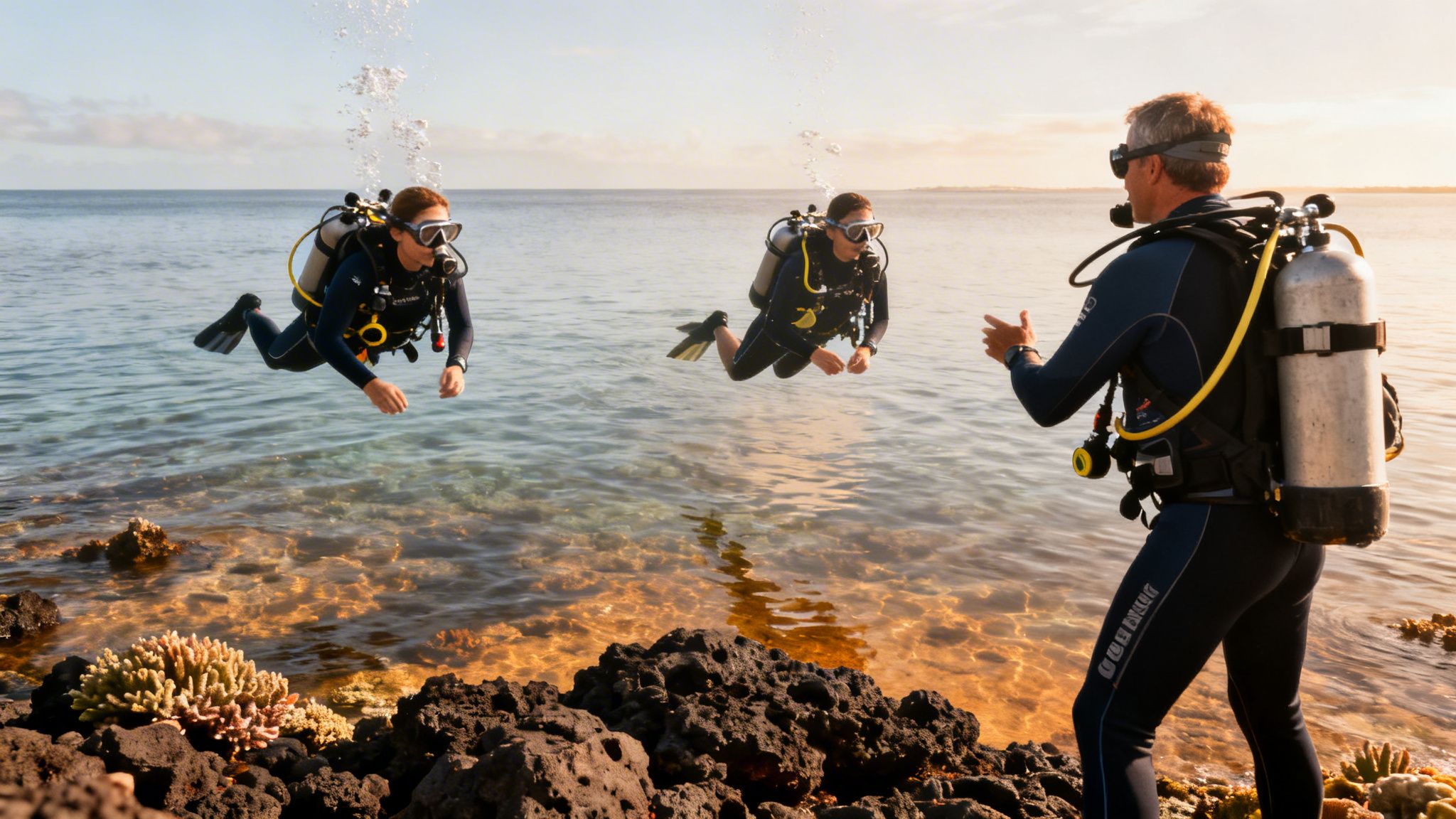
The Kona coast isn't just a stunning place to dive—it’s the perfect natural classroom. The calm, clear waters of its protected bays create a low-stress environment where you can really focus on building skills and confidence, whether you're taking your very first breath underwater or you’re a seasoned diver looking to go pro.
This unique combination of gentle conditions and world-class dive sites makes the Big Island an ideal destination to level up your diving game. Every single dive becomes a chance to learn and grow.
Starting Your Underwater Journey
For anyone who's never dived before, that first breath underwater is a moment you'll never forget. The PADI Discover Scuba Diving (DSD) program is the perfect way to get your feet wet. It's a one-day experience where an instructor walks you through the basics in a controlled setting, letting you experience the magic without committing to a full certification. It's the best way to see if scuba Hawaii Big Island is for you.
If you get hooked (and trust us, most people do), the PADI Open Water Diver course is your next move. This is the certification that teaches you everything you need to know to dive safely and independently. Forget sterile swimming pools—Kona's vibrant reefs serve as your training ground, surrounded by colorful fish and amazing volcanic landscapes.
Taking Your Skills To The Next Level
Already certified? Awesome, your adventure is just getting started. Continuing your dive education unlocks a whole new world of sites and experiences that are off-limits to newly certified divers. Think of each new certification as a key to a new part of the ocean.
Continuing your dive education isn't just about collecting cards; it's about expanding your capabilities, boosting your confidence, and gaining access to the most thrilling and challenging underwater environments Kona has to offer.
The PADI Advanced Open Water Diver course is the natural next step. It's all about building on what you already know through five "adventure dives," including a deep dive and an underwater navigation dive. You can usually knock it out in just two days, and you'll come out a much more capable and comfortable diver.
Unlocking New Adventures With Specialty Courses
Ready to dive deeper into what really excites you? Specialty courses are where you can fine-tune your skills and focus on specific interests, making you a safer and more skilled diver.
Here are some of the most popular and practical specialties for diving in Kona:
- Enriched Air (Nitrox) Diver: This is easily the most sought-after specialty. Diving with nitrox—a gas mix with a higher oxygen percentage—gives you longer bottom times. That means more time to explore Kona's incredible reefs on each dive.
- Deep Diver: This certification is your ticket to exploring down to 130 feet (40 meters). It opens up access to dramatic deep-water pinnacles and the unique marine life that calls those darker, cooler waters home.
- Peak Performance Buoyancy: Nothing screams "skilled diver" like flawless buoyancy. This course is all about mastering your control, helping you hover effortlessly, conserve air, and, most importantly, protect the fragile coral around you.
Once you're ready to put those advanced skills to the test, our Premium Advanced 2-Tank Trip is waiting. It’s designed to take experienced divers to some of Kona’s most rewarding and challenging sites, from deep lava formations to remote pinnacles buzzing with life.
Planning Your Big Island Diving Logistics
A great dive trip is all in the details. Getting the logistics sorted out before you arrive—from picking the right season to booking the perfect hotel—is what turns a good vacation into an unforgettable one. It lets you relax and focus on what you came for: the incredible world just beneath the waves.
So, let's talk about how to set yourself up for the perfect scuba Hawaii Big Island adventure.
One of the absolute best things about diving in Kona is that you can do it pretty much any day of the year. The massive volcanoes on the island act as a natural shield for the Kona coast, which means the water is almost always calm and clear. While the diving is consistently excellent, you’ll see subtle changes with the seasons. If you're hoping to hear humpback whales singing on your dive, for instance, your best bet is December through March.
The water here is always inviting, hovering between a comfortable 75°F and 80°F (24-27°C). But the visibility is what really blows people away. It’s not uncommon for it to be well over 100 feet, giving you a crystal-clear, high-definition view of the reefs and ancient lava formations.
Where To Stay For The Easiest Dive Days
To make your life as simple as possible, I always recommend staying in or around Kailua-Kona. This puts you right at the doorstep of Honokohau Harbor, which is the main launch point for us at Kona Honu Divers and most other top-notch operators on the island.
Being close to the harbor means you get to skip the long morning commute and just ease into your dive day. It’s a small detail that makes a huge difference, giving you more time to relax and less time stressing about traffic.
A typical day out with us at Kona Honu Divers starts with a relaxed meeting at the harbor. We'll give you a full briefing on the dive sites and safety, then head out for two fantastic dives in different spots. On the way back, it's all about sharing stories over snacks and drinks. It’s a seamless and genuinely fun experience from start to finish.
If your dive trip is part of a romantic getaway, you might want to look into guides on the best honeymoon destinations, as Hawaii is almost always on the list. A little strategic planning on where you stay can elevate the whole trip.
Booking Your Dives And What To Pack
Some of our dives, especially the world-famous Manta Ray Night Dive, are incredibly popular and fill up fast. Seriously, you don't want to miss this. To make sure you get a spot, book your tours well in advance, especially if you’re traveling during a peak time like a holiday or over the summer.
As for packing, you don’t need much, but a few key items will make your trip a lot more comfortable.
- Reef-Safe Sunscreen: This is non-negotiable. Help us protect our fragile coral by only using mineral-based sunscreens with zinc oxide or titanium dioxide.
- Swimwear & Cover-ups: A couple of options are always a good idea so you have a dry one ready to go.
- Hat & Sunglasses: The Hawaiian sun is no joke, even when it's cloudy.
- Reusable Water Bottle: Staying hydrated is crucial for safe diving, and you'll help us cut down on plastic waste.
- Dive Certifications & Logbook: Don't leave home without them! You'll need your cards, and you’ll definitely want to log these amazing dives.
With these logistics squared away, you're all set for an incredible underwater journey. Feel free to check out all our Kona diving tours and start piecing together your perfect trip.
Responsible Diving and Marine Life Conservation
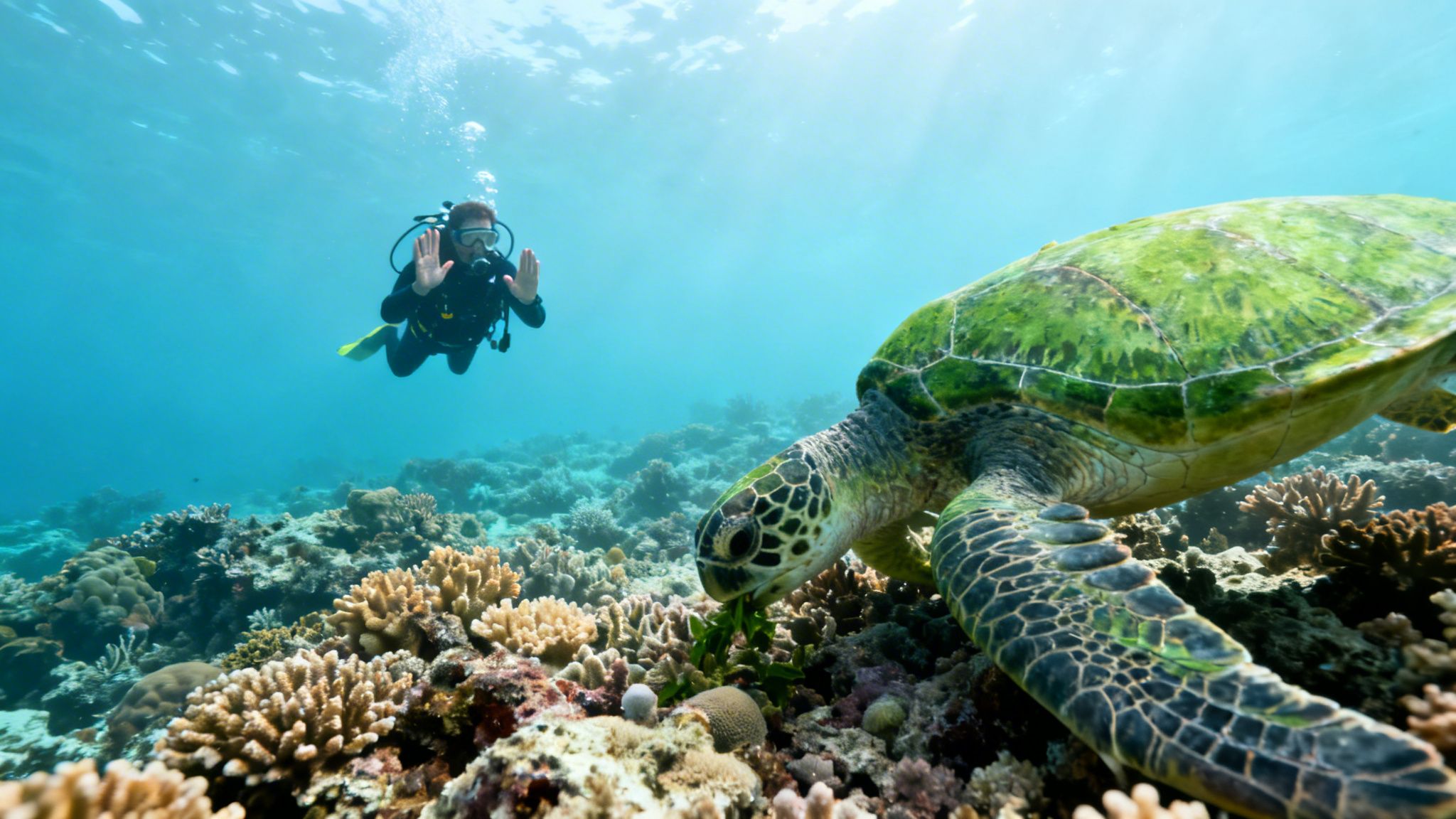
The real magic of a scuba Hawaii Big Island trip is the incredible life you see beneath the waves. It’s what this is all about. From the intricate coral gardens to the gentle giants that swim through them, this underwater world is a precious and fragile treasure. As divers, we’re guests here, and we all share the responsibility to protect it.
Diving in Kona is like getting a front-row seat to one of the most vibrant ecosystems on the planet. One day you might see a squadron of eagle rays gliding past in perfect formation, the next you could be greeted by a pod of spinner dolphins playing in the boat's wake. And of course, there's the iconic Hawaiian green sea turtle, or honu, often found munching on algae or just chilling out on the reef.
With this privilege comes a duty to be a good guest. Every single thing we do underwater, no matter how small it seems, has an impact. Adopting a mindset of respect and awareness is the most important piece of gear you can bring on any dive.
Guidelines for Respectful Underwater Encounters
Witnessing marine life up close is the thrill of a lifetime, but we have to remember that it's always on their terms. Following a few simple rules helps ensure our presence doesn't stress the animals or damage their home. Think of yourself as a quiet visitor, just passing through their world.
The golden rule of responsible diving is simple: look, but don't touch. Keeping a respectful distance and having solid control of your movements protects both the wildlife and the delicate reef structure they call home.
To help you become a true steward of the sea, here are the absolute essentials of diver etiquette:
- Keep Your Distance: Always stay several feet away from all marine life—that includes turtles, eels, and manta rays. Never chase an animal or block its path. Let them decide if they want to come closer.
- Hands Off Everything: This is non-negotiable. Touching coral can kill the fragile polyps, and touching a fish or turtle can strip off its protective slime coat, making it vulnerable to disease.
- Nail Your Buoyancy: Good buoyancy is everything. It lets you hover effortlessly over the reef, preventing accidental bumps and kicks that can break decades of coral growth in an instant. It also keeps you from kicking up sand, which can smother the reef.
- Secure Your Gear: Make sure your gauges, octopus, and camera are clipped in and not dangling. A stray piece of equipment can snag and damage fragile corals without you even noticing.
- Take Only Pictures, Leave Only Bubbles: Never remove anything from the reef—not even a cool-looking rock or an "empty" shell. Everything you see is part of the ecosystem.
When you follow these guidelines, you become part of the solution. If you want to dive deeper, check out our full guide on responsible and considerate diver etiquette. Your commitment helps ensure the magic of diving in Hawaii will be here for generations of adventurers to come.
Frequently Asked Questions About Big Island Scuba
Planning a dive trip always comes with a few questions. To help you get everything squared away for your adventure, we've put together answers to the queries we hear most often.
How Rough Are The Seas In Kona?
You're in for a treat. The Kona coast is famously calm, almost like a giant lake on most days. This is because the massive volcanoes on the island act as a natural barrier, blocking the winds and swells that affect other parts of Hawaii.
While we can get the occasional bumpy day (it's still the ocean, after all!), the conditions are generally fantastic for diving. It makes for a comfortable boat ride, even for those who aren’t used to being out on the water.
What Is The Best Time Of Year To Dive The Big Island?
Honestly, there’s no bad time to dive here. The water is a balmy 75-80°F (24-27°C) year-round, and the visibility is consistently great. You can have an amazing dive any day of the year.
That said, if you have a special interest, you can time your trip. For a truly magical experience, visit during the winter months (December to March). That's when the humpback whales are here, and hearing their songs echo through the water on a dive is something you'll never forget.
Do I Need To Be An Advanced Diver For The Manta Ray Night Dive?
Not at all! As long as you have your Open Water certification, you can join this incredible experience. The dive itself is in a calm, relatively shallow spot where we settle on the sandy bottom.
The key skills are simply being comfortable in the water at night and having decent buoyancy control, which our divemasters will review with everyone during the pre-dive briefing. If you want to explore all the dives we offer, check out our full list of dive tour options to find the perfect fit.
Can I Rent Gear From You?
Of course. We have a complete selection of top-notch, meticulously maintained rental equipment. From BCDs and regulators to wetsuits and dive computers, we’ve got you covered. We're serious about our gear because your safety and comfort are our top priorities.
What Happens If No Mantas Show Up On The Manta Ray Dive?
It's very rare, as we have a success rate of over 90%, but nature is unpredictable. If you're on one of those rare nights when the mantas decide to be shy, we’ll happily re-book you on another trip for free, as long as space is available.
This is exactly why we always suggest booking your manta dive for one of your first nights on the island. That way, you have plenty of flexibility to reschedule just in case.