
Picture this: you're sinking slowly into warm, turquoise water, the Hawaiian sun casting shimmering rays that dance on the reef below. You're not just looking at a reef; you're exploring a dramatic underwater landscape carved by ancient volcanoes. This isn’t just any dive—this is scuba on Hawaii's Big Island, a truly world-class experience.
Why The Big Island Offers Hawaii’s Best Scuba Diving
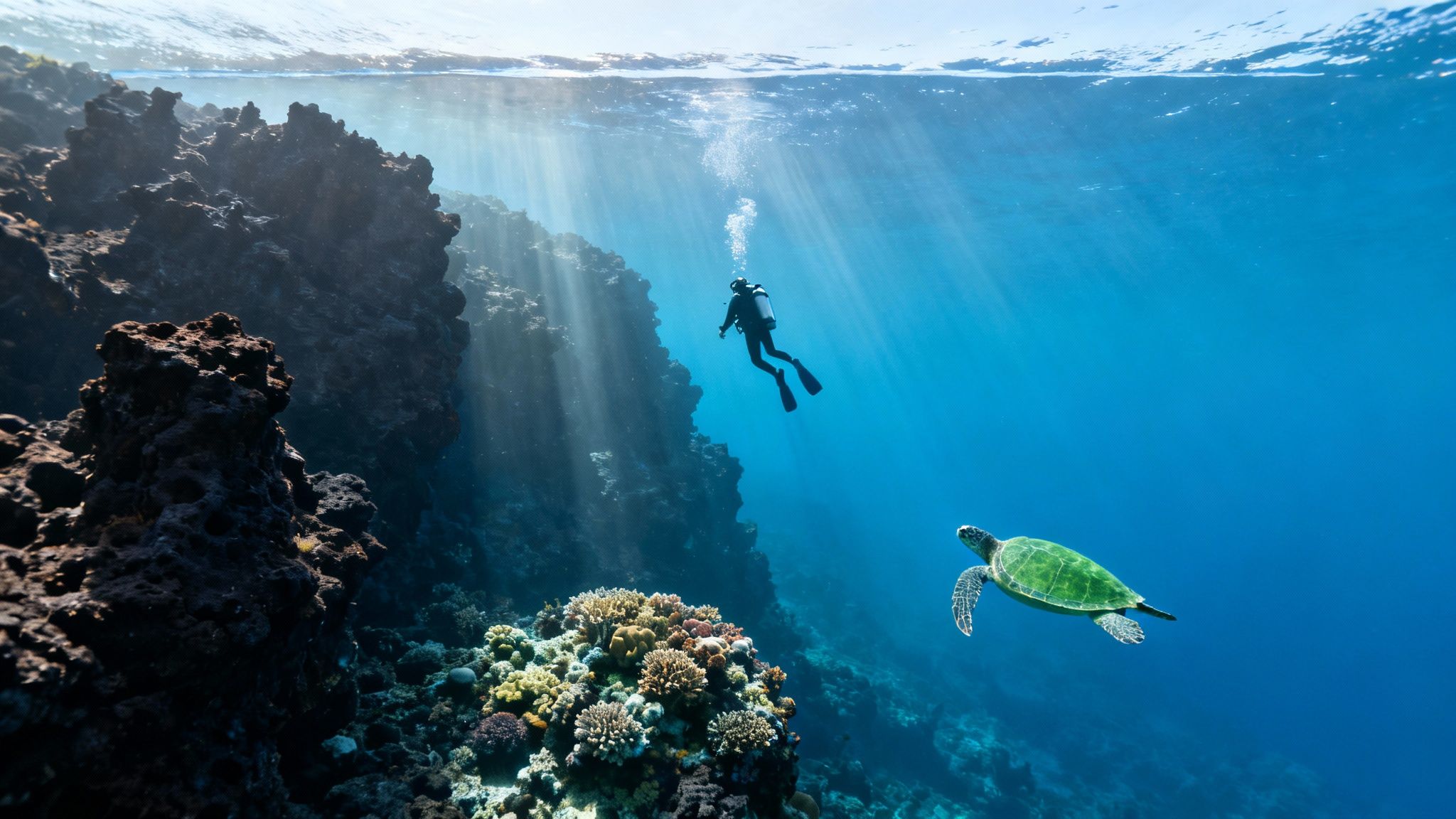
The magic of Big Island diving is all about geography. The west coast, home to the Kona and Kohala districts, sits in the "rain shadow" of the two largest volcanoes on Earth, Mauna Loa and Mauna Kea. These colossal mountains act as a natural shield, blocking the gusty trade winds that often churn up the waters around the other Hawaiian islands.
This protection creates incredibly calm and predictable conditions nearly every day of the year. For divers, this means one thing: phenomenal visibility. It’s not uncommon for the water clarity to exceed 100 feet, giving you a front-row seat to everything the underwater world has to offer.
To quickly grasp what makes this place so special, here’s a snapshot of the diving scene.
Big Island Diving At a Glance
| Feature | What to Expect |
|---|---|
| Visibility | Consistently clear, often 100+ feet. |
| Conditions | Calm seas and minimal currents on the Kona coast. |
| Topography | Volcanic landscapes: lava tubes, arches, and dramatic drop-offs. |
| Marine Life | Guaranteed encounters with turtles, reef fish, and mantas. |
| Best Season | Year-round, with peak conditions in summer and fall. |
This unique combination of factors makes the Big Island a premier global diving destination.
An Unforgettable Underwater Landscape
The island’s volcanic heart is even more spectacular beneath the waves. Forget endless, flat sandy bottoms. Here, you'll navigate a world of breathtaking drop-offs, swim through ancient lava tubes, and glide under massive archways formed by lava flows from millennia ago.
This dynamic terrain isn't just for show; it creates a complex and thriving habitat that supports an astonishing amount of marine life. Every dive reveals a new perspective on the island's powerful geology.
It’s no wonder this place is a diving mecca. The Big Island hosts around 100,000 certified scuba dives every year, and for good reason. More than 150,000 dive tourists travel here annually to see it for themselves. You can find more details on the Big Island's diving popularity on our blog.
Encounters with Abundant Marine Life
Those healthy coral reefs and volcanic structures are buzzing with life. Diving here isn't a game of chance where you hope to see something cool—it's a guarantee.
- Hawaiian Green Sea Turtles (Honu): You'll see these gentle giants on nearly every single dive, whether they're munching on algae, resting on the reef, or cruising gracefully past you.
- Spinner Dolphins: It’s common to see playful pods leaping from the water or zipping by the boat during your surface intervals.
- Majestic Manta Rays: The Kona coast is one of the best places on Earth for reliable manta ray sightings, especially on the world-famous Manta Ray Night Dive.
- Vibrant Reef Fish: The reefs are alive with hundreds of species of colorful fish, many of which are endemic, meaning you can only find them here in Hawaii.
It's this perfect mix of calm, clear water, fascinating volcanic seascapes, and prolific wildlife that makes scuba on Hawaii's Big Island an unforgettable adventure. It’s an experience that few other places in the world can match. When you're ready to plan your trip, check out our full range of diving tours.
Must-Do Dives: The Big Island’s Top Underwater Adventures
Sure, pretty much any dive along the Kona coast is going to be good. But there are a few iconic experiences that put scuba in Hawaii's Big Island on the global map. These are the dives that become legendary stories, the kind you tell for years to come.
From the silent, graceful dance of giants after dark to sanctuaries overflowing with sea turtles, consider this your essential checklist for the most unforgettable adventures the Big Island has to offer.
The World-Famous Manta Ray Night Dive
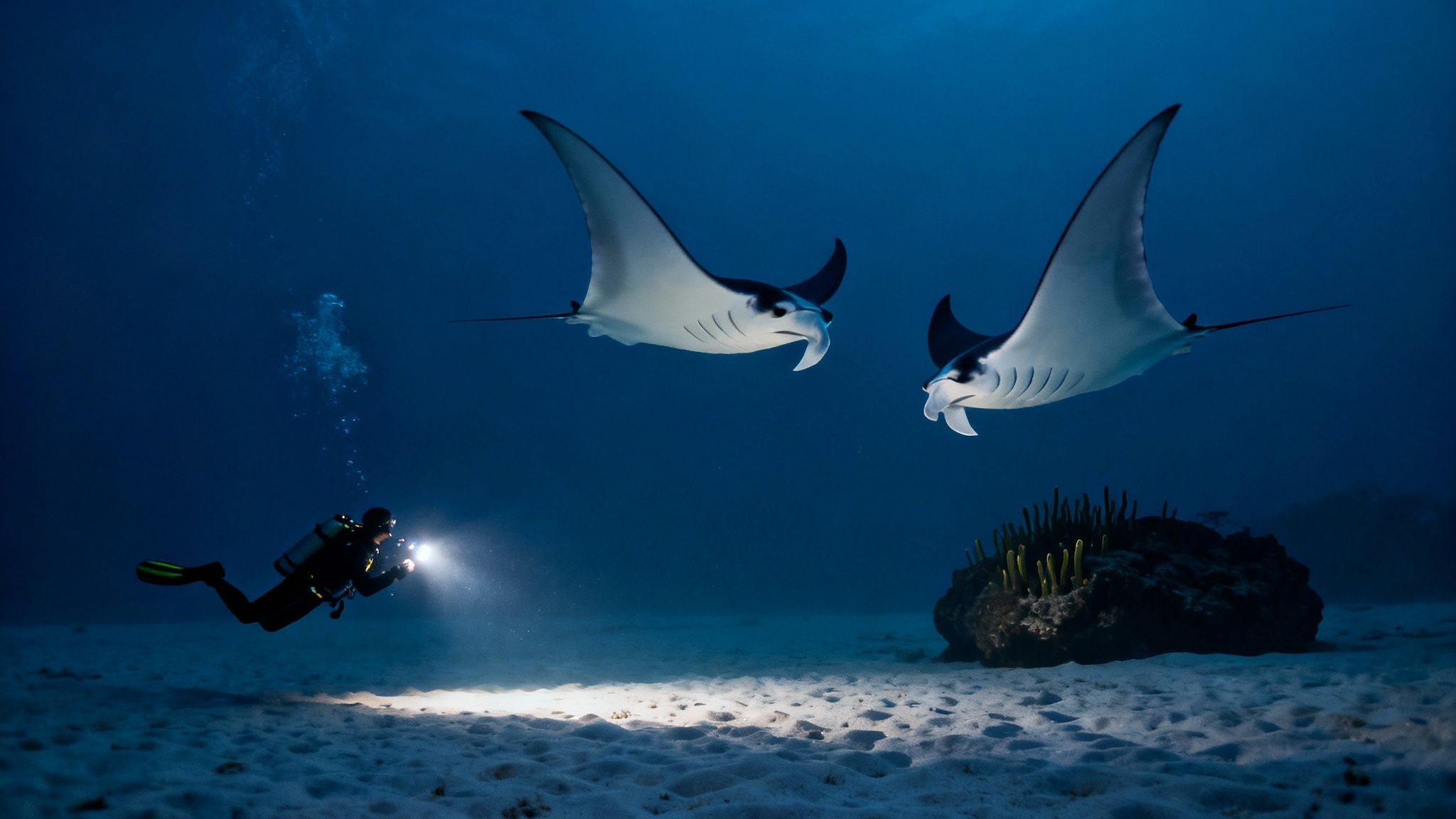
Picture this: you’re kneeling on the sandy ocean floor after sunset. You point your dive light up, creating a beacon in the dark water. Out of nowhere, a massive, winged shadow glides into the light, performing an effortless barrel roll just inches above your head. This isn't a dream; it's the Manta Ray Night Dive, an otherworldly ballet consistently voted one of the best night dives on Earth.
These gentle giants, with wingspans that can stretch over 12 feet, aren't there by accident. Our lights attract clouds of plankton—their favorite food. As they feast, the mantas swoop, glide, and somersault through the beams, putting on a breathtaking show. It's a completely passive interaction. You just get to be a guest at their dinner party.
The experience is truly humbling. Seeing these enormous, graceful animals move with such precision and beauty in their own world is a powerful reminder of the ocean's magic. It's an encounter that feels both intimate and grand at the same time.
And the best part? The chances of seeing them are incredibly high. Operators consistently report sighting success rates of 85-90% on average. Some nights are just mind-blowing, with logs showing over 20 or even 30 individual mantas showing up for the feast.
Why Garden Eel Cove is the Premier Manta Location
While there are a couple of spots to see the mantas, Garden Eel Cove (also known as Manta Heaven) is widely considered the superior choice. Located just north of the Kona airport, its geography gives it a serious edge. The cove is naturally protected from the open ocean swell, which means calmer, more comfortable conditions for divers.
The underwater landscape here is also perfect, creating a superior viewing area that functions as a natural "arena" for the show. The sandy bottom gives divers a safe place to settle in, while the healthier reefs framing the area add to the beauty. This pristine environment makes it a spectacular dive during the day, too. For a closer look at this incredible experience, check out our full guide to the Kona Manta Ray Night Dive.
The Mysterious Kona Blackwater Dive
For those with a true taste for adventure, the Kona Blackwater Dive is a trip to another dimension. This is not a reef dive. We take you several miles offshore, where the ocean floor is thousands of feet below. You descend to about 50 feet and simply drift in the deep, open ocean, safely tethered to the boat.
As you float in the darkness, your dive light illuminates a universe of life that rises from the abyss every single night. You're witnessing the largest migration on Earth, as countless tiny, bizarre, and often bioluminescent creatures ascend from the deep to feed. You'll see things that look like they belong on another planet: translucent squids, alien-like larval fish, and shimmering siphonophores. It's a thrilling experience that reveals a side of the ocean very few people ever get to see.
Essential Daytime Dives
Beyond the incredible night dives, the daytime diving here is world-class. The Big Island's volcanic coastline is a playground of lava tubes, dramatic arches, and vibrant coral gardens just waiting to be explored.
One spot that absolutely has to be on your list is Kealakekua Bay. As a protected Marine Life Conservation District, the bay is a haven for marine life and boasts some of the healthiest reefs on the island. We call it "Turtle Heaven" for good reason—it’s not uncommon to see dozens of Hawaiian Green Sea Turtles (honu) on a single dive. The calm, clear water and sheer abundance of life make it a perfect spot for divers of all levels, and it's a regular destination on our morning dive charters.
Planning Your Dive Trip and What to Expect
Getting the logistics right is the secret to an unforgettable scuba Hawaii Big Island adventure. With a bit of foresight, you can line up your trip with the perfect season and dive style, making sure every moment underwater is exactly what you’ve been dreaming of.
The best part? Kona's diving is fantastic all year round. We have the island's colossal volcanoes to thank for that—they shield the coastline, keeping conditions remarkably consistent. Water temperatures stay in that perfect sweet spot of 75-80°F (24-27°C) no matter when you decide to jump in. Still, different seasons bring their own unique flavor to the experience.
Finding Your Perfect Dive Season
Many divers will tell you that the summer months, especially August through October, are prime time. This is when the ocean tends to be at its calmest and warmest. Visibility often pushes past an incredible 100 feet, creating that classic, crystal-clear tropical paradise vibe. It's an absolutely perfect window for new divers or anyone who just wants supremely relaxing conditions.
But winter, from December through March, holds a different kind of magic. The water might be a degree or two cooler, but the trade-off is nothing short of spectacular. This is humpback whale season. Hearing their beautiful, haunting songs reverberate through the water on a dive is an experience that will stay with you forever—and you won't get that in the summer.
Choosing Your Ideal Dive Tour
Every diver has a different idea of a perfect day out on the water. Luckily, the Big Island serves up a variety of tours to match any skill level and interest. It’s all about finding the right fit for your adventure.
- Relaxed Two-Tank Morning Trips: This is the quintessential Kona dive. Great for all certification levels, these trips typically visit two distinct, vibrant reef sites. You’ll get a fantastic tour of the area's incredible biodiversity and volcanic topography, with plenty of turtles, eels, and schools of colorful reef fish.
- Challenging Advanced Charters: If you're an experienced diver looking to explore a bit further, our advanced dive charters are where it's at. These trips head out to deeper, more remote sites with dramatic drop-offs, wild lava formations, and a better chance of spotting larger pelagic life.
No matter which trip you pick, it’s the little things that make a good day great. Trust me, coming up from a dive to a comfortable boat with a hot freshwater shower waiting for you makes all the difference. For certified divers, having complimentary nitrox is a huge perk, as it can extend your bottom time and help you feel less tired, letting you squeeze every bit of awesome out of your dives.
What to Expect on a Typical Dive Day
Most dive tours in Kona run like a well-oiled machine, prioritizing both safety and fun. You’ll usually meet at the harbor in the morning, where the crew will help get your gear set up and stowed. Before you even leave the dock, you'll get a thorough briefing on the day's plan, safety protocols, and what makes the upcoming dive sites so special.
A perfect example of a world-class spot is the Kealakekua Bay Marine Life Conservation District. This protected area, established back in 1992, is a true gem of the Kona coast, with dive depths ranging from 30 to 130 feet. It’s famous for routinely seeing 20 or more green sea turtles on a single dive, and during the summer, visibility can hover between an unbelievable 80 to 120 feet. You can get more details on why this site is a must-see for Big Island scuba diving.
Between dives, you'll relax on the boat for your surface interval, enjoying some snacks and drinks while you cruise to the second location. This is where the crew’s local knowledge really shines; they know exactly where to go based on the day's conditions to give you the best dive possible. After you surface from your second dive, it's a chill ride back to the harbor, usually filled with everyone excitedly talking about what they just saw.
Choosing the Right Dive Operator in Kona
Your dive operator is so much more than just a boat ride. They're your guide, your safety net, and the ones who hold the keys to the Big Island's most spectacular underwater secrets. Picking the right company will make your dive trip unforgettable, while the wrong one can sour the whole experience and even compromise your safety.
Honestly, choosing a top-tier operator is the single most important decision you'll make when planning your Kona dive adventure.
So, what should you really be looking for? The absolute must-haves are a flawless safety record, boats and gear that are clearly well-cared-for, and a crew that is both experienced and genuinely passionate about diving. This isn't just about finding a fun guide; it’s about putting your trust in the people and equipment keeping you safe beneath the waves.
The Hallmarks of a Premier Dive Shop
When you're comparing dive shops, try to look past the price tag. A truly great operation invests in things you might not see at first glance, but they make all the difference in the world.
- Real Local Knowledge: An experienced crew knows exactly where to go based on the day's swell, currents, and visibility. They can take you to hidden gems the crowds miss and have a knack for spotting marine life you'd swim right past.
- A Culture of Safety: Top-notch shops don't just go through the motions. They give detailed briefings, have solid emergency plans in place, and are borderline obsessive about maintaining their gear. For them, safety is a core value, not a checklist item.
- Quality Boats and Gear: Think about it—a comfortable boat with a hot shower, plenty of shade, and easy water entry makes the whole day better. The same goes for rental gear; you want equipment that is reliable and serviced proactively, so you can just relax and enjoy your dive.
For a deeper dive into this, check out our complete guide on how to choose a Kona dive shop.
Why Experience and Reviews Matter
In the scuba world, reputation is everything. It's built slowly, one dive at a time, through years of consistent, exceptional service. This is where an operator like Kona Honu Divers really shines and sets the standard on the Big Island.
With over 200 years of combined staff experience, our team possesses a truly incredible depth of knowledge about Kona's underwater environment. That expertise directly translates into safer, more exciting, and more interesting dives for every single person who comes aboard. It’s a level of professionalism you can feel from the moment you check in.
But don't just take our word for it. The most honest and powerful proof of a company's quality comes straight from other divers. Thousands of glowing five-star reviews paint a vivid picture of a team that is absolutely dedicated to excellence.
This kind of social proof—real, unfiltered feedback from people who were once in your shoes—is invaluable. It confirms that a company consistently delivers on its promises of safety, quality, and amazing underwater adventures. See for yourself what fellow divers are saying.
Ready to dive with a team you can trust? Your adventure is waiting.
Getting Certified or Advancing Your Dive Skills
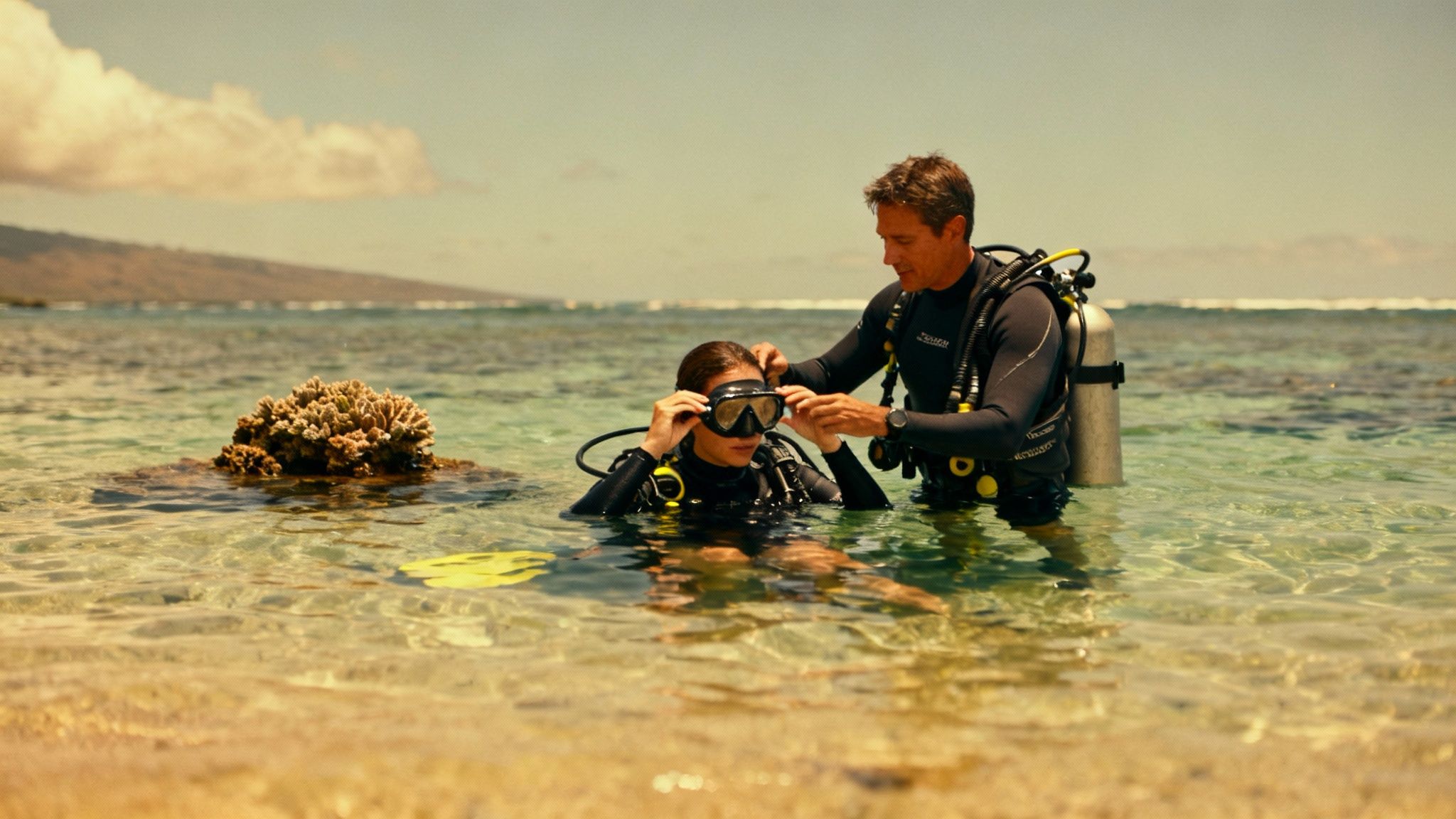
Whether you're dreaming of taking your first breath underwater or you're a certified diver looking to sharpen your skills, the calm Kona coast is the perfect classroom. The incredible visibility and gentle conditions create a low-stress environment, letting you focus on learning instead of fighting the ocean.
This is where the real adventure begins for so many people. If you've always been curious about diving but aren't quite ready for a full course, the Discover Scuba Diving experience is your ticket. Think of it as a test drive. In this one-day program, a PADI professional teaches you the absolute basics before guiding you on a real ocean dive. No experience necessary.
Ready to become a full-fledged diver? The PADI Open Water Diver course is the gold standard. This is the complete package—you'll cover the theory, practice skills in shallow water, and complete four open water dives to earn a certification that lasts a lifetime.
Your Path to Scuba Certification
Already certified but it’s been a while? It happens. A quick refresher course is the best way to shake off the rust and get your confidence back before joining one of our regular diving tours. We'll review the important safety procedures and get you comfortable in the water again, making sure you're ready for the incredible dives ahead.
Here's a quick look at how you can get started:
- Discover Scuba Diving: A half-day introduction for anyone who isn't certified. You'll learn the basic skills and do one supervised ocean dive.
- PADI Open Water Certification: This is the big one. It's the world's most popular scuba course for a reason and your gateway to exploring the underwater world with a buddy.
- Refresher Course: A short and sweet program for certified divers who need to review the fundamentals and get back into the swing of things.
Kona’s predictable conditions make it an ideal place to learn. We don’t have to cancel training days often because of rough seas, which is common in other destinations. The protected coastline here gives us a consistent, safe environment for you to build your skills.
Advancing Your Dive Skills
Just because you have your certification card doesn't mean the learning is over. In fact, that’s when the fun really starts. The Big Island’s unique volcanic topography is a natural playground for advanced training, helping you become a more capable and confident diver.
The PADI Advanced Open Water Diver course is a fantastic next step. It's built around five "adventure dives." Two are required—a deep dive and an underwater navigation dive—and you get to choose the other three. You might find yourself exploring a deep volcanic ledge, perfecting your buoyancy, or trying your hand at underwater photography. This course is all about building on what you already know and discovering new ways to enjoy the ocean.
Specialty courses let you go even deeper into what interests you most. Imagine mastering navigation so you can confidently lead a buddy through a lava tube, or becoming an Enriched Air (Nitrox) diver to get more bottom time on those amazing reef dives.
With a team of expert instructors who live and breathe this stuff, you have an incredible opportunity to advance your diving right here in Kona. Taking the next step in your dive education means learning in one of the most beautiful underwater classrooms on the planet.
Dive Safety and Marine Conservation
Becoming a skilled diver and becoming a steward of the ocean are really two sides of the same coin. When you descend into the waters off the Big Island, you’re stepping into a fragile world that’s been evolving for millennia. Making responsible diving a habit is the only way to protect both yourself and the incredible marine life that calls this place home.
Here in Hawaii, safety is directly linked to our unique volcanic underwater landscapes. Perfecting your buoyancy isn't just a neat trick—it’s a fundamental act of conservation. A single careless kick can destroy coral structures that took centuries to form. By keeping a safe, respectful distance, you're doing your part to preserve the reef for every diver who comes after you.
Protecting Hawaii's Delicate Ecosystem
Conservation thinking needs to start before you even hit the water, but let's begin with the golden rule for any dive: look, but don't touch. This is absolutely non-negotiable, especially around protected species like the Hawaiian Green Sea Turtle, our beloved honu. Touching them not only causes stress but can also strip away the protective mucus on their skin, making them susceptible to disease.
By practicing passive observation, you allow marine life to behave naturally and provide a more authentic and rewarding encounter for everyone. You are a guest in their home.
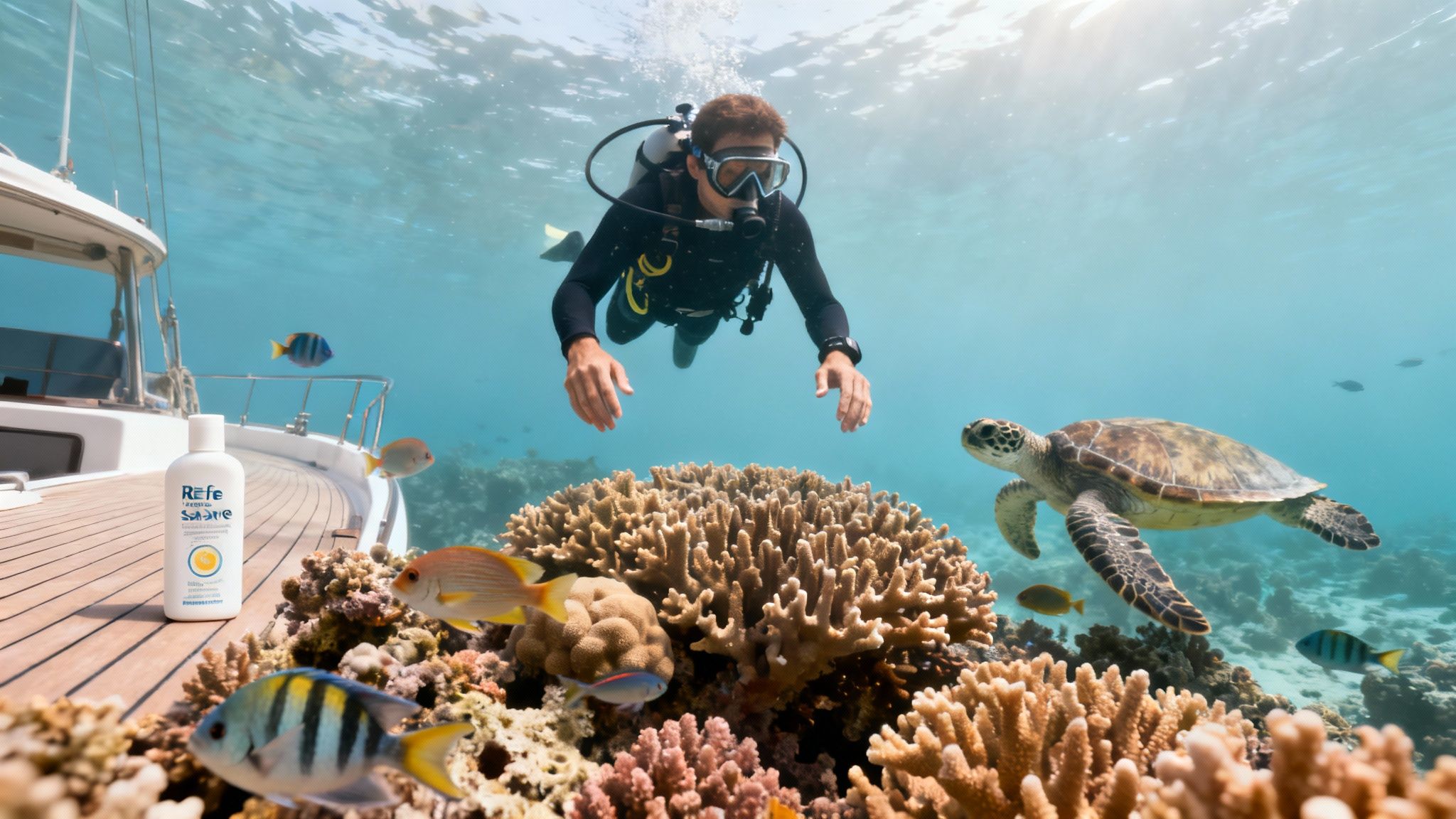
What you put on your skin matters, too. Many common sunscreens are loaded with chemicals like oxybenzone and octinoxate, which have been proven to cause coral bleaching and poison marine ecosystems.
Here's how you can make a difference:
- Choose Reef-Safe Sunscreen: Stick with mineral-based sunscreens that use zinc oxide or titanium dioxide. They work great and don't harm the coral.
- Wear Protective Clothing: A simple rash guard or dive skin is your best friend. It offers fantastic sun protection and cuts down on the amount of sunscreen you need to use in the first place.
These small, conscious choices add up to a huge positive impact, helping preserve the vibrant reefs that make scuba on Hawaii's Big Island so unforgettable. To dive deeper into this, check out our guide on responsible and considerate diver etiquette.
The responsibility doesn’t just fall on individual divers. Reputable operators are also committed to protecting these waters. From using eco-friendly boat cleaning products to leading by example on every charter, we all play a role. When you choose to dive responsibly, you become part of the solution, ensuring these underwater wonders are here for generations to come.
Your Big Island Scuba Diving Questions, Answered
Even the most seasoned travelers have a few questions before a big dive trip. We get it. Here are some of the most common things people ask us, with straightforward answers to help you plan your adventure.
When Is The Best Time to Dive?
Honestly, there’s never a bad time to dive in Kona. The conditions are consistently calm and clear year-round, which is what makes this place so special.
If you’re looking for that absolute picture-perfect, glass-calm water and incredible visibility, aim for August through October. But for a truly unforgettable experience, think about coming in the winter. From December to March, you can often hear the haunting songs of humpback whales echoing through the reef on your dives—it's a soundtrack that will stay with you forever.
Do I Need to Be Certified to Dive in Kona?
Not at all! If you’ve always wanted to try scuba but aren’t certified yet, our Discover Scuba Diving program is exactly what you're looking for. It's a one-day experience where a PADI professional teaches you the basics and then takes you on a real ocean dive in a safe, shallow spot.
It’s the perfect way to get a taste of the underwater world and see if diving is your thing, all while surrounded by Kona’s incredible reefs.
Is The Manta Ray Night Dive Safe for New Divers?
Absolutely. The world-famous manta ray night dive is one of the most well-managed and safe dives you can do. It happens in a shallow, protected bay, making it comfortable and accessible for all certified divers, even if you just got your card.
We give a very thorough briefing beforehand so everyone knows exactly what to do and feels completely at ease. And for any non-divers in your group, snorkeling with the mantas from the surface is just as magical.
What Marine Life Will I See?
Besides the legendary manta rays and the ever-present honu (Hawaiian Green Sea Turtles), Kona’s reefs are absolutely buzzing with life. On any given dive, you're likely to spot moray eels peeking out from their rocky homes, a camouflaged octopus trying to blend in, or maybe even a graceful reef shark cruising past in the distance.
Keep an eye out for pods of spinner dolphins, majestic eagle rays, and hundreds of species of vibrant tropical fish. The sheer variety is what makes every single dive here a new adventure.
Your unforgettable underwater journey is waiting. When you're ready to explore the vibrant reefs and meet the incredible marine life of the Kona coast, come dive with the best. Kona Honu Divers offers a full range of diving tours for every skill level.