
Picture this: you roll backward into the warm, turquoise Pacific, and as the bubbles clear, a stunning volcanic seascape unfolds below you. That's the magic of scuba diving on Hawaii's Big Island. The Kona coast, in particular, is a diver's dream, famous for its mind-blowing visibility, calm waters, and reefs teeming with life.
Why The Big Island Offers World-Class Scuba Diving
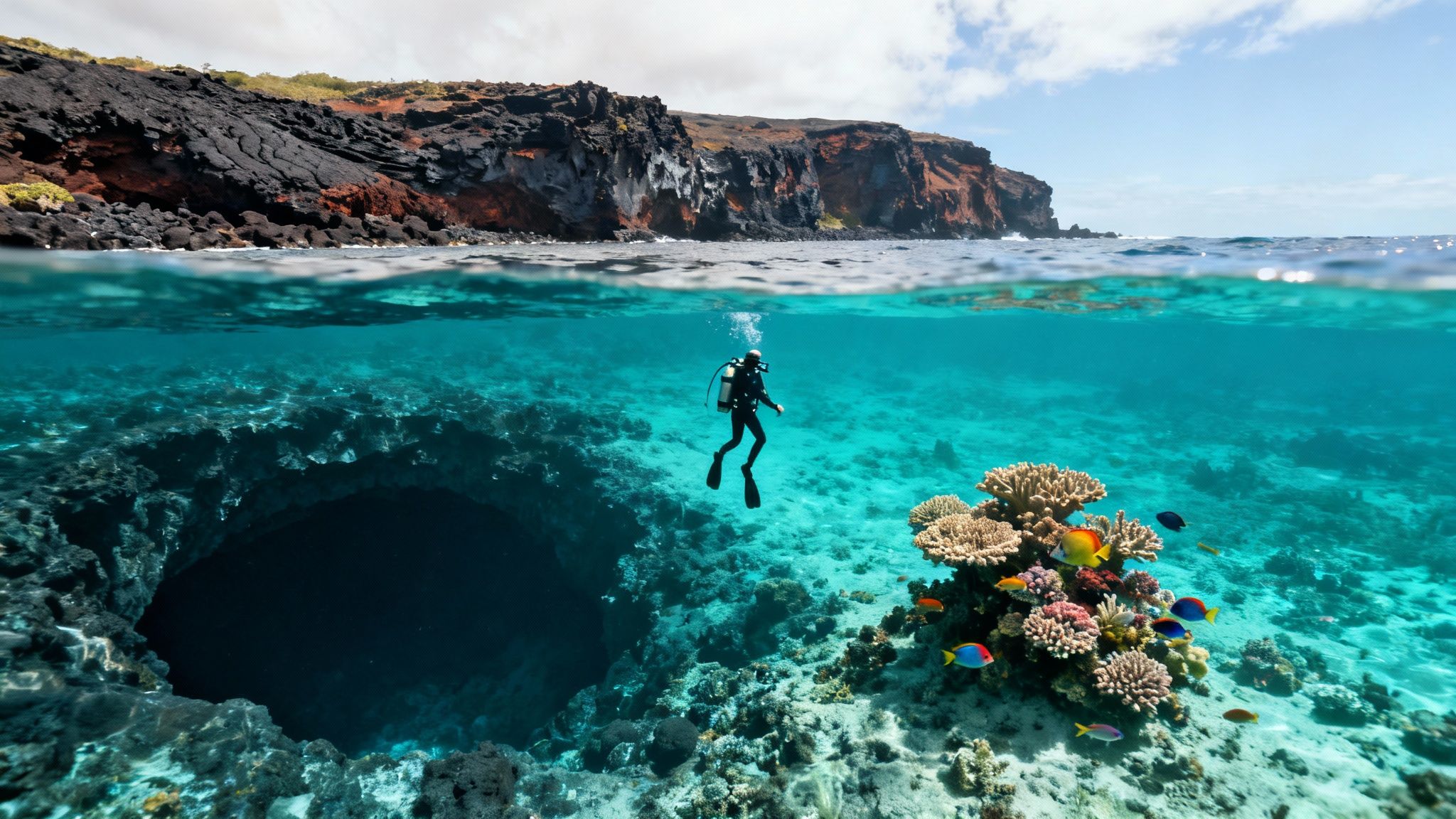
So, what’s the secret behind Kona’s incredible dive conditions? It all comes down to geography. The island is home to two colossal volcanoes, Mauna Loa and Hualalai, which act as a massive shield, blocking the strong trade winds that batter the other Hawaiian islands.
This natural barrier creates a calm, protected coastline with almost no current—perfect for divers of all skill levels. It also means the water stays incredibly clear, with visibility often soaring past 100 feet. You can see forever. This clarity reveals a breathtaking underwater world sculpted by eons of volcanic activity, with ancient lava flows creating a playground for divers.
A Volcanic Underwater Wonderland
The underwater landscape here is what truly sets the Big Island apart. Forget typical fringing reefs; here, you’re diving on a world built by lava. This unique geology has given rise to a rich and rugged ecosystem that thrives in every nook and cranny.
As you explore the Kona coast, you’ll find yourself navigating:
- Lava Tubes and Caverns: These are epic underwater tunnels and archways formed as molten lava cooled, creating dramatic swim-throughs that are now home to all sorts of marine life.
- Vibrant Coral Gardens: Hardy corals have taken root all over the volcanic rock, growing into sprawling gardens that shelter countless colorful reef fish.
- Deep Pinnacles and Canyons: The island’s dramatic drop-offs continue underwater, forming impressive structures that act as magnets for larger pelagic species cruising in from the deep blue.
This fascinating environment is home to an incredible variety of marine life, and what's really special is that about 25% of the fish species here are endemic—you won't find them anywhere else on the planet.
For a quick summary of what makes diving here so special, take a look at the table below.
Big Island Diving At a Glance
Here’s a snapshot of what makes scuba diving on the Big Island an unforgettable experience.
| Key Feature | What This Means for Your Dive |
|---|---|
| Volcanic Topography | Explore dramatic lava tubes, arches, and canyons unlike any other reef system. |
| Calm, Current-Free Waters | Enjoy relaxed, easy diving suitable for all skill levels, from beginner to expert. |
| Visibility up to 100+ Feet | Experience crystal-clear conditions that make spotting marine life and taking photos a breeze. |
| High Endemic Population | See unique fish and critters found nowhere else on Earth. |
| Iconic Night Dives | Participate in world-famous encounters like the Manta Ray Night Dive and the Kona Blackwater Dive. |
These unique features combine to create a truly world-class diving destination, but it's the iconic "bucket-list" dives that really put the Big Island on the map.
The Manta Ray Night Dive is consistently voted one of the best dives in the world. Imagine giant, graceful mantas swooping just inches above your head in a mesmerizing underwater ballet. It’s an experience you’ll never forget.
And then there's the one-of-a-kind Kona Blackwater Dive, a journey into the deep open ocean at night to witness the strange, bioluminescent creatures that migrate toward the surface. These signature dives, combined with pristine reefs and perfect conditions, are what make this place so special.
Ready to see it all for yourself? Check out the amazing diving tours available and start planning your underwater adventure.
Exploring Kona’s Most Unforgettable Dive Sites
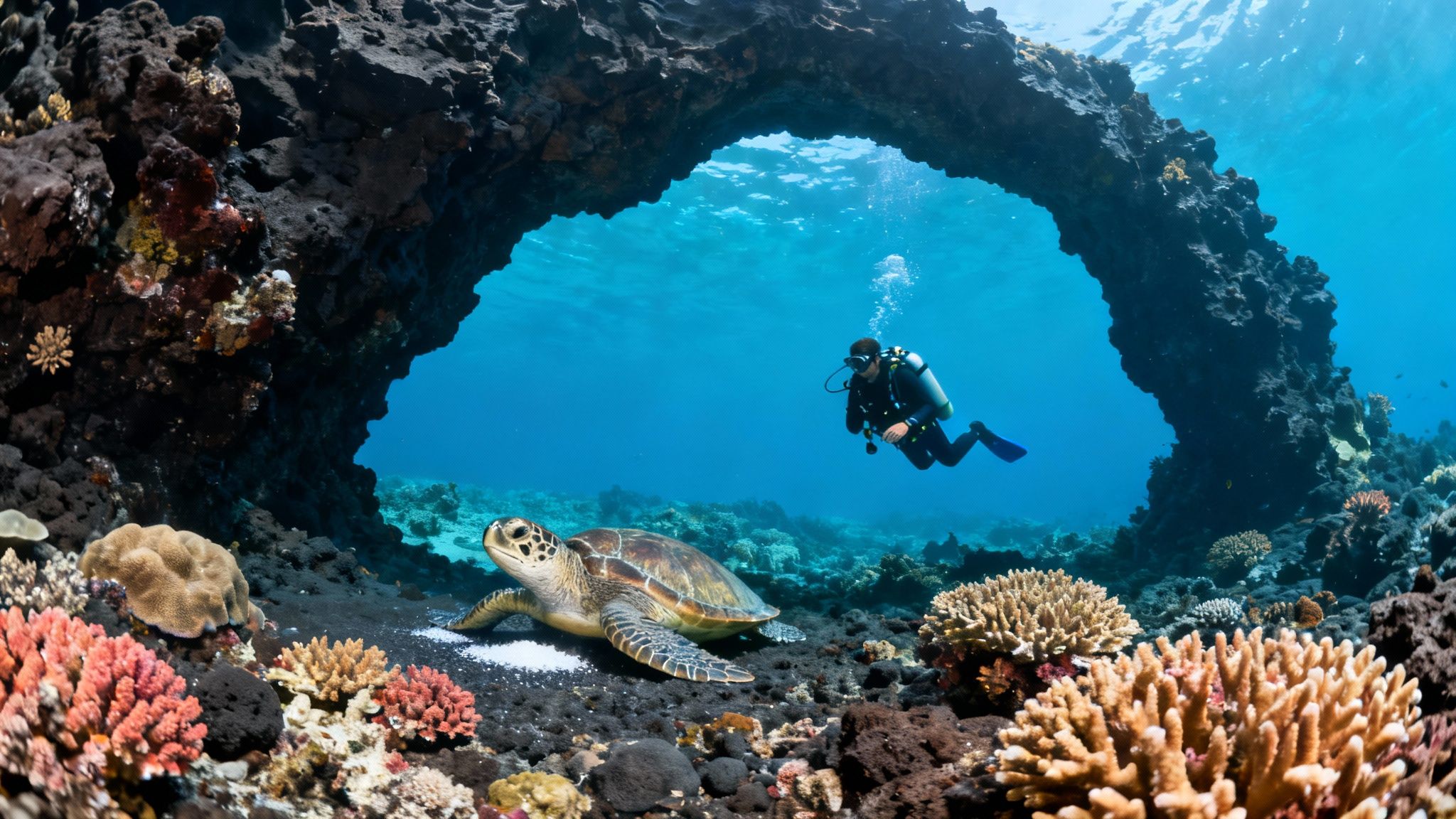
The Kona coast isn't just one dive spot; it's a whole library of underwater adventures, each with its own unique story. Thanks to the Big Island's volcanic past, the seafloor is a playground of ancient lava tubes, dramatic arches, and sprawling coral gardens. This incredible geology creates the perfect home for a mind-boggling variety of marine life.
This is why scuba Hawaii Big Island is on so many divers' bucket lists. The conditions here are consistently fantastic. We're talking calm, clear water where visibility often stretches beyond 100 feet. You spend less time fighting the ocean and more time just soaking in the vibrant world around you.
Kealakekua Bay: A Protected Paradise
If there’s a crown jewel of Kona diving, it has to be Kealakekua Bay. It’s so important ecologically that it was designated a Marine Life Conservation District back in 1992. That protection has allowed the coral reefs here to become some of the most pristine and healthy in all of Hawaii.
This underwater sanctuary covers over 7,000 acres, where you’ll find everything from massive schools of tropical fish and playful spinner dolphins to the occasional humpback whale in the winter. With visibility that regularly hits 100 feet and exceptionally calm waters, it's an ideal spot for new divers and families. It’s also home to more than 300 Hawaiian green sea turtles!
Golden Arches and Lava Formations
Ready to see the raw artistry of a volcano? Sites like Golden Arches put the island’s fiery origins on full display. It’s famous for its magnificent lava archways that create incredible swim-throughs—an absolute dream for underwater photographers.
As you glide through these ancient formations, you'll be met by schools of colorful reef fish that use the structures for shelter. It’s always worth taking a closer look in the nooks and crannies. You never know when you’ll spot a moray eel, a hidden octopus, or even a well-camouflaged frogfish.
Turtle Pinnacle: A Guaranteed Encounter
If your main goal is to come face-to-face with the Hawaiian green sea turtle, or honu, then Turtle Pinnacle is your spot. No question. This unique dive site is a natural "cleaning station," where turtles gather to let surgeonfish pick off algae and parasites.
It’s a classic example of symbiosis in action, and it gives us an incredible chance to observe these gentle giants. We can just hang back, stay neutrally buoyant, and watch as turtles line up for their turn at the spa. It’s a peaceful, mesmerizing experience that truly connects you to the rhythm of the reef.
Because the turtles are almost always there, Turtle Pinnacle is a huge favorite for divers of all skill levels. And it’s not just about the honu—the pinnacle itself is covered in beautiful, healthy coral and often gets visits from passing eagle rays.
The best way to experience these sites is with people who know them inside and out. To dive deeper into what makes Kona's underwater world so special, check out our full guide to the top Big Island scuba diving sites and start planning your next adventure.
The Magic of The Manta Ray Night Dive
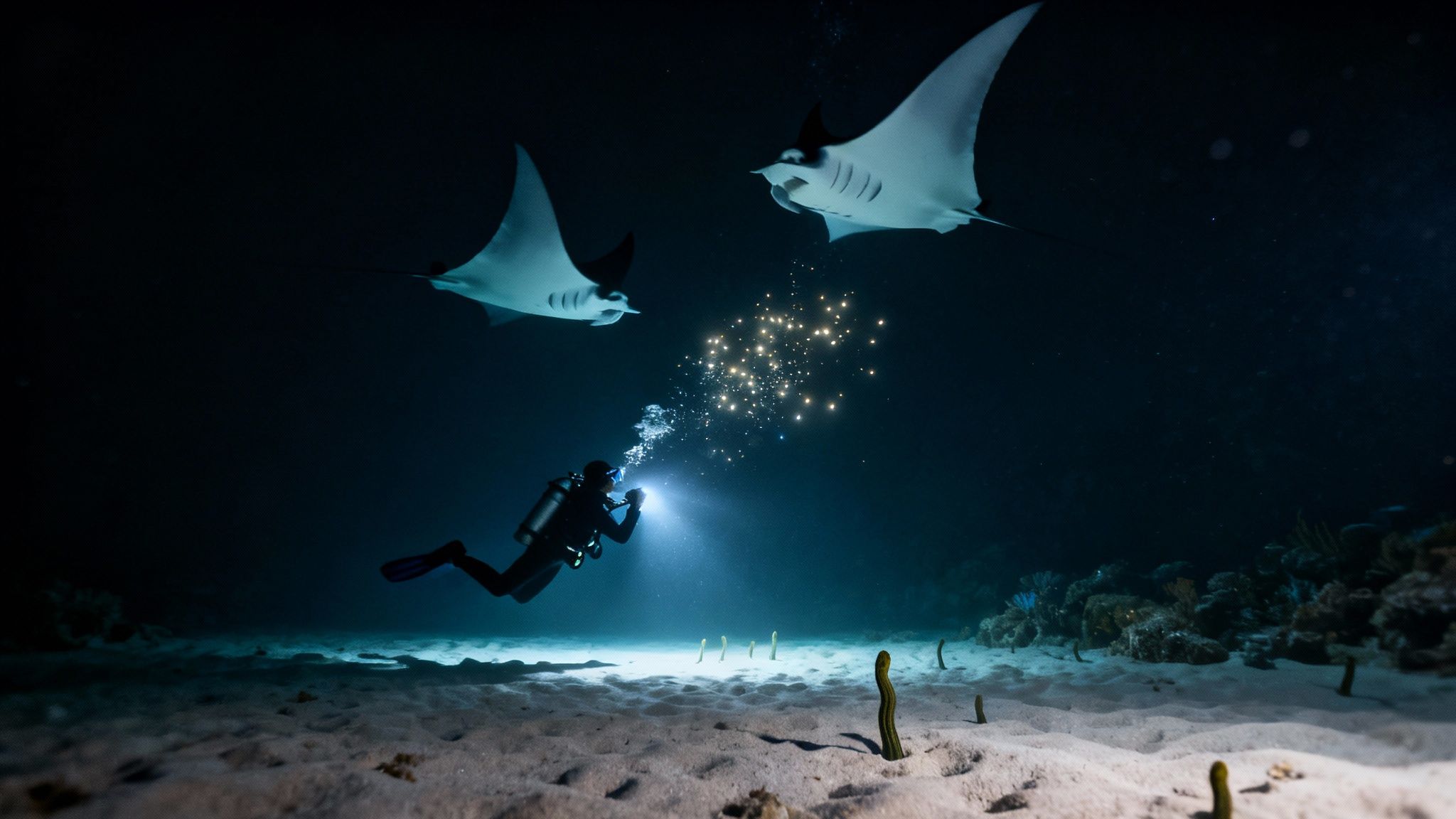
The Manta Ray Night Dive isn't just another entry in your logbook; it's a genuine underwater ballet, an experience so profound that many divers say it changed their perspective on the ocean forever. It’s earned a reputation as one of the best night dives on the planet, and for a very good reason—it’s a breathtaking spectacle you can count on seeing almost any night of the year.
The concept behind it is both simple and brilliant. We set up powerful lights on the seafloor that shine up toward the surface. This beam of light acts as a magnet for plankton, the microscopic critters that form the foundation of the marine food web. Before you know it, you have an all-you-can-eat buffet that the local reef manta rays simply can't resist.
What happens next is pure magic. These gentle giants, with wingspans that can stretch over 12 feet, glide, swoop, and perform effortless somersaults right through the light beams, scooping up mouthfuls of plankton. Watching them move with such otherworldly grace, sometimes just inches over your head, is a surreal and humbling encounter that truly defines the scuba Hawaii Big Island experience.
Why Garden Eel Cove is The Premier Choice
While a couple of spots host this dive, Garden Eel Cove is hands-down the superior choice. Its location just north of the Kona airport gives it natural protection from wind and swell, which almost always means calmer conditions both on the surface and below. This calmer setting makes for a much more comfortable and enjoyable dive. Better yet, the site features a perfect sandy "viewing area" where divers can settle in and watch the show without disturbing the environment.
The real secret to Garden Eel Cove is the whole package. It's not just that the conditions are typically better; the surrounding reefs are healthier and more vibrant. This means the twilight dive you often do right before the main event is a spectacular experience in its own right, making for a better overall tour.
What to Expect on Your Manta Adventure
Your manta adventure kicks off just as the sun begins to set. After a detailed briefing from your guide, you'll gear up for your first dive. You’ll get to explore a beautiful reef as it transitions from its busy daytime mode to the unique world of its nocturnal inhabitants.
Once twilight fades, it’s time for the main event. For the second dive, you’ll descend to the sandy viewing area, usually around 30-40 feet deep. Your guide will arrange the lights, and everyone will find a spot on the bottom, pointing their own dive lights upward to create a "campfire" of light that concentrates the plankton.
And then, you wait. It never takes long. A ghostly shape appears out of the darkness, then another, and another. For the next 45 minutes, you’ll be treated to a silent, graceful performance that feels like it’s from another world.
The Reliability of The Encounter
The Kona coast is a true diving mecca, especially for this world-famous night dive. The incredible reliability of this encounter is well-documented. Recent sighting reports show divers logging encounters with up to 32 manta rays on a single dive and boasting a staggering encounter rate of over 87%. This isn't just luck; the area's nutrient-rich waters are a natural feeding ground for over 200 individually identified manta rays. You can explore more about the astonishing consistency of manta ray sightings on jackdivinglocker.com.
Kona Honu Divers is known for running a safe, respectful, and absolutely unforgettable manta ray night dive. Our experienced crew is dedicated to ensuring both your comfort and the well-being of these magnificent animals.
Good buoyancy control is essential for this dive. The goal is to remain still on the bottom, which allows the mantas to feel comfortable enough to put on their best show. To get a better idea of the whole experience, check out our guide on what to expect from the Kona manta ray night dive. This bucket-list manta ray dive tour is waiting for you.
Advanced Dives For The Seasoned Explorer
Sure, the Kona coast has an incredible lineup of beautiful, relaxing reef dives that are perfect for everyone. But for those with a few more dives under their belt and a taste for something truly different, scuba Hawaii Big Island has another side—one that seasoned explorers live for. If you have your advanced certifications, the island offers some unique challenges that go way beyond your typical reef tour.
These advanced dives take you off the beaten path, away from the bustling shallow reefs and into a world of dramatic underwater landscapes and the mysterious, deep blue of the open ocean. They're going to demand excellent buoyancy control, solid situational awareness, and a healthy respect for the powerful environment you're dropping into. The payoff? An experience most divers only dream about.
Navigating Lava Tubes And Deep Pinnacles
The Big Island's volcanic past has left behind an absolutely stunning underwater world. We're not just talking about simple swim-throughs; there are intricate lava tube systems that snake through ancient rock, creating mazes that require sharp navigation skills and the right training. They’re certainly not for everyone, but exploring them is a chance to see geology in its rawest, most powerful form.
As you move away from the shore, the island drops off quickly into the deep. This is where you’ll find deep-water pinnacles that shoot up from the abyss, acting like magnets for marine life. These isolated seamounts often get bathed in gentle currents, bringing in larger pelagic species and huge schools of fish. To explore them safely, you’ll need a solid grasp of deep diving procedures and how to manage your gas.
This is where you really feel the raw, untamed nature of Hawaii. It's more than just seeing fish; it's about connecting with the powerful forces that shaped this incredible island, both above and below the waves.
At Kona Honu Divers, we run specialized advanced diving opportunities for certified divers who are ready for these deeper, more complex sites. Our expert guides are there to make sure every dive is run with the highest safety standards, so you can focus on the thrill of the adventure.
The Kona Blackwater Dive A Pelagic Magic Carpet Ride
Out of all the incredible advanced dives on the Big Island, one stands out as the most unique, most surreal experience you can have: the Kona Blackwater Dive. People call it a "pelagic magic carpet ride," and that's the perfect way to describe it. This isn't a reef dive. It's a journey straight into the void.
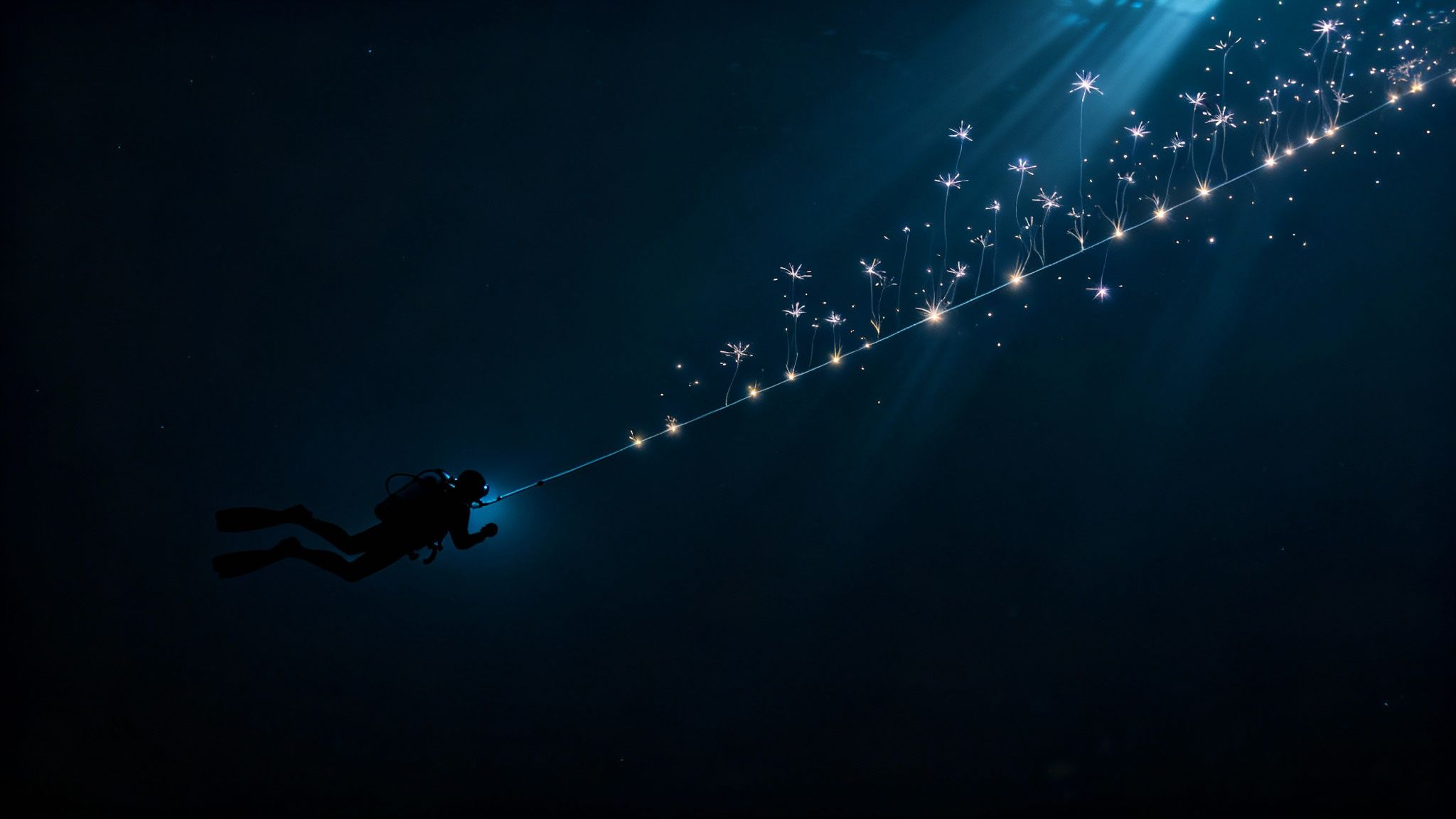
So, how does it work? We head out at night, miles from shore, over thousands of feet of water. Divers are tethered to a downline that drifts with the boat, suspending you in inky blackness about 50 feet below the surface. Your only light comes from the powerful beams shining down from the boat and your own dive torch.
What you're about to see is one of the largest migrations on the planet. Every single night, countless strange, tiny, and often bioluminescent creatures rise from the crushing depths to feed near the surface. You'll encounter critters that look like they're from another world:
- Larval octopuses and squids, some no bigger than your thumbnail.
- Pulsating, iridescent comb jellies that light up the dark.
- Translucent larval eels drifting like ghostly ribbons.
This is an absolute dream for macro photographers and anyone looking for a truly mind-bending underwater experience. It’s a rare glimpse into a hidden world of delicate, alien-like life forms that are as bizarre as they are beautiful. You'll need the right certification and experience for this one, along with a calm attitude and a deep sense of wonder. Find out more about the Kona Blackwater Dive tour and get ready for an adventure you'll never forget.
How To Choose The Best Big Island Dive Operator
Let's be honest, the dive operator you choose can make or break your entire trip. It’s easily one of the most important decisions you'll make. A great shop does more than just drive a boat; they create an experience built on a foundation of safety, comfort, and a genuine love for the ocean. Your choice is what turns a good dive into a truly unforgettable one.
When you start looking into scuba Hawaii Big Island, the number of options can feel a bit daunting. The key is to cut through the noise and focus on what really counts. First and foremost, a top-notch safety record isn't just a "nice to have"—it's a deal-breaker. You need a crew you can implicitly trust.
From there, look at the quality of the operation itself. Are the boats comfortable and built for diving, or are they just generic charters? Do they offer little things that make a huge difference, like a hot shower to warm you up after a night dive? Is their rental gear top-of-the-line and impeccably maintained? These details are what separate the professionals from the rest.
What Sets The Best Operators Apart
The truly exceptional dive operators all share a few core principles. They don't cut corners. They invest in their people, their equipment, and your experience. Here's what you should be looking for:
- An Experienced and Passionate Crew: You want a team with deep, local knowledge. An operator like Kona Honu Divers, whose staff has a combined 200+ years of experience, brings a level of expertise to every dive that you just can't fake.
- A Proactive Safety Culture: Safety is more than just having an oxygen kit. It’s an attitude. It shows in the detailed pre-dive briefings, the conservative dive plans, and the perfectly maintained equipment.
- High-Quality Boats and Gear: A spacious boat with plenty of shade and a clean head isn't a luxury; it's a necessity for a good day on the water. The same goes for rental gear—it should be from respected brands and serviced religiously to ensure you don't have any issues 60 feet down.
- Value-Added Perks: The best operators often include thoughtful extras that show they care about your dive. For instance, offering free nitrox to certified divers is a massive benefit that extends your no-deco time and adds a layer of safety.
Why Kona Honu Divers Stands Out
When you measure against these criteria, it’s easy to see why Kona Honu Divers consistently gets rave reviews. Their commitment to doing things the right way shines through in everything they do. The crew's incredible depth of experience means they know the dive sites like the back of their hand and can manage any situation with calm, seasoned professionalism.
Their boats are custom-built with divers in mind, featuring those amazing hot showers, easy-to-use entry and exit points, and tons of space so you're not tripping over other people. This focus on a premium experience lets you just relax and soak in the adventure.
Choosing an operator is about more than just a boat ride. It's about entrusting your safety and your precious vacation time to a team that is genuinely dedicated to making your underwater adventure as amazing as it can possibly be.
The proof is in the pudding, or in this case, the reviews. One of the best ways to get a real feel for a company is to see what other divers are saying. Consistent, glowing feedback is a surefire sign you're looking at a quality operation.
Ultimately, you’re not just booking a dive; you're choosing a partner for your underwater journey. By asking the right questions and prioritizing safety, crew experience, and comfort, you can guarantee your Big Island dive trip is everything you've been dreaming of. To get a better sense of what makes this place so special, check out our guide on the best scuba diving on the Big Island in our detailed guide.
Planning Your Ultimate Big Island Dive Vacation
This is where the fun really starts—turning your dream dive trip into a reality. A little bit of prep work goes a long way in making sure your scuba Hawaii Big Island adventure is everything you hoped for. Thinking through the seasons, your gear, and your certifications ahead of time means less stress on the ground and more time enjoying the incredible underwater world of Kona.
The best part? Kona offers fantastic diving all year long. But, depending on what you want to see and experience, one season might just have the edge for you.
Choosing The Best Season To Dive
Winter (December – March): Welcome to humpback whale season. While seeing a whale on a dive is the holy grail, hearing their songs echoing through the water is an experience that will stay with you forever. It's a truly haunting and beautiful soundtrack to your dives. The water does cool down a bit, usually between 75°F and 77°F (24°C – 25°C), so you'll probably be most comfortable in a 5mm wetsuit, especially on those epic night dives.
Summer (June – September): What you trade in whale song, you gain in unbelievably calm, glassy water. The ocean often flattens out completely, making for silky-smooth boat rides and some of the easiest diving conditions you can imagine. The water warms up to a toasty 79°F to 81°F (26°C – 27°C), making a 3mm wetsuit plenty warm for most divers.
No matter when you decide to come, the Kona coast delivers. The massive volcanoes on the Big Island act as a natural shield against the prevailing trade winds, which is why our waters stay so consistently calm and clear year-round.
Certifications And Gear Logistics
To really unlock all that Kona has to offer, it helps to have your certifications squared away before you get here. Your Open Water card is your ticket to most of our gorgeous reefs, but an Advanced Open Water certification opens up even more possibilities, including deeper sites and the one-of-a-kind Kona Blackwater Dive.
Here's a pro-tip: get Nitrox certified. Diving with enriched air gives you longer no-deco times, which translates directly into more time exploring lava tubes and hanging out with the wildlife. It’s also a great way to add another layer of conservatism to your dives. As a huge plus, Kona Honu Divers offers free Nitrox to all certified divers, which is an incredible value.
When it comes to your equipment, you've got options:
- Bring Your Own Gear: There's nothing like diving with your own, perfectly-fitted kit. If you love your BCD, regs, and wetsuit, bringing them along can make every dive that much better. Just keep an eye on those airline baggage fees.
- Rent High-Quality Gear: Don't want to lug a heavy bag across the Pacific? Renting is a fantastic, hassle-free alternative. A good dive shop will have a fleet of modern, well-maintained rental gear that will keep you safe and comfortable.
Either way, you’ll definitely want to pack personal items like your dive computer and your mask. And of course, don't forget your camera! Getting the logistics sorted out now means you can step off the plane ready to jump into all the amazing Big Island diving tours waiting for you.
Your Big Island Diving Questions, Answered
Planning a dive trip to Kona? You've probably got a few questions. Here are the answers to some of the most common things divers want to know before they jump in.
What's The Water Like? And What Wetsuit Should I Pack?
The water here is wonderfully comfortable year-round. You can expect temperatures to hover around a pleasant 75°F (24°C) during the winter months and warm up to a balmy 81°F (27°C) in the summer.
For most people, a standard 3mm wetsuit is the perfect choice for any daytime dive. If you're someone who gets cold easily or you're signing up for a night dive, you might be happier with a 5mm, especially in the winter.
Is The Big Island A Good Place To Learn To Dive?
It's not just good—it's one of the best! The massive volcanoes on the Big Island act as a natural shield, protecting the Kona coast from the heavy trade winds you find elsewhere in Hawaii. This creates a uniquely calm and protected underwater environment with almost no current.
The conditions are about as ideal as it gets for learning. With gentle, sloping reefs and crystal-clear water, it's a fantastic and confidence-inspiring place to get your Open Water certification or even just try diving for the very first time.
Can My Family Come On The Boat If They Don't Dive?
Of course! We know that not everyone in the family is a certified diver, and that’s perfectly fine. Most dive boats, including ours, happily welcome snorkelers and ride-alongs. This is a huge plus for the world-famous Manta Ray Night Dive, where the action happens right at the surface.
This means the whole family can share the experience of being out on the beautiful Kona coast. Whether they're in the water with a snorkel or just enjoying the sunset from the deck, no one gets left behind.
Ready to see it all for yourself? Kona Honu Divers has an amazing lineup of diving tours for every kind of diver.