
If you've ever dreamt of the perfect scuba diving trip, chances are it looked a lot like Hawaii. Think warm, crystal-clear water buzzing with life—that's exactly what you'll find here. The Hawaiian Islands, especially the Kona coast on the Big Island, serve up some of the most reliable and genuinely unique underwater adventures on the planet. From swimming with gentle giants to exploring landscapes forged by volcanic fire, this is a diver's paradise you can enjoy all year round.
Why Hawaii Is a World-Class Diving Destination
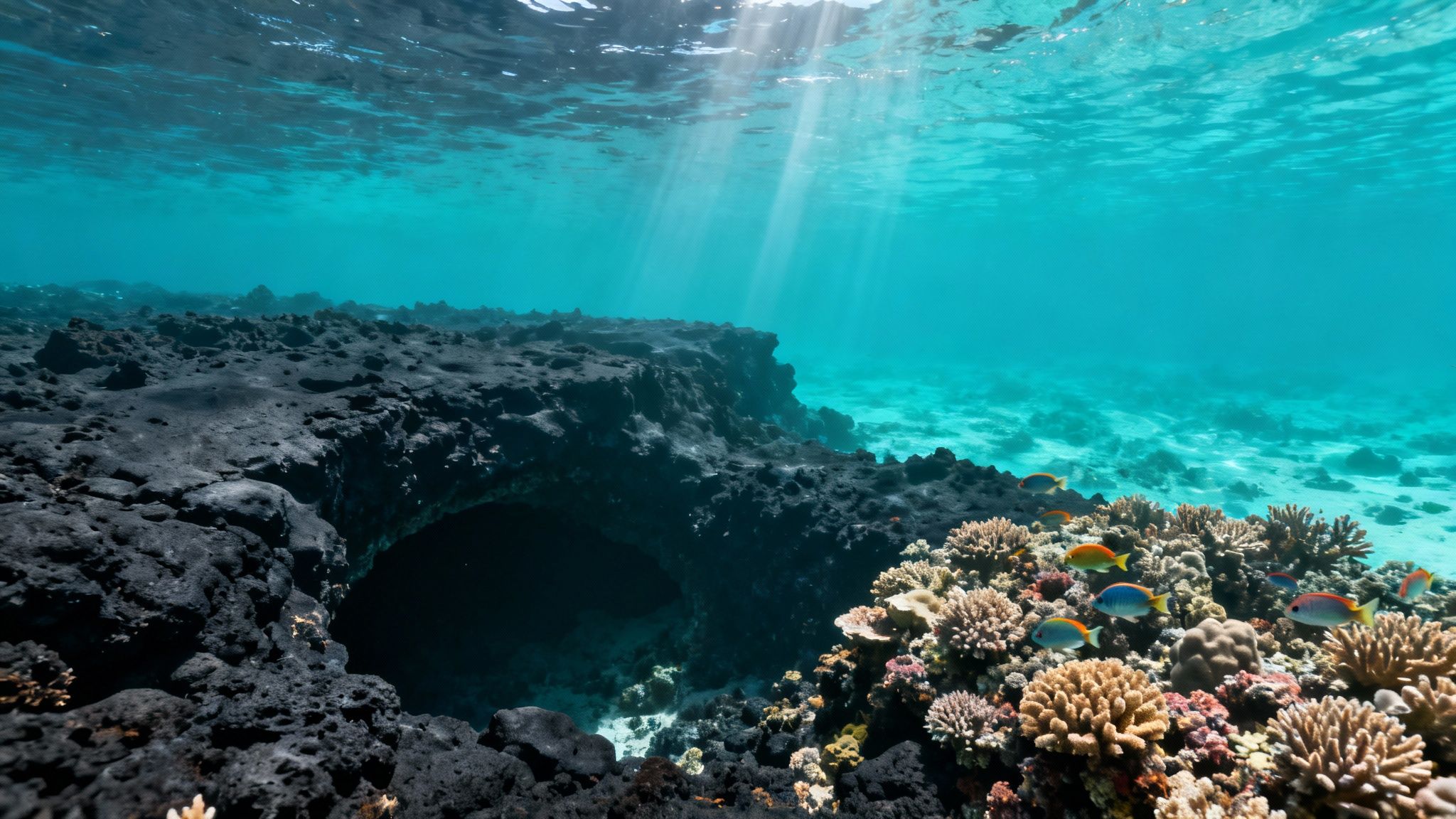
Hawaii is far more than just postcard-perfect beaches; it’s a top-tier destination for underwater exploration. Born from volcanoes, the islands feature a dramatic submerged topography that’s unlike anywhere else. As a diver, you can explore ancient lava tubes, glide through majestic archways, and navigate volcanic craters, all framed by some of the most vibrant coral reefs in the Pacific.
This one-of-a-kind environment is home to an incredible array of marine life. A huge percentage of Hawaii's reef fish are endemic, which means you simply won't find them anywhere else on Earth. Every dive feels like a treasure hunt, with a new and fascinating species waiting around every corner.
Prime Diving Conditions Year-Round
One of the best things about scuba diving in Hawaii is just how consistent the conditions are. Water temperatures stay in that perfect sweet spot year-round, typically hovering between 75–80°F (24–27°C). This stability means you can leave the heavy wetsuit at home and comfortably dive any time of year.
Visibility is often fantastic, frequently stretching beyond 100 feet, particularly along the sheltered Kona coast. This incredible clarity lets you take in every detail of the stunning coral gardens and the animals that call them home. You can get a deeper sense of the local scene by reading our article on whether scuba diving is big in Hawaii.
The state sees an estimated 1.5 million individual scuba dives every year, supported by more than 215 licensed dive shops. It's clear that Hawaii is a major player in the North American dive market, which is part of a global scuba tourism industry expected to hit nearly $1.75 billion by 2032.
Comparing the Top Hawaiian Islands for Divers
Every island offers something special, but the diving experiences can be dramatically different. Knowing what each one brings to the table is the key to planning the perfect trip.
| Feature | Big Island (Kona) | Maui | Oahu | Kauai |
|---|---|---|---|---|
| Topography | Lava tubes, arches, dramatic drop-offs, calm coves | Volcanic craters (Molokini), pinnacles | Historic shipwrecks, shallow reef systems | Sea caves, caverns, intricate reef tunnels |
| Signature Encounters | Manta rays (night), Blackwater dives, dolphins | Humpback whales (seasonal), sharks, eagle rays | Green sea turtles, large schools of fish | Endemic species, monk seals, reef sharks |
| Best For | Unique megafauna, advanced dives, consistent conditions | Pelagic life, clear visibility, boat diving | Wreck diving enthusiasts, accessibility | Adventurous divers, exploring unique geology |
| Conditions | Consistently calm and clear on the Kona coast | Can be windy, requires boat access for best sites | Often crowded, variable visibility | Conditions can be rough, more seasonal |
While you can have incredible dives on Maui, Oahu, and Kauai, the Big Island's Kona coast is widely recognized as the heart of scuba Hawaii. Its sheltered position and unique geology have created the perfect stage for world-famous experiences like the Manta Ray Night Dive and the surreal Blackwater Dive—adventures that truly define what it means to dive in Hawaii.
Comparing the Best Hawaiian Islands for Scuba Diving
When it comes to scuba diving in Hawaii, not all islands are created equal. Each one has its own unique underwater personality, and picking the right one is all about matching the island to the kind of diving you want to do. Are you dreaming of swimming with giant mantas, exploring historic shipwrecks, or navigating wild lava tubes?
Let's break down the top four destinations—the Big Island (Kona), Maui, Oahu, and Kauai. We’ll look at what really matters to divers: the marine life, how easy it is to get to the sites, water clarity, and the unique underwater landscapes that set each island apart.
The Big Island (Kona): Unmatched Marine Life and Conditions
If there's an epicenter for scuba Hawaii, it’s the Kona coast on the Big Island. The secret? The massive volcanoes of Mauna Loa and Hualalai act as a natural shield from the prevailing trade winds. This lucky bit of geology creates some of the calmest, clearest, and most predictable diving conditions you'll find anywhere, all year round.
But it’s what’s in the water that truly sets Kona apart. This is where you come for the big stuff and for dives you literally can't do anywhere else. Kona is world-famous for its Manta Ray Night Dive and the mind-blowing Blackwater Dive. The underwater scenery is pure volcanic drama—think massive lava tubes, arches, and steep drop-offs swarming with fish found only in Hawaii.
- Marine Life: The place to see manta rays, spinner dolphins, turtles, and seasonal whale sharks. The blackwater dives reveal a whole other world of strange, deep-water critters.
- Topography: Classic volcanic formations, from intricate lava tubes and caves to dramatic underwater cliffs.
- Best For: Anyone looking for consistently great conditions, bucket-list megafauna encounters, and truly unique advanced dives.
To get the most out of Kona's incredible waters, going with a seasoned local operator is key. Shops like Kona Honu Divers run a whole range of diving tours that hit all the highlights, from the most vibrant reefs to the legendary night dives.
Maui: The Allure of Molokini Crater
Maui is a huge draw for divers, and its crown jewel is the Molokini Crater. This partially sunken volcanic caldera is a protected marine conservation district, and the result is some of the most stunningly clear water in Hawaii—visibility often pushes past 150 feet. It’s a spectacular boat dive where you can spot sharks, rays, and massive schools of fish.
Beyond the crater, Maui offers exciting drift dives off the coast of Lanai and cool sites like the "Cathedrals," which are giant underwater lava domes. The catch is that Maui's best spots are almost all boat-access only, and the conditions can be choppier and more wind-affected than Kona's sheltered coast.
Oahu: Wrecks and Accessibility
If you're fascinated by sunken history, Oahu is your island. It’s the top spot in Hawaii for wreck diving, with several ships like the YO-257 and the Sea Tiger intentionally sunk to create thriving artificial reefs. These wrecks are super accessible, especially from Waikiki, offering a completely different kind of underwater adventure.
Oahu has some beautiful reefs, too, especially on the North Shore during the calmer summer months. The downside is that it's the most visited island, which means it can get crowded. You'll likely be sharing your dive sites with plenty of other groups, and the visibility isn't always as consistent.
Kauai: The Wild and Untamed Option
Known as the "Garden Isle" for its lush landscapes, Kauai's underwater world is every bit as wild and dramatic. Here, diving is about exploring sea caves, complex lava tunnels, and caverns, particularly along the breathtaking Na Pali Coast. It's also one of the best places to get a glimpse of the endangered Hawaiian monk seal.
Diving on Kauai is a more seasonal affair. The winter brings huge ocean swells that can make many of the premier dive sites inaccessible. This makes Kauai a fantastic choice for experienced, adventurous divers who are comfortable with more challenging conditions and plan their trip for the calmer summer season.
To help you visualize the differences, here’s a quick side-by-side look at what each island offers.
Scuba Diving in Hawaii Island Comparison
| Feature | Big Island (Kona) | Maui | Oahu | Kauai |
|---|---|---|---|---|
| Best For | Unique megafauna (mantas), blackwater dives, calm & clear conditions. | Crystal-clear visibility at Molokini Crater, drift dives. | Wreck diving, easy access from major tourist areas. | Adventurous diving, lava tubes, sea caves, and solitude. |
| Marine Life | Manta rays, dolphins, turtles, whale sharks, endemic species. | Sharks, rays, large schools of fish, garden eels. | Reef fish, turtles, eagle rays, and diverse life on wrecks. | Monk seals, turtles, large parrotfish, seasonal whales. |
| Conditions | Calmest and most consistent year-round due to volcano shelter. | Can be windy, best sites require a boat trip. Often great visibility. | Can be crowded. Visibility is more variable. | Very seasonal. Winter swells can limit access to north shore sites. |
| Topography | Lava tubes, arches, dramatic drop-offs, healthy coral reefs. | Volcanic crater, lava formations, wall dives. | Artificial reefs (shipwrecks), some natural reefs. | Dramatic sea caves, caverns, and intricate lava tunnels. |
Ultimately, your choice depends on your priorities. Are you after once-in-a-lifetime encounters, or are you happy exploring beautiful reefs? Each island delivers something special, but it's clear why one stands out for a dedicated dive trip.
Key Takeaway: While every island offers spectacular diving, the Big Island's Kona coast delivers the most reliable conditions, the greatest biodiversity, and the most unique, world-renowned dives. For a trip centered around scuba Hawaii, Kona is the undisputed premier choice.
Exploring Kona: The Crown Jewel of Hawaiian Diving
While you can find great diving across the Hawaiian Islands, the Kona coast on the Big Island is truly in a league of its own. It's not just another option; for many seasoned divers, it’s the undisputed heart of scuba in Hawaii. This reputation isn't just hype—it’s built on a unique blend of geography, biodiversity, and signature dives you simply won't find anywhere else on Earth.
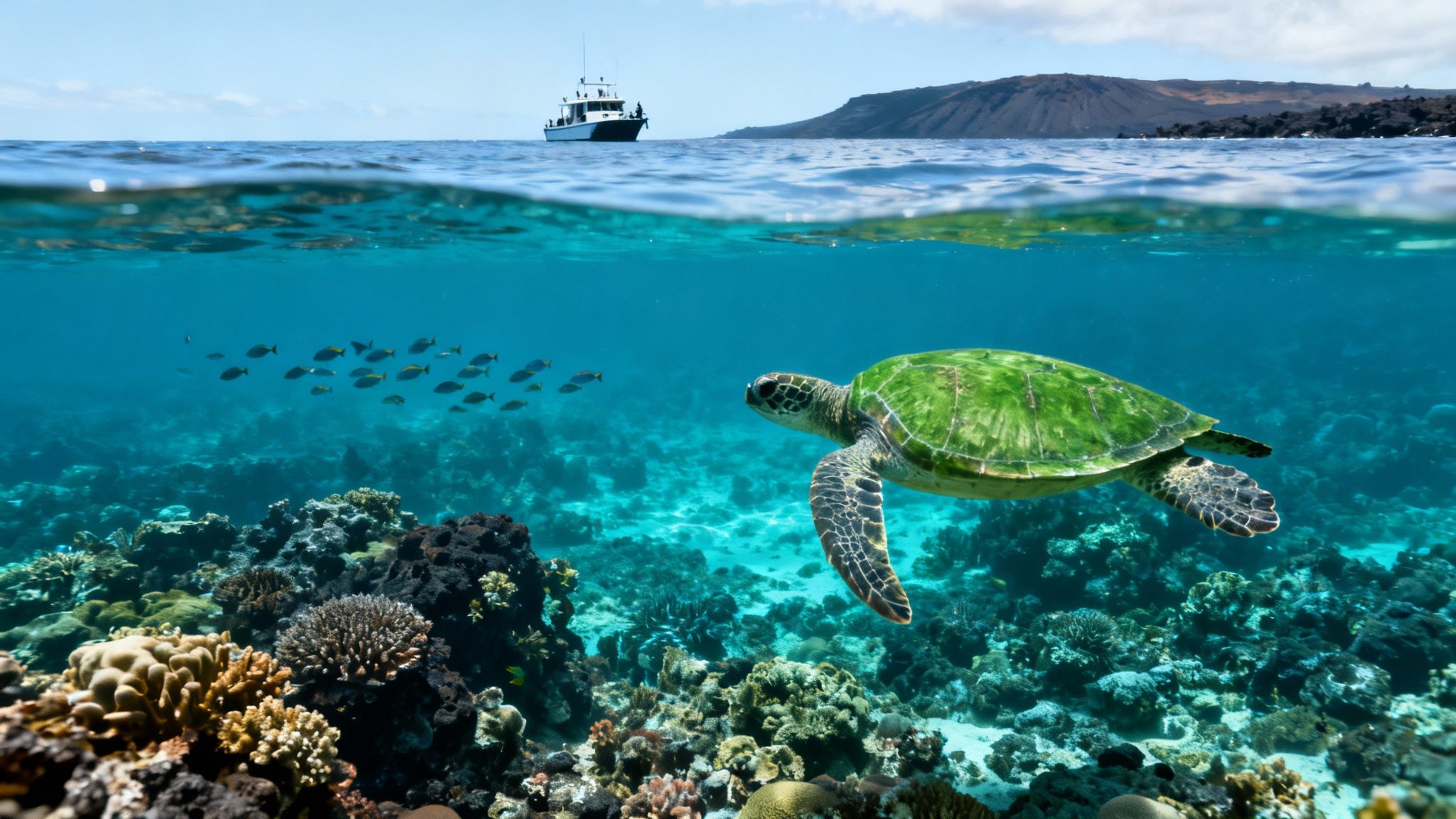
So, what’s Kona’s secret? It all comes down to its geography. The massive volcanoes of Hualalai and Mauna Loa act as a natural shield, blocking the powerful trade winds that often stir up the waters on other parts of the islands. This protection creates an incredibly calm and clear underwater environment. We're talking about visibility that regularly exceeds 100 feet, making the Kona coast a perfect diving playground year-round.
This sheltered pocket of the Pacific has allowed a breathtakingly diverse ecosystem to thrive. Kona’s waters are packed with life, from intricate coral gardens and ancient lava tubes to a stunning variety of marine animals.
Kona's Unmatched Biodiversity
Dropping into the water in Kona means immersing yourself in a world teeming with unique creatures. The reefs here have a high concentration of endemic species—fish and invertebrates you can only see in Hawaiian waters. But it's not just the small stuff; encounters with big marine life are the norm, not the exception.
On any given dive, you’re likely to swim alongside:
- Honu (Hawaiian Green Sea Turtles): These gentle giants are everywhere, often seen cruising by or just chilling out on the reef.
- Spinner Dolphins: It's common to see playful pods from the boat, and sometimes they'll even make a curious pass by divers below.
- Reef Sharks: Whitetip reef sharks are a regular sight, usually found resting peacefully in sand channels or under ledges.
- Endemic Fish: Keep an eye out for schools of milletseed butterflyfish or the elusive psychedelic wrasse—species you can't find anywhere else.
This sheer abundance of life makes every single dive feel like a true exploration. If you want to see the best of what Kona offers, local pros like Kona Honu Divers run a wide range of diving tours in Kona, Hawaii designed to showcase this incredible marine world.
Kona isn't just a destination; it's an experience. The combination of pristine conditions and world-famous signature dives puts it on the bucket list of serious divers worldwide. It’s the reliable, awe-inspiring heart of Hawaiian diving.
Signature Dives You Can Only Do in Kona
What really cements Kona's legendary status are its signature dives. These aren't just memorable—they are life-changing underwater spectacles that draw people from every corner of the globe.
First up is the Manta Ray Night Dive. Picture this: you kneel on the ocean floor in the dark as giant, graceful manta rays swoop and glide inches above your head, feeding on plankton drawn to your lights. It’s an underwater ballet consistently ranked as one of the best night dives in the world.
Then there’s the Kona Blackwater Dive, a completely surreal adventure into the deep, open ocean at night. You're tethered to the boat, floating in absolute darkness, witnessing the largest migration on the planet as strange and bioluminescent creatures rise from the abyss to the surface.
These unique experiences are the pinnacle of scuba Hawaii, offering a mix of adrenaline and pure wonder that stays with you forever. They are the reason that for so many divers, Kona isn’t just the best choice in Hawaii—it’s the only choice.
Kona Honu Divers has earned a stellar reputation for running these incredible trips, and their reviews speak for themselves.
Experiencing the World-Famous Manta Ray Night Dive
The Kona Manta Ray Night Dive isn’t just another item on a diver’s checklist; it’s a world-renowned spectacle that has come to define **scuba hawaii**. It’s consistently voted one of the best night dives on the planet, and for good reason. This is an experience that puts you right in the middle of an underwater ballet, face-to-face with majestic manta rays. It’s the kind of bucket-list dive that truly captures the magic of the Big Island.
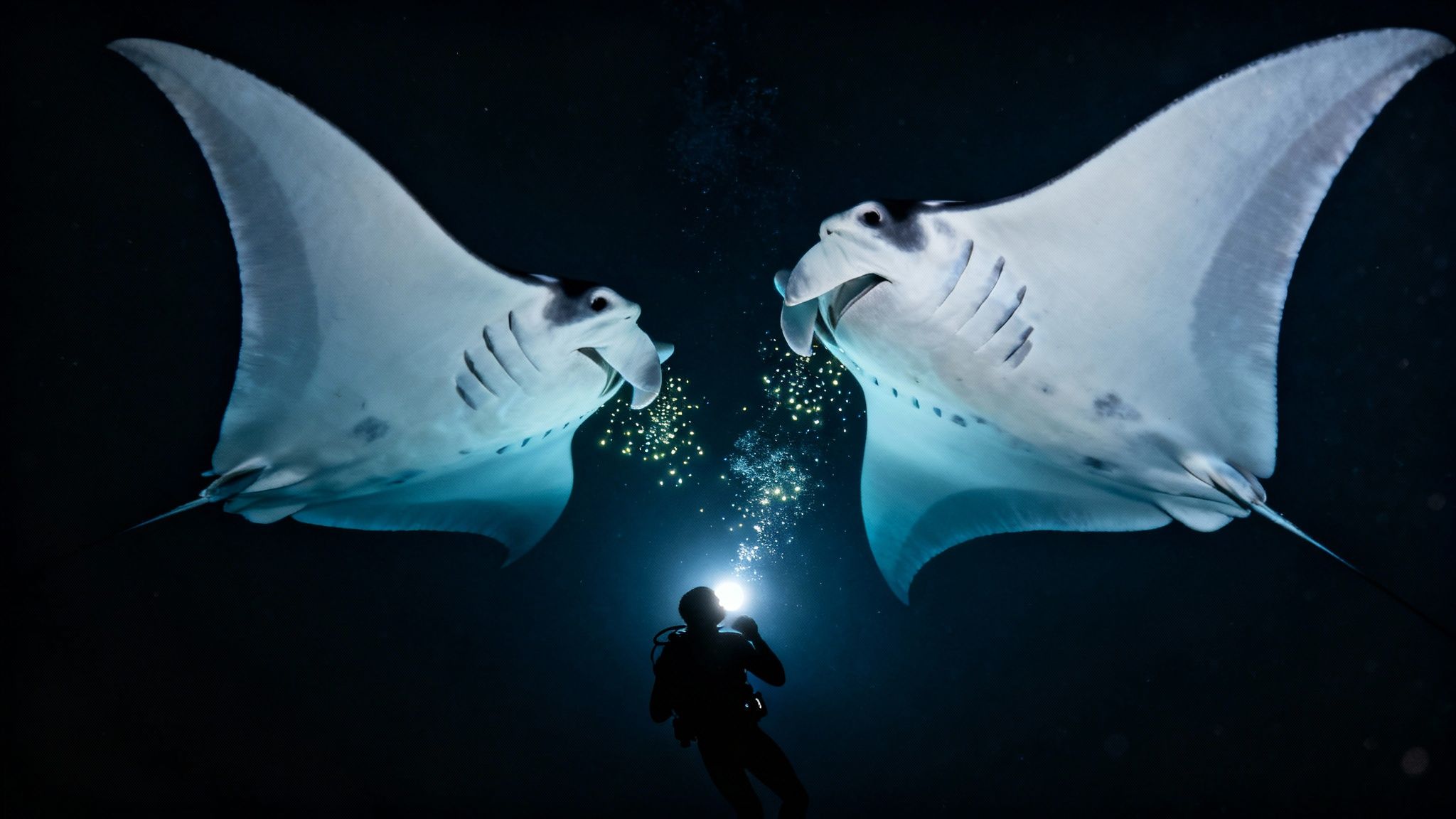
The setup is actually quite simple. We place powerful, purpose-built lights on the ocean floor, which create a massive column of light in the dark water. This light attracts swarms of phytoplankton, the primary food source for manta rays. As divers, we settle on the sandy bottom in a circle around the lights, and then the show begins. Giant mantas, some with wingspans stretching over 15 feet, glide, swoop, and barrel-roll through the beams, filter-feeding on the plankton just inches from your mask.
This single dive is a massive driver for Hawaii's entire dive industry. With the U.S. diving tourism market projected to hit USD 1,585 million by 2035, unique encounters like this are exactly what keep Hawaii at the top of the list for divers worldwide. People travel here specifically for this experience, and it never disappoints.
The Two Main Manta Ray Dive Sites Compared
When you look into booking a manta dive, you'll hear about two main locations: Manta Village near Keauhou Bay and Garden Eel Cove, which is closer to the airport. Both sites can have mantas, but they offer two very different experiences, and from a diver’s perspective, one is clearly the winner.
Manta Village is the original site, located right offshore from a large resort. While it’s had its share of amazing nights, its location is more exposed to open ocean swells. This can mean rougher conditions, lower visibility, and a less comfortable dive. The viewing area is also less defined, and you can see the impact that years of heavy traffic have had on the surrounding reef.
Garden Eel Cove, on the other hand, is the premier spot. Tucked into a naturally protected bay, this site almost always has calm, clear conditions, which makes the whole experience much more enjoyable from start to finish.
Key Insight: Garden Eel Cove is simply the better, more reliable location for the manta dive. Its protected setting, healthier reef, and purpose-built viewing area lead to more consistent and intimate encounters with the mantas.
Why Garden Eel Cove Delivers a Better Experience
Garden Eel Cove is more than just a dive site; it’s an underwater amphitheater designed for this encounter. The main viewing area, which we call the "campfire," is a designated sandy circle where everyone can settle in comfortably without damaging any coral. This organization means every diver gets a front-row seat to the action.
Here’s a quick breakdown of why it’s the superior choice:
- Protected Location: Being shielded from ocean swells means calmer water and better visibility nearly every single night.
- Healthier Reefs: The coral surrounding the "campfire" is more vibrant and full of life, making for a beautiful dive even before the mantas show up.
- Consistent Sightings: The reliable food source in this protected cove means the mantas are there more dependably.
- The "Campfire" Setup: This organized viewing area is safer, minimizes our impact on the environment, and guarantees you an incredible view.
Watching these gentle giants perform their acrobatics is a profoundly moving experience. You can get a much deeper understanding by checking out our guide on what the manta ray night dive is all about. For those ready to see it firsthand, our 2-Tank Manta Dive is the perfect way to experience Kona's most iconic underwater adventure.
Beyond Mantas: Exploring Kona’s Advanced and Unique Dives
The Manta Ray Night Dive is an incredible, bucket-list experience, but for seasoned divers, it’s just the beginning of what Kona has to offer. If you’re looking for a challenge that goes beyond the usual reef tour, you’ve come to the right place. Kona is a playground for advanced divers, offering unique adventures that take you into deep volcanic formations and the vast, mysterious open ocean.
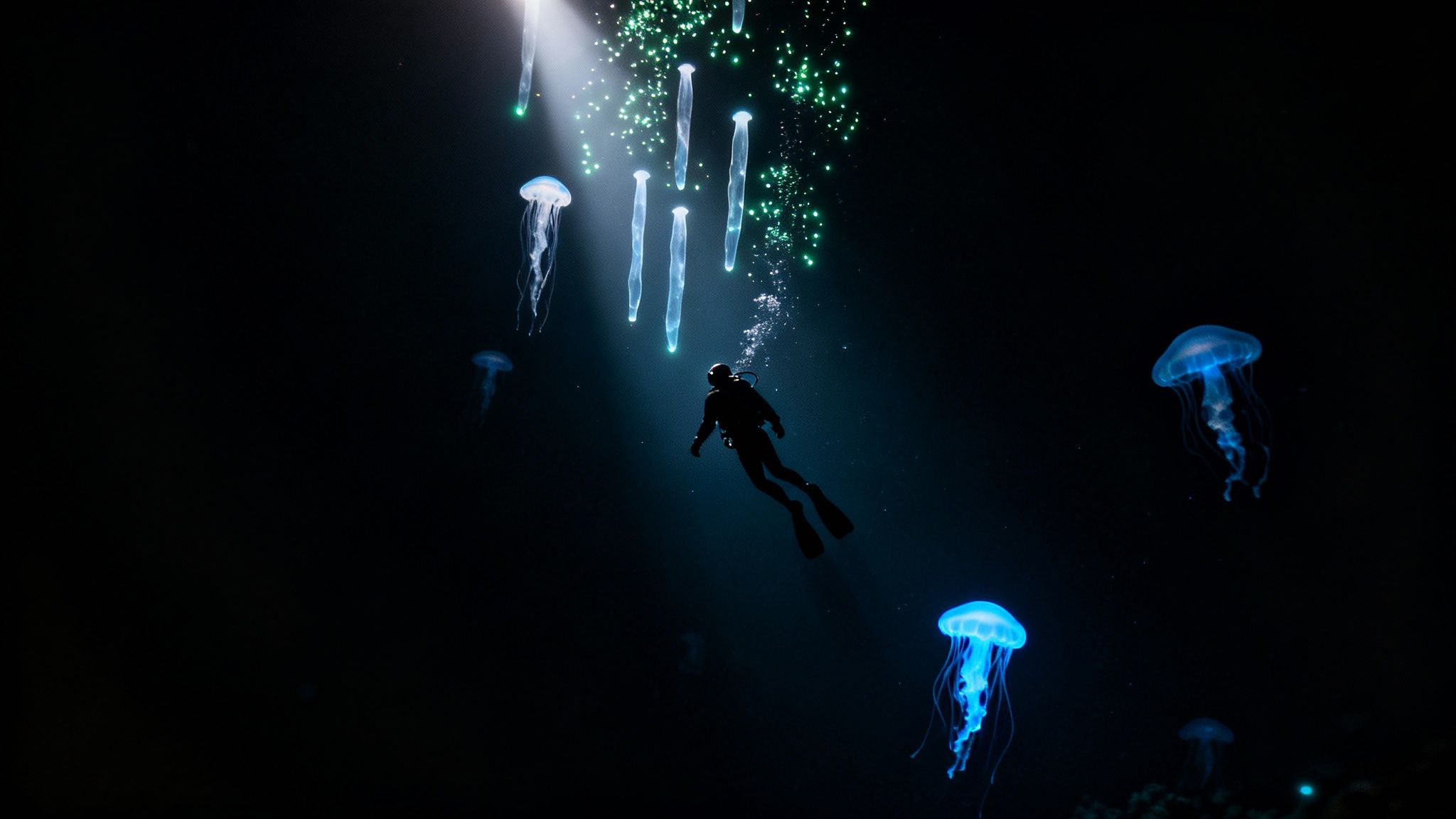
These dives demand more skill and a high level of comfort in the water. The reward? Experiences that few people on Earth ever get to witness. You’ll navigate ancient lava tubes, drift through the inky blackness of the deep sea, and see a side of scuba hawaii most divers miss.
The Kona Blackwater Dive: A Trip to Inner Space
Picture this: you’re floating in the middle of the Pacific Ocean at night, thousands of feet of water beneath you, tethered to a boat in the pitch dark. This is the Kona Blackwater Dive, and it’s one of the most surreal experiences you can have underwater. Forget the reef—this is a pelagic dive into the abyss.
You’re there to witness the largest migration on the planet, an event that happens every single night. Creatures from the deep, many of them bioluminescent, rise toward the surface to feed. You simply hang from a downline and watch as a parade of bizarre, beautiful, and utterly alien organisms drifts by.
You'll encounter life that looks like it's from another world:
- Translucent Squids: Shimmering with kaleidoscopic colors.
- Bioluminescent Jellies: Pulsing with their own ghostly light.
- Larval Fish and Eels: Looking nothing like their adult forms, caught in their strange, early-life stages.
Often described as floating through outer space, the blackwater dive is a true sensory journey. It’s an adventure built for divers with excellent buoyancy control and a calm confidence in the profound darkness of the open ocean.
The Kona Blackwater Dive is a must for underwater photographers and anyone craving a mind-bending experience. It’s a humbling, exhilarating glimpse into the hidden biodiversity of the deep. To learn more or book this unforgettable trip, head over to our dedicated Blackwater Dive tour page.
Advanced Reefs and Lava Tube Exploration
Beyond the blackwater, Kona's coastline is riddled with advanced dive sites that offer far more depth and complexity than the shallower reefs. For certified divers with solid experience, these sites reveal another layer of Kona's volcanic soul. Think deeper, more intricate lava tubes, dramatic archways, and sheer underwater cliffs that plummet into the deep blue.
These deeper environments attract a different class of marine life. Out here, you’re more likely to spot larger pelagic species cruising the reef's edge—schools of jacks, barracuda, and maybe even a passing shark. Exploring these sites requires precision and confidence.
Going deeper means managing your air and bottom time with a close eye, and navigating overhead environments like lava tubes demands rock-solid buoyancy skills. It’s exactly why these trips are reserved for certified advanced divers. If you’re ready to see Kona's most challenging and rewarding underwater landscapes, our Premium Advanced 2-Tank Trip is designed to take you there.
Planning Your Dive Trip with Kona Honu Divers
Picking the right dive operator is just as crucial as picking the right island for your Hawaii trip. Here at Kona Honu Divers, we’ve built our entire operation around your safety, comfort, and a genuine connection to the ocean. That’s our promise, and it’s what makes planning your **scuba Hawaii** adventure with us both simple and incredibly rewarding.
What really makes the difference? It's a mix of our people and our gear. Our crew has over 200 years of combined experience in the dive industry. You're not just getting a guide; you're diving with seasoned experts who know Kona's underwater world like the back of their hand. That deep, local knowledge is how we make sure you experience the absolute best of every single dive site.
More Than Just a Dive
This commitment to a better experience is why we run custom-designed dive boats. They aren't just a taxi to the reef—they are purpose-built for diver comfort. With plenty of space to move around, easy entry and exit points, and a focus on a smooth ride, you can just relax and get excited for the adventure waiting below.
We’ve always believed in quality over quantity. This means we keep our groups small, so every diver gets personal attention from our crew, both on the boat and in the water. It’s a safer, more enjoyable, and far more memorable way to dive.
This approach is becoming more important than ever. The global scuba diving tourism market is expected to jump from $910.4 million in 2024 to nearly $1,748.5 million by 2032. People aren't just looking for a dive; they want a high-quality, eco-conscious experience, which is exactly what we deliver. If you're curious about this trend, you can discover insights on scuba tourism trends on congruencemarketinsights.com.
The Kona Honu Divers Advantage
We want to make your dive vacation as seamless as possible. That's why certified divers get free nitrox on all our charters, which means more bottom time and shorter surface intervals. We also give early diver discounts to those who plan ahead—a little thank you for booking your dream trip with us.
What to Expect When You Dive with Us:
- Gear Provided: We’ve got you covered with high-quality, well-maintained BCDs, regulators, masks, fins, and wetsuits. All you need is your certification card, a swimsuit, and a towel.
- Easy Booking: Our online booking platform is straightforward and secure. You can see all our available charters, pick your dates, and lock in your spot in just a few minutes.
- Expert Guidance: From setting up your gear to giving detailed dive briefings, our crew handles all the logistics. Your job is to relax and enjoy the ride.
Ready to book your Kona adventure? You can explore our comprehensive guide to diving the Big Island for even more tips and information.
Frequently Asked Questions About Diving in Hawaii
It’s totally normal to have a few last-minute questions as you finalize your plans for an epic dive trip to Hawaii. To make sure you feel ready to jump in, we’ve put together answers to the questions we hear most often from fellow divers.
When Is the Best Time of Year to Dive?
Honestly, there's no bad time to dive in Hawaii. That's one of the best parts about it! The water stays beautifully warm all year, hovering between a comfortable 75°F and 80°F (24-27°C).
While the diving is always great, the seasons do bring a few subtle changes you might want to consider:
- Summer (May-September): This is when you'll generally find the calmest, flattest seas. It’s an ideal time for islands like Kauai, where the legendary north shore dive sites become much more accessible.
- Winter (October-April): Get ready for whale season! From December to March, humpback whales are the stars of the show. The water might be a little choppier, but hearing their songs echo through the water on a dive is an absolutely surreal experience. Here in Kona, we're lucky to stay calm year-round thanks to the shelter from the big volcanoes.
What Certification Do I Need for Different Dives?
Your certification card is your ticket to adventure, and different dives require different levels of training. For most of the incredible reef diving in Hawaii, including the world-famous Manta Ray Night Dive, an Open Water Diver certification is all you need.
Ready to go a little deeper or try something more technical? That’s where advanced training comes in.
- Advanced Open Water Diver: This certification opens up a whole new world. It's your key to exploring deeper sites, navigating complex lava tube systems, and joining exclusive trips like our Premium Advanced 2-Tank Trip.
- Specialty Dives: Unique experiences like the Kona Blackwater Dive are for seasoned divers. This dive requires rock-solid buoyancy control and being completely at ease in the dark, open ocean.
What Marine Life Can I Expect to See?
Hawaii is a goldmine for underwater encounters. You're almost guaranteed to see honu (Hawaiian green sea turtles) on every single dive—they're the beloved locals here.
Keep your eyes peeled for pods of spinner dolphins, whitetip reef sharks resting on sandy patches, and vibrant schools of endemic fish like the milletseed butterflyfish. You'll also spot graceful eagle rays gliding by. And of course, in Kona, the giant manta rays are the main event on our nightly charters.
What Are the Key Safety Considerations?
Your safety is everything. The number one rule is simple: always dive with a reputable, professional dive shop. Never dive alone, and never push yourself beyond your training and comfort level.
Always pay close attention during the dive briefing; it contains crucial info about the site and current conditions. Beyond that, remember the basics: stay hydrated, wear sun protection, and look but don't touch. Respecting the reef and its inhabitants is the best way to ensure a safe and memorable dive for everyone.
Ready to see why Kona is a world-class dive destination? The team at Kona Honu Divers is passionate about sharing our underwater world with you. Let's get you in the water!