
Picture this: you descend into warm, crystal-clear water, sunlight dancing through the turquoise surface. All around you, vibrant coral reefs rise from a landscape shaped by ancient volcanoes. For divers, this isn't just a fantasy—it's the heart and soul of scuba in Hawaii.
The Big Island’s Kona coast, in particular, is a world-class destination. Its unique geology and sheer remoteness have created an aquatic paradise you won't find anywhere else on Earth.
Why Hawaii Is a Premier Scuba Diving Destination
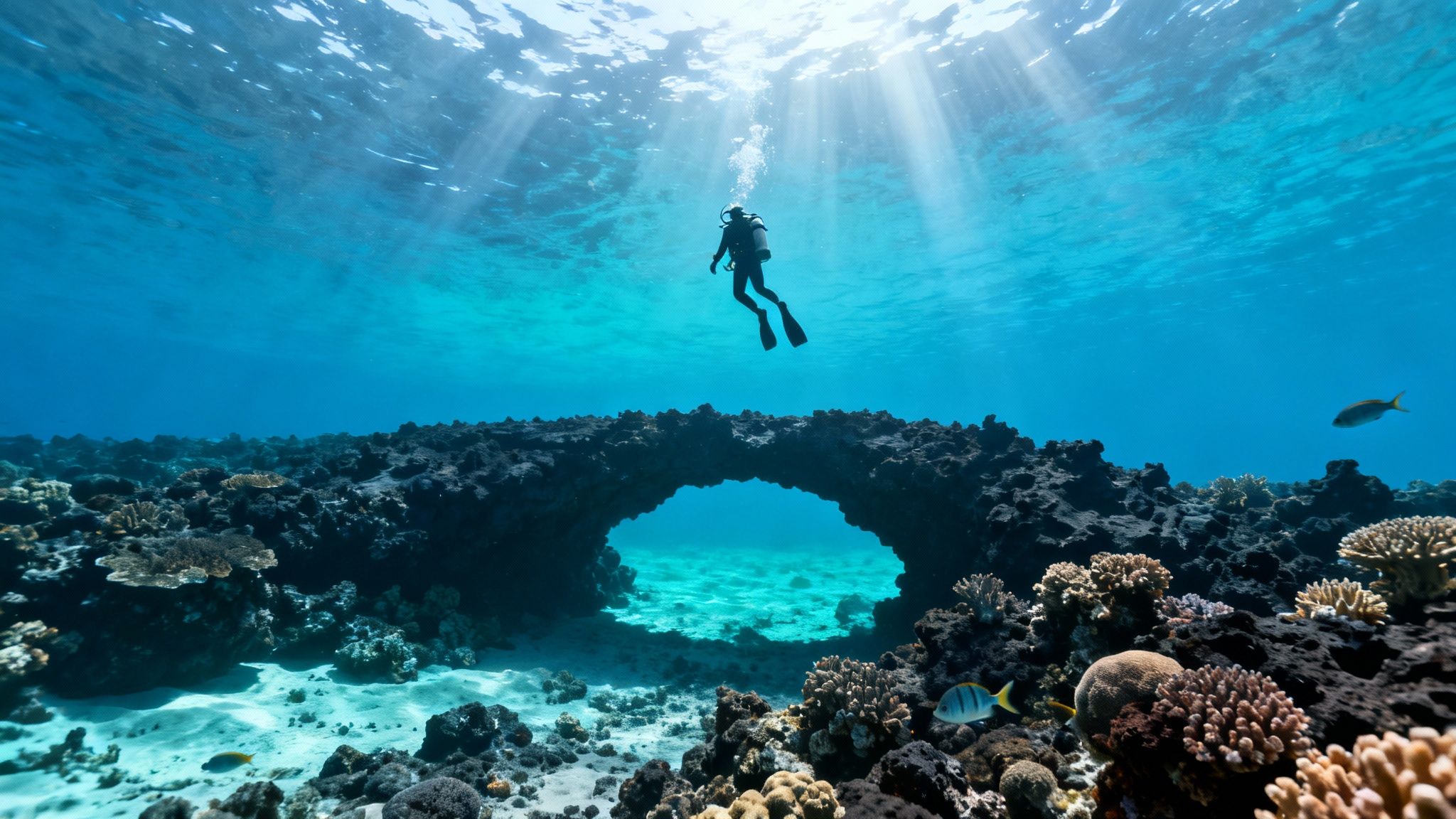
The magic of diving in Hawaii starts with its fiery origins. Over millennia, lava flows carved out a spectacular underwater world filled with dramatic arches, hidden lava tubes, and massive craters. This rugged, volcanic terrain provides the perfect backdrop for an explosion of marine life.
What makes Hawaii truly special is its isolation. As one of the most remote island chains in the world, its underwater ecosystem evolved on its own terms. In fact, an incredible 25% of the reef fish here are endemic—you literally cannot find them anywhere else on the planet. Every single dive is a chance to see something unique.
The Kona Advantage
While you can find great diving across the islands, the Kona coast on the Big Island is in a league of its own. It’s tucked away on the leeward side, sheltered by the colossal volcanoes of Mauna Loa and Hualalai. This protection means the waters are consistently calm and clear, creating nearly perfect diving conditions year-round. It's not uncommon for visibility to exceed 100 feet, letting you soak in the full glory of the coral gardens below.
This unique combination of factors is a huge reason why the U.S. diving-tourism market is projected to swell to around USD 1.6 billion by the early 2030s. People come from all over for Hawaii's dependably warm water and incredible biodiversity. Read more about the dive tourism market's growth.
For anyone ready to jump in, Kona Honu Divers is your gateway to the best of it. With decades of local know-how, our team makes every trip safe, unforgettable, and packed with amazing marine encounters.
What Awaits Beneath the Surface
The moment you drop below the waves, you’re greeted by a world teeming with life. You’ll see gentle green sea turtles (honu) resting on the reef and might even catch a pod of spinner dolphins playing in the distance. The adventure here is as diverse as the wildlife.
- World-Famous Night Dives: The manta ray night dive is a bucket-list spectacle you will never forget.
- Pristine Coral Reefs: Explore healthy, vibrant coral gardens that are home to a kaleidoscope of colorful fish.
- Unique Volcanic Formations: Swim through ancient lava tubes and under dramatic archways sculpted by nature.
This guide is your roadmap to planning the ultimate Hawaiian dive trip. Whether you're taking your first breaths underwater or you’re a seasoned pro, the Big Island offers an experience that will keep you coming back for more. And if you're wondering just how big the dive scene is here, you can find out more about what makes the Big Island a diver's paradise in our related article.
Exploring the Top Dive Sites on The Big Island
The Kona coast is a diver’s paradise, plain and simple. Think of it as a treasure map of world-class sites carved into ancient volcanic rock. Each spot tells a different part of Hawaii’s underwater story, from calm, sun-dappled coral gardens to dramatic, shadowy lava formations.
Diving here isn't just about what you see; it's about the experience. Going with an operator who knows every current, cave, and coral head makes all the difference. At Kona Honu Divers, we're all about matching the right dive to the right diver, making sure every single trip is one for the logbooks.
Must-See Dive Sites For Every Skill Level
Whether you're about to take your first breath underwater or you've got hundreds of dives under your weight belt, Kona has a site that will absolutely wow you. The sheer variety is what makes this place so special.
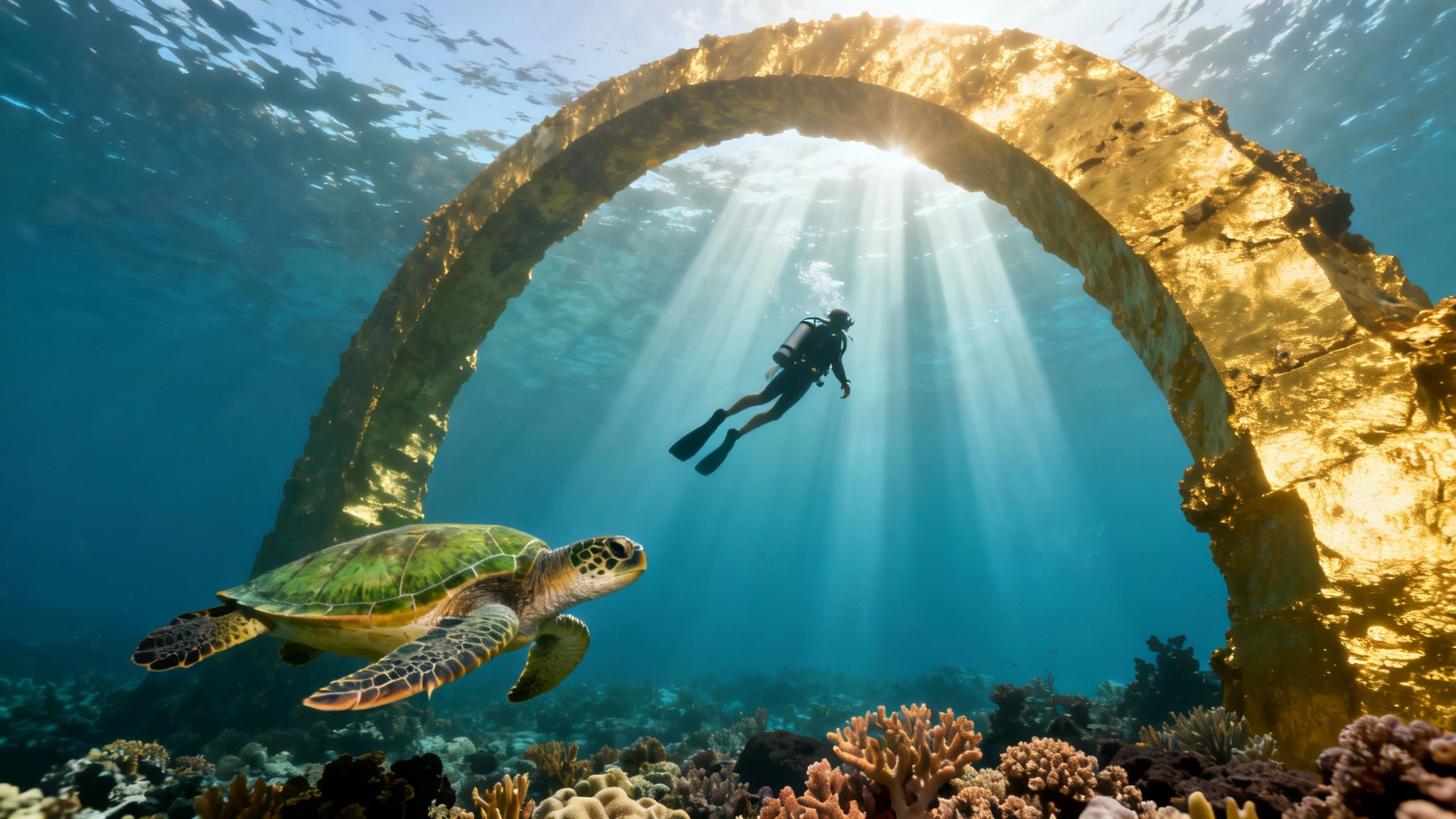
A true icon here is Golden Arches. You get to glide through this massive lava archway that’s completely coated in brilliant gold and orange cup corals. It’s a photographer’s dream and a fantastic place to spot Hawaiian green sea turtles (honu) just cruising by.
Another local favorite is Turtle Pinnacle, a true Kona classic. This spot is famous for its "cleaning stations," where turtles line up to let little reef fish nibble away parasites. It's like a natural spa day for the turtles and an incredible thing to witness.
It’s no secret that Hawaii is a major dive destination. The state sees an estimated 1.5 million scuba dives every year, with about 215 licensed operators keeping everyone safe and happy. Because of this, we take a lot of pride in responsible practices, like rotating dive sites to give the delicate ecosystems a chance to thrive for generations to come.
Lava Tubes and Unique Formations
The Big Island’s volcanic soul is on full display underwater. At sites like Catacombs, you can explore a thrilling maze of lava tubes and swim-throughs. Navigating these ancient corridors feels like you're on another planet, with beams of light filtering through cracks in the rock above.
If you’re looking for dramatic underwater scenery, Au Au Crater is a must-see. It's a submerged volcanic crater that offers a breathtaking wall dive. Keep your eyes peeled for big pelagic species like eagle rays gliding silently in the deep blue.
Top Kona Dive Sites at a Glance
To give you a better idea of what's out there, here's a quick rundown of some of the most popular sites we visit. Each one offers something a little different.
| Dive Site | Key Features | Common Marine Life | Recommended Skill Level |
|---|---|---|---|
| Golden Arches | Large lava archway, vibrant corals | Green sea turtles, moray eels, reef fish | Beginner to Intermediate |
| Turtle Pinnacle | Turtle cleaning stations, healthy reef | Abundant green sea turtles, wrasse, tangs | Beginner to Intermediate |
| Catacombs | Network of lava tube swim-throughs | Eels, crustaceans, unique invertebrates | Intermediate to Advanced |
| Au Au Crater | Submerged crater, dramatic wall dive | Eagle rays, sharks, schooling fish | Intermediate to Advanced |
Getting out there and seeing these places for yourself is the best way to truly appreciate just how rich Kona’s marine life is. Curious about all the spots we can show you? Take a look at all the Kona dive sites we can take you to.
Choosing Your Perfect Dive Adventure
So, which dive is right for you? It really comes down to what you're excited to see. Are you hoping for encounters with big animals, or are you more into exploring intricate coral structures and unique geology?
- For the Turtle Lover: You can’t go wrong with Turtle Pinnacle or Kelekekua Bay for almost guaranteed turtle sightings.
- For the Explorer: If you love the thrill of swim-throughs and caves, sites like Catacombs or Long Lava Tube deliver an unforgettable adventure.
- For the Photographer: The crystal-clear water and stunning structures at Golden Arches and Au Au Crater provide endless photo opportunities.
No matter what you're looking for, the Kona coast has it. The trick is to dive with an experienced crew that knows where to go based on the day's conditions and your personal comfort level. We focus on small, personalized groups to make sure your time underwater is everything you hoped it would be.
The World-Famous Manta Ray Night Dive
Get ready for what is, without a doubt, one of the most incredible wildlife encounters you can have anywhere on Earth. The Kona manta ray night dive isn’t just a popular dive—it’s a legendary experience, consistently voted one of the top ten dives in the world.
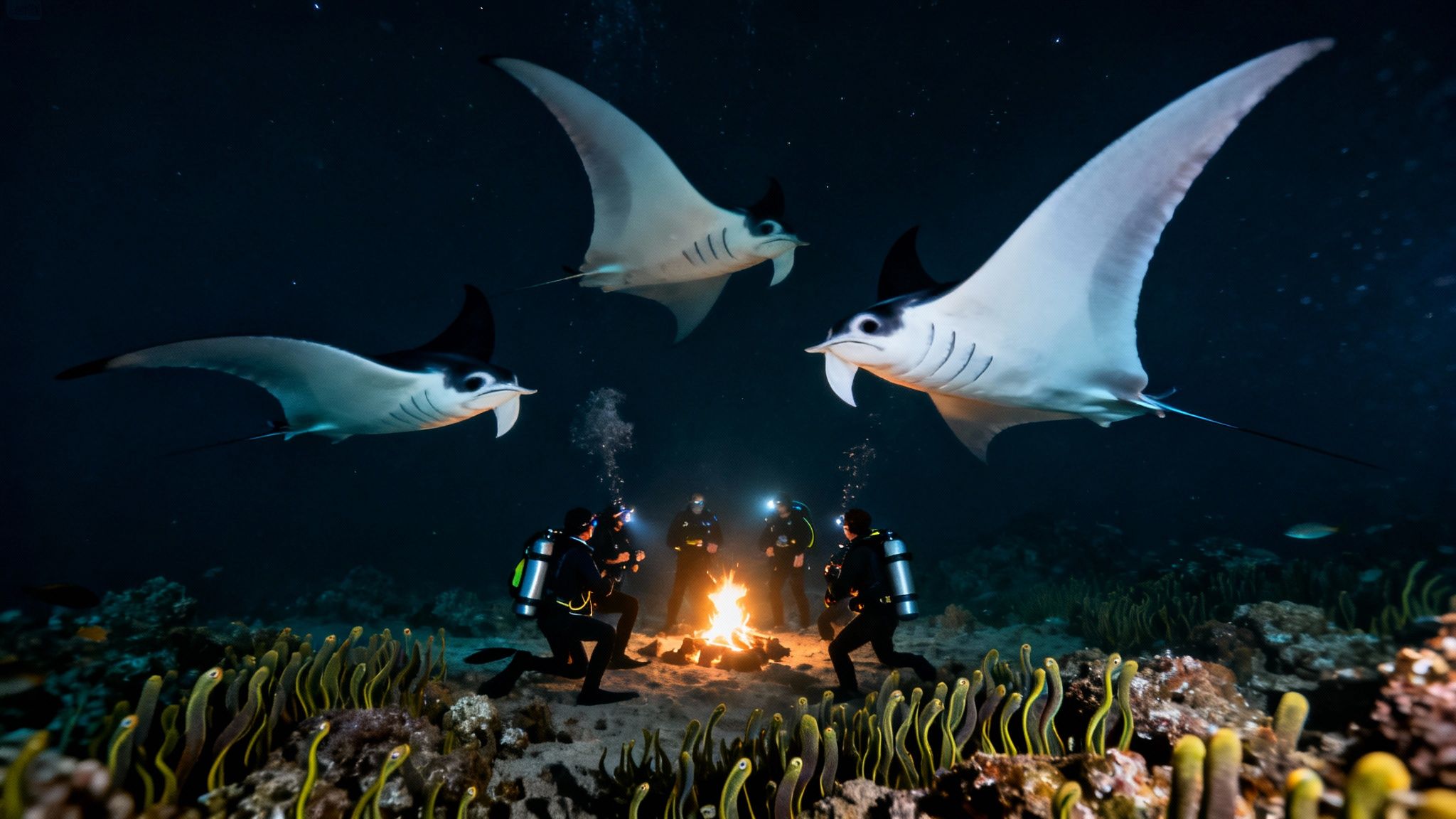
Picture this: you descend into the warm, dark Pacific just after sunset. You settle on the sandy ocean floor and look up. Soon, massive, graceful giants with wingspans reaching up to 16 feet appear, performing a silent, mesmerizing ballet just inches above your head.
How does it work? It's a brilliant combination of science and nature's magic. We place powerful lights on the ocean floor, which act like a magnet for clouds of plankton—the manta rays' favorite meal. As the plankton swarm to the light, the mantas arrive for their nightly feast, gliding, swooping, and barrel-rolling through the light beams. It’s a safe, reliable, and truly unforgettable way to get face-to-face with these gentle giants.
Why Garden Eel Cove is the Superior Choice
While you might hear about a couple of different spots for the manta dive, one location stands head and shoulders above the rest: Garden Eel Cove. This site is the superior choice because its protected location provides a better viewing area and supports healthier reefs, leading to a more reliable and breathtaking experience.
So, what makes it so much better? First and foremost, its geography. Garden Eel Cove is tucked into a naturally protected bay, shielded from the open ocean swells that can make other sites choppy. This means you get consistently calm water, making for a much more stable and relaxing dive. Instead of fighting surge or currents, you can just settle in and enjoy the show.
The protected nature of Garden Eel Cove not only provides a more comfortable dive but also contributes to the health of the surrounding reef, making the entire ecosystem more vibrant and resilient. This makes it the ideal stage for a world-class wildlife encounter.
The viewing setup at Garden Eel Cove is also perfectly designed for divers. We gather around a central light source—often called the "campfire"—in what feels like a natural underwater amphitheater. This arrangement gives everyone a front-row seat as the mantas glide right overhead. It’s an intimate and organized experience, unlike other spots that can feel a bit more scattered and chaotic.
A Healthier Reef and a Better Dive
The advantages of Garden Eel Cove don't stop with calm water and great views. Because the cove is so well-protected, its coral reefs are noticeably healthier and more vibrant than in more exposed areas. On the first tank of our two-tank manta dive tour, you'll get to explore this thriving reef at dusk, watching a huge diversity of marine life settle in for the night. It's the perfect opening act.
A healthier reef system supports a more robust food web, which is a major reason the manta population is so consistently drawn to this specific spot. Simply put, a thriving ecosystem means a more reliable and spectacular show. To get a deeper dive into the mechanics of it all, you can read our full explanation of what the manta ray night dive is.
When you choose a manta ray dive tour at Garden Eel Cove, you’re choosing:
- Calmer, More Reliable Conditions: Its sheltered location protects divers from big ocean swells.
- An Intimate Viewing Experience: The unique "campfire" setup guarantees an unparalleled, up-close view.
- Healthier Coral Reefs: The protected environment fosters a more vibrant and active marine ecosystem.
This isn’t just another dive to check off your list. It's a profound, almost spiritual connection with one of the ocean's most majestic creatures. It's an experience that will stick with you long after you’ve surfaced, a memory etched by the glow of underwater lights and the silent, soaring dance of the manta rays.
Advanced and Unique Diving Adventures in Kona
So, you're a certified diver and have a genuine taste for adventure? Kona has something special for you, well beyond the typical reef tour. The vibrant coral gardens are stunning, no doubt, but the truly profound moments happen when you venture out into the deep blue. This is where the world of advanced and unique scuba Hawaii adventures really begins.
These dives are for those who've nailed their buoyancy and feel at home in more demanding environments. It's a chance to witness things very few people ever will, pushing the boundaries of what it means to explore underwater in one of the planet's top diving destinations.
The Pelagic Blackwater Dive: A Journey into Inner Space
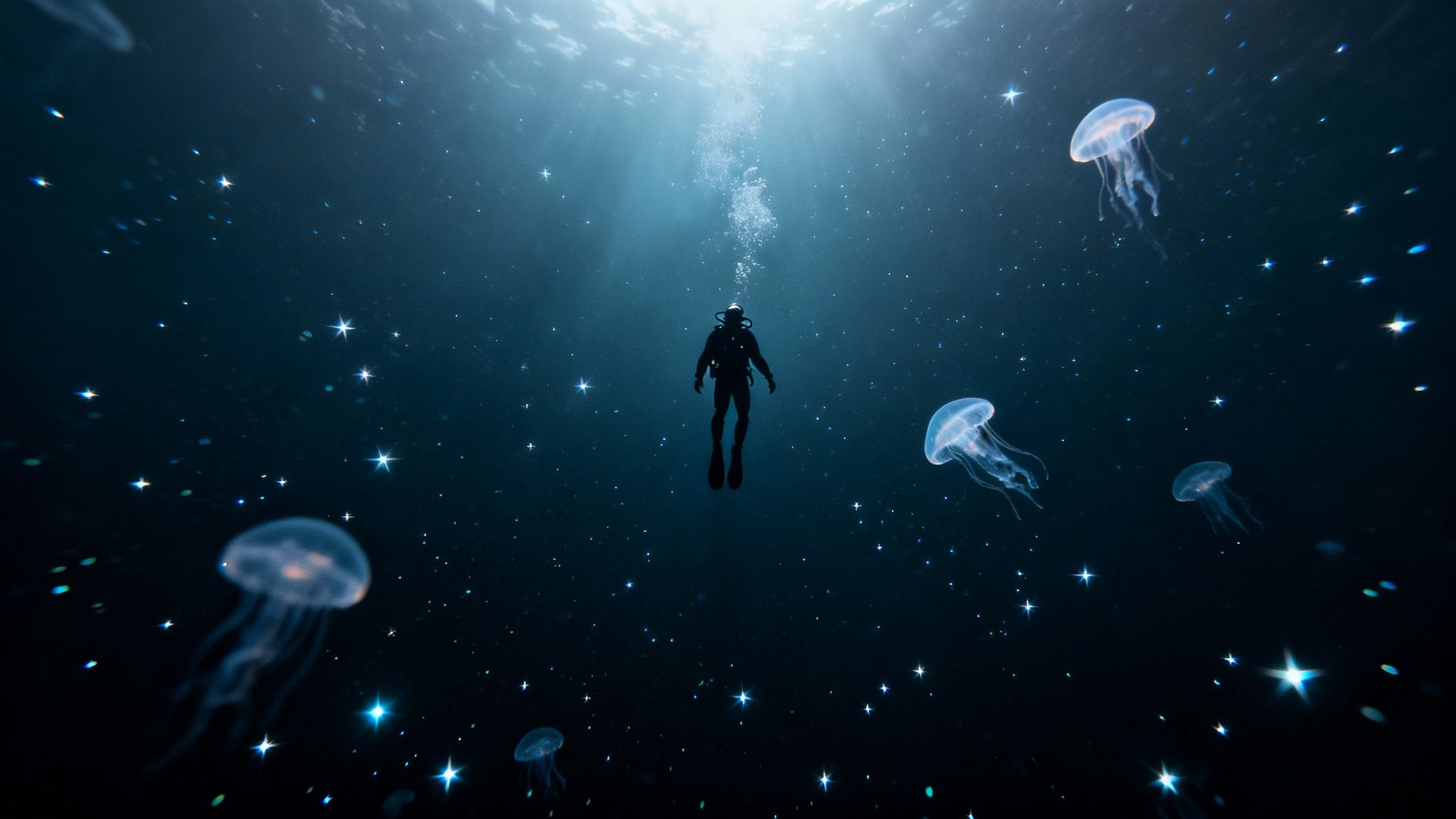
Picture this: you're floating in the vast, inky blackness of the open ocean. You're miles from shore, with thousands of feet of water directly beneath you. This is the Kona Blackwater Dive, an experience that divers often describe as a spacewalk in the deep sea. It’s without a doubt one of the most surreal and captivating dives you will ever do.
You'll be safely suspended from a tether in the middle of the Pacific, watching as some of the ocean's strangest and most rarely seen creatures rise from the abyss. This nightly event is the largest migration on Earth, as countless tiny organisms journey toward the surface to feed.
The Blackwater Dive is a sensory masterpiece. You’re not just observing marine life; you’re drifting through a living galaxy of bioluminescent beings, each one a tiny, glowing star in the deep ocean night.
You’ll see creatures that look like they came straight out of a sci-fi movie—translucent larval fish, iridescent comb jellies, and bizarre cephalopods pulsing with light. It’s a completely otherworldly spectacle that gives you a humbling peek into the mysteries of the deep. This is far more than a dive; it’s an unforgettable journey into a hidden universe, and you can experience it on a specialized Blackwater Dive tour.
Exploring Deeper Realms and Challenging Dives
Beyond the blackwater experience, Kona’s unique volcanic topography creates some incredible opportunities for seasoned divers. The underwater landscape is crisscrossed with dramatic drop-offs, deep canyons, and challenging drift dives that will thrill even the most experienced adventurer.
It's at these advanced sites where you're more likely to run into larger pelagic species. The deep, nutrient-rich water attracts animals like:
- Scalloped Hammerhead Sharks: You can often spot them schooling in the deeper, cooler waters just off the coast.
- Galapagos and Tiger Sharks: While less common, lucky divers might catch a glimpse of these impressive predators.
- Whale Sharks: The ultimate encounter. These gentle giants occasionally cruise through Kona’s waters.
These dives often mean navigating stronger currents and greater depths, which requires rock-solid buoyancy control and a calm, confident mindset. At Kona Honu Divers, our premium advanced dive trips are specifically built for divers looking to explore these exhilarating environments safely. Our expert guides know these sites like the back of their hand and lead small groups to make sure your adventure is both personal and secure. For those looking for even more thrills, you can find other couples adventure vacation ideas, including scuba diving.
Ultimately, these advanced dives offer a different kind of reward—the deep satisfaction of pushing your skills while witnessing the raw, untamed beauty of the open ocean.
How to Plan Your Hawaii Scuba Trip
Alright, let's turn that dream Hawaii scuba trip into a reality. A little bit of smart planning now will pay off big time later, ensuring your vacation is less about logistics and more about incredible underwater moments. From picking the right season to packing the essentials, here’s how to organize your journey to the Kona coast.
The first big question is when to come. The fantastic news? Kona is a year-round diving destination, sheltered from the open ocean swells that can affect other parts of Hawaii. Still, there are some subtle differences between the seasons that might influence your decision.
Choosing the Best Time to Dive
Hawaii really has two main seasons: a dry summer (kau) from April to October and a slightly wetter winter (hoʻoilo) from November to March. Both are fantastic for diving, but each offers a unique vibe.
-
Summer (April – October): This is when you'll find the calmest, flattest seas—like diving in a giant swimming pool. The water is at its warmest, usually sitting at a comfortable 77-80°F (25-27°C). If you're a new diver or just love warm, glassy conditions, this is your prime time.
-
Winter (November – March): While the open ocean might get a bit more active, the Kona coast stays remarkably protected. The real draw for winter diving is the arrival of humpback whales. Between December and March, you can often hear their hauntingly beautiful songs filtering through the water on your dives. It’s an experience that will give you goosebumps.
Honestly, there’s no "bad" time to dive in Kona. It really just boils down to your personal preference: do you want the calmest water imaginable, or are you hoping to hear the soundtrack of the annual whale migration?
Your Essential Packing Checklist
Packing for a dive trip is a bit of an art form. Forgetting one small piece of gear can throw a wrench in your plans, so use this checklist to make sure you’ve got all your bases covered.
Dive Gear Essentials:
- Certification Card(s): The golden ticket. No card, no dive. Remember to bring your main certification plus any specialty cards you have, like Nitrox or Advanced Open Water.
- Logbook: This is your underwater journal. It’s the perfect way to remember all the amazing creatures you saw and track your growing experience.
- Dive Computer: This is your most important piece of safety equipment. Don't even think about leaving it at home.
- Mask, Snorkel, and Fins: You can always rent, but nothing beats the comfort and reliability of your own gear that fits perfectly.
- Wetsuit: For most people, a 3mm or 5mm wetsuit is perfect for Hawaii’s water temperatures.
Hawaii-Specific Necessities:
- Reef-Safe Sunscreen: This is a big one. Hawaii has banned sunscreens with oxybenzone and octinoxate to protect our fragile coral reefs. Double-check your labels!
- Reusable Water Bottle: Diving is dehydrating work. Help us cut down on plastic waste by bringing your own bottle to refill.
- Lightweight Rain Jacket: A quick tropical shower can pop up unexpectedly, especially in the winter months. It's always good to have one handy.
Budgeting and A Sample Itinerary
Mapping out a rough budget and itinerary before you go will help you make the most of every minute. Your main costs will be flights, lodging, your diving tours, and food. We highly recommend staying near the Kona coast for convenience—it puts you right in the heart of the action, close to the best dive sites and operators like us.
To give you a better idea of how a trip could look, we've put together a sample itinerary that blends some classic reef diving with Kona’s most iconic experiences.
Sample 5-Day Kona Scuba Diving Itinerary
This schedule is just a starting point, but it gives you a great mix of diving and island exploration. It ensures you have plenty of bottom time while also getting a taste of what makes the Big Island so special above the water.
| Day | Morning Activity | Afternoon/Evening Activity |
|---|---|---|
| 1 | Arrive in Kona, check into your hotel. | Settle in, grab some dinner, and explore Kailua town. |
| 2 | 2-Tank Morning Boat Dive (e.g., Turtle Pinnacle). | Relax on a local beach like Manini'owali (Kua Bay). |
| 3 | Explore an Upcountry Kona coffee farm. | The World-Famous Manta Ray Night Dive! |
| 4 | 2-Tank Advanced Dive (e.g., exploring lava tubes). | Attend a traditional Hawaiian Luau for dinner. |
| 5 | Surface interval day—enjoy a scenic coastal drive. | Pack up and get ready for your flight home. |
Think of this as a template you can customize. With a solid plan in hand, you can stop worrying about the details and focus on the incredible underwater world waiting for you here in Kona.
Your Hawaii Diving Questions, Answered
As your trip to the Big Island gets closer, you probably have a few questions buzzing around in your head. It’s completely normal! Getting clear answers is the best way to feel confident and ready to jump in.
We’ve heard just about every question there is, so we’ve put together this little guide to tackle the most common ones. Think of it as a final chat with a seasoned local diver before you head to the boat.
What Is the Best Time of Year to Scuba Dive in Hawaii?
Honestly, there’s no bad time to dive in Hawaii. The Kona coast is a diver's dream, sheltered from the winds and weather that affect other parts of the islands, giving us consistently calm and clear water.
That said, there are a few seasonal highlights. The summer months (think April through October) bring the warmest water, often reaching a balmy 77-80°F (25-27°C). The ocean is usually glassy-smooth, which is fantastic for anyone just starting out or those who love a perfectly serene dive.
Winter, from November to March, has its own special kind of magic. While other coastlines might see bigger swells, Kona stays pretty mellow. The real draw this time of year is the humpback whales. You’ll be diving along a beautiful reef and suddenly hear their haunting songs echoing through the water—it's an experience that will give you chills.
Do I Need to Be Certified to Try Scuba Diving?
Not at all! This is probably the biggest myth we hear. You don't need to commit to a full certification course just to see what all the fuss is about.
If you’re curious but not yet certified, the perfect option is a Discover Scuba Diving experience. It’s a super safe, guided introduction to the underwater world. A certified pro will walk you through the basics in calm, shallow water, and once you're comfortable, they’ll take you on a genuine reef dive, staying right by your side the whole time.
It’s the perfect way to feel the incredible sensation of breathing underwater and see amazing marine life without the commitment of a multi-day course. Of course, if you get hooked (and many people do!), getting your Open Water certification is the next step to unlocking more dive sites and greater freedom.
What Marine Life Can I Expect to See on the Big Island?
The Kona coast is absolutely packed with life. You'd be hard-pressed to go on a dive here and not see something amazing.
Hawaiian green sea turtles, or honu, are practically a given. You'll see them gliding effortlessly past you or just chilling out on the reef. It's also incredibly common to be greeted by a pod of playful spinner dolphins on the boat ride out.
On any given dive, keep your eyes peeled for:
- A rainbow of reef fish: Many are endemic, meaning you can't find them anywhere else on the planet.
- Curious moray eels: Look for them peeking out of their rocky homes.
- Graceful eagle rays: They often soar through the water in small groups.
- Shy reef sharks: White-tip reef sharks are very common and are more scared of you than you are of them.
And that's just a typical day! On our specialty dives, you can encounter the world-famous manta rays or, if you're incredibly lucky, maybe even a whale shark cruising by in the deep blue.
Why Is the Kona Manta Ray Dive a Must-Do Experience?
There's a reason the Kona Manta Ray Night Dive is consistently ranked one of the best dives in the world. It’s not just a dive; it’s a full-on spectacle. Imagine kneeling on the ocean floor in the dark as these gentle giants, with wingspans up to 16 feet, perform an underwater ballet right over your head. It’s surreal.
The whole encounter works because we place powerful, eco-friendly lights on the seafloor. These lights attract clouds of plankton, which is a favorite meal for manta rays. They swoop in to feast, gliding and somersaulting through the light beams. It’s a completely natural feeding frenzy that you get a front-row seat for.
For the absolute best and most comfortable encounter, we always recommend a tour that heads to Garden Eel Cove. Its protected location means calmer water, and the unique "campfire" setup for the lights allows for a more organized and breathtakingly close view of the mantas.
At Kona Honu Divers, our whole mission is to give you the safest, most incredible underwater adventures Hawaii has to offer. Whether you’re gearing up for your very first dive or you're a seasoned pro looking for something new, our expert crew is ready to show you the best of Kona.