
You're probably here because Kona keeps showing up on every diver's shortlist, and you want to know whether scuba diving Kona Hawaii Big Island really lives up to the hype. It does, but not for the vague reasons travel pages usually give.
The first thing most divers notice is the water. You drop below the surface and the blue opens up instead of closing in. Lava rock, coral growth, schools of reef fish, and long clean sightlines make your first descent feel calm rather than chaotic. That matters more than people realize. Good diving isn't just about what you might see. It's about whether the conditions let you relax enough to enjoy it.
Kona also rewards different kinds of divers. Newer divers get forgiving conditions and approachable reef dives. Experienced divers get the kind of variety that keeps a destination interesting after multiple trips. Night dives with manta rays. Offshore blackwater drifts. Lava tubes and reef structure on daytime charters. It's all part of the same coastline, and the reason it all works comes down to the island itself.
Welcome to the Underwater World of Kona
The descent usually starts the same way. A backward roll, a quick bubble check, then that moment where the noise from the boat disappears and the Big Island shifts into its other personality. Below the surface, Kona feels spacious. The reef doesn't crowd you. The visibility gives you time to see the shape of the site before you're on top of it.
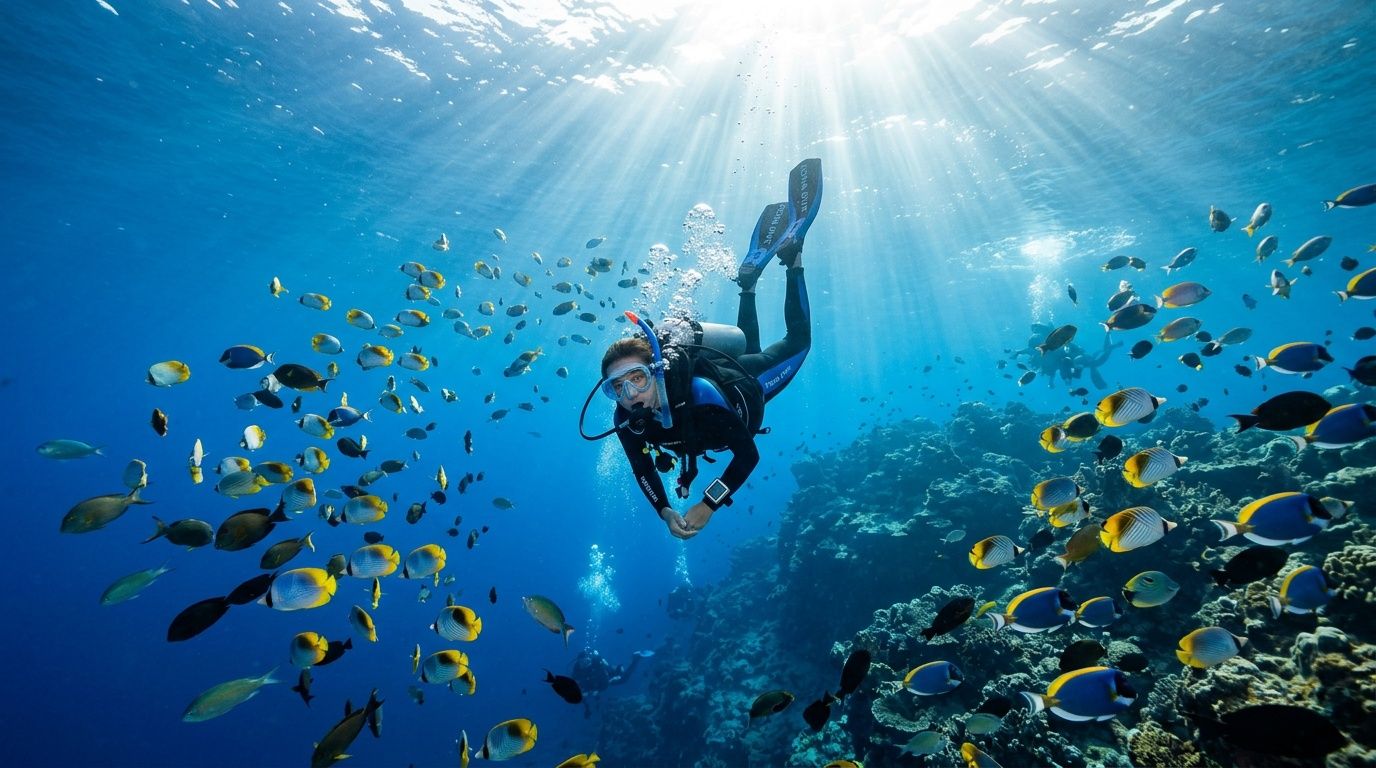
That first impression is backed by real volume and real variety. Kona hosts over 100,000 certified scuba dives annually and has more than 50 unique dive sites accessible year-round, which is a big reason it's recognized as a premier global dive destination, according to this Big Island scuba diving overview.
What makes the first dives here memorable
Kona doesn't rely on one flagship site carrying the whole destination. The coastline gives you different moods on different dives.
- Day reef dives: These are where many divers fall in love with the place. Lava structure, coral gardens, and fish life all show up in one dive.
- Night manta dives: This is the famous one for a reason. It feels choreographed, but it's wild.
- Blackwater dives: Advanced divers come for this because almost nowhere else feels so detached from the normal rules of reef diving.
Practical rule: If you want a dive trip that feels smooth from the first day, pick a destination where the water helps you rather than fights you. That's one of Kona's biggest strengths.
Why divers keep returning
A lot of places are fun once. Kona is different. It has enough range that your second trip won't look like your first. One day you're cruising volcanic reef structure in daylight. Another night you're staring into open ocean darkness waiting for deep-water life to rise.
That's why Kona keeps ending up on repeat itineraries, not just bucket lists. It gives you iconic dives, but it also gives you conditions that let those dives shine.
Why Kona is a Diver's Paradise
Kona's reputation starts with geography, not marketing. The west side of the Big Island sits in a protected position, and the island's volcanoes do a huge amount of work on a diver's behalf before you ever get wet.
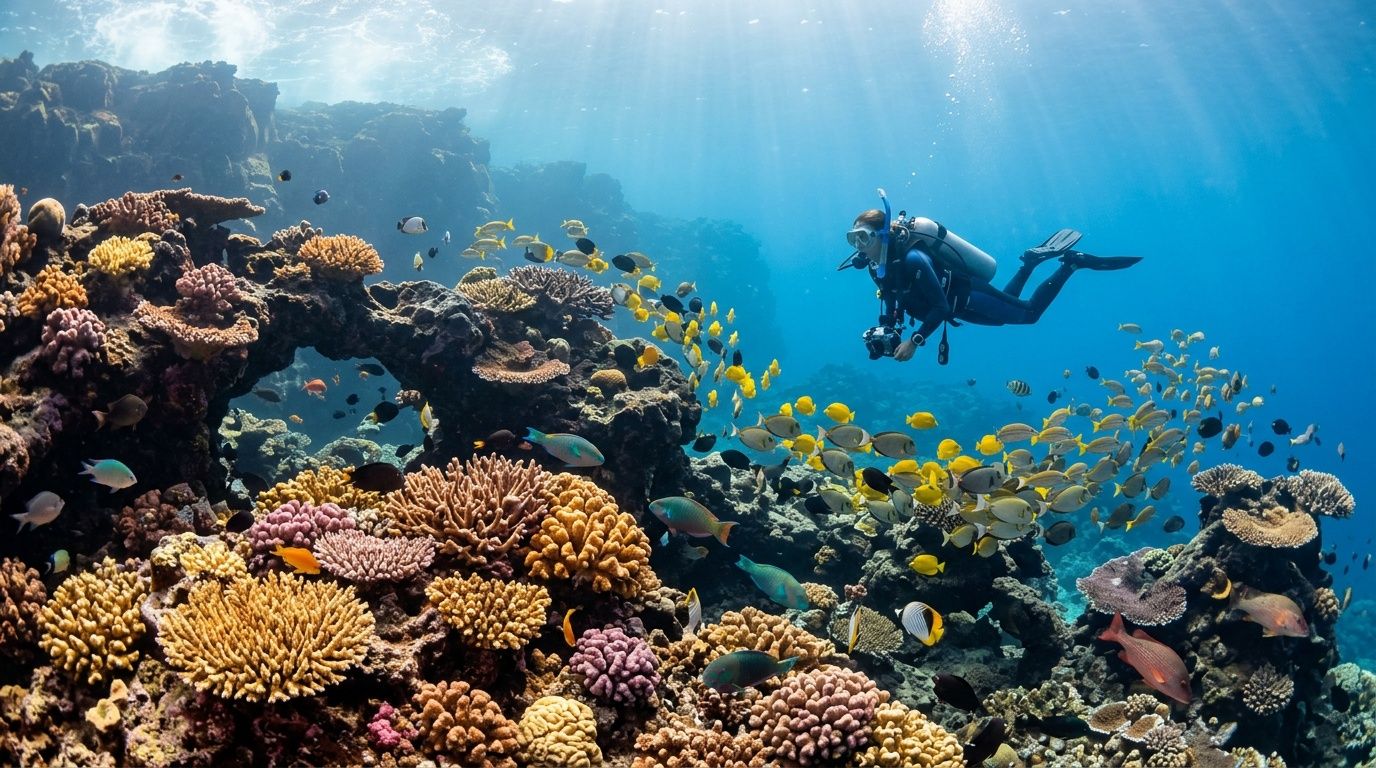
Mauna Loa and Mauna Kea block the prevailing northeast trade winds, creating calm seas that are typically under 2 feet with visibility exceeding 100 feet year-round on the Kona coast, as described in this Kona diving conditions guide. For divers, that translates into easier entries, steadier boat days, cleaner photography, and less stress for newer people in the water.
The natural fortress effect
Think of Kona as a coastline tucked behind a natural fortress. The volcanoes shield the leeward side, which means the water often stays calmer and clearer than many visitors expect from an open-ocean island.
That one fact explains a lot:
- Better visibility: You spend less of the dive peering through stirred-up water.
- More usable dive days: A trip here is less likely to feel like a gamble.
- Friendlier learning curve: Calm conditions help new divers focus on buoyancy and breathing instead of fighting surface chaos.
This is also why scuba diving Kona Hawaii Big Island feels so approachable even when the underwater topography is dramatic. The lava-made terrain can look rugged and theatrical, but the water itself often feels manageable.
Volcanoes shape the reef too
The underwater scenery isn't separate from the geology above water. It's the direct result of it. Lava flows created tubes, ledges, arches, and reef foundations that now hold coral growth and marine life. Divers don't just visit tropical reef here. They move through a seascape built by volcanism and softened over time by ocean life.
Good Kona dives feel balanced. The terrain has drama, but the conditions often have calm.
If you want a broader trip-planning resource alongside this guide, this ultimate guide to Kona diving is a useful companion for understanding the range of local experiences. For a direct look at local charters, training, and site access, the Kona scuba diving page is worth reviewing before you book.
Why that matters in practice
The “why” becomes obvious once you start diving multiple days in a row. You get more consistency. That means better chances of sticking to your plan, better comfort for mixed-experience groups, and less energy wasted adapting to rough conditions.
For underwater photographers, it means cleaner scenes. For newer divers, it means less task loading. For experienced divers, it means you can spend your mental bandwidth on the site itself instead of compensating for messy conditions.
Kona's Unforgettable Dive Experiences
Kona has plenty of standard reef diving, but people fly here for the experiences that feel specific to this coastline. Three stand out. The manta ray night dive. The blackwater dive. The daytime reef and lava dives that explain why the whole system works.
The manta ray night dive
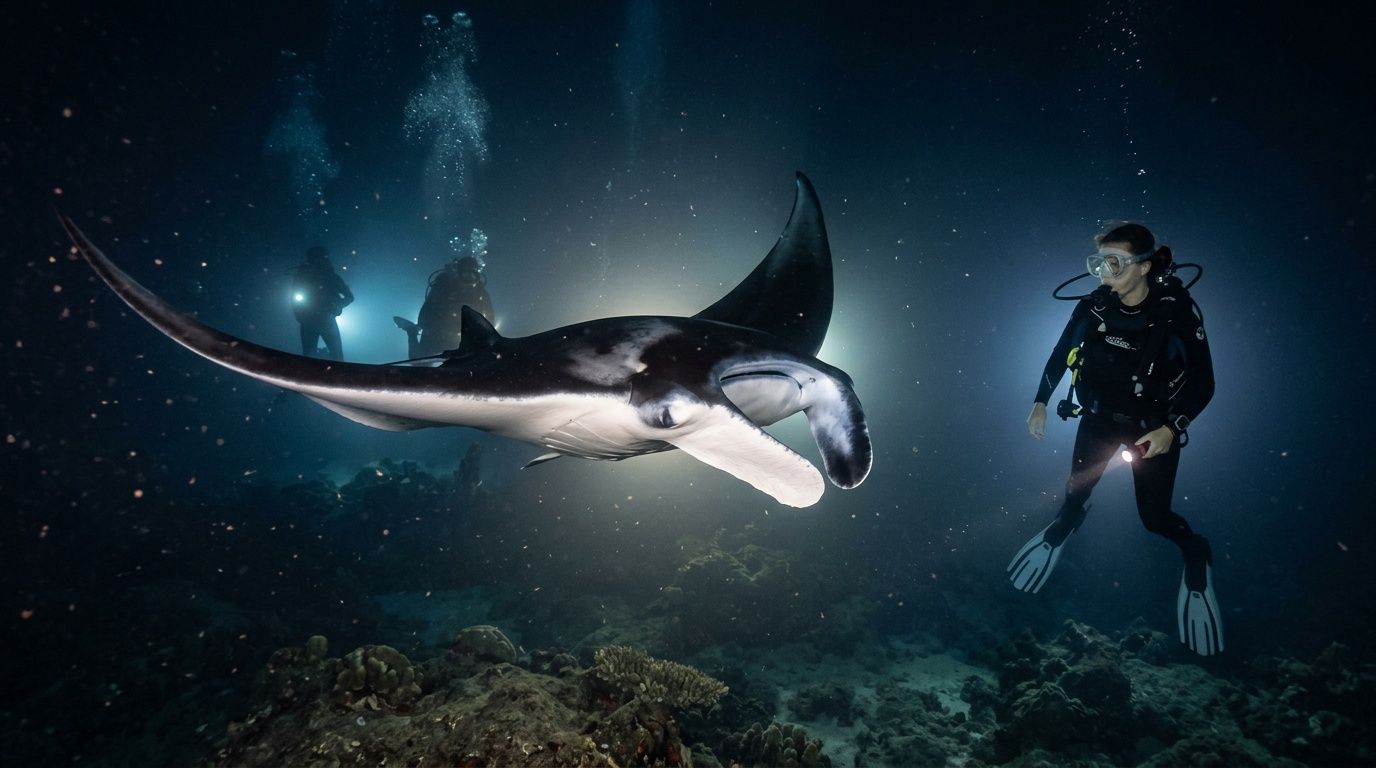
This is the dive that non-divers have heard of, and it still manages to exceed expectations when it's run well. Kona's manta ray night dive uses eco-LED lights to attract plankton, producing manta encounter rates of 90 to 100 percent, with reef mantas that can reach wingspans of up to 14 feet, according to this manta ray night dive reference.
The basic setup is simple. Divers settle in on the bottom, lights attract plankton, and mantas arrive to feed. The result doesn't feel simple at all. It feels like an underwater performance happening inches overhead.
Why Garden Eel Cove is the stronger choice
If you're deciding where to do the manta dive, Garden Eel Cove is the stronger pick. Its protected setting tends to make the experience feel more controlled, and the viewing layout works better for divers who want a clean, steady look at the action instead of a scattered one. The reef around it also adds more value to the overall site.
That protected location matters at night. Small differences in comfort and current feel much bigger after sunset. A better amphitheater-style viewing area also helps divers stay settled, which leads to less finning, less silting, and a better experience for everyone in the water.
If this is the dive that brought you to Hawaii, review the details for the manta ray dive tour and the local manta ray tour on the Big Island.
Stay still, keep your trim clean, and let the mantas control the encounter. That's what makes the dive work.
The blackwater dive
Blackwater is the opposite of a reef dive in almost every way. You're not touring terrain. You're suspended over deep open ocean at night, watching the water column itself come alive.
Kona is known for pioneering this style of diving, and it remains one of the most unusual advanced experiences you can do here. Deep-sea migrants rise from the dark, and the animals you see can look larval, transparent, alien, bioluminescent, or all four at once. The appeal isn't comfort. It's discovery.
This dive works well for divers who are calm, task-aware, and confident in open water at night. It's not the place to fix shaky buoyancy or test your comfort with darkness for the first time. If you're ready for it, the blackwater night dive tour is one of the most distinctive dives on the island.
Daytime reef and lava dives
The daytime diving is what gives the whole destination depth. If you only do the headline night dives, you'll miss the geological side of Kona that makes the coast so memorable.
Here's what stands out underwater:
- Lava tubes and swim-throughs: These are the features that make Kona feel different from a standard coral destination.
- Coral gardens: They soften the volcanic terrain and bring color into what could otherwise be a dark rock environment.
- Endemic marine life: Kona is known for exceptional marine endemism, so many of the fish and invertebrates you see feel specific to place rather than generic tropical scenery.
- Year-round access: The range of sites means operators can usually match conditions and diver skill to the right plan.
A good daytime charter also helps divers build rhythm. You get back in the water, refine weighting, settle your breathing, and learn how Kona's reef structure “reads” before stepping into one of the signature night dives. For general options, site variety, and regular reef charters, the Big Island diving tours page is the practical place to start.
What works and what doesn't
The biggest planning mistake is treating all three experiences as interchangeable. They're not.
| Dive type | Best for | What works | What doesn't |
|---|---|---|---|
| Manta night dive | Most certified divers | Good buoyancy, patience, following the light setup | Chasing mantas or over-finning |
| Blackwater | Advanced, composed divers | Comfort in darkness and open water | Booking it as your first Kona night dive |
| Day reef and lava dives | Almost everyone | Multi-day diving, camera-friendly conditions, skill tune-ups | Rushing through them to get only the “bucket list” dive |
If I were helping a friend build the strongest trip, I'd put a daytime charter first, manta night dive early enough for a weather backup, and blackwater only if their experience level matches the demands.
Planning Your Kona Dive Adventure
You land in Kona, the lava coastline is still radiating heat from the afternoon sun, and your first boat is tomorrow morning. The trip usually goes best when the plan is simple: choose the right season for your priorities, book dives in a smart order, and pick an operator whose safety standards match the kind of diving you came here to do.
Kona's conditions are shaped by the island itself. The west side sits in the lee of the Big Island, so the coast is often calmer than visitors expect. The volcanic shoreline also drops into deep water fast, which is a big reason Kona offers such a wide range of diving in a relatively small area. That geology is why trip planning here matters. You are not just picking dates. You are choosing how to experience a coast built for reef dives, manta nights, and advanced offshore profiles.
Best time to dive
Kona is a year-round destination, but different seasons suit different goals. If warm water, clear visibility, and a lighter visitor load top your list, fall is hard to beat. Spring is also a strong window for divers who want good conditions without aiming for the late-summer and early-fall sweet spot.
That usually leads to two solid planning options:
- September and October: Often the cleanest choice for divers who want warm water, strong visibility, and a polished overall dive week.
- April and May: A smart pick for calm conditions and a little more scheduling flexibility.
Weather always gets a vote. Book the trip around the experience you care about most, then leave a little margin in the schedule so the operator can work with conditions instead of forcing a plan that no longer fits the ocean.
Match the dive plan to your current skills
The biggest mistake I see is overbooking day one. Kona can feel easy on the surface, but the best trips are paced well.
A practical sequence looks like this:
- Start with daytime reef diving if you have not been in the water recently, need to fine-tune weighting, or want a lower-stress first day.
- Schedule the manta night dive early so weather or swell does not erase your only chance.
- Book blackwater later in the trip if you are already comfortable at night, calm in open water, and current on your buoyancy and situational awareness.
- Add advanced charters last if your gas management, trim, and experience support longer or more demanding profiles.
For experienced divers who want longer runs and more demanding site selection, the premium advanced 2-tank trip is worth comparing.
Picking a dive shop without guessing
A good Kona operator does more than drive a boat to a pretty reef. The crew should brief clearly, choose sites that fit the group, maintain gear properly, and know when to change the plan. That matters even more here because Kona's signature dives are tied directly to local conditions. Manta success depends on disciplined light setup and guest behavior. Blackwater depends on precise procedures, composure, and a crew that treats offshore night diving with respect.
If you are comparing operators, this guide on how to choose a Kona dive shop covers the decision points that matter once you get past branding and price.
One practical option many divers compare is Kona Honu Divers. They run local tours, courses, and advanced trips, and they provide free nitrox. For certified nitrox divers on multi-dive days, that can help reduce fatigue and stretch no-decompression limits within proper planning.
Some traveling divers also ask about propulsion gear for private yacht use or tender-based water access. If that applies to your trip, premium underwater scooters for yacht owners are a separate category to research well before arrival. They are not a substitute for buoyancy control, current judgment, or boat-diving skills.
A few planning mistakes to avoid
Kona rewards realistic planning and punishes rushed itineraries.
- Don't put your hardest dive first. Start with a day that lets you settle in, check weighting, and get comfortable in the water again.
- Don't stack demanding night dives back-to-back without thinking about fatigue. Manta and blackwater are very different, but both ask for focus and good decision-making.
- Don't treat hydration and surface intervals casually. Warm weather, sun exposure, and repetitive diving catch people off guard.
- Don't assume shore diving is the easier choice. Entries over lava rock and surge can make some shore sites less forgiving than a well-run boat charter.
- Don't book only the headline dives. Kona's famous experiences are stronger when you arrive settled, tuned up, and ready to enjoy them rather than just endure them.
Your Essential Gear and Safety Checklist
Kona is forgiving compared with many destinations, but forgiving doesn't mean casual. Good preparation protects your dive, your buddy, and the reef.
What to pack yourself
Bring the gear that directly affects comfort and awareness.
- Mask: A familiar mask saves trips. Rental masks can work, but your own fit is better.
- Dive computer: Use the computer you know. Night dives and repetitive dive days go more smoothly when the display is second nature.
- Exposure protection: Water here is warm enough that many divers are comfortable in light thermal protection, but your personal tolerance matters.
- Surface signaling gear: A safety sausage is worth packing.
- Logbook and certification cards: Keep them easy to access rather than buried in luggage.
For a more detailed pre-trip rundown, this gear guide for your Kona diving adventure is a useful checklist.
What matters more than fancy equipment
Skill beats gadgetry. Good buoyancy, clean trim, and controlled finning matter more than loading yourself with extras you rarely use.
That's especially true in Kona's lava structure and on manta dives. Divers who hold position well get better photos, better gas consumption, and better wildlife encounters. Divers who flail stress themselves out and make the site worse for everyone else.
If you're the type who likes exploring water toys beyond standard scuba equipment, some travelers also browse options like premium underwater scooters for yacht owners. They're not part of normal guided Kona scuba operations, but they can be relevant for private marine recreation planning.
Seasickness prep that actually helps
Boat nerves ruin more dives than bad visibility. If you know you get seasick, plan for it before the trip, not while staring at the horizon from the marina.
A few common options people use include:
- Patch option: Ship-EEZ Seasickness Patch
- Classic medication: Dramamine pills
- Another medication choice: Bonine pills
- Non-medication option: Sea Band wristbands
- Simple backup: Ginger chews
Take seasickness seriously if you're doing a night dive. Darkness and horizon loss can make mild motion issues feel stronger.
If you know you're prone to seasickness, don't “wait and see.” Use your prevention plan before boarding.
Reef and wildlife safety
A short checklist goes a long way:
- Hands off wildlife: Don't touch turtles, mantas, coral, or the bottom unless the dive briefing specifically calls for a settled position.
- Listen to the site briefing: Kona sites can be easy, but each one has its own current, entry, and visibility rhythm.
- Protect the reef with your fins: Most accidental damage comes from poor awareness, not bad intent.
- Stay close enough to your guide to benefit from the dive: Too far back and you miss the site. Too far ahead and you become the problem.
Making the Most of Your Time on the Big Island
Most dive travelers underestimate how big the Big Island feels once they're on land. Distances take time. A rental car isn't optional if you want to see more than the harbor, your hotel, and one restaurant block.
Pick your base wisely
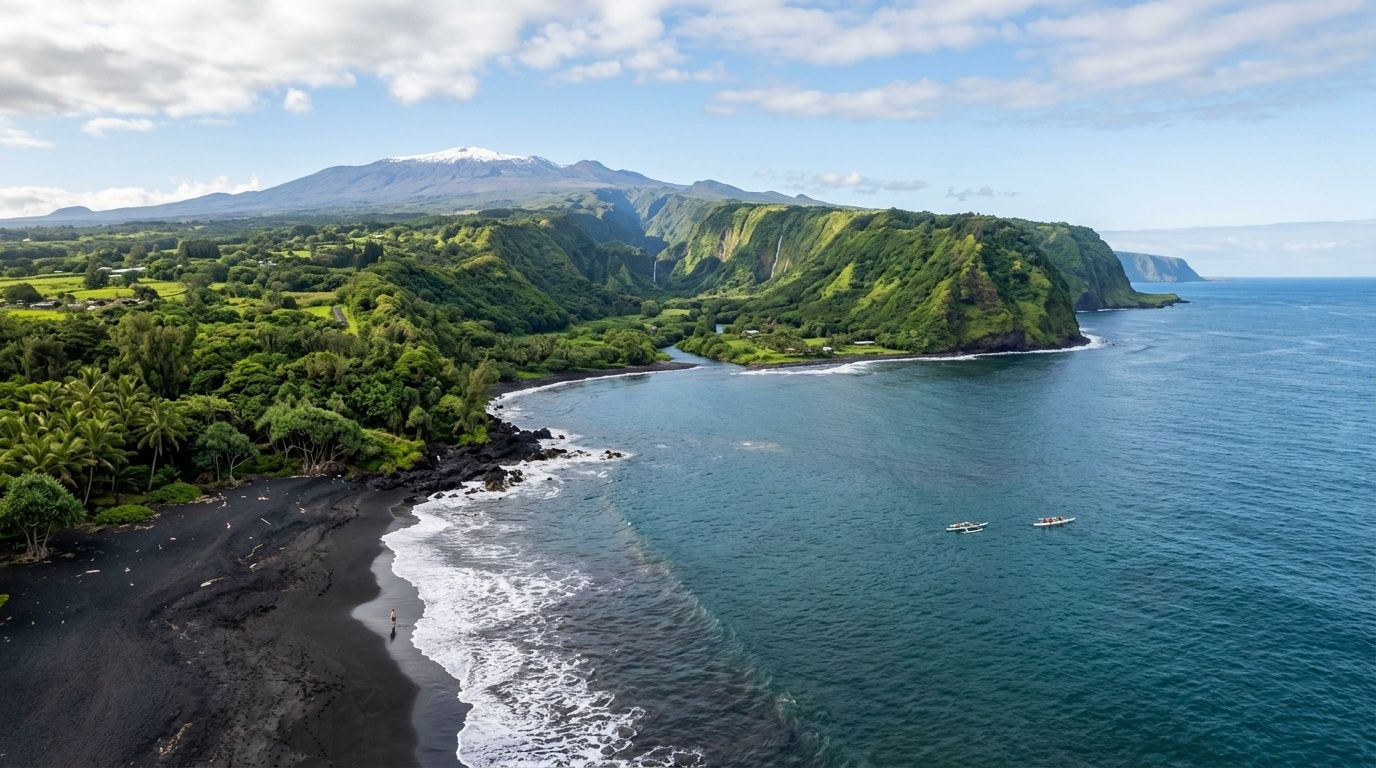
For a dive-focused trip, the Kona side makes the most sense. It's sunnier, logistically easier for boat diving, and better suited to early departures. Hilo has its own appeal, but it serves a different style of vacation.
A simple split helps:
| Stay area | Best for | Trade-off |
|---|---|---|
| Kona side | Diving, sunshine, easier harbor access | Less of the lush east-side feel |
| Hilo side | Rainforest atmosphere, east-side exploring | Less convenient for most Kona dive plans |
Good surface-interval activities
You don't need to fill every non-dive hour with another water activity. The island is strong above water too.
- Volcanoes National Park: The geology you dive around makes more sense after you've seen it on land.
- Kona coffee farms: Easy, relaxed, and ideal on a no-fly buffer day.
- Black sand beaches: Good for a slower afternoon when you don't want another schedule.
And yes, you'll want something comfortable after a salty boat day. A laid-back piece like this men's terry-lined Hawaiian shirt fits the post-dive, dry-off, sunset-dinner part of a Big Island trip better than anything overly technical.
Don't overbook the island
The most common land mistake is trying to “do” the entire island in one short trip. If diving is the priority, protect your dive mornings and leave room for one or two land adventures instead of five rushed ones. Kona rewards a little breathing room.
Frequently Asked Questions About Kona Scuba Diving
Is Kona suitable for brand new divers
Yes, if you choose guided boat diving that matches your experience. Shore diving can be challenging and is best suited for experts, while guided boat dives in Kona offer a safe, reliable, high-yield marine encounter experience for divers of all levels, including beginners, as noted in this shore diving maps and guidance page.
That is the direct answer most newcomers need. People often assume shore diving is simpler because it skips the boat, but entries, exits, surf, and site familiarity can make it harder. New divers usually do better on a guided boat plan where the crew handles the logistics and chooses appropriate sites.
What marine life can I see besides manta rays
Plenty. Turtles are a regular highlight. Reef fish are everywhere, and many divers come specifically for Hawaiian endemic species because they give the dives a real sense of place. On the right trip, pelagic life and unusual night creatures can also become part of the story.
The better question isn't “Will I see something?” It's “What kind of encounter do I want?” Kona can deliver mellow reef observation, iconic night wildlife, or advanced open-ocean strangeness.
Is it easy to dive solo in Kona
Yes, in the sense that it's easy to travel alone and join boat dives. No, if by “solo” you mean independently figuring everything out with no local support.
Boat charters are often the easiest way for solo travelers to plug into the local diving scene. You get buddies, briefings, site selection, and local knowledge in one package. If you're also budgeting the trip, this breakdown of how expensive scuba diving in Hawaii can be helps set expectations.
What's the real difference between the manta dive and the blackwater dive
They're both night dives, but they feel nothing alike.
- Manta dive: Structured, site-based, and centered on one famous animal interaction.
- Blackwater dive: Open-ocean, less predictable, and centered on rare pelagic life drifting up from the deep.
If you love stability, spectacle, and a clear focal point, manta wins. If you love mystery, unusual animals, and a more technical headspace, blackwater is the one.
How many dive days should I plan
More than one. Kona isn't a one-hit destination. Even if the manta dive is your headline goal, give yourself enough time for reef diving too. The daytime dives are what help the whole place make sense.
A short trip can work. A slightly longer trip works much better because you can pace your diving instead of cramming every must-do into a rushed schedule.
If you're ready to turn the research phase into real dives, Kona Honu Divers is a practical place to start comparing schedules, trip types, and training options for your Kona trip.