
You’re probably in the same spot a lot of divers are when they start planning a Hawaii trip. You want clear water, memorable marine life, and dive days that feel worth building the vacation around. You also don’t want to waste time sorting through vague “top 10” lists that don’t tell you which dives fit your experience level, which ones are unique, or how to put a smart itinerary together.
That’s where scuba diving kona hawaii big island stands apart. Kona gives you easy reef dives, dramatic lava formations, reliable boat diving, and a few signature experiences that people travel across the world to do. It works for new divers, experienced divers, mixed-skill groups, and families trying to figure out what’s realistic and what’s just marketing copy.
Welcome to the Underwater Paradise of Kona
A first Kona dive often goes like this. You back-roll into warm blue water, look down, and the reef is already visible from the surface. A turtle moves across the lava ledge below you. Small reef fish flash over black volcanic rock, and the underwater terrain looks sculpted rather than flat.
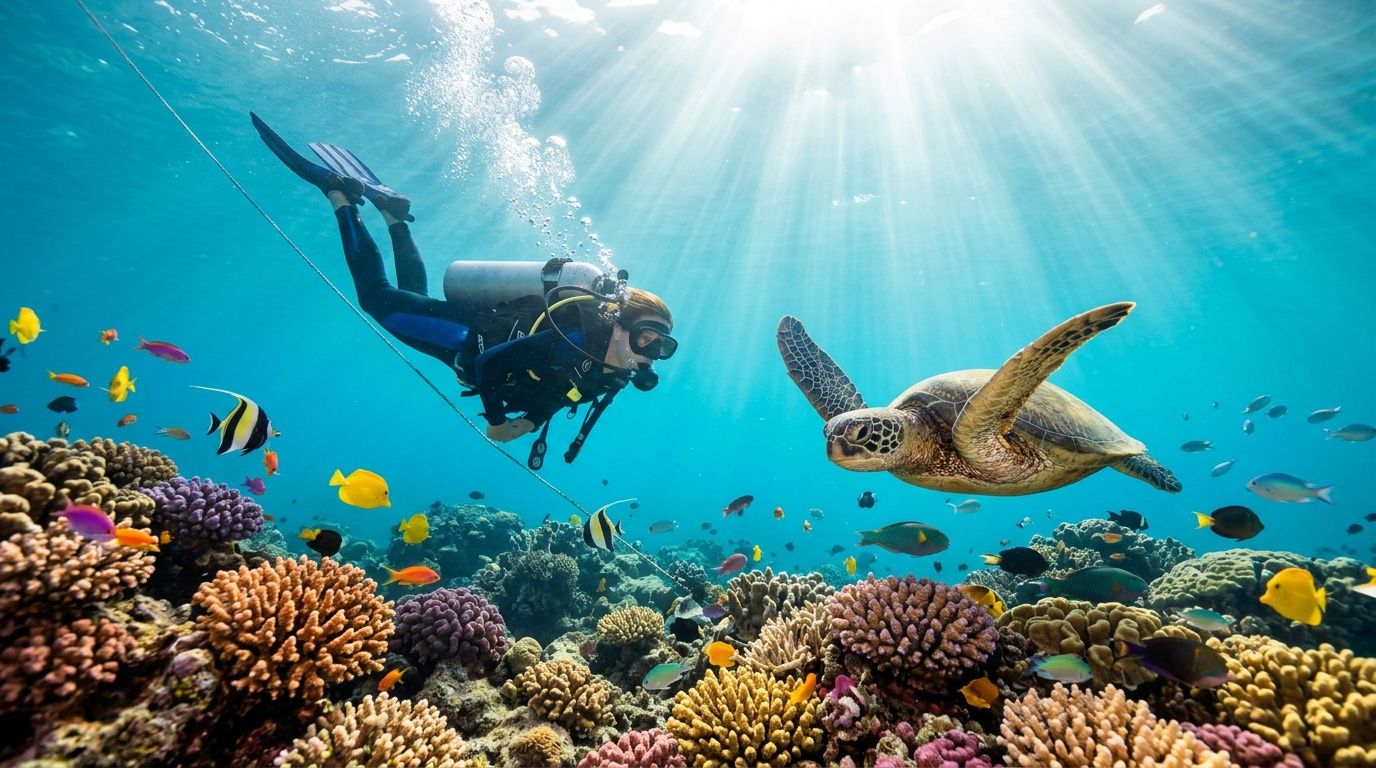
That mix is what hooks people on Kona. The diving feels accessible right away, but it doesn’t feel simple or repetitive. Even an easy reef site can have arches, shelves, caverns, and lava contours that make the whole dive feel like a guided tour through an old volcanic terrain.
Many travelers land on the Big Island knowing they want to dive, but not knowing how to choose between morning charters, shore dives, manta nights, beginner-friendly sites, and advanced offshore adventures. That confusion is normal. Kona offers enough variety that a little planning makes a huge difference.
A good starting point is getting familiar with the local diving scene through Kona diving resources from Kona Honu Divers, then matching the trip to your comfort level and goals.
The easiest mistake in Kona is treating every dive as interchangeable. They’re not. One day might be a calm reef with turtles and lava fingers. Another might be a night dive with mantas overhead.
If you’re brand new, Kona can be a comfortable place to start. If you’ve logged plenty of dives already, it can still surprise you. That’s a rare combination, and it’s the reason so many divers build an entire Big Island trip around the water.
Why Kona is a World-Class Scuba Diving Destination
Kona didn’t become famous by accident. The coast has a very specific combination of geography, ocean conditions, and underwater structure that makes diving unusually consistent and unusually rewarding.
The volcanoes do a lot of the work
Kona’s west side sits in the lee of Mauna Loa and Hualalai, which helps block the prevailing trade winds. That shelter is a major reason the area often has calm, lake-like surface conditions and visibility that often exceeds 100 feet year-round, while water temperatures stay in the 75 to 80°F range, according to this overview of what makes diving in Kona unique.
That matters more than many new divers realize. Calm water changes the whole day. Entries feel easier, briefings are less stressful, and once you descend, you spend more attention on the reef and less on fighting chop or current.
Clear water changes how you dive
Kona’s visibility isn’t just a nice bonus. It affects how divers move and what they notice.
When you can see the site clearly, navigation gets easier. You can spot the reef shape earlier, stay oriented around lava ridges, and enjoy the full scale of caverns and arches instead of only seeing what’s directly in front of your mask. For underwater photographers, it also means cleaner compositions and more natural-looking scenes.
Practical rule: If you’re choosing between a destination with average diving and one with calm water plus long visibility, take the visibility. It improves almost every part of the dive.
Comfortable water means longer-feeling dives
Another advantage is thermal comfort. Stable water temperatures help divers stay relaxed, and the conditions support efficient recreational profiles. The same Kona reference notes that at 60 feet, recreational divers can have 55 to 60 minute no-decompression limits in these conditions (Kona diving conditions reference).
That’s the kind of detail experienced divers appreciate because it translates into more usable bottom time. Newer divers feel it too, even if they don’t phrase it that way. They come up saying the dive felt comfortable and unhurried.
Why it feels different from many reef destinations
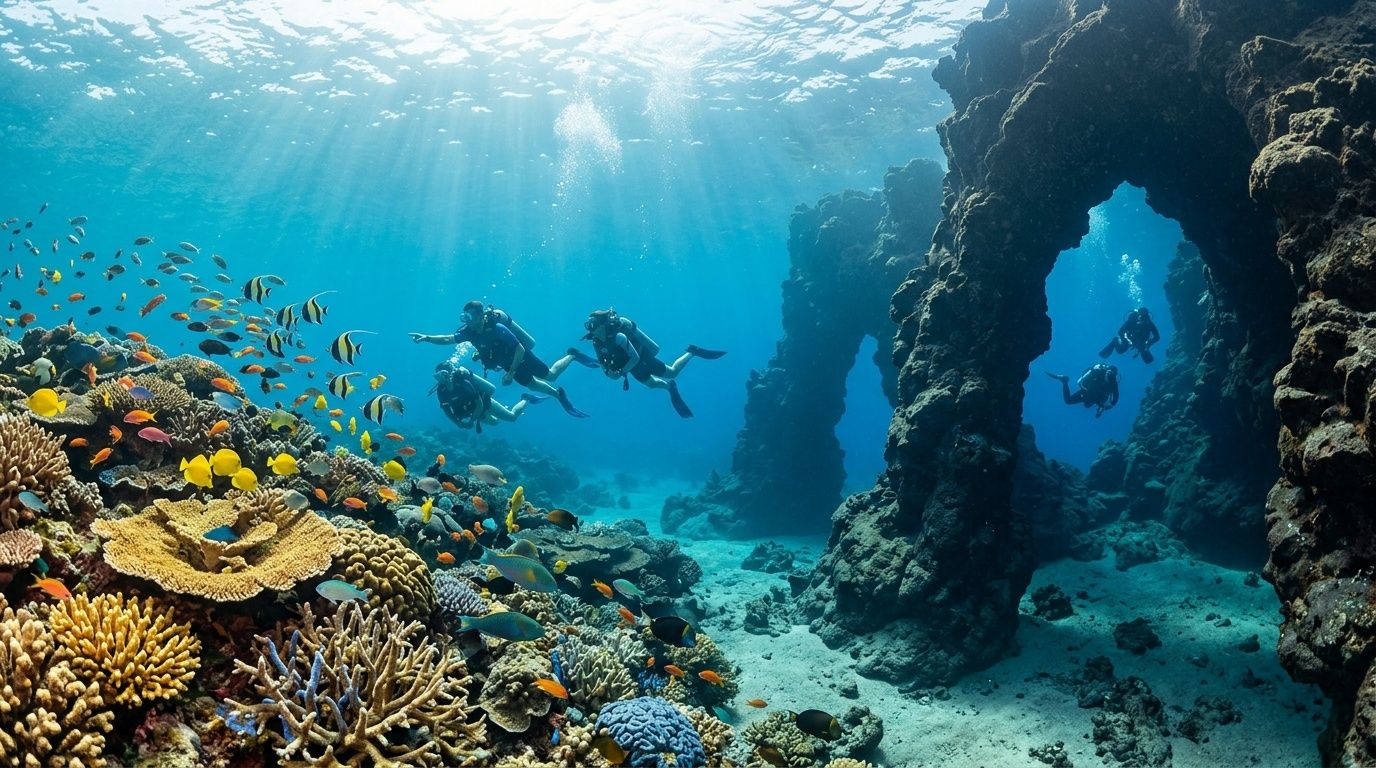
Kona also benefits from volcanic geology. The underwater world isn’t just coral spread across a broad platform. It’s carved, layered, and textured. Ancient lava flows created ledges, tubes, swim-throughs, arches, and reef lines that give each site its own identity.
That’s why the phrase scuba diving kona hawaii big island means more than warm water and fish. It means a place where geology and conditions work together. You get calm surface rides, strong visibility, and dives that feel distinct from one another rather than copied and pasted down the coast.
Kona's Unforgettable Signature Dive Experiences
Some places are good for diving. Kona has a few dives that people organize whole trips around.
The manta ray night dive
The headline experience is the manta ray night dive. It’s world-famous for a reason, but what makes it special isn’t just the size of the animals. It’s the behavior. You’re not hoping for a brief pass in the blue. You settle into position, shine light upward, and watch mantas swoop in to feed on plankton drawn to the light.
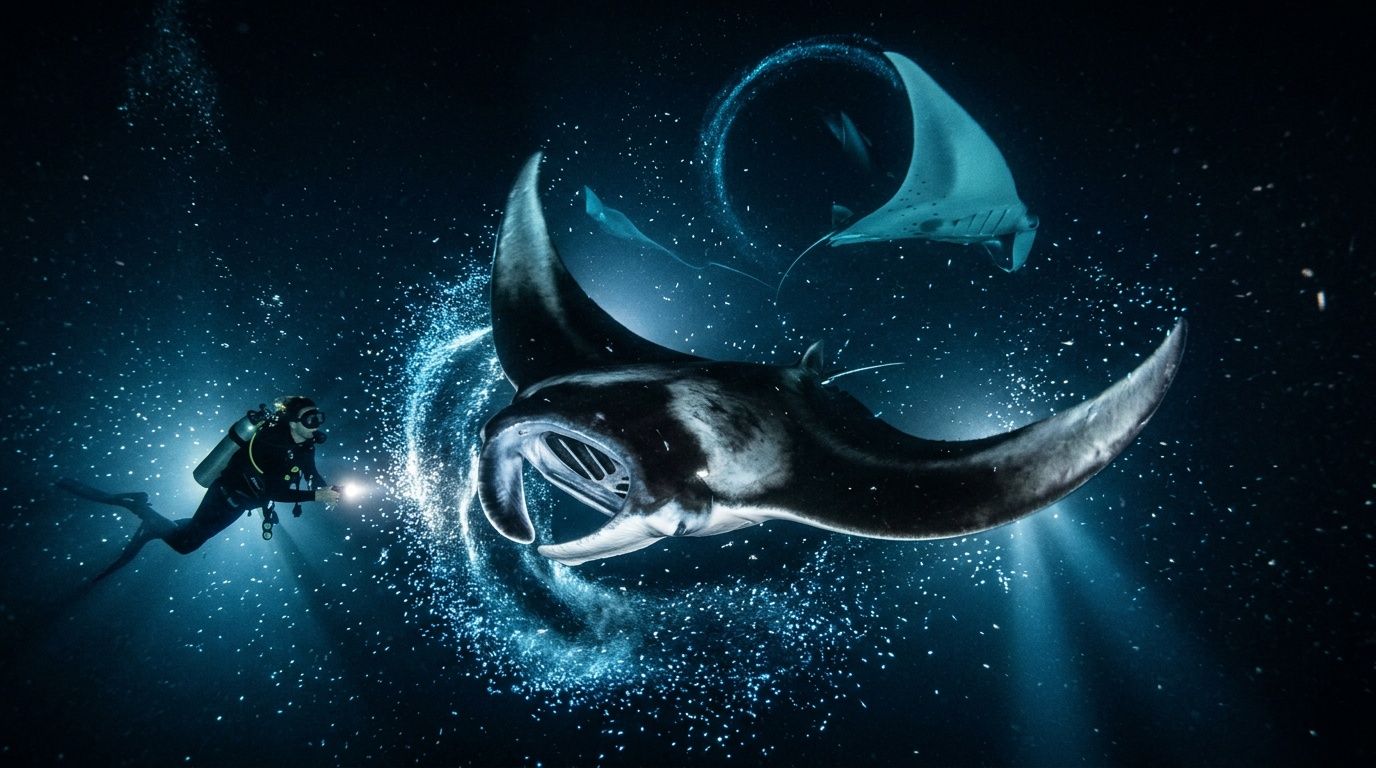
According to DAN, the Manta Pacific Research Foundation has identified over 270 individual manta rays in the Kona study area, and on this dive, divers sit at about 35 feet while a dozen or more mantas may swoop overhead during a single dive (DAN’s Kona manta overview).
That reliability is unusual. In many destinations, a “signature wildlife dive” still feels like a maybe. In Kona, the manta dive is known for being a repeatable spectacle.
If you want a good primer on how the experience works from the local snorkel-and-manta perspective, this guide to the Kona Snorkel Trips manta dive is useful context.
Why Garden Eel Cove gets so much attention
For the manta experience, Garden Eel Cove stands out because of its protected location and strong viewing setup. Divers generally want three things on this dive: calm conditions, a clear place to settle, and a good angle for watching mantas circle through the light field. Garden Eel Cove checks those boxes well.
It also helps that the surrounding reef adds value before the main event starts. Even if the mantas are the goal, the site doesn’t feel like a one-note attraction.
A lot of new divers get confused here and assume “manta dive” is just one standardized experience no matter where or how it’s run. It isn’t. Site choice shapes comfort, visibility, and how organized the viewing area feels.
For a closer look at how the encounter works from a local operator’s perspective, the manta ray night swim guide gives helpful background.
Stay low, stay still, and let the mantas do the movement. Divers who chase wildlife almost always turn a great encounter into a worse one.
The blackwater dive
Kona’s other signature experience is the blackwater night dive. This one is very different. There’s no reef, no lava ledge, and no familiar bottom to reference. You’re in open ocean at night, tethered into a controlled setup, watching deep-water pelagic life rise into the lights.
This dive appeals most to experienced divers with solid buoyancy and comfort in open water. The draw isn’t speed or adrenaline. It’s strangeness. You may see delicate larval creatures, transparent animals, and pelagic life forms that most divers never encounter on ordinary reef dives.
That’s why blackwater isn’t just “another night dive.” It’s a specialty experience with a completely different mood. The manta dive feels graceful and theatrical. Blackwater feels exploratory and surreal.
If that’s the kind of dive you travel for, the Blackwater Dive tour page is the relevant trip type to review.
One trip, two very different memories
The smartest way to think about Kona’s signature dives is this:
- Manta night dive: A structured, highly visual animal encounter that many certified divers can enjoy.
- Blackwater dive: A more advanced-feeling open-ocean experience for divers who like precision, buoyancy control, and unusual marine life.
- Day reef dives: The foundation that makes the rest of the trip feel complete, because they show you Kona’s volcanic underwater character.
If your schedule only allows one must-do experience, mantas are often the first choice. If you have more days and the right skill set, blackwater gives the trip a second anchor that feels completely different rather than repetitive.
Exploring Top Kona Dive Sites for Every Skill Level
Kona’s coast includes over 50 unique dive sites shaped by ancient lava flows, with arches, caverns, reefs, and visibility that often exceeds 100 feet, according to this Kona coast dive site overview.
That variety is great, but it can also make planning harder. The easiest way to make sense of it is to sort sites by what they ask from the diver, not just by name.
Kona dive sites by skill level
| Dive Site | Skill Level | Max Depth | Highlights |
|---|---|---|---|
| Two Step | Beginner | 40 ft | Easy entry, shallow coral gardens, turtles |
| Golden Arches | Beginner to Intermediate | Varies by profile | Reef structure, lava features, relaxed exploration |
| Suck 'Em Up | Beginner to Intermediate | Varies by profile | Gentle reef diving, fish life, confidence-building terrain |
| Turtle Pinnacle | Intermediate | Varies by profile | Volcanic structure, turtle encounters, layered reef |
| Kaiwi Point | Intermediate | Varies by profile | Caverns, swim-through feel, more varied topography |
| Au Au Crater | Advanced | Varies by profile | Dramatic terrain, deeper profile, more technical planning |
Best choices for beginners
Beginners usually do best on sites with simple navigation, good visual reference, and room to settle in. That’s why shallow reef areas and gentler slopes work so well.
Two Step is often part of the conversation for newer divers and families because it offers a straightforward way to see reef life without the commitment of a more complex boat profile. It’s also a good example of how Kona can feel welcoming without feeling boring.
Golden Arches and Suck 'Em Up' are the kinds of sites where newer certified divers can build confidence. You still get volcanic scenery, but the experience remains manageable.
Good fits for intermediate divers
Intermediate divers usually want more than a basic reef cruise, but they don’t always want a demanding advanced charter. Kona has a lot of middle ground.
Sites with lava tubes, caverns, and swim-through-style formations tend to land here. They’re more engaging from a buoyancy and awareness standpoint, yet still enjoyable for divers who are ready for more structure and a bit more task loading.
A good intermediate site gives you something to do without making you feel rushed. In Kona, that often means following lava topography rather than swimming over a flat reef.
Advanced options for divers who want range
Advanced divers often come to Kona looking for more dramatic terrain, deeper profiles, or offshore specialties. Pinnacles, deeper lava systems, and more remote site choices are important for such pursuits.
For divers who want that type of day, the premium advanced long-range dive tour is one way to access sites that go beyond the standard easy schedule.
The key is honesty. Advanced doesn’t just mean deeper. It means better buoyancy, better gas awareness, stronger situational control, and the ability to enjoy a site without becoming overloaded by it.
How to choose well
Use this quick filter:
- If you haven’t dived in a while, start easier than your certification card says you can.
- If you’re traveling with mixed experience levels, prioritize site comfort over bragging rights.
- If lava tubes or caverns sound exciting, make sure your buoyancy is clean enough to enjoy them calmly.
- If you only have a few days, include one signature specialty dive and a few classic day dives so the trip has range.
That’s how you turn a long list of site names into a trip that fits you.
Your Complete Kona Dive Trip Planning Guide
Good Kona trips usually feel smooth because the planning happened before the first boat ride. The goal isn’t to overcomplicate it. It’s to remove avoidable problems.
If you’re not certified yet
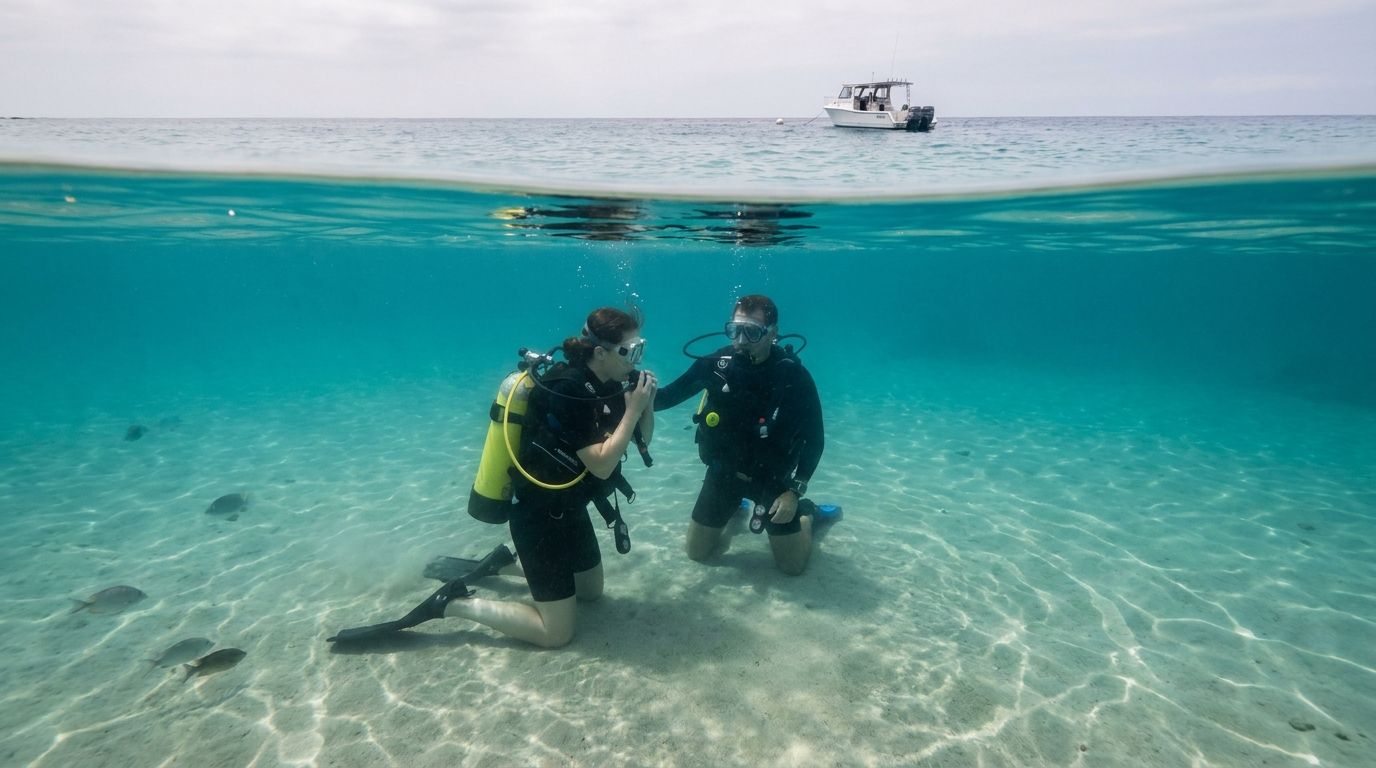
Kona is a practical place to learn. The calm conditions and clear water help beginners feel oriented quickly, and families should know that PADI’s minimum age for Junior Open Water certification is 10 years old. The same family-focused Big Island diving guide notes that Kona’s calm water and high visibility can help young divers transition from snorkeling to scuba more comfortably (family scuba guidance for the Big Island).
That doesn’t mean every child is automatically ready. Comfort in the water matters more than enthusiasm alone. A kid who loves snorkeling, listens well, and stays calm usually has a much better first scuba experience than one who just likes the idea of it.
What to pack and what to rent
Most divers can keep this simple. Bring the gear that affects fit and familiarity most, and rent the bulky items if that makes travel easier.
- Mask: If you own one that fits well, bring it. A familiar mask solves a lot of small problems.
- Computer: If you dive regularly, your own computer keeps settings and display style familiar.
- Exposure protection: A 3mm shorty is often comfortable, and some divers prefer a 5mm with a hood for multi-day diving, based on the exposure guidance in this Kona gear planning article.
- Save-a-dive basics: Keep this compact. Spare mask strap, defog, and anything small that has ruined a dive for you before.
Seasickness prep that’s worth doing
Even in calm conditions, boat diving can catch people off guard. If you know you’re prone to motion sickness, don’t wait to “see how it goes.”
Useful options include Ship-EEZ Seasickness Patch, Dramamine pills, Bonine pills, Sea Band wristbands, and ginger chews.
Different divers respond to different methods. If you already know what works for you on boats, use that same strategy here. Vacation isn’t the time to run a medication experiment.
The best anti-seasickness plan is the one you take seriously before the boat leaves the harbor.
Safety choices that actually matter
Dive safety advice gets repetitive because the basics work.
- Be honest about your current ability: “Certified” and “ready for this profile today” aren’t always the same thing.
- Listen to the site briefing: Lava terrain, entries, exits, and night procedures matter.
- Don’t overload the schedule: Leave room to enjoy dives rather than sprinting from one marquee activity to the next.
- Build in your post-dive buffer before flying: Your last dive day should never create pressure on departure timing.
Families, beginners, and rusty divers all benefit from the same approach. Start a little easier than you think you need. Kona rewards calm divers.
Sample Itineraries with Kona Honu Divers
If you’re trying to turn all of this into an actual vacation plan, itineraries help. The key is balancing classic reef diving with one or two specialty experiences so the trip feels varied rather than overloaded.
One practical option for scheduling is browsing the available Kona dive tours and then arranging the high-demand dives first.
The 3-day best-of-Kona plan
This works well for travelers who have limited time and want the broad Kona experience.
Day 1
Start with a morning two-tank charter. This gives you a feel for local conditions, the lava reef layout, and your own weighting and buoyancy in Kona water.
Day 2
Keep the morning relaxed, then do the manta afternoon and night sequence. This works better than cramming too much diving before a signature night experience.
Day 3
Choose based on your comfort level. If you’re experienced and current, a more advanced site or blackwater-style outing gives the trip a strong finish. If not, another classic reef morning is a better choice.
The 5-day immersion plan
This is the better rhythm for divers who want depth and variety without feeling rushed.
Day 1 and Day 2
Use these for standard daytime diving. You’ll see different reef structures, get settled into local conditions, and avoid making every day feel like a headline event.Day 3
Put the manta dive here. By now you’re comfortable in the water and can focus fully on the experience.Day 4
Reserve this for your more specialized choice. Some divers want advanced topography. Others want blackwater.Day 5
End with a relaxed reef day. This gives the trip a satisfying close and often becomes the day people remember as the most peaceful and enjoyable.
Who these itineraries fit best
The shorter plan fits:
- Vacationers with only a few dive days
- Mixed groups where not everyone is diving daily
- Divers who want mantas plus a taste of Kona reef diving
The longer plan fits:
- Photographers
- Experienced divers who want range
- Travelers who don’t want to feel like they’re checking boxes
Below is the requested review widget for Kona Honu Divers.
Ready to book a trip date?
Check AvailabilityFrequently Asked Questions about Kona Scuba Diving
What is the best time of year to dive Kona
Kona is a year-round destination, which is one reason divers like it so much. If you want the warmest, calmest-feeling conditions, summer often appeals most. The Kona coast guide notes that from June through September, visibility can exceed 30 meters (100 feet) and water temperatures range from 77°F to 80°F (Big Island seasonal diving overview).
Is Kona good for beginners
Yes, with the right site and the right pace. Beginners do best when they choose calm reef dives first, especially if they haven’t been in the water recently. Kona’s conditions help, but the smartest move is still matching the dive plan to your actual comfort level.
Do I need to be certified
For most standard boat dives, yes. If you’re not certified, an introductory experience with an instructor is the usual way to try scuba safely. If you are certified but rusty, treat your first day back as a tune-up rather than a test.
Is the manta dive suitable for newer divers
For many certified divers, yes. It’s different from a roaming night dive because the experience is structured around staying settled in one area and watching the mantas come to you. The main requirement is being calm, following the briefing, and maintaining control in the dark.
What marine life might I see besides mantas
Kona divers often talk first about turtles, reef fish, eels, and octopus because those encounters are part of ordinary dive days, not just lucky surprises. The volcanic structure also makes marine life spotting fun because animals use cracks, ledges, and lava contours as shelter.
Should families choose shore dives or boat dives
For some families, simple shore-access sites can be a smart introduction because they remove the pressure of a boat schedule. For others, a guided boat day works better because logistics and support are built in. The deciding factor is usually the child’s comfort, attention span, and water confidence, not just age.
If you’re ready to turn ideas into a real dive plan, Kona Honu Divers is a practical place to start. You can compare tours, choose experiences that match your skill level, and build a Kona trip around the dives you’ll still be talking about after you get home.