
You're probably in one of two places right now. You've either already booked a Big Island trip and you're trying to figure out which dives are worth your limited vacation days, or you're still deciding whether Kona belongs on your shortlist at all.
That's a good problem to have, because scuba diving kona big island isn't just another tropical destination with decent reefs and a couple of boat charters. Kona offers a very specific kind of diving. Volcanic topography. Warm water. Remarkably clear conditions. Night dives that feel like another planet. Pelagic encounters that happen close to shore. It's the kind of place where a single trip can include a relaxed reef dive in the morning, a manta dive after sunset, and a blackwater experience that resets your definition of marine life.
Divers don't come here by accident. Hawaii's scuba industry supports over 1.5 million scuba dives annually across the islands and is sustained by more than 215 licensed dive shops, which is part of why Hawaii ranks among the top 10 scuba diving destinations in the United States, with Kona serving as a major center of activity, according to this Hawaii scuba diving overview.
Your Kona Underwater Adventure Awaits
A lot of first-time visitors expect Kona to be pretty. They don't expect it to feel so immediate.
The boat ride out is often short. The entry is straightforward. You descend and the water opens up in layers of blue that seem to keep going. Lava fingers run out from shore. Coral heads break up dark volcanic structure. Turtles cruise through cleaning stations. If the light is right, the whole reef glows instead of just sitting there.
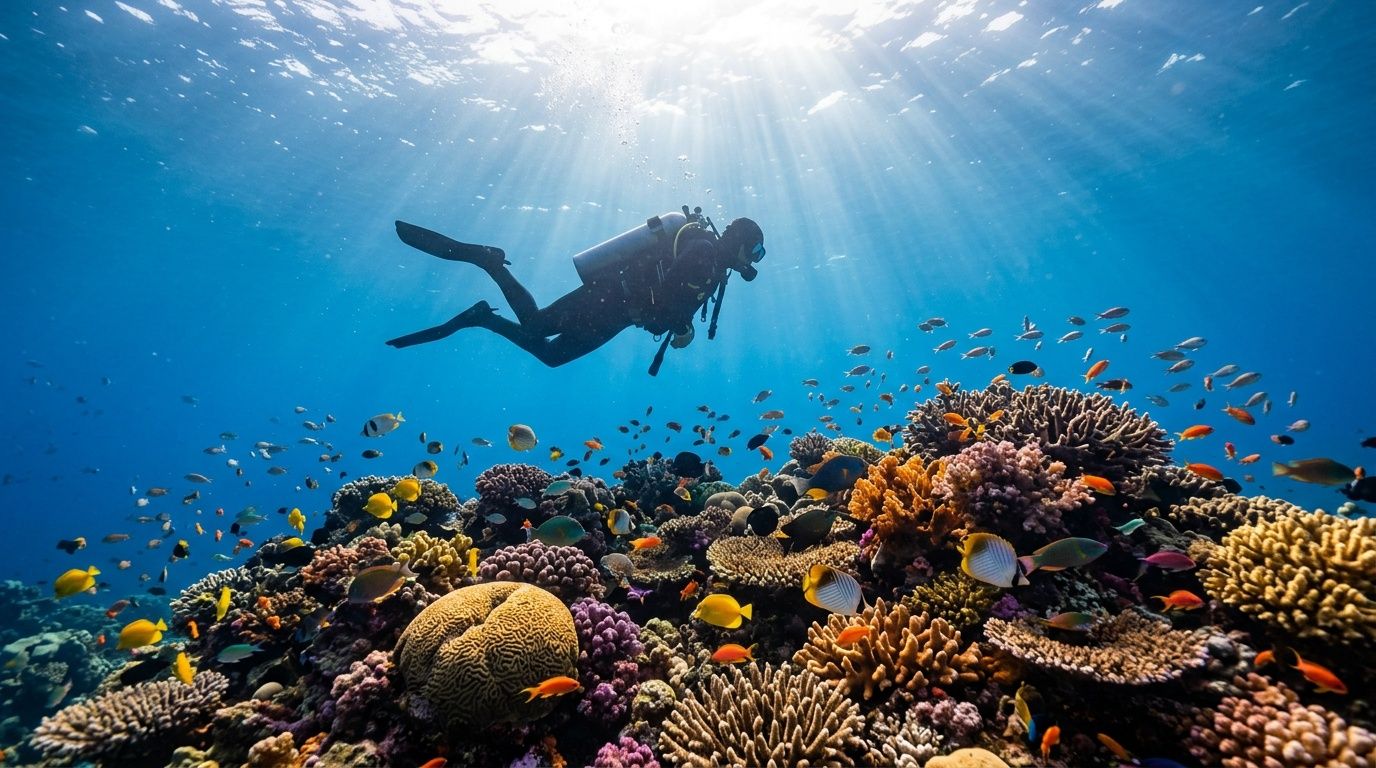
That first drop into Kona usually changes what divers prioritize on the rest of their trip. People arrive asking for the “famous sites.” After one or two dives, they start asking better questions. Which experience should I repeat? Which dive works best on my last full day? Should I do the manta first or save it? Is blackwater worth it if I've never done blue-water night diving before?
What makes Kona feel different
Kona works because the diving isn't built around one single highlight. It's built around types of experiences.
One diver wants lava tubes and dramatic structure. Another wants reliable marine life and easy boat diving. Another is already certified, comfortable in the water, and looking for something rare enough that it'll still stand out after years of dive travel. Kona can handle all three.
That's also why local knowledge matters more here than many visitors expect. On paper, two trips can sound similar. In practice, site choice, timing, group pace, and boat setup affect the whole day. If you're comparing operators or trying to understand what kind of trip fits your goals, the easiest starting point is a dedicated Kona scuba diving guide that lays out the local options clearly.
Kona rewards divers who choose by experience type, not just by site name.
The trip most divers wish they had planned sooner
The strongest Kona itineraries usually mix one iconic night experience with daytime dives that show off the coast's volcanic terrain. That combination gives you the full picture. Calm reef diving by day. Strange, high-energy pelagic behavior by night. Familiar tropical diving paired with something you probably can't replicate back home.
If you only plan one or two charters, choose the dives that are uniquely Kona. Generic reef diving is available in many destinations. Kona's standout value is that it pairs easy access with experiences serious divers talk about long after the vacation ends.
Why Kona Is a Diver's Paradise
Kona's reputation isn't luck. It comes from geography.
The west side of the Big Island sits in a leeward position, which means it's protected from the prevailing trade winds that affect other coastlines more directly. Less surface agitation usually means calmer conditions, easier boat operations, and cleaner water for divers.
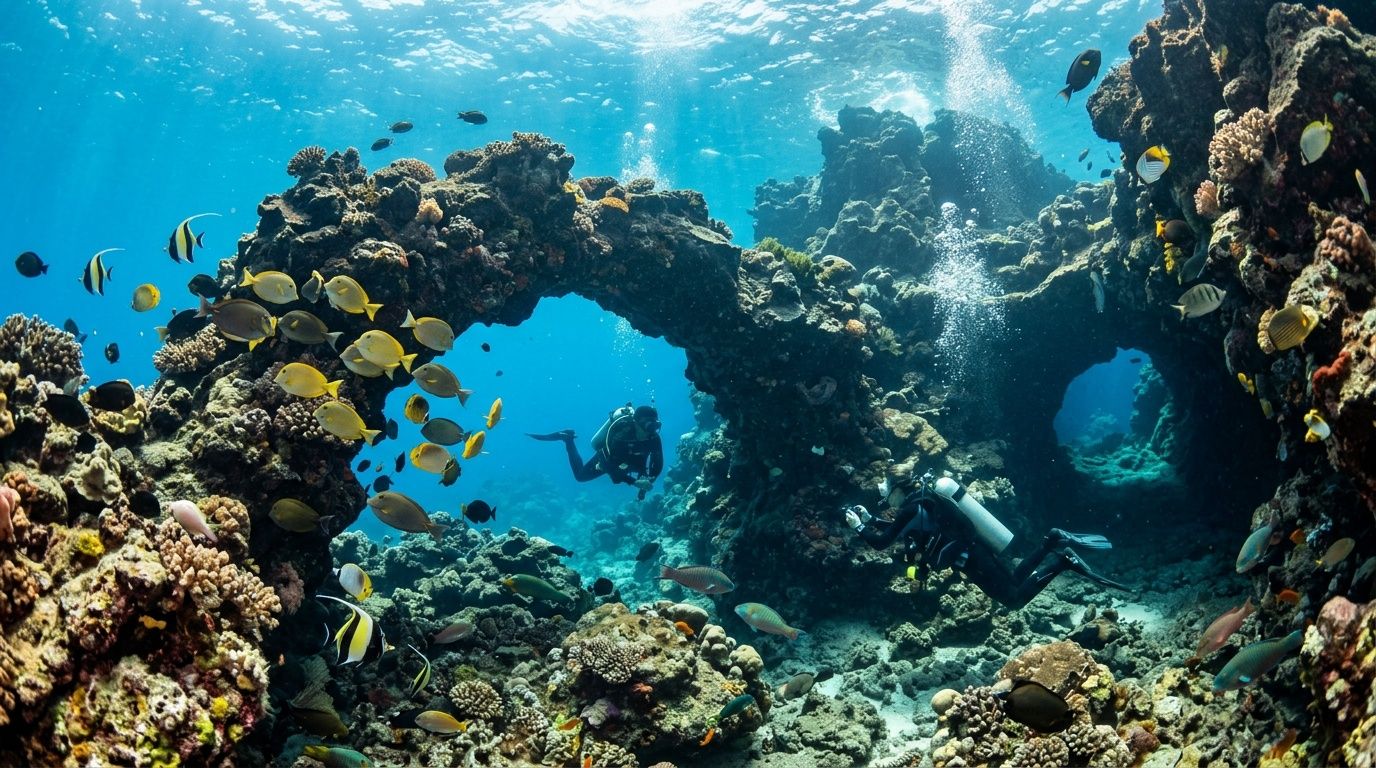
A useful benchmark comes from this Big Island diving explanation, which notes that the Kona coast's visibility frequently exceeds 100 feet (30 meters) and that water temperatures generally stay in the 75 to 85°F (24 to 29°C) range. Those are practical numbers, not brochure fluff. They affect how much reef you can see, how relaxed new divers feel, and how much exposure protection you'll want.
Why the west side stays so divable
Good Kona diving starts before you even hit the water.
The island's massive topography blocks much of the wind that would otherwise rough up the surface and suspend sediment. That gives divers the kind of clean blue water that makes depth perception easy and wide-angle views memorable. It also means boat diving remains comfortable on many days when more exposed coastlines would be less appealing.
Here's what that changes in real terms:
- For newer divers: calmer entries and exits reduce stress.
- For photographers: cleaner water gives subjects more separation and better color.
- For advanced divers: consistent visibility makes navigation, team awareness, and site exploration simpler.
- For families and mixed-skill groups: the day is easier when the surface interval doesn't feel like a survival exercise.
Warm water helps more than people think
Visitors often focus on visibility and ignore comfort. That's a mistake.
Stable warm water means divers stay relaxed, burn less energy, and often have a better first dive of the trip. Skill performance tends to be better when people aren't tense from cold. Equalizing is smoother. Breathing settles down faster. Even experienced divers make better decisions when they're comfortable.
A short comparison makes the point:
| Condition | Why it matters underwater |
|---|---|
| Clear water | Easier buddy contact, better scenic value, less task loading |
| Warm water | Lower stress, more comfort, easier adaptation for new divers |
| Leeward protection | More reliable boat diving and smoother surface conditions |
Year-round reliability beats seasonal hype
Some destinations are fantastic for a short weather window and frustrating the rest of the year. Kona's appeal is that it stays useful across seasons. Conditions vary, of course, but the coast's protected position gives the area unusual consistency.
That's a major reason divers return. They aren't gambling on a narrow peak month. They're booking a destination with dependable fundamentals. If you want a deeper explanation of what separates this coastline from other Hawaii diving regions, this overview of what is unique about diving in Kona is a good next read.
Clear water is more than a luxury. It changes safety, comfort, and how much of the reef you actually experience.
Kona's Signature Dive Experiences You Can't Miss
Most destinations ask you to choose between scenic diving and bucket-list diving. Kona gives you both. The mistake is treating every charter like it serves the same purpose.
The smartest way to plan scuba diving kona big island is to pick by experience category. One trip for mantas. One for blackwater if your comfort level fits. One daytime charter focused on lava structure and less-rushed exploration. That approach gives you a stronger trip than trying to cram random sites into a generic schedule.
Manta ray night diving
If you do only one iconic Kona dive, this is the one most divers remember for years.
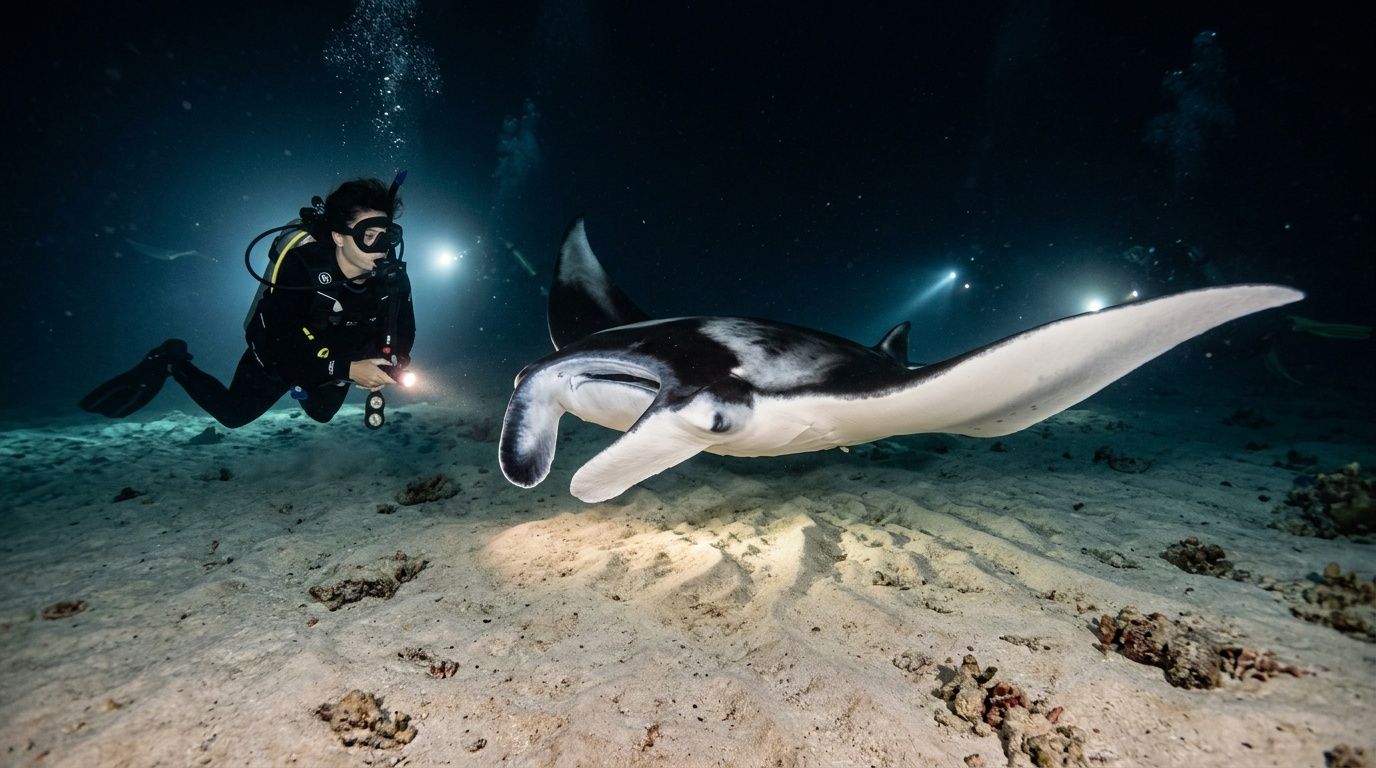
Kona's manta ray night dives use light to attract plankton, which in turn brings in reef mantas. At sites such as Manta Village, divers settle on the seafloor and watch the action build above them. According to this Big Island manta dive guide, encounter rates are over 90%, and the experience is described as one of the top 5 manta experiences in the world.
That's the science part. The diver's version is simpler. You kneel or settle in, keep your position, point your light where instructed, and wait while giant animals loop, roll, and glide through the beam line overhead.
When people ask which manta site I'd rather choose, Garden Eel Cove gets the nod for practical reasons. It's more protected, the viewing area is often more comfortable, and the surrounding reef adds more interest before and after the main show. It tends to feel better organized for divers who want a clean setup instead of a chaotic one.
If manta diving is on your list, book a dedicated manta ray night dive tour rather than hoping to tack it onto a mixed itinerary. If you want broader context on how the local experience works, this page on the manta ray tour Big Island is useful.
Don't chase the manta dive with a camera-first mindset. Settle in, stay still, and let the animals do the work.
Blackwater diving
Blackwater isn't just a night dive offshore. It's a completely different style of diving.
You descend in open ocean at night, usually over deep water with no reef reference below, and watch larval, juvenile, and pelagic organisms rise into the lit water column. The animals are tiny, transparent, alien-looking, and constantly moving. It's part photography challenge, part biology lesson, part sensory reset.
This isn't the right fit for every certified diver. It helps if you're already comfortable with buoyancy, darkness, and limited visual reference points. If you need the reassurance of a reef under you, start with a conventional night dive first. If you're already steady in the water and want something far outside normal tropical diving, blackwater belongs high on your list.
The right move is booking a purpose-built blackwater night dive tour. Don't treat it as an impulse add-on.
Long-range dives for lava structure and cleaner pace
Kona's volcanic coastline creates some of the most satisfying structure diving in Hawaii. Arches, lava tubes, hard edges, fingers, and broken terrain give the reef shape that many tropical destinations don't have.
Long-range trips make sense for experienced divers who don't want a basic nearshore loop. The value isn't speed for its own sake. It's range. More access, more site variety, and often a better chance to dive places that feel less repetitive.
A few practical trade-offs matter:
- Choose long-range trips if you're already dialed in on air consumption, boat routine, and current awareness.
- Skip them if you're rusty, underweighted, or still troubleshooting buoyancy.
- Use them well by pairing them with a lighter dive day before or after, especially if a night dive is also on your schedule.
For that style of day, look at an advanced long-range dive tour.
Build the trip around what's hard to replace
A lot of visitors spend too much of the budget on lodging and too little on the dives that make Kona special. If you're still balancing where to stay versus how much to spend on charters, it can help to save on your next beach resort and put more of the trip budget into the underwater part you'll remember.
The strongest Kona itinerary usually looks like this:
- Start with a daytime reef charter to settle weighting and buoyancy.
- Add the manta night dive early in the trip so weather shifts don't leave you disappointed.
- Book blackwater or advanced long-range dives once you know your energy level and comfort.
That order works because it builds confidence first, then layers on the unusual experiences.
Planning Your Kona Dive Trip Logistics and Booking
A smooth Kona dive trip usually comes down to a few decisions made before you ever step on the boat. Most problems I see aren't underwater problems. They're booking problems, packing problems, or schedule problems.
When to dive and how to pace the trip
Kona is a year-round dive destination, so the better question isn't “What month can I dive?” It's “How should I arrange my dive days?”
If you're doing several charters, don't stack your most demanding dives back-to-back unless you already know you handle repetitive diving well. Mix in easier mornings, a relaxed afternoon, or one non-diving day. If winter timing lines up with your trip, hearing whale sounds underwater can be a memorable bonus, but it shouldn't be the only reason you choose your dates.
A practical rhythm looks like this:
- Arrival day: Don't plan an aggressive dive schedule right after travel.
- First full dive day: Start with standard reef diving.
- Specialty night: Put mantas on a day when you're not already exhausted.
- Advanced day: Save blackwater or long-range dives for when your weighting and trim already feel sorted.
What to bring and what people forget
The basics are obvious. Certification card, swimsuit, towel, reef-safe sun protection for topside use, water, and any personal dive gear you strongly prefer.
The forgotten items are usually the ones that affect comfort:
- Light layers for the ride back: Even warm destinations feel cool after multiple dives.
- A dry bag or simple gear tote: Keeps electronics and personal items out of the spray.
- Spare defog and hair ties: Small thing, big annoyance if forgotten.
- Logbook notes or phone notes: Helpful if you're planning additional dives or skills training.
How to choose an operator
Don't just compare price and departure time. Compare how the day is run.
A few criteria tell you a lot:
| What to check | Why it matters |
|---|---|
| Group size and pace | Affects stress, bottom time, and whether the trip feels rushed |
| Boat layout | Matters for entries, exits, and comfort between dives |
| Guide expectations | Especially important for night diving and advanced charters |
| Nitrox availability | Useful if you're doing repetitive diving and already certified |
| Safety culture | You can usually hear this in the briefing before you ever enter the water |
If you're comparing local options, this overview of a Kona diving company lays out the kind of services and trip structure serious divers should look for.
One local operator that offers tours, courses, and free nitrox for qualified divers is Kona Honu Divers diving tours.
Booking mistakes that are easy to avoid
The biggest one is waiting too long to reserve specialty dives. Manta and blackwater aren't the kind of experiences you want to leave to chance.
Another common mistake is booking your final dive too close to your flight home. Build a conservative cushion. Diving should shape the trip schedule, not fight it.
A well-planned Kona trip feels easy because the decisions were made early, not because the diving is simple to improvise.
Certification Courses and Advancing Your Skills in Kona
Kona is one of the rare places where training doesn't feel like a compromise. New divers get conditions that reduce stress, and experienced divers get a natural classroom for improving precision.
Good place for beginners and families
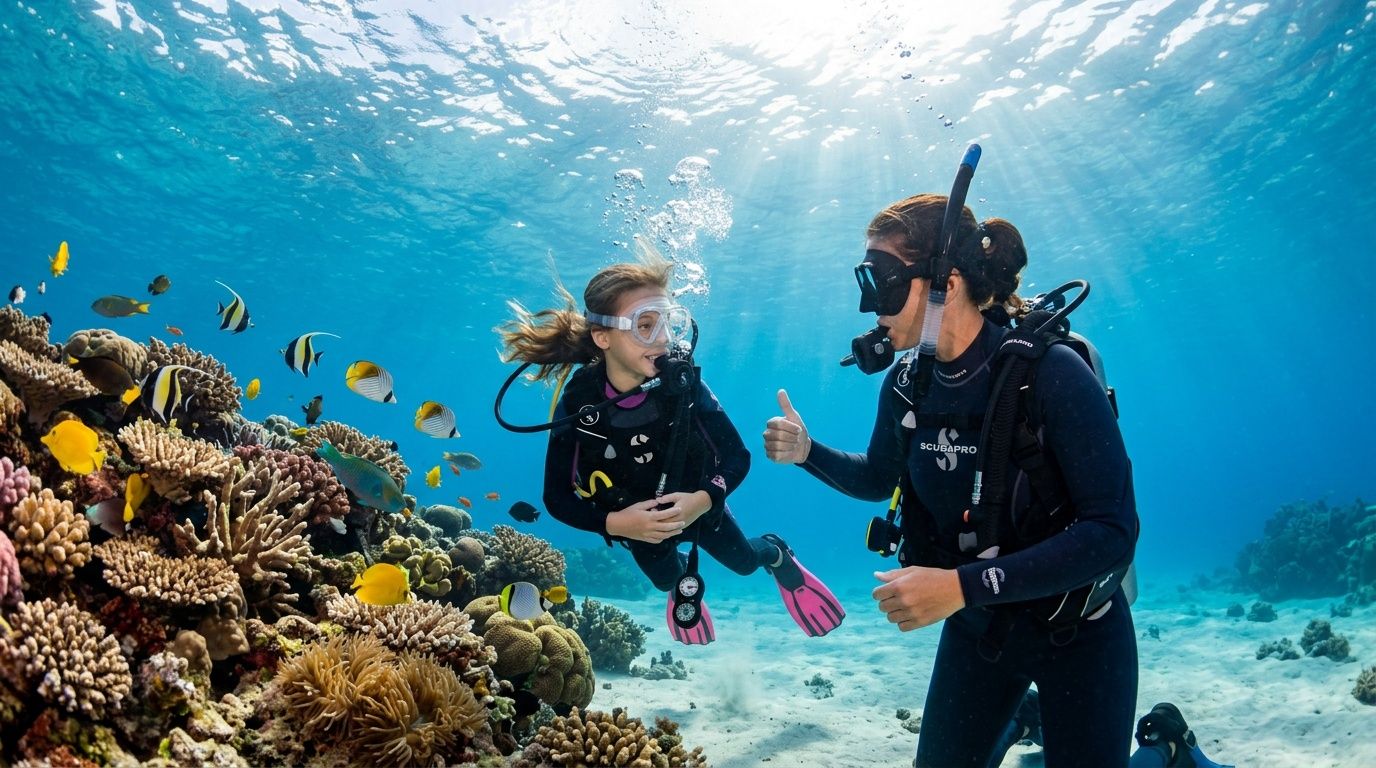
If someone in your group has never dived before, calm clear water changes the whole learning curve. Students can see what the instructor is doing, stay oriented, and spend less energy dealing with poor conditions.
That makes Kona well suited for:
- Discover Scuba experiences for travelers who want a supervised first dive
- Open Water courses for students who want training in comfortable conditions
- Family-friendly progression where one person certifies while others snorkel or dive
New divers tend to improve faster when the environment isn't fighting them.
Better place to sharpen real dive skills
Certified divers often come to Kona thinking only about sightseeing. They leave realizing they should have used the trip to level up.
Night diving skills, buoyancy control, situational awareness, and underwater photography all benefit from clear water and varied terrain. If you're already certified and want more than a scenic vacation, this is a smart place to work on task loading without piling on unnecessary stress.
A few specialties fit Kona especially well:
- Advanced training: useful if you want deeper site access and more confidence
- Night diver skills: valuable before manta or blackwater trips
- Underwater photo practice: clarity and marine life variety help a lot
- Nitrox training: one of the most practical upgrades for repetitive dive travel
Nitrox matters even more now
Nitrox isn't magic, but it is useful. On repetitive dive days, many divers appreciate the extra flexibility, the shorter pressure on their schedule, and the reduced fatigue they often report compared with similar profiles on air.
That benefit also ties into a bigger shift. According to this Kona coast climate and diving discussion, post-2025 ocean warming data highlights risks to shallow coral reefs, and advanced divers can adapt by using Nitrox, offered free by operators like Kona Honu Divers, to safely extend bottom time on deeper, often more resilient reef systems.
That doesn't mean shallow dives stop being worthwhile. It means smart divers expand their toolkit. Better gas choices, better buoyancy, and better planning all make the trip more flexible.
Essential Dive Safety and Health Tips for Kona
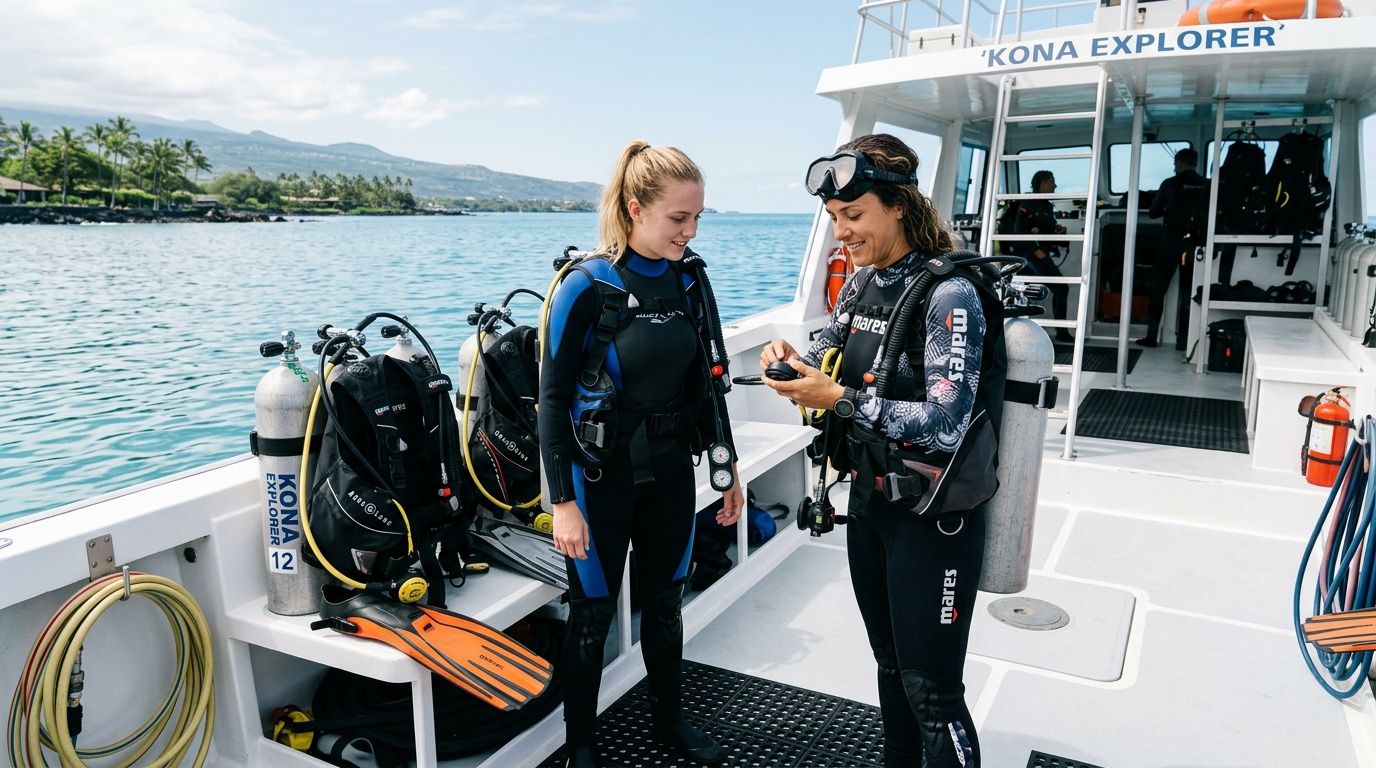
Strong divers look calm because they handle the basics early. They hydrate. They check gear before the boat leaves. They don't cut corners because the water is warm and the site is famous.
The non-negotiable pre-dive habits
Start with the simple stuff. It prevents most avoidable problems.
- Hydrate early: Start before the boat ride, not after the first dive.
- Check your own kit: Even if staff set up gear, verify your air, weights, releases, and computer.
- Respect surface intervals: Don't let vacation excitement push you into sloppy planning.
- Protect the marine life: On manta dives, passive interaction is the rule. Stay where you're placed and don't chase or touch animals.
Calm divers aren't casual. They're prepared.
Seasickness can ruin a good dive day
Kona often offers comfortable boat diving, but even easy seas can turn into a bad day if you're prone to motion sickness. Handle it before boarding, not after the horizon starts moving.
Divers commonly consider options like Ship-EEZ Seasickness Patch, Dramamine pills, Bonine pills, Sea Band wristbands, or Ginger chews. The right choice depends on how your body responds and whether drowsiness is an issue for you.
A few habits help regardless of which preventive you choose:
- Eat lightly, not heavily
- Keep eyes on the horizon during the ride out
- Avoid hanging out in exhaust or enclosed cabin air if that triggers nausea
- Tell the crew early if you're starting to feel off
Flying after diving is not flexible
Vacation schedules tempt people to squeeze in one last dive before departure. Don't.
After diving, you need a safe no-fly interval. If you want a plain-language refresher on the reasoning, this explanation of why you can't fly after diving covers the basics clearly. For divers who want a broader wellness-oriented explanation of hyperbaric treatment context, this article on MedEq Fitness wellness solutions is also useful background reading.
Your best last-day plan on the Big Island is simple. Stay dry, enjoy the island, and let your body off-gas without pressure.
Kona Scuba Diving FAQ
Is Kona good for solo divers
Yes. Boat diving in Kona works well for solo travelers because crews routinely pair divers by experience and keep a close eye on team fit. The key is being honest about your recent diving, air consumption, and comfort level with night or advanced conditions.
What marine life might I see besides mantas
Quite a bit. Turtles are common on many reef dives, and divers also look for reef fish, eels, and occasional larger pelagic visitors depending on site and conditions. Blackwater adds a totally different category of life, with pelagic juveniles and larval animals that most divers never see on ordinary reef trips.
Is boat diving better than shore diving on the Big Island
For most visitors, yes. Boat diving opens access to cleaner entries, broader site choice, and specialty experiences that shore diving can't provide. Shore diving can still be worthwhile for locals or very self-sufficient divers, but many visitors underestimate how awkward lava entries can be.
How many dive days should I plan
If Kona is the main reason for your trip, plan enough days to include at least one standard daytime charter and one signature experience. That gives you both the classic reef side of Kona and one of the experiences that makes the destination stand out.
Is blackwater only for technical divers
No. It's not a technical dive by default, but it is more comfortable for divers with solid buoyancy and good situational awareness. If you're newly certified and still task-loaded in basic night conditions, do a conventional night dive first.
What's the biggest planning mistake visitors make
Booking too few days on the water, then trying to force every highlight into a rushed schedule. Kona rewards divers who leave room for weather, energy, and repeating the experience they end up loving most.
If you're ready to turn the research into dive days, start with Kona Honu Divers. They offer Kona boat diving, manta trips, blackwater dives, courses, and trip options that make it easier to build a Big Island itinerary around the experiences you want.