
You’re probably in the same spot most visiting divers are in before they book Kona. You’ve seen the manta photos, heard people talk about lava tubes and impossible visibility, and now you’re trying to sort out what’s worth your time on the Big Island.
That’s the right approach. Scuba diving Kona Big Island isn’t just good because Hawaii is beautiful. It’s good because the west side of the island gives divers a rare combination of calm water, volcanic structure, and signature dives that you can’t duplicate by just picking any tropical destination and hoping for the same result.
The trick is knowing why Kona works, which dives deserve a place on your schedule, and where people often make poor choices. A lot of visitors waste dive days by choosing sites that don’t fit their skill level, overpacking their itinerary, or treating the manta dive like the only reason to get in the water. Kona has much more range than that.
Why Kona is a World-Class Scuba Diving Destination
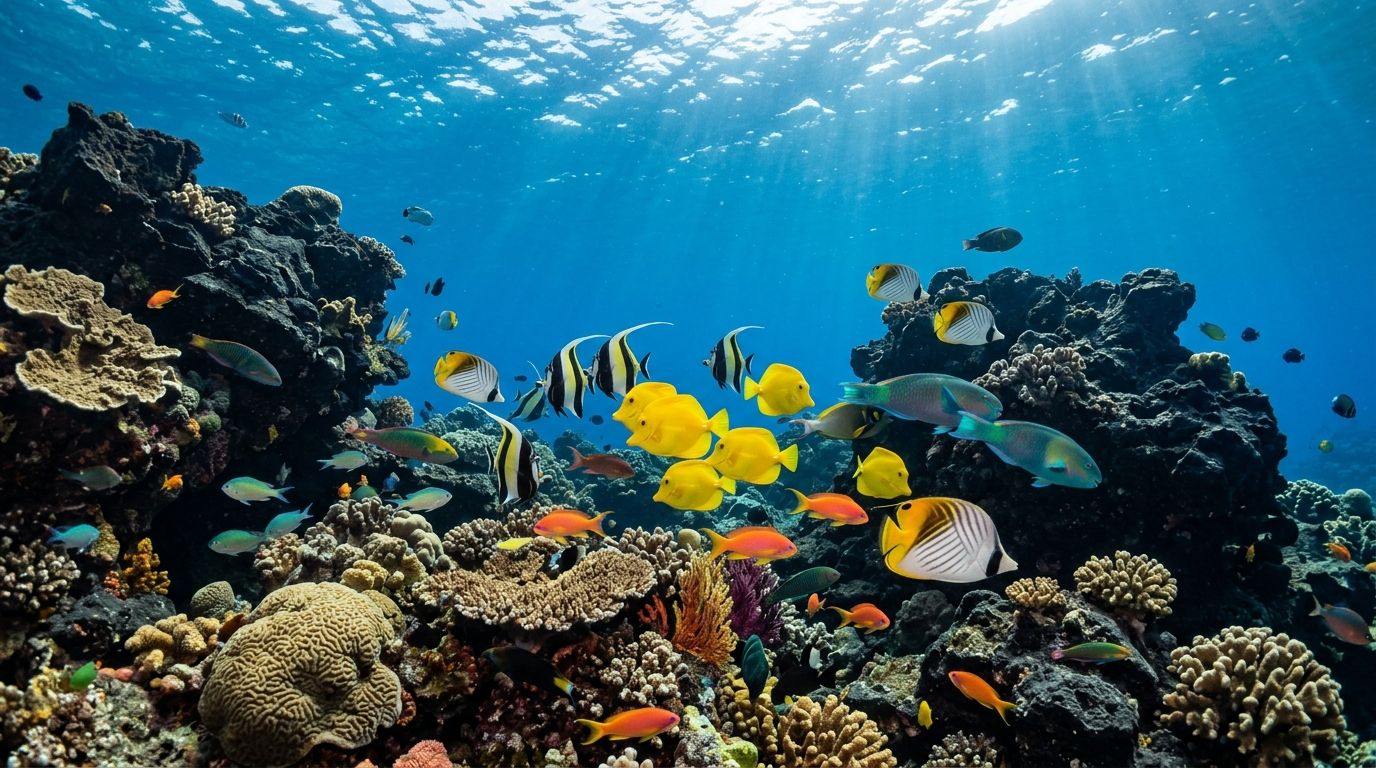
Kona earns its reputation for a reason. The coast sits behind two massive volcanoes, and that geography changes everything underwater. Mauna Loa and Hualalai create a natural windbreak that protects the western shoreline from trade winds, producing consistently calm conditions and visibility that often exceeds 100 feet according to this explanation of Kona’s volcanic shield effect.
That matters more than most travelers realize. Calm water doesn’t just make the ride nicer. It makes entries easier, gas consumption more relaxed, navigation cleaner, and underwater photography far more rewarding. For new divers, that means less task loading. For experienced divers, it means more freedom to enjoy the site instead of spending the whole dive managing surface chop or stirred-up water.
Lava made the diving
Kona’s underwater terrain is the other half of the story. Ancient lava flows didn’t stop at the shoreline. They kept going underwater and formed arches, caverns, tubes, ledges, and twisted reef structure that give these dives their character. That’s why a reef dive in Kona often feels more dimensional than a standard coral slope.
If you want a broader island comparison before you commit to a trip, this guide to explore Hawaii's best dive sites is useful context. But Kona stands out because the topography and the conditions work together.
Good Kona diving isn’t about one flashy animal encounter. It’s about reliable water, clean visibility, and structure underwater that keeps every descent interesting.
Why divers keep coming back
The best dive destinations are the ones that let you build a trip around different moods and skill levels. Kona does that well. You can spend one day on an easy reef, another on a manta night dive, and another exploring more complex volcanic formations without feeling like you’re repeating yourself.
There’s also a practical side to it. A place with dependable conditions gives you more confidence when planning a short vacation. If you’ve only got a few days to dive, reliability matters as much as spectacle. That’s one reason divers who want the deeper answer to what makes diving in Kona unique often end up centering their whole Hawaii trip here.
Kona’s Unforgettable Signature Dives
Some destinations have one famous dive and a lot of filler around it. Kona has several dives that feel like headline experiences for completely different reasons.
The manta ray night dive
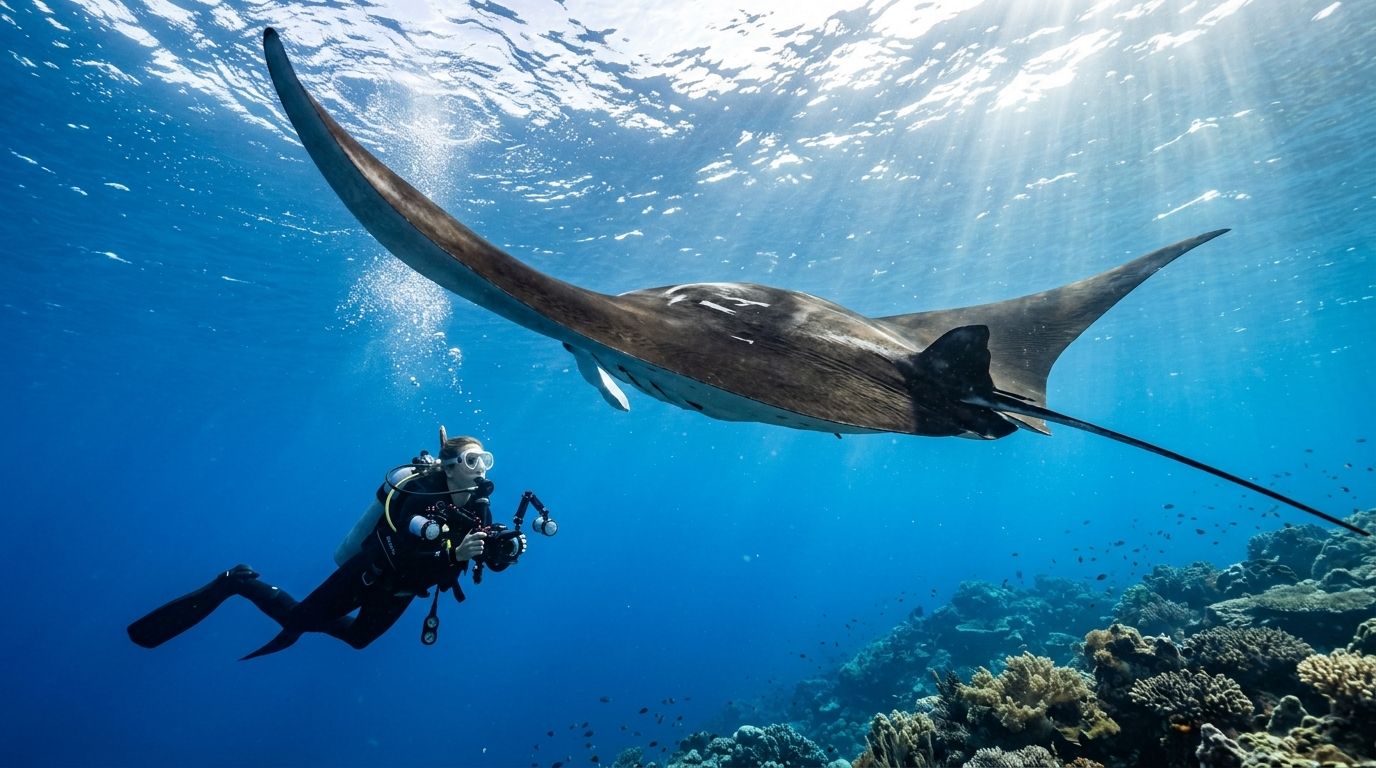
This is the dive that puts Kona on many bucket lists. At the Keauhou Bay manta ray night dive, divers settle in at about 35 feet while lights attract plankton, and 10 or more mantas with wingspans up to 20+ feet may come through on repeated feeding passes, as described in this Big Island manta overview.
What surprises first-timers is that the best manta dive isn’t the one where you swim around the most. It’s the one where you stay controlled, hold position, and let the rays do the work. Chasing mantas usually gives you worse views and a messier group experience.
For tour planning, I’d lean toward Garden Eel Cove over the other commonly discussed manta locations when conditions and logistics line up. It’s a protected location with a better viewing area and stronger reef surroundings, which usually makes the whole experience feel more polished underwater. If you’re comparing formats before booking, this page on the manta ray night swim experience helps clarify what the encounter is like.
If the manta dive is on your list, book a dedicated manta ray dive tour rather than trying to tack it on as an afterthought.
The blackwater dive
Blackwater isn’t for everyone, and that’s exactly why the right divers love it. You’re suspended in open ocean at night over deep water, focused on tiny pelagic creatures rising through the water column into the lights.
This isn’t a dive for someone who needs a reef beneath them to feel oriented. It rewards divers who are calm, precise with buoyancy, and comfortable in the dark without a fixed reference point. If that sounds like your kind of diving, the dedicated Blackwater Dive tour is the right place to start.
Practical rule: Book blackwater because you want unusual pelagic life and you’re comfortable with controlled open-water night diving. Don’t book it just because it sounds edgy.
Lava tubes, arches, and advanced reef structure
Day diving in Kona deserves just as much attention as the night specialties. The lava-made terrain is what gives the coast its identity. Swim-throughs, arches, collapsed tube sections, and broken reef fingers create routes that feel exploratory rather than repetitive.
This is where honest self-assessment matters. Some volcanic formations are forgiving. Others demand clean trim, good fin control, and the discipline not to crowd other divers in tighter spaces. If you like sites with more structure and a little more range, these are often the dives that stay with you longest after the trip.
For stronger certified divers looking for more ambitious site selection, a premium advanced 2 tank trip makes more sense than booking only beginner-friendly reef stops.
What works and what doesn’t
A good Kona itinerary mixes signature dives with classic day diving.
What works:
- Pairing one marquee night dive with morning reef diving so you get both spectacle and variety.
- Choosing dives that match your actual skill level instead of the version of yourself you had in mind while packing.
- Leaving some flexibility so operators can match the day’s conditions to the right site.
What doesn’t:
- Stacking demanding dives back to back when you haven’t dived recently.
- Treating the manta dive as your whole trip and missing the volcanic terrain that makes Kona distinctive.
- Booking advanced profiles for group convenience when part of the group isn’t ready for them.
When to Dive Kona A Seasonal Guide
Kona is one of the easier places in Hawaii to plan because the diving stays workable year-round. The broad pattern is simple. The Kona coast has over 50 unique dive sites, visibility often exceeding 100 feet year-round, and water temperatures ranging from 75 to 85°F, with summer conditions peaking from June through September according to this Big Island scuba overview.
Kona diving conditions by season
| Season | Water Temp (F) | Avg. Visibility | Marine Life Highlights |
|---|---|---|---|
| Winter | 75-85 | Often excellent | Reef life, manta dives, calmer leeward diving compared with more exposed coasts |
| Spring | 75-85 | Often excellent | Strong general reef diving and good comfort for mixed-experience groups |
| Summer | 77-80 | Over 100 feet is common | Baby fish on reefs, warm water, peak conditions |
| Fall | 75-85 | Often excellent | Balanced conditions, good choice for divers who want fewer peak-season crowds |
Summer is the easiest recommendation if your priorities are warm water, clear visibility, and straightforward planning. It’s also when more travelers are trying to do the same thing, so boats and specialty charters fill faster.
Picking the right season for your style
If you want the simplest answer, summer is the high-confidence window. If you want a little more breathing room on land while still keeping strong diving conditions, shoulder periods can be a smart play.
The bigger point is this: in Kona, the question usually isn’t “Will I be able to dive?” It’s “What kind of trip do I want?” That’s a much better place to start than in destinations where weather regularly wrecks plans.
Seasickness planning
Even on a protected coast, some divers get queasy on boats. Don’t try to toughness your way through it. Seasickness drains energy, increases stress, and can ruin a dive day before you hit the water.
Useful options include:
- Patch option: Ship-EEZ Seasickness Patch
- Classic medication: Dramamine pills
- Another common choice: Bonine pills
- Non-medication approach: Sea Band wristbands
- Simple backup: Ginger chews
If you know you get motion sick, handle it before the boat leaves the harbor. Once you’re sick, you’re already behind.
Choosing Your Adventure Itineraries for Every Diver
One of the biggest mistakes visitors make is planning by hype instead of planning by fit. Kona can work for beginners, families, intermediate vacation divers, and advanced hunters for unusual dives. The right itinerary depends on who’s in your group and what kind of confidence they bring into the water.
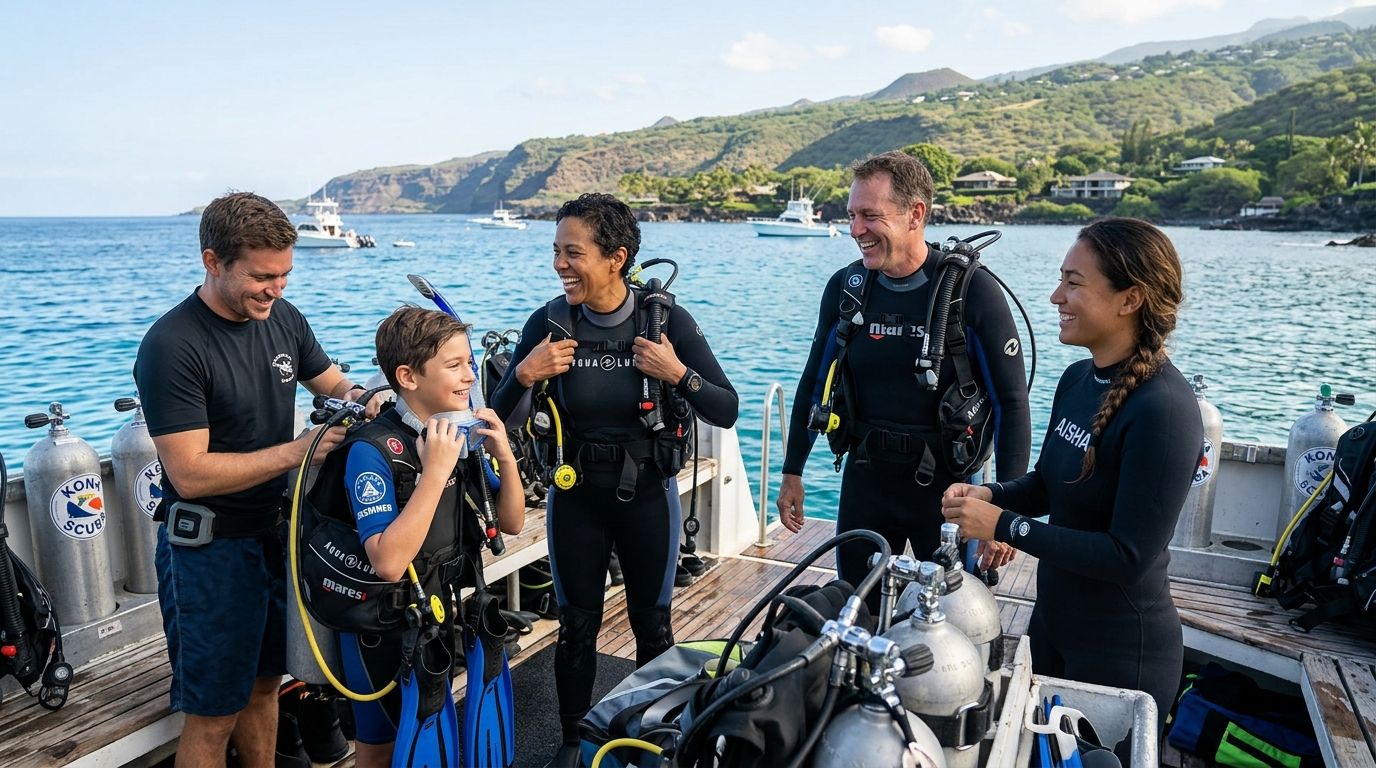
A useful starting point is this: Kona’s calm leeward waters and excellent visibility suit novices and families well, junior certifications are typically available from ages 8 to 10, and supervised boat-based intros at sheltered reefs are safer than popular but tougher shore dives according to this family-focused Big Island diving guide.
Beginner and family friendly plans
If your group includes kids, rusty certified divers, or people doing intro experiences, keep the first day easy. Boat dives at sheltered reefs are the better call over ambitious shore entries. Shore diving can look simple on paper, but uneven lava entries, surf timing, and depth changes can turn a family day into unnecessary work.
A smart 3 day Kona highlights plan for beginners or mixed groups looks like this:
- Day one: Easy supervised reef diving or intro diving.
- Day two: A relaxed two-tank boat morning.
- Day three: Manta experience for certified divers, or a separate snorkel-friendly ocean day for non-divers.
Intermediate divers who want range
This group usually gets the most out of Kona. You’ve got enough comfort to enjoy varied sites, but you don’t need every dive to be technical or aggressive.
Try this approach:
- Start with classic reef and lava structure dives to settle weighting and buoyancy.
- Add the manta night dive once everyone is comfortable.
- Leave one day flexible for a deeper or more terrain-focused charter.
If you want to compare multi-day planning options, these Kona diving packages make it easier to string together a sensible trip instead of booking randomly.
Advanced divers who don’t want a generic vacation
Advanced divers should be selective, not just ambitious. The best trips aren’t built by chasing depth for its own sake. They’re built around dives with a specific payoff, such as stronger volcanic structure, blackwater, or a long-range site with cleaner topography and fewer compromises.
A practical 5 day advanced exploration could include:
- One settling-in reef day
- One manta night dive
- One blackwater night
- One long-range advanced morning
- One final day chosen around energy level and conditions
The strongest itineraries have rhythm. They don’t ask every day to be the hardest day of the trip.
For comparing schedules and trip types in one place, the full Kona diving tours page is the easiest way to sort the options.
Dive with the Best Kona Honu Divers
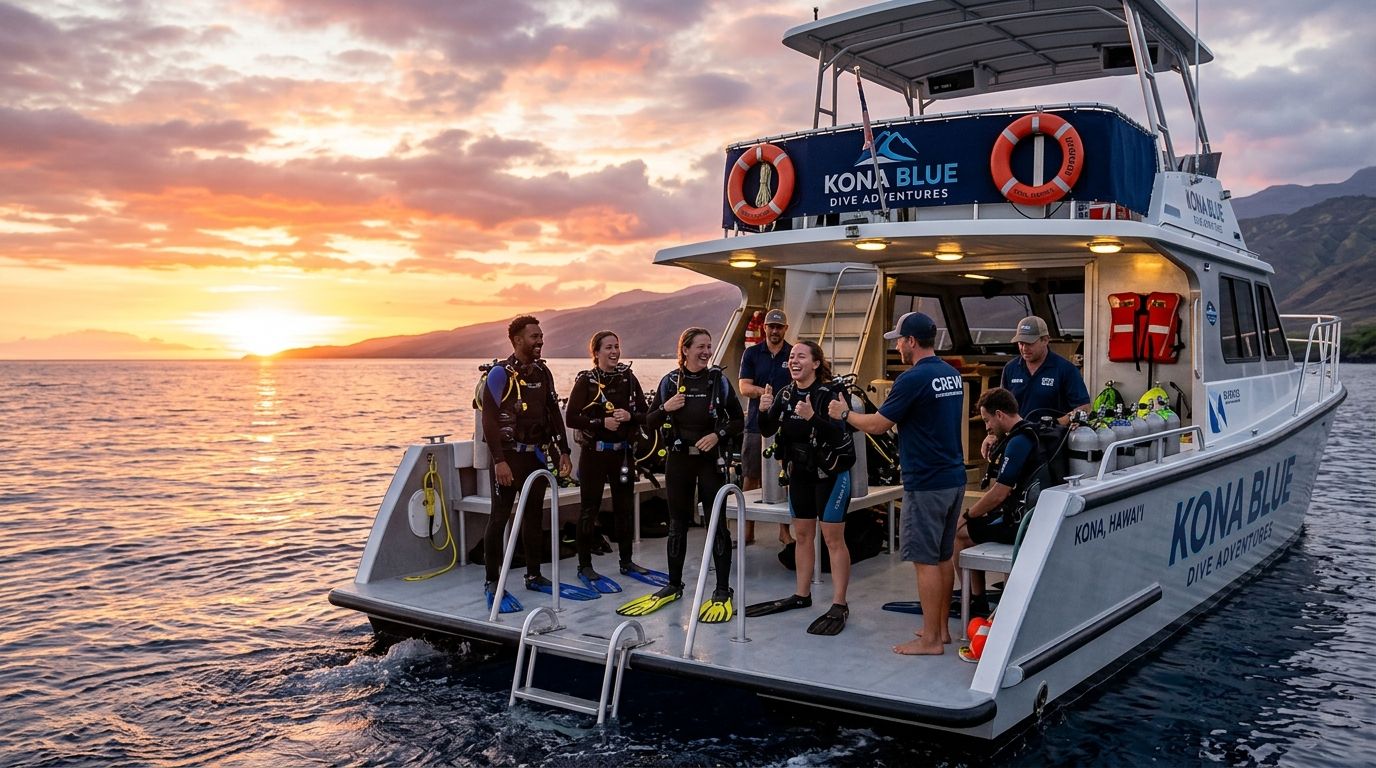
Operator choice shapes your trip more than most divers admit. Boats can visit the same coastline and still deliver very different experiences based on safety culture, briefing quality, group management, and how well the crew matches divers to sites.
Kona Honu Divers is one option for scuba diving on the Big Island. According to the company background provided, it offers custom dive boats, maintained rental gear, free Nitrox, early diver discounts, and a staff with over 200 years of combined industry experience. For travelers who want to see who they’ll be diving with, this page introduces the Kona dive team.
What matters on a real dive day
A good operator doesn’t just move tanks from dock to boat. The practical details make the difference:
- Briefings should be site-specific. Lava structure, night dives, and changing visibility all require clear expectations.
- Crew judgment should be visible. You want people who adapt the plan when the ocean asks for it.
- Gear handling should feel organized. Small failures on deck become bigger failures underwater.
- The boat should support comfort. Space, flow, and entry logistics matter more than glossy marketing photos.
That’s why experienced divers often care less about slogans and more about how the crew runs the day.
Why small decisions matter
The best dives often come from unglamorous competence. Was the entry smooth? Did the guide place the group correctly for the manta dive? Did the site choice reflect the actual conditions instead of a fixed script? Those are the things that shape whether a vacation dive feels average or memorable.
If you’re evaluating operators, look for specifics:
- How do they organize diver groups?
- How do they handle mixed experience levels?
- What specialty dives do they run consistently?
- How clearly do they communicate before the trip?
Sustainable Diving How to Protect Kona’s Paradise
A lot of dive marketing still sells the ocean as if it’s untouched and endlessly resilient. That’s the wrong mindset for Kona, and for diving in general.
The more honest view is that these reefs are spectacular and also vulnerable. Recent NOAA alerts have highlighted coral bleaching on the Big Island, and studies have noted manta behavioral shifts linked to overtourism. Some operators are responding with sustainability certifications that include practices such as using Nitrox to reduce diver impact and respecting reef-free zones, as discussed in this summary of Kona dive site sustainability concerns.
What responsible divers do differently
Responsible diving in Kona isn’t abstract. It shows up in your body position, your fin control, and whether you treat marine life like a spectacle or a living system.
Do these things every dive:
- Dial in buoyancy early: If you’re bouncing off the bottom, the reef pays for it.
- Keep your hands to yourself: Coral, lava structure, turtles, and mantas don’t need contact.
- Secure your gear: Gauges and octos dragging behind you cause more damage than many divers realize.
- Use reef-safe sun protection: What you wear into the water matters, even if most of your time is below the surface.
Manta etiquette matters
The manta dive works because divers behave predictably. The animals come to feed in a controlled light field. When people chase, crowd, or freestyle around the site, the interaction gets worse for everyone.
That’s true beyond mantas. Good wildlife encounters usually happen when the diver becomes less intrusive, not more active.
The divers who see the most in Kona are usually the ones who slow down first.
Choose operators who act like stewards
Once again, operator standards matter. Sustainable diving isn’t just a personal virtue. It’s also a system built by crews who brief well, enforce spacing, choose sites carefully, and don’t treat the reef as disposable scenery.
You don’t need to become a marine biologist before your trip. You just need to arrive with the right job description. As a diver, your job is to leave the site looking like you were never there.
Preparing for Your Kona Dive What to Bring and Know
Good dive days start before the boat leaves. Most problems I see are preventable. Missing cards, the wrong exposure layer, poor hydration, and rushed packing create stress that doesn’t need to exist.
For a more detailed gear breakdown, this checklist on what gear you need for a Kona diving adventure is a good companion read.
Your must-have basics
Bring these without fail:
- Certification and identification: Physical or accessible digital records should be easy to pull up at check-in.
- Dive computer and mask if you own them: Personal comfort gear usually matters more than owning every piece of kit.
- Exposure protection you already know works for you: Don’t experiment on vacation.
- Logistical essentials: Towel, reusable water bottle, hat, dry clothes, and sun protection.
What divers forget most often
The most common packing errors aren’t dramatic. They’re small and annoying.
Typical misses include:
- No dry bag or simple storage for personal items on the boat
- No water or electrolytes, followed by headaches later in the day
- No defog
- Incorrect charging plan for camera batteries, lights, or computers
- Flying too soon after diving, because someone planned the last dive day too aggressively
Practical safety habits
A few habits improve almost every Kona dive trip:
- Hydrate the day before, not just the morning of the dive.
- Listen carefully to the site briefing. Kona sites often have specific entry, exit, and route details.
- Be honest about your current comfort level. Rusty divers do better when they say so early.
- Protect your surface interval before flying. Don’t squeeze in one last dive if it puts your travel day in conflict with safe planning.
Preparation isn’t glamorous, but it gives you calmer descents and better dives.
Kona Scuba Diving Frequently Asked Questions
Is Kona good for beginner divers
Yes, if beginners choose the right dives. Kona’s leeward side gives new divers a much friendlier start than more exposed coastlines. The mistake is assuming that because Kona is beginner-friendly, every dive in Kona is a beginner dive. Stick with supervised boat dives and sheltered reef profiles first.
Can complete beginners try scuba diving here
Yes. New divers usually have two paths. They can do an introductory supervised experience, or they can start working toward certification. Which one makes sense depends on how much time they have and whether they want a one-time vacation dive or a long-term training path.
Which manta site should I choose
If you’re comparing the main manta areas, I generally prefer Garden Eel Cove for the protected setting, better viewing area, and more appealing surrounding reef. Manta-focused planning works best when you pick a site based on overall experience quality, not just name recognition.
Is the manta night dive difficult
For a certified diver with decent buoyancy, it’s usually more unusual than difficult. The challenge isn’t depth. The challenge is staying calm, stable, and respectful in the dark while large animals move close overhead.
What if someone in my group doesn’t dive
That’s common. Mixed groups often do better when divers schedule dedicated scuba days and non-divers choose separate ocean activities that fit them better. Don’t force everyone into the same itinerary if their comfort levels are different.
Should I shore dive or boat dive in Kona
Boat diving is the better choice for many visitors. It simplifies access, reduces the physical hassle of lava entries, and makes site selection easier. Shore diving can be rewarding, but it’s a better fit for people who already understand local conditions and are comfortable managing their own entries and exits.
How many days should I plan for scuba diving Kona Big Island
If diving is a major reason for your trip, give yourself several days. That gives you room for easy reef dives, at least one signature night dive, and some flexibility around conditions and energy level. Kona rewards divers who leave space in the schedule instead of trying to cram everything into one rushed day.
If you’re ready to turn research into dive days, take a look at Kona Honu Divers and build a trip around the dives that fit your experience, your group, and the kind of underwater time you want.