
You’re probably here with a specific version of the same question most divers ask before they book. Is scuba diving Kona Big Island as good as people say, and how do you avoid wasting dive days on the wrong trip, the wrong site, or the wrong expectations?
The short answer is yes, Kona delivers. The better answer is that Kona delivers when you match the dive to your skill level, the season, and the kind of experience you want. Some visitors should book easy reef dives and a manta night. Some should go straight for advanced lava structure and blackwater. Some families need an operator that can adjust plans when conditions shift. That’s where local judgment matters more than glossy photos.
Welcome to a Diver’s Paradise
Drop into clear blue water off Kona and the first thing most divers notice isn’t just the visibility. It’s how readable the dive feels. Lava fingers, reef edges, sand channels, and fish movement all stand out fast. You’re not descending into a vague blue haze and hoping the site develops. You can usually see the structure right away, settle your breathing, and start diving instead of adjusting to chaos.
That’s a big reason scuba diving Kona Big Island keeps people coming back. Hawaii sees over 1.5 million dives annually, and the Kona Coast has become the premier destination in that larger market because the coastline is protected from trade winds by massive volcanoes, creating calm water and visibility that often exceeds 100 feet year-round according to this overview of Hawaii scuba diving.
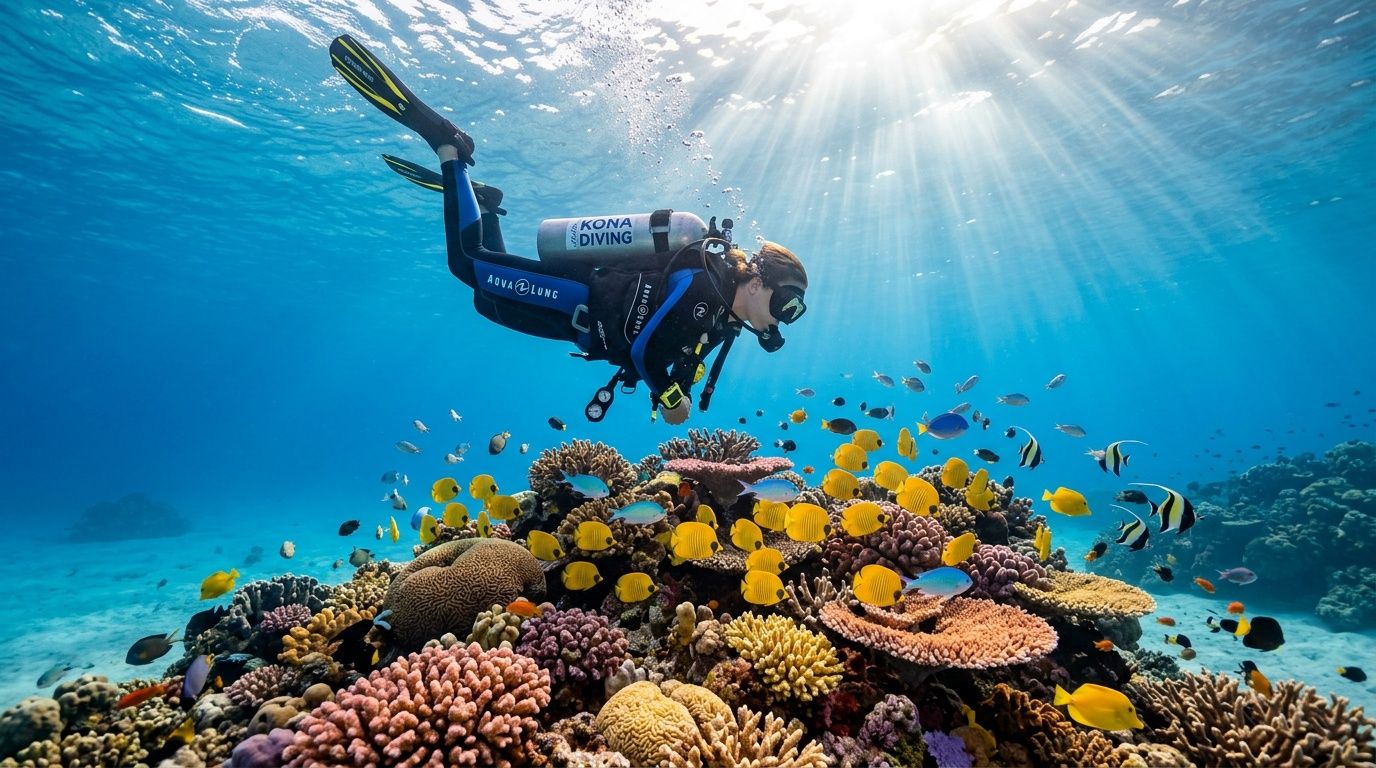
Some places are known for one signature dive. Kona gives you range. You can spend a morning on lava formations and reef fish, come back for a manta night dive, then dedicate another evening to pelagic blackwater if your skills are up to it. That variety matters because not every diver wants the same trip.
What makes a Kona trip work
A good Kona dive plan usually starts with three decisions:
- Your real comfort level: Certified doesn’t always mean current. If it’s been a while, start easier.
- Your must-do experience: For many divers that’s mantas. For others it’s lava structure or blackwater.
- Your tolerance for changing conditions: Even in a reliable destination, the crew’s site choice affects your day.
Practical rule: Don’t build your whole trip around a list of famous site names. Build it around the kinds of dives you’ll actually enjoy.
If you’re sorting through options, Kona diving tours are the easiest place to compare the major experiences and decide whether your trip should lean beginner-friendly, mixed-skill, or advanced.
The Kona Advantage Why The Diving is World-Class
Kona isn’t world-class by accident. The coastline gets help from geography first, then geology, then biology. That order matters because the calm water comes before the marine life experience. If the sea state is sloppy, even a beautiful reef won’t feel easy to enjoy.
The west side of the Big Island sits in the lee of Mauna Loa and Hualalai, which block the prevailing trade winds. That topographic shielding is why Kona often has calm water, visibility over 100 feet, water temperatures of 75 to 85°F, and access to over 50 unique dive sites almost 365 days a year, with most diving done by boat because the lava shoreline is rough according to this breakdown of Big Island scuba diving conditions.
Why the water stays so diveable
On many coasts, wind and swell decide everything. On Kona’s side, the island itself does a lot of the work.
| Factor | What it does for divers |
|---|---|
| Volcanic shielding | Cuts down direct trade wind impact |
| Leeward coastline | Helps keep boat conditions calmer |
| Lava shoreline | Limits easy shore access, so boats reach better sites |
| Stable conditions | Gives operators more flexibility in site selection |
That doesn’t mean every day is identical. It means crews usually have options. That’s a huge advantage for new divers, photographers, and anyone who’d rather spend their vacation diving than waiting on weather calls.
The underwater terrain is different here
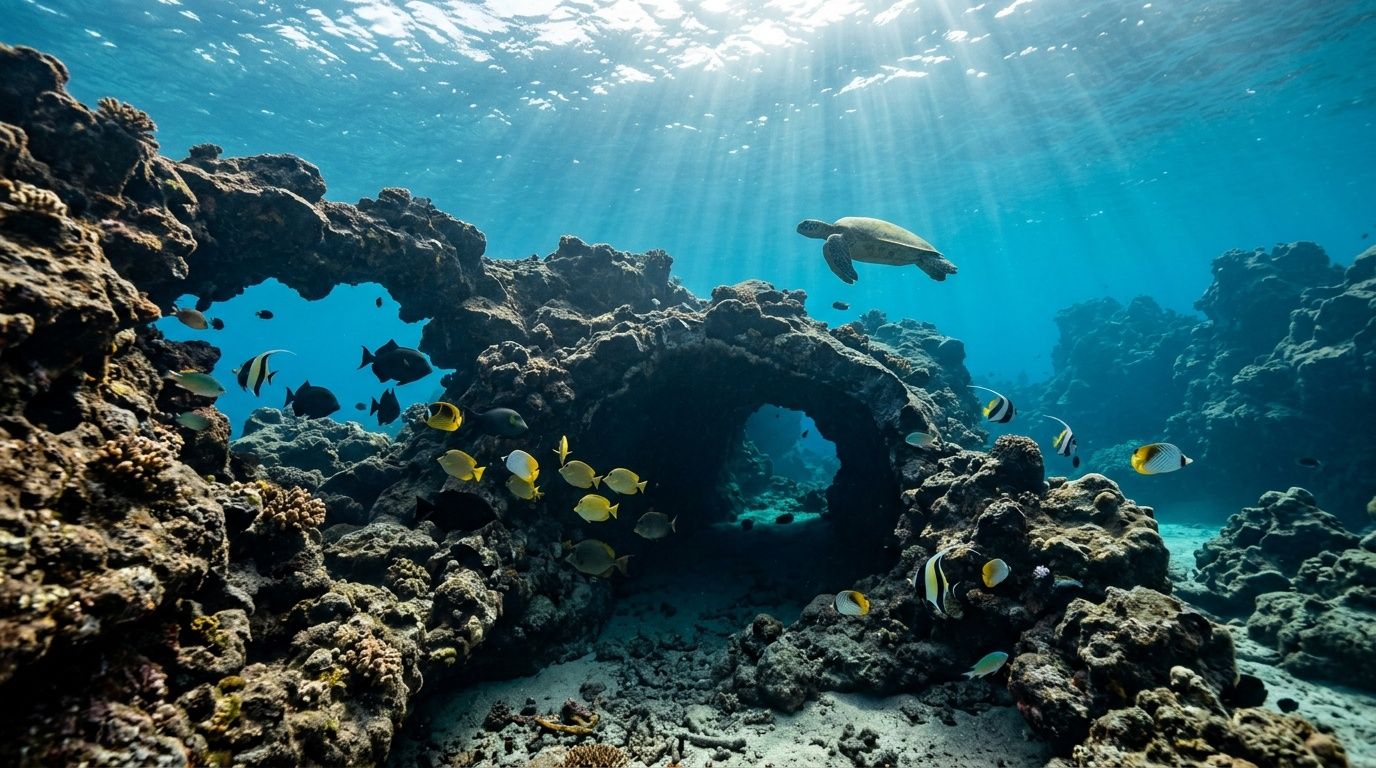
Kona doesn’t look like a soft, endless coral garden. It looks volcanic because it is volcanic. Ancient lava flows created arches, tubes, ledges, caverns, and young rock structure that gives each site more shape than many tropical reef systems. Good buoyancy matters more here because the structure gets interesting fast, and sloppy finning can ruin a clean line through lava features.
That’s also why boat diving makes so much sense here. The coast has access, but it’s not forgiving access.
The marine life is special for a deeper reason
Kona’s marine biodiversity isn’t only about abundance. The region is recognized as having the world’s highest rate of endemism for both marine fish and invertebrates, which means many species you see here aren’t found anywhere else on Earth, as described in this article on what makes diving in Kona unique.
The best Kona dives usually combine three things at once. Calm entries, volcanic structure, and animals that make you slow down and look closely.
That combination is hard to replicate. Plenty of places have good visibility. Plenty of places have reef life. Kona stacks those qualities with lava topography and signature night dives in a way that feels distinct from the first descent onward.
Signature Kona Scuba Diving Experiences
If you want the short list of what defines scuba diving Kona Big Island, it comes down to three experiences. The manta ray night dive. The blackwater dive. And advanced reef or long-range diving for people who want more challenging structure and more demanding conditions. They are not interchangeable. Each one rewards a different kind of diver.
Manta ray night dive
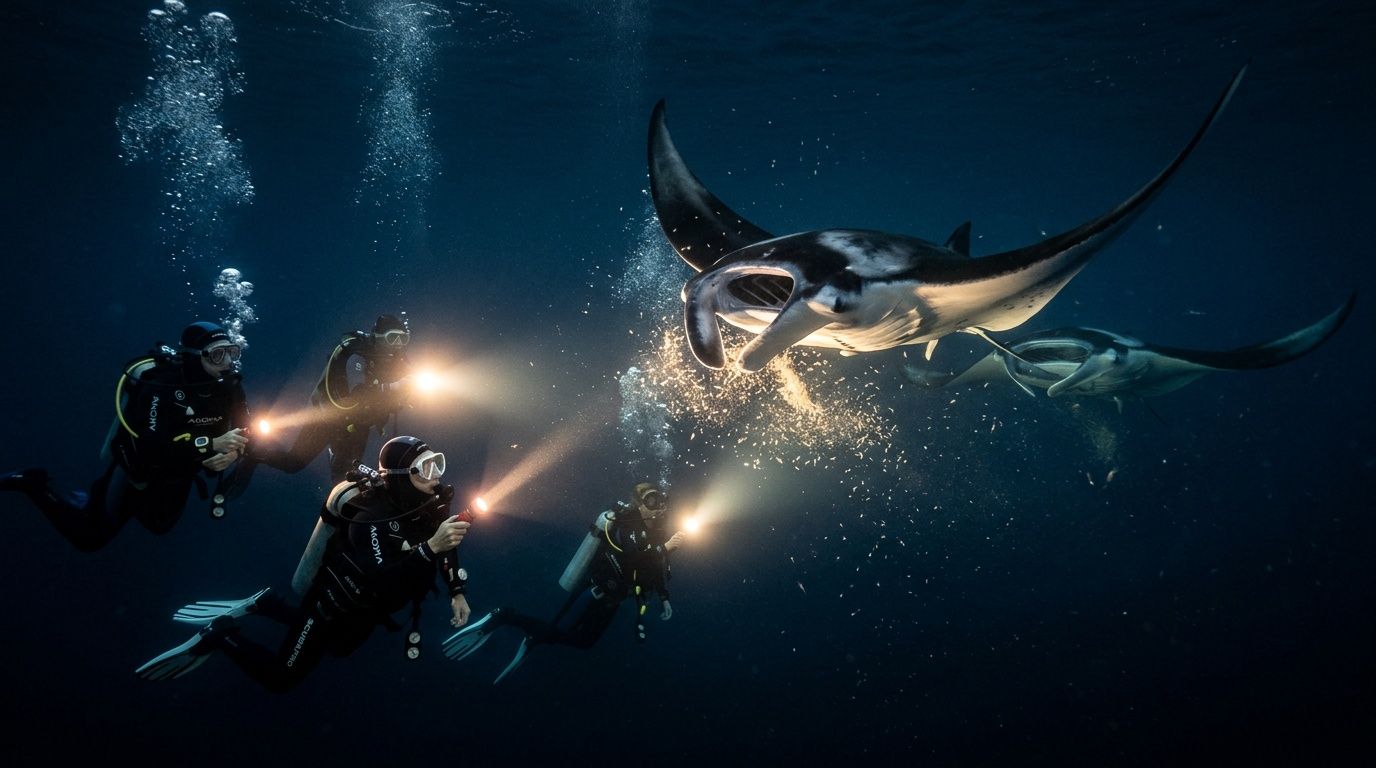
This is the dive many visitors build the trip around, and for good reason. Divers gather near the lights, plankton concentrates in the illuminated water, and manta rays sweep through the beam to feed. When it’s run well, the experience feels organized rather than chaotic. You stay in position, keep your profile controlled, and let the mantas do the work.
For this dive, Garden Eel Cove is the stronger choice. It’s more protected, it gives divers a better viewing area, and the reef quality is better than less protected alternatives. If you want the details on site selection and setup, the manta ray night dive tour is the relevant trip to compare.
If you want an outside read before booking, this guide to the best manta ray night dive Kona does a useful job explaining why not all manta operations feel the same in the water.
Who should do it
- Beginner certified divers: Yes, if you’re comfortable at night and can stay settled.
- Families with mixed interests: Often yes, because snorkel options can make it work for the whole group.
- Photographers: Yes, but only if you can control your position and avoid turning the site into a light circus.
Stay still. Don’t chase mantas. Divers who stay put usually get the closest passes.
A lot of people expect a swim-after-the-action kind of dive. That approach doesn’t work. This is one of those rare dives where patience improves the encounter.
For a broader look at the activity itself, manta ray tours on the Big Island help clarify the difference between scuba and snorkel formats.
Blackwater diving
Blackwater is the most misunderstood dive in Kona. It isn’t a reef dive at night. It’s an open-ocean drift dive over deep water, usually 1 to 3 miles offshore, where divers hover at 40 to 70 feet and watch pelagic life rise from depths up to 2,000 feet. The current can run 1 to 3 knots, and the dive demands advanced buoyancy, night experience, and disciplined light use according to this explanation of the Kona Blackwater Dive.
What you see out there can be bizarre. Larval fish, gelatinous animals, invertebrates, and small drifters that look almost unreal under dive lights. It’s one of the few recreational dives where the water column itself becomes the whole subject.
Who should skip it
Blackwater is not the dive to use as a confidence builder. Skip it if:
- You rely on the bottom for orientation
- Night diving already stresses you
- Your buoyancy changes constantly when you stop moving
- Open water with no reef reference makes you uneasy
If that sounds like you, do daylight reefs first. Come back to blackwater when your control is better.
For divers who are ready, the blackwater night dive tour is the right format to look at.
Advanced reefs and long-range diving
Some divers come to Kona for mantas and leave satisfied. Others want the lava structures that make this coast different in daylight. That’s where advanced and long-range trips matter.
These dives are for people who want more than easy profiles near forgiving reef. You may deal with deeper routes, stronger current management, sharper terrain, and more technical navigation through volcanic structure. Sites like Au Au Crater are the kind of places where buoyancy precision stops being a style point and becomes a safety issue.
What works well on these dives
| Diver habit | Result underwater |
|---|---|
| Clean buoyancy | Better control around lava features |
| Honest gas management | More relaxed, safer profiles |
| Calm ascents and descents | Less stress in changing conditions |
| Listening to site briefings | Fewer mistakes around structure and current |
These trips are ideal for experienced divers who don’t want a watered-down itinerary. If that’s your lane, the premium advanced 2-tank trip is the one to evaluate.
Planning Your Kona Dive Trip
Trip planning gets easier once you stop asking for the single “best” month and start asking better questions. Do you want warmer water? Easier family planning? Better odds of very clean visibility? More forgiving conditions for newer divers? Kona is diveable year-round, but the feel of the trip changes.
Seasonal nuance that actually matters
Kona’s leeward coast generally gives divers 80 to 120 foot visibility year-round, but during November through April, northeast swells can reduce visibility to 40 to 60 feet in a small percentage of dives. Experienced operators usually adapt by moving to more protected sites, which is one of the most useful planning details for off-season travelers according to this look at Kona diving visibility.
Summer has its own appeal. Water is warmer, and the reefs often show more baby fish on site. For newer divers or family groups, summer is easy to recommend because conditions tend to feel simpler from the boat ride to the descent.
What recent reef changes mean for expectations
Reef health matters, and it’s worth being honest about it. Recent NOAA data for 2025 to 2026 confirmed the fourth global coral bleaching event affected Hawaiian waters, with sea surface temperatures 1 to 2°C above average. That has caused some coral loss on shallower reefs, while deeper structures and pelagic experiences like manta and blackwater remain largely unaffected according to this summary of recent Kona reef conditions.
That doesn’t mean Kona stops being worth diving. It means divers should arrive with current expectations. If your only idea of a good dive is untouched shallow coral, you should know some sites have changed. If you value lava structure, big-animal encounters, and unique night diving, Kona still delivers in a very meaningful way.
If winter is when you can travel, don’t write Kona off. Just choose an operator that adjusts sites well and avoid locking your expectations to peak-summer photos.
Matching dives to your certification and comfort
Use a simple filter before you book:
- Newly certified or rusty: Choose daytime reef dives first. Add manta if you’re comfortable at night.
- Comfortable recreational diver: Build a balanced itinerary with reef dives, manta, and maybe a second specialty trip.
- Advanced and current: Add blackwater or advanced long-range diving.
- Mixed family group: Choose trips where divers and non-divers can still share part of the experience.
Budget matters too, especially when you’re stacking boat days and specialty dives. If cost is part of your planning equation, what scuba diving costs in Hawaii gives useful context without forcing you to guess.
Essential Gear Safety and Comfort
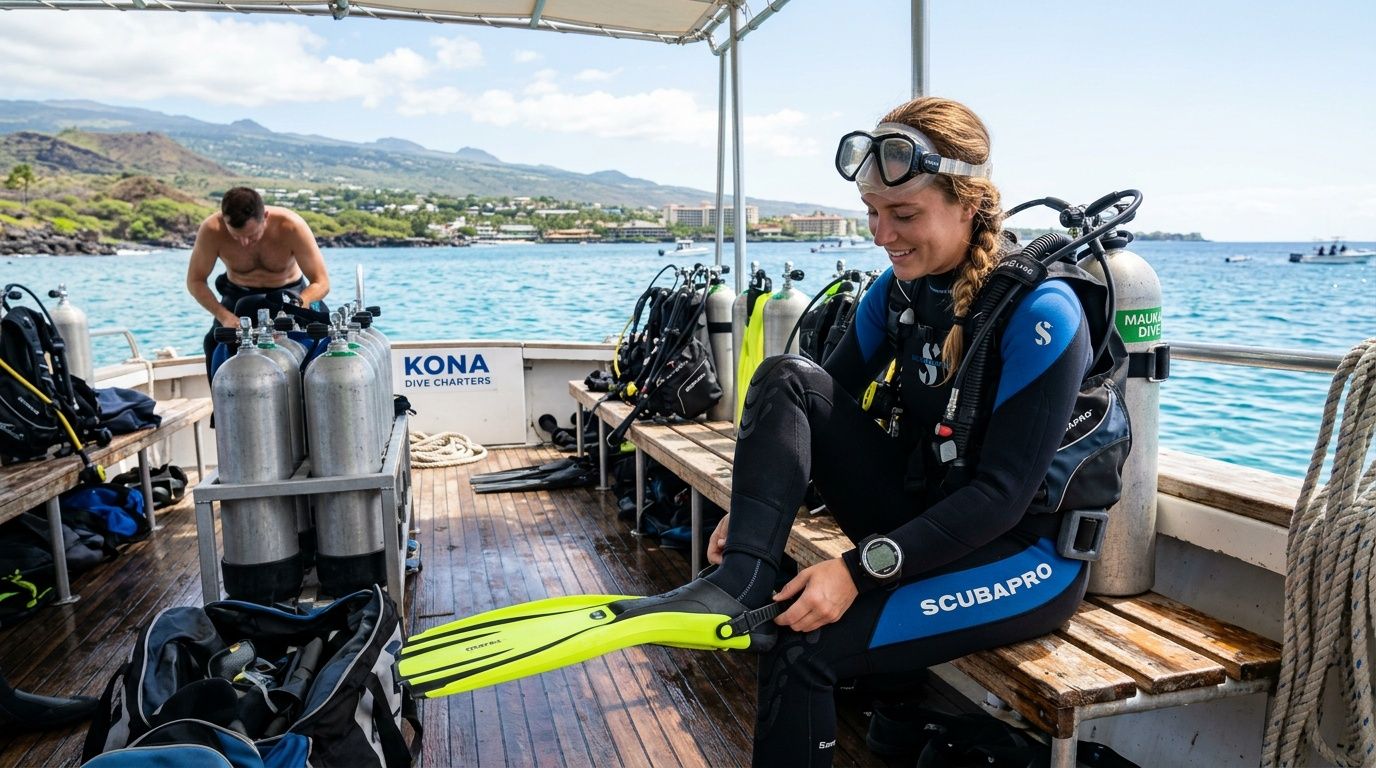
You feel gear problems fast in Kona. A mask that leaks on the first descent, fins that cramp your calves on the swim back to the ladder, or a wetsuit that felt fine in the shop but chills you on the second dive can turn a good boat day into a long one. Pack for fit and familiarity first. Rent the bulky pieces if the operation keeps them in good condition and sizes them carefully.
Exposure protection is a comfort decision, not a toughness contest. A 3 mm suit works for many divers here. Some divers, especially on repeat boat days or night dives, are happier in a 5 mm. If you know you get cold, plan for that from the start. Warm divers stay calmer, use less gas, and enjoy more of the dive.
What to bring and what to rent
The usual split is simple:
- Bring your own mask: Nothing affects a dive faster than poor fit.
- Bring your computer if you know it well: Familiar controls reduce task loading.
- Bring booties if fin fit is tricky for you: Rental fins vary, and hot spots get worse over multiple days.
- Rent BCDs, regulators, and tanks if needed: Well-maintained rental gear is practical for travel and avoids hauling heavy equipment across the Pacific.
- Pack a dry shirt or light jacket for the ride in: Wind chill after a couple of dives catches people off guard.
For a more detailed packing list, this guide to gear you will need for your Kona diving adventure covers the pieces that matter most.
Seasickness prep can save the whole day
Kona often has calm mornings, but calm is not the same as flat. A short ride with a side roll is enough to sideline a diver who showed up unprepared. I tell prone divers to make the call before the trip, not on the dock.
Useful options include:
- Patch option: Ship-EEZ Seasickness Patch
- Classic medication: Dramamine pills
- Less drowsy option for many travelers: Bonine pills
- Non-medication option: Sea Band wristbands
- Simple backup to keep in your bag: Ginger chews
Take whatever works for you early enough to be effective. Eat a light breakfast. Hydrate. Divers who skip food, rush onto the boat, and hope willpower fixes motion sickness usually miss part of the trip.
Safety mindset on the boat and in the water
Good dive days start before the giant stride. Listen to the briefing. Set up early. Ask questions while the boat is still at the mooring, not when everyone is descending. On this coast, entries and exits are usually straightforward from the boat, but current, surge, and ladder timing still matter. Calm, organized divers have easier dives.
Boat safety matters too. If you like understanding onboard standards beyond the usual diver briefing, this article on boat fire extinguisher requirements is a useful side read.
Kona Honu Divers offers rental gear for visitors who want to travel lighter, and that boat-based setup is often the practical choice here. It avoids rough shoreline lava entries and gives the crew more flexibility to put divers at sites that match conditions and experience level on the day.
Booking Your Adventure with Kona Honu Divers
The operator you choose shapes more than the boat ride. It affects site selection, briefing quality, how rushed the group feels, and whether a specialty dive feels controlled or messy. That matters on this coast because the best experiences come from judgment, not just from showing up at a famous name on a map.
Kona Honu Divers stands out on practical criteria that divers feel during the trip. The crew brings over 200 years of combined experience, the company runs custom dive boats designed around diver comfort and safety, and there are useful perks like early diver discounts and free Nitrox for certified divers. If you’re building several days of diving instead of a one-off outing, those details change the week in your favor.
What this means on an actual trip
A good operation improves the dives in ways that aren’t flashy.
| Operational detail | Why it matters |
|---|---|
| Experienced crew | Better site choice and clearer briefings |
| Custom dive boats | Easier entries, exits, and surface intervals |
| Smaller group feel | Less crowding, more attention, calmer dives |
| Free Nitrox for certified divers | Helpful if you’re stacking multiple dives |
This is also where packaging matters. If you’re booking more than one charter, Kona diving packages are worth checking before you reserve individual trips separately.
Which divers get the most value
Some travelers get outsized value from a polished operator:
- Rusty certified divers: Clear briefings and calm boat logistics reduce stress.
- Advanced divers: Specialty dives depend on competent supervision.
- Families and mixed groups: Flexible planning helps when not everyone wants the same ocean day.
- Photographers: Less chaos on the boat usually means a better camera day.
The lineup also makes sense as a full-trip menu. Day reefs for broad appeal. Manta for the classic Kona night experience. Blackwater for experienced divers who want something rare. Advanced charters for those who don’t want beginner-style profiles.
Frequently Asked Questions About Kona Diving
Do I need to be an expert diver to enjoy Kona
No. A lot of Kona’s reef diving works well for beginners and recently certified divers, especially on calm boat dives with straightforward descents. The mistake is choosing an advanced profile too early because the destination has a big reputation.
Is there good diving outside summer
Yes. Conditions remain good year-round, but the right expectation helps. Winter can bring occasional lower-visibility days, and strong operators handle that by shifting to more protected sites rather than forcing a marginal plan.
Are sharks in Kona, and is it safe
Yes, sharks are part of a healthy ocean. Divers do see reef sharks from time to time. In normal recreational diving, they are generally not the problem people imagine. Good briefings, calm behavior, and normal in-water discipline go a long way.
Can non-divers join part of the experience
Often yes, especially on manta-focused outings where snorkel participation can make the trip work for mixed groups. This is one of the reasons Kona works well for families and groups with different comfort levels in the water.
What’s the one booking mistake people make most often
Booking for ego instead of current skill. If you haven’t dived in a while, start easy. The diver who rebuilds comfort on day one usually gets more out of day two and day three than the diver who tries to jump straight into the hardest charter on the schedule.
If you’re ready to plan scuba diving Kona Big Island with a crew that knows how to match conditions, dive type, and experience level, take a look at Kona Honu Divers. It’s the simplest place to compare reef trips, manta nights, blackwater dives, and multi-day options without guessing what fits your trip.