
A calm-looking Kona shoreline can be the wrong place to start a dive. Swell direction, the shape of the coast, and the underwater terrain can turn a modest forecast into a difficult lava-rock entry, as this Kona dive-conditions guide explains. Choosing a boat or a shore entry should be a same-day conditions call, not a decision made from a photograph.
That's the useful starting point for scuba diving in Kona. Match the trip to your skills first, then let the crew match the site to the ocean. A morning reef dive, a manta encounter, and a blackwater night dive offer very different experiences, even when they leave from the same harbor.
Pick the Right Kona Dive First
Kona dive trips compared
| Trip | What you see | Typical depth | Best for | Main limit |
|---|---|---|---|---|
| 2-tank morning reef | Coral gardens, lava tubes, arches | About 30-60 ft (9-18 m) | Certified Open Water divers | Stay inside training limits |
| Premium advanced | Remote pinnacles and drift | Often past 60 ft (18 m) | Advanced or strong deep divers | Current and depth add work |
| Manta night at Garden Eel Cove | Reef mantas feeding in lights | Shallow, commonly under 40 ft | Certified divers and snorkelers, using separate viewing positions | Counts vary with plankton |
| Blackwater night | Larval fish and pelagic oddities | About 40-60 ft over deep water | Comfortable night divers | No reef as a reference |
| Morning introductory scuba | Shallow reef with an instructor | Very shallow, instructor-led | Uncertified beginners | Not a certification by itself |
Choose the dive you can enjoy comfortably
The morning reef trip is the sensible first choice for most certified visitors. It gives you volcanic scenery and marine life without making darkness or an advanced profile the main challenge. It's also a good setting to settle your weighting, check your gas consumption, and get comfortable with rental equipment.
Don't confuse an advanced trip with a better version of the morning boat. Remote pinnacles and drift dives ask more of your buoyancy, gas planning, and ability to follow a moving group. A newly certified Open Water diver should pass on the advanced boat until their training and recent experience match the planned dives.
Garden Eel Cove is the better choice for a manta tour because its protected setting, clearer viewing area, and healthier surrounding reef make it a stronger all-around dive location than more exposed manta sites. Choose it for the quality of the setting and the way the encounter can be managed, not for a promised animal count.
Choose for fit: The best trip is the one where you can pay attention to the marine life instead of spending the dive managing anxiety or unfamiliar equipment.
Separate darkness from difficulty
Blackwater isn't a manta dive with different animals. You're suspended in open water after dark, without a reef beneath you to help judge your position. Anyone uneasy on an ordinary night dive should skip it and build confidence on a reef first.
An introductory dive serves a different purpose again. It gives an uncertified guest an instructor-led introduction to breathing underwater, equalizing, and moving with scuba equipment. It doesn't turn that guest into a certified diver or qualify them to join the certified boat afterward.
Use the Kona diving tours page to compare the trip formats, then read the details that match your row. Pay particular attention to eligibility, equipment, and what happens if conditions require a different site.
For mixed groups, don't assume everybody needs the same activity. A confident snorkeler may enjoy watching from the surface while a certified partner dives, but that arrangement needs a suitable site and an agreed supervision plan. Sharing a boat is convenient; sharing an unsuitable water plan isn't.
Certification, Gear and a Typical Dive Day
For most regular Kona Honu Divers charters, you need at least an Open Water Diver certification from a recognized agency such as PADI, SSI, or NAUI. That qualification allows diving to 60 feet (18 meters) with a buddy, subject to your training restrictions and the conditions. Bring your C-card, not just an assurance that you completed a course.
A card establishes your qualification, but it doesn't show how comfortable you are today. Deeper pinnacles and current-sensitive sites need appropriate training and recent experience. If your last dive feels distant enough that you're trying to remember how to assemble the equipment, start with a refresher.
Get ready before the boat leaves
Our crew members are seasoned Kona locals who know these waters well. Their site selection accounts for the ocean and the divers aboard, so a request for a particular formation isn't a guarantee that the boat will visit it.
A typical day follows a practical sequence:
- Arrive and set up. Check equipment fit, identify your tank and weights, and tell the crew about unfamiliar gear or concerns.
- Listen to the briefing. Understand the site conditions, entry style, route, depth plan, turn pressure, and exit.
- Make the more demanding dive first. The deeper or more condition-sensitive site usually comes before the easier reef.
- Take the surface interval. Rest, hydrate, review the first dive, and raise any equipment issue before the next entry.
- Finish with a more relaxed dive. Use the second site to slow down rather than treating it as a reason to stretch your limits.
Uncertified guests belong in an introductory program or a certification course, not on the certified charter with a promise to stay close to a friend. The scuba classes and refresher options provide the appropriate route, whether you're starting from scratch or rebuilding skills.
Pack for function, not luggage weight
Rental regulators, BCDs, and computers should receive scheduled service. Our rental equipment is proactively serviced, but you still need to check your assembled system before entering the water. Breathe from the regulator while watching the pressure gauge, confirm the inflator works, and locate the releases.
Bring a mask that fits your face. A familiar computer is useful too, provided you understand its displays, alarms, and settings. If you're nitrox-certified, arrange the appropriate gas rather than assuming every cylinder contains air, then analyze and label your cylinder.
- Secure loose equipment. Clip gauges and alternate air sources so they don't drag across coral or catch on rock.
- Carry a surface signal. Know how to use it and agree with the crew on the pickup procedure.
- Complete the paperwork. Pack your C-card, useful logbook details, and any required medical form.
- Set an honest maximum depth. Your plan should reflect your qualification, recent dives, and comfort, not another guest's experience.
Families should agree on separate water plans when necessary. A non-diver's snorkeling entry must suit their swimming ability, even if their certified partner is comfortable descending at that location.
The Manta Night Dive at Garden Eel Cove
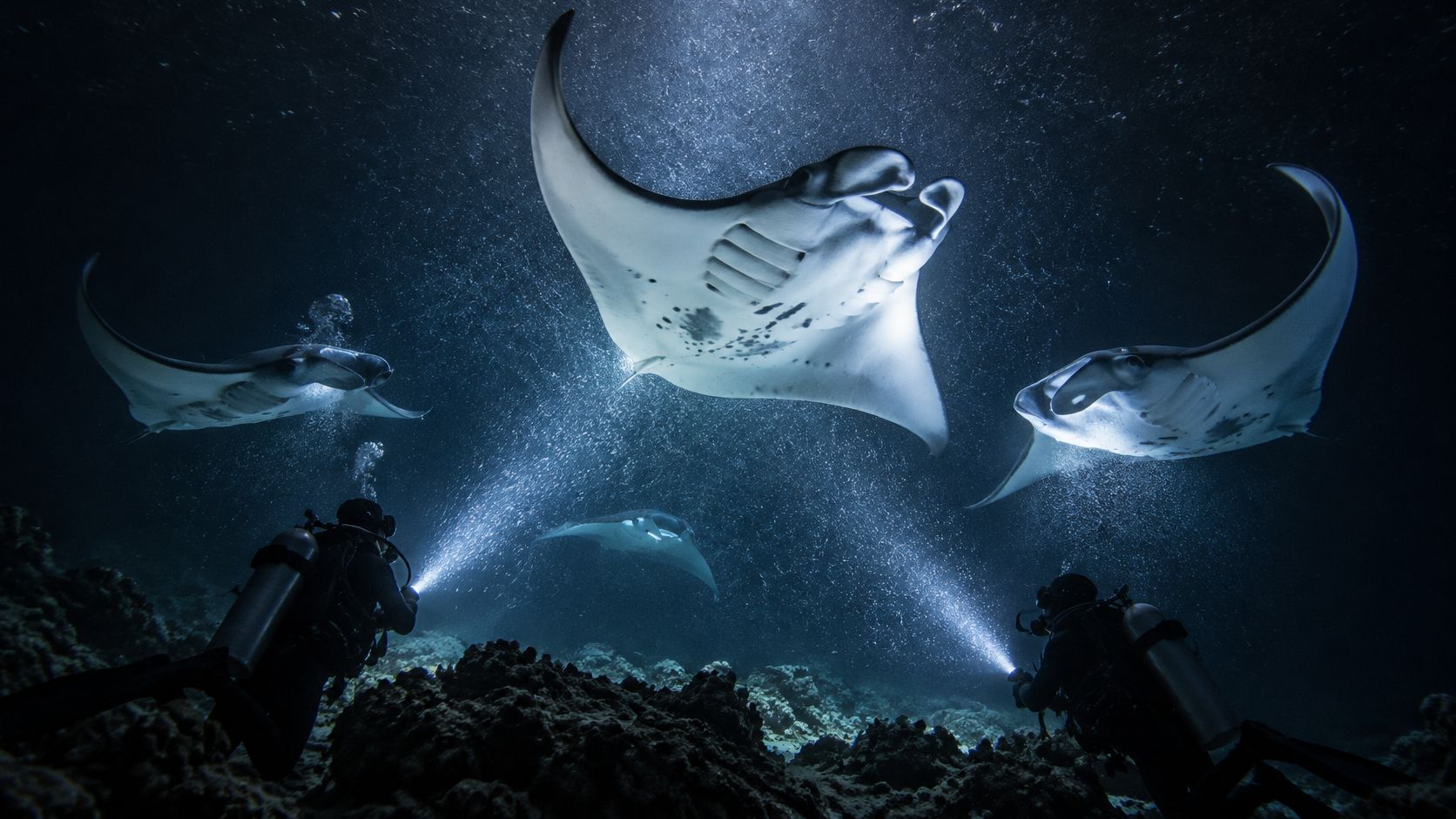
The first thing to watch at a manta station isn't a manta. It's the water around the lights. Small plankton collect in the illuminated area, creating a concentrated feeding opportunity for reef mantas.
A ray may approach, pass through the light, turn, and make another loop. The animals are feeding on plankton, not taking food from a guide's hand. Your job is to stay out of that route and let the encounter develop.
Why this wildlife encounter is distinctive
The Kona Honu Divers manta guide reports that monitoring at Manta Heaven from 2009 through 2014 recorded reef mantas on approximately 92% of monitored nights, including one individual on more than 56% of nights; it also notes that reef mantas can weigh up to 3,600 pounds and that Hawaii made killing or capturing mantas in state waters illegal in 2009.
Those observations describe consistent use of a particular feeding site, not a guarantee for your reservation. Plankton conditions change, and so does manta attendance. A quieter evening is still a wildlife encounter, not a failed performance.
Garden Eel Cove gives the tour a better foundation. Its protected location makes it preferable to a more exposed setting, the viewing area allows a clearer arrangement of observers and feeding space, and the surrounding reef adds value to the dive beyond the manta station.
Protection is relative, however. It doesn't make the cove immune to swell or remove the need for a crew decision. The right operator will change the plan when conditions don't support an orderly entry, viewing session, or pickup.
Stay outside the feeding route
Say a manta turns toward your light and approaches your position. The wrong response is to kick upward, extend a hand, or move into its path for a photograph. Hold your assigned position, keep your body compact, and give it room to pass.
Watch the lane. Don't become the lane.
A responsible station needs disciplined divers as much as good lighting:
- Maintain neutral buoyancy. Don't use the bottom as a place to kneel, stand, or push off.
- Keep the route clear. Stay where the guide places you rather than following a ray through the light field.
- Control your beam. Use the lighting arrangement explained in the briefing without shining into neighboring divers' eyes.
- Keep your hands to yourself. Never reach for a wing, even when the animal passes close.
- Leave room to leave. Keep the ascent and exit route clear, and follow the guide's signal when it's time to move.
Snorkelers observe from the surface using the same illuminated feeding environment. They need their own briefing on flotation, spacing, and returning to the boat. Scuba isn't automatically the better view, and snorkeling isn't automatically the right option for someone uncomfortable in dark water.
Judge the operation, not the advertised proximity
Boats, crowded viewing stations, and poor buoyancy deserve more attention than promises about how close a manta might pass. A smaller, well-briefed group is easier to position and account for, but group size alone doesn't establish good practice. Boat positioning, guide attention, and clear surface procedures matter too.
Before reserving a Garden Eel Cove manta dive or snorkel, read the night manta dive planning guide and decide which viewing position suits your skills. Choose the format that lets you remain calm and predictable around feeding wildlife.
Lava Tubes, Pinnacles and Blackwater
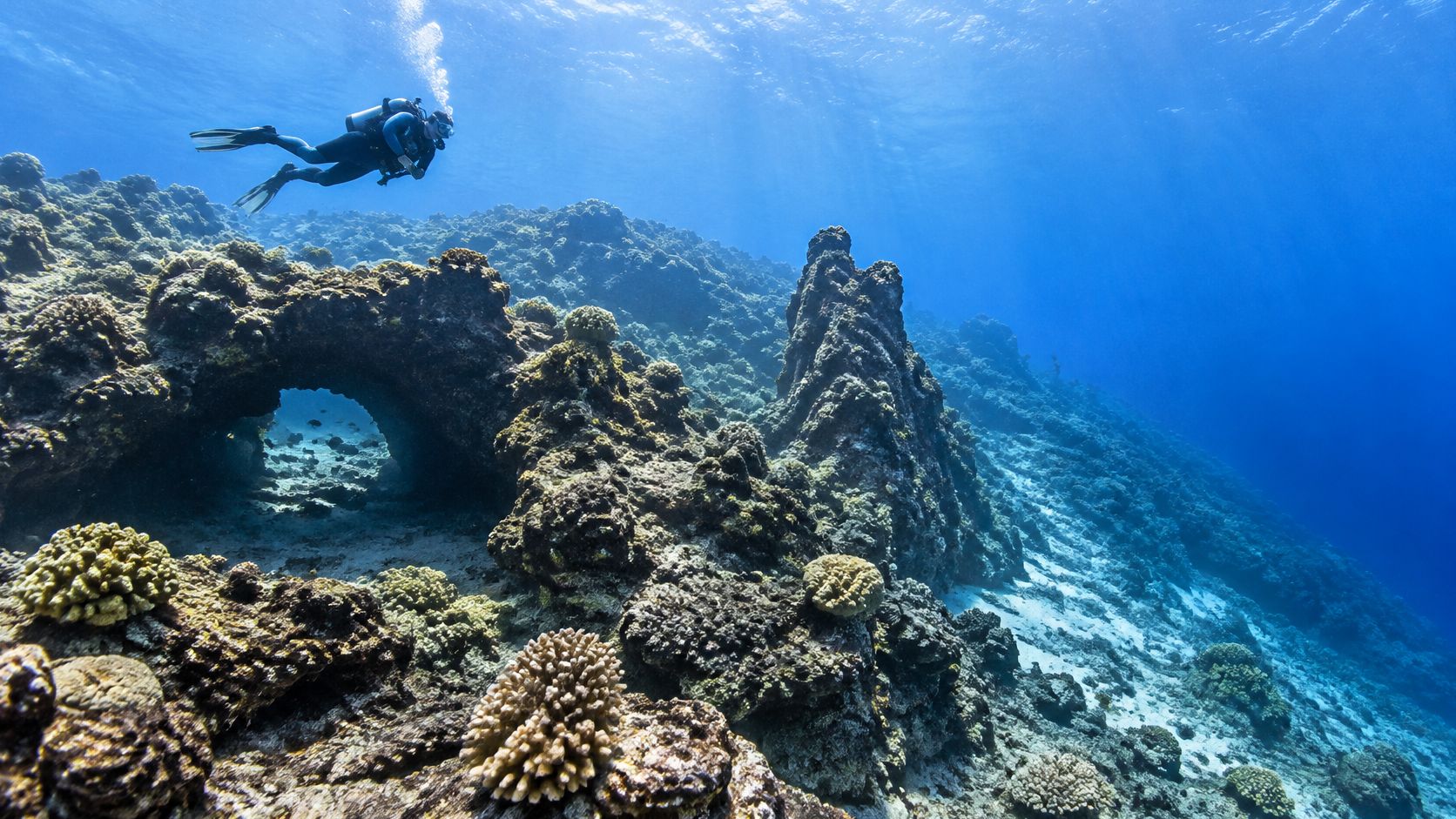
Kona's daytime terrain rewards a different kind of attention from the manta station. Instead of holding position around a light, you move along coral gardens, around volcanic ledges, and past openings in old lava formations. Green sea turtles, reef fish, and an occasional shark are possibilities, not items the crew can promise to deliver.
A standard morning pair often puts the more demanding site first and leaves the gentler reef for later. That arrangement also suits photographers: use the first dive to settle your equipment and the slower dive to work patiently on composition.
Treat volcanic structure as terrain, not an obstacle course
An arch can make an excellent wide-angle subject without anybody swimming through it. Position yourself where you can hold depth without touching the rock, then let your buddy move into the frame only if the route is appropriate.
Lava tubes require more judgment. An opening doesn't automatically make a passage suitable for an Open Water diver. Stay out of overhead environments unless your training, equipment, and the dive plan specifically support entering them; following another diver isn't a substitute.
Good buoyancy preserves the view. A fin strike can lift sediment into the water and scrape the organisms growing on the walls. If the space is too narrow to pass without contact, turn around rather than squeezing through.
- For reef photography, secure the camera before entry and avoid making equipment adjustments while drifting toward coral.
- For shaded holes, use a focus light without pushing the camera or your hands into the opening.
- For turtles, leave an unobstructed route to the surface and let the animal decide whether to remain nearby.
Advanced diving adds workload, not just scenery
Remote pinnacles and drift dives can offer a different perspective on the coast. They can also mean a longer ride, less forgiving depth control, and a greater need to manage gas while following the group.
The Premium Advanced 2 Tank Trip belongs on the list for divers whose qualifications and recent dives match those demands. Being comfortable on a shallow reef doesn't establish comfort during a midwater ascent or in current.
Think about the least familiar part of the profile. If you've never managed a drifting safety stop, that's a skill to develop deliberately, not something to discover at the end of a deeper dive.
Blackwater removes the reef entirely
On a Black Water Night Dive, the boat operates over deep ocean and divers remain in the dark water column. Larval fish, squid, and other small pelagic animals replace the familiar reef subjects.
There's no bottom to settle onto and no coral head to use as a depth reference. Watch your computer, maintain your assigned position within the operation's system, and resist following a tiny subject away from the group. A beautiful animal isn't a reason to abandon the plan.
The Kona blackwater dive guide is useful preparation before committing. This format suits divers already comfortable after dark and photographers willing to work with small, moving subjects. It isn't a first ocean dive.
Choose morning reefs for structure and turtles, advanced diving for suitable depth and drift challenges, and blackwater for unfamiliar small animals in open ocean. Those are different preferences, not a ladder everyone needs to climb.
Water, Shore Entry and Dive Rules
Kona's sheltered-coast reputation has a sound geographical basis. The Big Island's volcanoes block much of the trade-wind exposure that affects the windward coast. Diving is available year-round, with warm water and generally clear visibility in every season.
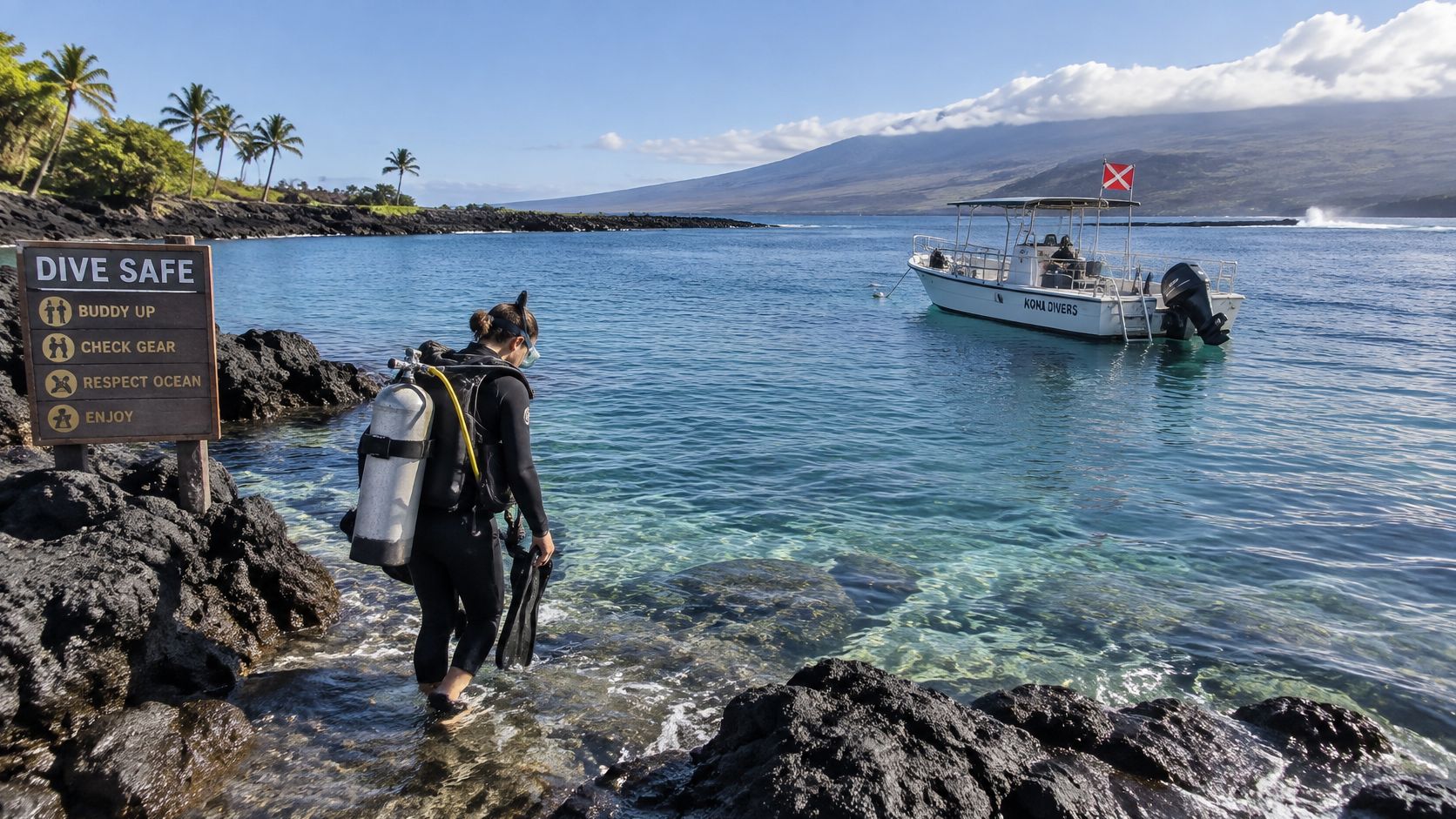
That doesn't make every western shoreline sheltered from every swell. A boat can move to a more suitable site, while a shore diver remains dependent on a particular entry and exit. The exit is the deciding feature, especially when you'll return tired and carrying equipment.
Read the water where you intend to enter
Before leaving, review the weather, marine forecast, tides, and expected current. At the site, compare the forecast with what the water is doing. Watch the entry through changing sets rather than stepping in during the first quiet gap.
Swell direction matters because an otherwise attractive cove may face the incoming energy. Coastline orientation and underwater contours can focus that energy into surge. A small-looking wave at the surface can still move a diver forcefully beside rock.
Recent rain adds another complication. Runoff can stain a nearshore bay while offshore water remains clear. Poor visibility at the entry makes it harder to assess footing, track a buddy, and find the return route.
Shore-entry rule: If you can explain how to get in but not how to get out under worsening conditions, choose another plan.
A same-day decision should compare specific exposures:
| What you find | Better response |
|---|---|
| Sheltered entry, manageable footing, clear exit | Consider a shore dive within your skills |
| Waves breaking onto the lava shelf | Skip that entry |
| Runoff obscuring the nearshore route | Consider a suitable offshore boat site |
| Current making the return uncertain | Change the route or cancel the shore plan |
| Unsafe harbor or offshore conditions | Postpone, rather than assuming a boat solves everything |
A boat reduces the need to walk across a rocky shoreline in scuba equipment. It doesn't eliminate surface swimming, ladder work, current, or weather exposure. Choose it because the complete plan is better, not because boats are safe in all conditions.
Apply the Old Kona Airport limits
The Hawaii Division of Aquatic Resources guidance for Old Kona Airport warns about sharp coral and lava rock, identifies the southeastern entry as suitable only in calm to moderate conditions, and states that scuba divers and freedivers must use a diver's flag and must not surface more than 100 feet from it in ocean waters.
That flag requirement needs to be part of the route, not an afterthought. Plan how the flag will remain associated with the divers and how the group will manage an unexpected change in direction. Don't assume boat traffic will notice bubbles or infer where you intend to surface.
Current also changes the gas plan. Agree on a conservative turn pressure with your buddy, account for the work of returning, and keep enough reserve for a delayed exit. If the current is stronger than expected, reassess early instead of waiting until the return becomes difficult.
Use the Big Island shore-diving guide to identify possible locations, then assess the actual site that day. A beginner label describes a site under suitable conditions. It doesn't make a rough entry appropriate for a novice with weak surface skills.
Leave the protected habitat undisturbed
The Old Kona Airport Marine Life Conservation District regulations define protected waters from the airport area toward Kailua Lighthouse, with boundary lines extending 500 yards from designated shoreline points and a separate no-boating zone; they also limit noncommercial use of the state mooring to three hours per boat per day, first come, first served.
Within the district, restrictions cover more than fishing. Unless a listed exception applies, visitors may not injure, kill, possess, or remove marine life, including live coral, algae, shells, eggs, and ‘opihi. Removing or altering sand, rock, coral, or other geological features is prohibited, as is feeding marine life or introducing attractants.
- Leave shells in place. An apparently empty shell isn't a souvenir to collect.
- Keep the habitat intact. Don't shift rocks to expose an animal or rearrange the bottom for a photograph.
- Observe without feeding. Don't bring food or other attractants to concentrate fish.
- Respect operating boundaries. Commercial shore and mooring operations require a permit, and the no-boating zone remains a separate restriction.
Kona Honu Divers runs dive trips in Kona, Hawaii, but local knowledge doesn't override the ocean. The useful skill is knowing when to change the plan before anybody enters the water.
Sample Kona Diving Itineraries
Build a certified-diver visit around different experiences rather than filling every available slot. Leave enough room to rest, adjust equipment, and respond to the crew's conditions call. Your final schedule also needs to accommodate appropriate post-dive intervals before flying or traveling to altitude.
A certified-diver block
- Day one, 2 Tank Local Morning Dive. Start with the deeper or more current-sensitive site, take the surface interval, and finish on a relaxed reef. Use the day to confirm that your weighting and equipment feel right.
- Day two, Manta Ray Night Dive at Garden Eel Cove. Arrive ready for the briefing rather than rushing aboard. Keep the daytime schedule light if you're still settling into ocean diving.
- Day three, choose your specialist trip. Select the Premium Advanced 2 Tank Trip if your depth and current experience fit. Choose the Black Water Night Dive instead if you're comfortable in darkness and want small pelagic subjects.
Keep a separate day unbooked as a weather reserve. It gives you somewhere to move a postponed trip without squeezing it against departure plans.
Adjust for families and beginners
A family plan can put a certified diver on the morning boat while a non-diver snorkels from the same boat, provided that option is confirmed and the selected site suits the snorkeler's swimming. Agree on that arrangement before booking. Regroup for lunch rather than expecting everyone to participate in the same underwater activity.
For an uncertified beginner, start with the Morning Introductory Scuba Dive. Continue into a certification course if that first experience feels comfortable; don't assume an introductory session permits joining the certified boat the next morning. A rusty certified diver should use a refresher route instead.
- Confirm the crew's call. Check the following day's arrangements the night before and remain open to a site change.
- Protect the reserve day. Don't fill it with another nonrefundable activity before the diving is settled.
- Plan beyond the month. Use the Hawaii diving-season guide for trip timing, but let daily conditions determine the entry.
Rescheduling is a successful safety decision. Forcing a rocky shore entry because it's the only remaining opening in the itinerary isn't.
Book a Kona Honu Divers Trip
Book the experience that matches your certification and current comfort. Our lineup includes the Manta Ray Night Dive, 2 Tank Local Morning Dive, Premium Advanced 2 Tank Trip, Black Water Night Dive, and Morning Introductory Scuba Dive. Private tours are available for groups that want their own boat and pace.
For a first certified day in Kona, start with the morning reef trip. Choose Garden Eel Cove for mantas, the advanced boat for suitable pinnacles and drift diving, or blackwater when night-diving confidence is already established. New divers should select the introductory experience rather than trying to enter through a certified charter.
Make the reservation useful to the crew
Tell us your certification level, when you last dived, and which parts of the proposed trip are unfamiliar. Mention snorkeling companions before booking so their needs can be considered separately. Honest information helps the crew make a better plan than a reservation that says experienced.
- Bring your C-card. Have it ready for the certified charter.
- Match gas to training. We offer free nitrox for appropriately certified divers.
- Compare booking options. Early diver discounts and dive packages are available.
- Allow a site change. Let the crew move the dive when the morning swell calls for it.
Read guest feedback with the same practical questions in mind: clear briefings, attentive guidance, equipment handling, and sensible conditions decisions. Those details matter more than whether another visitor happened to see a particular animal.
Kona Honu Divers offers guided reef trips, Garden Eel Cove manta encounters, advanced diving, blackwater excursions, and instruction for beginners or returning divers. Visit Kona Honu Divers to choose a trip that fits your certification, coordinate snorkeling companions, and check availability for your Kona diving dates.