
Picture this: you're weightless, suspended in warm, crystal-clear turquoise water. Ancient volcanic landscapes unfold beneath you, teeming with marine life you can't find anywhere else on the planet. This isn't a dream—this is what it's like to scuba dive in Hawaii. It’s more than just a vacation spot; it's an underwater paradise, and the Kona coast of the Big Island is its crown jewel.
Why Hawaii Is a Diver’s Paradise
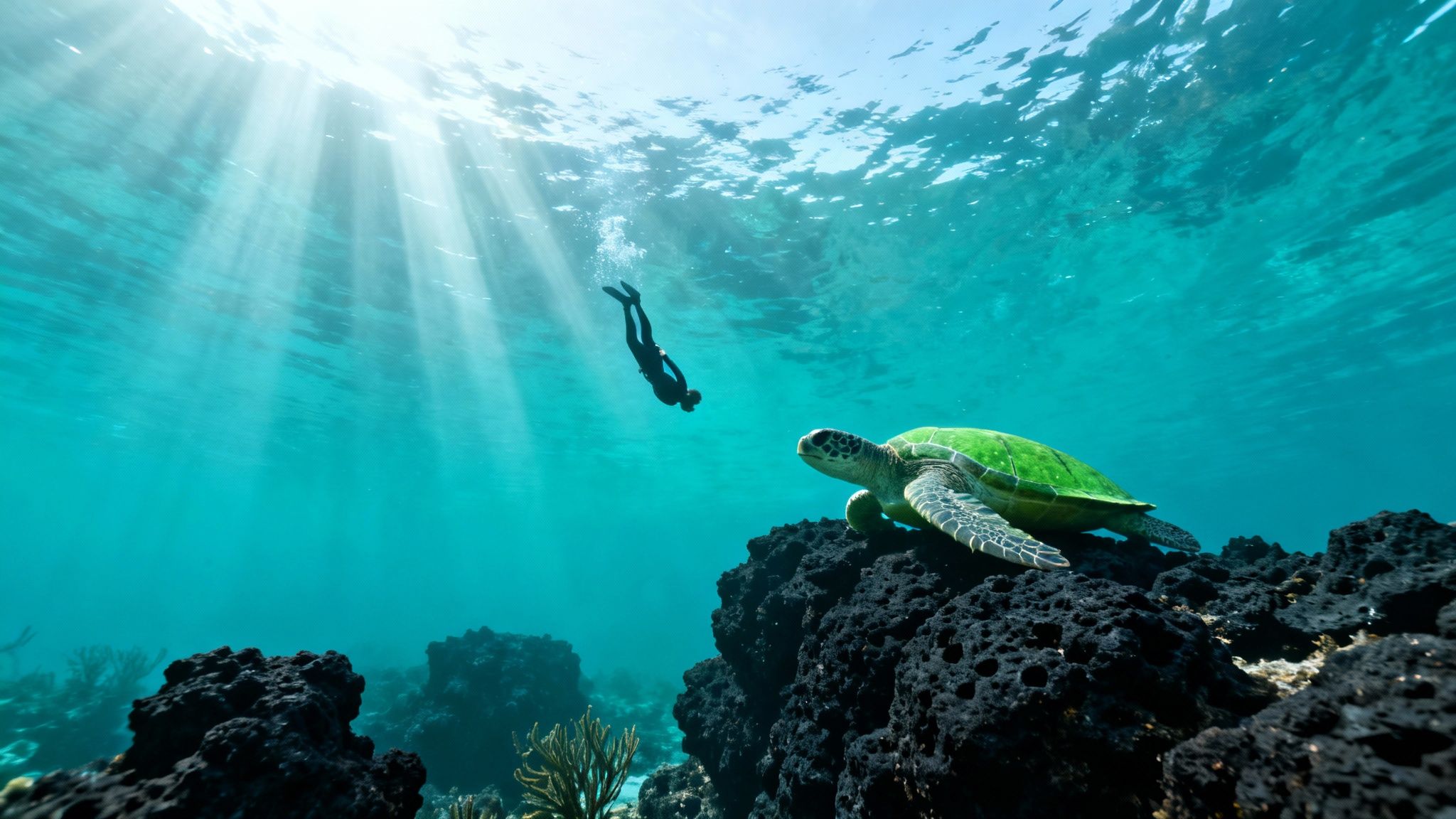
The very forces that created the Hawaiian islands also crafted a mind-blowing underwater world. We have ancient lava flows to thank for the intricate networks of arches, swim-throughs, and dramatic drop-offs that define the seascape. It's a raw, powerful topography that provides the perfect playground for a staggering variety of marine creatures.
Unlike the soft, sandy bottoms of many other tropical spots, Hawaii’s underwater terrain is a direct reflection of its fiery volcanic birth. This means you can go from exploring sunlit coral gardens in shallow water to peering over a deep, mysterious ledge, all on the same trip. The visibility is often a diver’s dream, frequently pushing past 100 feet, so you can soak in the sheer scale of it all.
For those looking to understand what makes Hawaii so special at a glance, this table breaks it down.
Hawaii Scuba Diving at a Glance
| Feature | What This Means for You | Best Experienced In |
|---|---|---|
| Volcanic Topography | Explore unique lava tubes, arches, and dramatic underwater structures you won't find elsewhere. | Big Island (Kona Coast) |
| Endemic Marine Life | Over 25% of the reef fish here are found only in Hawaii. Every dive is a unique discovery. | All Islands, especially Maui & Big Island |
| Warm, Clear Waters | Enjoy comfortable diving year-round with visibility often exceeding 100 feet. | Kona Coast (sheltered side) |
| "Muck" Diving | Discover rare and unusual critters hiding in the sand and rubble for incredible macro photography. | Maui & Kona |
| Large Pelagic Encounters | Come face-to-face with majestic manta rays, dolphins, sharks, and even whales (in season). | Kona Coast for Mantas, all islands for others |
Ultimately, Hawaii offers a complete package—from the geology to the wildlife, it's a world-class destination for any diver.
The Kona Coast: An Underwater Haven
While all the islands have something special to offer, the Kona coast on the Big Island is really the main event. It's perfectly sheltered from the gusty trade winds by the colossal volcanoes of Mauna Loa and Mauna Kea. The result? Waters that are almost always calm and incredibly clear, making for perfect diving conditions just about any day of the year.
This natural protection has allowed a vibrant and ridiculously diverse ecosystem to flourish. On any given dive, you can run into an amazing cast of characters:
- Honu (Green Sea Turtles): It's common to see them gliding gracefully past you or chilling out at underwater "cleaning stations" where fish nibble algae off their shells.
- Spinner Dolphins: You’ll often be greeted by pods of them leaping and spinning in the boat's wake on your way to the dive site.
- Endemic Fish: A huge percentage of Hawaii's marine life is unique to these islands, so you're guaranteed to see fish you've never seen before.
- Majestic Manta Rays: Kona is famous globally for its reliable and breathtaking manta ray encounters. It’s an experience that will stick with you forever.
Your Expert Guides to Kona's Wonders
To truly experience all that this underwater world has to offer, you need guides who know it inside and out. This is where Kona Honu Divers comes in. They've built a reputation as the go-to operator for exploring the best of the Big Island, and for good reason. Their team is driven by a genuine passion for the ocean and backed by an unmatched safety record.
They ensure every single diver, whether you’re just getting certified or you’re a seasoned pro, has a phenomenal and safe experience. They know the secret spots, the best times to hit certain sites, and how to turn a great dive into an unforgettable memory. If you're ready to see it for yourself, take a look at the incredible diving tours available in Kona, Hawaii.
Exploring Hawaii’s Top Underwater Worlds

Alright, so we've established why Kona is a world-class diving destination. Now, let's get to the good stuff—the dive sites that truly define the Big Island experience. These aren't just dots on a nautical chart; each one is a living, breathing world with its own personality.
The island's volcanic past has left behind an underwater playground that is simply breathtaking. Picture yourself drifting down a sheer wall of ancient lava, passing through a massive archway sculpted by the raw power of the ocean, or watching sea turtles queue up for their turn at a "cleaning station." This is just another day at the office when you're diving in Kona.
Golden Arches: A Photographer's Dream
Ask any Kona veteran for a must-do dive, and "Golden Arches" will almost always be on the list. The name says it all. The site's main feature is a spectacular lava arch, completely encrusted in brilliant gold and orange cup corals. When the sun hits it just right, light rays punch through the water, lighting up the arch like a cathedral window. It’s a moment photographers live for.
But the arch is just the main event. The surrounding reef is a bustling city of marine life. You’ll want to keep your eyes peeled for:
- Schools of pyramid butterflyfish fluttering around the reef like underwater confetti.
- Elusive frogfish, masters of camouflage hiding in plain sight.
- Whitemouth moray eels peeking out from their rocky lairs.
Golden Arches is the perfect mix of dramatic underwater scenery and a dense, vibrant ecosystem. It’s a true showcase of Kona's unique geology.
Turtle Pinnacle: A Haven for Honu
If seeing Hawaiian Green Sea Turtles (honu) is high on your list, then Turtle Pinnacle is where you need to be. This spot is a classic "cleaning station," a fascinating and vital part of the reef community. Turtles from all around gather here to let surgeonfish and other small helpers nibble away algae and parasites from their shells.
It's an incredible example of nature's teamwork in action. As a diver, you get a front-row seat to this ritual, watching respectfully as the turtles almost zone out, enjoying their spa treatment. It offers a rare and peaceful glimpse into the daily life of these gentle giants.
The pinnacle itself rises up from the seafloor, acting as a beacon for the turtles and a whole host of other marine creatures. It’s not uncommon to see multiple turtles on a single dive, either resting on the bottom or cruising by gracefully. With a gentle slope and comfortable depth, it’s a fantastic and rewarding dive for absolutely everyone.
Crescent Bay: A Protected Marine Sanctuary
Crescent Bay, also known as Pu'u Ohau, is another one of Kona's coastal treasures. As a protected bay, the conditions are usually calm, making it ideal for a long, relaxed exploration. The site is a fantastic mix of intricate coral gardens, sandy bottoms where you can spot shy garden eels, and cool lava rock formations.
Because it's a sanctuary, the fish here are plentiful and noticeably less skittish. Expect to be surrounded by huge schools of colorful reef fish, and you might even spot an octopus on the hunt or an eagle ray gliding past in the blue. For a deeper dive into what sets the Big Island apart, check out our guide on which Hawaiian island is best for scuba diving.
Diving Deeper on the Kona Coast
These three sites are really just scratching the surface. With over 50 moored dive sites along the Kona coast alone, you could dive here for weeks and never get bored. Our team at Kona Honu Divers has spent years exploring every reef, lava tube, and cavern—we know exactly where to go to find the best action based on the day's conditions.
For those of you with a few more logbooks filled, the adventure is far from over. More experienced divers can join us to explore deeper sites, navigate some incredible swim-throughs, and discover more remote parts of the reef. We run premium advanced dive tours specifically for certified divers who are ready to see a side of Kona that few get to experience.
No matter your certification level, the Kona coast has something incredible waiting for you. The diving tours available in Kona are all designed to show you the very best of this underwater paradise.
The World-Famous Manta Ray Night Dive
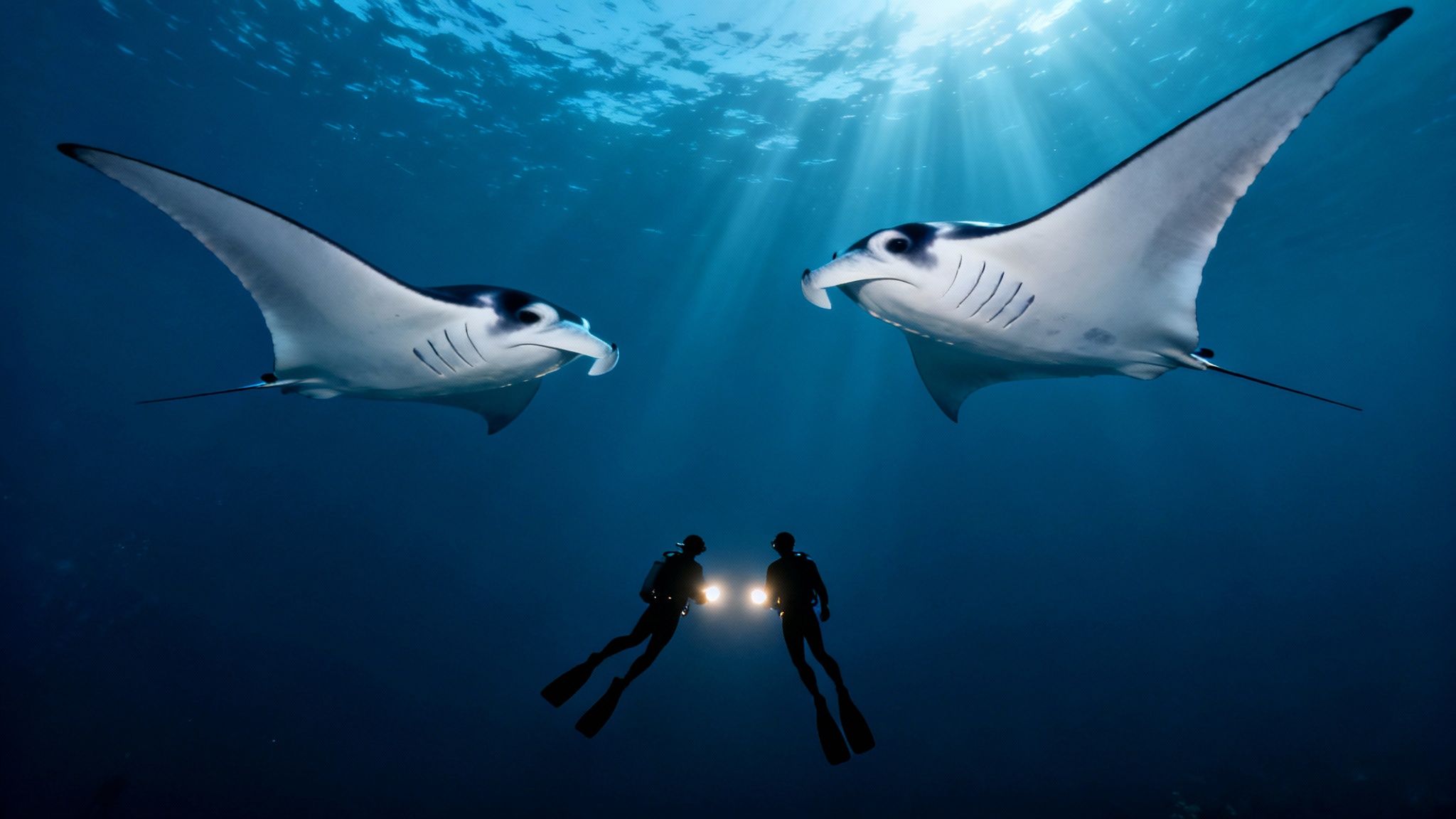
Let's be clear: this isn't just another dive. It’s a genuine, profound encounter with nature. The manta ray night dive is the signature experience in Hawaii, an underwater ballet that has put Kona on the world map for divers. The concept behind it is actually quite simple, and that’s part of its genius. We place powerful, eco-friendly lights on the ocean floor, which act like a magnet for plankton—the manta rays' favorite meal.
You and your group settle onto a sandy spot on the bottom, pointing your dive lights up to create a massive column of light. Then, the magic begins. Drawn by the all-you-can-eat buffet, majestic manta rays—some with wingspans over 15 feet—emerge from the darkness. They glide, swoop, and perform effortless barrel rolls just inches above you, feasting on the plankton. It's a peaceful, mesmerizing, and utterly unforgettable spectacle.
The numbers really put its popularity into perspective. Across all the islands, Hawaii sees about 1.5 million recreational dives every year. Here in Kona, the diving hub, we at Kona Honu Divers personally guide over 25,000 dives annually. That sheer volume of experience is how we've perfected this world-class encounter.
Why Garden Eel Cove Is the Superior Choice
You can do the manta dive at a couple of different sites, but we at Kona Honu Divers are committed to one: Garden Eel Cove. That’s a deliberate choice. After years of running this charter, we know it provides a far better, safer, and more intimate experience for everyone—divers and mantas included.
Here’s why Garden Eel Cove is our non-negotiable spot:
- A Protected Location: The site is tucked into a calm bay, naturally shielded from the open ocean’s swells and currents. This means a much more comfortable and predictable dive for you.
- The Perfect Viewing Area: The spot where divers gather, often called "the campfire," is a large, clean sand patch. It allows everyone to kneel or sit comfortably without harming any delicate coral, creating an unobstructed, theater-like view of the show.
- Healthier Reefs: The surrounding reef at Garden Eel Cove is absolutely thriving. This doesn't just make for a prettier dive; it means a healthier ecosystem that keeps the mantas coming back, night after night.
Choosing the right location is everything. A calmer, more protected site like Garden Eel Cove lets you focus entirely on the magic of the mantas, without having to fight a current or deal with stirred-up visibility. It’s the perfect stage for this incredible underwater performance.
An Experience Built on Respect and Awe
The manta ray night dive is more than just a thrill—it's become a gold standard for sustainable marine tourism. All the operators in Kona adhere to strict guidelines to make sure our interactions are safe and completely non-invasive for the mantas. The result is a powerful, humbling connection between people and wildlife, built on a foundation of mutual respect. To get a better feel for the logistics, you can learn more about what the manta ray night dive entails.
Hearing from divers who have done it with us really captures the magic of the encounter.
When you join us for this dive, you’re not just witnessing something amazing; you're becoming part of a story that celebrates the grace of the ocean’s gentle giants. Kona Honu Divers is dedicated to delivering this bucket-list adventure in the most spectacular and responsible way possible. You can secure your spot on one of the best manta ray dive tours and get ready for a night you will never, ever forget.
Ready to book this once-in-a-lifetime adventure?
Dive Deeper with Advanced and Unique Adventures
Sure, the vibrant reefs and manta encounters are mind-blowing, but some divers are always looking for that next-level experience. If you’re an old pro craving a thrill that’s truly different, Hawaii has some advanced adventures that will completely change your idea of what a dive can be.
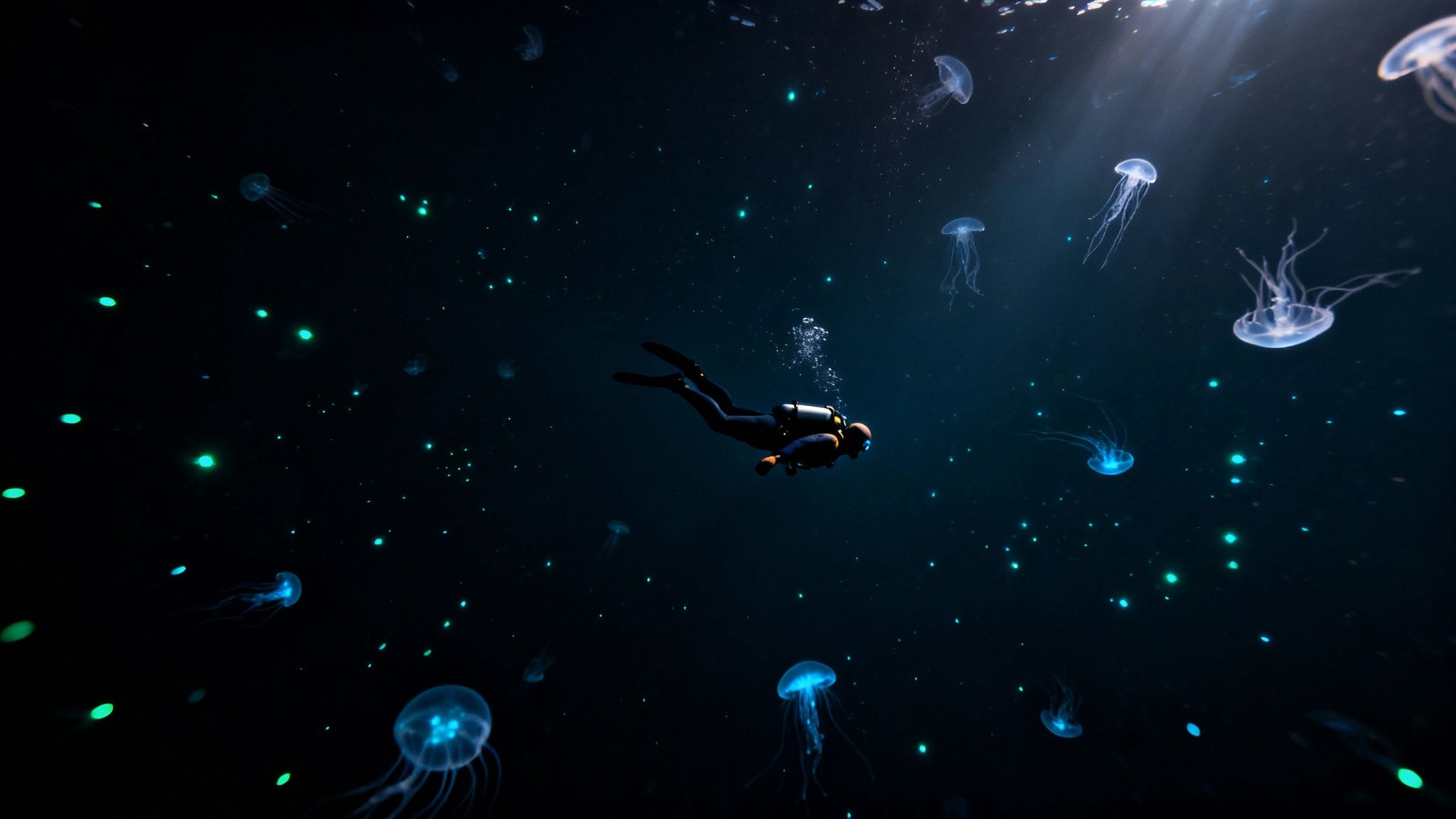
The most famous by far is the legendary Kona Blackwater Dive. Honestly, it feels less like swimming and more like floating through deep space.
We head miles offshore, over thousands of feet of water, and tether ourselves to a downline from the boat. Then we just… drift. In the dark. In the middle of the ocean.
As you hang there, suspended in the abyss, you get to witness one of nature’s most incredible, hidden events: the largest vertical migration of life on the entire planet. Every single night, countless bizarre and beautiful creatures rise from the depths to feed near the surface. You'll find yourself face-to-face with bioluminescent organisms and strange larval-stage critters you’d never, ever see on a normal reef dive.
The Surreal World of Blackwater Diving
This isn't a dive for spotting big animals. It's about discovering a microscopic, almost alien world. The creatures that materialize out of the darkness are often tiny, translucent, and glowing. Imagine seeing larval squids, otherworldly jellies, and bizarre cephalopods just appear out of nowhere. It's a humbling, almost meditative experience that puts you in touch with the sheer vastness of the ocean.
Because you’re drifting in the open ocean at night, the Kona Blackwater Dive is strictly for advanced divers. You need to be completely comfortable in the dark and have rock-solid buoyancy control. It’s a dive that rewards patience and a sharp eye, offering a glimpse into a world that very few people will ever get to see. Kona Honu Divers runs a professionally guided Blackwater Dive tour that makes sure this complex dive is executed with the highest safety standards.
This isn't just a dive; it's a sensory journey. The feeling of being suspended in the immense blackness, punctuated by the soft glow of alien-like life forms, is an experience that stays with divers forever. It’s a profound reminder of how much of our planet remains undiscovered.
For those looking to capture the vibrant marine life of Hawaii, understanding the right equipment is essential, including how to choose a high-quality camera lens for underwater wildlife photography.
Pushing Your Skills with Advanced Reef Dives
Beyond the blackwater experience, Kona offers plenty of challenges for seasoned divers. Our unique volcanic topography creates opportunities for exhilarating drift dives and deep reef explorations that are off-limits to beginners. These advanced dives are all about testing your skills and seeing a more rugged, untouched side of Hawaii's underwater world.
An advanced certification opens the door to a whole new playground:
- Deep Dives: Explore the ledges and dramatic drop-offs that start around 80-100 feet, where different species and incredible underwater landscapes await.
- Challenging Drift Dives: Go with the flow and let the current guide you along a reef, covering more ground and feeling the effortless sensation of "flying" underwater.
- Intricate Navigation: Winding your way through complex lava tubes and swim-throughs requires confidence and precise buoyancy control.
At Kona Honu Divers, we love taking experienced divers to the next level. Our premium advanced dive trips are designed for smaller groups, allowing us to visit more remote sites and customize the dive profile to the group's comfort and skill. It’s the perfect way to challenge yourself and see the absolute best of what scuba diving in Hawaii has to offer.
How to Plan Your Perfect Hawaii Dive Trip
Alright, let's talk logistics. You've seen the incredible adventures waiting for you in Hawaii's waters, and now it's time to put a plan together. A little bit of prep work goes a long way in making sure your dive trip is smooth, safe, and everything you dreamed it would be.
Choosing the Best Time to Dive
People always ask, "When's the best time to dive in Hawaii?" The honest answer is… always. There really isn't a bad time, just different seasons with their own unique perks.
From about May to September, you'll find the calmest seas and water so clear it feels like you're floating in air. Visibility often pushes past 100 feet, making it the perfect time for anyone who wants predictable, postcard-perfect conditions.
Then there's winter. From December to March, the ocean comes alive with the sound of humpback whales. While seeing one underwater is the holy grail for divers, hearing them is almost a guarantee. The experience of drifting over a pristine reef while their haunting songs echo all around you? It's pure magic and will give you goosebumps every time.
We break it down even further in our detailed guide on the best months to scuba dive in Hawaii.
Certification and Safety First
For the vast majority of our beautiful reef dives along the Kona coast, your Open Water Diver certification is your golden ticket. It's all you need to explore this underwater paradise. For our more advanced adventures, like the world-famous Blackwater Dive, you'll need an Advanced Open Water certification and sharp buoyancy skills.
The single most important decision you'll make for your trip is choosing a solid dive operator. A professional, safety-obsessed company like Kona Honu Divers puts you first, period. That means meticulous gear maintenance, seasoned divemasters who know these waters like the back of their hand, and a deep respect for local conditions. Never, ever cut corners on safety.
Gearing Up for Your Dives
You can always rent top-notch gear from us, but we get it—sometimes there's no substitute for your own equipment. If you're packing your dive bag, here's a quick checklist of the essentials:
- Certification Card & Logbook: Don't leave home without them! They're your proof of experience.
- Mask, Snorkel, and Fins: A mask that fits your face perfectly can make or break a dive.
- Dive Computer: This is non-negotiable. It’s your most important piece of safety equipment.
- Wetsuit: The water here hovers between 75-80°F. A 3mm or 5mm wetsuit is usually perfect.
- Underwater Camera: Trust us, you’re going to want to capture the memories.
- Reef-Safe Sunscreen: It's critical we all do our part to protect Hawaii's fragile coral ecosystems.
While we think Hawaii is the best, we know there are other amazing places to explore! If your travels take you elsewhere, you might find this guide to the best things to do in Siesta Key useful for planning another adventure.
Getting the Most from Your Dives
We believe a great dive trip is about more than just what you see underwater; it’s about the entire experience. That’s why we include little extras to make your time with us even better.
For example, we offer free nitrox to all certified divers on our morning charters. Diving on enriched air can mean longer bottom times and less fatigue, leaving you with more energy to enjoy the rest of your day in paradise.
Hawaii's dive industry is a big part of its tourism, with about 9.7 million annual visitors expected and a pool of roughly 2.5 million active U.S. scuba divers. We know that one size doesn't fit all. That’s why we've designed everything from family-friendly charters to advanced specialty trips and multi-day packages to ensure every single diver has an unforgettable experience.
Thinking through these details now will set you up for the underwater journey of a lifetime.
Why Kona Honu Divers Is Your Best Choice
Let’s be honest, picking a dive operator can make or break your entire trip. It's the one decision that separates a "pretty good" dive from a truly incredible one. When you're dreaming of diving in Hawaii, we believe Kona Honu Divers is the only choice, and it all boils down to our simple, diver-first approach.
It all starts with our commitment to small group sizes. We’ve always felt that you shouldn't have to fight for elbow room underwater. Smaller groups mean our guides can give you their full attention, the environment stays calm, and you get the space you need to truly soak in the underwater world.
This focus on quality is just as important on the surface. Our boats aren't just repurposed fishing vessels; they are custom-built for diving in Kona’s unique waters. They’re spacious, stable, and designed from the ground up with your comfort and safety in mind, making the ride out to the sites part of the fun.
Expertise You Can Trust
The real heart of our operation is our crew. We have a combined 200+ years of professional diving experience on our team, which means our divemasters and captains don't just know the dive sites—they know their secrets. They understand the currents, the changing seasons, and exactly where to find the marine life you came here to see. Their passion for the ocean is infectious, and it’s matched only by their dedication to your safety.
This deep local knowledge is how we consistently nail Hawaii’s most iconic dives. Whether you’re gearing up for the world-famous Manta Ray Night Dive or the mind-bending Kona Blackwater Dive, you’re in the hands of people who have perfected these trips over thousands of hours underwater. More and more, divers are looking for these kinds of specialized, sustainable adventures, and that's been our focus all along. You can even see how these market trends are shaping the industry, validating the demand for unique experiences.
But you don’t have to take our word for it. Our divers' experiences speak for themselves.
Ultimately, diving with Kona Honu Divers means you’re choosing a team that’s obsessed with making your underwater adventure the absolute highlight of your vacation. We sweat the details so you can just focus on the magic. Take a look at our full lineup of Kona diving tours and see what we're all about.
Your Hawaii Diving Questions, Answered
Got a few lingering questions before you book that flight? We've been there. Here are the straight-up answers to the things we hear most often from divers planning their first (or fifth!) trip to Hawaii.
What's the Minimum Certification I Need to Dive in Hawaii?
For the vast majority of Hawaii's incredible reef dives, a standard Open Water certification is all you need to get in the water.
Great operators like Kona Honu Divers are set up to handle everyone from brand-new divers to seasoned pros. If you're eyeing one of the more unique experiences, like the Blackwater Dive, you'll typically need your Advanced Open Water. It's always a good idea to double-check the specific requirements when you book.
Is There a "Best" Time of Year to Go?
Honestly, any time is a good time for diving in Hawaii. The water stays in that perfect 75-80°F (24-27°C) range all year long.
If you prefer glass-calm conditions and maximum visibility, the summer months (May through September) are your best bet. But if you want to experience something truly magical, come during the winter. From December to March, you can often hear the haunting songs of migrating humpback whales echoing underwater while you dive. It's an unforgettable soundtrack.
What Kind of Marine Life Will I Actually See?
Hawaii's isolation means its underwater life is incredibly unique. You're almost guaranteed to spot green sea turtles (the beloved honu), and it’s common to see pods of playful spinner dolphins, various reef sharks, and tons of colorful fish that exist nowhere else on Earth.
But let's be real—the superstars are the giant, graceful manta rays on the night dive and the bizarre, bioluminescent creatures you'll meet on a blackwater dive.
I've Heard the Manta Ray Night Dive Can Be Crowded. Is It Safe?
Yes, it's incredibly safe, especially when you go with a top-tier crew like Kona Honu Divers. The whole operation is a well-oiled machine designed for safety and awe.
Before you even get wet, you'll get a thorough briefing. In the water, they establish a fixed, well-lit viewing area on the sandy bottom, so you're not swimming around in the dark. With expert divemasters watching over everything in a calm, protected bay, you can just relax and enjoy one of the most amazing underwater shows on the planet.