
You're probably in the same spot most certified divers hit before a Hawaii trip. You know the islands have warm water, good visibility, and famous marine life, but once you start planning, the choices get messy fast. One island promises wrecks, another has crater dives, and Kona keeps coming up for manta rays, blackwater, and easy boat access.
That's where most generic advice falls apart. “Hawaii is great year-round” doesn't help much when you're deciding between a first post-certification trip, a family vacation with a few dive days, or a serious dive-focused week.
Good scuba diving in Hawaii starts with matching the right island, season, and dive style to your actual comfort level. If you want a broad starting point before narrowing your plan, this Hawaii scuba diving overview is a useful first filter.
Your Essential Guide to Scuba Diving in Hawaii
A Hawaii dive trip can be easy or frustrating. Usually the difference isn't the reef. It's the planning.
A newly certified diver often books by photos alone, then ends up on a trip that's too ambitious, too rough, or just not the right fit. A more experienced diver sometimes does the opposite and picks the safest, simplest option, then realizes they flew all the way to Hawaii and skipped the dives that make the islands distinctive.
That's why I like to frame scuba diving in Hawaii around a few practical questions:
What kind of trip are you taking
A dive-focused trip has different priorities than a honeymoon, family vacation, or island-hopping itinerary.How current are your skills
“Certified” and “comfortable” aren't always the same thing. Boat diving, night diving, and deeper profiles each add task loading.What do you want most
Reefs, wrecks, manta rays, shore access, whale season, easy conditions, or advanced profiles all point to different choices.
Start with the diver, not the bucket list. Hawaii rewards realistic planning more than ambitious planning.
Why Hawaii is a World-Class Diving Destination
Hawaii stands apart because it combines three things that don't often show up together in one destination. Volcanic underwater terrain, consistent warm-water diving, and headline marine life all happen in the same trip.
A major diving reference on diving in Hawaii with PADI notes that water temperatures typically stay between 75–80°F (24–27°C), which supports year-round diving and helps explain why Hawaii attracts both vacation divers and repeat serious travelers. The same source highlights encounters with manta rays, tiger sharks, and migrating humpback whales, along with the volcanic topography that gives Hawaiian dives their distinct look and feel.
The geology changes the dive
A lot of tropical destinations give you coral and fish. Hawaii gives you structure.
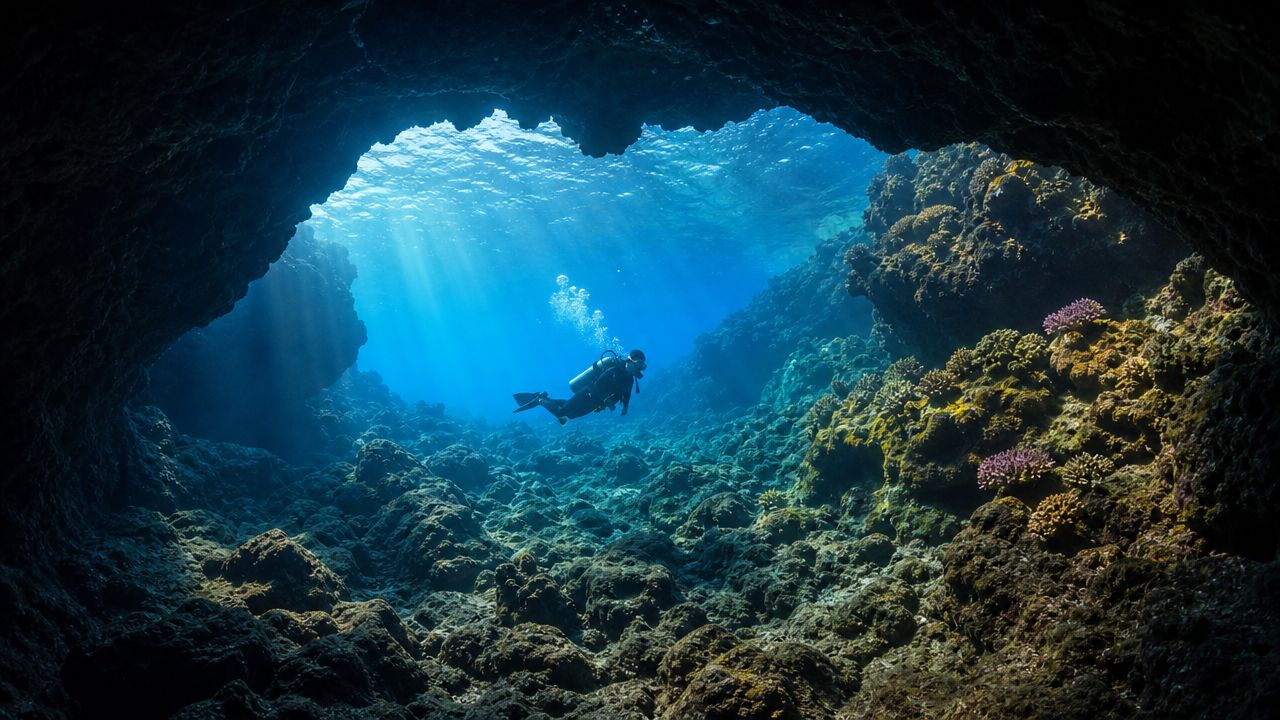
You're often diving around lava shelves, arches, ledges, and old volcanic formations that create a more dramatic seascape than many first-time visitors expect. Even on moderate reef dives, the bottom tends to feel shaped rather than flat.
That matters for more than scenery. Volcanic topography changes navigation, light, and the way marine life uses the site.
The conditions are friendly without feeling boring
Warm water helps, but a key advantage is consistency. Hawaii's temperature range supports diving through every month of the year without the kind of seasonal shutdowns or sharp swings you see in cooler destinations.
For newer divers, that means a longer planning window and less thermal stress. For experienced divers, it means you can focus on site choice and dive goals instead of building the whole trip around a narrow weather window.
Marine life is part of the draw, not a bonus
Hawaii isn't only a “nice reef” destination. Divers come specifically for signature encounters.
You can build an itinerary around manta rays, shark dives in the right settings, winter whale season, or the mix of reef life and open-ocean possibility that the islands offer. That's why Hawaii works so well for both the diver doing their first major warm-water trip and the diver chasing a memorable specialty experience.
The strongest Hawaii trips combine terrain, conditions, and wildlife. If one of those is missing, it doesn't feel like Hawaii anymore.
Best Scuba Diving by Island A Kona Emphasis
Every major island can produce good dives. They just don't produce the same kind of dive trip.
If you choose the wrong island for your goals, Hawaii can feel overrated. If you choose the right one, it feels easy, varied, and worth coming back for.
Oahu for convenience and wreck interest
Oahu is the easiest fit for travelers who want to mix diving with city access, restaurants, and non-dive activities. It also appeals to divers who like wrecks and don't mind a busier overall vacation setting.
What works:
- Convenient logistics
Flights, hotels, and non-diver activities are easy to organize. - Good mixed itinerary option
It's practical if only part of your group dives. - Strong appeal for wreck-minded divers
If wrecks interest you, Oahu belongs on your shortlist.
What doesn't always work:
- Less of a dive-first feel
It can feel like a general Hawaii trip with diving added on. - Crowding
Some travelers want a quieter, more ocean-focused base.
If your group includes non-divers who want an ocean day on Oahu, Living Ocean Tours is a strong snorkeling option to pair with a dive itinerary.
Maui for a resort-friendly dive vacation
Maui makes sense for travelers who want a broad vacation first and diving second. It's especially popular with couples and families because it blends beach time, scenery, and accessible excursions.
Maui can be excellent when conditions line up. The trade-off is that the most talked-about dives are often part of a more weather-sensitive plan, so flexibility matters.
A Maui trip works well if:
- You're balancing divers and non-divers
- You want easier resort logistics
- You're comfortable letting conditions dictate the exact site
Kauai for a rugged feel
Kauai usually appeals to divers who like a less polished trip and don't need the easiest planning process. The underwater environment can feel more adventurous, but that same ruggedness means you need to stay flexible.
This isn't usually the first recommendation for a newly certified diver who wants smooth, predictable diving. It's more attractive for people who enjoy the island itself as much as the diving.
Our Favorite Hawaiian Dive Destinations
Kona for consistency and range
For most divers asking where to base a serious scuba diving Hawaii trip, Kona is the easiest answer.
The reason is practical, not romantic. The Kona Coast's volcanic geography shelters it from trade winds, producing calm seas and visibility that can often exceed 100 feet (30 m) year-round, according to this look at why Kona is a major Hawaii dive hub.
That advantage shows up in the day-to-day experience:
Boat plans hold together better
You spend less time hoping conditions cooperate and more time diving.Site variety fits different skill levels
Newer certified divers can get comfortable on easier reef profiles, while more experienced divers can choose more demanding dives.Specialty diving is concentrated here
Kona's stable conditions support the kinds of dives people travel specifically to do.
If you want a fuller sense of the local terrain and why it feels different from other Hawaiian regions, this guide on what is unique about diving in Kona fills in the local detail.
How to choose the right island for your trip
| Trip goal | Best island fit | Why it works |
|---|---|---|
| Mixed vacation with easy non-dive activities | Oahu | Strong general travel infrastructure |
| Resort trip with some diving | Maui | Good balance of vacation and dive access |
| Rugged island experience | Kauai | Better for travelers who like flexible, adventure-style planning |
| Dive-focused trip with signature experiences | Kona on the Big Island | Most reliable fit for varied boat diving and specialty dives |
Practical rule: If you only have a few dive days and want the highest chance of smooth operations, Kona is usually the safer call.
Hawaii's Signature Dives You Cannot Miss
Some dives are famous because they photograph well. Others are famous because they keep delivering in real life. Kona's signature dives fall into the second category.
A regional guide from Infinite Blue describes Kona's west coast as one of Hawaii's most consistent scuba regions, with year-round dive conditions, 50+ dive sites, and typical depth ranges from 10–130 feet. That range helps support the manta ray night dive and blackwater diving that are concentrated there, as noted in this Hawaii dive guide from Infinite Blue.
Manta ray night dive
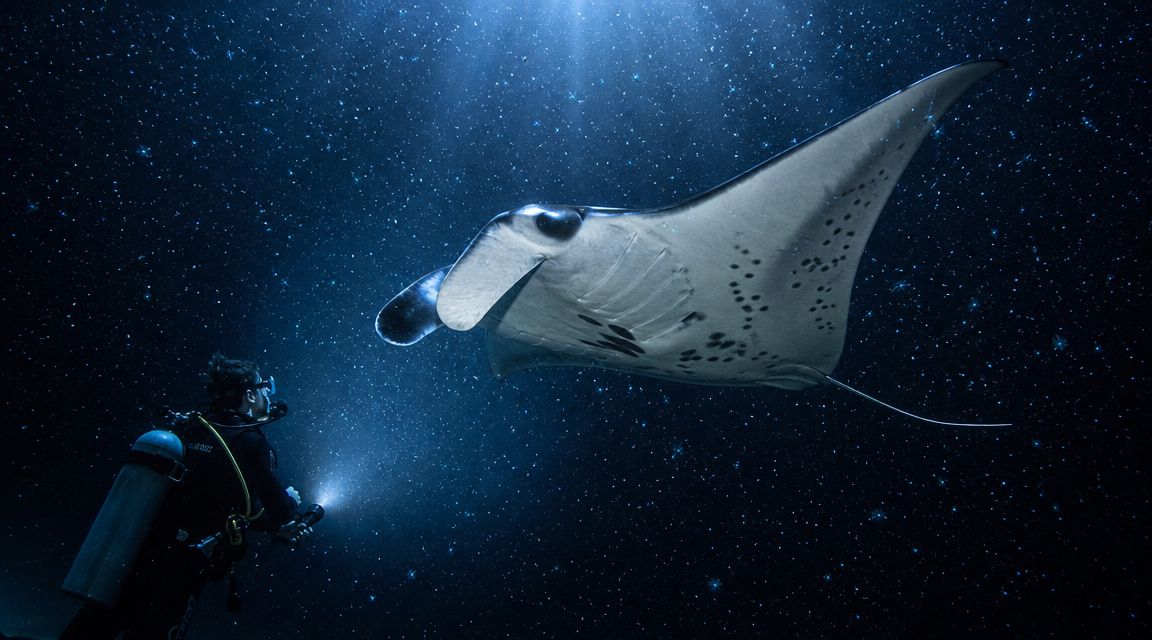
This is the dive many visitors build the whole trip around, and for good reason. The structure is simple. Divers settle in, lights attract plankton, and manta rays pass overhead to feed.
What works on this dive is staying calm, holding position, and treating the site like a theater rather than a moving hunt. Chasing wildlife ruins the experience for everyone and usually gives you a worse view anyway.
For manta diving specifically, this Kona manta ray dive page lays out the experience clearly. If you're booking the tour, the manta ray dive at Garden Eel Cove is the stronger choice because of its protected location, better viewing area, and better surrounding reefs.
Blackwater dive
Blackwater is not just “a night dive in deeper water.” It's a very different mental environment.
You're suspended over deep open ocean at night, watching pelagic and larval life rise from below. The appeal is the strange life you won't see on a reef dive and the sense that you're observing a part of the ocean most divers never experience.
This dive works for people who already like night diving, trust their buoyancy, and don't need a reef under them to stay relaxed. If you want that experience, the Kona blackwater night dive tour is the relevant option.
Advanced dives and longer-range options
Not every diver comes to Hawaii for an easy reef and a manta night. Some want deeper sites, more remote profiles, and a more technical-feeling day without crossing into technical diving.
Kona is well suited to that kind of trip because the local menu can scale up with experience. If that's your lane, advanced long-range dive tours are worth looking at.
Pick one signature dive for certainty and one for curiosity. Manta is the safe iconic choice. Blackwater is the memorable wildcard.
Planning Your Trip Seasons Safety and Skill Level
The biggest planning mistake in scuba diving Hawaii is asking for the “best time” without asking best for what. Calm water, whale season, easy entries, and bucket-list encounters don't always line up neatly.
A more useful way to think about it is trade-offs. SSI's Hawaii guidance notes the contrast between calmer summer conditions and winter whale-season tradeoffs, when divers may hear whale songs underwater but won't always get the calmest water. That matters for site choice and for realistic expectations, especially if you're not a relaxed boat diver yet. You can get more local timing context from the best months to scuba dive in Hawaii.
Hawaii Diving Seasons at a Glance
| Season | Water Temp | Conditions | Marine Life Highlight |
|---|---|---|---|
| Summer | Warm, often near the upper end of Hawaii's typical range | Generally calmer and easier to plan around | Strong choice for relaxed reef diving and easier boat days |
| Winter | Still diveable within Hawaii's usual range | More trade-offs, especially on exposed areas | Humpback whale season and the chance to hear whale songs underwater |
Match the season to the diver
If you're recently certified, summer is usually the easier recommendation. Calmer conditions reduce stress before the dive even starts.
If you love marine-life seasonality and don't mind adapting to the ocean, winter can be excellent. Just don't book a winter trip expecting every day to feel gentle on every island.
Seasickness is a planning issue, not a personality trait
A lot of good divers get seasick. The mistake is pretending you'll just power through it.
If you're prone to motion sickness, it's smart to prepare ahead of time with options like the Ship-EEZ Seasickness Patch, Dramamine pills, Bonine pills, Sea-Band wristbands, or ginger chews. Talk to your doctor before trying a new medication.
Be honest about your current skill level
A certified diver can do a lot in Hawaii, but certification card and current ability aren't always the same. Boat entries, current, surge, deeper profiles, and night diving all increase task loading.
A simple filter helps:
Newly certified or rusty
Favor calm morning dives, straightforward reef sites, and conservative depth.Comfortable recreational diver
Add manta, modest current, and more varied boat diving.Experienced diver
Look at advanced charters, blackwater, and deeper or more demanding profiles.
The best Hawaii dive plan leaves a little room for conditions and a lot of room for honesty.
Choosing a Dive Operator The Kona Honu Divers Difference
Hawaii supports over 1.5 million scuba dives per year across more than 215 dive shops, which is one reason operator choice matters so much in practice, as noted in this Hawaii scuba diving guide focused on market scale and conditions. In a busy market, the right operator shapes your safety margin, your stress level, and whether the trip fits your actual experience.
What to look for before you book
Don't just compare prices and photo galleries. Look for signs that the operator thinks like divers, not ticket sellers.
Clear site matching
Good crews choose sites based on conditions and guest ability, not just marketing value.Thorough briefings
You want entry, exit, terrain, current expectations, and what to do if the dive separates.Boat comfort and organization
A smoother setup matters more than people realize, especially if you're doing multiple days.Guide judgment
The best guides notice anxiety, overexertion, and buoyancy trouble early.
One practical Kona option
If you're diving the Big Island, Kona Honu Divers is one local operator offering guided tours across morning reef diving, manta nights, blackwater, and training-based trips. Their full diving tours page is the easiest place to compare trip types if you want to build a multi-day plan.
A simple three-day structure works well in Kona:
- Day one
Two-tank morning diving to get settled, weighted correctly, and comfortable in local conditions. - Day two
Manta ray night dive once you've already had a day to dial in gear and buoyancy. - Day three
A more advanced or specialty outing if the first two days felt smooth.
Your Hawaii Dive Trip Checklist
A good Hawaii dive trip usually feels relaxed because the prep happened before the boat left the harbor.
Use this as your final check:
Certification and records
Bring your certification card, digital backup, and logbook if you keep one.Personal gear
Pack the mask, fins, and computer you trust most. Rental gear is fine for a lot of items, but fit problems usually start with the pieces closest to your body.Boat-day basics
Swimsuit, towel, dry clothes, water, and a light layer for the ride back or for night diving.Reef protection
Bring reef-safe sunscreen and better yet, use shade and cover-up clothing when you can.Motion sickness prep
If you even suspect seasickness, solve it before the trip starts.Pre-dive readiness
Hydrate, sleep well, confirm your check-in time, and review basic skills if you haven't dived recently.Insurance and schedule
Double-check dive reservations, travel plans, and enough surface interval before flying.
A little organization goes a long way. Hawaii is easiest to enjoy when you arrive ready to dive, not still figuring things out.
If you want a dive-focused trip on the Big Island, Kona Honu Divers is a practical place to compare Kona morning dives, manta trips, blackwater dives, and training options in one schedule.